Page 6 of 8

Honor of Family

by Ron Huxley, LMFT

There are many days as a parent that you think to yourself: “How am I going to get through this day?” Admit, you’ve asked yourself this question. Much of life can be about “getting through” and finding how to fill the hours of the day with as much peace as possible.

Today, ask yourself a different question: “How can I honor each member of my family?” Take it a bit deeper and follow up with the declaration: “It is an honor to be member of this family” and list as many reasons as you can to back that statement up. You might think it is an honor to hear your child laugh or have your partner tell he loves you or it is an honor to be known by others and to know someone else so completely. 

You will live a long time with this people. You might not always like them. You might get very frustrated with some of there behaviors. But what is the honor side of these relationships. Perhaps, even the struggles, are ways you have grown as a person and learned more about your own strengths and weaknesses and now you are a better person for it. 

Family Dinners May Help Teens’ Mental Health

A recent study suggests that family dinners could be good for many teens’ mental health.

Researchers found that this type of regular dinner pattern could help prevent bullying and cyberbullying, which occurs in about 1 in 5 adolescents.

Unlike traditional bullying that can be physically dangerous, cyberbullying also carries harsh mental consequences that can directly affect the risk of certain mental health issues. Researchers studied the association between cyberbullying and mental health and substance problems to determine how family dinners could help out.

For the study, researchers examined survey data on 18,834 students (ages 12-18) from 49 schools in a Midwestern state. The authors measured five internalizing problems (anxiety, depression, self-harm, suicide ideation and suicide attempt), two externalizing problems (fighting and vandalism) and four substance use problems (frequent alcohol use, frequent binge drinking, prescription drug misuse and over-the-counter drug misuse).
Results showed that close to 19 percent of the students reported that they had been a victim of cyberbullying during the previous 12 months. However, researchers also found that family dinners appeared to help moderate the relationship between this issue and other related problems.

“Furthermore, based on these findings, we did not conclude that cyberbullying alone is sufficient to produce poor health outcomes nor that family dinners alone can inoculate adolescents from such exposures,” the researchers noted, in a news release. “Such an oversimplified interpretation of these associations disregards other exacerbating and protective factors throughout the social environment. Instead, these findings support calls for integrated approaches to protecting victims of cyberbullying that encompass individual coping skills and family and school social supports.”

Family Dinners May Help Teens’ Mental Health

inner-healing:

What does your heart desire?

by Ron Huxley, LMFT

A desire is defined as a “strong want or wish.” An even deeper meaning is to have such a longing for or yearning for something that everything else dims in comparison and the pull created by the desire shifts everything in life toward it. It can cause some very positive reactions in people to work toward a desire despite challenging odds or it can create some very distorted actions to get those desires met. 

These desires might include power, influence/significance, acceptance, challenge, curiosity, order, safety, honor, competence, fun/playfulness, connection, community, status, and peace. There are many more ways to describe these deep longings but this gives a simple list to focus on. 

Ask yourself what is the yearning of your heart and how do I get that desire met? Is this a healthy or unhealthy means to a legitimate end? Who provides this for me and how do I provide it to others? 

It is easy to focus on the emotions that accompany these desires or even more frequently, to focus on the behaviors they produce. All behavior, to one degree or another, is driven by a deeper desire. What does your behavior or the behavior of your children/family reveal to you about the desires of the heart? 

After you have made this internal inventory, ask yourself how you can met or get this desire met in a healthy way that will eliminate the inappropriate feelings and behaviors?

For example, a parent may be dealing with a defiant teenager who desires power, independence or competence. How can a parent help met that need in a way that is agreeable to both parent and child? Can more choices be offered or freedom allowed or rules re-negotiated? Address these desires in your heart in reaction to their yearnings: “I need to feel safe and honored in order to give your your desires” and vice versa. 

Try this for a week or two and see what difference it makes in your family?

» Need more help on clarifying your desires and finding real answers to life problems and parenting issues? Contact Ron Huxley today at rehuxley@gmail.com

The essence of parenting doesn’t occur in the schedules, checklists, and daily chores. It occurs in the moment by moment encounters that happen between family members. These tiny experiences that repeat a thousand times a day offer parents a change (or a redo) to install values, model behaviors, and equip children with emotional tools for successful living. The ultimate goal of parenting is to create prosocial, proactive human beings, not compliance driven, homework completing robots. 

What are the stories about you that you heard growing up? Where they narratives of playfulness or dark tales of stubbornness? How do these stories continue to define you? Are they plot lines you want to return to or is it time to rewrite the next chapters of your life? 

A Simple Way to Teach Family a Lesson About Complaining Less

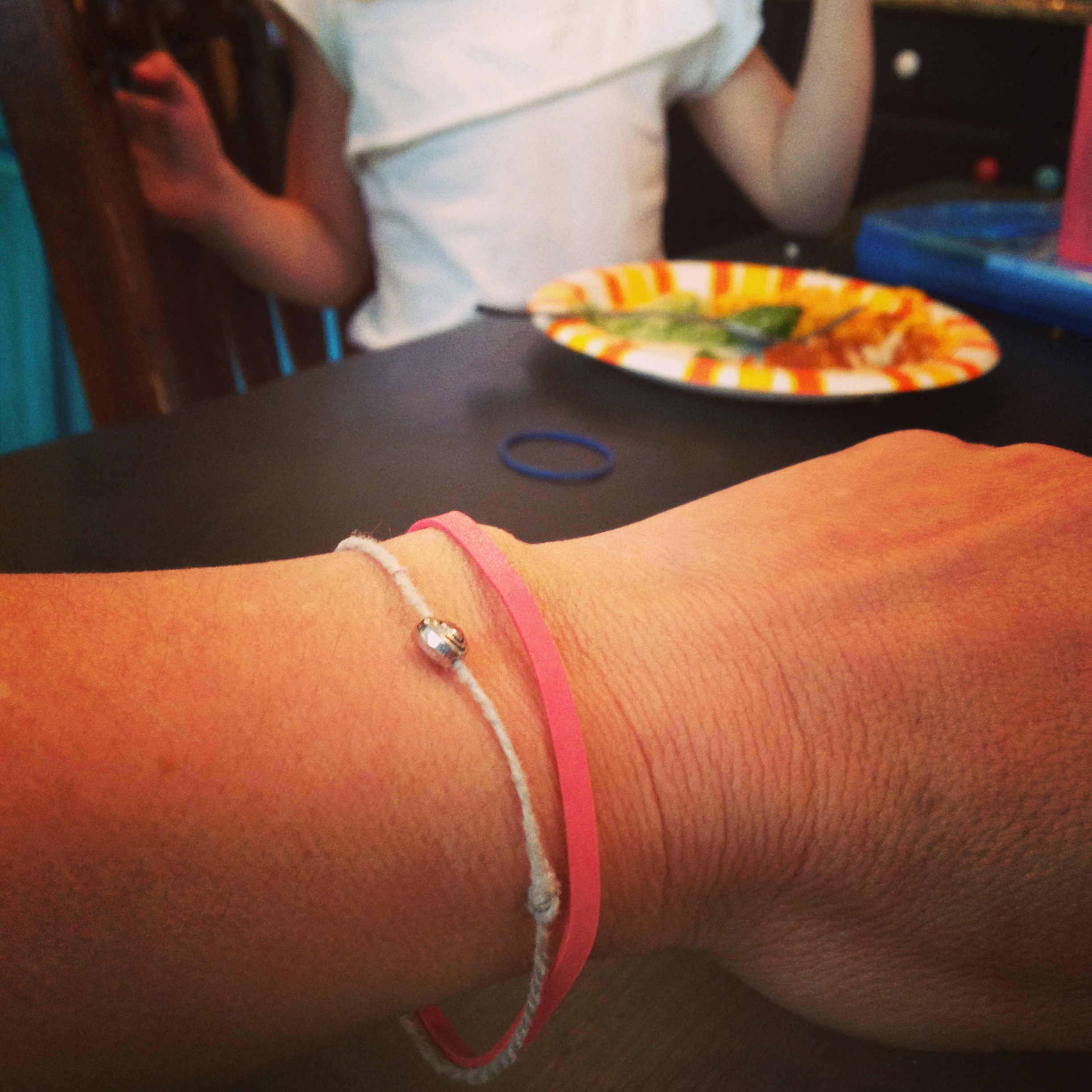
I handed everyone at the table a rubber band and told them to put it around their wrists like a bracelet.

We slipped it on as we finished dinner and I read these instructions from our dinner time devotional:  Every time you grumble or complain, snap your rubber band. 

photo

The day before we memorized John 6:43, “Stop grumbling among yourselves.”

Guess who got the first “pop?”

My kids laughed as the first complaint rolled off my tongue just minutes after reading our assignment. I wasn’t even trying to show them an example of what not to do. I didn’t even know I was going to grumble about cleaning up our dinner mess. Because sometimes complaining is just our second nature.

Ouch.

I rubbed my wrist and watched my words.

We all did. Our 24 hour experiment proved to leave our wrists a little tender and our tongues a little more controlled.

We were listening for the bemoaning and bellyaching. We pointed out when we heard each other complain.

The most important thing this experiment did? It made us think before we spoke. It made us more aware.

Grumbling comes too easy. And when we try not to do it, we see how often we whine or complain–about each other, about our situations, about what we have and what we don’t.

When we really get a good look at what’s underneath all those negative words, we find ingratitude.

Because let’s face it:  we probably all can find something to gripe about. But when we think before we speak, we can always find something to be thankful for.

the happiest people

Try this simple lesson today (and if rubber bands won’t work for you, keep tally marks on the kitchen calendar or cheerios around a yarn bracelet and break one off with every complaint).

 Here’s what a lesson in complaining less does for all of us:

1. It forces us to admit how often we grumble or whine or speak negatively about ourselves or others

2. It causes us to think before we speak

3. It gives us the opportunity to choose gratitude over grumbling.

And while this lesson won’t necessarily rid our homes of complaining (ask me how I know), it will certainly give us something to (think) and talk about.

Dream Parenting: The Natural Ally

At times parenting can be met with rejection by family members. Some of this can be developmental as a child has drives for independence. Some of it can be a self-protection from intimacy. If I don’t get close to you, then I don’t get hurt. Attempts to parent differently and achieve the family of your dreams requires significant risk in these situations.

You biggest ally is already inherent in you and your family members. It is a biologically-based need for attachment. We are social beings and as such, want to connect with one another even it doesn’t appear on the surface to be true. 

If there has been problems in your closest relationships it may mean that patterns of rejection and defenses of self-sufficiency have been created. These are tough walls to knock down. Start off by believing that you have a primal need to connect as you ally in this new strategy. Find ways to make eye contact and smile without using any words. Look for chances to connect with no words of judgement, correction, or instruction. Just make a connection no matter how small or brief. Make it a personal challenge to increase these moments everyday until you start to see the walls starting to crumble. 

Remember that your family wants this naturally. It was how they are designed. If they don’t get it from you, they will seek it elsewhere but they will find it, good or bad. Make it good starting right now. 

The Hormone Surge of Middle Childhood

VIEWED superficially, the part of youth that the psychologist Jean Piaget called middle childhood looks tame and uneventful, a quiet patch of road on the otherwise hairpin highway to adulthood.

Said to begin around 5 or 6, when toddlerhood has ended and even the most protractedly breast-fed children have been weaned, and to end when the teen years commence, middle childhood certainly lacks the physical flamboyance of the epochs fore and aft: no gotcha cuteness of babydom, no secondary sexual billboards of pubescence.

Yet as new findings from neuroscience, evolutionary biology, paleontology and anthropology make clear, middle childhood is anything but a bland placeholder. To the contrary, it is a time of great cognitive creativity and ambition, when the brain has pretty much reached its adult size and can focus on threading together its private intranet service — on forging, organizing, amplifying and annotating the tens of billions of synaptic connections that allow brain cells and brain domains to communicate.

Subsidizing the deft frenzy of brain maturation is a distinctive endocrinological event called adrenarche (a-DREN-ar-kee), when the adrenal glands that sit like tricornered hats atop the kidneys begin pumping out powerful hormones known to affect the brain, most notably the androgen dihydroepiandrosterone, or DHEA. Researchers have only begun to understand adrenarche in any detail, but they see it as a signature feature of middle childhood every bit as important as the more familiar gonadal reveille that follows a few years later.

Middle childhood is when the parts of the brain most closely associated with being human finally come online: our ability to control our impulses, to reason, to focus, to plan for the future.

Young children may know something about death and see monsters lurking under every bed, but only in middle childhood is the brain capable of practicing so-called terror management, of accepting one’s inevitable mortality or at least pushing thoughts of it aside.

Other researchers studying the fossil record suggest that a prolonged middle childhood is a fairly recent development in human evolution, a luxury of unfolding that our cousins the Neanderthals did not seem to share. Still others have analyzed attitudes toward middle childhood historically and cross-culturally. The researchers have found that virtually every group examined recognizes middle childhood as a developmental watershed, when children emerge from the shadows of dependency and start taking their place in the wider world.

Much of the new work on middle childhood was described in a recent special issue of the journal Human Nature. As a research topic, “middle childhood has been very much overlooked until recently,” said David Lancy, an anthropologist at Utah State University and a contributor to the special issue. “Which makes it all the more exciting to participate in the field today.”

The anatomy of middle childhood can be subtle. Adult teeth start growing in, allowing children to diversify their diet beyond the mashed potatoes and parentally dissected Salisbury steak stage. The growth of the skeleton, by contrast, slows from the vertiginous pace of early childhood, and though there is a mild growth spurt at age 6 or 7, as well as a bit of chubbying up during the so-called adiposity rebound of middle childhood, much of the remaining skeletal growth awaits the superspurt of puberty.

“Adulthood is defined by being skeletally as well as sexually mature,” said Jennifer Thompson of the University of Nevada, Las Vegas. “A girl may have her first period at 11 or 12, but her pelvis doesn’t finish growing until about the age of 18.”

The 18-year time frame of human juvenility far exceeds that seen in any other great ape, Dr. Thompson said. Chimpanzees, for example, are fully formed by age 12. With her colleague Andrew J. Nelson of the University of Western Ontario, Dr. Thompson analyzed fossil specimens from Neanderthals, Homo erectus and other early hominids, and concluded that their growth pattern was more like that of a chimpanzee than a modern human: By age 12 or 14, they had reached adult size.

Life for Neanderthals was nasty and short, Dr. Thompson said, and Neanderthal children had to get big fast, which is why they hurtled through adolescence at the equivalent of today’s chapter-book age. Our extreme form of dilated childhood didn’t appear until the advent of modern Homo sapiens roughly 150,000 years ago, Dr. Thompson said, when adults began living long enough to ease pressure on the young to hurry up and breed.

And what an essential luxury item middle childhood has proved to be. “It’s consistent across societies,” Benjamin Campbell, an anthropologist at the University of Wisconsin in Milwaukee said. “In middle childhood, kids start making sense.”

Parental expectations rise accordingly. “Kids can do something now,” said Dr. Campbell, who edited the special issue. “They can do tasks. They have economic value.”

Boys are given goats to herd and messages to deliver. They hunt and fish. Girls weave, haul water, grind corn, chop firewood, serve as part-time mothers to their younger siblings; a serious share of baby care in the world is performed by girls not yet in their teens.

Workloads and expectations vary substantially from one culture to the next. Karen Kramer and Russell Greaves of Harvard compared the average number of hours that girls in 16 different traditional cultures devoted each day to “subsistence” tasks apart from child care. Girls of the Ariaal pastoralists in northern Kenya worked the hardest, putting in 9.6 hours daily. Agriculturalist girls in Nepal worked 7.5 hours a day.

Then you come to the more laid-back lives of the foragers. The researchers focused on the Pumé, a foraging group in west-central Venezuela, where preadolescent girls do almost nothing. They forage less than an hour a day, significantly less than their brothers, and are very inefficient in what little they do. They prefer hanging out at the campsite. “Pumé girls spend their time socializing, talking and laughing with their friends, beading and resting,” Dr. Kramer said.

But most cultures mark the beginning of middle childhood with some new responsibility. Kwoma children of Papua New Guinea are given their own garden plots to cultivate. Berber girls of northern Africa vie to prove their worth by preparing entire family meals unassisted.

In the Ituri forest of Central Africa, Mbuti boys strive to kill their first “real animal,” for which they will be honored through ritualized facial scarring. And in the United States, children enter elementary school, for which they will be honored through ritualized gold starring.

In middle childhood, the brain is at its peak for learning, organized enough to attempt mastery yet still fluid, elastic, neuronally gymnastic. Children have lost the clumsiness of toddlerhood and can become physically gymnastic, too, and start practicing their fine motor skills. And because they are still smaller than adults, they can grow adept at a skill like, say, spear-tossing, without fear of threatening the resident men.

Middle childhood is the time to make sense and make friends. “This is the period when kids move out of the family context and into the neighborhood context,” Dr. Campbell said.

The all-important theory of mind arises: the awareness that other people have minds, plans and desires of their own. Children become obsessed with social groups and divide along gender lines, girls playing with girls, boys with boys. They have an avid appetite for learning the local social rules, whether of games, slang, style or behavior. They are keenly attuned to questions of fairness and justice and instantly notice those grabbing more than their share.

The mental and kinesthetic pliancy of middle childhood can be traced at least in part to adrenarche, researchers said, when signals from the pea-size pituitary at the base of the brain prod the adrenal glands to unleash their hormonal largess. Adrenal hormones like DHEA are potent antioxidants and neuroprotectants, Dr. Campbell said, and may well be critical to keeping neurons and their dendritic connections youthfully spry.

Evidence also suggests that the adrenal hormones divert glucose in the brain to foster the maturation of the insula and anterior cingulate cortex, brain regions vital to interpreting social and emotional cues.

In middle childhood, the brain is open for suggestions. What do I need to know? What do I want to know? Well, you could take up piano, chess or juggling, learn another language or how to ski. Or you could go outside and play with your friends. If you learn to play fair, friends will always be there.


Ron Huxley Reacts: I was intrigued by this topic of this article by the New York Times as middle childhood doesn’t get much press. I am not much on “evolutionary” talk but if you can get by that, you will find this a very enlightening post on the 6 to 12 year old child.

10 Things to Banish from the Dinner Table

Ron Huxley’s Recommends: Here is some good old fashioned advice on how to improve table manners and build better family attachments. Ivillage.com lists ten things to banish from your table:

1. Cell Phones.

2. Salt.

3. Contentious conversation.

4. Unhealthy fats.

5. Corn syrups.

6. Germs.

7. Toys and games.

8. Messy dress.

9. Dangerous dishes.

10. The television!

What do you do to build family unity around the table? Share your thoughts here or post them to us on Twitter and Facebook.

3 Keys to Behavior Chart Success

I used to joke with parents that if they could make a grocery list, they could change a child’s behavior. The idea behind this is that most behavioral change takes parental attention and consistency. The truth is that we are constantly shaping our child’s behaviors every day. And, one might say, they are changing ours too! This is a natural process of interaction. The question is really, what are your shaping? Our you modeling positive habits? Do you reward positive behavior? Shifting our attention away from negative behavior (what you don’t want) and refocusing on positive behaviors (what you do want) can be as easy as making a list or creating a chart.

 Here are 3 keys to successfully changing a child’s behavior with a behavior chart:

1. Have a clear, achievable goal in mind: If you don’t know where you are going, you won’t get there. Don’t confuse the goal by making it too vague or complex. Focus on a specific behavior you WANT to see happen. Don’t write it in the negative. State what you want to see different. Be age appropriate when focusing on change. A 4 year old can’t do what a 14 year old can do.

2. Make it rewarding: The power of a behavior chart is that a child will get a reward for doing what you want. What motivates your child? What can you realistically afford to do? How long will it take to get the reward? Some children need daily, if not hourly rewards. Break a big reward down into smaller rewards if necessary to keep children motivated. The last thing you want is a defiant child who refuses to do a chart because it is too difficult or they feel like they will fail and so they don’t even try. Also, remember the best reward is you! Your smile, hug and words of praise should always be given regardless of any other physical reward.

3. Be open to change: If  the chart is not working, make changes. It is just a parenting tool, not a magical wand. Use the success or lack of it as feedback on how to create the chart. Use family meetings and intimate discussions about what is working for the child. Continue to celebrate any small success or effort. You might find that using a chart changes your parenting time and energy as well. That is good modeling and parenting improvement.