Page 81 of 92

New Definition of Autism May Exclude Many, Study Suggests

The definition is now being reassessed by an expert panel appointed by the American Psychiatric Association, which is completing work on the fifth edition of its Diagnostic and Statistical Manual of Mental Disorders, the first major revision in 17 years. The D.S.M., as the manual is known, is the standard reference for mental disorders, driving research, treatment and insurance decisions. Most experts expect that the new manual will narrow the criteria for autism; the question is how sharply.

The results of the new analysis are preliminary, but they offer the most drastic estimate of how tightening the criteria for autism could affect the rate of diagnosis. For years, many experts have privately contended that the vagueness of the current criteria for autism and related disorders like Asperger syndrome was contributing to the increase in the rate of diagnoses — which has ballooned to one child in 100, according to some estimates.

The psychiatrists’ association is wrestling with one of the most agonizing questions in mental health — where to draw the line between unusual and abnormal — and its decisions are sure to be wrenching for some families. At a time when school budgets for special education are stretched, the new diagnosis could herald more pitched battles. Tens of thousands of people receive state-backed services to help offset the disorders’ disabling effects, which include sometimes severe learning and social problems, and the diagnosis is in many ways central to their lives. Close networks of parents have bonded over common experiences with children; and the children, too, may grow to find a sense of their own identity in their struggle with the disorder.

The proposed changes would probably exclude people with a diagnosis who were higher functioning. “I’m very concerned about the change in diagnosis, because I wonder if my daughter would even qualify,” said Mary Meyer of Ramsey, N.J. A diagnosis of Asperger syndrome was crucial to helping her daughter, who is 37, gain access to services that have helped tremendously. “She’s on disability, which is partly based on the Asperger’s; and I’m hoping to get her into supportive housing, which also depends on her diagnosis.”

The new analysis, presented Thursday at a meeting of the Icelandic Medical Association, opens a debate about just how many people the proposed diagnosis would affect.

The changes would narrow the diagnosis so much that it could effectively end the autism surge, said Dr. Fred R. Volkmar, director of the Child Study Center at the Yale School of Medicine and an author of the new analysis of the proposal. “We would nip it in the bud.”

Experts working for the Psychiatric Association on the manual’s new definition — a group from which Dr. Volkmar resigned early on — strongly disagree about the proposed changes’ impact. “I don’t know how they’re getting those numbers,” Catherine Lord, a member of the task force working on the diagnosis, said about Dr. Volkmar’s report.

Previous projections have concluded that far fewer people would be excluded under the change, said Dr. Lord, director of the Institute for Brain Development, a joint project of NewYork-Presbyterian Hospital, Weill Medical College of Cornell University, Columbia University Medical Center and the New York Center for Autism.

Disagreement about the effect of the new definition will almost certainly increase scrutiny of the finer points of the psychiatric association’s changes to the manual. The revisions are about 90 percent complete and will be final by December, according to Dr. David J. Kupfer, a professor of psychiatry at the University of Pittsburgh and chairman of the task force making the revisions.

At least a million children and adults have a diagnosis of autism or a related disorder, like Asperger syndrome or “pervasive developmental disorder, not otherwise specified,” also known as P.D.D.-N.O.S. People with Asperger’s or P.D.D.-N.O.S. endure some of the same social struggles as those with autism but do not meet the definition for the full-blown version. The proposed change would consolidate all three diagnoses under one category, autism spectrum disorder, eliminating Asperger syndrome and P.D.D.-N.O.S. from the manual. Under the current criteria, a person can qualify for the diagnosis by exhibiting 6 or more of 12 behaviors; under the proposed definition, the person would have to exhibit 3 deficits in social interaction and communication and at least 2 repetitive behaviors, a much narrower menu.

Dr. Kupfer said the changes were an attempt to clarify these variations and put them under one name. Some advocates have been concerned about the proposed changes.

“Our fear is that we are going to take a big step backward,” said Lori Shery, president of the Asperger Syndrome Education Network. “If clinicians say, ‘These kids don’t fit the criteria for an autism spectrum diagnosis,’ they are not going to get the supports and services they need, and they’re going to experience failure.”

Amy Harmon contributed reporting.

Ron Huxley’s Reply: The DSM 5 (Diagnostic Statistical Manual) is one of those necessary evils. We need it for mental health professionals to communicate with one another and for qualifications for reimbursement through insurance companies or treatment services. We hate it because it labels people and can stigmatize them for life. How have you loved or hate your child’s diagnosis? Share with us by clicking the reply link.

> Get more power parenting tools as a member of our Parenting Toolbox “Inner Circle” at http://parentingtoolbox.com/pages/parenting-membership

Childhood Aggression Predicts Health Care Use Later in Life

Ron Huxley Responds: This repost from Brain Blogger outlines how children who are chronically aggressive at children has increased risks of health issues later in life. The most obvious reason for this is that angry children turn out to be angry adults, which has serious social and health costs. The 15-year longitudinal study revealed that aggressive lifestyles led to increase drug use, alcohol dependency, injuries and overall poor health. Anger takes a toll on our lives!

The blog states: “Young children can be physically aggressive, owing to a combination of instinct, temperament, cultural and social influences, and (sometimes) not getting what they want. But, by the time most kids reach preschool age, they have learned to control their aggression with coping skills and relational techniques. However, children who do not learn to regulate aggressive behavior are at risk for physical and mental health issues, as well as serious patterns of aggression and violence, as adults.”

Children have to learn social skills. They will hit, bite, or knock other children down as a very primal solution to who “gets to play the toy” or any other challenging social situation. Parents have the responsibility to model appropriate social behavior and teach children common social skills.

Homes with lots of stress and conflict can make teaching children how to get along with others as they look for a release valve for their anxiety. This can turn inward or outward depending on the temperament of the child. The solution to this, while not always simple, is to have healthier marriages and improve family communication.

How have you managed anger in children? What tips can you share on teaching social skills?

> Get more power parenting tools in our Parenting “Inner Circle” at http://parentingtoolbox.com/pages/parenting-membership
New Kindle eBook: “101 Parenting Tools”

We are excited to announce our latest ebook formatted for the Amazon Kindle: 


Click here to get it hot off the electronic press!

Parents need the right tools for the job. Get 101 Parenting Tools from family therapist Ron Huxley and his popular ParentingToolbox.com website. This 53 page ebook gives an A-Z guide on how manage the toughest parenting problems. In addition, each tool lists the age of the child and parenting style (balance of love and limits) it is best suited for…get it and start taking back control of your home today!

Teenage Drug Use: Preventing and Treating

Teenage drug use is a severe problem in our society. It is a big concern for parents with very few clear directions on how to parents should prevent it from occurring in the first place. This is due to the fact that it is a subject that is considered “taboo” in our society leading to parents avoiding talking about the risks and dangers. It should be no surprise, then, that over-indulgent parents tend to have children with the highest drug abuse problems.

The problem of teenage drug abuse is huge.  According to the US Center for Disease Control, approximately 75% of teenagers have tried alcohol, 35% of teens have used marijuana at least once and almost 20% of teens currently use it regularly. Reports from the National Survey on Drug Use and Health state those 5.2 million youths ages 12 and older used non-medical pain killers within the month prior to being surveyed.  It is reported that drug use has affected the lives of nearly 40 percent of all teenagers in America. This would include health problems, driving under the influence, highway crashes, arrests, impaired school and job performance. The drugs that teenagers most often use range from Alcohol, LSD, Marijuana, and tobacco products, to name just a few. 

Signs that your teenager might be using drugs include: loss of interest in family activities, sudden increase or decrease in appetite, disrespect for family rules, disappearance of valuable items or money, lying about activities, verbally or physically abusive interactions between the teen and the rest of the family, secretive behaviors, and/or excuses for bad behavior. Other warning signs include missing prescription drugs, finding cigarette rolling papers, pipes, small glass vials, plastic baggies or remnants of drugs, use of incense or room deodorant to hide smoke or chemical odors, and using breath mints or mouth wash to cover up the smell of alcohol.

If your child has any of these signs, it is important to address those concerns directly. Don’t be in denial or fear your child’s anger at your questions or concerns about drug use. Better a little negative reaction from your teen then allowing a problem to move from use to abuse and long-term addiction or death. Permissiveness is as big a factor as peer pressure when it comes to why teenagers use drugs or alcohol.

As much as teenagers attempt to reject being like their parents, they do view their actions as role models. The positive side of this is that parents who handle the problem with directness and empathy will have a better chance at treating the teenager’s drug use and maintaining a healthy relationship. The negative side is that parents who abuse drugs and alcohol themselves cannot preach what they do not practice. Additionally, parents who react in an overly hostile manner toward their children will reinforce the very problem they are trying to stop.

Protective factors that will help parents prevent or treat drug use include learning better family communication skills, appropriate discipline styles, firm and consistent rule enforcement, and other positive family management approaches. Research confirms the benefits of talking to children about drugs, monitoring their activities, getting to know their friends, understanding their problems and concerns, and being involved in their school activities.

If you are a parent that is looking for teenage drug treatment and teenage rehab centers there are many options available.

Refer to sites like http://www.rehabs.com to see if there is one near where you live.

You can look into detoxification, residential rehabilitation, an intensive outpatient program, or an aftercare/continuing care program.

For the successful fruition of the drug treatment program the role played by the family is very vital. Drug addiction is a problem that affects not only the individual but also the family members. The family should act as a support system for the recovering patients. For these teenagers to be able to stay clean and free of drugs they need the involvement and support of their family.

An addicted teenager must be given timely and proper help from a professional source to take care of their condition. For proper treatment a correct diagnosis of the condition is very vital at the beginning. During the recovery process at a teenage drug treatment center a patient goes through a treatment procedure that suits them and their requirements. Drug abuse has several physical and emotional challenges which must be dealt with in a highly professional and caring manner.

What’s New in Our Parenting App?

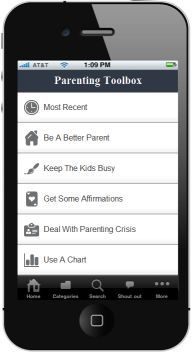
Have you downloaded our freee parenting app yet? NO! Why not? It offers parents on the go helpful advice on management crisis situations, creative ideas to keep the kids busy, much needed affirmations and our regular Parenting Toolbox blog posts.

Click here for more information on our FREE parenting app!

Now you can list your local parenting class or event too. Just send us the details of your next group, class or conference for parents to rehuxley@gmail.com

Why Our Preschoolers Are Couch Potatoes

Http://i.huffpost.com/gen/455811/thumbs/scouchpotatokidslarge300.jpg

Our preschoolers are couch potatoes.

I’m serious. They really are – at least the ones in childcare or some sort of school program, which is three-quarters of the US kids ages 3-5. They spend 70-83% of their time being sedentary – and that’s not including meals or naps. In fact, they spend only about 2-3% of their time in active play.
To find out why our little kids are mostly sitting, researchers at Cincinnati Children’s put together focus groups of different childcare and preschool programs in the area and asked them why the kids weren’t more active. The study, released this week, is in the February issue of Pediatrics.

For some providers the issue was financial: they couldn’t afford much outdoor (or indoor) play space or equipment. But even when they could afford it, the researchers found that the equipment they had, chosen for safety reasons, wasn’t all that interesting to kids (face it, those little slides are boring). To make matters worse, the staff often discouraged kids from being active for fear of injury (sometimes at the request of the parents). And the centers felt pressure to get as much academics into the day as possible.
Why do we care, if they are safe and learning? Isn’t that what we want for them when they go to preschool?

Hmm … not necessarily.
Kids need active play. They need it for the exercise; a third of US kids are either overweight or obese. And what’s particularly worrisome about that statistic (besides the fact that it’s likely to rise given our TV and Super-Size culture) is that more and more studies are showing that fat kids grow into fat adults. If we don’t act now, we could literally be dooming our children to diabetes, heart disease, cancer, and everything else obesity brings.

Kids need play for more than that, though. They need it to learn what we call “executive function” – the organizing principles of behavior. Through play they learn to share, negotiate and solve problems. They learn to be creative and use their imagination. They learn to focus and finish tasks – and they learn empathy. Play isn’t just goofing around. It truly is the work of childhood.
It’s easy when your kids are small to get sucked into the paradigm of keeping them totally safe and trying to turn them into Einsteins. It’s our culture, after all – the culture of keeping kids in bubbles (God forbid they get stitches!), and of achievement. We don’t want them to just enjoy books, we want them to start reading them really early so that they will go to an Ivy League college. As for play, we think of it as a waste of time. If they are going to be active, we want them to join teams so they can get really good at a sport and get an athletic scholarship. Starting early on this stuff is key, we are told.

(It was really different when I was young, which is why I spent my childhood in trees).
Okay: reality check here, folks. About 1% of high school athletes get athletic scholarships to college. And less than 1% of kids who go to college graduate from an Ivy League school. Starting early doesn’t guarantee anything – in fact, often it hurts more than it helps. And despite what the Occupy people might say, I really don’t think that 99% of us are miserable.

Stop for a moment. What do you really want for your child when he or she grows up? I am hoping that the answer is that you want them to be healthy, happy, kind and self-sufficient adults.
To make this happen, we need to get over ourselves and let our kids be kids.

So when you are looking for a program for your preschooler, look for places where the kids really play – inside and out. Look for places with the fun stuff to play on and open spaces where kids can run. Look for dress-up clothes and blocks and finger paint. Sure, you want somewhere that encourages learning – but they should encourage singing and dancing and making pretend dinner just as much.
And don’t be afraid to let your kid climb trees. I had a wonderful time up there – and still made it to med school.

Ron Huxley’s Comments: This post takes a balanced look at a common (if not all too common) problem of the lack of adequate play/exercise in children. It is easy to judge parents for this problem but many homes have to deal with unsafe environment or have no outside for children to play. The helpful insight of this article is that it illustrates the psychological value of play. The idea of “executive functioning” is lacking in many children and the author correctly pins this crucial development on child’s play.

How have you encouraged your children to play? Get more power parenting tools by joining our Parenting Membership Club at http://parentingtoolbox.com/pages/parenting-membership

Change the Way You Deal With Anger

Did you have a parent who was out of control when they got angry? Are you afraid if you express your anger, you will get out of control? Learn a healthy way of expressing and learning from your anger.

There is much to learn from anger, yet many people are afraid of this feeling because they don’t know how to express anger in ways that are helpful rather than harmful. I teach a process at my weekend “Inner Bonding” workshops called “The Anger Process.” This powerful process, which is described below, is not only for releasing pent-up anger in harmless ways, but for discovering what your responsibility is in a conflict with another person.

Often, when I describe this process in a workshop, some people get anxious and want to leave. They are afraid of anger and of expressing their anger. This is invariably because they come from a family where one or both of their parents or other caregivers were angry in a mean, violent way – a way that caused harm to others. These people are so afraid of being like their mother or father that they repress their anger, taking it out on themselves instead of others.
Neither dumping anger on others nor repressing it and taking it out on yourself is healthy. Anger expressed in these ways is about controlling rather than learning. Venting anger on another is about controlling through intimidation and blame. Anger dumped on yourself is about controlling feelings that are harder to feel than anger, such as fear, anxiety, loneliness, heartbreak or helplessness over others.

Anger is an important emotion. It informs us that we are thinking or behaving in ways that are not in our highest good. You may have been taught that other people’s behavior causes your anger, but this is generally not true. Others may behave in ways that you don’t like, but your anger at them is frequently a projection of how you are not taking care of yourself – a way to control them rather than take care of yourself.

It’s important to differentiate between blaming anger and justified anger, which can be called outrage. Outrage is the feeling we have when there is injustice, such as seeing someone abuse a child. Outrage moves us to take appropriate, loving action in our own or others behalf.
Blaming anger comes from feeling like a victim and gets us off the hook from having to take personal responsibility for ourselves. This anger does not lead to learning or to healthy action.
The anger process is a way of expressing anger that leads to learning and growth. When people in my workshop want to leave rather than do the process, I explain that it is very important for them to reassure the frightened child within that this anger is not like their father’s or mother’s anger – it is not being expressed with the intent to control. It is being expressed with the intent to learn.

The “Anger Process” is a 3-step process that is done when you are alone:

  1. Fully express anger toward a person you are presently angry with (not in their presence!). You can yell, call names, kick something, and pound with fists on a pillow or with a bat or towel, but do not harm yourself.
  • Ask yourself who this person reminds you of in the past – parent, teacher, sibling, friend – and then let the angry part of you again fully express the anger.
  • Finally – and this is the most important part – allow the angry child within to express his or her anger at you, the adult, for all ways you are not taking care of yourself in this conflict, or ways you are treating yourself badly, or treating yourself like the other person is treating you.
  • Step three is the most important part, because it brings the issue home to personal responsibility. If you just do the first two parts, you are left feeling like an angry victim. The anger that comes from being a victim is a bottomless pit, and will never lead to learning and resolution.

    Once you understand that you can express your anger with an intention to learn, your fear of your own anger will go away. You don’t have to repress your anger in order to not be like your parents.

    –>

    This Blogger’s Books from

    Amazon


    Healing Your Aloneness: Finding Love and Wholeness Through Your Inner Child

    Ron Huxley’s Resolutions: Over the years I have trained people on how to manage their anger and there is one big truth that I try to get across: Anger management is life management. As we enter into a new year, stop focusing on managing your emotions…emotions don’t want to be managed. Start focusing on life changes. Get out of the abusive relationship. Get some professional help through a marriage counselor, psychologist or doctor. Start getting healthier. Do whatever it takes to change your life and you will see anger lose its hold on you.

    Click on the link to the right to join our 12 year long anger management group online –>

    Join our Parenting “Inner Circle” and get exclusive tools to deal with anger in the home –>

    Are You A Non-Forgiver?

    A growing body of research demonstrates that chronic negative emotions such as bitterness, cynicism, mistrust, and hostility – all expressions of not forgiving – sap your energy and undermine your mental and physical well-being. A recent study found that subjects who were instructed to rehearse unforgiving responses to a violation experienced elevated blood pressure and increased arousal of the sympathetic nervous system.

    If these physiological effects are chronic and intense, they could compromise your immune system, increasing the risk of cancer or infectious diseases, or building calcifications in the coronary arteries leading to cardiovascular disease.

    Refusing to Forgive may isolate you not just from the person who hurt you but from those who have done you no harm. Mistrust is like blood seeping from a wound, staining everything it touches. Morbidly absorbed in the injury, you may push everyone away, even those who care for you and want to help you heal. Unable to open up to them, or even admit that you welcome their support, you’re likely to stand firm but alone.

    Stabilizing and strengthening yourself requires more than a shot of indignation. You need to turn inward and make sense of the injury so you can go on with your life. You need to reach out and develop more nourishing connections with those who are there for you, or who would like to be there for you. There’s a difference between nursing your wounds and binding them, a difference between destructive rage and constructive anger. When you don’t know the difference, not forgiving becomes your reason for being.

    Learning To Forgive May Not Be Easy

    Giving up the brute arrogance of not forgiving is hard work. You need to dismantle your pride, learn humility, and stop blaming others for your share of the problem.  Most of us have suffered violations that seem unpardonable. Refusing to Forgive seems to demonstrate our courage and wisdom – our strength, our self-respect, our right to justice.

    The truth is, however, that refusing to forgive offers only a superficial balm for our wounds. It may give us a temporary rush of power, but it doesn’t permit a clear, measured, self-sustaining response. It doesn’t release us from our preoccupation with the offender or provide anything more than hatred to rebuild our injured pride. It gives us a veneer of protection but doesn’t really make us any less fragile or more fulfilled as human beings.

    In the end, Not Forgiving is just that – a negative force, a way of not being engaged in life. It is a sorely limited, constricted, hard-hearted response to injury that feeds on hate and humiliation and diverts us from the greatest challenge of all – to make peace with ourselves so we can feel whole and happy to be alive.

    Pig manure deters teenagers from drinking in the woods – Telegraph

    Ron Huxley Humor: OK, I am not a fan of this kind of discipline tactics but I did find it very humorous.

    Youths have turned their noses up at a woodland drink and drugs den after it was spread with pig dung. iddlesbrough Council came up with the cheap but effective method of combating anti-social behaviour in woods at Coulby Newham.

    It said residents had complained about young people smoking drugs in the area and, although there is a slight smell from the pig manure, locals “would much rather have a pong than a bong”.

    Elderly people nearby had been upset by youngsters congregating in the woodland between Willowbank and Stainton Way to drink and smoke.

    Council staff thinned out the trees so the area was more visible from paths, then spread a thick layer of pig manure to deter the youngsters.

    A council spokesman said: “Following complaints, an inspection of the area revealed it was being used to drink alcohol and take drugs, as paraphernalia known as bongs were found.”