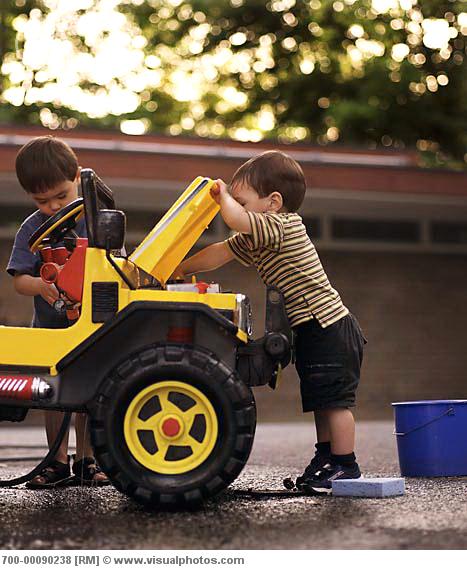
You didn’t yell at your child when they fell down when they were learning to walk. You celebrated each step. Why do we yell at them as they are learning more complicated things like social interactions and human responsibilities? Celebrate the steps of success not the failures.
Page 52 of 92

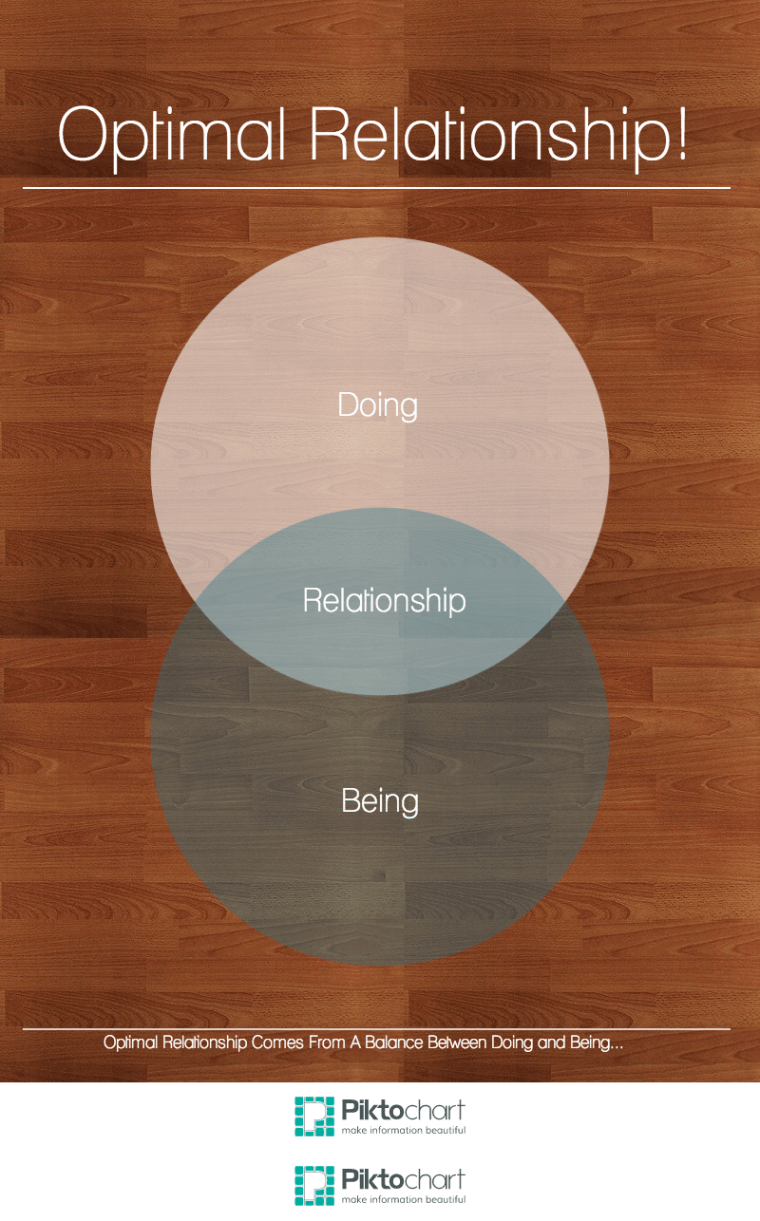
Optimal Relationships have a balance between doing and being. Are your relationships dry and boring? Maybe there is too much doing and business and not enough talk about dreams, thoughts, and feelings. Are you filling like your relationship is not productive and stuck? Maybe more action and planning is needed? Find that balance by setting boundaries on when and what you talk about together to achieve more balance in your relationships today.

Dependent or Dependable Children?
by Ron Huxley, LMFT
When children enter the world they are completely dependent on big people for everything. Over time they become more independent. This is seen most dramatically in various neurological growth spurts during the “terrific two’s” and “thrilling teen” years. It can be a time of challenging parental authority. Children need learn to do things on their own, make important decisions, and establish a unique identity. These are also trying times and worrying times for parents and may cause us to not let go of a our grip.
The goal is not to keep a child dependent or just teach independence although both are part of life. We will always be dependent on someone for something so purely teaching independence is just part of the goal. A more realistic pursuit is to teach our children to be dependable. This means that a child is worthy of trust and has integrity in life and it will be one of the most important survival skills (and arguably one of the most lacking) needed for a successful adult life.
Family Dinners May Help Teens’ Mental Health
A recent study suggests that family dinners could be good for many teens’ mental health.
Researchers found that this type of regular dinner pattern could help prevent bullying and cyberbullying, which occurs in about 1 in 5 adolescents.
Unlike traditional bullying that can be physically dangerous, cyberbullying also carries harsh mental consequences that can directly affect the risk of certain mental health issues. Researchers studied the association between cyberbullying and mental health and substance problems to determine how family dinners could help out.
For the study, researchers examined survey data on 18,834 students (ages 12-18) from 49 schools in a Midwestern state. The authors measured five internalizing problems (anxiety, depression, self-harm, suicide ideation and suicide attempt), two externalizing problems (fighting and vandalism) and four substance use problems (frequent alcohol use, frequent binge drinking, prescription drug misuse and over-the-counter drug misuse).
Results showed that close to 19 percent of the students reported that they had been a victim of cyberbullying during the previous 12 months. However, researchers also found that family dinners appeared to help moderate the relationship between this issue and other related problems.
“Furthermore, based on these findings, we did not conclude that cyberbullying alone is sufficient to produce poor health outcomes nor that family dinners alone can inoculate adolescents from such exposures,” the researchers noted, in a news release. “Such an oversimplified interpretation of these associations disregards other exacerbating and protective factors throughout the social environment. Instead, these findings support calls for integrated approaches to protecting victims of cyberbullying that encompass individual coping skills and family and school social supports.”

Are you a Perfect Parent?
by Ron Huxley, LMFT
How many of the parents, reading this column, are perfect
parents? None? Well, how many of the imperfect
parents, reading this column, have perfect children? Still
none? While it may be that perfect parents don’t need to
read this column, I think the real truth is that there are no
perfect parents or perfect children.
If that is true, then why do so many parents act as if there is
such a being as the “perfect parent” or “perfect child?"
To illustrate my point, try completing the following
sentences. Just say the first thing that comes to mind:
1. A good parent always… 2. Good children should…
3. As a parent, I must… 4. My children ought to be more…
5. If I were more like my own parents, I would be more…
If a parent falls short of these standards, and so, is not a
"good” parent, what does that leave the parent to be?
Parents are left with the belief that he or she is a “bad"
parent. These beliefs are responsible for why parents feel
so out of control and powerless in their parenting roles.
Parents need more realistic beliefs about parenting.
Realistic Beliefs about Parenting
Beliefs are expressions of parents’ values about
themselves, other people, and the world. Unrealistic beliefs
create a feeling of demand that pushes and drives parents
unnecessarily where realistic beliefs create a feeling of
inner stability, even when circumstances aren’t always
stable.
One way to create more realistic beliefs is to evaluate the
evidence for your unrealistic thoughts about parenting. Ask
yourself these questions: What law states that a child will
always listen and be respectful? What evidence really
suggests that all parents must be available to their children
at all times? What edict states that I must be perfect?
For one day, make a list of all the negative thoughts that
come to mind as you go about your parenting duties. At the
end of the day, look over the list and write out alternative,
positive counter-thoughts. Whenever the negative thoughts
come up, immediately state the alternative thought to break
its power over you. If it is too hard to remember them all,
pick one or two of the negative thoughts that create the
most interference in your parenting and counter those only.
Do that for about a week and then move down the list to the
others.
Changing what you say about your parenting will change
how you feel about your parenting. Try this experiment:
complete the following incomplete sentences and notice the
emotional difference between these and the first list.
1. A responsible parent always… 2. Good children
sometimes… 3. As a parent, I can be… 4. I desire my
children to be more… 5. If I were like my own parents, the
positive qualities I would like to have…
Only one word was changed in each of these sentences
and yet it dramatically changes how you think and feel. If
you are going to accept the fact that you are imperfect then
you will have to eliminate "perfection” language from your
thoughts and words. You will need to accept the fact that
you are acting “good-enough.” This doesn’t mean that you
shouldn’t strive for more out of yourselves or your child.
Self-improvement is not the same as expecting perfection.
“The Courage To Be Imperfect”
It takes courage to be a “good-enough” parent. This is what
the child psychiatrist, Rudolph Driekurs, calls “the courage
to be imperfect.” While there are plenty of perfect parenting
standards to fall short of, there are no rules for how to be
an imperfect parent. Here are ten un-commandments for
developing the “courage to be imperfect”:
1. Children should be encouraged, not expected, to seek
perfection. 2. Accept who you are rather than try to be
more than or as good as other parents. 3. Mistakes are
aids to learning. Mistakes are not signs of failure.
Anticipating or fearing mistakes will make us more
vulnerable to failure. 4. Mistakes are unavoidable and are
less important than what the parent does after he or she
makes a mistake. 5. Set realistic standards for yourself and
your child. Don’t try correcting or changing too many things
at one time. 6. Develop a sense of your strengths and your
weaknesses. 7. Mutual respect, between parent and child,
starts by valuing yourself. Recognize your own dignity and
worth before you try and show your child their dignity and
worth. 8. Unhappy parents are frequently discouraged,
competitive, unrealistic in their standard for themselves and
their children, over ambitious, and unbalanced in their love
and limits. 9. High standards and expectations are
frequently related to parents’ feelings of inferiority and
lack of adequate parenting resources. 10. Parents need to
develop the courage to cope with the challenges of living,
which means, they must develop the “courage to be
imperfect.”

How do you feel about your child today?
Are you feeling love or are you feeling anger or sadness or disappointment?
Our feelings are responses to events that occur in us and around us. They are not definitions of the relationship status or the amount of affection we can direct towards our children. When they mess up and they are good mess makers, we never change our affections toward them regardless of our emotional state.
Emotions come and go. The word emotion comes from the French term “to stir up” and stir up they do but they also settle down. Our emotional statement is based on our state of mind about our intentions to love our children in unconditional ways no matter what emotions have been stirred up.
The good news about emotions and relationships is that they are new every day. Today is a new day to start fresh and re-store new emotional experiences. Don’t let emotions drag yesterday into todays thoughts and actions. Yesterday is a drag…it drags down your ability to parent from a fully charged emotional purpose to love and cherish your children.
Give yourself permission to feel freely, in love, with your child today.

Parents need to stop thinking about how to “fix” their children’s behavior problems and begin to look at how to “re-source” them instead. Stop trying to stop tantrums or talking back and start re-connecting them to the source of the problems. What is your child needing that he or she cannot get or getting that he or she doesn’t want? Decode and recode your children to add social skills, self-soothing, understanding, competence, attention, love, affection, security that is driving the behaviors in the first place.
It is time to put away punishment and use discipline which is to disciple or teach/guide a child to appropriate behaviors. The goal is not “stop irritating mommy” today but learn to live life successfully tomorrow! You can never deal with a negative by using a negative and expect a positive outcome.
Visualize who and what your child is becoming and connect them to that source of choice-making, problem-solving, character.