Page 43 of 92

Parenting And The Serenity Prayer

Parenting and the Serenity Prayer: Asking for Help

By Ron Huxley, LMFT

If parenting could be summed up in a single prayer, that prayer might be “The Serenity Prayer”:

Lord, grant me the serenity to accept the things I cannot change, the courage to change the things I can, and the wisdom to know the difference.

In this 5 part series, we will explore the essential points of this prayer and how it can help parents find grace and peace in the family relationships. 

Asking for Help: 

If parents want to find more balance in their relationships with their children they must be willing to ask for help! Whether that help is from God, a higher power, or other people, parents will need support to help the through the many challenges of parenting.

A common denominator of stressed-out parents is trying to parent in isolation; they do not realize that they need help or can’t find healthy support and in moments of crisis, do things they wish they didn’t do and say things they wish they didn’t do. Parenting from a place of regret is not a “happy place to be.” Additionally, it may result in child abuse and neglect that will cause the legal system to become involved in the families life. This is not the type of help you want to happen if you can help it. 

In other to accept help parents have to accept that parenting is difficult. I know that seems obvious to most of us but many parents believe they can do it all or feel shame if they don’t do everything perfectly which keeps them from seeking support. 

Support can come from natural and artificial sources. Natural sources would including the help and advice of family and friends. Aunt Melba might come and watch the kids so mom and dad can get our for a break once in a while. Grandpa John might offer some helpful advice about managing teenagers. Unfortunately, not all family advice is helpful like when they suggest you get a stick and start beating some butts. The idea of taking more authority in the home could be a great idea but physical abuse will get you in trouble. 

When natural help is not helpful, parents need to find artificial help in the form of professionals. Family therapy or parenting classes may be what parents need to shift the home from crisis to calm. Some cost may be involved in this but you get what you pay for, right? There are lots of non profit organizations in every community that will offer inexpensive, if not free, help to parents. 

Take action: What kind of help do you need the most? Who in your natural network of family and friends could help you? If there are not natural helpers available to you, who in your community could provide you will support? Let go of feelings of embarrassment and do what is necessary to get the help you need. 

Come back to RonHuxley.com to read the other 4 parenting tools based on the Serenity Prayer…

diyparent:

TheraPlay Helps Children Overcome Trauma and Increase Attachment

Ron Huxley, Licensed Marriage and Family Therapist is trained in TheraPlay for Families and Child Therapy Groups. To arrange a private session with Ron, go here: https://ron-huxley-lmft.clientsecure.me/client_portal .

“Theraplay is a structured play therapy for children and their parents. Its goal is to enhance attachment, self-esteem, trust in others, and joyful engagement. The sessions are designed to be fun, physical, personal, and interactive and replicate the natural, healthy interaction between parents and young children. Children have been referred for a wide variety of problems including withdrawn or depressed behavior, overactive-aggressive behavior, temper tantrums, phobias, and difficulty socializing and making friends. Children also are referred for various behavior and interpersonal problems resulting from learning disabilities, developmental delays, and pervasive developmental disorders. Because of its focus on attachment and relationship development, Theraplay has been used for many years with foster and adoptive families.

Program Goals:

The goals of Theraplay are:

Increase child’s sense of felt safety/security
Increase child’s capacity to regulate affect
Increase child’s sense of positive body image
Ensure that caregiver is able to set clear expectations and limits
Ensure that caregiver’s leadership is balanced with warmth and support
Increase caregiver’s capacity to view the child empathically
Increase caregiver’s capacity for reflective function
Increase parent and child’s experience of shared joy
Increase parent’s ability to help child with stressful events”

TheraPlay is considered to be an Evidenced-Based Approach for Family Therapy: http://www.cebc4cw.org/program/theraplay/detailed

Attitude Awards for Your Children

by Ron Huxley, LMFT

Have you ever received an award for “outstanding achievement” or completion of some difficult task or milestone? How did it feel to get that award? Did you place it proudly in your home or office where you and everyone else could see it? 

Your children like to get awards too. Trophy’s, certificates, ribbons, and cards can create personal satisfaction. They reinforce our sense of uniqueness and give attention to our gifts and talents and hard work. Try giving your child an award for good attitude. This isn’t for cleaning their room or getting an A on a test. That is a good time for an award as well but attitude awards focus more on the inner qualities that you want to see more of in your children. Giving an unexpected award for goodwill, kindness, generosity, teamwork and other character traits will bring those qualities to the forefront more often. Your child might not be the kindest person in the family. All the more reason to give them a award for any effort in this direction. Anything attitude and behavior you reinforce in a child will reproduce in their life and anything you ignore will decrease. Be sure to use sincerity and surprise to make the award more impactful. 

Bossy Children

by Ron Huxley, LMFT

Are you tired of power struggling with your children? Do they believe they are the parent and boss their siblings around (and maybe you too)? Many children have a natural leadership tendency that need parents to direct in a healthy, non-annoying direction. 

Try playing a game I call “Follow the Leader” to create more democratic relationships. Invite children to take turns leading the way or overseeing an activity to give them more focused leadership skills and then allowing the natural, low energy followers a chance to be in charge. If you are taking a walk around the block or going into the store, have one child direct the rest of the group or spice it up and have them walk in a “funny way” that everyone has to emulate. It’s goofy but it will reign in those high energy children by making a daily challenge fun. Perhaps the leader can choose a song to sing in the car on the way to school or pick the board game for the night. Choose a day of the week that each child gets to pick out the book for bed time or the desert after dinner. After a while each child will know what day is there day and the group will manage itself (instead of mom or dad playing mediator). Even the quiet ones will assert: “This is my day to pick, not yours.” As the parent, you can also state: “This is your sisters day to pick the desert. Your day is tomorrow.” This will provide more parenting power. The game/rule/day will be the bad guy, not you. It is easy to argue with you and hard to argue with the “rule.” It also eliminates the dreaded “because I said so” statements. No one wins with that statement!

Strong willed children will still want to dominate but you have to set a new, fairer precedent that allows everyone a chance to pick, talk, control. As the parent, you guide your children with this game/parenting style and step out of the emotional tug-o-war. Use this tactic whenever the bossy child starts to become the dictator. Be creative with the game. Short cycles taking turns might be necessary to prevent meltdowns and don’t let those low energy children give up their turn to the more dominant ones. It is easy for natural followers to let others take charge but they need to be empowered too! 

Overcoming Selfishness

by Ron Huxley, LMFT

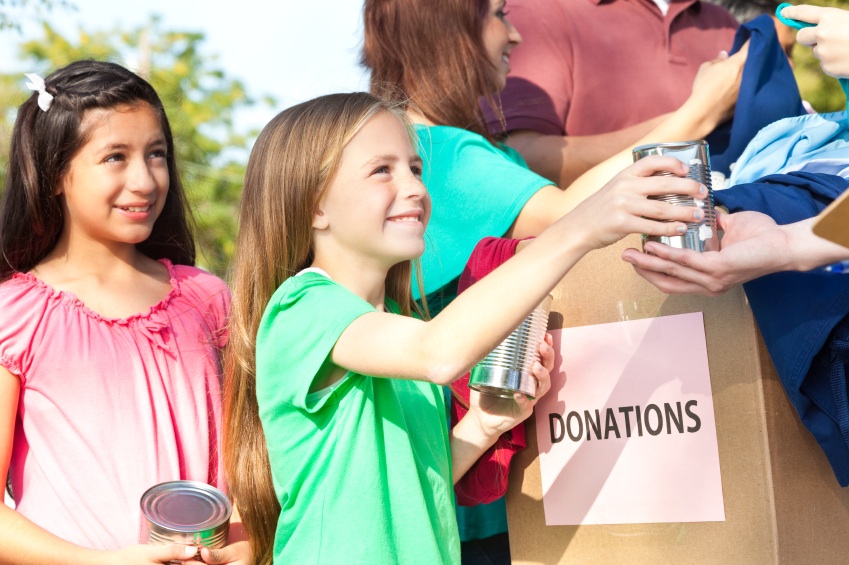
A lot of parents feel their children are selfish and mean to others. No one wants to raise a bully or narcissist. Fortunately, parents can use volunteerism to turn the tide on entitled behavior. 

When we help others we increase our capacity to empathize with others. You could even go so far as to say we increase our spiritual development. By the time your child reaches the age of 5 they are fully able to understand the hurts, needs, and problems of others. Parents can model helpful behavior and deal with children’s selfishness by volunteering to help others less fortunate. 

Helping does not mean write a check although that can be a big help too. In this context I am talking about talking the family out to a local community non-profit or special event to volunteer your time and talents. Let children offer suggestions about what they would like to do in the community. What cause would they like to get most involved with? You may be pleasantly surprised by how creative and genuine children can be when asked for their thoughts. Let the children help contact the organization or event and give choices of things they can do to help if there are choices. Take time after to reflect on what they got the most from it, what new insights did they gain, and how do they feel about themselves. 

Four Steps for Working With Trauma: An Interview with Bessel van der Kolk

Step 1: Start with Self-Regulation

Dr. van der Kolk: I would say the foundation of all effective treatments involves some way for people to learn that they can change their arousal system.

Before any talking, it’s important to notice that if you get upset, taking 60 breaths, focusing on the out breaths, can calm your brain right down. Attempting some acupressure points or going for a walk can be very calming.

Dr. Buczynski: So this is learning to modulate arousal?

Dr. van der Kolk: Yes, and there’s alarmingly little in our mainstream culture to teach that. For example, this was something that kindergarten teachers used to teach, but once you enter the first grade, this whole notion that you can actually make yourself feel calm seems to disappear.

Now, there’s this kind of post-alcoholic culture where if you feel bad, you pop something into your mouth to make the feeling go away.

“The issue of self-regulation needs to become front and center in the treatment of trauma.”
It’s interesting that right now there are about six to ten million people in America who practice yoga, which is sort of a bizarre thing to do – to stand on one foot and bend yourself up into a pretzel. Why do people do that? They’ve discovered that there’s something they can do to regulate their internal systems.

So the issue of self-regulation needs to become front and center in the treatment of traumatized people. That’s step number one.

Step 2: Help Your Patients Take Steps Toward Self-Empowerment

The core idea here is that I am not a victim of what happens. I can do things to change my own thoughts, which is very contrary to the medical system where, if you can’t stand something, you can take a pill and make it go away.

The core of trauma treatment is something is happening to you that you interpret as being frightening, and you can change the sensation by moving, breathing, tapping, and touching (or not touching). You can use any of these processes.

It’s more than tolerating feelings and sensations. Actually, it is more about knowing that you, to some degree, are in charge of your own physiological system.

There needs to be a considerable emphasis on “cultivating in myself,” not only as a therapist, but also as a patient – this knowing that you can actually calm yourself down by talking or through one of these other processes.

So, step number two is the cultivation of being able to take effective action. Many traumatized people have been very helpless; they’ve been unable to move. They feel paralyzed, sit in front of the television, and they don’t do anything.

“Programs with physical impact would be very, very effective treatments.”
Programs with physical impact, like model mugging (a form of self-defense training), martial arts or kickboxing, or an activity that requires a range of physical effort where you actually learn to defend yourself, stand up for yourself, and feel power in your body, would be very, very effective treatments. Basically, they reinstate a sense that your organism is not a helpless (tool) of fate.

Step 3: Help Your Patients Learn to Express Their Inner Experience

The third thing I would talk about is learning to know what you know and feel what you feel. And that’s where psychotherapy comes in: finding the language for internal experience.

The function of language is to tie us together; the function of language is communication. Without being able to communicate, you’re locked up inside of yourself.

“Without being able to communicate, you’re locked up inside of yourself.”
So, learning to communicate and finding words for your internal states would be very helpful in terms of normalizing ourselves – accepting and making (the communication of internal states) a part of ourselves and part of the community. That’s the third part.

Step 4: Integrate the Senses Through Rhythm

We’re physical animals, and to some level, we’re always dancing with each other. Our communication is as much through head nodding and smiles and frowns and moving as anything else. Kids, in particular, and adults, who as kids were victims of physical abuse and neglect, lose those interpersonal rhythms.

“Rhythmical interaction to establish internal sensory integration is an important piece.”
So, some sort of rhythmical interaction to establish internal sensory integration is an important piece that we are working on. With kids, we work with sensory integration techniques like having them jump on trampolines and covering them with heavy blankets to have them feel how their bodies relate to the environment because that’s an area that gets very disturbed by trauma, neglect, and abuse, especially in kids.

For adults, I think we’ve resolved rhythmical issues with experiences like tango dancing, Qi Gong, drumming – any of these put one organism in rhythm with other organisms and is a way of overcoming this frozen sense of separation that traumatized people have with others.

Dr. Buczynski: These are four keystones that can make healing from trauma faster and more effective. In order to give patients the best chance for recovery, consider these steps as you plan your interventions and treatments.

– See more at: http://www.nicabm.com/bessel-van-der-kolk/confirmed/?del=7.8.15BesselLMtoall#sthash.tU3FljBE.dpuf