
Sensory-motor help is available online, delivered in easy to follow lessons, at an affordable rate… Get more info at http://ParentingToolbox.tumblr.com/coordikids
Sensory-motor help is available online, delivered in easy to follow lessons, at an affordable rate… Get more info at http://ParentingToolbox.tumblr.com/coordikids
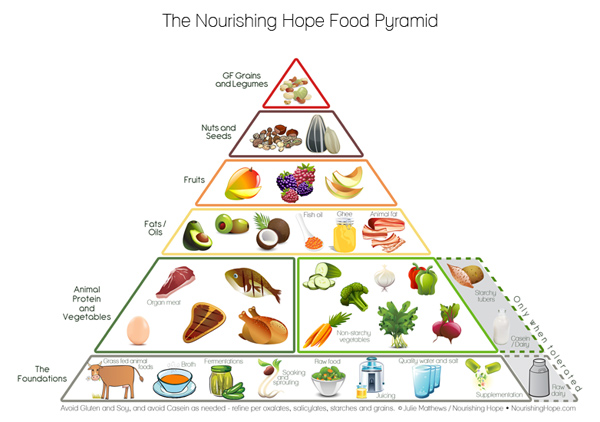
Parents with Special Needs Children Use Nutrition to Increase Focus and Attention!
Guest Blogger: Julie Matthews of Nourishing Hope
Parents of children with autism are learning that food choices can help their sons and daughters become healthier and reach their full potential. In addition to traditional behavioral therapy and other pharmaceutical treatments, pediatricians, researchers, and nutritionists increasingly recommend that parents implement autism diets, autism-specific nutrition, and specialized supplementation.
Even television’s respected Dr. Oz recently said, “Some of the most promising treatments for autism come from changing the foods that the child is eating.” Respected pediatrician and author of “The Autism Book,” Dr. Robert Sears says that 75% of his patients following the diet see great improvement.
Doctors now recognize that the bodies of children with autism are unique and require very specific care, including special enzymes for digestion, medical treatment for yeast infections and other common conditions found during testing, attention to digestive issues, special dietary requirements (autism diets), nutrient and fatty acid supplementation, behavioral therapy, and more.
The outdated model sees autism as a “mysterious” psychiatric disorder that begins and ends in the brain—and reports that little can be done to impact its effects. Through the breakthrough work of the Autism Research Institute a more appropriate “whole body disorder” (the brain is affected by the biochemistry generated in the body) perspective of autism has emerged.
When seen as a whole body disorder, parents and physicians are more likely to identify the physical symptoms of autism that often get overlooked including diarrhea, constipation, bloating and GI pain, inflammation, and frequent infections. With this broader comprehension it becomes apparent that there is a great deal that can be done to address these challenges. Step one is to take charge of diet.
When parents correctly implement specific autism diets, improvements in gastrointestinal problems (including diarrhea and constipation), language, learning, focus, attention, eye contact, behavior, sleep difficulties, toilet training, and skin rashes/eczema have been observed. Parents around the world are beginning to share their stories of healing. Since every child is unique, improvements will vary.
It’s important to understand that these diets are customized food-focused strategies of nutritional intervention for autism. Going from not considering the impact of food intake (standard American diet) to giving specialized attention (nutrition centered diet) is the key to promoting systemic healing through autism diets. All autism diets involve the removal of problematic foods and substances, and the addition of easier to digest nutrient dense foods.
Certain food substances, such as gluten (wheat) and casein (milk) are known to be problematic for many children with autism, and should be avoided – and other foods rich in healing nutrients are beneficial when added to children’s diets. Attention to these factors is intended to help balance biochemistry, affect systemic healing, and provide relief of autism symptoms.
For many children with autism, nutrient deficiencies, chemicals in foods, imbalanced biochemistry, and digestive problems can play a significant role in their physical conditions. Their physiological and behavioral symptoms may stem from, or be exacerbated by, impaired digestion and GI health. Altering food choices positively affects these processes and helps improve symptoms.
There are several diets that are used by parents, autism nutritionists and pediatricians. These diets include the Gluten-Free Casein-Free (GFCF) Diet, Specific Carbohydrate Diet (SCD), Gut and Psychology Syndrome (GAPS) Diet, Low Oxalate Diet, Body Ecology Diet, Feingold Diet and Weston A. Price dietary principles.
Parents begin with simple steps: more fresh fruits, vegetables and grass-fed meats whenever possible. They read labels for ingredients and clean out their cupboards. They shop for organic foods in order to remove antibiotics, hormones, pesticides and PCBs from the dinner table. They naturally avoid pre-packaged, canned or frozen foods that contain preservative, additives, colors and artificial ingredients. They immediately decrease the amount of sugar they feed their children. The guidance of a qualified nutrition profession is always recommended.
After the initial clean up steps are completed, parents embark on the implementation of an autism diet, which typically begins with removing gluten and casein—as implemented in the GFCF diet. Gluten is the protein found in wheat, rye, barley, commercial oats, kamut, and spelt. Casein is the protein found in dairy. The GFCF diet has become popular for autism and the general population, and there are many GFCF foods available in stores. Parents applying a GFCF diet cook from great recipes they find online and in autism diet friendly cookbooks.
Autism Research Institute (ARI) surveyed thousands of parents and found that 69% of those applying the GFCF Diet saw improvement. For the Specific Carbohydrate Diet, 71% noted improvement. In recent autism diet research funded by Autism Speaks, 82% of parents reported “definite improvement” in their child’s skills.
For the parent of a child with autism, the food that they choose to serve their children is vitally important to their healing. Autism diets are an important first step all parents should consider as they are creating a program for the improved health and well being of children.
Julie Matthews is an internationally respected Certified Nutrition Consultant, autism nutrition specialist and author of the award-winning book, “Nourishing Hope for Autism” and the creator of “Cooking to Heal: Autism Nutrition and Cooking Classes” (DVD). Julie provides diet and nutrition intervention guidance backed by scientific research and applied clinical experience. She presents at the leading autism conferences in the US and abroad.
Get a free ebook on harnessing the power of nutrition for your child:


7 Ways Anxiety Actually Works to Your Advantage If you live with #anxiety, you’re all too familiar with its negative effects—unfounded fear, tension, and nervousness among them. But there are positives, too. http://ift.tt/24AXK61

Parents are worried about children returning to school and failing!
It’s a horrible thought…
Your little one, suffering at school. Whether they’re struggling to make sense of the lessons, or even being bullied for being “different”.
All you want to do is swoop in and protect them! I know, I’m a mom myself. And even as they get older, that protective feeling doesn’t get any less…
If I take my mom hat off for a minute, and put my Occupational Therapist one on, I can tell you a fact:
Poor Sensory Motor Skills are the culprit for most problems in the classroom.
It’s true.
Things like:
Are all impacted by poor Sensory Motor Skills.
And how a child reacts to these problems is different in every case.
Some go into their shell, become anxious and have bad associations with school, even experiencing physical symptoms like stomach pain and headaches at the thought of going to school.
Others act out and are unfairly labeled “troublemaker” or “lazy” when they actually have no control over their ability to complete the allocated tasks.
One thing is consistent throughout every child I see though:
Improving their Sensory Motor Skills improves their performance in the classroom. Fact.
And as they have to be at school for 12 years (not counting further study after that) it is SO important to give them the best possible foundation for their schooling career!
Even if you feel they are doing “Okay” and there’s nothing really wrong… helping your child’s Sensory Motor Skill development will only give your child even more of an advantage.

Fear destroys families and why you must make it “feel” safer
By Ron Huxley, LMFT
Fear is one of the biggest reasons for family power struggles and defiance in children. It shifts the atmosphere of the home and causes use to react instead of acting in a safe and sane manner toward one another. All families fight. You can create a S.A.F.E.R. H.O.M.E. to battle against problems instead of people you love.
Are you in a constant power struggle with your children? Feeling a little helpless to manage the continual arguments and competition between children in your home? Tired of yelling, bribing, and negotiating to get cooperation? Well here is a 9 step plan to help you create a “safer home”:
S = Stop what you are doing. Your probably reacting to the stress of the situation and making things worse. Take some time to…
A = Assess the situation, environment, mood and motivations of your child(ren). What are they doing? Why are they doing it? How are you handling it? Who is involved? Just notice for now…
F =Focus on one problem or priority to address. Don’t try to tackle all the issues. Try and address the core issue that affects the most people/variables. This will allow you to…
E = Empathize with your child’s feelings. State: “I can understand how you would feel this way or want to act in a certain way, however…”
R = Respond (versus reacting) by offering alternative solutions or asking for responses from the children to come up with the alternatives themselves. This activates all areas of the brain through empathy development (right brain and emotional centers of the brain) and logical thought (left brain and cause and effect areas of the brain)…
H = Help children with suggestions for things they could try if they cannot come up with their own or if they won’t do it. “Would you like some ideas? What if we do x or y?”…
O = Offer choices. Would you rather share the toy or find a new one? Brush teeth before or after putting on your pajamas? The more choices and the smaller they are spread out through the day the more compliance you will get. Choices mean power but only offer ones you can live with and be ready to…
M = Maintain your position when they go for that third choice you didn’t offer them. If they do this, you know you are playing a game that no one will win. You may have to be a broken record and repeat the choice two choices two times (this is important to only do it twice) and then…
E = Execute the choice everyone agreed to or take action if they can’t or won’t agree to one. You chose A or B. This is “do or die” when it comes to parenting. Be ready to stick to your choice and don’t back down. If you do, you give total control back to your child. The fight might be tough today but tomorrow it will be easier and easier the day after that until finally it will be a rare day that you have to fight it at all. Won’t that be nice and safe?
// Never miss a post by Ron Huxley again. Click here to join our newsletter //

Love Never Gives Up
By Ron Huxley, LMFT
A recent article by Scientific American reviews desperate attempts to change unruly teen behavior around. One of the toughest challenges is to reach an adolescent who is angry, defiant and acting out in destructive ways. Confrontational strategies and harsh punishment, the article explains, has only short-term benefits. No studies prove lasting results from this type of “scared straight” intervention. So what does work? The article ends with this summarization:
“…results show that merely imposing harsh discipline on young offenders or frightening them is unlikely to help them refrain from problematic behavior. Instead teens must learn enduring tools—including better social skills, ways to communicate with parents and peers, and anger management techniques—that help them avoid future aggression. Several effective interventions do just that, including cognitive-behavior therapy, a method intended to change maladaptive thinking patterns and behaviors, and multisystemic therapy, in which parents, schools and communities develop programs to reinforce positive behaviors. Another well-supported method, aimed at improving behavior in at-risk children younger than eight years, is parent-child interaction therapy. Parents are coached by therapists in real time to respond to a child’s behavior in ways that strengthen the parent-child bond and provide incentives for cooperation [see “Behave!” by Ingrid Wickelgren; Scientific American Mind, March/April 2014].”
What can you do to strengthen your bond with your child? How can you reach his or her heart, locked behind a wall of pain and anger? Don’t expect overnight miracles. Turning your defiant teen around will require consistency and continual micro-shifts of change in you and your child. You will probably blow it on days and be exhausted from the effort on others. This is a marathon, not a sprint. Focus on who the child will be and not on who they have been or what they are doing. Consequences are natural and necessary. Boundaries are even more important! Just don’t equate your love with positive behavior. Nothing your child does should make you love him or her any less and nothing can make you love them more.
“Love never gives up, never loses faith, is always hopeful, and endures through every circumstance.” I Corinthians 13:7 (NLT)
// Use our FREE Parenting Toolbox with Behavior Charts, Dream Parenting Worksheets and MORE //

Dream Parenting is about speaking into the lives of our children and awakening them to the reality of who they are designed to be. Not all children what us to speak to them. They feel they know best. How do they come up with that idea? Do they see us as poor models about how to live life? Do our actions not inspire them to be designed like their designers? Design is the starting place. Destiny is the goal. They carry our DNA but we have to imprint and inspire them to be all they are designed to be, so they can live out their destiny. Our dream family is not just a product of our imaginations alone. It is birthed in the union with those we have birthed.
Our children turn away from our moral codes when we react more to fear than to promises about our future. Fear is always a reaction. Promise is a response! Think about it for a few minutes. As parents, too many of our past disappointments are speaking into our present/presence and we do not display a design our children want to emulate. Dreams are not born out of fear. Dreams are produced by a strong faith in the knowledge of who we are. Not what we do and not based on what our children do.
I hope this is not confusing you. You can’t build a dream family by managing behavior. That’s the bottom line. You have to build it by reminding yourself and your children about who you are designed to be. If you don’t yet understand that, then this is the first step in your new family blueprint.
I think I should create a handout to go with this…Be on the lookout for one. in the meantime, join our MORE list and get past Dream Parenting Handouts and more: Click here now.

There are two types of trauma: Trauma A and Trauma B. Do you know the difference? Which one has impacted you? One is much more recognized by society but both are important to healing from trauma, managing anger and aggression and improving our family relationships.
(via https://www.youtube.com/watch?v=ZXWUrRXSSoU)
Get our special report “5 Steps to Transforming Trauma” here!



 Ron Huxley LMFT