Page 3 of 92

Thought Deletion: Why Trying to Erase Your Thoughts Doesn’t Work

In the complex landscape of mental health, we often find ourselves battling unwanted thoughts. The Acceptance and Commitment Therapy (ACT) approach offers a fascinating perspective on this challenge through a simple yet profound exercise known as Thought Deletion.

The Illusion of Mental Control

Our natural instinct when confronted with distressing thoughts is to push them away. We believe we’d find peace if we could delete these thoughts. However, the human mind doesn’t work like a computer—there’s no convenient mental backspace or delete button.

The Thought Deletion Exercise

The exercise is elegantly simple:

  1. Identify a Distressing Thought: Clients are asked to focus on a recent thought that causes them significant emotional discomfort.
  2. Attempt Deletion: They’re then instructed to actively try to erase this thought.
  3. Experience the Paradox: Invariably, they discover something counterintuitive—the more they try to eliminate the thought, the more persistent and powerful it becomes.

Why Thought Deletion Backfires

This exercise illustrates a fundamental principle of psychological flexibility: resistance increases suffering. When we struggle against our thoughts, we inadvertently give them more power. It’s like trying not to think about a pink elephant—the very act of trying not to think about it ensures the elephant dominates your mental landscape.

Defusion: A Different Approach

Acceptance and Commitment Therapy introduces the concept of cognitive defusion—learning to see thoughts as merely mental events, not absolute truths that must be fought or believed. Instead of wrestling with thoughts, we can:

  • Observe thoughts without judgment
  • Recognize that thoughts are transient
  • Understand that having a thought doesn’t make it real or meaningful
  • Choose to focus on actions aligned with our values

Practical Implications

For adolescents and adults alike, the Thought Deletion exercise serves multiple therapeutic purposes:

  • Reduces anxiety around “unacceptable” thoughts
  • Demonstrates the futility of thought suppression
  • Introduces a more compassionate approach to inner experiences
  • Builds psychological resilience

A Mindful Alternative

Instead of deletion, ACT suggests:

  • Acknowledging thoughts without attachment
  • Letting thoughts pass like clouds in the sky
  • Focusing on present-moment experiences
  • Choosing actions that matter, regardless of intrusive thoughts

Thought Deletion is more than an exercise—it’s a gateway to understanding our mind’s complex workings. We open ourselves to greater emotional freedom and psychological flexibility by embracing thoughts rather than fighting them.

Remember, you are not your thoughts. You are the awareness observing those thoughts.

What is ACT?

Acceptance and Commitment Therapy (ACT) is a form of psychological intervention that focuses on helping individuals accept complex thoughts and feelings rather than fighting or feeling controlled by them. The core aim is to increase psychological flexibility—the ability to:

  • Accept emotions and thoughts without judgment
  • Stay present in the moment
  • Clarify personal values
  • Take committed action toward meaningful goals

ACT uses six key processes:

  1. Cognitive defusion (seeing thoughts as just thoughts)
  2. Acceptance of emotional experiences
  3. Present moment awareness
  4. Self-as-context (observing self)
  5. Values clarification
  6. Committed action aligned with those values

Unlike traditional cognitive therapies that seek to change thought content, ACT helps people change their relationship with thoughts, reducing their impact and enabling more value-driven living.
Navigating the Adoption Journey: Insights for Adoptive Parents and Professionals

Adoption is a complex and emotional process that requires understanding, patience, and ongoing support. This article aims to provide valuable insights for both adoptive parents and the professionals who work with them.

Understanding the Complexities

Joyce Maguire Pavao, a renowned adoption expert, emphasizes:

“Adoption is not about finding children for families, it’s about finding families for children.”

This perspective shift is crucial for both parents and professionals to internalize. It places the child’s needs at the center of the adoption process.

The Lifelong Nature of Adoption

Adoption is not a one-time event but a lifelong journey. As one adoptive parent notes:

“The adoption journey doesn’t end when your adopted child is finally in your arms. The journey is one that never ends. It is a journey filled with joy, pain, fear and love.”

Professionals should prepare adoptive parents for this ongoing process, providing resources and support for various stages of the adoption journey.

Openness and Communication

Open communication about adoption is vital from the earliest stages. Experts recommend:

“Start telling your child that s/he is adopted from day one. A child should never remember finding out they’re adopted – they should just always know.”

Professionals can guide adoptive parents on age-appropriate ways to discuss adoption with their children.

Addressing Loss and Grief

It’s important to recognize that adoption involves loss for all parties involved. Pavao notes:

“The stages birth parents go through are very real and need to be understood… The initial period of grieving lasts roughly five to seven years.”

Professionals should help adoptive parents understand and navigate these complex emotions, both for themselves and their children.

Cultural Competence

For transracial or transcultural adoptions, cultural competence is crucial. Pavao advises:

“The challenge to adoptive parents, and to others connected to this child, is to help the child to develop his/her own identity within the framework of both cultures.”

Professionals can provide resources and guidance on cultural integration and identity development.

Ongoing Education and Support

Adoption requires continuous learning. One adoptive parent shares:

“You commit to education. You commit to learning other perspectives. You commit to growing.”

Professionals should encourage adoptive parents to engage in ongoing education about adoption issues, trauma-informed care, and child development.

Conclusion

For both adoptive parents and professionals, understanding the nuances of adoption is crucial. By recognizing its lifelong nature, embracing openness, addressing loss, promoting cultural competence, and committing to ongoing education, we can better support adoptive families throughout their journey.

Remember, as Pavao states, “Adoption is intergenerational. It lasts a lifetime and beyond.” With this perspective, we can work together to create positive, supportive environments for all members of the adoption triad.

Citations:
[1] https://www.reddit.com/r/AdoptiveParents/comments/1ercoiw/starting_our_unexpected_adoption_journey/
[2] https://www.goodreads.com/author/quotes/487220.Joyce_Maguire_Pavao
[3] https://abidinglovecharities.org/2022/11/16/being-open-to-grow-in-your-adoption-journey/
[4] https://www.adoptimist.com/adoption-success-stories/a-proactive-and-prayerful-adoption-journey
[5] https://www.waitnomore.org/the-adoption-journey/
[6] https://blog.nchs.org/adoptive-families-challenges
[7] https://www.modernheirloombooks.com/new-blog/2020/3/18/what-to-save-for-your-adoption-journey-book
[8] https://www.boulderpsychologicalservices.com/understanding-common-challenges-adopted-children/

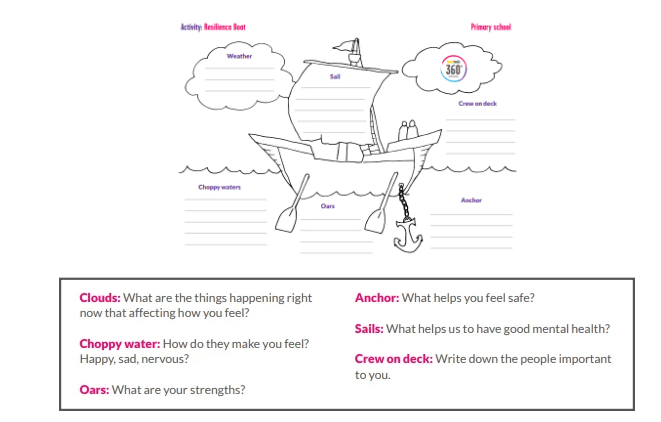
The Resiliency Boat: Navigating Life’s Challenges

The Resiliency Boat exercise is a powerful tool for individuals to visualize and strengthen their ability to cope with life’s challenges. This creative and engaging activity helps participants identify their support systems, personal strengths, and areas for growth.

How It Works

The exercise begins with participants drawing a boat, representing themselves navigating life’s ups and downs. Each part of the boat and its surroundings symbolizes different aspects of resilience:

Choppy Waters

Participants identify current challenges or stressors they’re facing. These might include work pressures, relationship issues, or health concerns[1].

Oars

These represent personal strengths that help navigate difficult times. Participants list qualities like determination, adaptability, or problem-solving skills[1].

Anchor

This symbolizes the support system that provides stability. Participants note people, resources, or activities that ground them during tough times[1].

Sails

The sails represent self-care strategies that promote mental health and well-being. These might include exercise, meditation, or creative pursuits[1].

Crew on Deck

This section is for listing key individuals who provide support and encouragement[1].

Benefits of the Exercise

The Resiliency Boat exercise offers several advantages:

  1. Visual Representation: It provides a tangible, visual way to understand one’s resilience factors.
  2. Self-Awareness: Participants gain insight into their coping mechanisms and support systems.
  3. Identifying Gaps: The exercise helps highlight areas where additional support or skills might be needed.
  4. Positive Focus: Emphasizing strengths and supports fosters a positive mindset towards challenges.
  5. Group Discussion: In a group setting, it promotes sharing and learning from others’ experiences.

Conducting the Exercise

To conduct the Resiliency Boat exercise:

  1. Provide participants with paper and drawing materials.
  2. Explain the symbolism of each boat part.
  3. Allow time for reflection and drawing.
  4. Encourage participants to share their boats with the group, if comfortable.
  5. Facilitate a discussion about common themes and insights gained.

Enhancing Resilience

The Resiliency Boat exercise underscores that resilience is not a fixed trait but a skill that can be developed. By regularly reflecting on and strengthening the elements represented in their boat, individuals can enhance their ability to navigate life’s challenges[2].

Remember, building resilience is an ongoing process. Just as a real boat needs regular maintenance, our resilience requires continuous attention and care. By using tools like the Resiliency Boat exercise, we can better understand our strengths, support systems, and areas for growth, ultimately becoming more equipped to handle life’s storms.

Citations:
[1] https://whenyoumakeithappen.com/learning-to-float-and-tame-the-storms-about-building-resilience/
[2] https://cartus.com/en/insights/blog/what-floats-your-boat-how-develop-resilience-while-international-assignment/
[3] https://info.sailingvirgins.com/blog/resilience-at-sea-how-sailing-adventures-foster-mental-toughness-in-professionals
[4] https://www.youngminds.org.uk/media/4mhjvqu1/resilience-boat.pdf
[5] https://commonslibrary.org/leaderful-organizing-tool-resilience-trees/
[6] https://positivepsychology.com/resilience-counseling/
[7] https://www.youtube.com/watch?v=ECaxX-jJQUU
[8] https://nathanbweller.com/tree-life-simple-exercise-reclaiming-identity-direction-life-story/

Overcome the Need for Approval: Key Steps

Understanding the Impact of Others’ Opinions

Caring about what others think is a natural human tendency rooted in our evolutionary need for social acceptance. While it’s expected to seek approval, excessive concern can lead to anxiety and hinder personal growth. To cultivate a more authentic life, learning how to prioritize your values and well-being over external validation is essential.

Steps to Stop Caring About What Others Think

1. Focus on Your Own Goals and Values
Begin by identifying what truly matters to you. Create a list of personal aspirations and values that guide your decisions. This will help shift your focus from others’ opinions to your path, fostering a sense of purpose and direction in life.

2. Listen to Your Inner Voice
Cultivate self-awareness by tuning into your thoughts and feelings. Regular practices like journaling or meditation can help clarify your priorities and reinforce your self-worth. When you understand your own values, the opinions of others become less significant.

3. Challenge Negative Thoughts
Recognize when you’re comparing yourself to others, especially on social media. Remind yourself that these comparisons often reflect only the surface of someone’s life. Replace negative self-talk with affirmations highlighting your strengths and accomplishments, such as “I am enough just as I am”.

4. Surround Yourself with Supportive People
Choose to spend time with individuals who uplift and encourage you rather than those who foster insecurity or doubt. Positive relationships can bolster your self-esteem and help you feel more secure in your identity.

5. Embrace Change and Imperfection
Understand that perfection is subjective and unattainable. Allow yourself to change your mind and make mistakes without fear of judgment. This acceptance fosters resilience and self-compassion, enabling you to navigate life’s challenges more effectively.

6. Spend Time Alone
Solitude can be a powerful tool for self-discovery. Use this time to reflect on your thoughts and desires without external influences clouding your judgment. The more grounded you are in yourself, the less likely you will be swayed by others’ opinions.

7. Let Go of the Need for Approval
Not everyone will like or accept you, and that’s perfectly okay. Detaching from the need for universal approval frees you to express your true self without fear of rejection.

Learning to stop caring about what others think is a journey that involves self-reflection, courage, and practice. By focusing on your values, surrounding yourself with supportive people, and embracing imperfection, you can cultivate a more authentic life filled with confidence and fulfillment. Remember, the opinions of others are often reflections of their own insecurities—what truly matters is how you perceive yourself.

Quiz: How Much Do You Care About What Others Think?

This quiz will help you assess your concern about others’ opinions. For each statement, rate yourself on a scale from 1 to 5, where:

  • 1 = Strongly Disagree
  • 2 = Disagree
  • 3 = Neutral
  • 4 = Agree
  • 5 = Strongly Agree

Questions

  1. I often change my opinions or preferences to fit in with others.
  2. I feel anxious when I think about how others perceive me.
  3. I frequently seek validation from friends or family before making decisions.
  4. I avoid expressing my true feelings if it might upset someone else.
  5. I often compare myself to others on social media.
  6. I worry about what people will say if I pursue my passions or interests.
  7. I feel embarrassed when I receive criticism, even if it’s constructive.
  8. I often think about how others will judge my actions before doing them.
  9. I frequently apologize, even when I don’t feel I’ve done anything wrong.
  10. I prioritize pleasing others over my own needs and desires.

Scoring Your Quiz

Add up your scores for each question to get your total score.

  • 10-20: Low Concern
    You have a healthy sense of self and are not overly affected by what others think. You prioritize your own values and opinions.
  • 21-35: Moderate Concern
    You care about others’ opinions to some extent, but you also value your own perspective. Strive for more balance in your decision-making.
  • 36-50: High Concern
    You may be significantly influenced by what others think, which can lead to anxiety and self-doubt. Consider working on building your self-esteem and focusing on your personal values.

Reflection

Regardless of your score, remember that it’s natural to care about how others perceive you to some degree. The key is finding a balance that allows you to live authentically while maintaining healthy relationships with those around you. If you find yourself in the high-concern category, consider exploring strategies to cultivate self-confidence and reduce the impact of external opinions on your life.

Art Therapy Activities to Boost Children’s Emotional Health

Nurturing Creativity and Emotional Well-being: Art Therapy Activities for Children

As parents, we always look for ways to support our children’s emotional development and help them express their feelings. Art therapy activities can be a powerful tool in this journey, offering a non-verbal outlet for emotions and fostering creativity. Here are some simple yet effective art therapy activities you can try at home with your children:

Emotion Monsters

Encourage your child to draw and color personified versions of their emotions. For example, they might create a grumpy thundercloud for anger or a playful sunshine for happiness. This activity helps children identify and understand feelings while developing coping mechanisms by giving these “monsters” friendly features or silly accessories[1].

Color Your Feelings

Give your child an outline of a heart and ask them to color it based on their emotions. Different colors can represent various feelings. This exercise helps children create visual representations of their emotions, making it easier to express and understand complex feelings[2].

Abstract Expression

Set up a space with large canvases or paper and various art supplies like paints, markers, or crayons. Play calming music and encourage your child to express emotions through abstract shapes and colors. This activity allows for releasing emotions in a non-judgmental space and can be particularly helpful for children who struggle to verbalize their feelings[1].

Safe Space Creation

Ask your child to draw or create a representation of their safe space. This could be a real place or an imaginary one. Encourage them to include elements that make them feel secure and comfortable. This activity can lead to discussions about creating safe environments in real life and can be a valuable tool for children dealing with anxiety[2].

Story Stones

Collect smooth stones and have your child paint or draw simple images. These stones can then be used to create and tell stories. This activity not only stimulates creativity but also helps children explore narratives and themes that are meaningful to them. It’s an excellent way to encourage self-expression and advance vocabulary[3].

Mindful Doodling

Introduce your child to mindful doodling. Have them close their eyes and draw simple shapes and lines on paper, focusing on how they feel rather than how they look. This exercise can be calming and meditative, helping to reduce stress and anxiety[3].

Remember, these activities aim not to create masterpieces but to provide a safe, creative outlet for self-expression. Encourage your child to focus on the process rather than the end result. As you engage in these activities together, you’re supporting their emotional development and strengthening your bond.

Incorporating these art therapy activities into your family routine gives your child valuable tools for emotional regulation and self-expression that can benefit them throughout their lives.

Citations:
[1] https://loveplaygrownj.com/art-therapy-activities/
[2] https://positivepsychology.com/art-therapy/
[3] https://www.rmcad.edu/blog/brushing-away-stress-21-art-therapy-activities-for-self-expression-and-healing/
[4] https://intuitivecreativity.typepad.com/expressiveartinspirations/100-art-therapy-exercises.html
[5] https://www.weareteachers.com/art-therapy-activities/
[6] https://www.playday.com/post/8-art-therapy-activities-for-kids-recommended-by-therapists
[7] https://www.wholechildcounseling.com/post/5-art-therapy-inspired-activities-for-calming-behaviors-and-building-resilience-by-erica-curtis
[8] https://www.alternativetomeds.com/blog/art-therapy-ideas/

Keeping Siblings Connected: The Challenges and Triumphs of Adoption

Sarah nervously fidgeted with her necklace as she waited in the airport terminal. It had been five years since she’d seen her younger brother, Jake. Separated by adoption when Sarah was 10 and Jake was 6, the siblings were about to reunite for the first time since that difficult day.

“I was so scared he wouldn’t remember me,” Sarah recalled. “But as soon as I saw him, it was like no time had passed. We just hugged and cried.”

Stories like Sarah and Jake’s are too familiar in adoption. While keeping siblings together is often the goal, it’s not always possible. Maintaining these vital connections is challenging, but so are the rewards.

Dr. David Brodzinsky, a leading expert in adoption psychology, emphasizes the importance of sibling relationships: “Sibling bonds are often the longest-lasting family ties we have. For adopted children, these connections can be a crucial link to their past and a source of stability in their present.”

Indeed, research has shown that maintaining sibling relationships can have profound benefits for adopted children. These connections can provide emotional support, a sense of identity, and a link to a shared history.

However, maintaining these relationships is often fraught with obstacles. Geographic distance, the differing needs of individual children, and complex family dynamics can all pose challenges.

Mary, an adoptive mother of three siblings, shared her experience: “We knew it was important to keep the kids together, but it wasn’t easy. They each had such different needs. There were times I wondered if we’d made the right choice.”

Despite the difficulties, Mary and her husband persevered. They sought professional help, established routines that gave each child individual attention, and worked tirelessly to foster a sense of family unity.

“It was worth every struggle,” Mary said. “Watching them support each other, seeing their bond grow stronger – it’s been the most rewarding part of our adoption journey.”

For families who aren’t able to adopt sibling groups together, maintaining connections requires creativity and commitment. Regular video calls, shared online photo albums, and planned visits can all help bridge the gap.

Tom, a social worker specializing in adoption, offers this advice: “Communication is key. Be open with your children about their siblings, encourage questions, and proactively facilitate contact when possible.”

He adds, “It’s also important to be sensitive to the complex emotions that can arise. Feelings of guilt, loss, or confusion are common. Providing a safe space for children to express these feelings is crucial.”

As the adoption community continues to recognize the importance of sibling relationships, more resources and support are becoming available. Many agencies now offer specialized training for families adopting sibling groups or those working to maintain connections with siblings placed separately.

Sarah, now 25, reflects on her journey: “It hasn’t always been easy, but I’m so grateful we’ve been able to stay in each other’s lives. Jake is more than just my brother – he’s a link to my past and an important part of my future.”

As we continue to navigate the complexities of adoption, one thing remains clear: the sibling bond is a powerful force. By recognizing its importance and working to nurture these relationships, we can help adopted children maintain vital connections to their roots while building strong, loving families for the future.

Here are some valuable resources for adoptive parents looking to deepen their understanding of sibling relationships and the adoption process:

Websites and Organizations

  1. Adoption Support Alliance
    A comprehensive resource with various topics related to adoption, including sibling dynamics. They provide links to books, blogs, and organizations to help navigate the adoption journey.
    Adoption Support Alliance Resources [1]
  2. Creating a Family
    This nonprofit organization offers unbiased education and support for families dealing with infertility or adoption. Their website includes a wealth of resources on post-adoption parenting and sibling relationships.
    Creating a Family Resources [2]
  3. Utah’s Adoption Connection
    A resource database tailored for adoptive families, offering information on various topics, including mental health services, educational support, and support groups.
    Utah’s Adoption Connection Resources [3]
  4. Purl Adoption
    This organization provides resources and education for adoptive parents, focusing on how to talk to children about adoption and navigate the complexities of their feelings.
    Purl Adoption Resources [4]

Recommended Books

  1. “20 Things Adoptive Parents Need to Succeed” by Sherrie Eldridge
    A practical guide offering insights and advice for adoptive parents.
  2. “The Connected Child” by Karyn B. Purvis and David R. Cross
    Focuses on strategies for nurturing and connecting with adopted children.
  3. “Raising Adopted Children: Practical Reassuring Advice for Every Adopted Parent” by Lois Ruskai Melina
    Offers practical parenting advice to adopted children, including those with siblings.
  4. “The Body Keeps the Score” by Bessel Van Der Kolk, M.D.
    Explores the impact of trauma on children, including those in the adoption process.
  5. “Adoption Nation” by Adam Pertman
    Discusses the evolution of adoption and its implications for families and society.

Support Groups and Community Resources

  • Support Groups: Many adoptive families find comfort and support in connecting with others with similar experiences. Look for local or online support groups focused on adoption.
  • Counseling Services: Consider seeking out adoption-competent therapists who specialize in the unique challenges faced by adopted children and their families.

By utilizing these resources, adoptive parents can gain deeper insights into sibling relationships and the broader adoption process, fostering a more supportive environment for their children.

Citations:
[1] https://www.adoptionsupportalliance.org/resources
[2] https://creatingafamily.org/adoption/resources/
[3] https://www.utahadopt.org/resources
[4] https://www.purladoptions.com/learn/adoption-advisor/resources-for-talking-to-your-child-about-adoption/
[5] https://www.utahadopt.org/support-resources
[6] https://www.adoptuskids.org/adoption-and-foster-care/parenting-support/for-adoptive-parents
[7] https://www.creatingafamilyed.org/courses/preparing-children-already-in-the-home-for-adoption
[8] https://adoptioncouncil.org/publications/adoption-advocate-no-147/

“Doing The Best I Can”: A Healthy Reframe for Overwhelm and Negativity

When life feels complicated, and challenges seem insurmountable, it’s easy to fall into negative thinking and self-criticism patterns. However, adopting the “Doing The Best I Can” mindset can be a powerful reframe to combat these feelings and foster self-compassion. Here’s how this simple phrase can transform your perspective:

Acknowledging Your Efforts

“Doing The Best I Can” recognizes that you’re putting forth effort, even when outcomes aren’t perfect. This acknowledgment is crucial because:

  1. It shifts focus from results to process
  2. It validates your struggles and challenges
  3. It reminds you that perfection isn’t the goal

Embracing Imperfection

This reframe helps you accept that perfection is unattainable. Instead of berating yourself for falling short of impossible standards, you can:

  • Recognize that everyone has limitations
  • Appreciate progress, no matter how small
  • View mistakes as opportunities for growth

Cultivating Self-Compassion

By telling yourself you’re doing your best, you’re practicing self-compassion. This approach:

  • Reduces self-criticism and negative self-talk
  • Increases resilience in the face of setbacks
  • Improves overall mental well-being

Recognizing Context

“Doing The Best I Can” takes into account your current circumstances. It acknowledges that:

  • Your best may vary from day to day
  • External factors can impact your capabilities
  • You’re working with the resources available to you

Promoting Growth Mindset

This reframe encourages a growth mindset by:

  • Focusing on effort rather than innate ability
  • Viewing challenges as opportunities to learn and improve
  • Encouraging persistence in the face of difficulties

Practical Application

To incorporate this reframe into your daily life:

  1. Notice negative self-talk and consciously replace it with “I’m doing the best I can.”
  2. Reflect on your efforts at the end of each day, acknowledging your hard work.
  3. Practice self-compassion exercises when feeling overwhelmed
  4. Share this perspective with others to create a supportive environment

Remember, “Doing The Best I Can” doesn’t mean settling for less or making excuses. Instead, it’s about recognizing your efforts, accepting your limitations, and maintaining a compassionate attitude toward yourself as you navigate life’s complexities.

By adopting this reframe, you can reduce feelings of overwhelm, combat negative thinking, and approach challenges with a more balanced and kind perspective. It’s a simple yet powerful tool for fostering resilience and maintaining emotional well-being in life’s inevitable ups and downs.

Living With Your Adult Child…

Navigating Life with Your Adult Children: Key Insights and Practical Strategies

As children grow into adulthood, the parent-child relationship naturally evolves. While the dynamics change, the desire to support and guide them remains strong. However, this stage often presents unique challenges for parents who must balance offering guidance and respecting their adult child’s independence. Drawing from the wisdom of several insightful books on this topic, here are key strategies and advice for parents navigating this complex phase.

1. Respect Their Independence

One of the most crucial steps in maintaining a healthy relationship with adult children is recognizing and respecting their independence. As Jim Burns, author of “Doing Life with Your Adult Children,” advises, “Keep your mouth shut and the welcome mat out.” This encapsulates the delicate balance of being there for your adult children without overstepping boundaries. It’s important to let them make their own decisions—even if they’re not the choices you would make.

2. Establish Clear Boundaries

Allison Bottke, in her book “Setting Boundaries with Your Adult Children,” emphasizes the importance of setting and maintaining boundaries. She introduces the concept of SANITY: Stop enabling, Assemble a support group, Nip excuses in the bud, Implement rules and boundaries, Trust your instincts, and Yield everything to God. Bottke’s framework helps parents avoid enabling behavior while offering love and support.

3. Offer Unconditional Love and Acceptance

In “How to Really Love Your Adult Child,” Gary Chapman and Ross Campbell underscore the importance of unconditional love. They argue that while it’s natural for parents to want to guide their children, it’s essential to do so from a place of love and acceptance rather than criticism or control. “Your adult child needs to know that your love for them is not contingent on their success, choices, or lifestyle,” Chapman explains. This kind of love provides a foundation for a strong and healthy relationship.

4. Communicate Effectively and Listen More

Communication is vital in any relationship, but it’s especially crucial with adult children. Jane Isay, in “Walking on Eggshells,” highlights the importance of listening without judgment. She writes, “The hardest part of being a parent of an adult is to listen, not to advise, unless asked.” Active listening fosters mutual respect and understanding, helping to bridge generational gaps and differing perspectives.

5. Encourage Their Growth and Self-Reliance

Encouraging adult children to take responsibility for their lives is vital for their growth. In “Parenting Your Adult Child,” Gary Chapman and Randy Southern suggest that parents focus on helping their children achieve independence. They advise, “Guide them, but don’t dictate. Offer support, but don’t take over.” This approach helps adult children build confidence in their decision-making abilities while knowing they have their parents’ support.

Practical Ways Parents Can Support Their Adult Children

Based on the insights from these books, here are five practical ways parents can help their adult children navigate life:

  1. Be a sounding board, not a director. Offer advice when asked, but allow your child to make their own decisions. This fosters their sense of autonomy and responsibility.
  2. Encourage financial independence. Whether it’s through discussing budgeting or helping them set financial goals, encourage your adult child to manage their finances responsibly.
  3. Respect their personal space and choices. Understand that your adult child may make decisions that differ from your values or expectations. Support them even when their path diverges from yours.
  4. Model healthy boundaries. Doing so yourself will teach your adult children how to set and respect boundaries, protecting your well-being and teaching them an essential life skill.
  5. Celebrate their achievements, big or small. Acknowledge their successes and offer encouragement during setbacks. Positive reinforcement can be a powerful motivator as they navigate adulthood.

Parenting adult children requires a shift in perspective, moving from a more directive role to one of support and guidance. By respecting their independence, setting clear boundaries, offering unconditional love, communicating effectively, and encouraging their growth, parents can help their adult children navigate the complexities of life while maintaining a strong, loving relationship. These strategies empower adult children and allow parents to enjoy the evolving relationship as they both move into new stages of life.

Is My Child Autistic? How to Understand the Signs and Symptoms

Sarah and John had always known their daughter Emma was unique. From a young age, she seemed to march to the beat of her own drum. Unlike other children her age, Emma didn’t seem interested in playing with other kids at the park. She preferred to line up her toys in perfect rows or repeat the exact phrases from her favorite movies. Emma struggled with group activities at school, often feeling overwhelmed by the noise and unpredictability. Her teachers described her as bright but distant, usually lost in her world. Concerned and confused, Sarah and John asked: Could Emma be on the autism spectrum?

If you, like Sarah and John, are wondering whether your child might be autistic, this guide is here to help you navigate the signs and understand the next steps. Autism Spectrum Disorder (ASD) can look different in every child, and the path to a diagnosis can be filled with questions, emotions, and uncertainty. Here’s what you need to know.

Understanding Autism Spectrum Disorder (ASD)

ASD is a neurodevelopmental condition characterized by differences in social communication and interaction and restricted and repetitive behaviors. While some signs can be evident early, others may only become noticeable as social demands increase. Girls like Emma often present differently, making their symptoms subtler and more accessible to overlook.

Critical Signs of Autism to Look For

  1. Social Communication and Interaction Challenges:
  • Difficulty with Social Reciprocity: Your child may struggle with back-and-forth conversations, not easily share their feelings or interests, or seem detached in social settings.
  • Nonverbal Communication Differences: Challenges may include avoiding eye contact, difficulty understanding body language or facial expressions, and a lack of gestures.
  • Struggles with Relationships: Children with ASD often find it hard to make friends or understand how to play interactively with peers. They might prefer to play alone or have trouble adjusting their behavior to different social settings.
  1. Restricted and Repetitive Behaviors:
  • Repetitive Movements or Speech: Hand-flapping, rocking, repeating the exact phrases, or fixating on particular objects.
  • Insistence on Routine: Changes in daily routines, like taking a different route home or a new breakfast cereal, can cause significant distress.
  • Highly Focused Interests: An intense focus on specific topics, such as trains, maps, or numbers, can dominate your child’s conversations and play.
  • Sensory Sensitivities: Your child may be overly sensitive to certain sounds, textures, lights, or other sensory inputs or, conversely, seem indifferent to pain or temperature.
  1. Early Signs Often Overlooked:
  • Delayed Milestones: Some children may have delayed speech or use language in unusual ways, such as speaking in a sing-song voice or using adult-like vocabulary.
  • Play Differences: Children might prefer repetitive actions, like spinning wheels or arranging objects in a particular order instead of imaginative or group play.

Steps to Take If You Suspect Your Child Is Autistic

  1. Trust Your Instincts and Gather Information: As a parent, you know your child best. If you have concerns, start by recording behaviors that stand out. Pay attention to how your child interacts at home, school, and other settings.
  2. Consult Professionals: Contact your pediatrician, who can refer you to specialists such as a child psychologist, developmental pediatrician, or speech-language pathologist. A thorough evaluation will include interviews, direct observations, and possibly standardized assessments like the Autism Diagnostic Observation Schedule (ADOS-2).
  3. Learn from Credible Resources: Educate yourself using reliable sources. Here are some excellent resources to get started:
  • Books:
    • “The Reason I Jump” by Naoki Higashida – A first-person account by a young autistic boy that offers insights into the autistic mind.
    • “Uniquely Human” by Dr. Barry Prizant – Offers a compassionate approach to understanding and supporting individuals with autism.
  • Podcasts:
    • “Autism Spectrum Radio” – Features interviews with experts, parents, and individuals on the spectrum, providing a wide range of perspectives.
    • “The Autism Helper Podcast” – Practical advice from educators and therapists on supporting autistic children.
  • Websites:
    • Autism Speaks (www.autismspeaks.org): Offers toolkits, resources, and information on signs and symptoms.
    • CDC’s Autism Information Center (www.cdc.gov/ncbddd/autism): Provides comprehensive details on the signs, diagnosis, and prevalence of autism.
  1. Seek Support for Your Family: The journey doesn’t end with a diagnosis. Connecting with support groups, finding therapists experienced in autism, and working with your child’s school to create supportive educational plans can make a significant difference.

Navigating the Diagnosis Process

The road to a diagnosis can be daunting, but it’s essential to remember that early intervention can profoundly impact your child’s development and quality of life. Evaluations are not just about labeling your child; they’re about understanding how your child learns, interacts, and experiences the world to receive the support they need.

Final Thoughts

Learning that Emma was on the autism spectrum was a turning point for Sarah and John. It answered many of their questions and opened new challenges and opportunities. With the proper support, Emma began to thrive in her own way, and her parents felt empowered to better understand and connect with her.

If you suspect your child might be autistic, take heart in knowing that there are many resources, communities, and professionals ready to help you along the way. Each child’s journey with autism is unique, and with patience, understanding, and the right support, your child can achieve their fullest potential.

10 Deep Relationship Questions to Live More Fully

Here’s a revised list of 10 deep relationship questions that can be used across various types of relationships, including marriage, parenting, and friendship:

  1. What do you value most about our relationship, and how do you think we can nurture it further?
  2. How do you feel most supported by me, and is there anything I can do differently to better meet your needs?
  3. What is one thing you wish I understood about you that I may not fully grasp?
  4. How do you handle conflict or disagreements with me, and what would make those moments feel more constructive?
  5. What has been one of the most challenging moments in our relationship, and what did you learn from it?
  6. What are your fears or insecurities in our relationship, and how can we work together to address them?
  7. How do you envision our relationship growing in the next few years, and what steps can we take to get there?
  8. What’s one memory or experience in our relationship that means a lot to you, and why?
  9. In what ways do you feel appreciated or unappreciated by me, and how can we improve this?
  10. How can we better communicate our needs and boundaries to each other to strengthen our connection?

These questions foster open dialogue, enhance mutual understanding, and build stronger, more meaningful relationships in any context.