What if that trait you’ve always considered just part of your personality—being “too sensitive” or “fiercely independent”—isn’t really who you are? What if it’s actually trauma silently controlling your responses?
Trauma doesn’t always announce itself through dramatic flashbacks or panic attacks. It often hides in our everyday behaviors, reflexive reactions, and even our quirks. These unconscious responses might be your mind’s way of trying to keep you safe from threats that no longer exist.
Join us as we explore ten common trauma responses that might be quietly shaping your life and discover how recognizing them is the first step toward healing and reclaiming your authentic self.
Trauma leaves an indelible mark on our minds and bodies. Whether it’s a single distressing event or prolonged exposure to adverse circumstances, trauma can disrupt our sense of safety, trust, and well-being. As mental health practitioners, we strive to guide individuals toward healing and resilience. One powerful ally in this journey is procedural memory.
What Is Procedural Memory?
Procedural memory is a type of implicit memory—meaning it operates unconsciously. It involves the memory of how to do certain things. Think of it as the mental blueprint for tasks we’ve learned over time. Riding a bike, tying shoelaces, cooking an omelet without a recipe—these are all examples of procedural memories.
Why Is Procedural Memory Relevant in Trauma Recovery?
Implicit Learning and Skills:
Trauma survivors often struggle with conscious memories related to their traumatic experiences (declarative memory). However, procedural memory remains relatively intact.
Psychologists can leverage this by focusing on activities that engage procedural memory. Engaging in repetitive, rhythmic, or sensory experiences can help regulate emotions and create a sense of safety.
Mind-Body Connection:
Trauma affects both the mind and body. Procedural memory links physical sensations and emotional states.
Psychologists can guide clients to notice bodily sensations during therapy. By paying attention to these cues, clients can process trauma more effectively.
Mindfulness and Presence:
Practices like mindfulness enhance procedural memory.
Psychologists can teach trauma survivors mindfulness techniques to regulate emotions, reduce anxiety, and stay grounded.
Mindfulness helps clients access their present-moment experiences, aiding in trauma processing.
Completing Traumatic Memory Processing:
Trauma memories are often fragmented and incomplete due to dissociation (a protective mechanism).
Procedural memory can help fill in gaps. By engaging in activities that evoke procedural memory (e.g., drawing, dancing, playing music), clients access implicit aspects of their trauma.
This completeness contributes to healing and resolution.
Integration of Multiple Approaches:
Complex trauma requires an integrative approach.
Psychologists combine evidence-based techniques, including mindfulness, somatic experiencing, and cognitive-behavioral strategies.
Procedural memory allows for a holistic treatment approach, addressing both cognitive and somatic aspects of trauma.
Practical Applications
Art Therapy: Engaging in creative activities (painting, sculpting, writing) taps into procedural memory. It provides an avenue for expression and healing.
Movement-Based Therapies: Yoga, dance, and tai chi activate procedural memory. These practices promote relaxation, embodiment, and emotional regulation.
Breathing Exercises: Focusing on breath patterns engages procedural memory. Deep, rhythmic breathing calms the nervous system.
Grounding Techniques: Sensory grounding (touching objects, feeling textures) connects clients to the present moment.
Conclusion
As mental health professionals, we honor the resilience within each person. Procedural memory, with its implicit wisdom, guides us toward inner healing. By integrating it into trauma therapy, we empower survivors to reclaim their lives—one procedural step at a time. 🌟🧠
Remember, healing is a journey, and every small step matters. Let’s walk alongside our clients, fostering hope and transformation. 💙
Disclaimer: This article provides general information and is not a substitute for professional advice. Consult a qualified therapist for personalized guidance.
References:
Schacter, D. L., & Tulving, E. (Eds.). (1994). Memory systems 1994. MIT Press.
van der Kolk, B. A. (2014). The body keeps the score: Brain, mind, and body in the healing of trauma. Penguin.
In Trauma-Informed Care (TIC), resilience is an essential factor that enables professionals to provide effective and compassionate support to individuals affected by trauma. In its guidance for a trauma-informed approach, the Substance Abuse and Mental Health Services Administration (SAMHSA) has identified key elements of resilience. By understanding and incorporating these elements, TIC workers can improve their ability to handle difficult situations while also maintaining their own well-being.
Being self-aware is crucial to building resilience. As a TIC worker, it’s essential to have a deep understanding of your personal triggers, emotions, and stress responses. This knowledge enables you to respond appropriately and prevent any negative impact on your interactions with trauma survivors. With self-awareness, you can identify when you require additional support or resources to maintain your well-being.
Taking care of oneself is crucial to maintaining physical, emotional, and mental well-being. This is especially important for TIC workers, who need to prioritize their own self-care in order to effectively support others. Engaging in healthy activities like exercise, eating well, getting enough sleep, and relaxation techniques can help build emotional resilience and prevent burnout. It is important to remember that taking time for oneself is not selfish, but rather a necessary step towards maintaining personal well-being and professional longevity.
Establishing Relationships: Fostering Supportive Connections and Building a Robust Social Network. Having stable and supportive relationships is vital for developing resilience. TIC personnel gain advantages from nurturing relationships with coworkers, mentors, managers, and other experts in their area. These connections offer opportunities for collaboration, debriefing, and peer support, fostering a sense of belonging and reducing feelings of loneliness. Constructing a powerful social network grants TIC professionals a support system that can aid them in navigating difficult situations, providing insights and guidance when required.
As a key element of resilience in TIC, flexibility plays a crucial role in supporting trauma survivors. TIC workers must be able to adapt to various challenges and respond effectively. This involves embracing change, considering different perspectives, and finding innovative solutions. By remaining flexible, TIC workers can better support individuals throughout their recovery journey and address the changing needs of trauma survivors.
Practicing present-moment awareness and self-reflection is what mindfulness is all about. It is an incredibly useful tool for building resilience, especially for TIC workers. By staying fully engaged and attuned to the needs of trauma survivors, mindfulness enables them to listen and respond with empathy and compassion. Additionally, self-reflection is crucial as it helps TIC workers examine their thoughts, emotions, and responses, fostering personal growth and enhancing their ability to provide trauma-informed care.
Building resilience is paramount for Trauma-Informed Care workers in their mission to support individuals affected by trauma. SAMHSA’s guidance outlines critical elements of resilience, including self-awareness, self-care, connections, flexibility, and mindfulness. By incorporating these elements into their practice, TIC workers can enhance their ability to navigate challenging situations, maintain their well-being, and provide compassionate support to trauma survivors. Remember, resilience is an ongoing journey, and investing in these critical elements will contribute to personal growth and professional effectiveness of Trauma-Informed Care.
Sleep is vital to our overall well-being, affecting our physical, mental, and emotional health. For individuals who have experienced trauma, achieving restful sleep can be particularly challenging. Understanding the impact of trauma on sleep patterns and adopting trauma-informed care practices can help create a safe and healing environment for promoting peaceful sleep. In this article, we will explore the importance of trauma-informed care and provide insights from experts to support your journey toward restorative sleep.
Understanding the Impact of Trauma on Sleep:
Experiencing trauma can severely impact our sleep patterns. Trauma survivors often struggle with insomnia, nightmares, hypervigilance, and anxiety – all of which can negatively impact their physical health and make it difficult for them to recover and find emotional stability.
Applying Trauma-Informed Care:
Trauma-informed care is an approach that recognizes the prevalence of trauma and seeks to provide support and understanding to those who have experienced it. By incorporating trauma-informed practices into our sleep routines, we can create an environment that fosters healing and promotes restful sleep.
Safety and Trust:
Creating a safe sleep environment is essential for individuals healing from trauma. “Safety is the most important thing that trauma-informed care provides. If people don’t feel safe, they can’t heal.” (Harris, 2014) Ensure your bedroom is a sanctuary, free from potential triggers or disruptions. Utilize calming elements like soothing sounds or comforting scents to create an atmosphere of safety and tranquility.
Establishing Predictability:
Consistency and predictability in our sleep routines can be grounding and reassuring. “Predictability and structure help survivors feel safer, allowing them to relax and be open to healing.” (Hopper, 2010) Set regular sleep and wake times to establish a sense of stability. Engage in relaxing activities before bed, such as reading a book or taking a warm bath, to signal to your body and mind that it’s time to unwind.
Mind-Body Connection:
Trauma can disrupt the connection between our minds and bodies. Rebuilding this connection is crucial for promoting restful sleep. “Engaging in mindfulness practices can help individuals reconnect with their bodies, bringing awareness and relaxation to the present moment.” (Nakazawa, 2020) Explore techniques like deep breathing exercises, progressive muscle relaxation, or meditation to help ground yourself and promote a sense of calm before sleep.
Cultivating Self-Compassion:
Self-compassion is a powerful tool for healing from trauma and promoting restful sleep. “Self-compassion involves treating yourself with the same kindness, care, and understanding you would offer to a loved one.” (Germer, 2009) Practice self-care rituals like journaling, practicing gratitude, or engaging in hobbies that bring you joy. Embrace the idea that you deserve healing and peaceful sleep.
Seeking Support:
Reaching out for support is an essential aspect of trauma-informed care. “Connecting with others who understand and support you is an important part of the healing process.” (Herman, 1997) Consider joining support groups or seeking therapy with professionals experienced in trauma-informed care. Engaging with others who have similar experiences can provide validation, empathy, and guidance on your healing journey.
By embracing trauma-informed care practices, you can create a nurturing environment that promotes restful sleep and facilitates healing from trauma. It’s crucial to prioritize safety, establish predictability, foster mind-body connection, cultivate self-compassion, and seek support from others. Keep in mind that healing takes time, but with the help of trauma-informed care principles, you can restore peaceful sleep and reclaim your well-being.
Sources:
“Trauma-Informed Care: How Neuroscience Influences Practice” by Patricia A. Harris (2014).
“Trauma and Recovery: The Aftermath of Violence–from Domestic Abuse to Political Terror” by Judith Herman
If you’ve ever experienced trauma or anxiety, you know how debilitating it can be. It can feel like you’re constantly stuck in a state of fight, flight, or freeze. But what if there was a scientific explanation for why this happens? That’s where polyvagal theory comes in.
The polyvagal theory is a groundbreaking theory developed by Dr. Stephen Porges that explains how the nervous system responds to stress and trauma. According to the theory, three branches of the nervous system work together to regulate our response to stress: the sympathetic nervous system, the parasympathetic nervous system, and the newest branch, the social engagement system.
The sympathetic nervous system is responsible for the fight or flight response, activated when we sense danger. The parasympathetic nervous system is responsible for the rest and digest response, which is activated when we’re in a relaxed state. The social engagement system is responsible for our ability to connect with others and feel safe in social situations.
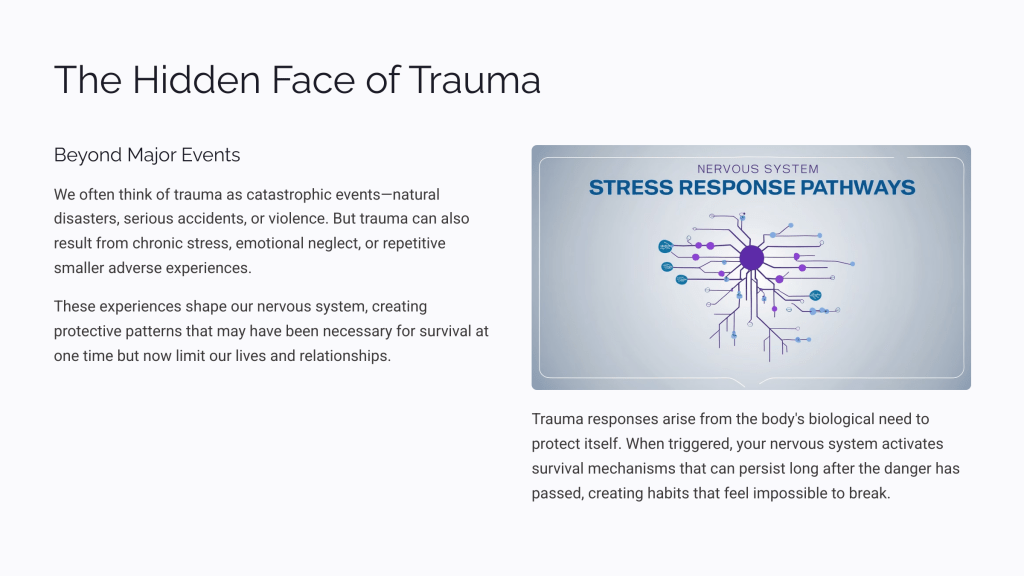
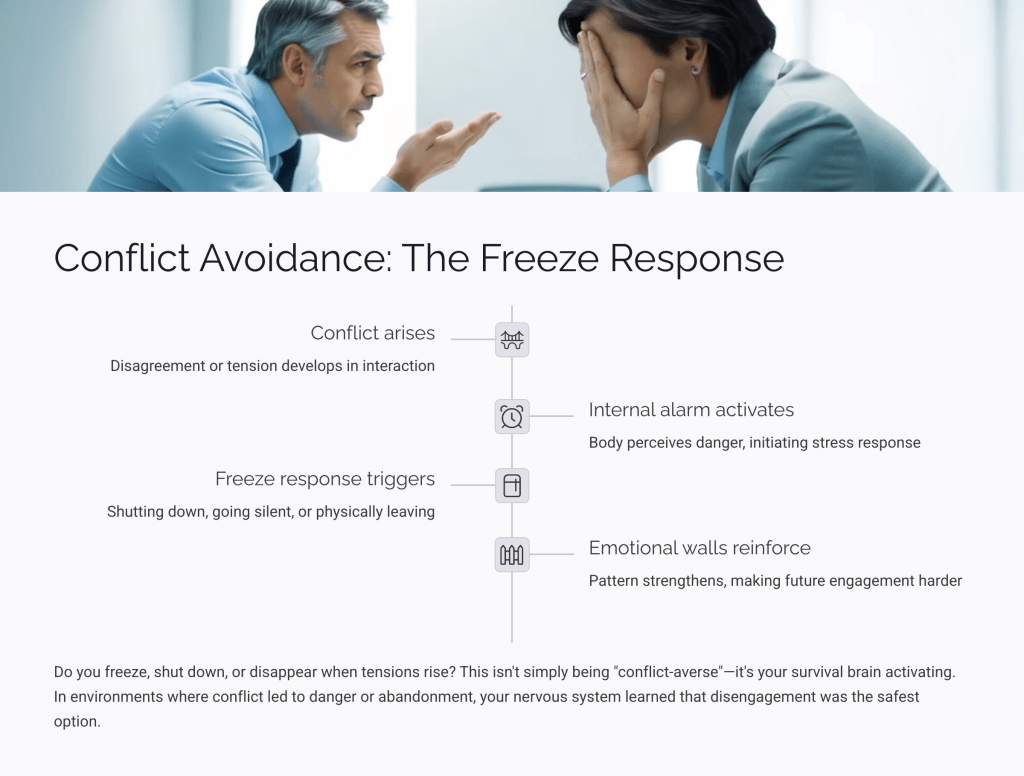
When we experience trauma or chronic stress, our nervous system can become dysregulated, causing us to get stuck in a state of fight, flight, or freeze. This dysregulation can lead to symptoms such as anxiety, depression, and chronic pain.
But the good news is that polyvagal theory provides practical tools for regulating our nervous system and managing our response to stress. Here are a few tips for applying polyvagal theory in your daily life:
Practice breathing: Slow, deep breathing can activate the parasympathetic nervous system, which can help you feel more relaxed and calm.
Engage your social engagement system: Connecting with others, even if it’s just through a phone call or video chat, can activate your social engagement system and help you feel safer and more secure.
Ground yourself in the present moment: Focusing on your senses, such as the sights, sounds, and smells around you, can help bring you back to the present moment and regulate your nervous system.
Seek professional support: A trained therapist can help you learn practical skills for managing your nervous system and healing from trauma.
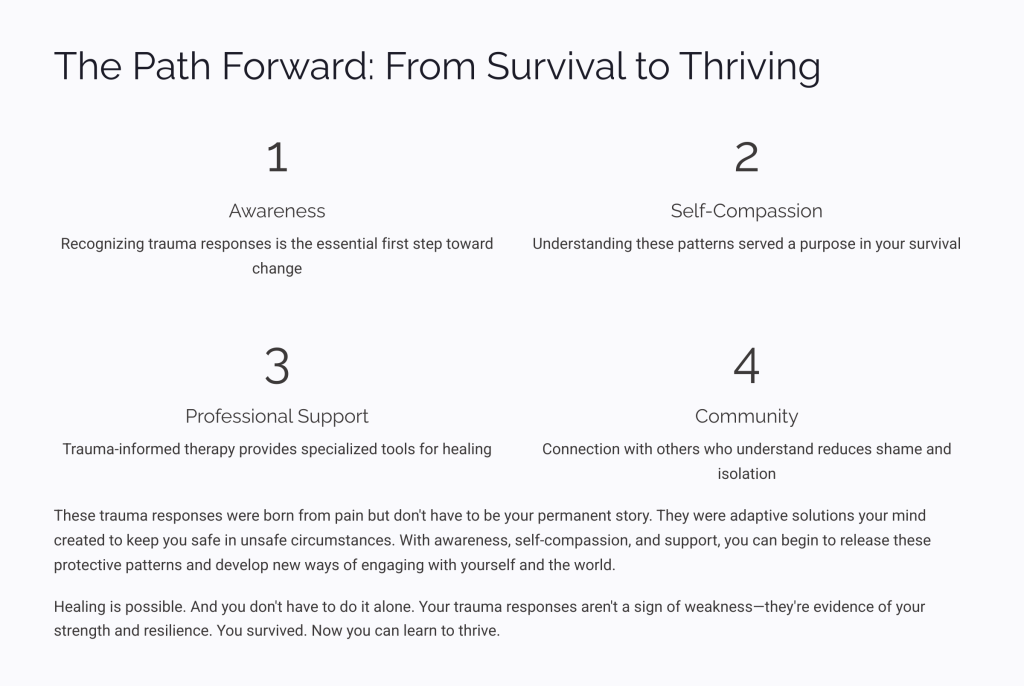
By understanding polyvagal theory and applying its principles to your daily life, you can begin to regulate your nervous system and find relief from trauma and anxiety symptoms. Remember, healing is possible, and you don’t have to do it alone.
The last two years have been one of daily uncertainty and fear, but a crisis is also a great revealer of the myths and idols we hold. It “knocks us off our thrones” and breaks our “assumptive worlds.” Our assumptions are the beliefs we hold about who we are and the world we live in…at times, like these, they don’t hold up. In fact, they can shatter into thousands of meaningless thoughts.
In social psychology, shattered assumptions theory proposes that traumatic events can change how victims and survivors view themselves and the world. We all have three inherent assumptions including “overall benevolence, the meaningfulness of the world, and self-worth.” They are the bedrock of our conceptual system, and as such, they are the ones we are least aware of and least likely to challenge. We become confident in our beliefs and use them to plan and act in daily living. If nothing challenges them they allow our lives to move along smoothly.
Sadly, traumatic life events shatter core assumptions, and coping with them requires a new effort to construct more realistic and viable assumptions. We have to rebuild our belief systems to fit the new world we live in.
Core Beliefs:
The world is benevolent
The world is meaningful
The self is worthy
This can be painful for people of faith who end up questioning their faith. When our assumptive worlds shatter, it causes believers to questions the goodness of God. They might “assume” that God is silent or uncaring. The promises they believed must be wrong since things didn’t work out the way they “believed.” Trying to reconcile a good God to their adverse life situations may turn some to question themselves, wondering if they ever heard God speak into their lives or if some sin or trauma from the past has made them unworthy of mercy.
I mean, if God never changes, then the problem must be ourselves, right? Christians believe that when they become followers they are “new creations.” New creations have to have renewed minds to find new beliefs about God’s goodness and nature in their lives. Renewal is exactly what we need when our assumptions become shattered. Neurologists called this neuroplasticity.
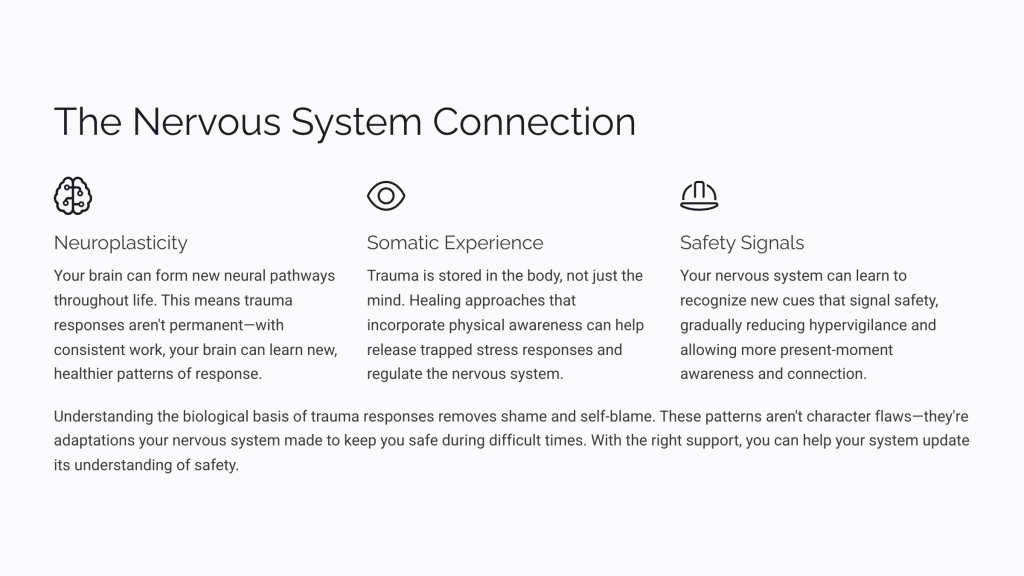
Neuroplasticity is the brain’s ability to restructure itself through training and practice, thereby creating new neuropathways in the human nervous system. Neuroplasticity, renewed minds, and rebuilt belief systems are about personal growth that is sometimes only possible after trauma.
The reason that believers feel peace after giving their lives to follow the Christian faith is that new neuropathways are being created. Transformation or growth is occurring. From a more secular viewpoint, life has a way of creating maturity in our thinking. The trick is how to not become bitter and negative afterwords.
There is a favorite verse of mine that goes: “Do not worry about anything, but in everything by prayer and supplication with thanksgiving let your requests be made known to God. And the peace of God, which surpasses all understanding, will guard your hearts and your minds in Christ Jesus. –Philippians 4:6-7 (NRSV)” Prayer and meditation increase brain neuroplasticity and makes renewal possible. Allowing our minds to let go of distractions and slow down helps us focus on what we control and let go of what we cannot. In Alcoholics Anonymous, this is the path to serenity.
After a shattering event, people are able to discover strength they didn’t know that had in them. They also find new purposes and seek out deeper connections than before. Faith also grows in people after difficulty. They start to see deeper meaning and value in their life. This is called Post-Traumatic Growth in contrast to Post-Traumatic Stress Disorder.
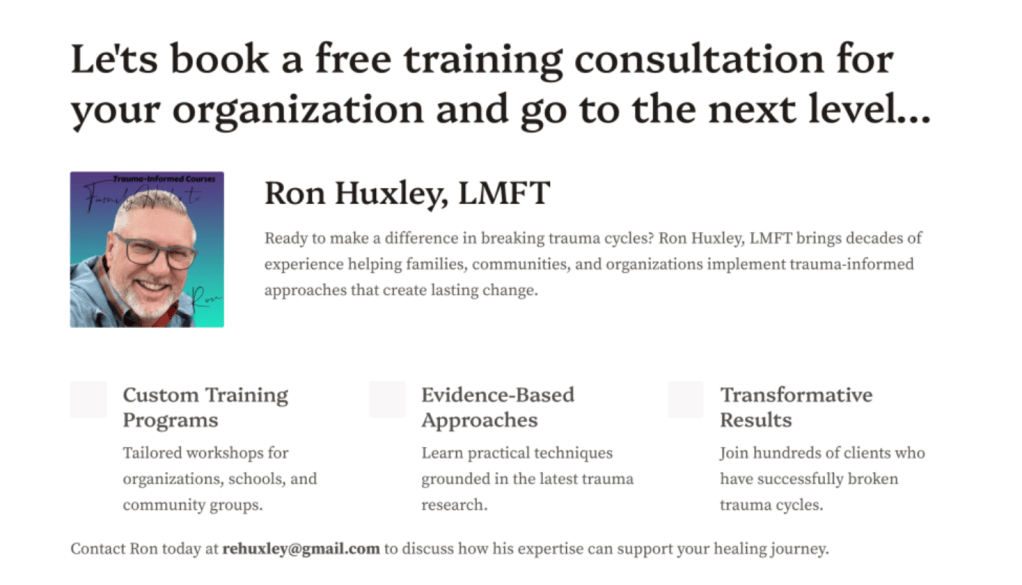
Would you like assistance recovering from a shattering event or trauma? Need new tools for your organization or group? Contact Ron Huxley today!
Resentments are defined as the “bitter indignation at being mistreated.” It is a hard feeling that creates discontent, hostility, bitterness, and an inability to trust others.
It is destructive to relationships because it is a hook to the traumatic events of the past. When we are tied to our histories, we cannot fully enjoy the present, and the future feels like a painful rerun. We make vows that we will never let anyone hurt us like we were hurt before. Unfortunately, these vows isolate and insulate us from loving relationships.
Resentment is connected to our ego. Our ego needs to be correct, and it needs to be good. When we experience trauma, it can strip away our dignity, causing us to get needs met in unhealthy ways or won’t allow anyone else to help meet those needs. We believe that “I can do it all by myself” but it feels safer when we are alone. Unfortunately, cutting others out of our lives is a very lonely life.
Resentment can also keep us stuck in a victim role. Victims need abusers to maintain this position. Therefore, our ego will fault others, reinforce the belief that people “can’t be trusted”, and only see the negative in the circumstances. We will gravitate to rescuers to make us feel good and validate our victim-mindedness.
WRITE BRAIN/RIGHT BRAIN:
Write about ways resentment keeps you stuck in the past. What are the struggles you have experienced that make trusting others difficult? Have you chosen to be right over having a relationship? Journal about ways to select connections first. Visualize what the world of your ego looks like, who lives there, and what beliefs you take as truth in your ego world.
How can you imagine a new, different world where you feel safe and secure? How would you do it this time if you could do a situation over? Have a chat with your “ego” and offer it comfort and seek what it needs to care for it healthily?
Explore your resiliency. You didn’t want to go through tough times, but you got through them. What strengths did you discover about yourself? How did this challenging experience change your priorities? Celebrate how you have grown instead of feeding the monster of resentment.
The following is from a recent study on the effects of the pandemic on our mental health, substance use, and suicidality. It is safe to say that those of us who were already experience challenges before the pandemic have seen an increase in our struggles.
Even if we never had issues with mental health or substance use, the pandemic caused us to feel depressed, anxious, and overwhelmed.
Data show COVID’s impact on nation’s mental health, substance use…
The Substance Abuse and Mental Health Services Administration (SAMHSA) has released findings from the 2020 National Survey on Drug Use and Health (NSDUH). The data suggest that the COVID-19 pandemic had a negative impact on the nation’s well-being. Americans responding to the NSDUH survey reported that the coronavirus outbreak adversely impacted their mental health, including by exacerbating use of alcohol or drugs among people who had used drugs in the past year.
Several changes to the 2020 NSDUH prevent its findings from being directly comparable to recent past-year surveys, as explained below.
Based on data collected nationally from October to December 2020, it is estimated that 25.9 million past-year users of alcohol and 10.9 million past-year users of drugs other than alcohol reported they were using these substances “a little more or much more” than they did before the COVID-19 pandemic began. During that same time period, youths ages 12 to 17 who had a past-year major depressive episode (MDE) reported they were more likely than those without a past-year MDE to feel that the COVID-19 pandemic negatively affected their mental health “quite a bit or a lot.” Adults 18 or older who had any mental illness (AMI) or serious mental illness (SMI) in the past year were more likely than adults without mental illness to report that the pandemic negatively affected their mental health “quite a bit or a lot.”
The 2020 data also estimate that 4.9 percent of adults aged 18 or older had serious thoughts of suicide, 1.3 percent made a suicide plan, and 0.5 percent attempted suicide in the past year. These findings vary by race and ethnicity, with people of mixed ethnicity reporting higher rates of serious thoughts of suicide. Among people of mixed ethnicity 18 or older, 11 percent had serious thoughts of suicide, 3.3 percent made a suicide plan and 1.2 percent attempted suicide in the past year. Among Whites 18 or older, 5.3 percent had serious thoughts of suicide, 1.4 percent made a suicide plan, and 0.5 percent attempted suicide in the past year. Among Hispanics or Latinos 18 or older, 4.2 percent had serious thoughts of suicide, 1.2 percent made a suicide plan and 0.6 percent attempted suicide in the past year. Among adolescents 12 to 17, 12 percent had serious thoughts of suicide, 5.3 percent made a suicide plan, and 2.5 percent attempted suicide in the past year.
“SAMHSA’s annual NSDUH provides helpful data on the extent of substance use and mental health issues in the United States,” said Health and Human Services (HHS) Assistant Secretary for Mental Health and Substance Use Miriam E. Delphin-Rittmon, Ph.D., who leads SAMHSA. “These data help to guide our policy directions in addressing such priorities as addiction, suicide prevention, and the intersection of substance use and mental health issues.”
It has been said that professional social workers, therapists, and front-line workers suffer from burnout 5 times more than other professionals. Perhaps everyone has experience has some form of anxiety or stress in the last couple of years. Burnout is a real, damaging condition with several emotional symptoms.
The signs and symptoms of burnout
The emotional signs of burnout might include:
Sense of failure and self-doubt.
Feeling helpless, trapped, and defeated.
Detachment, feeling alone in the world.
Loss of motivation.
Increasingly cynical and negative outlook.
Decreased satisfaction and sense of accomplishment.
Helping professionals often get their sense of identity from seeing others improve and get healthy and well. Emotionally, burnout can change helpers attitudes so they now resent or judge the people they are helping. There are many examples of long-term health or human service professionals who are just going through the motions. They are frequently irritable and grouchy, complaining about the people they are serving. They do the least amount of work possible and may even mistreat colleagues and clients.
The physical symptoms of burnout also include headaches and stomachaches. Burnout people tend don’t take as good care of themselves, eating poorly, drinking too much, and don’t exercise. Consequently, they are more likely to experience obesity and heart disease. Chronic stress will result in sleep disorders, anxiety attacks, and clinical depression.
Once you find yourself suffering from burnout, it can be difficult to turn your life around. Your best choice is to prevent burnout as soon as you see the warning signs. Here are a few helpful tips to avoid burnout.
No matter what your profession may be, it’s important to have boundaries. You can’t be available around the clock; this is simply impossible. So, to prevent burnout, it’s critical to establish boundaries of times you will not be available. This means that you won’t be in the office or available by phone or email during these times. If you are in a management position, it might help to post these hours somewhere or adjust your email auto-reply, so people know you will answer as soon as you are available.
Helpers help, right? We are rewarded for high we perform. We get praise for productivity. We start to believe that we are our work and cannot say no. This is a common but damaging mental state.
Have A Work-Life Balance
Besides just setting boundaries, you need to have time to do things that aren’t workplace-related. This means you have time for your hobbies, your family, and just doing what you love. This doesn’t have to be complicated, and it could be as simple as taking one afternoon a week to go for a walk in your favorite park. Whatever it may be, it needs to be something you want to do, and you need to put your foot down if work ever tries to interfere with your time.
It is no wonder that burnout destroys marriages. If you give your all to work, you have nothing left to give your partner or children. The world reinforces you for putting work first but this isn’t the correct order for physical and mental health. Some countries give more allowance for family leave, paid vacations, and publicly reward putting self and relationships over the job. These countries do not see a lower level of productivity. In fact, they have a higher employee retention and less costly turnover.
We are social creatures. Our brains and nervous systems are designed to function optimally when we are in healthy relationships with others. This is true for extroverts as well as introverts. Social circles include having loving, trusting family and friends. It isn’t about the number of friends in your life. It is about the quality of those friendships. You can visualize a social circle like a target, with you in the middle, and concentric circles surrounding you. The smaller, closer circles will have people who are more intimate and highly trusted. Those in the outer circles are important for various areas of your life but are not part of the inner circle. The more people in the various circles, the more buffer you have to stress. The less number or quality of people, the more likely that stress will enter and negatively affect you.
Research demonstrates that even one trusted person can dramatically decrease the negative effects of stress and so, lessen the likelihood of burnout.
The 3 R’s of Burnout Recovery
Sometimes you can’t avoid burnout and have to find healthy ways to cope. Try using the 3 R’s:
Recognize.
Reprioritize.
Redesign.
5 Finger Check In
Using the signs listed above, stop and check in periodically on how you are doing physically, emotionally, mentally, relationally, and spiritually. We call this the five finger check in. Do this with your partner or co-workers on a regular basis. Be honest. Shame likes to hide issues in darkness. Expose them so you can treat them.
If there are any signs of burnout in your life, make some changes as soon as possible. Reprioritizing your schedule, responsibilities, and relationships. Anything that is causing an inner drain should be seriously addressed.
Redesign your life. It is never too late to change your work or how you work. Many people, over the course of the last year, have started working remotely instead of going into an office. This has dramatically improved peoples mental as well as physical health. If you don’t have many people in your social circles, start by reaching out to a professional or take a risk by joining a club or group. Make sure you have a health balance of fun in your life. Take that vacation, turn off the screens, eat a good meal. Little efforts can result in big changes in your life.
This past year presented so many different challenges and obstacles that tested our strength and resiliency. The global pandemic forced us to cope with situations we never even imagined, and a lot of us struggled with our mental health as a result. The good news is that there are tools and resources available that can support the well-being of individuals and communities.
Now, more than ever, we need to combat the stigma surrounding mental health concerns. That’s why this Mental Health Month Ron Huxley is highlighting the TraumaToolbox.com- what individuals can do throughout their daily lives to prioritize mental health, build resiliency, and continue to cope with the obstacles of COVID-19.
Throughout the pandemic, many people who had never experienced mental health challenges found themselves struggling for the first time. During the month of May, we are focusing on different topics that can help process the events of the past year and the feelings that surround them, while also building up skills and supports that extend beyond COVID-19.
We know that the past year forced many to accept tough situations that they had little to no control over. If you found that it impacted your mental health, you aren’t alone. In fact, of the almost half a million individuals that took the anxiety screening at MHAscreening.org, 79% showed symptoms of moderate to severe anxiety. However, there are practical tools that can help improve your mental health. We are focused on managing anger and frustration, recognizing when trauma may be affecting your mental health, challenging negative thinking patterns, and making time to take care of yourself.
It’s important to remember that working on your mental health and finding tools that help you thrive takes time. Change won’t happen overnight. Instead, by focusing on small changes, you can move through the stressors of the past year and develop long-term strategies to support yourself on an ongoing basis.
A great starting point for anyone who is ready to start prioritizing their mental health is to take a mental health screening at MHAscreening.org. It’s a quick, free, and confidential way for someone to assess their mental health and begin finding hope and healing. Ultimately, during this month of May, Ron Huxley wants to remind everyone that mental illnesses are real, and recovery is possible.
Check out the many mental health tools create free at the TraumaToolbox.com.











 Ron Huxley LMFT