Grounding exercises are short, simple techniques that focus attention and distract from intense emotions.
They often involve focusing on environmental stimuli or pleasant, calming topics or objects.
They can usually be done with minimal equipment, such as a pen and paper, or nothing at all except one’s thoughts and imaginations.
Therefore they are versatile exercises that can be performed anywhere.
Grounding exercises quiet down extreme emotions and help survivors of trauma shift to a more rational form of thinking.
People with trauma will, from time to time, experience high stress or emotional overload.
This is true for people with acute trauma, complex trauma, even traumatic grief.
The goal is not to eradicate feelings of intense anxiety, sadness, or anger. Instead, learning how to respond to those emotions, in the moment, is key to our healing.
In the video above you will learn 5 powerful Grounding Exercises:
Item Listing
The 54321 Game
Task Visualization
The Method of Loci
The 5 Senses Technique
It’s always best to have multiple grounding techniques in your toolbox.
What works best for one stressful situation (a trauma flashback, for example) might not work best in another (such as prior to a job interview).
A technique that you use frequently may become less effective over time. It is best to use a variety of techniques to avoid becoming acclimated to them.
Some grounding exercises may not be a good fit for your temperament.
For example, some people find the Ice Cream Technique frustrating because they get stuck and can’t remember any additional flavor examples.
Other people find the 54321 Game unhelpful because it can draw attention toward unpleasant feelings or sights in their environment.
For each technique, there are modifications to help expand their usefulness. But some techniques might just not be for you.
Looking for a speaker on Trauma-Informed care for your next workshop, conference, or event? Contact Ron Huxley for more information at rehuxley@gmail.com
A particular area of interest for me is the teenage brain. It is one of the most rapidly changing periods of brain development. This is no surprise to parents who are trying to understand the rapidly changing personality of the teenager.
Perhaps the most dramatic area of development is the area called the prefrontal orbital brain. It is called this because it sits directly behind our eyeballs and it is responsible for abstract thought, moral reasoning, self-control, planning, judgment and so many other areas commonly associated with adults. This area is in constant flux, causing radical shifts in mood and attitude. This formation and reformation of the brain continue into young adulthood (the mid-20’s). I often joke with parents that while their child has the hardware upgrade, the software has not yet been installed. This is why the teen is capable of getting pregnant, driving a car or doing algebra but they don’t mean that they are completely ready for the adult world of intense responsibility or raising a family.
This poses significant challenges to parents who want to navigate the raging waters of adolescence, therefore, I am going to list four basic reminders to help parents stay sane when their child actions appear insane. I am using the acronym WORK to guide parents:
W = Remember that your child is still “wondering” about how the world works. He or she might try to convince you that they already know how it does but they don’t. They haven’t had enough experience yet for this to be possible. They need you to help them by asking “what if” questions that will explain some cause and effect relationship and assist them in planning out their day and making better judgments. Because their brain is still developing they use their “will” to fight you and cover up their inexperience. Don’t shame them. Train the “will” to find positive rewards in daily interactions. “Wait” for them to get it. It will take them longer than you as they haven’t traveled some of these morally sticky situations in life yet. Allow them a little more time to “wake” up to a new world of responsibilities and schedules.
O = Be “open” to “opportunities” for your teenage child to share some wisdom about the world and how to survive in it. Don’t preach at them as this will shut them down completely. “Occupy” the same space and look for openings when you are both in a good mood. The relational approach will be more effective and allow more “objective” conversation between you. Remember that “obedience” at this age is really about natural consequences or trial and error for the teenager. The will learn more about doing then lecturing. Being a good role model will help them understand how to use the “operators” manual called their brain more than lots of words at this time of life.
R = “Relationship” is one of the toughest things to have with the teen but one of the most important tasks a parent can do for their child. You may only have a split-second when the door is open wide enough to have that former intimacy but use it when you can. It will pay huge ‘rewards” for both of you later in life. “Recognize” that the teen is in process. They are still not fully cooked and need more time in the oven of life before they can be expected to make better decisions. They will “reflect” their peers and “respond” more from other inexperienced teenagers over their own, more experienced parents. This is not a true sign of his “respect” or “rejection.” The teen is just trying to find their own way. Don’t take this personal. “Rebelliousness” is the other side of the “readiness” coin of maturity.
K = Be “kind” to your teen as they developmentally, socially, emotionally, physically and spiritually. Turn the proverbial other cheek and smile when they growl. Reach out again when they slap away your hand. The “key” to relating to the teenager is a long-term vision. This isn’t just about today. It is about the next 10, 20, 30, 40 years of your life together. The cold response you get from that teen-child today will “kindle” into a stronger fire connection later in life. Work with that end in mind. Keep in mind this is your “kin.” They may be more like you than you care to admit. They share your nature and your nurture and need your “kudo’s” for every positive effort and the end result you can give.
It’s been reported that one out of every four children attending school has been exposed to a traumatic event that can affect their learning and/or behavior. Educators need the right information, with the right tools, to be prepared at the right time.
When children have experienced chronic and pervasive trauma, their thinking skills are literally hijacked by their emotional brain, shutting down their ability to focus, initiate tasks, follow directions, organize work, and control impulses. Everything a child needs to be successful in school.
The Emotionally Regulated Classroom:
Educators can model emotional self-regulation for their students.
They can demonstrate how to notice, name, and respond to intense feelings instead of reacting to them. Doing so, will build resilience within and beyond the classroom.
Educators can use classroom design to prepare a space that promotes self-regulation. Classrooms should, generally, be well organized, clean, well-labeled, and provide resources for overwhelmed students.
Many of the principles and techniques used to interact with students with trauma are broadly applicable to conversations with all students.
Clear, assertive, comfortable communication can establish trust and provide structure.
However, it is important for educators to realize that the emotional and social needs of students with trauma are different.
Students should be made aware, in a clear, specific fashion, what their teachers and staff expect of them.
School discipline policies should be communicated at the beginning of the year to all students, faculty, and staff, and should be consistently described.
Allowing students an opportunity to inquire about, and even challenge, rules, will increase their sense of procedural justice.
If students perceive the procedures as basically transparent and fair, they are more likely to go along with an individual decision or policy they do not agree with.
Regulation Strategies for the Classroom:
One strategy to regulated the classroom is called “Two Before Me.”
In a group discussion, a student may initially speak up whenever they have the opportunity & are called on.
However, after speaking, a student must wait for at least two other people to speak before they can raise their hand or contribute again.
This prevents conversations from being dominated by a limited few people and can reduce conflict/arguments.
Another strategy is the “Suggestion Box.”
Students with trauma often find it scary to communicate their needs or express displeasure.
Students who have been neglected may not be used to identifying or sharing needs at all.
To encourage these students to express their needs, supply them with a suggestion box or cubby hole in a circumspect place in your classroom.
Set aside a weekly or monthly time where the contents of the box are discussed or provide written answers to students concerns on a bulletin board.
You can name this box something other than a suggestion box. Perhaps call it a comment box or question box or come up with a name the class decides together. Remind students that it is OK to write feelings they are uncomfortable to say out loud as long as the feeling is not directed at a specific person, or intended to cause harm.
In the “Ouch/Oops” strategy, the classroom learns how to manage hurt feelings and resolve conflicts.
If your class adopts this rule, anyone is free to say “Ouch” if something a peer or teacher says rubs them the wrong way.
For example, if someone said something hurtful, accusatory, or generally offensive, the person who caused the “Ouch” is required to say “Oops”. It is then up to the person who said “Ouch” to determine how the conflict should be resolved, like having a private discussion or a mediation with the teacher or other peers.
Educators will need to watch for misuses of this strategy, such as a student using “Ouch” frequently to derail a conversation or target a disliked peer. Also, students may “Ouch” something benign a teacher says that they don’t like, such as assignment due date. And students may refuse to respond with an “Oops” if there are no firm rules on it.
If necessary, educators may want to restrict this strategy to personal discussions to prevent misuse. Generally speaking, older students are somewhat more likely to use “Ouch/Oops” strategy correctly but with some practice, it can be a useful regulation tool for all ages.
GET MORE Trauma-Informed Tools by contacting Ron Huxley at rehuxley@gmail.com for a consultation or in-services at your next event or conference. Click here for more information.
A generational pattern refers to behaviors or attitudes that are passed from one generation to another. This usually occurs through “learned behavior.” Take bad parenting, for example, …if you grew up in a home with abuse or neglect you might have vowed that you would never do to your own children what your parents did to you…but what happens to many families who make this vow? They end up saying and acting in a similar manner. You know the moment I am referring to when you yell at your children and realize that sounds just your mother or father? Not a good moment, right? But we learn how to act or react, right or wrong, from the previous generation
Take a moment and think something GOOD that you learned from your family of origin. Maybe it was how to cook or build things or a love to read poetry.
It would be nice if all we learned was the good stuff and we never learn anything bad from our parents but unfortunately, we do get both. Some of this is genetic. We can have temperaments, chemical makeups, and other inherited traits that come from our parents. We could grow up in a poor family and adopt some ideas about the need to “count pennies” even when we are not poor in our current family. We can also inherit depression and anxiety just like we can inherit medical issues, like certain genetic disorders or diseases.
Being able to accept the good with the bad is part of a healthy mind. This ability to understand the limitations of one’s parents and not be influenced by them is what clinicians called having a “coherent narrative.” This essentially means your story with all the good, bad, and the ugly is part of who you are but it doesn’t have to continue to define you. Your identity and your ability to have healthy, secure relationship are under your control.
If you would like to have Ron come speak on the Generational Patterns of Parenting to your organization or conference, contact him at rehuxley@gmail.com or call 805-709-2023.
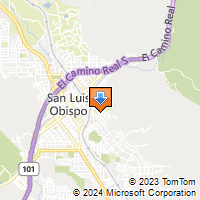
San Luis Coastal Adult School
1500 Lizzie Street, Room J2
San Luis Obispo, CA 93401 Driving Directions
Parent Connection has selected you to attend this one day workshop.
Ron Huxley, our trainer, is a noted child and family therapist, speaker and blogger who helps families in need of hope and restoration in San Luis Obispo County.
___________________________________________
Parenting is never easy. As professionals working with parents/caregivers it is important to understand some of the challenges present in generational patterns of parenting. These challenges include:
The transmission of trauma from one generation to another
Adult Attachment challenges
The life-cycle of parenting
The importance of addressing survival needs and immediate crisis before addressing sensitive, underlying trauma and unexplored issues
Through building healthy communication habits, modeling characteristics of self-aware adults, and providing concrete tools and strategies, you can build confidence and restore hope for parents/caregivers.
_________________________________________________
There will be 5 contact hours through the
Board of Behavioral Sciences. (This only applies to Therapists and Social Workers)
This training is appropriate for professionals working with parents and caregivers of children of any age.
Including parent educators, family advocates, social workers, therapists and counselors, teachers, childcare providers and health care providers.
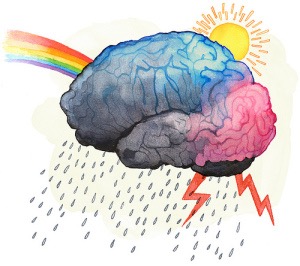
When you go through something really horrible, it can shock you to your core. Trauma can take many forms. All of them have one thing in common: Feelings of Helplessness, Anger, Fear, and being Overwhelmed.
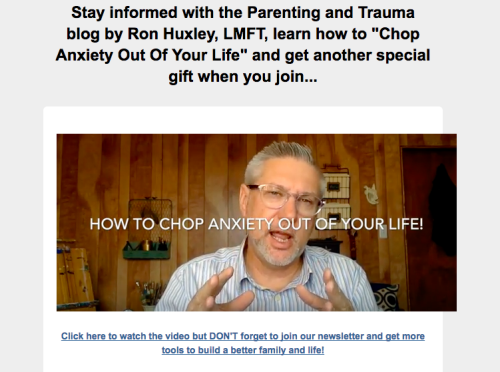
Watch the complete video on how trauma affects our lives and how you CAN heal…
> Take our FREE Parenting Course: The Full-Proof Family Meeting when you sign up to our Family Healer Newsletter…Click here now!
Great writers and painters have known this fact for decades: The body acts like a brain…
Walt Whitman understood that the flesh was the source of meaning; Auguste Escoffier discovered that taste is actually a smell; Paul Cézanne realized that the brain can decipher an image from minimal brushstrokes.
In my own trauma-informed trainings I discuss how our central nervous system, specifically the nerves surrounding our “guts”, acts as a second brain.
Did you know that there are 43 different pairs of nerves which connect the nervous system to every part of our body. Twelve of these nerve pairs are connected to the brain, while the remaining 31 are connected to the spinal cord.
Did you know that the gut has 100 million nerve cells that make up it’s own nervous system separate from the brain!
Did you know that one of the major nerve pathways from the gut to the brain is called the Vagus Nerve. The brain interprets signals from the Vagus Nerve as actual emotional information. It really doesn’t know the difference.
Did you know that there is more and more research on how the gut and gastrointestinal conditions are linked to depression, anxiety, autism, and ADHD. What we are talking about here is nutrition and not just medication can change our mental health.
And did you know that there is a reason we call certain kinds of food “comfort food”? Comfort foods affect our moods. Can someone say chocolate please?
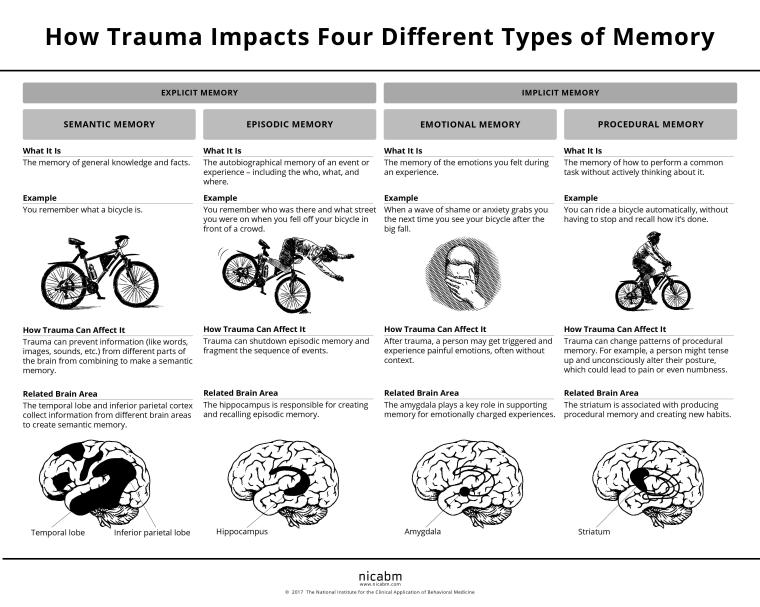
Understanding the brain/body connection can help us overcome trauma in ways that traditional talk therapy cannot. This is because a lot of times there are no words to express what trauma is doing in our lives or the trauma is so far back in infancy and during pregnancy that there was no ability to form words.
This will require a new approach to doing therapy that involves movement, sensory processing, art therapy and my own NeuroResilience Play Therapy Approach. Click here for more info.
What is your body telling you? Perhaps its time to follow your “gut” instincts today and find the help you need. Hey, writers and artists have been telling us for years this truth about our body acting like a brain. Let’s listen to what it is saying!
Every parent wants a child that is “responsible and fun to be around”. Children will enjoy being this way too. Unfortunately, traumatized children forget who they are and believe a lie instead. Trauma introduces the belief that “the world is a scary place, caregivers can’t be trusted and I am broken and damaged goods”. In addition, they believe that “no one could love me…People will get rid of me just like everyone else…I am stupid…I can only trust myself…Life is not safe”, and on it goes.
A big lie is that it is not ok to make a mistake. This is because a life of shame makes mistakes feel like a reminder that “I am a mistake too”. Fortunately, if we have believed a lie, we can also choose to believe the truth. This doesn’t always come easily. Attachment research calls this cycle “rupture and repair”. Every family has a rupture in a relationship. The healing for traumatized children comes in the repair. In that respect, a rupture is desirable. It allows the attachment relationship to be rebuilt. New Positive experiences can replace negative experiences from their past. A simple strategy is for parents to ask children: “How are you going to clean up this mess?”
A mess is a metaphor for a problem that children create in their relationships and daily living. For example, Hitting their sibling over taking a toy is a mess. Not following through on doing chores and forcing mom to repeat herself several times is a mess. Throwing a tantrum and refusing to brush their teeth is a mess. Forgetting their homework and getting a failing grade is a mess. You get the idea…
Our job as parents is to teach children how to clean up their messes and be more responsible and fun to be around. Instead of nagging, complaining or lecturing, trying asking how the child plans on cleaning up the mess they have made? This is also a way to increase leverage. At some point a child will want something from the parent. When they do you can simple refer the child back to the need to clean up their mess before you give them what they are wanting. This reinforces the concept of working together. You help me and I help you. This is how we do things in this family…
A typical response to the question is “I don’t know” to avoid taking responsibility. Don’t engage in a fight. That is how the child distracts you from the problem in front of them. In reply a parents offer some of their ideas on how the child can clean up their mess. The best idea from mom and dad are the tough, most undesirable ones. Children don’t want to do the tough ones. They want to do the easy ones. Offering the tough idea will force a child to engage in the discussion and present a better idea. This will get their thinking brains online so that they start to consider better ways to treat others and make family life more fun.
MESSES are Mom’s LEVERAGE:
Sometimes (OK, often) children will not follow through on their plan to clean up their messes. That’s fine. Parents now have another opportunity for “rupture and repair” by waiting until the child wants something from them…and you know they will.
Son: “Hey mom, can I go to Johnny’s house to play.”
Mom: “Oh wow, Johnny has that new video game you have been talking about, right?”
Son: “Yeah, it is so cool. Can I go?”
Mom: “It really would be cool but it is soooo sad!”
Son: “Sad?”
Mom: “Yes, there is still this mess you made with that tantrum yesterday and all those toys are still all over the living room. Remember how you made that plan to say you were sorry and clean them up?”
Son: “Kind of…”
Mom: “So take all the time you need to clean up that mess and then you can go to Johnny’s.”
You can only imagine the type of negotiation that the son might try at this point, right? He might even choose to get angry and throw another tantrum. More opportunities for rupture and repair. This is where mom MUST stand her ground and stay as cool and empathic as possible. Empathy has a way of keeping everyones brains level and focused on the problem on not in a heated game of “whose to blame”. With practice on how to clean up their messes, a child will learn to be more “responsible and fun to be around”.
Original concept for this tool is from the book “Love and Logic”
Let Ron Huxley provide a trauma-informed training for your next event or up-coming conference. Click here!
Join our newsletter and get all of Ron’s Family Healer posts plus special member only reports and videos. Subscribe here!
Art can be a way for us to heal from intense grief and trauma. Some things can’t be expressed complete in words and require the aid of images and sensory expressed movements.
It can help us transcend our emotional pain and find ways to regulate our nervous systems that encode trauma in our memories. Even when our minds cannot remember our traumatic pasts, our body still remembers.
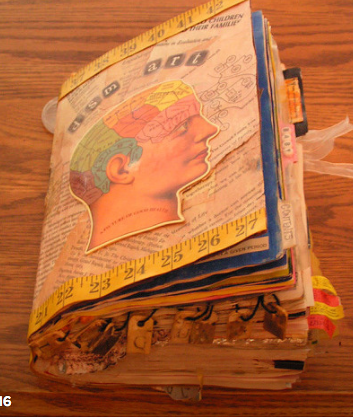
The french painter, Charles Braque, stated that “art is a wound turned to light.” Art takes many forms. One contemporary form of art is called Altered Books. an Altered book is a form of mixed media artwork that changes a book from its original form into a different form, altering its appearance and meaning.
Ron Huxley, a family art therapist, altered a diagnostic and statistical manual along with a group of therapists to demonstrate how therapists can overuse labels to diagnose mental disorders and risk losing the essence of humanity each client brings to therapy. Therapists can take themselves too seriously and transforming a dry clinical manual with fresh artistic insights can make them better healers.







 Ron Huxley LMFT