Page 3 of 13

Why Your Stuffed Animal is a Comforting Object…

The concept of transitional objects originated from the work of renowned psychoanalyst D.W. Winnicott in the mid-20th century. Winnicott introduced the idea that particular objects, often soft and comforting, like stuffed animals or blankets, play a transitional role in a child’s life as they navigate the process of growing independence. These objects, typically chosen by the child themselves, help them feel secure and provide a sense of continuity and comfort during transition or stress, such as separation from their primary caregiver.

Trauma-informed care is an approach to providing support and treatment that recognizes the prevalence and impact of trauma on individuals. It involves creating an environment of safety, trust, and empowerment for those who have experienced trauma. In a trauma-informed care framework, professionals consider the potential effects of trauma on a person’s behavior, emotions, and overall well-being. They prioritize their physical and emotional safety, provide choices and autonomy, and promote a collaborative and strengths-based approach to healing.

Finding Comfort from Your “Stuffy”:

For several reasons, a stuffed animal can be a comforting object to someone who has experienced trauma, even into adulthood. First, a stuffed animal’s soft texture and familiar presence can provide comfort and security. It can remind them of a time when they felt safe and protected, helping to alleviate anxiety or distress.

Additionally, a stuffed animal can become a symbolic representation of emotional support and companionship. It may be a constant presence that offers unconditional love and understanding, especially during emotional distress. This can be particularly important for individuals who have experienced trauma, as they may find it challenging to trust or connect with others.

Furthermore, a stuffed animal can provide a tangible outlet for soothing and self-soothing behaviors. It can be squeezed, held, or cuddled, releasing tension and promoting relaxation. Engaging with the stuffed animal in this way can create a calming effect and help regulate emotions during moments of distress.

Moreover, the familiarity and consistency of a stuffed animal can create a sense of stability and predictability, which is particularly valuable for individuals who have experienced trauma. It can act as a reliable anchor in their lives, offering a sense of control and reassurance when other aspects may feel uncertain or overwhelming.

Self-Soothing Strategies:

DBT (Dialectical Behavior Therapy) self-soothing activities are techniques commonly used in therapy to help individuals manage distress and regulate their emotions. DBT is a cognitive-behavioral therapy that teaches individuals skills to improve emotional regulation, interpersonal effectiveness, and distress tolerance. Self-soothing activities in DBT aim to help individuals calm themselves during times of heightened emotional intensity or distress. These activities can vary widely but often involve engaging the senses, such as listening to calming music, using aromatherapy, taking a warm bath, practicing deep breathing exercises, or engaging in gentle physical activity like yoga or walking.

By utilizing self-soothing activities, individuals can cultivate a sense of self-care and emotional regulation, promoting resilience and well-being in the face of challenging situations or traumatic experiences.

The 1-Minute Cure for Distressing Emotions

If you have ever felt that there isn’t enough time to manage your emotional and mental health or you get stuck in the same distressing place repeatedly, here are some quick 1-minute self-soothing activities to find some breakthrough.

These activities come from a therapeutic practice called Dialectical Behavior Therapy or DBT. DBT is all about helping you manage your emotions and build better relationships. It’s like having a toolkit with practical skills to handle tricky situations and care for yourself. Imagine you’re facing distressing emotions or struggling with intense mood swings. It teaches you how to recognize and understand your emotions so they don’t feel like a wild rollercoaster ride you have no control over.

One of the strengths of DBT is mindfulness. It’s all about being present at the moment, fully aware of what’s happening inside and around you. It’s like pressing the pause button on your busy thoughts and taking a breather. By practicing mindfulness, you can find some calmness in the chaos.

DBT also shines a light on something called interpersonal effectiveness. It’s like giving you a secret handbook on communicating better, setting boundaries, and building healthy relationships. You’ll learn to express your needs, listen to others, and find that sweet spot where everyone feels heard and respected.

Now, let’s not forget about distress tolerance. Life can throw some curveballs your way, right? DBT helps you develop strategies to handle those challenging moments without worsening things. It’s like having a shield that protects you from getting overwhelmed when things don’t go as planned.

DBT also tackles unhelpful thoughts and beliefs. It helps you challenge negative self-talk and find more balanced perspectives. It’s like rewiring your brain to think more positively and realistically. You’ll discover that you can do amazing things and that setbacks don’t define you.

Ultimately, the goal of DBT is to help you create “a life worth living.” It’s about finding balance, cultivating self-acceptance, and building a solid foundation for your well-being. With DBT, you’ll have the tools and support to tackle life’s challenges head-on and create a brighter future.

Here’s a list of 25 different 1-minute self-soothing activities to regulate your emotions:

  1. Take three deep breaths, focusing on the sensation of the air entering and leaving your body.
  2. Squeeze a stress ball or a soft object in your hand.
  3. Repeat a positive affirmation or mantra to yourself.
  4. Close your eyes and visualize a calm and peaceful place.
  5. Listen to a calming or instrumental piece of music.
  6. Stretch your body and release tension.
  7. Take a quick walk around the room or step outside for fresh air.
  8. Massage your temples or gently rub your hands together for a few seconds.
  9. Write down three things you are grateful for in a gratitude journal.
  10. Drink a small glass of water mindfully, focusing on the sensation of each sip.
  11. Look out the window and notice five things in your surroundings.
  12. Count backward from 10 to 1, allowing yourself to relax with each number.
  13. Hold and stroke a soft fabric or a favorite plush toy.
  14. Repeat a calming word or phrase silently to yourself.
  15. Do a quick body scan, noticing any areas of tension and consciously releasing them.
  16. Hum a soothing tune or sing a calming song to yourself.
  17. Use a scented hand lotion and focus on the fragrance as you rub it into your hands.
  18. Take a mindful pause and observe your thoughts without judgment.
  19. Apply gentle pressure to your temples with your fingertips and massage in circular motions.
  20. Use a stress-relief app or listen to a guided meditation for one minute.
  21. Look at a photo or image that brings you joy and smile at the associated memory.
  22. Do a quick yoga or stretching pose, such as a standing forward bend or a shoulder roll.
  23. Repeat “I am calm and in control” silently or aloud.
  24. Hug yourself tightly for a few seconds, providing comfort and warmth.
  25. Practice a simple gratitude exercise by listing three things you appreciate about yourself.

Remember, these self-soothing activities provide quick relief and promote relaxation in just one minute. Feel free to customize the list based on your preferences and experiment with different techniques to find what works best.

Get a complete list of DBT Regulation Skills by clicking here!

Let Ron Huxley help you today with your emotional regulation and mood. Click here to schedule an appointment.

“Understanding Polyvagal Theory: A Pathway to Healing from Trauma and Anxiety”

If you’ve ever experienced trauma or anxiety, you know how debilitating it can be. It can feel like you’re constantly stuck in a state of fight, flight, or freeze. But what if there was a scientific explanation for why this happens? That’s where polyvagal theory comes in.

The polyvagal theory is a groundbreaking theory developed by Dr. Stephen Porges that explains how the nervous system responds to stress and trauma. According to the theory, three branches of the nervous system work together to regulate our response to stress: the sympathetic nervous system, the parasympathetic nervous system, and the newest branch, the social engagement system.

The sympathetic nervous system is responsible for the fight or flight response, activated when we sense danger. The parasympathetic nervous system is responsible for the rest and digest response, which is activated when we’re in a relaxed state. The social engagement system is responsible for our ability to connect with others and feel safe in social situations.

When we experience trauma or chronic stress, our nervous system can become dysregulated, causing us to get stuck in a state of fight, flight, or freeze. This dysregulation can lead to symptoms such as anxiety, depression, and chronic pain.

But the good news is that polyvagal theory provides practical tools for regulating our nervous system and managing our response to stress. Here are a few tips for applying polyvagal theory in your daily life:

  1. Practice breathing: Slow, deep breathing can activate the parasympathetic nervous system, which can help you feel more relaxed and calm.
  2. Engage your social engagement system: Connecting with others, even if it’s just through a phone call or video chat, can activate your social engagement system and help you feel safer and more secure.
  3. Ground yourself in the present moment: Focusing on your senses, such as the sights, sounds, and smells around you, can help bring you back to the present moment and regulate your nervous system.
  4. Seek professional support: A trained therapist can help you learn practical skills for managing your nervous system and healing from trauma.

By understanding polyvagal theory and applying its principles to your daily life, you can begin to regulate your nervous system and find relief from trauma and anxiety symptoms. Remember, healing is possible, and you don’t have to do it alone.

Promoting Healing and Resilience: Trauma-Informed Parenting Strategies for Self-Regulation in Children

Trauma-informed parenting is an approach to parenting that considers the impact of trauma on a child’s emotional and psychological well-being. It recognizes that children who have experienced trauma, abuse, or neglect may struggle to regulate their emotions, form positive relationships, and cope with stress.

Trauma-informed parenting involves creating a safe, stable, and supportive environment for children who have experienced trauma. It emphasizes the importance of safety and predictability while promoting healing and resilience.

Trauma-informed parenting also emphasizes the importance of understanding a child’s trauma history and its impact on their behavior and emotions. This involves being aware of triggers that may re-traumatize a child and learning to respond in a supportive and validating way.

Trauma-informed parenting uses positive discipline strategies that teach appropriate behavior and promote self-regulation rather than punishment or harsh discipline. It also emphasizes the importance of helping children build positive relationships and promoting their sense of self-worth.

Overall, trauma-informed parenting is an approach that emphasizes understanding and responding to a child’s needs in a way that promotes healing, resilience, and positive development.

Promoting self-regulation in a traumatized child can be a challenging but essential aspect of trauma-informed parenting. Self-regulation involves a child’s ability to manage their emotions, thoughts, and behaviors in response to internal and external stressors.

Here are some strategies parents can use to promote self-regulation in their traumatized child:

  1. Model self-regulation: Children learn through observation, so parents must model healthy self-regulation strategies, such as deep breathing, mindfulness, or other coping techniques.
  2. Provide a predictable routine: A consistent and predictable pattern can provide a sense of safety and security for a traumatized child, which can help promote self-regulation.
  3. Create a calming environment: Creating a calm and soothing environment can help a child feel more relaxed and in control, which can help promote self-regulation. This may involve using soft lighting, calming music, or other sensory tools.
  4. Teach coping skills: Teach your child healthy coping skills, such as deep breathing, mindfulness, or other relaxation techniques, to help them manage their emotions and calm their body.
  5. Use positive reinforcement: Praise your child when they demonstrate self-regulation skills and reinforce positive behavior with rewards or incentives.
  6. Encourage physical activity: Physical activity can help a child release pent-up energy and emotions, which can help promote self-regulation. Encourage your child to participate in sports, dance, or yoga activities.

Parents can use these strategies to help their traumatized child develop healthy self-regulation skills, promoting healing, resilience, and positive development.

Self-Regulation

Promoting self-regulation in a traumatized child can be a challenging but essential aspect of trauma-informed parenting. Self-regulation involves a child’s ability to manage their emotions, thoughts, and behaviors in response to internal and external stressors.

Here are some strategies parents can use to promote self-regulation in their traumatized child:

  1. Model self-regulation: Children learn through observation, so parents must model healthy self-regulation strategies, such as deep breathing, mindfulness, or other coping techniques.
  2. Provide a predictable routine: A consistent and predictable pattern can provide a sense of safety and security for a traumatized child, which can help promote self-regulation.
  3. Create a calming environment: Creating a calm and soothing environment can help a child feel more relaxed and in control, which can help promote self-regulation. This may involve using soft lighting, calming music, or other sensory tools.
  4. Teach coping skills: Teach your child healthy coping skills, such as deep breathing, mindfulness, or other relaxation techniques, to help them manage their emotions and calm their body.
  5. Use positive reinforcement: Praise your child when they demonstrate self-regulation skills and reinforce positive behavior with rewards or incentives.
  6. Encourage physical activity: Physical activity can help a child release pent-up energy and emotions, which can help promote self-regulation. Encourage your child to participate in sports, dance, or yoga activities.

Parents can use these strategies to help their traumatized child develop healthy self-regulation skills, promoting healing, resilience, and positive development.

Let Ron Huxley help you and your family find a pathway to healing. Schedule a session today by clicking here!

Reflection and Journaling for the New Year

Reflections and journaling are powerful tools that can help us better understand ourselves and our lives. They can provide a sense of clarity, direction, and purpose, and can even lead to personal growth and transformation.

What is reflection?

Reflection is the process of thinking deeply about something, considering different perspectives, and learning from past experiences. It involves evaluating and analyzing events, actions, and feelings, and considering their significance and impact.

Reflection can take many forms, including self-reflection, where we reflect on our own thoughts, feelings, and behaviors; and external reflection, where we reflect on the experiences and perspectives of others. Reflection can also be formal or informal, depending on the context and the purpose of the reflection.

Why is reflection important?

Reflection is an essential part of the learning process, as it helps us make sense of our experiences and understand how they relate to our goals and values. It can also help us identify patterns and trends in our behavior and thought processes, and identify areas for improvement or growth.

Reflection can also provide a sense of perspective and clarity, and help us better understand ourselves and the world around us. It can be a way to process and make sense of difficult experiences, and can even help us find meaning and purpose in our lives.

How do we reflect?

There are many different ways to reflect, and what works best for you will depend on your personal style and preferences. Some common methods of reflection include:

• Writing in a journal: This can be a great way to capture your thoughts and feelings on paper, and can be especially helpful for processing and making sense of difficult experiences.

• Talking to someone: Sharing your thoughts and feelings with a trusted friend, family member, or therapist can be a helpful way to reflect on your experiences and gain insight.

• Meditating or practicing mindfulness: These practices can help you focus your attention on the present moment and reflect on your thoughts and feelings without judgment.

• Engaging in creative activities: Creative activities like drawing, painting, or writing poetry can be a way to express and explore your thoughts and feelings in a different way.

• Doing something physical: Engaging in physical activities like exercise or yoga can be a way to reflect on your thoughts and feelings while also taking care of your physical well-being.

Why is journaling important?

Journaling is a form of reflection that involves writing down your thoughts and feelings on a regular basis. It can be a powerful tool for personal growth and development, and has a number of benefits, including:

• Providing a sense of clarity and perspective: Writing down your thoughts and feelings can help you better understand and make sense of them. It can also provide a sense of perspective and help you see things in a new light.

• Enhancing self-awareness: Journaling can help you become more self-aware by providing a space to reflect on your thoughts, feelings, and behaviors. This can help you identify patterns and trends, and better understand your strengths and areas for growth.

• Promoting emotional well-being: Journaling can be a way to process and express difficult emotions, and can even help reduce feelings of stress and anxiety.

• Setting goals and tracking progress: Journaling can be a way to set goals and track your progress towards achieving them. It can also help you reflect on what is and isn’t working, and make any necessary adjustments.

Journaling is a simple but powerful tool that can help improve your mental well-being and overall quality of life. It involves writing down your thoughts and feelings on a regular basis, and can provide a sense of clarity, perspective, and self-awareness. It can also be a way to process and express difficult emotions, set goals, and track progress.

If you’re new to journaling, or are looking for ways to make it a more meaningful and beneficial practice, here are some tips to get started:

1. Find a comfortable and private space to journal

It’s important to have a dedicated space where you can journal without distractions or interruptions. This can be a physical space, like a quiet room or cozy corner, or it can be a virtual space, like a private journaling app or document. Make sure you have everything you need, like a pen and paper or a laptop, and create a comfortable and inviting atmosphere.

2. Choose a journaling method that works for you

There are many different ways to journal, and what works best for you will depend on your personal style and preferences. Some options include:

• Pen and paper: This is a traditional and simple way to journal, and can be especially helpful for those who enjoy the physical act of writing.

• Digital journaling: There are many apps and online platforms available that allow you to journal electronically. This can be a convenient option if you’re always on the go or prefer typing to writing.

• Creative journaling: If you’re more creative and artistic, you might enjoy using your journal as a canvas for drawing, painting, or collaging.

• Prompted journaling: If you’re struggling to know what to write about, you might find it helpful to use prompts or questions to get started. There are many online resources and journals available that provide prompts for different topics and themes.

3. Set a regular journaling schedule

To get the most out of journaling, it’s important to make it a regular practice. Choose a time of day that works best for you, and try to set aside at least 15-20 minutes for journaling. You might find it helpful to journal at the same time each day, or to schedule specific times for different types of journaling (e.g., morning pages, gratitude journaling).

4. Write freely and without judgment

One of the key benefits of journaling is that it provides a safe and private space to explore your thoughts and feelings. It’s important to remember that your journal is for you, and that you don’t have to worry about grammar, spelling, or structure. Just write freely and let your thoughts and feelings flow.

5. Be honest and authentic

Journaling is an opportunity to be honest and authentic with yourself, so don’t hold back. Write about what’s really on your mind, even if it’s difficult or uncomfortable. You might be surprised at the insights and revelations that come from this process.

6. Reflect on and learn from your journaling

Journaling is a form of reflection, so it’s important to take some time to review and analyze your writing. Look for patterns and trends in your thoughts and feelings, and consider how they relate to your goals and values. Use your journaling as a way to learn about yourself and identify areas for growth and improvement.

7. Consider sharing your journal with someone you trust

Sharing your journal with a trusted friend, family member, or therapist can be a powerful way to gain additional insights and support. It’s important to choose someone who is supportive and non-judgmental, and to only share what you feel comfortable sharing.
Emotional Regulation Tools for Stressed-Out People

Emotional regulation is the ability to manage and respond to our emotions in a healthy and productive way. It’s a crucial skill to have, especially for those who struggle with stress and anxiety. When we’re overwhelmed by negative emotions, it can be difficult to think clearly and make good decisions. However, with some practice and effort, we can learn to regulate our emotions and feel more in control of our lives.

Here are some strategies for improving emotional regulation in times of stress and anxiety:

1. Practice mindfulness: Mindfulness is the practice of bringing your attention to the present moment, without judgment. It can help you become more aware of your thoughts and emotions, and allow you to respond to them in a more thoughtful way. Try setting aside a few minutes each day to sit quietly and focus on your breath, or try a guided mindfulness meditation.

2. Use deep breathing: Deep breathing is a simple but effective way to calm the body and mind. When we’re stressed or anxious, our breath tends to become shallow and rapid. By slowing down and deepening our breath, we can help activate the body’s natural relaxation response. Try taking a few slow, deep breaths whenever you’re feeling overwhelmed.

3. Engage in physical activity: Exercise can be a great way to reduce stress and improve emotional regulation. It releases endorphins, which are chemicals that improve mood and reduce feelings of stress. Plus, getting your body moving can be a great distraction from negative thoughts and emotions.

4. Practice gratitude: Focusing on the things we’re grateful for can help shift our perspective and improve our mood. Try keeping a gratitude journal where you write down three things you’re grateful for each day. Or, share your gratitude with a friend or family member.

5. Seek support: It’s important to remember that you don’t have to face stress and anxiety alone. Talk to a trusted friend or family member about how you’re feeling, or consider seeking support from a mental health professional.

6. Use positive self-talk: Our thoughts have a powerful impact on our emotions. When we’re struggling with stress and anxiety, it’s common to have negative thoughts about ourselves or the situation. By practicing positive self-talk, we can reframe these negative thoughts and improve our emotional well-being. For example, instead of telling yourself “I can’t handle this,” try saying “I’m doing the best I can and I will get through this.”

7. Take breaks: It’s important to give yourself time to relax and recharge. Make sure to schedule breaks into your day and take time to do things you enjoy. This could be something as simple as going for a walk or reading a book.

8. Use relaxation techniques: There are a variety of relaxation techniques that can be helpful for managing stress and anxiety. These might include progressive muscle relaxation, visualization, or guided imagery. Experiment with different techniques to see what works best for you.

9. Set boundaries: It’s important to set boundaries and make sure you’re not taking on more than you can handle. Learn to say no to things that don’t align with your values or that are overwhelming for you.

10. Seek professional help: If you’re struggling to manage your stress and anxiety on your own, it may be helpful to seek the support of a mental health professional. They can provide you with tools and strategies to help you cope with difficult emotions and improve your overall well-being.

Emotional regulation is a skill that can be developed with practice. It’s not always easy, but it’s worth the effort. By using the strategies outlined above, you can learn to manage your emotions in a healthy and productive way, even in times of stress and anxiety.

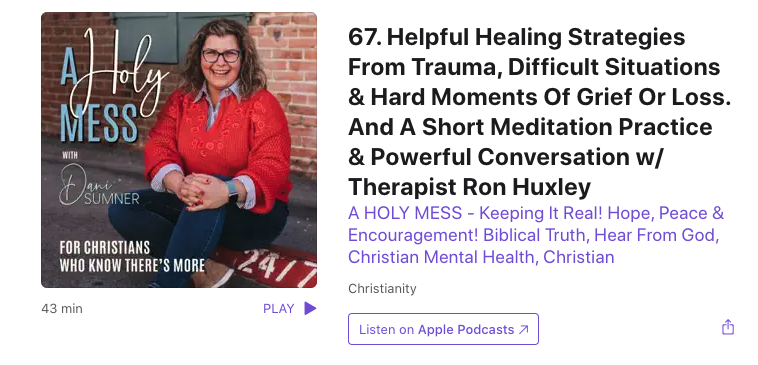
Helpful Healing Strategies from Trauma, Difficult Situations & Hard Moments of Grief or Loss (a Holy Mess Podcast)

I am so excited to guess again on the Holy Mess Podcast (see the link below). The show creator, Dani Sumner, has the #1 Christian Mental Health podcast on Spotify. This episode talks about healing from a body, mind, and spirit perspective. At the end of the podcast, I will lead you through a short meditation on how to “resource” safety from each perspective. You don’t want to mess with this podcast: Click here now!

6 Steps Adoptive Parents Need to Learn

When you adopt a child, it’s not uncommon to find yourself parenting a child who has been traumatized. The emotional regulation skills that all children learn in their early years were probably not developed as well as they could have been in the child’s pre-adoption life, and now you’re facing the task of helping your child learn how to manage their emotions.

It’s not always easy, but some strategies can help make this process easier. Here are some tips for dealing with emotionally dysregulated children who were adopted:

1.) Learn about trauma and its effects on developing minds and bodies.

2.) Learn about emotional regulation and how it develops in children.

3.) Identify what emotional regulation looks like for your child—what do they do when they get upset? How do they express anger? Frustration? Sadness? Joy? What helps them calm down when they get upset? What makes them get upset or escalate into inappropriate behaviors? And most importantly: what doesn’t work when they feel overwhelmed by intense emotions?

4.) Since every child is unique, there is no one-size-fits-all approach. Learn brain-based parenting skills and methods.

5) Identity the attachment styles for each family member and discover techniques that create greater security.

6) Take care of yourself. Self-care is not a luxury. It is necessary to be more patient and resilient with your dysregulated child.

Take a free course on Trauma-Informed Care in the home, school, and community at TraumaToolbox.com.

If you need specialized help, contact Ron Huxley today by clicking here and scheduling an appointment.

20 Ways to Forgive – Infographic

How to invite forgiveness to bless your life…

Forgiveness is both a decision and a process. Choose one of the ways listed in this infographic to implement in your life for one week. Assess how it has blessed you and then try a new way until you feel the weight of hurt and bitterness lessen.