Page 11 of 13


Mosaic Weighted Blankets for sensory processing disorders in Autims, ADHD, Trauma and more.
The Benefits of Mosaic Weighted Blankets® for Anxiety, Stress, and Insomnia
Adults, teens, and children can benefit from weighted blanket therapy. Mosaic Weighted Blankets are a safe and effective non-drug therapy for anyone seeking a solution for loss of sleep and relaxation.
“In psychiatric care, weighted blankets are one of our most powerful tools for helping people who are anxious, upset, and possibly on the verge of losing control,” says Karen Moore, OTR/L, an occupational therapist in Franconia, N.H.
“These blankets work by providing input to the deep pressure touch receptors throughout the body,” Moore says. “Deep pressure touch helps the body relax. Like a firm hug, weighted blankets help us feel secure, grounded, and safe.” Moore says this is the reason many people like to sleep under a comforter even in summer. (Source: Psychology Today)
How to Have a SAFER Home!
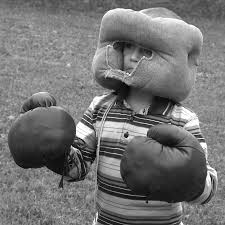
Fear destroys families and why you must make it “feel” safer
By Ron Huxley, LMFT
Fear is one of the biggest reasons for family power struggles and defiance in children. It shifts the atmosphere of the home and causes use to react instead of acting in a safe and sane manner toward one another. All families fight. You can create a S.A.F.E.R. H.O.M.E. to battle against problems instead of people you love.
Are you in a constant power struggle with your children? Feeling a little helpless to manage the continual arguments and competition between children in your home? Tired of yelling, bribing, and negotiating to get cooperation? Well here is a 9 step plan to help you create a “safer home”:
S = Stop what you are doing. Your probably reacting to the stress of the situation and making things worse. Take some time to…
A = Assess the situation, environment, mood and motivations of your child(ren). What are they doing? Why are they doing it? How are you handling it? Who is involved? Just notice for now…
F =Focus on one problem or priority to address. Don’t try to tackle all the issues. Try and address the core issue that affects the most people/variables. This will allow you to…
E = Empathize with your child’s feelings. State: “I can understand how you would feel this way or want to act in a certain way, however…”
R = Respond (versus reacting) by offering alternative solutions or asking for responses from the children to come up with the alternatives themselves. This activates all areas of the brain through empathy development (right brain and emotional centers of the brain) and logical thought (left brain and cause and effect areas of the brain)…
H = Help children with suggestions for things they could try if they cannot come up with their own or if they won’t do it. “Would you like some ideas? What if we do x or y?”…
O = Offer choices. Would you rather share the toy or find a new one? Brush teeth before or after putting on your pajamas? The more choices and the smaller they are spread out through the day the more compliance you will get. Choices mean power but only offer ones you can live with and be ready to…
M = Maintain your position when they go for that third choice you didn’t offer them. If they do this, you know you are playing a game that no one will win. You may have to be a broken record and repeat the choice two choices two times (this is important to only do it twice) and then…
E = Execute the choice everyone agreed to or take action if they can’t or won’t agree to one. You chose A or B. This is “do or die” when it comes to parenting. Be ready to stick to your choice and don’t back down. If you do, you give total control back to your child. The fight might be tough today but tomorrow it will be easier and easier the day after that until finally it will be a rare day that you have to fight it at all. Won’t that be nice and safe?
// Never miss a post by Ron Huxley again. Click here to join our newsletter //

Do you have Trauma A or Trauma B?

There are two types of trauma: Trauma A and Trauma B. Do you know the difference? Which one has impacted you? One is much more recognized by society but both are important to healing from trauma, managing anger and aggression and improving our family relationships.
(via https://www.youtube.com/watch?v=ZXWUrRXSSoU)
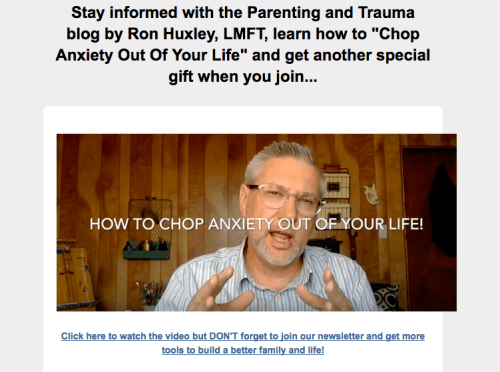
Get our special report “5 Steps to Transforming Trauma” here!


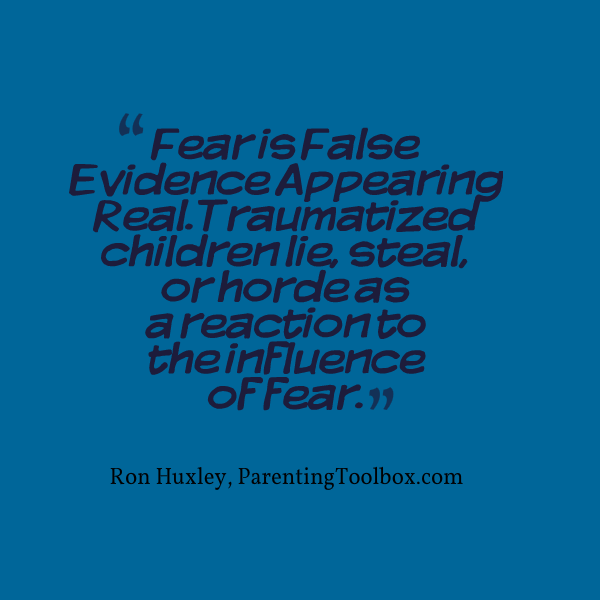
Children who have been abused and neglected suffer from an internal model of fear. The world is a scary place. Providers, regardless of the amount of love and tenderness, can’t be trusted. Behaviors can go to the extreme and violate social norms and expectations but these behaviors were normal in an abnormal world. They are now abnormal in a normal family! Unfortunately, children who have been maltreated still operated under F.E.A.R. or False Evidence Appearing Real.

(via https://www.youtube.com/watch?v=EPHjLe7MVYE)
Floortime introduction for children with developmental delays due to autism and trauma (special needs).
Abused Children Similar to War Vets

Children who have been abused or witnessed violence suffer similar trauma to war veterans…
LONDON (Reuters) Children exposed to family violence show the same pattern of activity in their brains as soldiers exposed to combat, scientists said on Monday. In a study in the journal Current Biology, researchers used brain scans to explore the impact of physical abuse or domestic violence on children’s emotional development and found that exposure to it was linked to increased activity in two brain areas when children were shown pictures of angry faces.
Previous studies that scanned the brains of soldiers exposed to violent combat situations showed the same pattern of heightened activity in these two brain areas the anterior insula and the amygdala which experts say are associated with detecting potential threats. This suggests that both maltreated children and soldiers may have adapted to become “hyperaware” of danger in their environment, the researchers said. “Enhanced reactivity to a…threat cue such as anger may represent an adaptive response for these children in the short term, helping keep them out of danger,” said Eamon McCrory of Britain’s University College London, who led the study.
 Ron Huxley LMFT