Page 2 of 5

Back-To-School Stress: Supporting Anxious Children and Coping with School Refusal

As summer days give way to the crisp air of autumn, a familiar but often challenging chapter unfolds in the lives of many families: the return to school. While back-to-school excitement fills the air for some, it’s essential to acknowledge that many children experience varying degrees of anxiety, panic, or outright refusal when faced with the prospect of returning to the classroom. This article aims to shed light on the common phenomenon of back-to-school stress, with a particular focus on parents whose children are feeling anxious, panicky, or refusing to go to school.

Understanding Back-to-School Stress

Back-to-school stress is a perfectly normal response to the significant changes that come with the start of a new school year. Even under typical circumstances, children might experience heightened anxiety as they grapple with new teachers, classmates, schedules, and academic challenges. However, the COVID-19 pandemic has introduced a new layer of complexity to this issue. Extended periods of remote learning, social isolation, and uncertainty have intensified feelings of anxiety in many students.

Identifying the Signs

Parents should be vigilant in recognizing signs of back-to-school stress in their children, which can manifest in various ways. Some common indicators include:

  1. Physical Symptoms: Headaches, stomachaches, nausea, and sleep disturbances are often physical manifestations of stress in children.
  2. Emotional Changes: Increased irritability, mood swings, tearfulness, or clinginess may signal underlying anxiety.
  3. Behavioral Shifts: Refusal to attend school, withdrawal from friends and family, and reluctance to participate in activities they once enjoyed are red flags.
  4. Academic Struggles: A sudden drop in academic performance can be a sign that a child is struggling to cope with stress.
  5. Expressing Worry: Children may voice concerns about various aspects of school, such as making friends, academic pressure, or fear of bullying.

Supporting Anxious Children

  1. Open Communication: Encourage open and non-judgmental communication with your child. Let them express their fears and concerns without interruption, and validate their feelings.
  2. Normalize Anxiety: It’s essential to normalize anxiety as a common human experience. Share your own experiences with stress and discuss healthy ways to manage it.
  3. Establish Routines: Predictable routines provide a sense of security and can help alleviate anxiety. Create a daily schedule that includes time for homework, relaxation, and family activities.
  4. Practice Relaxation Techniques: Teach your child relaxation techniques such as deep breathing, meditation, or mindfulness exercises to manage stress.
  5. Seek Professional Help: If your child’s anxiety is severe or persistent, consider consulting a mental health professional who specializes in working with children and adolescents.

Overcoming School Refusal

School refusal, when a child adamantly refuses to attend school, can be an alarming development for parents. It’s essential to address this issue promptly:

  1. Identify the Underlying Cause: School refusal can stem from various factors, such as academic pressure, social anxiety, bullying, or a fear of separation from parents. Pinpointing the root cause is crucial.
  2. Collaborate with School Personnel: Work closely with teachers, counselors, and school administrators to develop a plan for easing your child back into school. They can offer valuable insights and support.
  3. Gradual Reintegration: Start with shorter school days or partial attendance if necessary, gradually increasing the time your child spends in school.
  4. Professional Help: Consider seeking help from a child psychologist or therapist who specializes in school refusal. They can provide strategies and interventions tailored to your child’s needs.

Back-to-school stress is a common experience for many children, but it can be particularly challenging for those who feel anxious, panicky or refuse to go to school. As parents, it’s our responsibility to provide support, understanding, and guidance during these challenging times. By recognizing the signs, maintaining open communication, and seeking professional help when necessary, we can help our children overcome their anxieties and ensure a successful return to school. Remember that you’re not alone in this journey, and there are resources available to assist both you and your child in navigating back-to-school stress.
The Magic of the Physiological Sigh

The fastest and most efficient way to calm down the over-aroused nervous system (think “panic attack”) is by using what is called the “physiological sigh.” The physiological sigh is a breathing technique with several benefits for physical and mental health. It is a natural reflex that we all do occasionally, but it can also be done intentionally to help reduce stress and anxiety.

When we sigh, we are taking in a more significant amount of air than we usually do. This helps reinflate the alveoli, the tiny air sacs in our lungs. The alveoli are responsible for exchanging oxygen and carbon dioxide, so when they are deflated, it can lead to a buildup of carbon dioxide in the blood. This can make us feel stressed and anxious.

The extended exhale of the physiological sigh helps to remove the excess carbon dioxide from the blood. This can help to reduce stress and anxiety, and it can also improve our overall mood.

The physiological sigh can also help to improve our sleep. When we are stressed, our bodies produce more stress hormone cortisol. Cortisol can interfere with sleep, making it difficult to fall asleep. The physiological sigh can help reduce cortisol levels, making it easier to sleep.

To do the physiological sigh, follow these steps:

  1. Sit or lie down in a comfortable position.
  2. Take a double inhale through the nose, filling your lungs to capacity.
  3. Hold your breath for a few seconds.
  4. Release one long exhale, making a sighing sound.
  5. Repeat steps 3-5 more times.

You can do the physiological sigh as often as you like. It is a safe and effective way to reduce stress and anxiety and can also help improve your sleep.

Here are some additional benefits of the physiological sigh:

  • Improves oxygen intake
  • Reduces heart rate
  • Relieves muscle tension
  • Promotes relaxation and sleep
  • Improves mood

If you are looking for a natural way to reduce stress and anxiety, the physiological sigh is an excellent option. It is easy to do and has several benefits for your physical and mental health.

Creating a Resilient Mindset for Challenging Situations

Life is an unpredictable journey filled with twists and turns, presenting us with a wide array of challenges and difficult situations. In such moments, the power of resilience becomes paramount. Resilience, the ability to bounce back from adversity, is not an innate trait but a skill that can be cultivated and nurtured. In this article, we will explore how we can draw inspiration from popular books, renowned authors, poets, and philosophers to develop a resilient mindset that empowers us to face life’s difficulties head-on.

Embracing the Power of Mindset:

One of the fundamental aspects of building resilience is adopting a growth mindset. In her book “Mindset: The New Psychology of Success,” Carol S. Dweck emphasizes the transformative potential of embracing a growth mindset. By understanding that challenges are opportunities for growth, we can shift our perspective and view difficult situations as stepping stones towards personal development.

Drawing Inspiration from Literature:

Throughout history, literature has been a source of solace and inspiration for individuals facing hardships. Authors like Viktor Frankl, in his work “Man’s Search for Meaning,” remind us that even in the darkest moments, we can find purpose and meaning. By seeking out stories of triumph over adversity, such as “The Alchemist” by Paulo Coelho or “The Odyssey” by Homer, we can glean wisdom and resilience from the journeys of fictional characters.

Wisdom from Philosophers and Poets:

The wisdom of philosophers and poets transcends time and provides us with timeless insights into resilience. Marcus Aurelius, in his “Meditations,” highlights the importance of accepting and adapting to circumstances beyond our control. The poet Maya Angelou, through her words, encourages us to rise above difficulties and discover our inner strength. “Still I Rise” serves as a testament to the power of resilience in the face of adversity.

Cultivating Self-Compassion:

In challenging times, self-compassion becomes a vital component of resilience. Kristen Neff, in her book “Self-Compassion: The Proven Power of Being Kind to Yourself,” emphasizes the importance of treating ourselves with kindness, especially when facing difficult situations. By practicing self-compassion, we create a nurturing inner environment that fosters resilience and self-growth.

Building Supportive Relationships:

Resilience is not a solitary endeavor. Building and maintaining healthy relationships can be a source of immense strength during tough times. Author Brené Brown, known for her work on vulnerability and courage, explores the power of connection in her book “Daring Greatly.” Surrounding ourselves with a network of supportive individuals who uplift and encourage us can significantly enhance our resilience.

Setting the right mindset for a specific situation or relationship can greatly contribute to positive outcomes. Here are some questions you can ask yourself to help establish a resilient mindset:

  1. What is my desired outcome in this situation or relationship?
  2. What are my strengths and how can I leverage them to navigate this situation or relationship effectively?
  3. What are the potential challenges or obstacles I might encounter, and how can I prepare to overcome them?
  4. Am I approaching this situation or relationship with an open and non-judgmental mindset?
  5. What assumptions or preconceptions do I have, and how can I challenge or reframe them?
  6. What opportunities for growth and learning exist within this situation or relationship?
  7. How can I practice empathy and understanding to better connect with others involved?
  8. Am I focusing on what I can control or influence, rather than fixating on things outside of my control?
  9. What self-care strategies can I implement to maintain my well-being throughout this process?
  10. Am I willing to communicate openly and honestly, and actively listen to the perspectives of others?

In the face of life’s challenges, resilience becomes the anchor that keeps us grounded. By cultivating a growth mindset, drawing inspiration from literature, embracing wisdom from philosophers and poets, practicing self-compassion, and nurturing supportive relationships, we fortify our resilience. As we navigate the ups and downs of life’s journey, let us remember that difficult situations are not insurmountable roadblocks but opportunities for growth and self-discovery. With the wisdom of renowned authors, poets, and philosophers as our guiding lights, we can cultivate an unwavering mindset that empowers us to face adversity with grace and resilience.

The Importance of Creating a Safe Place, Safe Space, and Safe Face

In times of stress, uncertainty, and change, it’s essential to have a sense of safety and security. Whether you’re dealing with personal challenges, societal upheaval, or global crises, having a place where you feel safe, a space where you feel accepted, and a sense of self-worth can help you navigate challenging times with greater resilience and confidence. In this article, we’ll explore the concept of “safe place, safe space, and safe face” and how you can use this framework to cultivate a greater sense of safety and security in your life.

Safe Place: Finding Your Oasis of Calm

A safe place is a physical or emotional space where you feel comfortable and secure. It could be your bedroom, a cozy reading nook, a favorite spot in nature, or simply a mental image that you find soothing. When we feel stressed or overwhelmed, it can be helpful to take a few moments to imagine ourselves in our safe place and to take a few deep breaths to calm our minds and bodies.

To find your safe place, consider the environments where you feel most relaxed and at ease. What do these places look like, smell like, and feel like? What colors, textures, and sensations do you associate with calm and safety? Once you’ve identified your safe place, try to visit it regularly, even if only in your imagination. This can help you feel grounded and centered, even during chaos and uncertainty.

Safe Space: Building a Supportive Community

A safe space is a social environment where you feel accepted and respected. It could be a group of friends, a supportive community, or a therapist’s office where you feel heard and validated. When we feel like we’re in a safe space, we’re more likely to be open and honest about our feelings and needs.

To build your safe space, think about the people in your life who make you feel accepted and valued. Who are the friends, family members, or colleagues who support you and encourage you to be your authentic self? How can you cultivate relationships with these people and create community? If you don’t have a supportive community, consider joining a group or seeking therapy to build connections and find a safe space to express yourself.

Safe Face: Valuing Your Own Worth

A safe face is a sense of self-respect and self-worth that comes from feeling valued and appreciated by others. It’s about feeling seen and heard and like our contributions are important. When we have a safe face, we’re more likely to be assertive and confident in our interactions with others.

To cultivate your safe face, acknowledge your worth and value. What strengths, talents, and qualities make you unique and valuable? How can you recognize and appreciate these qualities in yourself and communicate them to others? It’s also important to surround yourself with people who value and respect you and to avoid relationships or situations that make you feel small or unimportant.

Creating a Culture of Safety and Security

Using the framework of a safe place, safe space, and safe face, you can cultivate a greater sense of safety and security. Whether dealing with personal challenges, societal upheaval, or global crises, having a sense of safety and security can help you navigate challenging times with greater resilience and confidence. By finding your safe place, building a supportive community, and valuing your own worth, you can create a culture of safety and security that supports you and empowers you to face life’s challenges with courage and grace.

Safe Place, Safe Space, and Safe Face Worksheet:

Instructions: For each section, answer the questions and complete the prompts to identify your safe place, safe space, and safe face.

Safe Place:

  1. What physical or emotional space do you feel most comfortable and secure in?
  2. What colors, textures, and sensations do you associate with calm and safety?
  3. Describe your safe place in detail, including what it looks like, feels like, and smells like.
  4. How often can you visit your safe place, even if only in your imagination?
  5. How can you incorporate your safe place into your daily life?

Safe Space:

  1. Who are the people in your life who make you feel accepted and valued?
  2. What qualities do they possess that create a sense of safety and security for you?
  3. How can you cultivate relationships with these people and create community?
  4. If you don’t have a supportive community, how can you seek out therapy or join a group to build connections and find a safe space to express yourself?
  5. What self-care practices can you engage in to create a safe space for yourself, such as meditation, journaling, or spending time in nature?

Safe Face:

  1. What strengths, talents, and qualities make you unique and valuable?
  2. How can you recognize and appreciate these qualities in yourself and communicate them to others?
  3. What affirmations or self-compassion statements can you say to yourself when feeling down or unworthy?
  4. How can you surround yourself with people who value and respect you and avoid relationships or situations that make you feel small or unimportant?
  5. How can you assert your boundaries and communicate your needs to others with confidence and grace?

By completing this worksheet, you can identify and cultivate your safe place, safe space, and safe face to create a culture of safety and security that supports you in navigating life’s challenges with greater resilience and confidence.

Emotional Regulation Tools for Stressed-Out People

Emotional regulation is the ability to manage and respond to our emotions in a healthy and productive way. It’s a crucial skill to have, especially for those who struggle with stress and anxiety. When we’re overwhelmed by negative emotions, it can be difficult to think clearly and make good decisions. However, with some practice and effort, we can learn to regulate our emotions and feel more in control of our lives.

Here are some strategies for improving emotional regulation in times of stress and anxiety:

1. Practice mindfulness: Mindfulness is the practice of bringing your attention to the present moment, without judgment. It can help you become more aware of your thoughts and emotions, and allow you to respond to them in a more thoughtful way. Try setting aside a few minutes each day to sit quietly and focus on your breath, or try a guided mindfulness meditation.

2. Use deep breathing: Deep breathing is a simple but effective way to calm the body and mind. When we’re stressed or anxious, our breath tends to become shallow and rapid. By slowing down and deepening our breath, we can help activate the body’s natural relaxation response. Try taking a few slow, deep breaths whenever you’re feeling overwhelmed.

3. Engage in physical activity: Exercise can be a great way to reduce stress and improve emotional regulation. It releases endorphins, which are chemicals that improve mood and reduce feelings of stress. Plus, getting your body moving can be a great distraction from negative thoughts and emotions.

4. Practice gratitude: Focusing on the things we’re grateful for can help shift our perspective and improve our mood. Try keeping a gratitude journal where you write down three things you’re grateful for each day. Or, share your gratitude with a friend or family member.

5. Seek support: It’s important to remember that you don’t have to face stress and anxiety alone. Talk to a trusted friend or family member about how you’re feeling, or consider seeking support from a mental health professional.

6. Use positive self-talk: Our thoughts have a powerful impact on our emotions. When we’re struggling with stress and anxiety, it’s common to have negative thoughts about ourselves or the situation. By practicing positive self-talk, we can reframe these negative thoughts and improve our emotional well-being. For example, instead of telling yourself “I can’t handle this,” try saying “I’m doing the best I can and I will get through this.”

7. Take breaks: It’s important to give yourself time to relax and recharge. Make sure to schedule breaks into your day and take time to do things you enjoy. This could be something as simple as going for a walk or reading a book.

8. Use relaxation techniques: There are a variety of relaxation techniques that can be helpful for managing stress and anxiety. These might include progressive muscle relaxation, visualization, or guided imagery. Experiment with different techniques to see what works best for you.

9. Set boundaries: It’s important to set boundaries and make sure you’re not taking on more than you can handle. Learn to say no to things that don’t align with your values or that are overwhelming for you.

10. Seek professional help: If you’re struggling to manage your stress and anxiety on your own, it may be helpful to seek the support of a mental health professional. They can provide you with tools and strategies to help you cope with difficult emotions and improve your overall well-being.

Emotional regulation is a skill that can be developed with practice. It’s not always easy, but it’s worth the effort. By using the strategies outlined above, you can learn to manage your emotions in a healthy and productive way, even in times of stress and anxiety.

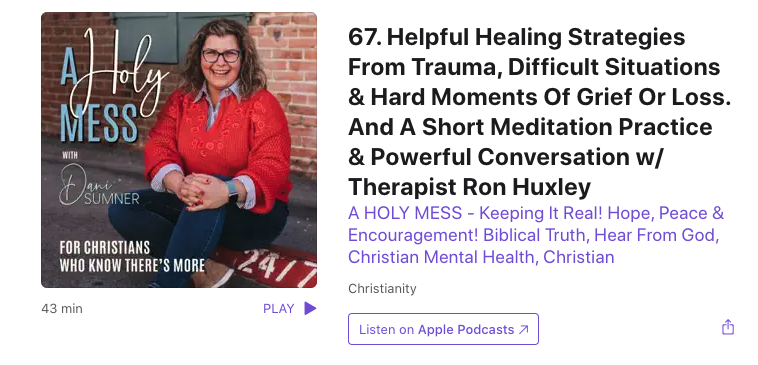
Helpful Healing Strategies from Trauma, Difficult Situations & Hard Moments of Grief or Loss (a Holy Mess Podcast)

I am so excited to guess again on the Holy Mess Podcast (see the link below). The show creator, Dani Sumner, has the #1 Christian Mental Health podcast on Spotify. This episode talks about healing from a body, mind, and spirit perspective. At the end of the podcast, I will lead you through a short meditation on how to “resource” safety from each perspective. You don’t want to mess with this podcast: Click here now!

10 Ways to Manage Your Panic Attacks

“In my experience, the words “now just calm down” almost inevitably have the opposite effect on the person you are speaking to.” – Elyn Saks

A panic attack is a sudden and intense feeling of fear or anxiety that can be overwhelming and debilitating. It is often accompanied by physical symptoms such as rapid heartbeat, difficulty breathing, dizziness, sweating, trembling, and a feeling of impending doom. Some people may also experience chest pain, nausea, and a fear of losing control or going crazy.

During a panic attack, the body’s fight or flight response is activated, even though there is no real danger. This response causes the physical symptoms of a panic attack and a heightened state of alertness and arousal.

Many things trigger panic attacks, social events, public speaking, conflict with family or coworkers, and situations reminiscent of past traumas. Sometimes, an accumulation of stress builds up over time and then pops up unexpectedly in a panic. 

Most people believe they have a heart attack when experiencing a panic attack. They often go to the emergency room or their doctor for a checkup. When the doctor cannot find anything physically wrong with them, they suggest that the individual might have had a panic attack and recommend talking to a mental health professional. 

Family and friends feel helpless around individuals who struggle with panic attacks. They can suggest useless advice or tell them to “calm down,” which never works. 

Mental health professionals might offer several strategies to cope with a panic attack:

  1. Focus on your breathing: Take slow, deep breaths through your nose and out through your mouth. This can help to calm your body and mind.
  2. Use positive self-talk: Remind yourself that you are safe and that the panic attack will pass.
  3. Find a peaceful place to relax: Find a quiet place where you can sit or lie down and relax.
  4. Use relaxation techniques: Try progressive muscle relaxation, visualization, or mindfulness meditation to help you relax.
  5. Find a focus object: Redirect your attention to something in clear sight and consciously notice all the details about that object, engaging all of your senses if possible.
  6. Picture a safe place, face, or space: Visualizing a place or location that holds a positive memory can be helpful to calm the nervous system. Additionally, you can picture someone safe or an activity that gives you joy. 
  7. Engage in light exercise: Taking a walk, stretching, or playing an outdoor game with someone can alleviate the stressful energy in your body.
  8. Use a mantra or affirmation: A positive statement, verse, song, or quote can redirect fear or worry about your condition and reset negative thoughts. 
  9. Change your life situation: If panic results from stress, consider distancing yourself from people, changing jobs, setting boundaries, or reorganizing living situations for your future health.
  10. Reach out to someone: Talk to a friend or loved one, or consider seeking support from a mental health professional.

The best time to deal with a panic attack is before you have a panic attack. Trying to deal with one in the middle is highly challenging to control. A daily practice of calming, affirming prayer and meditation, healthier living, and new perspectives can strengthen the body’s defenses, so the panic never comes up again. 

Panic attacks can be very distressing and may interfere with daily activities. It is essential to seek help from a mental health professional if you are experiencing panic attacks, as they can be treated effectively with therapy and medication. Consult Ron Huxley today if you are struggling with panic attacks and want help. 

5 Beliefs That Keep You from Attacking Your Goals

Everyone has dreams, but not everyone makes their dreams into goals. You may have a few of these too. What are the reasons you tell yourself late at night to put the shutdown on making them a reality? These reasons are beliefs that you have, but that doesn’t mean they are valid reasons.

  1. Not Enough Time

Everyone is busy these days. When someone asks how you are doing, you probably respond with “Busy.” But that might not be the truth. Everyone has the same twenty-four hours in the day. For a week or maybe two, keep a time ladder of how you spent your time. This includes sleeping, preparing and eating meals, social media, getting ready for work, cleaning your house. Take a good look at how your time is spent, and you might realize you have more time than you realize.

  1. I Don’t Have ‘X’ Talent

It doesn’t matter if you want to write a book or paint a picture, you have as much talent as you are willing to work for. You may not have been born with the natural ability to paint, it doesn’t mean you can’t learn and practice. 

  1. After ‘X’ I Will Do It

“Once I get through this (insert tough project at work), I will start training for that marathon.” “After I lose twenty pounds, I will take a salsa dancing class.” Why are you waiting? Maybe that marathon training will help you work through the stress of that project at work. Perhaps salsa dancing lessons will allow you realize that no matter your weight, your body is worthy of fun and sexy movement. If you have a goal, go for it now.

  1. I’m Not Good Enough

What ruler are you using to measure your “good enough”? You are always good enough to go after your own dreams and goals. If this is an internal dialogue, then you need to work on liking and loving yourself first. If this belief is coming from external sources, then consider those sources and if they are holding you back.

  1. ‘X’ Person Has it Easier

The grass is greener where you water it. Walk a mile in someone else’s shoes. There are many sayings that sum up that you really don’t know what someone else is going through. So do not assume that someone has it easier, and therefore can achieve their goals while you cannot. That person may think you have it easier or better.

Self-limiting beliefs can be a slippery slope. They can also keep you from even trying to reach your goals. Take time to examine your reasoning and come up with better beliefs to counter the negative ones.

Let Ron Huxley help you today. Schedule a session or take a free course at FamilyHealer.tv

Forgiveness: Another Way to Eliminate Negativity

When people treat you wrong, it is very easy to hold a grudge. You may not understand how it could be possible to forgive someone for a slight, especially if the action was especially hurtful. Maybe you think forgiveness is about the other person and somehow,they benefit from you forgiving them. Forgiveness is not about the other person; it is about you. 

Forgiving another person does not always mean they stay in your life. Sometimes you do not even let them know you are forgiving them. You do not even need to trust them again. Just forgive them to eliminate the negativity in your life. 


Even horrific crimes can be forgiven. For safety reasons, you may want to use an indirect way of forgiving them instead of contacting them directly. Write a letter as if you plan on sending it to the other person. Talk about how what they did made you feel, and about how it made you think about yourself. Write about how you are no longer going to allow them space in your head and how you forgive them for what they did to you. 


When you finish writing, seal up the letter in an envelope and put their name on the front. Then either throw it away (shred it first!) or burn the letter. It does not have to actually be read by the person you are forgiving, this exercise is to help you get past the negativity and the chains that are holding you back as a person. 


If you find you can’t forgive on your own, you may want to talk with a professional. Therapy can really help you get past this hurdle. Especially if the person committed a serious crime. If you have been abused, particularly over a long period of time, you may need therapy to help you get past what was done to you. There is nothing wrong with seeking help. 


Once you have forgiven the other person, you will feel like a weight has been lifted, or chains have been removed. Grudges are not healthy for you and they do not affect the other person. When you bottle up negative feelings, you can increase your risks of developing heart disease, and other health conditions. You tend to age faster as well. Not forgiving others can dim your overall outlook on life, so why put yourself through all of that? 


Remember that forgiveness is not about the other person, it is about eliminating the negativity in your own life. So free yourself today by forgiving others for the wrongs they have done to you.

Helping children to be more resilient

Resiliency is the ability to adjust to life’s difficulties and overcome challenging and stressful situations. On a scale from 1 to 10, 10 being the highest, how resilient are you? How resilient is your child?

Resilient parents don’t automatically have resilient children. This can be frustrating for parents who want their kids to get motivated about school, say no to bad choices, or accept rejection and failures. If your child scores low on the resiliency scale, you can build new skills to help them grow emotionally and mentally.

Resilience has several attributes that parents would love to see in their children:

  • Emotional awareness and regulation
  • Inner drive or motivation
  • Future focus and readiness for change
  • Strong social connections/relationships
  • Physical health, sleep, and diet

Creating this in your child will be a process that occurs over time. The hope is that children will show these characteristics by the time they turn 18 and leave the home but even if it takes longer it is a goal parents will want to continue nurturing in them.

Don’t compare your child to others. Focus on the qualities of your child only! Comparisons places to much pressure on you and your child and will sabotage your efforts to develop this mental strength.

Parents have to model resiliency. You can’t preach resiliency if you don’t practice resiliency. Children will always do what you do over what you say. Put words and actions together to encourage resiliency.

Peers have a strong pull on children actions contrary to what your teenager tries to tell you. Be aware of who they are interacting with and work to know your children’s friends and their family, if possible. You don’t have to ban a friend you feel is the best influence on your child but you can talk with your them your concerns and offer suggestions on how to set boundaries and stand up for themselves and what they believe in.

Start with emotions. The more you validate and empathize with your child the stronger their conscience development. A strong moral compass will help your child overcome tough circumstances and follow the right path. This way you don’t have to be hovering over their shoulder every minute. If your child handles a situation poorly or makes a wrong decision, be empathic but encourage them to try again. Isn’t this how we all learn? Focusing on your child’s emotional awareness will produce more resilient people. about changes in behavior and encourage your child’s friends to be at your home and offer your supervision over them. Children with high emotional awareness will be more resilient people.

Young children will need to increase their emotional vocabulary. Label feelings, explore different feelings, validate positive and uncomfortable emotions. Make feelings ok and don’t push them down or brush them off but don’t over focus on them. A good healthy, emotional balance translates into greater resiliency.

Older children can have more complex conversations about feelings and social situations. Don’t shy away from cultural discussions and world situations. Use them to explore thoughts and ideas, helping the older child to see all sides of an issue. A more open-minded approach will rap children who have better judgment and compassion.

You can learn more about resiliency by consulting with Ron Huxley through a free online course at FamilyHealer.tv or schedule a session today.