Gratitude: 6 Ways It Enhances Your Quality of Life

Cultivating gratitude can significantly improve various aspects of your life, from mental health to physical well-being. Here are six ways gratitude can enhance your quality of life, backed by scientific research:

1. Boosts Happiness and Life Satisfaction

Practicing gratitude has increased happiness and life satisfaction[1][2]. When we express thankfulness, our brain releases serotonin and dopamine, neurotransmitters associated with pleasure and contentment[4]. This neurochemical boost can lead to a more positive outlook on life and greater emotional well-being.

2. Improves Mental Health

Gratitude can profoundly impact mental health, potentially reducing symptoms of depression and anxiety[4]. Focusing on the positive aspects of life may decrease stress hormones, leading to improved mood and emotional resilience[1].

3. Enhances Sleep Quality

Research indicates that practicing gratitude before bed can lead to better sleep quality and fewer sleep disturbances[4]. This improvement in sleep may be due to a more positive mindset as you drift off, allowing for more restful and rejuvenating sleep.

4. Strengthens Relationships

Expressing gratitude can significantly improve the quality of your relationships[4]. When we show appreciation for others, it fosters positive interactions and encourages reciprocal kindness. This can lead to stronger social bonds and a more supportive social network.

5. Increases Patience and Self-Control

Studies suggest regularly practicing gratitude increases patience and reduces impulsiveness[4]. This enhanced self-control can benefit various aspects of life, from personal relationships to professional endeavors.

6. Promotes Physical Health

Gratitude has been linked to improved physical health, particularly cardiovascular health[4]. As gratitude reduces stress and brings you closer to loved ones, you may experience a decrease in blood pressure and inflammation levels, contributing to better overall health.

By incorporating gratitude into your daily life, you can harness these benefits and improve your overall quality of life. Whether it’s keeping a gratitude journal, expressing thanks to others, or simply taking a moment to appreciate the good things in your life, cultivating gratitude can lead to a more fulfilling and satisfying existence.

How Do I Start Living Grateful?

One Simple Way to Start Practicing Gratitude: The Daily Gratitude List

Creating a Daily Gratitude List is one of the easiest and most effective ways to begin practicing gratitude. Here’s how to do it:

  • Choose a Time: Set aside a few minutes each day—perhaps in the morning to start your day positively or in the evening to reflect on your experiences.
  • Write It Down: Grab a notebook or journal or use a notes app on your phone. Write down three to five things you are grateful for that day. They can be as simple as enjoying a warm cup of coffee, having a good conversation with a friend, or appreciating the beauty of nature.
  • Be Specific: Be specific about what you are grateful for and why it matters. Instead of just writing, “I’m grateful for my family,” you might say, “I’m grateful for my sister’s support during a tough week; her kindness made me feel loved.”
  • Reflect: Take a moment to reflect on how these things make you feel. This can deepen your sense of gratitude and help reinforce positive emotions.
  • Make It a Habit: Consistency is key! Aim to do this daily or at least several times a week. Over time, you’ll train your mind to focus more on the positives in your life.

    This simple practice can help shift your mindset and cultivate lasting gratitude in your everyday life.

    Citations:
    [1] https://www.health.harvard.edu/blog/gratitude-enhances-health-brings-happiness-and-may-even-lengthen-lives-202409113071
    [2] https://pmc.ncbi.nlm.nih.gov/articles/PMC10693196/
    [3] https://pmc.ncbi.nlm.nih.gov/articles/PMC3010965/
    [4] https://www.helpguide.org/mental-health/wellbeing/gratitude
    [5] https://www.health.harvard.edu/healthbeat/giving-thanks-can-make-you-happier
    [6] https://www.mayoclinichealthsystem.org/hometown-health/speaking-of-health/can-expressing-gratitude-improve-health
    [7] https://www.psychiatrist.com/news/the-science-behind-the-lasting-benefits-of-gratitude/
    [8] https://www.princetonhcs.org/about-princeton-health/news-and-information/news/can-gratitude-increase-quality-of-life
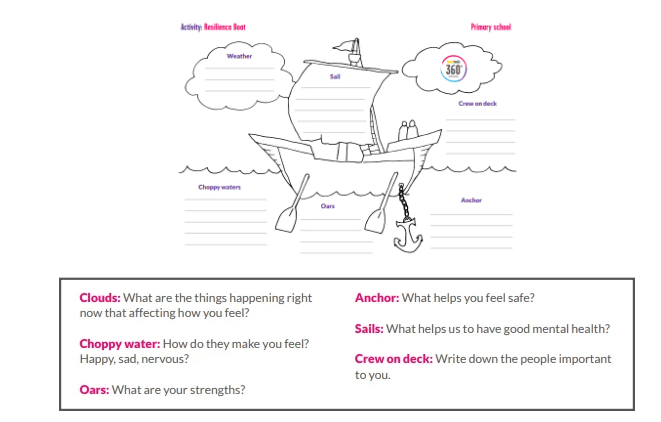
    The Resiliency Boat: Navigating Life’s Challenges

    The Resiliency Boat exercise is a powerful tool for individuals to visualize and strengthen their ability to cope with life’s challenges. This creative and engaging activity helps participants identify their support systems, personal strengths, and areas for growth.

    How It Works

    The exercise begins with participants drawing a boat, representing themselves navigating life’s ups and downs. Each part of the boat and its surroundings symbolizes different aspects of resilience:

    Choppy Waters

    Participants identify current challenges or stressors they’re facing. These might include work pressures, relationship issues, or health concerns[1].

    Oars

    These represent personal strengths that help navigate difficult times. Participants list qualities like determination, adaptability, or problem-solving skills[1].

    Anchor

    This symbolizes the support system that provides stability. Participants note people, resources, or activities that ground them during tough times[1].

    Sails

    The sails represent self-care strategies that promote mental health and well-being. These might include exercise, meditation, or creative pursuits[1].

    Crew on Deck

    This section is for listing key individuals who provide support and encouragement[1].

    Benefits of the Exercise

    The Resiliency Boat exercise offers several advantages:

    1. Visual Representation: It provides a tangible, visual way to understand one’s resilience factors.
    2. Self-Awareness: Participants gain insight into their coping mechanisms and support systems.
    3. Identifying Gaps: The exercise helps highlight areas where additional support or skills might be needed.
    4. Positive Focus: Emphasizing strengths and supports fosters a positive mindset towards challenges.
    5. Group Discussion: In a group setting, it promotes sharing and learning from others’ experiences.

    Conducting the Exercise

    To conduct the Resiliency Boat exercise:

    1. Provide participants with paper and drawing materials.
    2. Explain the symbolism of each boat part.
    3. Allow time for reflection and drawing.
    4. Encourage participants to share their boats with the group, if comfortable.
    5. Facilitate a discussion about common themes and insights gained.

    Enhancing Resilience

    The Resiliency Boat exercise underscores that resilience is not a fixed trait but a skill that can be developed. By regularly reflecting on and strengthening the elements represented in their boat, individuals can enhance their ability to navigate life’s challenges[2].

    Remember, building resilience is an ongoing process. Just as a real boat needs regular maintenance, our resilience requires continuous attention and care. By using tools like the Resiliency Boat exercise, we can better understand our strengths, support systems, and areas for growth, ultimately becoming more equipped to handle life’s storms.

    Citations:
    [1] https://whenyoumakeithappen.com/learning-to-float-and-tame-the-storms-about-building-resilience/
    [2] https://cartus.com/en/insights/blog/what-floats-your-boat-how-develop-resilience-while-international-assignment/
    [3] https://info.sailingvirgins.com/blog/resilience-at-sea-how-sailing-adventures-foster-mental-toughness-in-professionals
    [4] https://www.youngminds.org.uk/media/4mhjvqu1/resilience-boat.pdf
    [5] https://commonslibrary.org/leaderful-organizing-tool-resilience-trees/
    [6] https://positivepsychology.com/resilience-counseling/
    [7] https://www.youtube.com/watch?v=ECaxX-jJQUU
    [8] https://nathanbweller.com/tree-life-simple-exercise-reclaiming-identity-direction-life-story/

    “Doing The Best I Can”: A Healthy Reframe for Overwhelm and Negativity

    When life feels complicated, and challenges seem insurmountable, it’s easy to fall into negative thinking and self-criticism patterns. However, adopting the “Doing The Best I Can” mindset can be a powerful reframe to combat these feelings and foster self-compassion. Here’s how this simple phrase can transform your perspective:

    Acknowledging Your Efforts

    “Doing The Best I Can” recognizes that you’re putting forth effort, even when outcomes aren’t perfect. This acknowledgment is crucial because:

    1. It shifts focus from results to process
    2. It validates your struggles and challenges
    3. It reminds you that perfection isn’t the goal

    Embracing Imperfection

    This reframe helps you accept that perfection is unattainable. Instead of berating yourself for falling short of impossible standards, you can:

    • Recognize that everyone has limitations
    • Appreciate progress, no matter how small
    • View mistakes as opportunities for growth

    Cultivating Self-Compassion

    By telling yourself you’re doing your best, you’re practicing self-compassion. This approach:

    • Reduces self-criticism and negative self-talk
    • Increases resilience in the face of setbacks
    • Improves overall mental well-being

    Recognizing Context

    “Doing The Best I Can” takes into account your current circumstances. It acknowledges that:

    • Your best may vary from day to day
    • External factors can impact your capabilities
    • You’re working with the resources available to you

    Promoting Growth Mindset

    This reframe encourages a growth mindset by:

    • Focusing on effort rather than innate ability
    • Viewing challenges as opportunities to learn and improve
    • Encouraging persistence in the face of difficulties

    Practical Application

    To incorporate this reframe into your daily life:

    1. Notice negative self-talk and consciously replace it with “I’m doing the best I can.”
    2. Reflect on your efforts at the end of each day, acknowledging your hard work.
    3. Practice self-compassion exercises when feeling overwhelmed
    4. Share this perspective with others to create a supportive environment

    Remember, “Doing The Best I Can” doesn’t mean settling for less or making excuses. Instead, it’s about recognizing your efforts, accepting your limitations, and maintaining a compassionate attitude toward yourself as you navigate life’s complexities.

    By adopting this reframe, you can reduce feelings of overwhelm, combat negative thinking, and approach challenges with a more balanced and kind perspective. It’s a simple yet powerful tool for fostering resilience and maintaining emotional well-being in life’s inevitable ups and downs.

    Reflecting on Your Beliefs for Personal Growth

    In our journey towards personal growth and self-improvement, understanding our beliefs plays a crucial role. Our beliefs shape how we perceive the world, ourselves, and our potential. By identifying and reflecting on our beliefs, we can uncover deep-seated patterns that may be holding us back and cultivate a mindset that propels us forward. Here are some key questions and practical ways to reflect on your beliefs for personal growth:

    Questions to Identify Core Beliefs:

    1. What beliefs do I hold about myself?
    2. How do I view my abilities and skills?
    3. What beliefs do I have about relationships?
    4. How do I perceive failure and setbacks?
    5. What are my beliefs about the world around me?
    6. How do I see my own worthiness and value?
    7. What beliefs do I hold about success and achievement?
    8. How do I interpret feedback and criticism?
    9. What are my beliefs about happiness and fulfillment?

    Reflective Practices for Personal Growth:

    1. Journaling: Write down your beliefs, explore their origins, and reflect on their impact on your thoughts and actions.
    2. Mindfulness: Practice being present and observing your beliefs without judgment in different situations.
    3. Seeking Feedback: Engage in conversations with others to gain new perspectives on your beliefs.
    4. Challenge Your Beliefs: Question the validity of your beliefs and examine how they may be limiting you.
    5. Visualization: Envision a life without the constraints of limiting beliefs and explore the possibilities.
    6. Read and Learn: Educate yourself on personal development topics to gain insights into belief systems.
    7. Affirmations: Use positive affirmations to replace negative beliefs with empowering ones.
    8. Therapy or Coaching: Consider seeking professional guidance to delve deeper into your beliefs and work on transforming them.

    By actively engaging in these reflective practices, you can unravel the layers of your beliefs, identify areas for growth, and pave the way for personal transformation. Embracing a mindset of curiosity, openness, and self-awareness can lead to profound shifts in your beliefs and ultimately empower you to live a more fulfilling and authentic life. Remember, personal growth is a continuous journey of self-discovery and evolution, and reflecting on your beliefs is a powerful step toward realizing your full potential.

    Stop Second-Guessing Yourself: Build Confidence and Make Better Decisions

    Second-guessing oneself is a common experience that can lead to indecision, anxiety, and a lack of confidence. For many people, the constant cycle of doubting their choices and actions can be a significant challenge. However, there are ways to overcome this habit and build the confidence needed to make decisions with conviction.

    Step 1: Recognize the Pattern:

    The first step in overcoming second-guessing is to recognize the pattern. Pay attention to when and why you tend to doubt yourself. Is it in social situations, at work, or when making personal decisions? Understanding the triggers for your second-guessing can help you address the issue more effectively.

    Step 2: Challenge Negative Thoughts:

    Once you identify the pattern, work on challenging the negative thoughts that lead to second-guessing. Instead of assuming the worst or doubting your abilities, consciously replace negative thoughts with more positive and realistic ones. For example, if you catch yourself thinking “I can’t do this,” reframe it to “I have the skills and knowledge to tackle this.”

    Step 3: Practice Self-Compassion:

    It’s important to be kind to yourself when facing the challenges of second-guessing. Practice self-compassion by acknowledging that it’s okay to make mistakes and that everyone experiences moments of doubt. Treat yourself with the same understanding and encouragement that you would offer to a friend in a similar situation.

    Step 4: Seek Support and Feedback:

    Don’t be afraid to seek support and feedback from trusted friends, family members, or colleagues. Sharing your thoughts and concerns with others can provide a different perspective and help you gain clarity. Constructive feedback can also reinforce your confidence in making decisions.

    Step 5: Take Action and Embrace Mistakes:

    Overcoming second-guessing often involves taking action despite the uncertainty. Embrace the possibility of making mistakes and recognize that they are valuable learning opportunities. By taking decisive action, you can build confidence in your ability to handle challenges and make informed choices.

    Step 6: Celebrate Achievements and Progress:

    As you work on overcoming second-guessing, celebrate your achievements and progress along the way. Recognize and acknowledge the times when you make decisions without hesitation or doubt. By acknowledging your growth, you reinforce positive behaviors and build confidence in your decision-making abilities.

    Overcoming the habit of second-guessing oneself is a gradual process that requires self-confidence, and a willingness to take action. By recognizing the pattern, challenging negative thoughts, seeking support, and embracing mistakes, individuals can gradually build the confidence needed to make decisions with conviction. Through consistent practice and perseverance, it is possible to break free from the cycle of second-guessing and approach life’s challenges with greater confidence and clarity.

    The Five Big Ideas of Real Change (New Years Resolutions that WORK!)

    The Five Big Ideas of Real Change

    1. Habits are the compound interest of self-improvement.
    2. If you want better results, then forget about setting goals. Focus on your system instead.
    3. The most effective way to change your habits is to focus not on what you want to achieve, but on who you wish to become.
    4. The Four Laws of Behavior Change are a simple set of rules we can use to build better habits. They are (1) make it obvious, (2) make it attractive, (3) make it easy, and (4) make it satisfying.
    5. Environment is the invisible hand that shapes human behavior.

    It is tradition, at the beginning of each year, to set New Year Resolutions. We have great intentions for lasting change but soon lose motivation and drive to complete them. Consequently, most people will stop trying to set habits to avoid the disappointment of failure. There has to be a better way to see real change that actually work, isn’t there?

    Enter the book “Atomic Habits” by James Clear. As the byline states, this book will help you “build good habits and break bad ones.” Sounds simple!

    The key to making changes in your life that are successful is to take a new perspective of change from the one’s we are used to. The problem isn’t us. It is the systems we surround ourselves with that fail us and result in feelings of failure. See big idea #2 above.

    The book lists 5 Big Ideas about how to create effective habits. You will have to read the entire book to get all the details for each big idea or you can read this summary here (Link) or watch a YouTube video here (Link). I have affiliate connections to there resources…

    My focus for this blog article is on big idea #3: The most effective way to change your habits is to focus not on what you want to achieve, but on who you wish to become. Repeats this big idea to yourself a couple of times. Let it soak in. It is possible that everything you have tried to do to change your life has been wrong. You might have blamed others for the way you are or blame your bad luck or situation. These could be serious issues that make your habit difficult but it is not the final reason. Or, as I like to say, “it is a reason but isn’t a good excuse.”

    Real change occurs from the inside out. This is true of parenting, marital relationships, business endeavors, or anything you attempt to do in your life. A habit, by definition, is a the tendency to behave or act in a regular manner. Habits require very little energy because it has become an automatic way of reacting. Initially, they take a lot of energy and practice but soon become reflexes that take little to now thought to initiate. It is their strength and their weaknesses when we try to break them.

    Many habits start out of a reaction to traumatic situations. They start off as ways of coping with stress and pain, splitting off parts of ourselves to manage or protect from further pain. This may be a very “normal way to react in a very abnormal situation.” Unfortunately, traumatic habits can end up being “abnormal behaviors” in a new, more “normal situation.” The ways you had to behavior in an alcoholic home, for example, may not serve you will now, in a healthier relationship and home.

    Find a way to change or develop new habits can become extremely urgent to maintain a healthy relationship and avoid new forms of pain in our lives.

    One place to start is with you. Work on your character issues instead of waiting for others to change. The only thing you have 100% guarantee of change is through your own growth. You can change other people. You can coerce them, threaten them, or manipulate them but that will always backfire on you. Stick with you and the big idea working on who you want to become.

    Start with a vision of what character traits you wish for yourself and picture how these traits will bear positive fruit in your life. It is just imagination so you run no risk of disappointment at this stage. Be sure to write this vision down. It may change from day to day but continue to modify it till you have something that truly inspires you. People have motivation for things they really want and desire. Make this idea of a new you very attractive!

    Problem are destined to get in the way of this new habit of being you. That is a good thing. What is predictable is preventable. Predict what will get in the way, how you will look your motivation, who will try to stop you, what limitations might pop up…Set a plan for how you will encounter them before they show up so you are ready.

    Small changes every day will reap big results in the end. Focus on a 1% change every day. That’s not a lot, right? You can do one thing to be a new, better version of you each day. Taking on too much, too soon, will choke out your efforts.

    Use the power of gratitude for positive things in your life every day. Science has demonstrated that gratitude changes the very structure of our brain and enhances motivation to healthy, positive behaviors.

    If traumas are making you stuck and all of this feels impossible, work with a professional to help you through it. If you would like to set up an appointment with me, to deal with trauma and anxiety, click on the Link here to set a time to work on some real life change!