Page 6 of 11

Attitude Awards for Your Children

by Ron Huxley, LMFT

Have you ever received an award for “outstanding achievement” or completion of some difficult task or milestone? How did it feel to get that award? Did you place it proudly in your home or office where you and everyone else could see it? 

Your children like to get awards too. Trophy’s, certificates, ribbons, and cards can create personal satisfaction. They reinforce our sense of uniqueness and give attention to our gifts and talents and hard work. Try giving your child an award for good attitude. This isn’t for cleaning their room or getting an A on a test. That is a good time for an award as well but attitude awards focus more on the inner qualities that you want to see more of in your children. Giving an unexpected award for goodwill, kindness, generosity, teamwork and other character traits will bring those qualities to the forefront more often. Your child might not be the kindest person in the family. All the more reason to give them a award for any effort in this direction. Anything attitude and behavior you reinforce in a child will reproduce in their life and anything you ignore will decrease. Be sure to use sincerity and surprise to make the award more impactful. 

Bossy Children

by Ron Huxley, LMFT

Are you tired of power struggling with your children? Do they believe they are the parent and boss their siblings around (and maybe you too)? Many children have a natural leadership tendency that need parents to direct in a healthy, non-annoying direction. 

Try playing a game I call “Follow the Leader” to create more democratic relationships. Invite children to take turns leading the way or overseeing an activity to give them more focused leadership skills and then allowing the natural, low energy followers a chance to be in charge. If you are taking a walk around the block or going into the store, have one child direct the rest of the group or spice it up and have them walk in a “funny way” that everyone has to emulate. It’s goofy but it will reign in those high energy children by making a daily challenge fun. Perhaps the leader can choose a song to sing in the car on the way to school or pick the board game for the night. Choose a day of the week that each child gets to pick out the book for bed time or the desert after dinner. After a while each child will know what day is there day and the group will manage itself (instead of mom or dad playing mediator). Even the quiet ones will assert: “This is my day to pick, not yours.” As the parent, you can also state: “This is your sisters day to pick the desert. Your day is tomorrow.” This will provide more parenting power. The game/rule/day will be the bad guy, not you. It is easy to argue with you and hard to argue with the “rule.” It also eliminates the dreaded “because I said so” statements. No one wins with that statement!

Strong willed children will still want to dominate but you have to set a new, fairer precedent that allows everyone a chance to pick, talk, control. As the parent, you guide your children with this game/parenting style and step out of the emotional tug-o-war. Use this tactic whenever the bossy child starts to become the dictator. Be creative with the game. Short cycles taking turns might be necessary to prevent meltdowns and don’t let those low energy children give up their turn to the more dominant ones. It is easy for natural followers to let others take charge but they need to be empowered too! 

Four Steps for Working With Trauma: An Interview with Bessel van der Kolk

Step 1: Start with Self-Regulation

Dr. van der Kolk: I would say the foundation of all effective treatments involves some way for people to learn that they can change their arousal system.

Before any talking, it’s important to notice that if you get upset, taking 60 breaths, focusing on the out breaths, can calm your brain right down. Attempting some acupressure points or going for a walk can be very calming.

Dr. Buczynski: So this is learning to modulate arousal?

Dr. van der Kolk: Yes, and there’s alarmingly little in our mainstream culture to teach that. For example, this was something that kindergarten teachers used to teach, but once you enter the first grade, this whole notion that you can actually make yourself feel calm seems to disappear.

Now, there’s this kind of post-alcoholic culture where if you feel bad, you pop something into your mouth to make the feeling go away.

“The issue of self-regulation needs to become front and center in the treatment of trauma.”
It’s interesting that right now there are about six to ten million people in America who practice yoga, which is sort of a bizarre thing to do – to stand on one foot and bend yourself up into a pretzel. Why do people do that? They’ve discovered that there’s something they can do to regulate their internal systems.

So the issue of self-regulation needs to become front and center in the treatment of traumatized people. That’s step number one.

Step 2: Help Your Patients Take Steps Toward Self-Empowerment

The core idea here is that I am not a victim of what happens. I can do things to change my own thoughts, which is very contrary to the medical system where, if you can’t stand something, you can take a pill and make it go away.

The core of trauma treatment is something is happening to you that you interpret as being frightening, and you can change the sensation by moving, breathing, tapping, and touching (or not touching). You can use any of these processes.

It’s more than tolerating feelings and sensations. Actually, it is more about knowing that you, to some degree, are in charge of your own physiological system.

There needs to be a considerable emphasis on “cultivating in myself,” not only as a therapist, but also as a patient – this knowing that you can actually calm yourself down by talking or through one of these other processes.

So, step number two is the cultivation of being able to take effective action. Many traumatized people have been very helpless; they’ve been unable to move. They feel paralyzed, sit in front of the television, and they don’t do anything.

“Programs with physical impact would be very, very effective treatments.”
Programs with physical impact, like model mugging (a form of self-defense training), martial arts or kickboxing, or an activity that requires a range of physical effort where you actually learn to defend yourself, stand up for yourself, and feel power in your body, would be very, very effective treatments. Basically, they reinstate a sense that your organism is not a helpless (tool) of fate.

Step 3: Help Your Patients Learn to Express Their Inner Experience

The third thing I would talk about is learning to know what you know and feel what you feel. And that’s where psychotherapy comes in: finding the language for internal experience.

The function of language is to tie us together; the function of language is communication. Without being able to communicate, you’re locked up inside of yourself.

“Without being able to communicate, you’re locked up inside of yourself.”
So, learning to communicate and finding words for your internal states would be very helpful in terms of normalizing ourselves – accepting and making (the communication of internal states) a part of ourselves and part of the community. That’s the third part.

Step 4: Integrate the Senses Through Rhythm

We’re physical animals, and to some level, we’re always dancing with each other. Our communication is as much through head nodding and smiles and frowns and moving as anything else. Kids, in particular, and adults, who as kids were victims of physical abuse and neglect, lose those interpersonal rhythms.

“Rhythmical interaction to establish internal sensory integration is an important piece.”
So, some sort of rhythmical interaction to establish internal sensory integration is an important piece that we are working on. With kids, we work with sensory integration techniques like having them jump on trampolines and covering them with heavy blankets to have them feel how their bodies relate to the environment because that’s an area that gets very disturbed by trauma, neglect, and abuse, especially in kids.

For adults, I think we’ve resolved rhythmical issues with experiences like tango dancing, Qi Gong, drumming – any of these put one organism in rhythm with other organisms and is a way of overcoming this frozen sense of separation that traumatized people have with others.

Dr. Buczynski: These are four keystones that can make healing from trauma faster and more effective. In order to give patients the best chance for recovery, consider these steps as you plan your interventions and treatments.

– See more at: http://www.nicabm.com/bessel-van-der-kolk/confirmed/?del=7.8.15BesselLMtoall#sthash.tU3FljBE.dpuf


Parenting Styles and the Effect they have on Children

Parenting is sometimes referred to as the hardest job in the world. Although there are millions of parenting books, your individual child is not born with a “how to raise me manual.”

By Carnigee Truesdale

Source: http://www.psychiatry.emory.edu/PROGRAMS/GADrug/effect_on_children.html

Most parents look to their own parents, their friends and parental experts with questions they have on how to be an effective parent. Naturally, every parent has traits that they admire as well as a value system they wish to instill to enable their child to mature into a successful and morally just adult. However, parents partake in different methods to achieve the same goal. Unfortunately, not all methods are conducive in raising a healthy individual and may have a severe impact on child development.

Psychologist, Ron Huxley believes parenting styles are defined as the “manner in which parents express their beliefs about how to be a "good” or “bad” parent.“ He says that parents adopt styles of parenting learned from their parents because they do not know what else to do and because they feel that their way of parenting is the right way (The Four Styles of Parenting-personal communication, June 5, 2001).

There are four basic styles of parenting each having an effect on child development. The first is the rejecting/neglecting style of parenting. The rejecting/neglecting parent rarely sets limits or shows positive affection (Huxley, 2001). Typically, the rejecting/neglecting parent is frequently absent or pre-occupied with social and environmental disruptions (work, divorce, illness, alcoholism, etc.) (Dr. Stein, Impact of Parenting Styles on Children, June 5, 2001). According to Dr. Stein, children of rejecting/neglecting parents may lack the ability to form close relationships, feel unloved, helpless and isolated. Children may even develop bitter, hostile and anxious feelings (Stein, 2001).

The second parenting style is the authoritarian parent who is very restrictive, punitive and shows little positive affection. Authoritarian parents are very strict and encourage perfectionism. Physical punishment is sometimes used for discipline or training. Dr. Stein believes children of authoritarian parents develop self-guilt and self-hatred that could lead to low self-esteem (2001).

The third parenting style is the permissive parent who shows a lot of positive affection but rarely disciplines or sets limits. Within this parental dimension the roles are often switched. The child has control and manipulates the parents, and the parents become the children. Sometimes a permissive parent may shower the child with gifts and certain privileges without regard to the child’s specific needs. Permissive parents may also submit to the child’s demands, temper tantrums or impulsivity to calm the child. Children of permissive parents fail to take initiative, ignore the rights and respect for others and lose responsibility (Stein, 2001).

The last parenting style is authoritative or democratic/balanced. The authoritative parent exhibits high amounts of positive affection and disciplinarian techniques. The authoritative parental style is based on democratic concepts such as equality and trust. Parents and children are equal in terms of their needs for respect and self-worth but not in terms of responsibility and making decisions (Huxley, 2001). Children of authoritative parents feel secure, accepted, have autonomy and find satisfaction in achievement and contribution (Stein, 2001).

It appears that modeling and imitation may have the most beneficial effect on childhood development. Dr. Firestone believes that the modeling effect derived from the child’s daily living with their parental figures who themselves should consistently behave in a responsible manner, is more important than specific training or disciplinary measures (1990). Toxic personality traits in parents not only have a profoundly destructive effect on children directly, but the negative qualities are passed on to succeeding generations through the process of identification and imitation (Firestone, 1990). Instead of turning to everyone else for answers on how to be an effective parent, parents should look within themselves first and become the person they want their children to emulate.

Children Heal in Healthy Families

By Ron Huxley, LMFT

When parents decide to build their family they don’t want to believe that their child may in up with developmental or special needs that require a lot of time, commitment and yes, money. They are dreaming of the perfect family, playing and enjoying warm, cuddly time together. There is nothing wrong with that but not every dream turns out that way. 

Many families choose to build their family through adoption or end up taking care of a relatives child due to many misfortunes and circumstances. Consequently, many children come with a history of trauma and loss. The dream family is still possible but it must be modified and made more realistic. You have to say goodbye to the old dream to allow room for the new one to unfold.

Research and common experiences proves that children can heal in a healthy family. A child needs a secure attachment relationships in order to maximize all the areas of their lives, socially, physically, emotionally, cognitively and spiritually. 

Because many children comes from insecure attachment relationships, they don’t always know what it means to be in a health family. Their special needs may be based on survival in high stress family situations. Their “abnormal behaviors” in a normal family were perfectly “normal” in their abnormal situations before entering the new home. A bit of rehabilitation is necessary to help them make the internal and external adjustments. 

Trauma situations impact the children development. This includes their brain development as well. The child needs to adapt to overwhelming and hostile environments and can create a position of offensive behaviors that don’t want to submit to parental controls. An internal model develops that believes the world and caregivers cannot be trusted. 

Fortunately, the same brain that adapted to stressful circumstances can re-adapt to calm living environments. This happens over time, sometimes quickly and sometimes not so quickly. This is challenging for parents to understand and cope. 

The brain must be re-activated to change. Experience dictates form and function when it comes to brain adaptation. New, positive experiences that happen repeatedly will open up new neuronal brain growth that allows for a feelings safety and security to settle in. Once this happens, parents can begin to enjoy that “dream family” once again. 

Stepparenting can be tough. Stepparents frequently report feeling confused about their role, displaced from their spouse when the stepchild is around, helpless to change the situation, and guilty because they know that God is expecting them to love their stepchildren, even though they sometimes don’t.

Finding an effective stepparent role is a challenge—you must persevere to find success. Here are some practical tips for the journey.

Relationship Building Tips for Stepparents

Play! Having fun is a great way to connect.

Track with them. Know what activities a child is engaged in and enter that world. Take them to practice, ask about an activity, and take interest in their interests.

Share your talents, skills, and hobbies.

Communicate your commitment. Let the child know you value and want a relationship with them.Share the Lord and your walk. Shared spirituality can facilitate connection and a sense of family identity, but don’t be preachy. Instead share with humility your faith journey so they will experience you as a safe person.

The cardinal rule for stepparent-stepchild relationships is this: Let the children set the pace for their relationship with you. For example, if your stepchildren are open to physical affection from you, don’t leave them disappointed. If they remain aloof and cautious, respect their boundaries. As time brings you together, slowly increase your personal involvement and affections.

It’s important that stepparents not consider themselves failures if they do not form deep emotional bonds with every child.

The length of time required to move into this role depends on multiple factors, most of which are beyond the stepparent’s control. Enjoy the relationship you have now and trust that investments made over time will increase affection and respect. 

Do’s and Don’s for Stepparents

Early on biological parents must pass power to stepparents so that children understand that stepparents are not acting on their own authority

Parents and stepparents negotiate rulestogether behind closed doors and seek unity in leading the family. The biological parent then communicates the rules to the children with the stepparent’s support.

Stepfamilies, where both parents bring children to the stepfamily, still negotiate rules together, but each takes the lead role with their own children.

Over time as emotional bonds with stepchildren deepen, stepparents can become more authoritative and shows of affection can become more common. 

Don’t be harsh or punish in a way inconsistent with the biological parent. This tends to polarize parents and create marital discord.

Do focus on relationship building with each child. This is your long-term strength as a parent-figure.

Source: Youversion.com

Adults who are securely attached put a high value on relationships and are objective regarding their own thoughts and emotions. They don’t all have trouble-free childhoods but they have and are working through past issues. The have learned to effectively communicate with others and are working to forgive and have more compassion in life. They are creators of a new generation of secure people. #secureparenting #parentingtoolbox

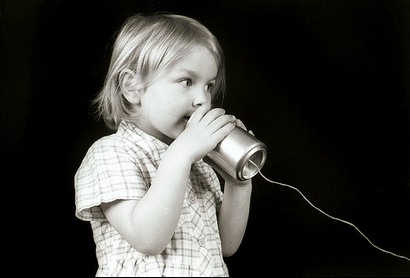
One of parents main goals is to improve communication in the home. Unfortunately, what they really mean is they want the child to “listen” to them and cooperate with their “instructions.” Communication is two-way. It requires parents to listen as well as be listened to. More importantly, parents cannot judge or shame a child’s efforts to communicate when they express their opinions. Either you value communication or your don’t. Back up your values with your actions. The good news is that communication doesn’t need to be learned. It needs to be protected. If parents will allow their children to talk and feel heard then they will talk more. If parents allow conversation to be two-sided and value their children’s thoughts, even if is immature and irrational, then parents will have the opportunity to “speak into” their child’s life. Don’t waste time lecturing, criticizing or showing children the error of their thoughts. That shuts down communication FAST! Try this talk tool the next time your child opens up. Say: “That is interesting. Tell me more!” and just listen…

Avoiding the Parent/Teen Torture Chamber

By Ron Huxley, LMFT

Sweat streamed done his face as the heat from the lights glared on his face. His head swayed heavily forward, weary from the uninterrupted hours of questioning. The voices shot from the either side of him, out of the darkness: “Where were you till two in the morning? Why is there mud on the care tires? Whose sweater is in the back-seat? Why are your pupils dilated like that? Is that cigarette smoke I smell? Why didn’t you call?”

This could be a scene from a movie about an enemy spy being interrogated for unknown crimes. Or it could be a fictional account of innocent child tortured at the hands of sadistic tormentors. Instead, it is a dramatization of two parents questioning their teenager for coming home past curfew. At least, this is how a teenager might describe the experience. Teens often feel parents overreact or assume the worst case scenario. They don’t feel parents understand what it is like to be a teenager today. And, they feel that parents don’t give them enough freedom. No matter what a teen does, he or she winds up violating some new rule, like hidden trip wire strung about the house, waiting for an innocent victim. And the rules! Barbaric remnants from there parents generation as children, totally unrealistic for a teenager today.

Parents don’t want to torture their children. They describe their feelings of fear and horror when they don’t know where their child is late at night or early in the morning as the case might be. They know all too well the world a teenager must live in. That is what scares them, motivating their “barbaric rules.” They fear their teenager hides their behaviors and friends from them. They worry that they will be influenced by peers and fall snare to various social evils. They question their child’s ability to make good judgments and take care of themselves in a crisis situation.

So where is the middle ground? How can teenagers feel as if they are getting the freedom they need and still keep mom and dad secure? How can parents learn to trust teens, so if possible, they can meet the teenager half way? Here are some tools that may help teens and their parents avoid the torture chamber:

Things Teens Can Do:

Give parents information. They have a legal responsibility for their child’s safety and behavior, so they have a right to know a child’s whereabouts and activities. Teens who accept and acknowledge this fact can move a great distance along the road to independence. They also want to feel a part of your life, so share with them what is going on in it. They had you because they wanted a family. You need a family for survival (for a while yet, at least) and a sense of personal identity.

Take their perspective- in other words, do a Role Reversal. Take a look at the situation as if YOU were a parent- a person responsible for their child’s safety and well being. See YOURSELF from your parent’s perspective. Do YOU see someone who is responsible and trustworthy? What limits would you set for you if YOU were your parent? Next, look at the world the way a parent looks at the world. Good kids get hurt in this world too! Now, tell yourself the truth. Then, you will be ready to:

Negotiate. Accept compromise as being a reasonable tool for establishing mutually agreeable boundaries and limits. If you are unyielding with your information (tip #1), and unable to accept the fact that parents have to be responsible about their children (tip #2), you are doomed to trouble with the folks. Yielding in areas where maybe they have reasons to set limits and boundaries (areas where your choices have not been the wisest), will give you the opportunity to earn their trust. In time, those areas can get larger as you show you’ve learned to be responsible for yourself and earn the privilege of freedom.

Things parents can do.

Give teens information. Their minds are able to process intelligent reasoning, and understanding why you make the choices you do will open them to adult perspectives and responsibilities. They also need to feel a part of your life. If they have a sense of belonging at home, they’ll
be less likely to seek acceptance with an inappropriate peer group.

Take your child’s perspective. You can do this Role Reversal more easily than your child can, because after all, you’ve been there! Look at yourself through your child’s eyes. Are you reasonable with boundaries and limits? Are you intrusive or disrespectful of, your child’s growing needs for personal privacy, independence and freedom? Do you give your teen opportunities to be responsible, to demonstrate trustworthiness? Do you give them the supports they need to learn and make mistakes? Do you remember what it felt like to be that age? After being honest with yourself, you then are ready to:

Negotiate. Ask your teen what they feel are reasonable limits and boundaries. State what yours are. Then reach compromise. Be willing to “back-off” some in areas where your teen needs to grow. Be specific in what is expected behaviorally, and with what consequences for poor choices will be. Help each other clearly understand the expectations you each hold for the other and the reasons for them. Finally, be willing to follow through with consequences when necessary, both with the lowering or raising of those limits and boundaries in accordance with your teen’s choices.

Ron Huxley is a child and family therapist and the author of the book “Love & Limits: Achieving a Balance in Parenting.” You can order his book online or request it through your local bookstore. The ISBN number is 1-56593-936-0.