The Hidden Messages in Your Discomfort: Why Processing Emotions is Your Path to Freedom

You know that feeling—a nagging unease in your stomach, a restlessness you can’t quite name, or a vague sense that something isn’t right even when everything looks fine on the surface. Most of us try to push these feelings away, distract ourselves with work, social media, or other activities. But what if these uncomfortable sensations aren’t problems to be solved, but messengers trying to deliver critical information?

The Weight of Unfinished Emotional Business

That persistent discomfort you’re experiencing might not be a warning about what’s coming—it could be an echo from your past that’s been quietly traveling with you. Unprocessed emotions don’t simply disappear because we ignore them. They settle into our bodies and minds like uninvited houseguests, taking up space and influencing how we move through the world.

Think of these unresolved feelings as unopened letters from earlier versions of yourself. Some contain wisdom and insights that could guide you forward. Others are simply remnants from chapters of your life that have already ended but haven’t been adequately acknowledged or grieved. All of them represent parts of you that are still waiting to be heard and integrated.

These emotional fragments aren’t trying to torture you—they’re signals pointing toward aspects of yourself that haven’t been fully understood or accepted. They’re like a persistent knock at the door from the parts of you that remain unfree, asking for attention and care.

Creating Space for Healing

When you’re ready to stop running from these feelings and start listening to them, the process begins with creating a sense of safety. This means finding physical and emotional spaces where you can turn toward your discomfort rather than away from it. It’s about developing the courage to ask, “What are you trying to tell me?”

This journey often brings up forgotten memories and long-buried emotions. You might suddenly remember moments from childhood that shaped how you see yourself, or realize that specific triggers—anger, sadness, anxiety—have been trying to wake you up to unmet needs or unacknowledged pain.

The healing process isn’t always gentle. It might involve crying for losses you never properly mourned, revisiting difficult memories to offer your younger self the comfort or voice they never had, or simply sitting with emotions you’ve spent years avoiding. But as you move through this process, something remarkable happens: you begin to feel lighter, as if you’re literally releasing weight you didn’t realize you’d been carrying.

Your body, too, holds onto emotional experiences. Physical practices such as exercise, stretching, or allowing yourself to shake or tremble can help release stored tension and trauma. Sometimes the body knows how to let go in ways the mind hasn’t figured out yet.

The goal isn’t to eliminate all discomfort from your life, but to learn how to be present with your feelings as they arise. When you can face what’s wrong without immediately trying to fix or escape it, you begin to uncover parts of yourself that have been buried under layers of personas, beliefs, and protective strategies.

You were never actually lost—just hidden. The discomfort was your authentic self’s way of reminding you that it was still there, waiting to be reclaimed.

Discomfort as Your Growth Partner

Here’s something our culture rarely teaches us: discomfort is often the seed of positive change. Most transformations begin not with a sudden burst of inspiration but with experiences that initially bring uncertainty, fear, and anxiety. This happens because we’re remarkably good at adapting to situations that aren’t quite right for us, often waiting until crisis forces our hand before we make necessary changes.

Your discomfort isn’t punishment—it’s information. It’s your inner wisdom communicating that something needs to shift, that there’s another way forward even if you can’t see it clearly yet. Think of discomfort as a caring friend who’s willing to tell you brutal truths that others might avoid.

Many people resist this messenger, which is why their lives can feel stuck or repetitive. But learning to sit with discomfort, to let it reveal what it needs to show you, is one of the most valuable skills you can develop. Discomfort, like anger, grief, and jealousy, serves a purpose—it’s trying to guide you toward something meaningful.

The Sneaky Ways We Resist Our Own Growth

Even when we intellectually understand that change would benefit us, our minds have clever ways of keeping us stuck. These psychological patterns often operate below conscious awareness, sabotaging our best intentions:

The Comfort of Familiar Discomfort. Strangely, we often unconsciously sabotage ourselves when life gets too good. If you’re used to struggle or chaos, peace and happiness can feel foreign and threatening. Your mind might create problems or find ways to return to familiar levels of stress, even when that familiar state isn’t pleasant. Change—even positive change—feels uncomfortable until it becomes your new normal.

The Limits of Our Imagination. Our minds are remarkably good at solving problems we’ve encountered before, but they struggle to envision genuinely new possibilities. When contemplating change, we often can only imagine variations of what we’ve already experienced. This limitation can lead us to believe that our current options are more limited than they actually are. Real growth requires accepting uncertainty and exploring unknown territory, which can feel deeply unsettling.

Expecting the Worst. Human brains are wired to notice and remember negative experiences more vividly than positive ones. This survival mechanism once kept our ancestors alive, but now often keeps us playing small. We tend to overestimate the likelihood and severity of bad outcomes while underestimating our ability to handle challenges or create positive change. This negativity bias can make staying in uncomfortable but familiar situations seem safer than taking risks toward something better.

The Sunk Cost Trap. Sometimes we remain committed to jobs, relationships, or life paths that aren’t working simply because we’ve already invested a significant amount of time, energy, or money in them. The thought of “wasting” that investment can keep us trapped in situations that no longer serve us, preventing us from pursuing options that might be much more fulfilling.

First Impressions Stick. Our brains tend to give special weight to early experiences and first impressions, making it harder to see new possibilities later. Suppose you learned early in life that you weren’t good at something, or that specific dreams were unrealistic. In that case, these initial conclusions can overshadow evidence to the contrary that emerges as you grow and change.

Temporary Feelings, Permanent Decisions. When we’re going through difficult emotions or challenging periods, it’s easy to assume these temporary states represent permanent realities. A bad week can feel like a prediction of a bad life. A period of sadness can seem like evidence that happiness isn’t possible. Learning to recognize the temporary nature of most emotional states can prevent us from making major life decisions based on passing feelings.

Insight Without Action. Sometimes, we become so caught up in understanding our patterns and having revelations about ourselves that we forget to actually implement the changes. Self-reflection can become its own form of avoidance when we use it to delay the often mundane, repetitive work of building new habits and sticking to healthier choices.

Living More Intentionally

Processing emotions and working through discomfort isn’t about reaching a state where you never feel bad again. It’s about developing the capacity to live more fully in each moment, experiencing your feelings in real-time rather than carrying around emotional baggage from the past or anxiety about the future.

When you can look directly at what’s bothering you—when you can sit with discomfort long enough to understand its message—you begin to access parts of yourself that may have been hidden for years. You discover that beneath all the protective layers you’ve built up, your authentic self has been there all along, waiting to be acknowledged and expressed.

This process isn’t always comfortable, but it leads to something invaluable: the freedom to respond to life from a place of choice rather than reaction, to make decisions based on who you actually are rather than who you think you should be, and to experience the full range of human emotion without being overwhelmed by it.

Your discomfort has been trying to tell you something important. Maybe it’s time to finally listen.
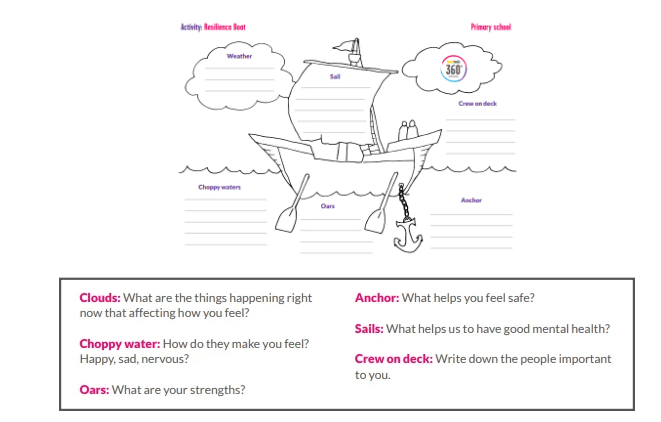
The Resiliency Boat: Navigating Life’s Challenges

The Resiliency Boat exercise is a powerful tool for individuals to visualize and strengthen their ability to cope with life’s challenges. This creative and engaging activity helps participants identify their support systems, personal strengths, and areas for growth.

How It Works

The exercise begins with participants drawing a boat, representing themselves navigating life’s ups and downs. Each part of the boat and its surroundings symbolizes different aspects of resilience:

Choppy Waters

Participants identify current challenges or stressors they’re facing. These might include work pressures, relationship issues, or health concerns[1].

Oars

These represent personal strengths that help navigate difficult times. Participants list qualities like determination, adaptability, or problem-solving skills[1].

Anchor

This symbolizes the support system that provides stability. Participants note people, resources, or activities that ground them during tough times[1].

Sails

The sails represent self-care strategies that promote mental health and well-being. These might include exercise, meditation, or creative pursuits[1].

Crew on Deck

This section is for listing key individuals who provide support and encouragement[1].

Benefits of the Exercise

The Resiliency Boat exercise offers several advantages:

  1. Visual Representation: It provides a tangible, visual way to understand one’s resilience factors.
  2. Self-Awareness: Participants gain insight into their coping mechanisms and support systems.
  3. Identifying Gaps: The exercise helps highlight areas where additional support or skills might be needed.
  4. Positive Focus: Emphasizing strengths and supports fosters a positive mindset towards challenges.
  5. Group Discussion: In a group setting, it promotes sharing and learning from others’ experiences.

Conducting the Exercise

To conduct the Resiliency Boat exercise:

  1. Provide participants with paper and drawing materials.
  2. Explain the symbolism of each boat part.
  3. Allow time for reflection and drawing.
  4. Encourage participants to share their boats with the group, if comfortable.
  5. Facilitate a discussion about common themes and insights gained.

Enhancing Resilience

The Resiliency Boat exercise underscores that resilience is not a fixed trait but a skill that can be developed. By regularly reflecting on and strengthening the elements represented in their boat, individuals can enhance their ability to navigate life’s challenges[2].

Remember, building resilience is an ongoing process. Just as a real boat needs regular maintenance, our resilience requires continuous attention and care. By using tools like the Resiliency Boat exercise, we can better understand our strengths, support systems, and areas for growth, ultimately becoming more equipped to handle life’s storms.

Citations:
[1] https://whenyoumakeithappen.com/learning-to-float-and-tame-the-storms-about-building-resilience/
[2] https://cartus.com/en/insights/blog/what-floats-your-boat-how-develop-resilience-while-international-assignment/
[3] https://info.sailingvirgins.com/blog/resilience-at-sea-how-sailing-adventures-foster-mental-toughness-in-professionals
[4] https://www.youngminds.org.uk/media/4mhjvqu1/resilience-boat.pdf
[5] https://commonslibrary.org/leaderful-organizing-tool-resilience-trees/
[6] https://positivepsychology.com/resilience-counseling/
[7] https://www.youtube.com/watch?v=ECaxX-jJQUU
[8] https://nathanbweller.com/tree-life-simple-exercise-reclaiming-identity-direction-life-story/

“Doing The Best I Can”: A Healthy Reframe for Overwhelm and Negativity

When life feels complicated, and challenges seem insurmountable, it’s easy to fall into negative thinking and self-criticism patterns. However, adopting the “Doing The Best I Can” mindset can be a powerful reframe to combat these feelings and foster self-compassion. Here’s how this simple phrase can transform your perspective:

Acknowledging Your Efforts

“Doing The Best I Can” recognizes that you’re putting forth effort, even when outcomes aren’t perfect. This acknowledgment is crucial because:

  1. It shifts focus from results to process
  2. It validates your struggles and challenges
  3. It reminds you that perfection isn’t the goal

Embracing Imperfection

This reframe helps you accept that perfection is unattainable. Instead of berating yourself for falling short of impossible standards, you can:

  • Recognize that everyone has limitations
  • Appreciate progress, no matter how small
  • View mistakes as opportunities for growth

Cultivating Self-Compassion

By telling yourself you’re doing your best, you’re practicing self-compassion. This approach:

  • Reduces self-criticism and negative self-talk
  • Increases resilience in the face of setbacks
  • Improves overall mental well-being

Recognizing Context

“Doing The Best I Can” takes into account your current circumstances. It acknowledges that:

  • Your best may vary from day to day
  • External factors can impact your capabilities
  • You’re working with the resources available to you

Promoting Growth Mindset

This reframe encourages a growth mindset by:

  • Focusing on effort rather than innate ability
  • Viewing challenges as opportunities to learn and improve
  • Encouraging persistence in the face of difficulties

Practical Application

To incorporate this reframe into your daily life:

  1. Notice negative self-talk and consciously replace it with “I’m doing the best I can.”
  2. Reflect on your efforts at the end of each day, acknowledging your hard work.
  3. Practice self-compassion exercises when feeling overwhelmed
  4. Share this perspective with others to create a supportive environment

Remember, “Doing The Best I Can” doesn’t mean settling for less or making excuses. Instead, it’s about recognizing your efforts, accepting your limitations, and maintaining a compassionate attitude toward yourself as you navigate life’s complexities.

By adopting this reframe, you can reduce feelings of overwhelm, combat negative thinking, and approach challenges with a more balanced and kind perspective. It’s a simple yet powerful tool for fostering resilience and maintaining emotional well-being in life’s inevitable ups and downs.

Reflecting on Your Beliefs for Personal Growth

In our journey towards personal growth and self-improvement, understanding our beliefs plays a crucial role. Our beliefs shape how we perceive the world, ourselves, and our potential. By identifying and reflecting on our beliefs, we can uncover deep-seated patterns that may be holding us back and cultivate a mindset that propels us forward. Here are some key questions and practical ways to reflect on your beliefs for personal growth:

Questions to Identify Core Beliefs:

  1. What beliefs do I hold about myself?
  2. How do I view my abilities and skills?
  3. What beliefs do I have about relationships?
  4. How do I perceive failure and setbacks?
  5. What are my beliefs about the world around me?
  6. How do I see my own worthiness and value?
  7. What beliefs do I hold about success and achievement?
  8. How do I interpret feedback and criticism?
  9. What are my beliefs about happiness and fulfillment?

Reflective Practices for Personal Growth:

  1. Journaling: Write down your beliefs, explore their origins, and reflect on their impact on your thoughts and actions.
  2. Mindfulness: Practice being present and observing your beliefs without judgment in different situations.
  3. Seeking Feedback: Engage in conversations with others to gain new perspectives on your beliefs.
  4. Challenge Your Beliefs: Question the validity of your beliefs and examine how they may be limiting you.
  5. Visualization: Envision a life without the constraints of limiting beliefs and explore the possibilities.
  6. Read and Learn: Educate yourself on personal development topics to gain insights into belief systems.
  7. Affirmations: Use positive affirmations to replace negative beliefs with empowering ones.
  8. Therapy or Coaching: Consider seeking professional guidance to delve deeper into your beliefs and work on transforming them.

By actively engaging in these reflective practices, you can unravel the layers of your beliefs, identify areas for growth, and pave the way for personal transformation. Embracing a mindset of curiosity, openness, and self-awareness can lead to profound shifts in your beliefs and ultimately empower you to live a more fulfilling and authentic life. Remember, personal growth is a continuous journey of self-discovery and evolution, and reflecting on your beliefs is a powerful step toward realizing your full potential.

Embracing Post-Traumatic Growth: A Guide for Adoptive Families

Adopting a child is a journey filled with love, hope, and challenges. For adoptive families, the road to building a strong and resilient family unit may involve navigating various emotional terrains. One concept that has gained recognition in recent years is “post-traumatic growth” (PTG). This transformative process, arising from adversity, can be a powerful tool for adoptive families seeking to foster connection, resilience, and personal growth.

Understanding Post-Traumatic Growth:
Post-traumatic growth refers to the positive psychological changes that individuals or families can experience in the aftermath of a challenging or traumatic event. Rather than being overwhelmed by difficulties, individuals may find new strengths, perspectives, and a deeper appreciation for life.

Adoptive families often encounter unique challenges, including the complexities of attachment, identity, and the potential for past traumas in a child’s life. By understanding the principles of post-traumatic growth, adoptive families can harness these challenges as opportunities for personal and collective development.

The Five Domains of Post-Traumatic Growth:

  1. Personal Strength:
    Adoptive families can cultivate personal strength by acknowledging and embracing their vulnerabilities. This involves recognizing the resilience they’ve developed in navigating the adoption process and overcoming obstacles. Fostering a sense of self-efficacy can empower family members to face future challenges with confidence.
  2. Appreciation of Life:
    Embracing gratitude for the joys and positive aspects of life can be a transformative practice for adoptive families. Celebrating milestones, small victories, and the everyday moments of connection can create a foundation of positivity within the family.
  3. Relationships:
    Nurturing healthy connections within the family and beyond is crucial for post-traumatic growth. Adoptive families may find strength in open communication, empathy, and a shared commitment to overcoming challenges. Strong support systems, whether through friends, family, or support groups, can enhance the family’s ability to grow together.
  4. New Possibilities:
    The adoption journey opens doors to new possibilities, both for the child and the family. Recognizing and exploring these opportunities, whether through education, hobbies, or cultural exploration, can contribute to the family’s collective growth.
  5. Spiritual or Existential Growth:
    Reflecting on the deeper meaning and purpose of the adoption journey can lead to spiritual or existential growth. This may involve exploring one’s beliefs, values, and the profound impact of building a family through adoption.

Practical Strategies for Adoptive Families:

  1. Promote Open Communication:
    Encourage family members to express their thoughts and feelings openly. Establishing a safe space for communication fosters understanding and strengthens familial bonds.
  2. Seek Professional Support:
    Utilize the expertise of adoption professionals, therapists, and support groups to navigate challenges. Professional guidance can offer insights, coping strategies, and reassurance during difficult times.
  3. Embrace the Journey:
    Recognize that the adoption journey is ongoing, and growth is a continuous process. Embrace the ups and downs, understanding that challenges can be opportunities for learning and development.
  4. Celebrate Milestones:
    Acknowledge and celebrate the achievements and milestones within the family. Recognizing progress, no matter how small reinforces a positive outlook and strengthens the family’s sense of accomplishment.


Post-traumatic growth is a powerful framework for adoptive families seeking to transform challenges into opportunities for personal and collective development. By fostering personal strength, appreciating life, nurturing relationships, exploring new possibilities, and embracing spiritual growth, adoptive families can build resilience and create a supportive environment for their children. The adoption journey is a unique and transformative experience, and with a mindset of post-traumatic growth, families can navigate it with strength, grace, and a deep sense of connection.