Page 9 of 25

The Mystery of the Teenage Brain

By guest blogger: Stephanie Patterson, MS, LMFT

www.SLOFamilyCounseling.com

The teenage brain is a mystery to most of us. We don’t understand teens.
Dan Siegel, M.D. is the current authority on the brain and relationships. He authored Brainstorm: The Power and Purpose of the Teenage Brain. It is an amazing book and a must read.

Teens do stupid things because their brain is bored most of the time. Additionally, when they do something pleasurable their brains give them an extra ‘high’ and this makes the pleasure they are experiencing much more compelling. Dopamine is the chemical in the brain responsible for pleasure and reward. Dr. Siegel says, “the baseline level of dopamine [in a teen’s brain] is lower but its release in response to experience is higher, which can explain why teens may report a feeling of being "bored” unless they are engaging in some stimulating and novel activities.“ 

So be sure to provide your teen(s) with plenty of healthy, thrill seeking activities, such as river rafting, swimming in the ocean, traveling, learning a new skill, laser tag or paint-balling, or operating a new piece of equipment like a tractor, golf cart or car. Otherwise, if the teen does not have the needed activity, he or she may become withdrawn and shut down or may be drawn to risky behaviors, such as drugs, alcohol, and sex.   Also note that a pruning of unused neural connections happens between age 11 and 13. That means if you have a special skill (such as music or a sport) you want your teen to learn, it is best to have them practice it before adolescence. Otherwise, the neurons will be cut out. And rebuilding them in adulthood is much harder. Trust me, I’ve been trying to learn Spanish for 7 years now but I am making little head way! Seize the day; adolescence is a last ditch effort to get these neural networks in place.

Teens are emotional and aggressive because their brains often bypass the prefrontal cortex, which uses reasoning. A research experiment showed a neutral face to adults and teens. The adult brains simply showed flow of thought. For teens, the emotion center, became activated. "The result for teens can be an inner conviction that even another person’s neutral response or a bump in the hallway can be interpreted as intentional, and a teen may respond with an irritated remark even if the look or bump was completely innocent.” Sound familiar? Now you know why: their brains are sending intense messages of emotion and perceived aggression. 

So what is helpful?

Teens need their drive for innovation and creation to be honored. This does not mean setting no limits. “It means acknowledging the intention behind the actions." 

Teens have good intentions. Make sure you give those intentions their due credit. 

Time in, that is time listening to your own thoughts, feelings and body, causes your brain to grow more integrative fibers that create your ability to regulate emotions, attention, thinking, sense of well-being, and connection to others. This is the cure for the woes of teenage-hood. You can find mindfulness, meditations, and ways to be present in the moment, or ideas for time with nature online or in this book. A teen should take time to exercise his or her brain. 

Focused learning without digital distractions is also important. Put away the iPods, tablets, and cell phones while studying. Focused attention is important work for the brain. 

"Don’t do it” doesn’t work. Instead promote a positive value your teen already has. For example, an anti-smoking campaign tried something new. Instead of intimidating teens into saying “no” they focused on “being strong in the face of manipulative adults out to get rich.” Did it work? You bet. The next time you attempt to set a limit with a teen, try encouraging a value they already possess instead. Common values for teens are independence, not being manipulated by adults, creativity and adventure.

Most of all, remember to respect the drastic changes happening in the teenage mind. Calling teens “out of their minds,” “crazy,” or “hormonal” is disrespectful and unhelpful. These mental changes are useful adaptations for their future success. As Dan Siegel puts it “We are moving out of our old minds and into new ones as adolescents, and our adolescent mind is full of positive power and the potential for creativity. And this power is something we all need to honor. The key as an adolescent or as an adult is to tap into that potential and help cultivate that power.”

Ron’s Reading: Keep Your Love On: Connection Communication And Boundaries


by Danny Silk

One of the most common aggravations experienced by parents is the “power struggle”. It usually happens when the parent has to get to work or needs to finish dinner or help the child with their homework. Right in the middle of this urgent time, the child decides to exercise their will and demand a treat or refuse to put on their shoes or wants to argue about some topic they really don’t know anything about. Regardless of the circumstance, the outcome is two yelling, arguing, snorting, bug-eyed people who just want the other person to do what they want them to do. No fun for anyone!

Why does this happen so often in families? Danny Silk is one of my favorite authors and I recommend his books to many of the parents I work with in family therapy or parenting workshops. In his book: “Keeping Your Love On: Connections, Communication & Boundaries” he shares how a family is a group of powerful people who are trying to learn how to live in powerful ways. He writes: “If you heard someone described as a powerful person, you might assume he or she would be the loudest person in the room, the one telling everyone else what to do. But powerful does not mean dominating. In fact, a controlling, dominating person is the very opposite of a powerful person. Powerful people do not try to control other people. They know it doesn’t work, and it’s not their job. Their job is to control themselves.” 

The trick, for parents, is not to demand respect but to create a respectful environment where non-respect, talking back and control simple can’t exist. Their just isn’t enough oxygen for those negative elements to survive. Learning how to be a powerful and responsible person is one of the most important tasks of parenting. 

You can get more information (and read along with me) on Danny’s book here: Keep Your Love On: Connection Communication And Boundaries


(affiliate link). 

What else is Ron reading? Click here to see…

Fight Now or Fix Later? A Parenting Tool to Manage Defiant Behavior

By Ron Huxley, LMFT

Parents can diffuse defiance by delaying actions or a response. Conflict is inevitable in a family. Parents and children will not always see things eye-to-eye and arguments may pop up. If this becomes a regular hassle, this may mean that children are starting to consider it a game for how to guarantee mom or dad’s attention. Of course, it is negative attention, but that can make it all the more challenging to eliminate. 

Who says that mom or dad have to fight with the child? Why do you HAVE to reply to talking back or rude comments or annoying demands right now? A favorite Love and Logic tool of mine is Delaying Replies. Instead of fighting now, say: “I love you too much to argue with you…” or “I will have to do something about this behavior or attitude but not right now.” Delaying allows parents to cool off and consider a consequence or reply in a clear headed way and gather the support of the other parent. 

Try this Parenting Tool next time your child is defiant with you: 

Parenting With Love And Logic (Updated and Expanded Edition)

(affiliate link)

What else is Ron reading? Click here to see…

Parents believe that it is their job to teach children how to respect limits. More importantly, the parents job is to teach children how to understand limits. The aim of parenting is to raise responsible, fun-to-be around children who know how to manage themselves.

Learn more power parenting tools with Ron Huxley’s parenting book: 

Love and Limits: Achieving a Balance in Parenting

Parents don’t necessarily need a new idea as much as they need a new perspective on their child’s heart. What is your child’s uniques gifts, talents, perspectives, dreams, needs, desires, wants, fears, joys, passions, etc? The best parenting tool is seeing children through their eyes. 

Is It Talking Back or Assertiveness: How to teach appropriate behavior

By Ron Huxley, LMFT

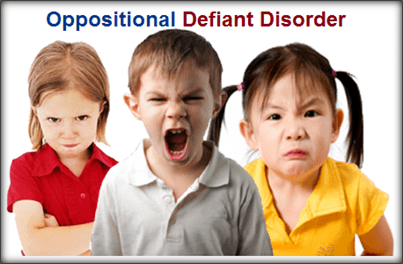
Parents will tell me that they want a child who can speak their mind and express themselves in an articulate and assertive manner but no one enjoys a child who argues, talks back or refuses to do anything they are asked to do. Typically, we call this latter description: Oppositional or Defiant behavior. 

Clinically, it is describe as any person who shows a pattern of…

A.  negativistic, hostile, and defiant behavior lasting at least 6 months, during which four (or more) of the following are present:
(1) often loses temper
(2) often argues with adults
(3) often actively defies or refuses to comply with adults’ requests or rules
(4) often deliberately annoys people
(5) often blames others for his or her mistakes or misbehavior
(6) is often touchy or easily annoyed by others
(7) is often angry and resentful
(8) is often spiteful or vindictive

It is hard to differentiate between talking back and being assertive. When this is the case, I suggest that parents have children “Redo” a defiant comment or action. Ask the child to repeat what they want in a different tone of voice, manner of approach or without the tantrum or door slamming. It is important that parents stay as calm as possible. Take a few deep breaths and ask the child to do the same and then have them “Redo” the behavior one to five times. The reason for the longer repetition is that not only does it reinforce the behavior in a positive manner and teach a more appropriate social skill but it also “satiates” (read “bores the child”) the inappropriate behavior. Children hate boring tasks but will feel rewarded when they get what they want through appropriate words and actions. 

Hey, try this on your husband too 🙂

Learn more power parenting tools with Ron Huxley’s parenting book: 

Love and Limits: Achieving a Balance in Parenting

How to Parent When YOU Are in Pain?

Parenting & Pain
By Ron Huxley, LMFT

It is hard to be on top of our parenting game when you are in a lot of emotional pain. This is especially challenging if the origin of this pain comes from the children that we are trying to parent. It might be simplistic to say but pain is “painful.” It hurts! It shuts us down and drives a wall between us and others so we can’t be hurt anymore. We want to retreat to nurse our wounds before risking more in relationships. Unfortunately, the everyday tasks of life have to be completed and our children continue to need us. As a compromise to this situation we become robotic in our actions. We are hyper-functional but we are hypo-relational. We get stuff done but we are just going through the motions and have no e-motions to share. We are too raw!

If you are in this place, make a resolution to find some help through good friends, therapists, doctors, etc. There are lot of support groups and parenting educations classes in your community. Be determined not to repeat past problems. Find new ideas and new support to achieve new, less painful interactions with your family. Second, be OK with being in a place of pain but don’t let it define you. You feel bad but YOU are not bad. Hurtful feelings are normal responses to hurtful actions they are not meant to be permanent. You will have better days again but don’t allow shame to pull you deeper into that dark place of despair. Set some boundaries, find some help and get mad a shame. It is not your friend!

Take back control of your home: 101 Parenting Tools: Building the Family of Your Dreams

FACT: 25% to 30% of “normal” families have emotionally insecure children — and are observed to need improvements in the emotional availability of their parent-child relationships.

The emotional security of children plays a significant role in shaping their lives — from their personality, confidence, success in future relationships, and mental health — as they grow. It is a widely accepted fact that children from loving and caring households go on to become well-adjusted adults, while children from abusive, broken, or neglectful homes often grow up to have serious emotional or even mental problems. But it is less well known that many concerned, caring, and well-meaning parents are still observed to need improvements in their relationships so that their children can grow up to be emotionally securely attached (vs. insecurely attached) to their parents. 30% of normal, benign relationships are found to be on the lower end of EA in our research studies.

When parents are emotionally reachable and are able to ‘read’ the emotional signals (through body and verbal language based on attachment and EA principles) of their kids, the children will perform better in a wide variety of situations.

Source: http://www.emotionalavailability.com

Sustain Your Families Successes

By Ron Huxley, LMFT

Parents want to know how to sustain the successes they have in the home. They want the temperature in the mood and attitudes in their children to stay constant. It is frustrating to have a good day and then have it follow with a week of anger and defiance. In order to sustain the good times, it is important that parents consistently put in what they want to get out of the family. For example, if you want kind children, keep putting in kindness to the children in your word and deeds. If you want joy, put in joy and fun activities. If you want respect, don’t just demand it, give it! This is why research demonstrates the power of modeling in social relationships. 

What do you want “out” of your family members? How can you put more of that “into” your home? 

Take back control of your home: 101 Parenting Tools: Building the Family of Your Dreams