Page 22 of 25

10 Tools for Positive Attachment | Psychology Today

It’s never too late to have a close relationship with someone you love. If you had a connection before, you can have it again. If you need a model for building a good relationship, consider what the word “attachment” spells out:

A: Attachment is about creating a bond with those you love. It requires that you accept life’s imperfections and get okay with things being “good enough.” When you have a good attachment with the ones you love almost any obstacle can be overcome.

T: Touch is a very important part of being attached. If you’re not getting enough, talk with your mate about it. Physical connection is a necessary part of creating a healthy attachment. If you don’t want or need to be touched, that’s okay, but if your partner isn’t on the same page, it will chip away at your foundation.

T: Thoughtfulness means that, even in times of strife, you somehow always manage to consider your partner first. You need to want your partner to be happy, and thinking about him or her should make you happy.

A: Affirming verbally how you feel is very important for many people. To never hear “I love you” from your mate can leave you feeling as though you are not truly wanted. Many men and women need to hear they are valued. This is a case where actions do not speak louder than words.

C: Connecting with your partner by looking into his or her eyes, holding hands, and just saying “thank you for being in my life” or holding each other tightly for several minutes are both powerful tools. Give them a shot.

H: Hoping for a better tomorrow is critical for relationships that are in healing mode. If you both honestly commit to working on your relationship together, you will have the best chance of getting through a rough patch.

M: Memories of happier times will help you find the strength you need to get things back on track if you have lost your feelings of attachment. Knowing that you were once in love can give you the motivation you need to find it again.

E: Emotional availability and support are the cornerstones of a loving intimate relationship. Your partner needs to know that you’re going to be there for him or her.

N: Needing another person is not a sign of weakness. Yes, people can be too needy, and insecure behavior can make it difficult for a couple to bond appropriately. But everyone needs to feel valued and that his or her feelings won’t be dismissed.

T: Trusting that you are loved is essential. If you have any doubts, it’s best to sit down and talk about them. Communicating, verbally and nonverbally, is the best tool for creating what you want.

After a little time, what you may find is that your partner isn’t perfect and neither are you. Of course, that means that your relationship isn’t perfect either. It is, however, good enough.

Ron Huxley’s Additions: As a family therapist, parenting educator and parents, I welcome any movements toward building strong families. It is what the Parenting Toolbox web site has always been about. These 10 tools give some great advice on how to establish the building blocks of relationships. It is actually based on some serious science but that isn’t important here. Practice these parenting tools today.

10 Discipline Tricks from Teachers

Ron Huxley’s Remarks: Ever wonder why your child behaves at school but not at home? In this very informative article, parents.com lists 13 ways your child’s teacher uses to gain control:

1. Give them a “do-over.”

2. Set up a take-a-break space.

3. Get on your knees.

4. Channel their superpower.

5. Change “go” to “come.”

6. Say their name first.

7. Let them swap chores.

8. Let them make the rules.

9. Give them a piece of the rock.

10. Do a countdown to liftoff.

How Parents and Adult Children Can Rebuild Relationships

How Parents and Adult Children Can Rebuild Relationships

by Lindsey Rich

As an empty nester, your relationship with your grown children may be filled with joy or disappointment. Do you act like best friends and weekly phone conversations, go on weekly shopping trips or seek one another’s advice? Or is their life like adolescence all over again?

Frustration ferments with questionable choices in dating lifestyles, drug and alcohol consumption and spending habits.

Sure, your kids may need to grow up.

But consider this: Maybe you are the impetus of the conflict. The fights increase because you have saddled unrealistic expectations on them; maybe they don’t follow the career path you have set for them; maybe they make choices you wouldn’t make.

If any of these ring to a familiar tone, it is time to examine the source of your conflict.

Causes of Conflict

Researchers at California State University have found that, while some children may have “grown up,” adulthood is fraught with problems, stemming from:

  • Communication style
  • Lifestyle choices
  • The way grandchildren are raised
  • Politics and religion
  • Employment status
  • Household conduct1

Psychiatrist Harry Bloomfield agrees with these findings, adding that almost 90 percent of children in adulthood do not get along with their parents.2

Advice for Repairing the Relationship

If you are a parent whose relationship is strained, Dr. Kathryn Bechkam Mims of Albany State University makes these recommendations:

  • Always tell the truth to one another.
  • Keep the lines of communication open.
  • Be sensitive to each other’s feelings.
  • Respect one another, despite differences in opinions.
  • Do not hold on to the past or judge their decisions. We all make mistakes, and each slip-up provides an opportunity for a life lesson.
  • Don’t blame one another. Blame is not always necessary and it’s often unhelpful.
  • Decide that your relationship with your child or parent is more important than most disagreements.3

Love and respect are the most important parts in any relationship. With a healthy dose of each, parents can move past their role as disciplinarian and into their new role as friend and confidant. “Reaching a comfortable adult-to-adult friendship is a growing, changing process, and it’s never too late to make new progress.”4

1 Clarke, Preston, Raksin, and Bengston, “Types of conflicts and tensions between older parents and adult children,” The Gerontologist, 39(3) (1999), 261-270.
2 Carol Kuykendall, Give Them Wings (Wheaton, Illinois: Tyndale House Publishers, 1994).
3 K.B. Mims, “They’re all grown up but I’m still a parent!,” Family Information Services, Minneapolis, MN (1998).
4 Chuck Colson, “The Return of Peter Pan,” Breakpoint (July 23, 1992), 5.
Copyright © 2006 Lindsey Rich. Used with permission. All rights reserved.

Ron Huxley’s Reflections: As an empty nester myself, I found this a simple, but helpful article on how to maintain a relationship with your adult child. I find that the toughest thing to do is allow them to make their own decisions and know when to keep you mouth shut or when to speak out. I admit, I haven’t always managed this balance.

Take a Brain Break – Mindfulness for Children

http://cdnapi.kaltura.com/index.php/kwidget/wid/0_9w4mpxly/uiconf_id/5590821

Ron Huxley’s Comments: In this video, actress Goldie Hawn talks about the importance of teaching children mindfulness. Her program is called MindUp and takes only a few minutes a day. Mindfulness research is promising huge improvements in mental health. Some of it gets, well, a bit out there! For the most part, however, it holds great benefits in improving mood, increases focus, and promote self-control. What child doesn’t need that? What parent doesn’t need that?

Real world math: put kids in charge of their money

Spending money! The perfect setup for real-world learning and natural consequences!

There are many methods for giving kids an allowance – tied to chores, tied to age, bonuses-for-extra-work, etc. How (or if) one gives an allowance is rooted in one’s family culture, and doesn’t lend itself to pat directives. But, no matter how you decide to give your kids an allowance, I find the key to increasing its power as a teaching tool is to put your kids in charge of how they spend their money.

Putting buying decisions in my kids’ hands has done wonders for their money savvy, consumer awareness, and math skills. Specifically:

  • Addition and subtraction (“How much to I still have to earn to buy x? How much will I have left if I buy y?”)
  • Percentage (“Hey, Mom! Museum members get 10% off in the gift shop!”)
  • Fractions (“Hey, Mom! X is on sale for half price!”)
  • Decimals (dollars and cents)
  • Quality vs. value (“It’s cheap, but it might break the second time I use it.”)
  • Needs vs. wants…or wants vs. other wants (“I want that video game, but maybe I should save my money for an iPad 2.”)
  • Long-term goals (“I want to buy a car when I get my license.”)

A few key details make this strategy work:

Allowance must be big enough to be meaningful.

I got two bucks a week when I was a kid, but it was more of a token payment than anything else. We pay our kids an allowance equal to their age. Half goes to “spending money,” and half goes to “long-term savings” which they get when they move out. They choose what to do with money they receive for jobs or gifts (spend it all or save part of it).

If they ask, I also “cash out” gift cards. That is, if they receive a store-specific gift card but would prefer the cash, I buy it from them, knowing it’s a matter of time till I shop at that store myself.

We choose not to formally tie allowance to chores or work, except for specific jobs such as lawn mowing or washing the car. For us, changing the context from “family responsibility” to “cash for work” decreases teamwork and increases conflict and loophole-finding.

We no longer buy treats and trinkets.

This is essential. No more lollipops in the checkout line. No more cheap toys. The only way kids learn to assess value is to pay for impulse purchases themselves.

This also goes for “upgrades” to purchases we cover. For example, we have a certain budget for school clothing. If our kids want the too-expensive pair of shoes (or whatever), they kick in the extra.

We advise our kids on purchases if they ask, but we don’t judge what they buy.

My kids decide what’s valuable to them. Beyond the most basic guidelines (nothing unsafe or offensive), they can buy whatever they want with their own money. Sometimes they buy candy or crap toys, but rarely…they decided early on it’s a waste of money.

We track allowance and spending electronically.

The roadblock we kept hitting was the actual handling of cash. We never had proper change when it was allowance time (or we’d forget to pay it). Someone would forget their wallet, or forget to put their money in the wallet, etc. We’d buy stuff for the kids, forget to get paid back…you get the picture.

An iPhone app solved the problem: Kiddy Bank. This simple app is little more than a smart ledger, automatically adding allowance each week, with the ability to debit for purchases and credit for earnings and gifts. We’ve created separate spendings- and savings “accounts” for each of the kids, as their allowances and savings rates are different. The app is not connected to an actual bank account, so no money actually moves around.

So there you have it…our allowance strategy. I’d love to hear what’s working for you.

Ron Huxley’s Remembrance: I remember getting $1 every Sunday, as a child, for my allowance. I would walk my brother and sister down to the corner market and we would spend that dollar. I would get three comic books and a chocolate malt. The day the comic books went from twenty-five cents to thirty-five cents was devastating for me. I had to make an important decision. Did I buy one less comic book or skip the malt? I ended up getting one less comic book.

This was math for me as a child. The ideas in this article can help you teach some simple life skills to your child as well. It covers some of the common obstacles and manipulations that might come up.

The Moral Life of Babies and Some Thoughts on Parenting

Ron Huxley’s Rant: I came across this very comprehensive article on the moral life of babies. I didn’t repost the entire article here because, well, it’s quite long and could get a bit boring. If you like that sort of thing I would encourage you to click the nytimes.com link above. Here’s the basic premise: Babies do come into the world with a bit of a moral compass. It is our job as parents to give it some refinement. This premise moved me to consider how are parenting philosophy and techniques are based on how we think about babies. 

The researchers conducted several experiments demonstrating that children experience empathy and have sense of right and wrong from the earliest moments of their lives. Their solutions to moral problems (how two children will share one toy that both believed they had their eye on first) may be limited due to their cognitive limitations and lack of social guidance but their innate understanding that some injustice has occurred is right on. Astute parents have witnessed their children getting their feelings hurt by the most innocent of situations. I once looked at a baby wrong and she tightened her face up into a silent scream and then exploded into tears. This reaction doesn’t come without some moral frame of reference, however limited.

I am not sure why we like to believe children are “perfect idiots” or full of “blooming, buzzing (moral) confusion” as a couple of leading thinkers in the field have described them. My fear is that when we hold the idea that children are narcissistic sociopaths, we will respond to them in very adverse, punitive ways. I think this has definitely been the case historically. The parenting idea of “spare the rod and spoil the child” has lead too many parents to the point of physical and emotional abuse. In my career many parents that had their children removed really that they were doing the right thing by their child. So much of our beliefs about parenting is governed by social constructs. How would parenting styles differ if we thought of babies as already equipped with a moral center, full of goodness and mercy? I know this sounds a bit preachy, but really, how would we parent differently? Would it change how we prioritize our schedules during the day? Alter educational standards? Give a new approach to discipline?

Let’s have a conversation, with other parents, about how parenting methods might change if our first thought is that babies are smart, nice and loving creatures and not budding sociopaths in need of parental toughness. Share your thoughts here or post on Facebook and Twitter.

Fun Ideas for Picky Eaters

Toddler’s can be the most finicky little people when it comes to just about anything; especially when it comes to eating! Parent’s are always trying to find fun, innovative ways of introducing new foods to the family menu. In this article I will be providing a few fun tips for letting your kids be the kitchen “Sous Chef” so to speak.

I’ve found that introducing new vegetables, colors and just about anything that doesn’t resemble a piece of chicken or slice of pizza is the most difficult task when trying to get my toddler to eat new things. A new game we’ve started together is—

The Calendar/Alphabet Game
Make a large calendar for the month and for each day have your children write a different letter of the alphabet on the calendar. For example, Monday “B”, Tuesday “M” etc … On Monday you and your children choose a new fruit, vegetable, dairy or grain that starts with the letter “B” to incorporate in the meals and snacks for that day. There is no limit to the many ways that the new foods can be added either. If you choose Broccoli for the new vegetable, liven it up a bit … have it as a snack, cold with their favorite dip or chopped up in a homemade cheese omelette for breakfast. Our favorite so far is “Y”, we made the best mixed fresh fruit and low-fat yogurt parfait with granola for dessert which followed our Yellow Squash Lasagna. It is very important to have your children involved in the prep work for each of the meals/snacks. It gives them a chance to connect with the food and learn to be creative. They’ll feel a sense of accomplishment when they finally sit down to enjoy the food that they never thought that would!

I’m a stay at home mom so my kids are almost always at home with me. to break the ongoing cabin fever that plagues young kids I try to implement atmosphere changes as frequently as possible, which leads me to my next tip—

The Color Wheel Picnic
This can be done as often as your schedule allows and it really is a lot of fun! On the same calendar that you use for the calendar game, put a star on a few days a month that you’d like to have a picnic, whether it is at the neighborhood park, your backyard, or in your family room on a rainy day.

Now have your child pick their three to five favorite colors for that day. Write down the colors and together go into your refrigerator and/or pantry. Find fruits, snacks, fresh vegetables, cheese/dairy and whole grains that match those colors and pack them into your picnic basket, have fun with your kids sampling all of the fun and colorful foods. Remember to bring a camera to document all of the colors that you’ve created with the food and take pictures to pin to your calendar so that you can remember just how yummy it all was!Along with creating fun and healthy meals with your kids, getting in enough physical activity is essential to their growth and what better way to connect eating healthy with staying fit. My next tip shows you how to help your toddler burn off some energy while getting your daily exercise in as well. I recommend spending at least thirty to forty-five minutes per day of physical activity—The Final Countdown
Who doesn’t know the saying “no pain no gain”? Well, who says you can’t have fun too? Countdown consists of combining a little math with a little exercise. Before starting remember, stretching is always important so do a few minutes of leg and body stretches with your children. Now, choose a number from one to five, for instance your child chooses the number “four”.. start off with doing four sets of four sit ups together. Remember to have them count along with you that would have been a total of 16 sit ups. When finished have them choose another number, “five” now do five sets of five jumping jacks, twenty-five in all. Once you’ve finished all numbers one to five reward yourselves with a nice cold smoothie or your favorite treat!These are just a few, fun, nutritious, and healthy tips to share with your children. Keep an eye out for more fun topics to come very soon!

Via http://www.divinecaroline.com/22107/118457-fun-ideas-expanding-toddler-s-menu/2#ixzz1YmdjP5uW

Rich Baby, Poor Baby: Overspending on Kids Is a Waste

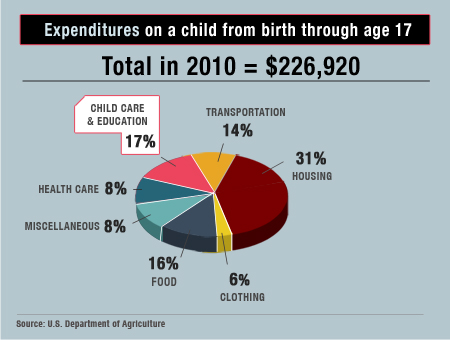
This article shares a growing trend of parents spending way too much on their children for items that seem like it is more about “fitting” in that based on need. I know as a grand parent I am guilty of this but hey, let the grand parents pay for the high tech toys and mom and dad stick with the quality time (as opposed to the video time).

7 Things Every Parent Should Discuss with Their Children and 3 Things They Absolutely Should Not : Parentables

Image via John Cave Osborne

To be an effective parent, you must also be an effective communicator. Yet being an effective communicator doesn’t necessarily make you an effective parent. After all, there’s the little issue of what, exactly, it is that you should be communicating to your children. And, perhaps even more importantly, what it is that you shouldn’t be communicating to them. 

Here are seven things that definitely need to be covered:

1. God

God Image: DamienHR’s photostream via Creative Commons

Parents owe it to their children to have a discussion about God, whether they’re believers or not. It’s a subject that is too hotly contested around the world to ignore as evidenced by the ominous ten-year anniversary that’s fast approaching. So whether you’re a bible-thumping Baptist or a card-carrying atheist, discussing why you believe, or why you don’t is an absolute must. And when you do, you’ll have the perfect opportunity to teach your child that regardless of what your beliefs are, tolerance of others’ beliefs is essential.

2. Sex

sexImage: je@an’s photostream via Creative Commons

A lot of people have a hard time talking about sex with their spouse, much less with their children, but it’s imperative to tackle this issue early and often. How early is impossible to say, but if your kids are old enough to ask, then they’re old enough for the talk. About the birds and the bees, that is. Follow up conversations are crucial if you want your child to have a healthy understanding of and respect for sex. If you do, odds are they’ll better understand when sex is and when it is not appropriate. Not to mention practice it safely when the time is right.


3. Drugs and Alcohol

drugs and alcohol Image: Marion Doss’s photostream via Creative Commons

You don’t exactly have to keep your eyes peeled for tragic stories involving fatalities due to underage drinking and drug use. It hurts to even read such stories, but one day it might hurt even worse if you don’t turn them into learning experiences by discussing them with your children.

When it comes to drugs, parents like you as well as kids and teenagers can find advice here at teenzeen.org.

4. Death

deathImage: Emmett Tullos III’s photostream via Creative Commons

For many children, death first rears its inevitable head in the form of a pet. For others, it comes at the loss of a beloved family member. No matter what your child’s first exposure is, a brush with death will always trigger a number of question which need to be handled delicately. But just because the questions stop doesn’t mean that the wondering has. You’re not being morbid if you re-visit the topic from time to time to make sure there aren’t lingering concerns. You’re being a good parent. 

5. Money

moneyImage: jollyUK’s photostream via Creative Commons

At some point, children naturally begin to wonder about money — about where, exactly, their family stands in the pecking order of wealth. And when they do, it’s best to remind them that wherever they stand, it’s just that: a pecking order. Which, of course, means that inordinate concern for all things material is for the birds. A discussion about money opens the door to a discussion about values and if you tackle the issue aggressively, your children stand a better chance of never mistaking their self worth with their net worth. 

6. Bullying

bullyingImage: trix0r’s photostream via Creative Commons

No one likes a bully. And unless your kids turns into one, it’s likely that he or she will be bullied at some point in time. But bullying usually starts gradually. So keep your eyes and ears open. And at the first signs of bullying, act aggressively by encouraging your child to stand up to the bully with a respectful yet forthright approach. With enough coaching your child will handle such encounters with confidence. And the funny thing about bullies? They usually crumble in the face of such confidence. 

7. The Internet

the InternetImage: The Daring Librarian’s photostream via Creative Commons

On the one hand, our kids know all about the Internet. After all, it is to them what the TV was to us. Yet on the other, no one really understands the Internet thanks to it’s virtually limitless reach and astonishing immediacy. If you don’t believe me, ask Karen Owen, the Duke student who sent an email to a few close friends only to have the topic of that email go viral just days later. That topic? A tongue-in-cheek powerpoint presentation of her various “sexcapades” which caused great embarrassment and harm to all involved, especially the creator. It’s impossible to understand the power of the Internet. But if you convince your kids of that very fact, they stand a greater chance of not learning that lesson the hard way. You talk to them all the time about their real lives, so be sure to discuss their virtual ones as well. 

Okay, now that we’ve got some of the must-discuss topics out of the way, time to point out that there are also some things you should not discuss with your kids. Here are three that immediately come to mind. 

1. Marital Problems

marital problemsImage: Ed Yourdon’s photostream via Creative Commons

Everyone knows that a divorce can be devastating for a child. As a stepdad, I’ve seen it firsthand. It’s for that very reason that parents should never discuss marital problems with their children. In most cases, all you’ll do is confuse your child. And have them constantly worrying that a divorce may be imminent. It’ll be bad enough if and when it actually happens, so until then, keep it under wraps.

2. Negative Feelings About Family

mother-in-lawImage: basykes’ photostream via Creative Commons

Do your in-laws drive you nuts? What about that loud and obnoxious nephew? Or the selfish biological parent of your step child? Well, sorry to hear it, but do your child a favor and keep all that to yourself. Unless someone poses a specific threat to your child, why in the world would you stop him or her from loving anyone? Besides, if you plug in hard enough, you just might find that the person you’re not so fond of is A-OK after all. 

3. Your Problems

your problemsImage: aturkus’ photostream via Creative Commons

Remember back in the day when you thought your mom and dad had all the answers? Well guess what? Your kids believe the exact same thing about you. I know, laughable, but perception is reality. So the last thing you want to do is  shatter that “reality” by discussing your own self doubts with your children. That doesn’t mean that you can’t discuss difficult situations which you managed to conquer. After all, every child can learn from stories like that. But it does mean that you shouldn’t bombard your children with the issues that keep you up at night. All that will do is make them feel the same insecure. A better approach is to put a confident foot forward even when you’re feeling anything but. After all, things have a funny way of working out when you approach them with confidence and faith. And wouldn’t you rather teach your kids that than treat them like your therapist? 

Speaking of therapists, does reading this list make you think that I’m in desperate need of one? Anything on here you vehemently disagree with? Please let us know the things you think parents should discuss, as well as the things you don’t think parents should discuss with their children. 

MORE ON PARENTING:

6 Axioms of Step Parenting 
The Golden Rule of Parenting? Judge Not. 
Parenting Through Crisis: Keeping Perspective During Extreme Stress 

Ron Huxley’s Remarks: This is a great article on important subjects to talk to your children about and maybe even more importantly, what not to talk about…

Honoring Step Family Day: September 16

Honoring Step Family Day

by Bonnie Cushing

Friday, September 16 is Step Family Day! Although not a true national holiday, Step Family Day was founded by Christy Borgeld of Grand Rapids, Mich., to recognize and show appreciation for the importance and value of step-parents and their extended relations. It was first celebrated in 1997.

According to Stepfamily Foundation statistics, approximately half of all Americans are currently involved in some form of step relationship. Despite their substantial presence in our society, however, the negative myths of the wicked stepmother and the happily-ever-after Brady Bunch (as well as those commentators, politicians and religious leaders who continue to label any family that deviates from the “nuclear” model as abnormal) persist in plaguing real life stepfamilies struggling to integrate family members in an authentically loving way. Celebrating Step Family Day is one way to challenge society’s stigmas, while simultaneously promoting the health and well-being of families and strengthening the connections between them.

In her book Living Jewish Life Cycle: How to Create Meaningful Jewish Rites of Passage at Every Stage of Life, Rabbi Goldie Milgram outlines for everyone (regardless of their religious or nonreligious affiliation) what ceremonies and rituals can accomplish:

Providing support for desired or necessary change

Identifying the losses inherent in transitions

Acting as ‘speed bumps’ that invite reflection and integration

Affirming identity and location within the community

Promoting healing, balance and nurturance

Helping to connect with the mystery of existence 

These are all tasks that stepfamilies face at some point in their lifecycle—and ceremonies offer an unparalleled opportunity to move a family along the continuum toward robust health.

What constitutes an effective celebration for stepfamilies to engage in together, whether it be on September 16th or any other day of their choosing?                                                                             

(1)  Open planning sessions involving as many family members as possible is optimal. This, in and of itself, will help build closer relationships and understanding among family members and provide a space and time for everyone to feel that their voice is welcome and needed in the family. For parents and step-parents, it is important to present your ideas as possibilities and not a statement of what you want or expect the children to do, as that can undermine the sense of cohesion and inclusion you are trying to create. I also recommend a feedback session after a celebration occurs to help refine traditions and continue empowering family members to actively participate. 

(2) Taking into account the developmental stages that the children (and adults!) are in at any given time is critical as well (i.e. with teenagers, resistance and the need to be with peers are both predictable and appropriate).  

(3) Building common ground by drawing upon both the old traditions of the families before re-configuration and new ones created by the family in its present incarnation can communicate that what came before is as important as what exists now. This affirms and softens the inevitable losses sustained by different family members and, at the same time, honors what is unique about your new stepfamily constellation.                                                                                                                         

(4) Being patient and staying with the process is essential. Ron Deal, in his volume The Smart Stepfamily: Seven Steps to a Healthy Family, uses the metaphor of cooking to emphasize the importance of taking the time necessary for successful integration. All the quicker cooking methods leave a lot to be desired. What Ron suggests is the Crock-Pot method—using time and a slow and evenly applied heat to allow each family member to cook at their own speed. Take heed—people are not fast food!

So, what forms can a Stepfamily ritual or celebration take?                                                                                   

Although I urge you to let yourselves collectively dream up your own kinds of ceremonial gatherings, here are a few examples of ways you can mark Step Family Day for your family:                                                                                                                      

(A)  Organize a picnic at a local park. This can include favorite foods, games, and music of each family member. Including one or more other step families provides the extra benefit of combating the sense of being different than “real” families and counters the resulting sense of isolation.

(B) Have a “Movie Night” at home with special take-out food or a meal prepared together.                

© Share an adventure such as parasailing, treasure-hunting, canoeing, or camping out together  

(D) Create a communal piece of art—a collage, clay sculpture, finger painting, etc.—or stage a family talent show, with or without an audience!                                                                                             

(E) Create a Family Ceremony, such as one where each family member writes something meaningful about every other member of the family and places it in a box for each person. The notes can then be read aloud, along with a simple candle-lighting.

The point is to use your collective imagination, and remember—the sky’s the limit. This is your family, and you all deserve loving recognition!!

Bonnie Berman Cushing is a family systems therapist with 20 years experience, as well as a celebrant who has collaborated and performed weddings, civil unions, memorials, baby welcomings, public art dedications and other assorted ceremonies. She is proud to have been among the first eight North American celebrants to be certified by the Celebrant Institute and Foundation. In addition to being a licensed clinical social worker specializing in family systems therapy, she is a devoted organizer and educator for racial justice. Bonnie is married to David and is mother to two amazing people, Molly and Jerry. bonniecushing@aol.com

Ron Huxley’s Remarks: As a step parent I used to joke that I suddenly realized why they called us “blended” families. It was because it felt like we were in a blender on high speed. Blended families (not my favorite term for it) or step parent families (also not a favorite term) deserve to be honored and celebrated.

Although not an “official” holiday, it is still a time to say thank you to a step mom or dad for all the hard work they put into loving their own and others children.