Page 14 of 25

Shame On Me: How to Parent Without Shame or Blame

by Ron Huxley

The default mode of parenting is to use shame in a desperate attempt to regain control of our home and our children. It is not that parents enjoy using negative tactics. In fact, parents universally describe the “necessity” of using shame or other aggressive tactics because “nothing else seems to work.” Parents feel powerless in their own homes. 

Shame differs from guilt in that guilt is the feeling of “doing” a wrong behavior and shame is a sense that “I am wrong” from doing that wrong behavior. It creates an inner world of worthlessness, badness, and feeling damaged or defective. Shame comes from social messages that you are bad when you do bad things. It is backed up by social rejection and isolation from not meeting others expectations or the failure to perform in a certain way. Fear may be involved in both guilt and shame except that guilt is fear of punishment and shame results in fear of abandonment. 

Parents reveal to me the road of desperation they end up on…they start off asking nicely and have their requests ignored. They give choices but the choices are dismissed. They provide structure but the child kicks down the limits. All attempts to parent in a positive way, including the use of rewards and social praise, breaks down into the one thing that their children seem to respond to: shame!

Shame can give short term results but the long term price is emotional suffering for both parent and child. The home becomes a prison of fear and breeds discouragement and anger. It kills the spirit of the child and sets up an intergenerational pattern of negative communication that erodes self esteem and destroys intimate relationships for life. 

Debating with parents about long term results of shame is not productive either. Parents who feel they have no other recourse will not let go of their grip on the tool of shame because that just increases the powerlessness of the situation. Further exploration of a parents original parenting toolbox shows me that there was only had two or three parenting tools in there to start. As a child grows older and more independent, the parent quickly burns through their limited tools and they feel they have no options left but to reach to the bottom of the box and use negative forms of parenting. The tools got into the toolbox parents because that is often one used by their parents. They were controlled by shame and no they are using it despite vows to never parent the way they were parented. A simple solution to this dilemma is to add more tools to the parenting toolbox and train parents on how and when to use them the next time the noncooperation crops up and it will…

The good news about behavior problems is that if they popped up today, they will pop up again tomorrow and the day after that and the day after that, etc. They are predictable! This gives parents a chance to form new strategies and add new tools to try with their children. If one tools doesn’t work, set it back in the box and try a new one until cooperation can be found that doesn’t require a one punch system of control. Trust me, the problem will come up again giving you another opportunity to find a way to manage it positively. 

You can get over 100 parenting tools in Ron Huxley’s ebook by clicking here now! You can also hire Ron to coach you on how to use these tools and create new strategies for parenting with more positive results. Click here for more information on how to regain control in your home. 

Special Free Report: “Balancing Love and Limits in the NonTraditional Family”

by Ron Huxley, LMFT

Balancing love and limits in discipline is one of the most 

challenging aspects of parenting. Love and limits refer to 

different styles of parenting with love representative of a 

“permissive” or child centered style of parenting and limits 

representative of “authoritative” or parent centered style. Each 

style is based on a set of beliefs, in the parent, about what it 

means to be a good parent. No one wants to be a bad parent. 

They adopt a style that they feel best meets the goal of 

parenting to raise children that are able to manage themselves 

and function productively in the world. 

Get some tools to rebuild your family today…click here!

Americans tend to lack imagination when it comes to breakfast. The vast majority of us, surveys say, start our days with cold cereal — and those of us with children are more likely to buy the kinds with the most sugar. Children all over the world eat cornflakes and drink chocolate milk, of course, but in many places they also eat things that would strike the average American palate as strange, or worse.

Breakfast for a child in Burkina Faso, for example, might well include millet-seed porridge; in Japan, rice and a putrid soybean goop known as natto; in Jamaica, a mush of plantains or peanuts or cornmeal; in New Zealand, toast covered with Vegemite, a salty paste made of brewer’s yeast; and in China, jook, a rice gruel topped with pickled tofu, strings of dried meat or egg. In Cuba, Brazil and elsewhere in Latin America, it is not uncommon to find very young children sipping coffee with milk in the mornings. In Pakistan, kids often take their milk with Rooh Afza, a bright red syrup made from fruits, flowers and herbs. Swedish filmjolk is one of dozens of iterations of soured milk found on breakfast tables across Europe, Asia, the Middle East and Africa. For a child in southern India, the day might start with a steamed cake made from fermented lentils and rice called idli. “The idea that children should have bland, sweet food is a very industrial presumption,” says Krishnendu Ray, a professor of food studies at New York University who grew up in India. “In many parts of the world, breakfast is tepid, sour, fermented and savory.”

Photo

<p>The elaborate Saturday morning spread in front of Doga includes honey and clotted cream, called <em>kaymak</em>, on toasted bread; green and black olives; fried eggs with a spicy sausage called <em>sucuk</em>; butter; hard-boiled eggs; thick grape syrup (<em>pekmez</em>) with tahini on top; an assortment of sheep-, goat- and cow-milk cheeses; quince and blackberry jams; pastries and bread; tomatoes, cucumbers, white radishes and other fresh vegetables; <em>kahvaltilik</em> <em>biber salcasi</em>, a paste made of grilled red peppers; hazelnut-flavored halvah, the dense dessert; milk and orange juice. While certainly more elaborate than weekday fare, this Gursoy family meal is in keeping with the hodgepodge that is a typical Turkish breakfast.</p>
Photo

<p>Doga Gunce Gursoy, 8 years old, Istanbul</p>

Doga Gunce Gursoy, 8 years old, Istanbul

The elaborate Saturday morning spread in front of Doga includes honey and clotted cream, called kaymak, on toasted bread; green and black olives; fried eggs with a spicy sausage called sucuk; butter; hard-boiled eggs; thick grape syrup (pekmez) with tahini on top; an assortment of sheep-, goat- and cow-milk cheeses; quince and blackberry jams; pastries and bread; tomatoes, cucumbers, white radishes and other fresh vegetables; kahvaltilik biber salcasi, a paste made of grilled red peppers; hazelnut-flavored halvah, the dense dessert; milk and orange juice. While certainly more elaborate than weekday fare, this Gursoy family meal is in keeping with the hodgepodge that is a typical Turkish breakfast.

Parents who want their kids to accept more adventurous breakfasts would be wise to choose such morning fare for themselves. Children begin to acquire a taste for pickled egg or fermented lentils early — in the womb, even. Compounds from the foods a pregnant woman eats travel through the amniotic fluid to her baby. After birth, babies prefer the foods they were exposed to in utero, a phenomenon scientists call “prenatal flavor learning.” Even so, just because children are primed to like something doesn’t mean the first experience of it on their tongues will be pleasant. For many Korean kids, breakfast includes kimchi, cabbage leaves or other vegetables fermented with red chile peppers and garlic. A child’s first taste of kimchi is something of a rite of passage, one captured in dozens of YouTube videos featuring chubby-faced toddlers grabbing at their tongues and occasionally weeping.

S.A.F.E.R. H.O.M.E. : Helping parents deal with power struggles and out-of-control children.

by Ron Huxley, LMFT

Are you in a constant power struggle with your children? Feeling a little helpless to manage the continual arguments and competition between children in your home? Tired of yelling, bribing, and negotiating to get cooperation? Well here is a 9 step plan to help you create a “safer home”:

= Stop what you are doing. Your probably reacting to the stress of the situation and making things worse. Take some time to…

= Assess the situation, environment, mood and motivations of your child(ren). What are they doing? Why are they doing it? How are you handling it? Who is involved? Just notice for now…

=Focus on one problem or priority to address. Don’t try to tackle all the issues. Try and address the core issue that affects the most people/variables. This will allow you to…

E = Empathize with your child’s feelings. State: “I can understand how you would feel this way or want to act in a certain way, however…”

= Respond (versus reacting) by offering alternative solutions or asking for responses from the children to come up with the alternatives themselves. This activates all areas of the brain through empathy development (right brain and emotional centers of the brain) and logical thought (left brain and cause and effect areas of the brain)…

= Help children with suggestions for things they could try if they cannot come up with their own or if they won’t do it. “Would you like some ideas? What if we do x or y?”…

= Offer choices. Would you rather share the toy or find a new one? Brush teeth before or after putting on your pajamas? The more choices and the smaller they are spread out through the day the more compliance you will get. Choices mean power but only offer ones you can live with and be ready to…

M = Maintain your position when they go for that third choice you didn’t offer them. If they do this, you know you are playing a game that no one will win. You may have to be a broken record and repeat the choice two choices two times (this is important to only do it twice) and then…

E = Execute the choice everyone agreed to or take action if they can’t or won’t agree to one. You chose A or B. This is “do or die” when it comes to parenting. Be ready to stick to your choice and don’t back down. If you do, you give total control back to your child. The fight might be tough today but tomorrow it will be easier and easier the day after that until finally it will be a rare day that you have to fight it at all. Won’t that be nice and safe?

Need more help with power struggles, arguments and out-of-control home situations? Contact Ron today at rehuxley@gmail.com about parenting coaching or family therapy. 

The Gentle Path of Parenting

by Ron Huxley, LMFT

“Blessed are the meek,
    for they will inherit the earth.”

Many spiritual traditions, including Christianity, like to turn our normal way of thinking on its head. The answers we get from our faith often contradicts the truths we hear around us. If we follow this different path, it can lead to confusion and ridicule but it may also open doors to greater peace in our relationships. It might also lead to the end result we were wanting in the first place by way of an alternate path. 

The verse quoted above is from Matthew 5:5 where Jesus gave the Sermon on the Mount. It is also called the Beatitudes where Jesus gave his “Blessings” or instructions on how to live life with a different “attitude”. If what you have been trying with your family isn’t working perhaps it is time to try something new.

What if you stop fighting with your child to pick up his toys or get your husband to stop leaving his boots on the new carpet? What other approach might you take, a more gentle one, that would get the results you want? The arguing and nagging wasn’t working anyway. That is what your family expects from you. They don’t suspect a different, upside down tactic.

Meek doesn’t have to mean weak. You will have to have a new attitude to make this upside down thinking work. Actually, you will have to stop trying to make it work. Much of the spiritual principle of parenting referenced here is that you get something (or something new and better) when you stop wanting something or striving so hard. It’s kind of like when you tell you child not to eat his broccoli and then he wants to eat it. Unfortunately, our relationships are triggered negatively. We expect a fight and so it is a fight we get. We expect mom to yell and so we ignore or stay stuck in front of the screen until she does. The earlier warnings she gave done mean anything. Predictable and annoying. 

What would this meek approach look like if we tried that? What is the opposite of what you have been doing? What would calm look like if that was your super power? Nothing rattles mom or dad, not even forgotten chores. Ta da!

What if natural consequences took over instead? What if you get a carpet cleaning estimate and gave it to dad and then asked him to schedule it because you and your girlfriends are going out for coffee and a movie? Perhaps it sounds a bit manipulative but why should everyone else have all the fun watching you spin like an angry top. The alternative to keep doing what you have been doing and that hasn’t worked. You could give up instead and pick up dad’s shoes for him or your children’s toys and just be your families slave. No? Well, that’s try my idea of meekness. It isn’t weakness or complacency or wimpish. It is a calm, gentle approach to dealing with life’s problems and owning your own power. It is accepting that you are a powerful person and using that power in a productive, gentle manner that also respects the other powerful people in your family and fosters creativity in them to use that power respectfully toward you. 

Take some time to reflect on this and begin to brainstorm some different strategies and tactics other then a tantrum or yelling or giving up?  

inner-healing:

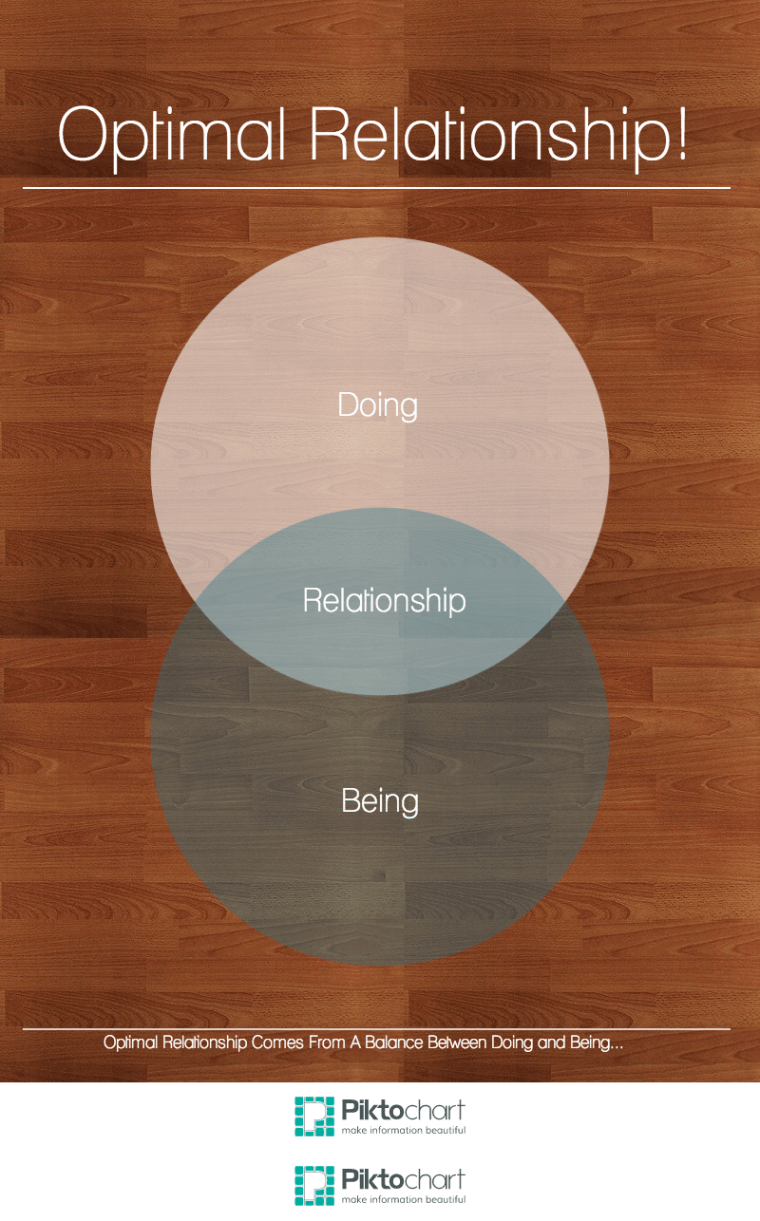
Optimal Relationships have a balance between doing and being. Are your relationships dry and boring? Maybe there is too much doing and business and not enough talk about dreams, thoughts, and feelings. Are you filling like your relationship is not productive and stuck? Maybe more action and planning is needed? Find that balance by setting boundaries on when and what you talk about together to achieve more balance in your relationships today.

Dependent or Dependable Children?

by Ron Huxley, LMFT

When children enter the world they are completely dependent on big people for everything. Over time they become more independent. This is seen most dramatically in various neurological growth spurts during the “terrific two’s” and “thrilling teen” years. It can be a time of challenging parental authority. Children need learn to do things on their own, make important decisions, and establish a unique identity. These are also trying times and worrying times for parents and may cause us to not let go of a our grip.  

The goal is not to keep a child dependent or just teach independence although both are part of life. We will always be dependent on someone for something so purely teaching independence is just part of the goal. A more realistic pursuit is to teach our children to be dependable. This means that a child is worthy of trust and has integrity in life and it will be one of the most important survival skills (and arguably one of the most lacking) needed for a successful adult life. 

Family Dinners May Help Teens’ Mental Health

A recent study suggests that family dinners could be good for many teens’ mental health.

Researchers found that this type of regular dinner pattern could help prevent bullying and cyberbullying, which occurs in about 1 in 5 adolescents.

Unlike traditional bullying that can be physically dangerous, cyberbullying also carries harsh mental consequences that can directly affect the risk of certain mental health issues. Researchers studied the association between cyberbullying and mental health and substance problems to determine how family dinners could help out.

For the study, researchers examined survey data on 18,834 students (ages 12-18) from 49 schools in a Midwestern state. The authors measured five internalizing problems (anxiety, depression, self-harm, suicide ideation and suicide attempt), two externalizing problems (fighting and vandalism) and four substance use problems (frequent alcohol use, frequent binge drinking, prescription drug misuse and over-the-counter drug misuse).
Results showed that close to 19 percent of the students reported that they had been a victim of cyberbullying during the previous 12 months. However, researchers also found that family dinners appeared to help moderate the relationship between this issue and other related problems.

“Furthermore, based on these findings, we did not conclude that cyberbullying alone is sufficient to produce poor health outcomes nor that family dinners alone can inoculate adolescents from such exposures,” the researchers noted, in a news release. “Such an oversimplified interpretation of these associations disregards other exacerbating and protective factors throughout the social environment. Instead, these findings support calls for integrated approaches to protecting victims of cyberbullying that encompass individual coping skills and family and school social supports.”

Family Dinners May Help Teens’ Mental Health

Are you a Perfect Parent?

by Ron Huxley, LMFT

How many of the parents, reading this column, are perfect 
parents
? None? Well, how many of the imperfect 
parents
, reading this column, have perfect children? Still 
none? While it may be that perfect parents don’t need to 
read this column, I think the real truth is that there are no 
perfect parents or perfect children.

If that is true, then why do so many parents act as if there is 
such a being as the “perfect parent” or “perfect child?" 
To illustrate my point, try completing the following 
sentences. Just say the first thing that comes to mind:

1. A good parent always… 2. Good children should…    
3. As a parent, I must… 4. My children ought to be more… 
5. If I were more like my own parents, I would be more…

If a parent falls short of these standards, and so, is not a 
"good” parent, what does that leave the parent to be? 
Parents are left with the belief that he or she is a “bad" 
parent. These beliefs are responsible for why parents feel 
so out of control and powerless in their parenting roles. 
Parents need more realistic beliefs about parenting.

Realistic Beliefs about Parenting

Beliefs are expressions of parents’ values about 
themselves, other people, and the world. Unrealistic beliefs 
create a feeling of demand that pushes and drives parents 
unnecessarily where realistic beliefs create a feeling of 
inner stability, even when circumstances aren’t always 
stable.

One way to create more realistic beliefs is to evaluate the 
evidence for your unrealistic thoughts about parenting. Ask 
yourself these questions: What law states that a child will 
always listen and be respectful? What evidence really 
suggests that all parents must be available to their children 
at all times? What edict states that I must be perfect?

For one day, make a list of all the negative thoughts that 
come to mind as you go about your parenting duties. At the 
end of the day, look over the list and write out alternative, 
positive counter-thoughts. Whenever the negative thoughts 
come up, immediately state the alternative thought to break 
its power over you. If it is too hard to remember them all, 
pick one or two of the negative thoughts that create the 
most interference in your parenting and counter those only. 
Do that for about a week and then move down the list to the 
others.

Changing what you say about your parenting will change 
how you feel about your parenting. Try this experiment: 
complete the following incomplete sentences and notice the 
emotional difference between these and the first list.

1. A responsible parent always… 2. Good children 
sometimes… 3. As a parent, I can be… 4. I desire my 
children to be more… 5. If I were like my own parents, the 
positive qualities I would like to have…

Only one word was changed in each of these sentences 
and yet it dramatically changes how you think and feel. If 
you are going to accept the fact that you are imperfect then 
you will have to eliminate "perfection” language from your 
thoughts and words. You will need to accept the fact that 
you are acting “good-enough.” This doesn’t mean that you 
shouldn’t strive for more out of yourselves or your child. 
Self-improvement is not the same as expecting perfection.

“The Courage To Be Imperfect”

It takes courage to be a “good-enough” parent. This is what 
the child psychiatrist, Rudolph Driekurs, calls “the courage 
to be imperfect.” While there are plenty of perfect parenting 
standards to fall short of, there are no rules for how to be 
an imperfect parent. Here are ten un-commandments for 
developing the “courage to be imperfect”:

1. Children should be encouraged, not expected, to seek 
perfection. 2. Accept who you are rather than try to be 
more than or as good as other parents. 3. Mistakes are 
aids to learning. Mistakes are not signs of failure. 
Anticipating or fearing mistakes will make us more 
vulnerable to failure. 4. Mistakes are unavoidable and are 
less important than what the parent does after he or she 
makes a mistake. 5. Set realistic standards for yourself and 
your child. Don’t try correcting or changing too many things 
at one time. 6. Develop a sense of your strengths and your 
weaknesses. 7. Mutual respect, between parent and child, 
starts by valuing yourself. Recognize your own dignity and 
worth before you try and show your child their dignity and 
worth. 8. Unhappy parents are frequently discouraged, 
competitive, unrealistic in their standard for themselves and 
their children, over ambitious, and unbalanced in their love 
and limits. 9. High standards and expectations are 
frequently related to parents’ feelings of inferiority and 
lack of adequate parenting resources. 10. Parents need to 
develop the courage to cope with the challenges of living, 
which means, they must develop the “courage to be 
imperfect.”