Page 4 of 7

Helicopter Parenting

Helicopter parents think they are protecting their children from harm and are standing up for their child to make sure they get their well-deserved special treatment The truth is that helicopter parents are doing their children more harm than good, are potentially stifling the creativity and emotional development of the children and often embarrassing them.

What is helicopter parenting?

Helicopter parenting was originally described by famed author, child psychologist, psychotherapist and parent educator, Haim G. Ginott (1922-1973). He is known as author of the 1965 best-selling book “Between Parent and Child.” Ginott is credited with the first published reference to helicopter parenting in his 1969 best-seller, “Between Parent and Teenager.” In the book, Ginott mentions a teenager who complained to him, “Mother hovers over me like a helicopter.” Helicopter parenting is described very simply by Positive-Parenting-Ally as parents who “seem to ‘hover’ over their children in an effort of trying to control their lives in order to protect them from harm, disappointment, or mistakes.” They do their child’s daily homework and keep them safe by insisting that they be excused from activities where they could get hurt, in the opinion of the parent. So the child is often left on the sidelines when other kids in the physical education class are playing soccer or are taught gymnastics routines.

Helicopter parents demand to speak to the teacher “right now” even after school personnel tell the parent that the teacher is in class. The parent feels entitled to special treatment and should not have to wait for anything. Their child should also not have to wait. Their child should be first in line to receive rewards or to engage in an activity and their child should be seen first at medical or dental appointments, even if there are children who need more urgent care than theirs. Helicopter parents may think they are protecting their children, but they are actually hurting their children, possibly for a lifetime.

Who are the helicopter parents?

Mothers are overwhelmingly more likely to be guilty of helicopter parenting than dads and are also more likely to go to extremes to circumvent rules for their children. Moms more often refuse to let their children make mistakes, be given a bad grade or to perform in the ballet recital without the helicopter mom interfering and complaining. The helicopter parent feels the need to constantly come to their child’s rescue. They complain that their children are not treated fairly, that the child received a bad grade not because of poor effort or incorrect answers but because the teacher does not like their child. Other children are chosen for teams, school plays or recitals because the coach likes the other children better, not because the child of the helicopter mom does not have the necessary skills.

Helicopter parents, particularly mothers, are easily identifiable at an early age and typically interfere by the time a child starts school. There are differences between the types of behaviors exhibited by helicopter moms and helicopter dads. The fathers are so consumed by overall status and career path that they may skip going to the teacher or coach and go straight to the top with his complaints and even threats. Helicopter moms are busy working behind the scenes, manipulating and dominating to get the special treatment for their child that the mother thinks her child deserves, even though none of the other children in the class or on the team get that specific treatment or benefit demanded by helicopter mom. She is likely to threaten teachers and coaches directly, often telling them if they do not give her child what she wants, she will see to it that the teacher or coach gets fired.

Effects of helicopter parenting on the children

The results of helicopter parenting can leave a child with serious deficiency in some life skills and with poor emotional health. The U.K. Daily Mail reported on a study that found children of helicopter parents are “more likely to be depressed,” and to have difficulty getting along well with others. The children have less self-confidence than peers and are more likely to have anxiety issues, according to results of the study. This coincides with other findings on the effects of helicopter parenting. The Family Education Network quotes Ohio State University associate professor of child and adolescent psychiatry, Dr. Hiasako M. Koizumi, who explains that the helicopter mom “interferes with normal child development. She manages their environment to the extent that she prevents them from learning how to handle stress, inhibits healthy exploration, denies the growth of autonomy, limits self-confidence, and nurtures socially isolated and inadequate teenagers.”

Many other professionals stress the detrimental effects that helicopter parenting has on children and that the effects are long-term, potentially affecting the child throughout their entire life. Children of helicopter parents often exhibit a lack of confidence to accomplish anything independently. Some children may grow up unable to make crucial decisions on their own, while others recognize the helicopter parenting and are embarrassed by their parent’s behavior. Other children grow up with a sense of entitlement, stemming from the special treatment demanded by their parents throughout their childhood.

Helicopter parents are always there…always

Helicopter parents bully other parents, teachers, coaches and anyone else who they feel is the cause of their child not having the best grades, not being first in line and not being recognized more than other children. They also display hovering behaviors when a child spends the night at a friend’s house, when their children go off to summer camp or on a school field trip. Even when not physically with their child, helicopter mom is still there…hovering. Some summer camps have actually started hiring staff whose job duties are to deal with all the telephone calls from helicopter parents who call to request special treatment for their child and who demand that staff supply their child with certain items that the other campers are not given.

Helicopter parents do not stop when the child enters adulthood

Just because a child graduates high school does not mean helicopter parenting stops. Some grown children feel the hovering even after going off to college or after getting married and living on their own as an adult. The extremes that helicopter parents go to so they can still hover over their adult children is demonstrated in the ABC-News report “Helicopter Parents Hover Over Kids’ Lives,” which states that up to 60% of college students have at least one helicopter parent. The extremes that some parents have gone to includes a confession by one college student who reported that his parents installed a nanny-cam on his computer. Jim Settle, co-author of the study on helicopter parenting of college students stated that the parents installed the nanny-cam “so the parents were able to watch their son 24 hours a day.” Other parents have logged on to their college-aged children’s social media pages to keep track of what they are doing and with whom and have make repeated calls to university administrators over minor disputes and even to complain over the food served to their child on campus.

College is not the only place that helicopter parents hover after their child reaches adulthood. They are right there to “help” their child get a job, which usually backfires when the human resources officer or hiring manager gets a call from mommy. When the adult who has been victim of a helicopter parent throughout childhood does get a job, there are likely to be issues with keeping the job, difficulty accepting criticism or a sense of entitlement, expecting more favorable treatment than co-workers.

Are you a helicopter parent?

Helicopter parents often refuse to admit to being a helicopter parent. They usually see nothing wrong with their actions, as in the case of the mother who called the college dining hall to complain about her daughter being served chicken that was too salty. The mother said making the call was the right thing to do. Other parents do not recognize that they are guilty of helicopter parenting. Baby Zone offers a quick, 10-question quiz so parents can determine if they are a helicopter parent. If you are, back off and let your child be a child and if grown, let the child be an adult. Let the child fall, fail the math test or not get chosen for the lead in the school play. Johnny will learn to dust himself off and go back to playing football and Suzy will learn to study harder for the next test. Children need to make mistakes and learn from them instead of having a hovering parent “protecting” them from living a normal life. Children who learn from mistakes and who learn to make decisions on their own are more likely to develop positive self-esteem and not grow up with a sense of entitlement or lack of confidence.

Source: http://nobullying.com/helicopter-parents/

Regulation vs. Resolution

by Ron Huxley, LMFT

Are you trying to build or rebuild the family of your dreams? Needs some parenting tools to remodel your relationships. Let Ron Huxley and the ParentingToolbox blog help you this New Year.

Instead of figuring out your parenting resolutions, work on relationship regulation. Regulation is defined as “a set of rules maintained by an authority figure” and “a process of self-management and control.” Modern parents are plagued with homes that are out-of-control and find it impossible to enforce a set of rules in the home. This is the new season for regulation and not for a new list of tasks to increase this or decrease that behavior problem. 

Resolutions focus on the person and not the problem. Regulation is a co-relational strategy between parent and child that is based on scientific research in the fields of attachment and developmental neuroscience. 

Follow this blog as Ron Huxley gives you new tools for this new season of regulation and find more family connection. Hey, tell a friend too 🙂

Anger Management: “Jump!”

by Ron Huxley, LMFT

Four frogs were sitting on a log and one decides to
jump. How many frogs are left? Still four. Deciding to jump does not
mean that the frog actually did jump. Managing our anger is often the
same. We decide to make a change in our attitudes and behaviors but
we never “get off the log.” The difference between the person who
succeeds in managing anger in their life and the one who doesn’t is
commitment. One must be committed to change if it is to become a
reality. There are no easy alternatives. Stopping the destructive
path of anger is hard work and takes courage and discipline. 

Today, write out a statement of commitment to
changing the role of anger in your life. Make it strong and make it
clear. It can be as long as you like but there can not be any
ambiguities in your language. No “maybes.” No “trying.” Just “doing.”
Oh, you will mess up and you will fall a few times but you have to go
back to your statement and do it again. How many times? As many times
as it takes until anger is your slave and not the other way around.

Dream Parenting Project: I Choose You

All families have disagreements and fights. It is easy to get into polar opposition toward one another and the result can be feelings of hurt and loss. How do you build a dream family when these painful elements exist? You make a choice! You choose one another despite the hurts. Of course, you work to change that negative atmosphere and you must have boundaries and even consequences for certain behaviors but you still make a choice to connect. Take a moment today to tell a family member: “I choose you.” If it is not safe to say it aloud, at least, say it to yourself when you are thinking about that person and how they wronged you. Again, set good boundaries and make positive, safe behavioral choices but make a choice to connect by taking your will to task and declaring: “I choose you." 

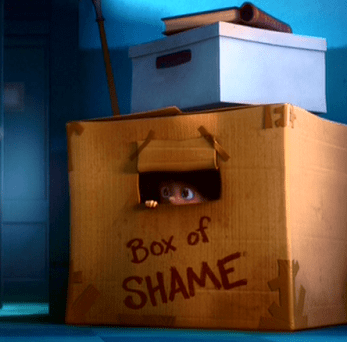
Shame On Me: How to Parent Without Shame or Blame

by Ron Huxley

The default mode of parenting is to use shame in a desperate attempt to regain control of our home and our children. It is not that parents enjoy using negative tactics. In fact, parents universally describe the “necessity” of using shame or other aggressive tactics because “nothing else seems to work.” Parents feel powerless in their own homes. 

Shame differs from guilt in that guilt is the feeling of “doing” a wrong behavior and shame is a sense that “I am wrong” from doing that wrong behavior. It creates an inner world of worthlessness, badness, and feeling damaged or defective. Shame comes from social messages that you are bad when you do bad things. It is backed up by social rejection and isolation from not meeting others expectations or the failure to perform in a certain way. Fear may be involved in both guilt and shame except that guilt is fear of punishment and shame results in fear of abandonment. 

Parents reveal to me the road of desperation they end up on…they start off asking nicely and have their requests ignored. They give choices but the choices are dismissed. They provide structure but the child kicks down the limits. All attempts to parent in a positive way, including the use of rewards and social praise, breaks down into the one thing that their children seem to respond to: shame!

Shame can give short term results but the long term price is emotional suffering for both parent and child. The home becomes a prison of fear and breeds discouragement and anger. It kills the spirit of the child and sets up an intergenerational pattern of negative communication that erodes self esteem and destroys intimate relationships for life. 

Debating with parents about long term results of shame is not productive either. Parents who feel they have no other recourse will not let go of their grip on the tool of shame because that just increases the powerlessness of the situation. Further exploration of a parents original parenting toolbox shows me that there was only had two or three parenting tools in there to start. As a child grows older and more independent, the parent quickly burns through their limited tools and they feel they have no options left but to reach to the bottom of the box and use negative forms of parenting. The tools got into the toolbox parents because that is often one used by their parents. They were controlled by shame and no they are using it despite vows to never parent the way they were parented. A simple solution to this dilemma is to add more tools to the parenting toolbox and train parents on how and when to use them the next time the noncooperation crops up and it will…

The good news about behavior problems is that if they popped up today, they will pop up again tomorrow and the day after that and the day after that, etc. They are predictable! This gives parents a chance to form new strategies and add new tools to try with their children. If one tools doesn’t work, set it back in the box and try a new one until cooperation can be found that doesn’t require a one punch system of control. Trust me, the problem will come up again giving you another opportunity to find a way to manage it positively. 

You can get over 100 parenting tools in Ron Huxley’s ebook by clicking here now! You can also hire Ron to coach you on how to use these tools and create new strategies for parenting with more positive results. Click here for more information on how to regain control in your home. 

The Gentle Path of Parenting

by Ron Huxley, LMFT

“Blessed are the meek,
    for they will inherit the earth.”

Many spiritual traditions, including Christianity, like to turn our normal way of thinking on its head. The answers we get from our faith often contradicts the truths we hear around us. If we follow this different path, it can lead to confusion and ridicule but it may also open doors to greater peace in our relationships. It might also lead to the end result we were wanting in the first place by way of an alternate path. 

The verse quoted above is from Matthew 5:5 where Jesus gave the Sermon on the Mount. It is also called the Beatitudes where Jesus gave his “Blessings” or instructions on how to live life with a different “attitude”. If what you have been trying with your family isn’t working perhaps it is time to try something new.

What if you stop fighting with your child to pick up his toys or get your husband to stop leaving his boots on the new carpet? What other approach might you take, a more gentle one, that would get the results you want? The arguing and nagging wasn’t working anyway. That is what your family expects from you. They don’t suspect a different, upside down tactic.

Meek doesn’t have to mean weak. You will have to have a new attitude to make this upside down thinking work. Actually, you will have to stop trying to make it work. Much of the spiritual principle of parenting referenced here is that you get something (or something new and better) when you stop wanting something or striving so hard. It’s kind of like when you tell you child not to eat his broccoli and then he wants to eat it. Unfortunately, our relationships are triggered negatively. We expect a fight and so it is a fight we get. We expect mom to yell and so we ignore or stay stuck in front of the screen until she does. The earlier warnings she gave done mean anything. Predictable and annoying. 

What would this meek approach look like if we tried that? What is the opposite of what you have been doing? What would calm look like if that was your super power? Nothing rattles mom or dad, not even forgotten chores. Ta da!

What if natural consequences took over instead? What if you get a carpet cleaning estimate and gave it to dad and then asked him to schedule it because you and your girlfriends are going out for coffee and a movie? Perhaps it sounds a bit manipulative but why should everyone else have all the fun watching you spin like an angry top. The alternative to keep doing what you have been doing and that hasn’t worked. You could give up instead and pick up dad’s shoes for him or your children’s toys and just be your families slave. No? Well, that’s try my idea of meekness. It isn’t weakness or complacency or wimpish. It is a calm, gentle approach to dealing with life’s problems and owning your own power. It is accepting that you are a powerful person and using that power in a productive, gentle manner that also respects the other powerful people in your family and fosters creativity in them to use that power respectfully toward you. 

Take some time to reflect on this and begin to brainstorm some different strategies and tactics other then a tantrum or yelling or giving up?  

Dependent or Dependable Children?

by Ron Huxley, LMFT

When children enter the world they are completely dependent on big people for everything. Over time they become more independent. This is seen most dramatically in various neurological growth spurts during the “terrific two’s” and “thrilling teen” years. It can be a time of challenging parental authority. Children need learn to do things on their own, make important decisions, and establish a unique identity. These are also trying times and worrying times for parents and may cause us to not let go of a our grip.  

The goal is not to keep a child dependent or just teach independence although both are part of life. We will always be dependent on someone for something so purely teaching independence is just part of the goal. A more realistic pursuit is to teach our children to be dependable. This means that a child is worthy of trust and has integrity in life and it will be one of the most important survival skills (and arguably one of the most lacking) needed for a successful adult life. 

Are you a Perfect Parent?

by Ron Huxley, LMFT

How many of the parents, reading this column, are perfect 
parents
? None? Well, how many of the imperfect 
parents
, reading this column, have perfect children? Still 
none? While it may be that perfect parents don’t need to 
read this column, I think the real truth is that there are no 
perfect parents or perfect children.

If that is true, then why do so many parents act as if there is 
such a being as the “perfect parent” or “perfect child?" 
To illustrate my point, try completing the following 
sentences. Just say the first thing that comes to mind:

1. A good parent always… 2. Good children should…    
3. As a parent, I must… 4. My children ought to be more… 
5. If I were more like my own parents, I would be more…

If a parent falls short of these standards, and so, is not a 
"good” parent, what does that leave the parent to be? 
Parents are left with the belief that he or she is a “bad" 
parent. These beliefs are responsible for why parents feel 
so out of control and powerless in their parenting roles. 
Parents need more realistic beliefs about parenting.

Realistic Beliefs about Parenting

Beliefs are expressions of parents’ values about 
themselves, other people, and the world. Unrealistic beliefs 
create a feeling of demand that pushes and drives parents 
unnecessarily where realistic beliefs create a feeling of 
inner stability, even when circumstances aren’t always 
stable.

One way to create more realistic beliefs is to evaluate the 
evidence for your unrealistic thoughts about parenting. Ask 
yourself these questions: What law states that a child will 
always listen and be respectful? What evidence really 
suggests that all parents must be available to their children 
at all times? What edict states that I must be perfect?

For one day, make a list of all the negative thoughts that 
come to mind as you go about your parenting duties. At the 
end of the day, look over the list and write out alternative, 
positive counter-thoughts. Whenever the negative thoughts 
come up, immediately state the alternative thought to break 
its power over you. If it is too hard to remember them all, 
pick one or two of the negative thoughts that create the 
most interference in your parenting and counter those only. 
Do that for about a week and then move down the list to the 
others.

Changing what you say about your parenting will change 
how you feel about your parenting. Try this experiment: 
complete the following incomplete sentences and notice the 
emotional difference between these and the first list.

1. A responsible parent always… 2. Good children 
sometimes… 3. As a parent, I can be… 4. I desire my 
children to be more… 5. If I were like my own parents, the 
positive qualities I would like to have…

Only one word was changed in each of these sentences 
and yet it dramatically changes how you think and feel. If 
you are going to accept the fact that you are imperfect then 
you will have to eliminate "perfection” language from your 
thoughts and words. You will need to accept the fact that 
you are acting “good-enough.” This doesn’t mean that you 
shouldn’t strive for more out of yourselves or your child. 
Self-improvement is not the same as expecting perfection.

“The Courage To Be Imperfect”

It takes courage to be a “good-enough” parent. This is what 
the child psychiatrist, Rudolph Driekurs, calls “the courage 
to be imperfect.” While there are plenty of perfect parenting 
standards to fall short of, there are no rules for how to be 
an imperfect parent. Here are ten un-commandments for 
developing the “courage to be imperfect”:

1. Children should be encouraged, not expected, to seek 
perfection. 2. Accept who you are rather than try to be 
more than or as good as other parents. 3. Mistakes are 
aids to learning. Mistakes are not signs of failure. 
Anticipating or fearing mistakes will make us more 
vulnerable to failure. 4. Mistakes are unavoidable and are 
less important than what the parent does after he or she 
makes a mistake. 5. Set realistic standards for yourself and 
your child. Don’t try correcting or changing too many things 
at one time. 6. Develop a sense of your strengths and your 
weaknesses. 7. Mutual respect, between parent and child, 
starts by valuing yourself. Recognize your own dignity and 
worth before you try and show your child their dignity and 
worth. 8. Unhappy parents are frequently discouraged, 
competitive, unrealistic in their standard for themselves and 
their children, over ambitious, and unbalanced in their love 
and limits. 9. High standards and expectations are 
frequently related to parents’ feelings of inferiority and 
lack of adequate parenting resources. 10. Parents need to 
develop the courage to cope with the challenges of living, 
which means, they must develop the “courage to be 
imperfect.”

How do you feel about your child today?

Are you feeling love or are you feeling anger or sadness or disappointment?

Our feelings are responses to events that occur in us and around us. They are not definitions of the relationship status or the amount of affection we can direct towards our children. When they mess up and they are good mess makers, we never change our affections toward them regardless of our emotional state.

Emotions come and go. The word emotion comes from the French term “to stir up” and stir up they do but they also settle down. Our emotional statement is based on our state of mind about our intentions to love our children in unconditional ways no matter what emotions have been stirred up. 

The good news about emotions and relationships is that they are new every day. Today is a new day to start fresh and re-store new emotional experiences. Don’t let emotions drag yesterday into todays thoughts and actions. Yesterday is a drag…it drags down your ability to parent from a fully charged emotional purpose to love and cherish your children.

Give yourself permission to feel freely, in love, with your child today.