Creating a Safe Space for Adoption Conversations: A Guide for Parents

For transracial adoptees, having a safe space to discuss their adoption story, birth family, and cultural identity is crucial for healthy emotional development. Yet many parents struggle to create this environment despite their best intentions. This article explores what constitutes a safe space for these conversations, what barriers parents might face in providing one, and why overcoming these challenges benefits the entire family.

What Makes a Safe Space for Adoption Conversations?

A safe space for adoption conversations includes several key elements:

Emotional safety is the foundation. Children need to feel they can express any emotion—sadness, anger, confusion, curiosity—about their adoption without parents becoming defensive, dismissive, or overly emotional themselves. Parents should validate these feelings rather than trying to “fix” them.

Non-judgment allows children to ask questions or share thoughts about their birth family, cultural heritage, or identity without fear of upsetting their parents. This includes accepting when children may express grief or loss alongside a love for their adoptive family.

Age-appropriate honesty builds trust. Parents should share truthful information about the adoption story at developmentally appropriate stages, without hiding challenging aspects but presenting them with sensitivity.

Regular, casual opportunities for conversation help normalize adoption discussions. Rather than making these talks formal or rare events, weaving them naturally into everyday life shows children that adoption isn’t a taboo topic.

Child-led pacing respects the child’s emotional readiness. Some children may want frequent conversations, while others need more time. Parents should follow their child’s lead while occasionally opening the door for discussion.

Consistent reassurance of permanence and love provides security. Children need to know that exploring feelings about the birth family doesn’t threaten their place in the adoptive family.

Cultural resources and connections demonstrate respect for the child’s heritage. Books, cultural events, and relationships with others who share their background show children that their identity is valued.

Barriers Parents May Face

Despite good intentions, parents can struggle to create this safe space for several reasons:

Fear of Rejection

Many adoptive parents worry that their child’s interest in their birth family or culture signifies rejection of them as parents.

“It’s natural to feel threatened when your child expresses curiosity about their birth family,” says Dr. Emily Martinez, adoption psychologist and author. “But remember, a child’s desire to understand their origins isn’t about replacing you—it’s about completing their identity puzzle.”

Insecurity About “Real” Parenthood

Some parents struggle with societal messaging that biological connections are more “real” than adoptive ones.

“I’ve worked with many parents who confess they feel like ‘imposters’ when their child asks about their birth family,” explains adoption counselor James Wilson. “This insecurity can make it difficult to create the open environment children need.”

Discomfort with Difficult Emotions

Adoption stories often include complex, sometimes painful elements. Parents may want to protect their children—and themselves—from these difficult emotions.

“Parents often tell me they want to wait until their child is ‘old enough’ to handle the hard parts of their story,” says Dr. Lisa Chen, a family therapist specializing in adoption. “But avoidance usually creates more issues than it solves. Children sense when topics are off-limits, which can lead to shame and secrecy.”

Cultural Disconnection

For transracial adoptees, discussions about identity often include race and culture. Parents who haven’t done their own cultural education work may feel ill-equipped for these conversations.

Why Creating a Safe Space Benefits Everyone

Though challenging, creating this safe space ultimately strengthens family bonds and promotes healthy development:

For the child: Research shows that adoptees who can openly discuss their adoption experiences have better self-esteem, more vigorous identity formation, and fewer psychological issues in adulthood.

For parents: Open communication builds trust and deepens the parent-child relationship. It also prevents the buildup of unspoken questions and concerns that can create distance.

For the family unit: Families who can navigate these conversations develop resilience and communication skills that benefit all aspects of family life.

A Real-Life Example

When 8-year-old Mei began asking questions about her birth mother in China, her adoptive mother, Sarah, initially felt anxious. “I worried she was unhappy with our family,” Sarah admits. “I found myself changing the subject or giving brief answers to end the conversation quickly.”

After joining an adoptive parent support group, Sarah recognized her defensive reactions were more about her fears than Mei’s needs. She began creating space for these conversations, starting with books about adoption and gradually moving to more personal discussions.

“The turning point came when I told Mei it was okay to love her birth mother and wonder about her,” Sarah recalls. “The relief on her face was immediate. She said, ‘I thought it would hurt your feelings if I talked about her.'”

Today, at 13, Mei speaks openly about her adoption story and Chinese heritage. “These conversations haven’t diminished our bond,” Sarah says. “They’ve made it stronger because Mei knows she can bring her whole self to our relationship.”

Expert Advice

Dr. Martinez offers this guidance: “The best gift you can give your adopted child is permission to explore all aspects of their identity without feeling they’re betraying you. This isn’t always easy, but it’s essential.”

Wilson adds: “Remember that your child’s story belongs to them. Your role is not to control the narrative but to help them understand and integrate it into their life healthily.”

Dr. Chen concludes: “Creating this safe space isn’t a one-time event but an ongoing process. Be patient with yourself and your child as you navigate these waters together. The ultimate goal is to raise a child who feels whole and secure in all aspects of their identity.”

By facing their own fears and insecurities, parents can create the safe space their children need to thrive—not despite their adoption story, but with it fully integrated into their sense of self.
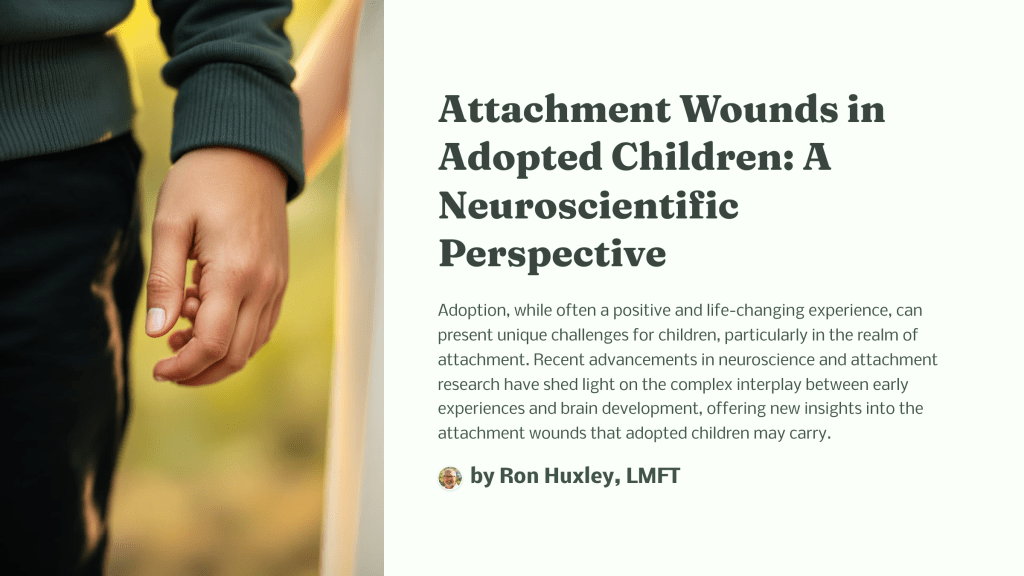
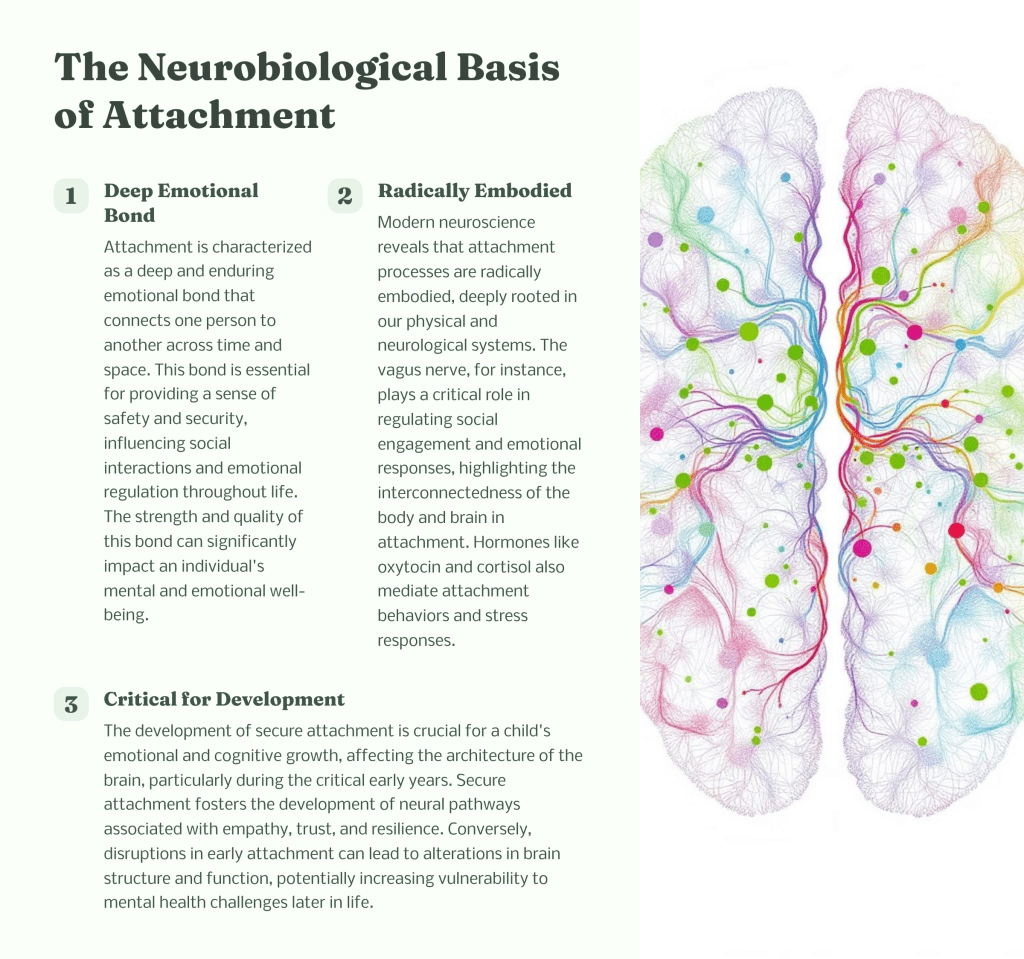
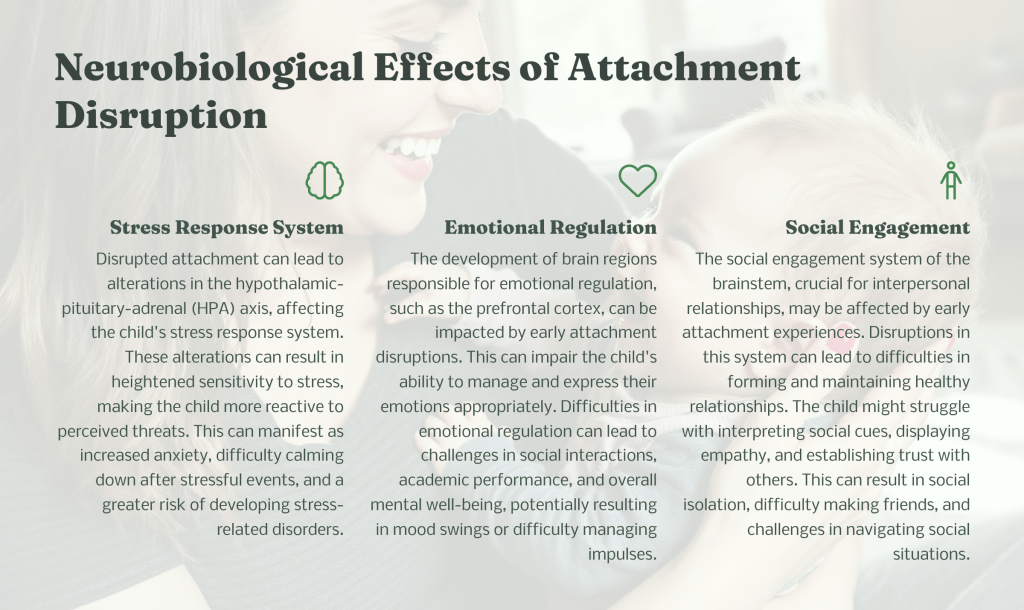
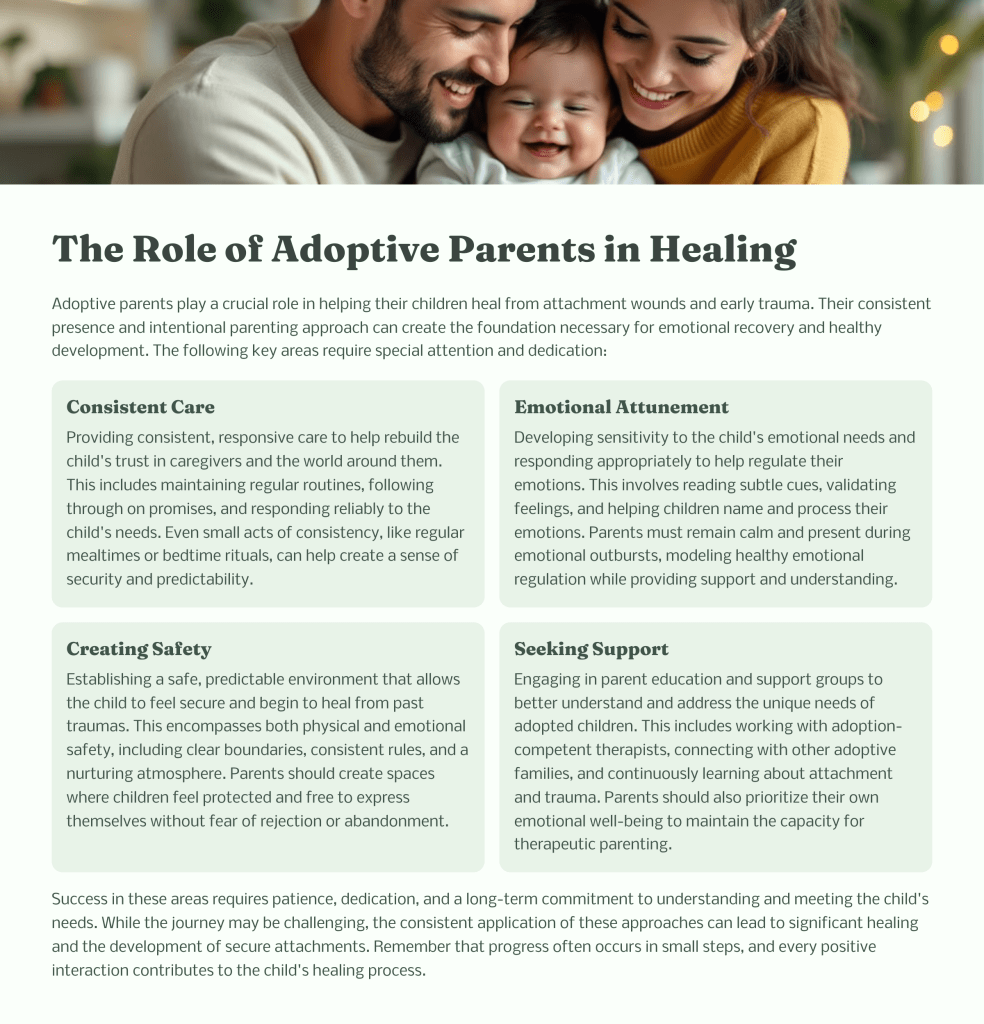
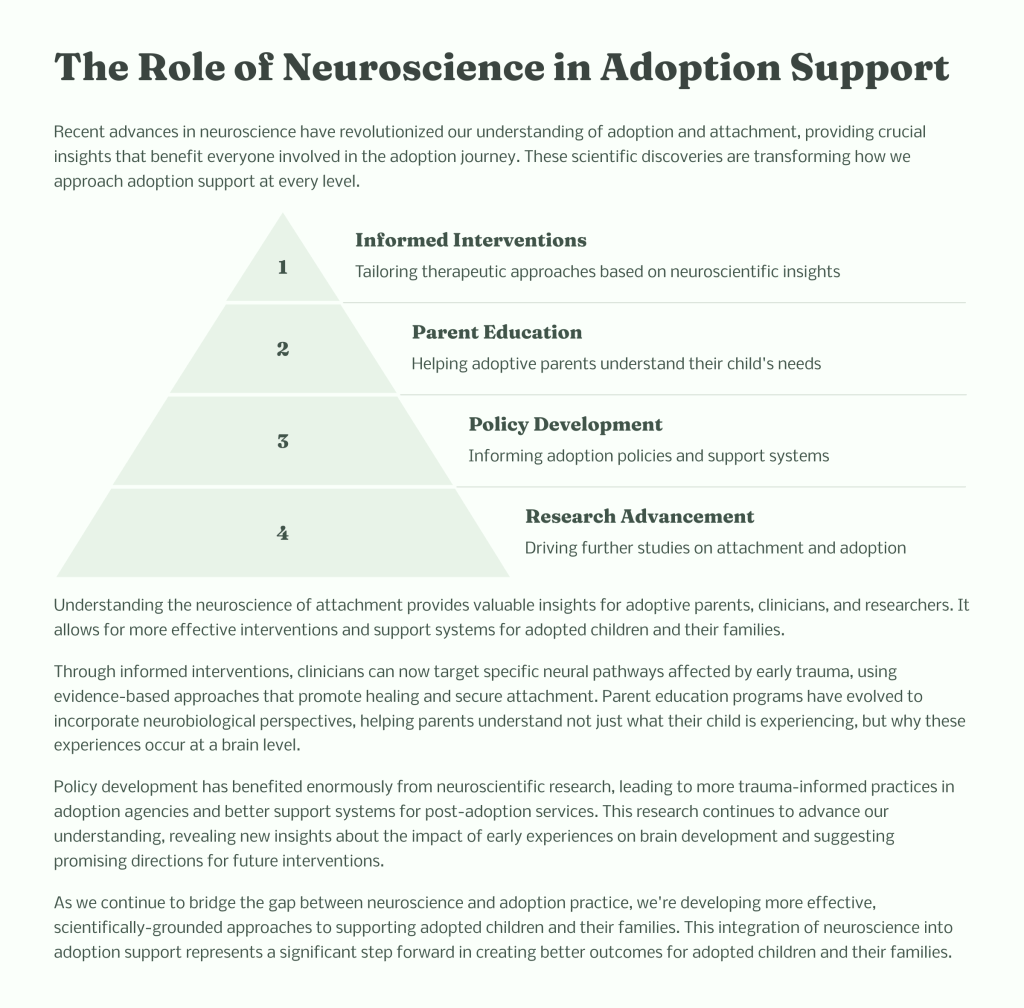
Attachment Wounds in Adoption: A Neuroscientific Perspective

Adoption, while often a positive and life-changing experience, can present unique challenges for children, particularly in the realm of attachment. Recent advancements in neuroscience and attachment research have shed light on the complex interplay between early experiences and brain development, offering new insights into the attachment wounds adopted children may carry.

Does your child seem like a “Square Peg in a Round Hole”?

When Your Child Doesn’t Seem to “Fit”: Understanding and Supporting Neurodivergent Kids

Picture trying to fit a square block into a round hole in a shape sorter. No matter how hard you push or turn it, it just won’t fit. This is how many neurodivergent children feel every day in schools, social situations, and even at home. These are the kids who might have ADHD or autism or simply think and experience the world differently than most. But here’s the thing – they’re not broken blocks that need reshaping. They’re unique individuals who need the right space to shine.

“Why Can’t My Child Just…?”

If you’ve ever asked yourself, “Why can’t my child just follow simple directions?” or “Why do they struggle with things other kids find easy?” you’re not alone. Dr. Ross Greene, who has worked with countless families, puts it beautifully: “Kids do well if they can.” This simple but powerful idea turns traditional thinking on its head. When our children struggle, it’s not because they’re being difficult – it’s because something in their environment doesn’t match their needs or abilities.

It’s Not About Trying Harder

Consider asking someone nearsighted to “just try harder” to see clearly. Sounds ridiculous, right? Yet we often expect neurodivergent kids to “try harder” to fit into situations that aren’t designed for their way of thinking or processing information.

Robyn Gobbel, who specializes in helping parents better understand their children, explains that connecting with our kids is more important than trying to correct their behavior. When children feel understood and supported, they’re much more likely to develop the skills they need to navigate challenging situations.

Your Child’s Brain: A Different Kind of Beautiful

Dr. Daniel Siegel helps us understand that every child’s brain develops in its own unique way. Just like some people are naturally artistic while others are mathematical, neurodivergent children have unique ways of thinking and learning. Instead of seeing this as a problem to fix, we can view it as a different kind of gift to nurture.

Making Room for All Shapes

So, how can we help our square pegs thrive in a world full of round holes? Here are some practical ideas:

  • Create “just right” challenges: Break big tasks into smaller, manageable pieces
  • Look for the message behind the behavior: When your child struggles, ask, “What’s making this hard?” instead of “Why won’t they cooperate?”
  • Celebrate different ways of doing things: Maybe your child needs to move while learning or draw while listening.
  • Trust your instincts. You know your child best. If something isn’t working, it’s okay to try a different approach.

A New Way Forward

Instead of trying to make our children fit into spaces that weren’t designed for them, we can work on creating spaces that welcome all kinds of minds. This might mean:

  • Talking with teachers about flexible learning options
  • Finding activities where your child’s unique traits are strengths, not challenges
  • Connecting with other parents who understand your journey
  • Most importantly, helping your child understand that different isn’t wrong – it’s just different

The Real Goal

The goal isn’t to turn square pegs into round ones. It’s to create a world where all shapes are welcomed and valued. Your child isn’t a problem to solve – they’re a person to understand and support.

Recommended Resources

For parents wanting to learn more:

  1. “The Explosive Child” by Dr. Ross Greene
  • Learn about collaborative problem-solving and working with your child instead of against them
  1. “Lost at School” by Dr. Ross Greene
  • Understanding how to advocate for your child in educational settings
  1. “The Whole-Brain Child” by Dr. Daniel Siegel and Dr. Tina Payne Bryson
  • Practical strategies for understanding your child’s development and behavior
  1. “Beyond Behaviors” by Mona Delahooke
  • Understanding and helping children with behavioral challenges
  1. “Building the Bonds of Attachment” by Daniel Hughes
  • Insights into connection-based parenting approaches

Online Resources:

Remember, you’re not alone on this journey. These resources are here to support both you and your child as you navigate this path together.

Why does Play Therapy Work for Traumatized Children?

Play therapy is a specialized approach that utilizes play to help children, particularly those aged 3-12, process and overcome traumatic experiences. Play is a natural form of communication for children and offers a safe and less invasive way for them to express their emotions and experiences, especially when words fail. Children may have difficulty regulating emotions, managing impulses, or communicating feelings due to the impact of trauma on their development.

Here’s why play therapy works for traumatized children:

  • Natural Expression: Play is a child’s inherent language, allowing them to communicate and work through internal conflicts more effectively than through verbal therapy alone.
  • Safe Environment: Play therapy sessions provide a comfortable and non-threatening space where children can explore their emotions and experiences without feeling pressured.
  • Symbolic Communication: Through toys, art, and storytelling, children can express and process complex emotions and traumatic memories symbolically, making it easier to address complex subjects.
  • Building Coping Skills: Play therapy equips children with healthy coping mechanisms for managing emotions, such as anger, frustration, and stress. It helps them learn to regulate impulses and develop better control over their feelings.
  • Developing Social Skills: Play therapy can also help children improve their social skills, build relationships, and gain confidence in interacting with others.

Play therapy sessions can be either directive or non-directive:

  • Non-directive (Free Play): In this approach, the child leads the play, choosing the toys and activities. The therapist observes the child’s interactions and uses their choices and play patterns to gain insights into underlying issues.
  • Directive Play: The therapist guides the play towards specific goals, selecting activities and toys to encourage the child to address particular topics or work through specific challenges.

Standard techniques used in play therapy for trauma include:

  • Dolls and action figures: This technique helps therapists understand family dynamics and how the child perceives different family members. The child’s interaction with the figures can reveal past experiences and attachments.
  • Arts and crafts: Creative activities like drawing and painting allow children to express their emotions non-verbally. Therapists can analyze the child’s art for patterns or symbols that offer insight into their inner world.
  • Storytelling and roleplaying: By using puppets, masks, or imaginary characters, children can safely explore difficult emotions and events, feeling less exposed and more comfortable sharing their experiences.
  • Make-believe: This play can reveal the child’s desires, fears, and coping mechanisms. It allows them to express their need for escape or control in challenging situations.

It’s important to note that the success of play therapy relies heavily on the relationship between the therapist and the child. Building trust and rapport is crucial for creating a safe space where the child feels comfortable expressing themselves. The therapist’s role is to guide the child through play, helping them understand and process their emotions and experiences in a way that leads to healing and growth.

Parenting the Ups and Downs

Parenting is a challenging yet rewarding journey filled with moments of joy and times of stress and anxiety. While not every moment will be easy, there are ways to cope with the challenges and focus on the joys inherent in raising a child.

  • Acknowledge the Challenges: Parenting takes significant time, financial resources, and emotional energy. It is essential to accept that there will be difficult times and prepare for them.
  • Find Support: Connect with other parents, friends, or family members who can offer support and understanding.
  • Celebrate the Joys: Amidst the challenges, remember to cherish the moments of joy that come with parenting. Focus on the positive aspects of your relationship with your child.

By acknowledging the challenges, finding support, and celebrating the joys, you can navigate the ups and downs of parenting and create a more fulfilling experience for yourself and your child. Remember, while this advice may be helpful, seeking professional guidance when dealing with specific traumas or stressors in your family is essential. This information is not from the provided source; you may want to verify it independently.

Raising Good Humans: A Guide to Mindful Parenting

Hunter Clarke-Fields’ book “Raising Good Humans” offers a refreshing approach to parenting that focuses on mindfulness, emotional intelligence, and building strong relationships with our children. By incorporating these principles, parents can create a nurturing environment that fosters cooperation, resilience, and empathy in their children.

The Power of Modeling

One of the core tenets of Clarke-Fields’ approach is the importance of modeling desired behaviors. Children learn more from what we do than we say[1]. As parents, we must embody the qualities we wish to see in our children, such as kindness, calmness, and respect[1]. For example, if we want our children to manage their emotions effectively, we need to demonstrate emotional regulation ourselves.

Breaking Harmful Cycles

Clarke-Fields emphasizes the need to identify and break harmful generational patterns[1]. Many parents unknowingly perpetuate behaviors they experienced in their own upbringing, such as yelling or using physical punishment. By recognizing these patterns, we can consciously choose to parent differently, creating a more positive family dynamic.

Mindfulness as a Foundation

The book advocates using mindfulness techniques to enhance parental self-regulation and improve communication with children[1]. Practices like the RAIN meditation can help parents navigate emotional challenges with more excellent balance and presence[1].

Building Strong Relationships

At the heart of Clarke-Fields’ philosophy is the belief that a strong parent-child relationship is key to effective parenting[3]. Children who feel securely attached to their parents are more likely to cooperate and work together to resolve conflicts[3].

Top Parenting Techniques from “Raising Good Humans”

  1. Practice mindful emotion management: Use techniques like RAIN meditation to navigate challenging situations with balance[1].
  2. Model desired behaviors: Demonstrate the qualities you want to see in your children, such as kindness and calmness[1].
  3. Focus on positive reinforcement: Catch your child being good and acknowledge their positive actions[2].
  4. Teach interoception: Help children recognize their body’s internal signals to develop better self-regulation[2].
  5. Establish predictable routines: Create consistency in daily activities to provide security and reduce anxiety[2].
  6. Spend focused time with your child: Strengthen your connection through dedicated, quality time together[3].
  7. Create a low-stress home environment: Simplify your surroundings to foster a calm atmosphere[3].
  8. Practice vulnerability: Show your children that it’s okay not to have all the answers and to learn from mistakes[6].
  9. Cultivate a growth mindset: Encourage a perspective that embraces challenges and sees failures as opportunities for learning[6].
  10. Prioritize emotional intelligence: Help children effectively identify, understand, and manage their emotions [5].

By implementing these techniques and embracing the principles outlined in “Raising Good Humans,” parents can create a nurturing environment that supports their children’s emotional and social development. Remember, the goal is not perfection but a conscious, mindful approach to parenting that fosters strong relationships and raises emotionally intelligent, resilient children.

Citations:
[1] https://swiftread.com/books/raising-good-humans
[2] https://www.mindbodydad.com/dad/5-principles-of-parenting
[3] https://www.shortform.com/summary/raising-good-humans-summary-hunter-clarke-fields
[4] https://bewellbykelly.com/blogs/blog/raising-good-humans-discover-the-5-key-principles-of-parenting-with-dr-aliza-pressman
[5] https://www.20minutebooks.com/raising-good-humans
[6] https://www.mamasaysnamaste.com/podcast-good-humans/
[7] https://www.youtube.com/watch?v=eOlJMB8I_k0
[8] https://gabbybernstein.com/podcast/spirituality-and-parenting-raising-good-humans-with-dr-aliza-pressman/

The Courtroom Carousel: A Co-Parent’s Guide to Peaceful Resolution

As a parent caught in the cycle of endless court battles over co-parenting issues, you’re likely feeling frustrated, drained, and at your wit’s end. If you’re nodding in agreement, you’re not alone. Many parents find themselves trapped in this exhausting loop, wondering if there’s a way out. The good news is, there are alternatives to the constant legal tug-of-war. Let’s explore some strategies to help you break free and find more constructive ways to co-parent effectively.

Understanding the Impact

Dr. Jennifer Jill Harman, a social psychologist specializing in family dynamics, puts it bluntly: “High-conflict custody disputes are often characterized by a toxic mix of hostility, distrust, and poor communication between parents. This adversarial atmosphere can be detrimental to children’s well-being”.

Constant court battles can be emotionally and financially draining, not just for parents but also for children. Courts generally prefer that parents work out their differences without judicial intervention. Recognizing this can be a powerful motivator to find alternative solutions.

Effective Communication Strategies

  1. Document Everything: Keep written records of all communication and instances where court orders are violated. Family law judge Michele Lowrance advises: “Contemporaneous documentation can be crucial in demonstrating patterns of behavior to the court”.
  2. Use Technology: Utilize co-parenting apps or shared calendars to facilitate clear, timely communication about schedules, events, and important decisions.
  3. Stay Child-Focused: When communicating with your co-parent, always keep the focus on your child’s best interests. This can help reduce personal conflicts and encourage cooperation.

Alternative Dispute Resolution

  1. Mediation: A trained mediator can help identify potential problems and develop possible solutions. This process is often quicker and less expensive than going to court.
  2. Co-Parenting Counseling: Working with a therapist specializing in co-parenting can help you develop healthy communication strategies and conflict resolution skills.
  3. Parenting Coordinators: Dr. Matthew Sullivan, a forensic psychologist, notes: “Parenting coordinators can help reduce conflict by facilitating communication and decision-making between high-conflict co-parents”.

Modifying Existing Arrangements

If current court orders are ineffective or unsuitable, consider petitioning for modifications. Ensure your proposed changes are reasonable and supported by evidence demonstrating their necessity. Family law attorney Lisa Zeiderman emphasizes: “Courts are increasingly recognizing the harm caused by parental alienation and are more willing to take decisive action to protect the child’s relationship with both parents”.

For Parents Who Feel They’ve Tried Everything

  1. Seek Specialized Help: Consider working with a parenting coordinator or a therapist who specializes in high-conflict co-parenting situations.
  2. Focus on Self-Improvement: Dr. Robert Emery, a divorce mediator, suggests: “Invest in your own emotional growth and parenting skills. This can positively impact your co-parenting relationship and impress the court”.
  3. Consider Parallel Parenting: When co-parenting seems impossible, parallel parenting might be an alternative. Dr. Edward Kruk explains: “Parallel parenting allows both parents to remain involved while minimizing direct contact, reducing conflict exposure for children”.
  4. Explore Legal Alternatives: If traditional methods have failed, consider alternative dispute resolution processes. Mediator Forrest Mosten notes: “Collaborative law or mediation can often lead to more satisfactory and durable agreements than litigation”.

The Power of Persistence and Cooperation

Remember, effective co-parenting is about putting your child’s needs first. By working together, you can create a more stable and positive environment for your child, reducing stress for everyone involved.

As Dr. Joan Kelly, a clinical psychologist, emphasizes: “Parents who maintain a cooperative, child-centered stance, even in the face of high conflict, often see better outcomes for their children in the long run”.

By implementing these strategies and maintaining a child-focused approach, you can work towards breaking the cycle of constant court appearances and focus on what truly matters – your child’s well-being. It may not be easy, but with persistence and the right tools, you can navigate the co-parenting maze and find a path to more peaceful resolution.

Understanding Today’s Teen Challenges

As parents, we often compare our teenage years to those of our children. However, the landscape of adolescence has dramatically shifted, presenting a unique set of challenges for today’s teens. Let’s explore these changes and how we can support our young ones through these turbulent times.

The Digital Dilemma

One of the most significant differences between our teen years and our children is the pervasive influence of social media and digital technology. While these platforms offer unprecedented connectivity, they also bring new risks:

  • Cyberbullying has become a prevalent issue, with nearly half of all US teens experiencing online harassment.
  • Constant exposure to curated online personas can lead to poor body image and self-esteem issues.
  • Excessive social media use is linked to higher rates of depression and anxiety among teens.

Mental Health Matters

The mental health landscape for teens has changed dramatically:

  • A staggering 42% of teens report persistent feelings of sadness or hopelessness.
  • Suicide has become the second leading cause of death among young people aged 10-24.
  • Academic pressures, coupled with concerns about global issues like climate change, contribute to increased stress and anxiety.

Substance Use: A Changing Landscape

Interestingly, reported drug use among teens has actually decreased in recent years. However, this comes with its own set of concerns:

  • While fewer teens are using drugs overall, those who do may be engaging in riskier behavior.
  • Overdose death rates among teens have risen despite lower usage rates.
  • New substances, like delta-8, present ongoing challenges in monitoring and addressing teen drug use.

How Can We Help?

As parents, it’s crucial to adopt a harm-reduction approach when dealing with these challenges. This strategy focuses on minimizing negative consequences without necessarily requiring complete abstinence. Here are some ways to implement this:

  1. Open Communication: Create a safe environment for open discussions about their challenges.
  2. Education: Stay informed about the latest trends and risks to provide accurate information to your teens.
  3. Support: Be aware of available resources and programs offering additional support.
  4. Empowerment: Help your teens make informed decisions by providing them with the necessary tools and knowledge.

Remember, while our teens’ challenges may differ from what we experienced, our role as supportive, understanding parents remains crucial. By staying informed and adopting a harm reduction approach, we can help our teens navigate these turbulent times and emerge stronger on the other side.

Back to School, But Not Back to Normal: Understanding Kids’ Ongoing Anxiety After the Pandemic

The lingering effects of the COVID-19 pandemic continue to impact children’s mental health and their ability to adjust to school life, even as the world returns to a semblance of normalcy. Despite the official end of the pandemic, many children are still grappling with anxiety and struggling to readapt to the classroom environment.

Persistent Anxiety and Worry

A survey by Nemours Kids-Health revealed that 37% of children aged 9 to 13 worry at least once a week, primarily about school or friendships[1]. This ongoing anxiety can be attributed to several factors:

  1. Disrupted Routines: The pandemic significantly disrupted children’s daily routines, and reestablishing these patterns has proven challenging for many.
  2. Heightened Health Concerns: Children have been conditioned to be cautious about physical proximity and hygiene, leading to lingering fears about safety in social settings[2].
  3. Academic Pressure: The shift from remote learning back to in-person education has created new stressors as children readjust to different testing methods and classroom dynamics[1].

The Impact of Social Isolation

The extended period of social isolation during the pandemic has had lasting effects on children’s social skills and confidence:

  • Social Anxiety: Many children are experiencing increased social anxiety as they navigate peer interactions after prolonged periods of limited social contact[2].
  • Separation Anxiety: Some children have developed separation anxiety after spending extended time at home with their families[2].

Lingering Mental Health Issues

Research indicates that the pandemic has left a significant mark on children’s mental health:

  • A study found that depressive and anxiety symptoms doubled during the pandemic, with 20% of youth reporting significant anxiety symptoms[4].
  • Children from urban, racial-minority, and ethnic-minority backgrounds showed higher levels of emotional and behavioral symptoms mid-pandemic compared to pre-pandemic levels[4].

Factors Contributing to Ongoing Struggles

Several elements continue to influence children’s difficulties in school:

  1. Increased Screen Time: The reliance on digital devices during remote learning has led to increased screen time, associated with worse mid-pandemic mental health in children[4].
  2. Academic Gaps: Many students are still trying to catch up on learning losses incurred during remote schooling periods.
  3. Parental Stress: Caregiver depression and stress can indirectly affect children’s mental health and ability to cope with school demands[4].

The Need for Support and Intervention

To address these ongoing challenges, schools and mental health professionals are emphasizing the importance of:

  • Providing consistent routines and structure in the classroom
  • Offering mental health support and counseling services within schools
  • Encouraging open communication about anxiety and concerns between parents, teachers, and students.

While the acute phase of the pandemic may be over, its psychological impact on children persists. The transition back to regular schooling remains a complex process for many students. Recognizing these ongoing struggles and providing appropriate support is crucial for helping children regain their footing in the educational environment and manage their anxiety effectively.

>> Get more Anxiety Tools for Children and Adults at FamilyHealer.tv!

Citations:
[1] https://www.cbsnews.com/philadelphia/news/kids-left-with-lingering-mental-health-issues-after-pandemic-study/
[2] https://childmind.org/article/back-to-school-anxiety-during-covid/
[3] https://www.chop.edu/news/health-tip/how-to-help-manage-your-childs-anxiety-around-covid-19
[4] https://pmc.ncbi.nlm.nih.gov/articles/PMC9894765/
[5] https://pmc.ncbi.nlm.nih.gov/articles/PMC8525876/
[6] https://spurgeons.org/about-us/news-stories-events/blogs/in-a-post-pandemic-world-children-are-struggling-with-anxiety-more-than-ever-what-can-we-do-to-help/
[7] https://thelucyraynerfoundation.com/post-covid-anxiety-in-children/
[8] https://nyulangone.org/news/trauma-children-during-covid-19-pandemic

Navigating the Adoption Journey: Insights for Adoptive Parents and Professionals

Adoption is a complex and emotional process that requires understanding, patience, and ongoing support. This article aims to provide valuable insights for both adoptive parents and the professionals who work with them.

Understanding the Complexities

Joyce Maguire Pavao, a renowned adoption expert, emphasizes:

“Adoption is not about finding children for families, it’s about finding families for children.”

This perspective shift is crucial for both parents and professionals to internalize. It places the child’s needs at the center of the adoption process.

The Lifelong Nature of Adoption

Adoption is not a one-time event but a lifelong journey. As one adoptive parent notes:

“The adoption journey doesn’t end when your adopted child is finally in your arms. The journey is one that never ends. It is a journey filled with joy, pain, fear and love.”

Professionals should prepare adoptive parents for this ongoing process, providing resources and support for various stages of the adoption journey.

Openness and Communication

Open communication about adoption is vital from the earliest stages. Experts recommend:

“Start telling your child that s/he is adopted from day one. A child should never remember finding out they’re adopted – they should just always know.”

Professionals can guide adoptive parents on age-appropriate ways to discuss adoption with their children.

Addressing Loss and Grief

It’s important to recognize that adoption involves loss for all parties involved. Pavao notes:

“The stages birth parents go through are very real and need to be understood… The initial period of grieving lasts roughly five to seven years.”

Professionals should help adoptive parents understand and navigate these complex emotions, both for themselves and their children.

Cultural Competence

For transracial or transcultural adoptions, cultural competence is crucial. Pavao advises:

“The challenge to adoptive parents, and to others connected to this child, is to help the child to develop his/her own identity within the framework of both cultures.”

Professionals can provide resources and guidance on cultural integration and identity development.

Ongoing Education and Support

Adoption requires continuous learning. One adoptive parent shares:

“You commit to education. You commit to learning other perspectives. You commit to growing.”

Professionals should encourage adoptive parents to engage in ongoing education about adoption issues, trauma-informed care, and child development.

Conclusion

For both adoptive parents and professionals, understanding the nuances of adoption is crucial. By recognizing its lifelong nature, embracing openness, addressing loss, promoting cultural competence, and committing to ongoing education, we can better support adoptive families throughout their journey.

Remember, as Pavao states, “Adoption is intergenerational. It lasts a lifetime and beyond.” With this perspective, we can work together to create positive, supportive environments for all members of the adoption triad.

Citations:
[1] https://www.reddit.com/r/AdoptiveParents/comments/1ercoiw/starting_our_unexpected_adoption_journey/
[2] https://www.goodreads.com/author/quotes/487220.Joyce_Maguire_Pavao
[3] https://abidinglovecharities.org/2022/11/16/being-open-to-grow-in-your-adoption-journey/
[4] https://www.adoptimist.com/adoption-success-stories/a-proactive-and-prayerful-adoption-journey
[5] https://www.waitnomore.org/the-adoption-journey/
[6] https://blog.nchs.org/adoptive-families-challenges
[7] https://www.modernheirloombooks.com/new-blog/2020/3/18/what-to-save-for-your-adoption-journey-book
[8] https://www.boulderpsychologicalservices.com/understanding-common-challenges-adopted-children/