Calm Minds, Bright Futures: Supporting Students Through Anxiety

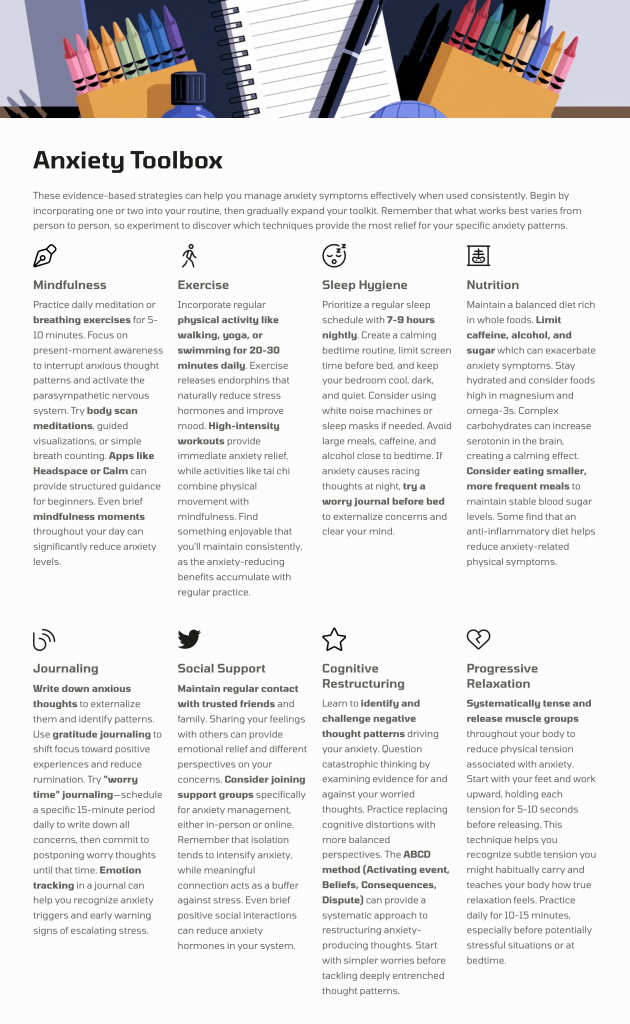
Welcome to this comprehensive guide to understanding and managing students’ anxiety. It is a practical anxiety toolbox strategy for thriving academically and personally.

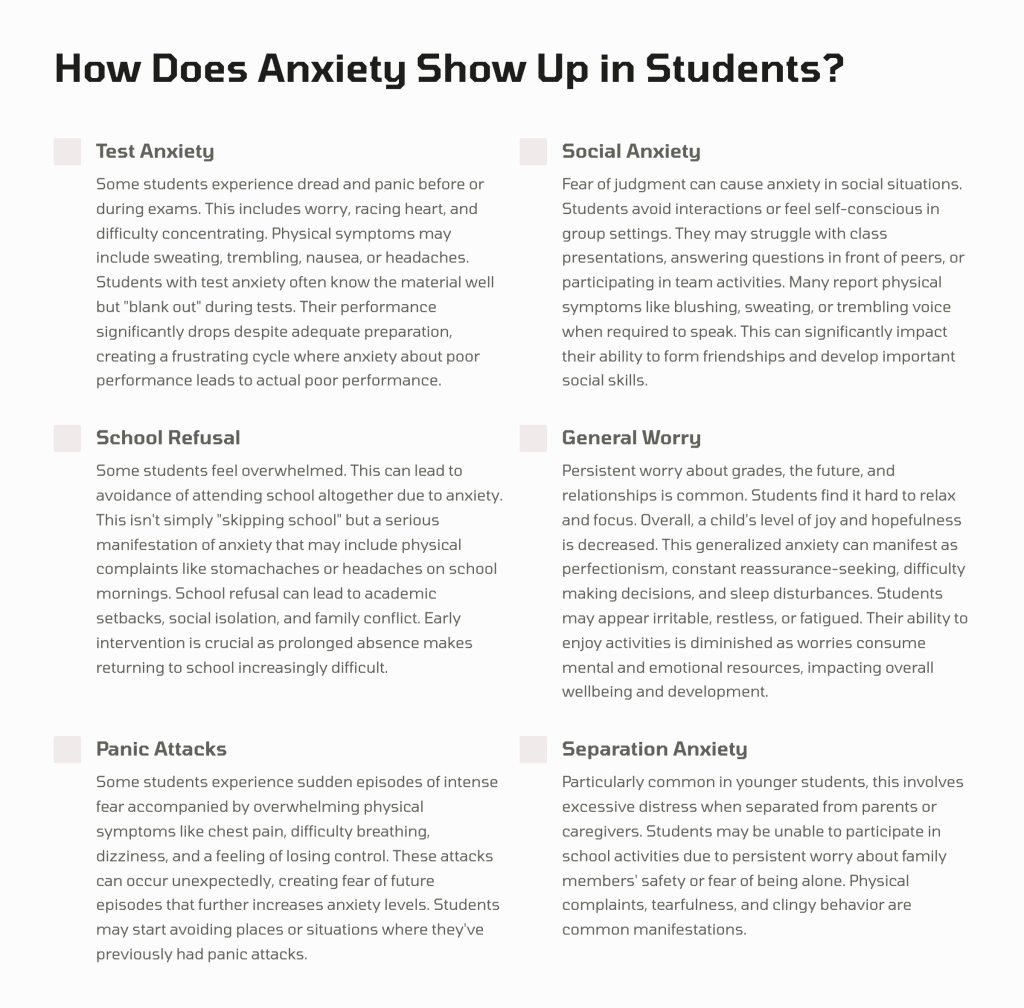
This guide offers evidence-based approaches to help students recognize anxiety symptoms, understand their triggers, and develop effective coping mechanisms. We’ll explore both immediate relief techniques and long-term strategies.

Whether dealing with test anxiety, social stress, or general worries about the future, this guide provides actionable steps to build resilience and maintain mental well-being throughout your academic journey.

Overcoming Perfectionism for a Happier, More Peaceful You

Are you someone who often finds themselves striving for flawlessness in everything you do? Do you frequently worry that your efforts aren’t good enough or that you will make mistakes? If these thoughts sound familiar, you might be dealing with a common challenge known as perfectionism.

In this article, we will introduce you to the world of perfectionism, explaining what it is and how it can affect your life. But don’t worry; we will also explore strategies for breaking free from the perfectionism trap and embracing imperfection as a path to a happier and healthier you.

What Is Perfectionism?

Perfectionism is a personality trait characterized by setting excessively high standards for yourself and relentlessly striving to meet them. It often goes hand-in-hand with being overly self-critical and experiencing significant stress and anxiety when things don’t go as planned.

Signs of Perfectionism

Perfectionism can manifest in various ways, including:

  1. Setting unrealistically high goals: You might often set expectations for yourself that are nearly impossible to achieve.
  2. Fear of failure: The mere thought of making a mistake or falling short of your goals can fill you with dread.
  3. Overemphasis on mistakes: When you make a mistake, you may dwell on it excessively and have difficulty letting it go.
  4. Procrastination: In an attempt to avoid making mistakes, you might find yourself putting off tasks or projects.
  5. Low self-esteem: Perfectionists often tie their self-worth to their achievements, so they may struggle with feelings of inadequacy.

The Impact of Perfectionism

While striving for excellence can be a positive trait, extreme perfectionism can adversely affect your mental and emotional well-being. It can lead to chronic stress, anxiety, depression, and physical health problems. It can also strain relationships as you may have unrealistic expectations of others.

Embracing Imperfection: How to Break Free

The good news is that you can overcome perfectionism and learn to embrace imperfection. Here are some friendly and essential strategies to get you started:

  1. Challenge Your Inner Critic: Pay attention to your self-talk and challenge negative, perfectionistic thoughts with more realistic and compassionate ones.
  2. Set Realistic Goals: Break your goals into smaller, achievable steps, and celebrate your progress along the way.
  3. Practice Self-Compassion: Treat yourself with the kindness and understanding you would offer a struggling friend.
  4. Learn from Mistakes: Instead of fearing them, see mistakes as valuable opportunities for growth and learning.
  5. Mindfulness and Relaxation: Techniques like mindfulness meditation and deep breathing can help you stay present and reduce anxiety about the future.
  6. Seek Support: Consider talking to a therapist or counselor who can provide guidance and support on your journey to overcoming perfectionism.

Remember, it’s okay to be imperfect. Nobody is flawless, and life is full of ups and downs. By letting go of perfectionism, you can reduce stress, boost your self-esteem, and lead a happier, more fulfilling life. In upcoming articles, we’ll explore these strategies in more detail, so stay tuned for more tips on your journey to embracing imperfection!

Take a complete course on overcoming perfectionism and anxiety with the Freedom From Anxiety course today at FamilyHealer.tv

Back-To-School Stress: Supporting Anxious Children and Coping with School Refusal

As summer days give way to the crisp air of autumn, a familiar but often challenging chapter unfolds in the lives of many families: the return to school. While back-to-school excitement fills the air for some, it’s essential to acknowledge that many children experience varying degrees of anxiety, panic, or outright refusal when faced with the prospect of returning to the classroom. This article aims to shed light on the common phenomenon of back-to-school stress, with a particular focus on parents whose children are feeling anxious, panicky, or refusing to go to school.

Understanding Back-to-School Stress

Back-to-school stress is a perfectly normal response to the significant changes that come with the start of a new school year. Even under typical circumstances, children might experience heightened anxiety as they grapple with new teachers, classmates, schedules, and academic challenges. However, the COVID-19 pandemic has introduced a new layer of complexity to this issue. Extended periods of remote learning, social isolation, and uncertainty have intensified feelings of anxiety in many students.

Identifying the Signs

Parents should be vigilant in recognizing signs of back-to-school stress in their children, which can manifest in various ways. Some common indicators include:

  1. Physical Symptoms: Headaches, stomachaches, nausea, and sleep disturbances are often physical manifestations of stress in children.
  2. Emotional Changes: Increased irritability, mood swings, tearfulness, or clinginess may signal underlying anxiety.
  3. Behavioral Shifts: Refusal to attend school, withdrawal from friends and family, and reluctance to participate in activities they once enjoyed are red flags.
  4. Academic Struggles: A sudden drop in academic performance can be a sign that a child is struggling to cope with stress.
  5. Expressing Worry: Children may voice concerns about various aspects of school, such as making friends, academic pressure, or fear of bullying.

Supporting Anxious Children

  1. Open Communication: Encourage open and non-judgmental communication with your child. Let them express their fears and concerns without interruption, and validate their feelings.
  2. Normalize Anxiety: It’s essential to normalize anxiety as a common human experience. Share your own experiences with stress and discuss healthy ways to manage it.
  3. Establish Routines: Predictable routines provide a sense of security and can help alleviate anxiety. Create a daily schedule that includes time for homework, relaxation, and family activities.
  4. Practice Relaxation Techniques: Teach your child relaxation techniques such as deep breathing, meditation, or mindfulness exercises to manage stress.
  5. Seek Professional Help: If your child’s anxiety is severe or persistent, consider consulting a mental health professional who specializes in working with children and adolescents.

Overcoming School Refusal

School refusal, when a child adamantly refuses to attend school, can be an alarming development for parents. It’s essential to address this issue promptly:

  1. Identify the Underlying Cause: School refusal can stem from various factors, such as academic pressure, social anxiety, bullying, or a fear of separation from parents. Pinpointing the root cause is crucial.
  2. Collaborate with School Personnel: Work closely with teachers, counselors, and school administrators to develop a plan for easing your child back into school. They can offer valuable insights and support.
  3. Gradual Reintegration: Start with shorter school days or partial attendance if necessary, gradually increasing the time your child spends in school.
  4. Professional Help: Consider seeking help from a child psychologist or therapist who specializes in school refusal. They can provide strategies and interventions tailored to your child’s needs.

Back-to-school stress is a common experience for many children, but it can be particularly challenging for those who feel anxious, panicky or refuse to go to school. As parents, it’s our responsibility to provide support, understanding, and guidance during these challenging times. By recognizing the signs, maintaining open communication, and seeking professional help when necessary, we can help our children overcome their anxieties and ensure a successful return to school. Remember that you’re not alone in this journey, and there are resources available to assist both you and your child in navigating back-to-school stress.

Cracking the Anxiety Code: Understanding Your Triggers

Living with anxiety can be challenging, especially when we are caught off guard by overwhelming emotions and racing thoughts. It’s important to remember that anxiety triggers can differ from person to person, making it crucial for individuals to identify and understand their unique triggers. By creating awareness around these triggers, we gain valuable insights and empower ourselves to take proactive steps toward managing our anxiety. In this article, we’ll explore a comprehensive anxiety trigger checklist that can serve as a roadmap to self-discovery and offer guidance in navigating the complex terrain of anxiety.

  1. Life stressors: Life can throw curveballs our way, and major life changes like moving, starting a new job, or ending a relationship can significantly impact our well-being. Recognizing these stressors allows us to acknowledge their influence on our anxiety levels and seek support during transitional periods.
  2. Social triggers: Social interactions can be both energizing and anxiety-inducing. Pay attention to situations that trigger anxiety, such as parties or public speaking engagements. Identifying specific fears, such as judgment or rejection, helps us understand our social anxiety and develop coping strategies to navigate these challenges.
  3. Health-related triggers: Our physical health and well-being can substantially affect our mental state. Chronic illnesses, fear of medical procedures, or lack of sleep can exacerbate anxiety symptoms. Prioritizing self-care and seeking appropriate medical support can help manage these triggers.
  4. Environmental triggers: Our surroundings can profoundly impact our anxiety levels. Consider how crowded or noisy environments, overstimulation from bright lights, strong smells, or specific phobias affect your anxiety. Creating calm and organized spaces and avoiding triggering environments can help alleviate anxiety.
  5. Cognitive and emotional triggers: Our thoughts and emotions can influence our anxiety. Negative self-talk, perfectionism, and catastrophizing can fuel anxious thoughts. By challenging these cognitive patterns and nurturing self-compassion, we can develop healthier mindsets and reduce anxiety triggers.
  6. Media and information triggers: In today’s connected world, exposure to distressing news or social media overload can affect our mental well-being. Being mindful of media consumption and setting boundaries can help prevent anxiety triggers. Unplugging when necessary and engaging in positive and uplifting content can contribute to a healthier mental state.
  7. Physical triggers: Our physical habits can impact our anxiety levels. Stimulants like caffeine, irregular eating patterns, sedentary lifestyles, or substance abuse can affect our overall well-being. Prioritizing balanced nutrition, regular exercise, and healthy lifestyle choices can positively impact anxiety management.

Understanding our anxiety triggers is a significant step toward self-discovery and empowerment. Utilizing the anxiety trigger checklist provided, we can identify the unique factors contributing to our anxiety and develop personalized strategies for managing it effectively. Remember, seeking professional help from therapists or psychiatrists is crucial in gaining a deeper understanding of our triggers and receiving personalized guidance. With self-awareness and proactive measures, we can navigate our anxiety journey with greater confidence and well-being.

10 Ways to Manage Your Panic Attacks

“In my experience, the words “now just calm down” almost inevitably have the opposite effect on the person you are speaking to.” – Elyn Saks

A panic attack is a sudden and intense feeling of fear or anxiety that can be overwhelming and debilitating. It is often accompanied by physical symptoms such as rapid heartbeat, difficulty breathing, dizziness, sweating, trembling, and a feeling of impending doom. Some people may also experience chest pain, nausea, and a fear of losing control or going crazy.

During a panic attack, the body’s fight or flight response is activated, even though there is no real danger. This response causes the physical symptoms of a panic attack and a heightened state of alertness and arousal.

Many things trigger panic attacks, social events, public speaking, conflict with family or coworkers, and situations reminiscent of past traumas. Sometimes, an accumulation of stress builds up over time and then pops up unexpectedly in a panic. 

Most people believe they have a heart attack when experiencing a panic attack. They often go to the emergency room or their doctor for a checkup. When the doctor cannot find anything physically wrong with them, they suggest that the individual might have had a panic attack and recommend talking to a mental health professional. 

Family and friends feel helpless around individuals who struggle with panic attacks. They can suggest useless advice or tell them to “calm down,” which never works. 

Mental health professionals might offer several strategies to cope with a panic attack:

  1. Focus on your breathing: Take slow, deep breaths through your nose and out through your mouth. This can help to calm your body and mind.
  2. Use positive self-talk: Remind yourself that you are safe and that the panic attack will pass.
  3. Find a peaceful place to relax: Find a quiet place where you can sit or lie down and relax.
  4. Use relaxation techniques: Try progressive muscle relaxation, visualization, or mindfulness meditation to help you relax.
  5. Find a focus object: Redirect your attention to something in clear sight and consciously notice all the details about that object, engaging all of your senses if possible.
  6. Picture a safe place, face, or space: Visualizing a place or location that holds a positive memory can be helpful to calm the nervous system. Additionally, you can picture someone safe or an activity that gives you joy. 
  7. Engage in light exercise: Taking a walk, stretching, or playing an outdoor game with someone can alleviate the stressful energy in your body.
  8. Use a mantra or affirmation: A positive statement, verse, song, or quote can redirect fear or worry about your condition and reset negative thoughts. 
  9. Change your life situation: If panic results from stress, consider distancing yourself from people, changing jobs, setting boundaries, or reorganizing living situations for your future health.
  10. Reach out to someone: Talk to a friend or loved one, or consider seeking support from a mental health professional.

The best time to deal with a panic attack is before you have a panic attack. Trying to deal with one in the middle is highly challenging to control. A daily practice of calming, affirming prayer and meditation, healthier living, and new perspectives can strengthen the body’s defenses, so the panic never comes up again. 

Panic attacks can be very distressing and may interfere with daily activities. It is essential to seek help from a mental health professional if you are experiencing panic attacks, as they can be treated effectively with therapy and medication. Consult Ron Huxley today if you are struggling with panic attacks and want help. 

Breaking out of Negative Thoughts and Rumination

Do you ever feel like your mind is racing or your thoughts are stuck in a loop? You might be experiencing what’s called negative thinking or rumination. People who engage in this tend to overthink things, strive for perfection, look at the downside of events and miss the good stuff that happened to them.

Coping with negative thoughts and rumination can be a challenge. But it’s not impossible to overcome, and it’s not something you have to live with forever.

The good news is that you can learn ways to cope with negative thinking and rumination without using medications. Here are some things that might help:

1) Practice mindfulness meditation. This involves focusing on the present moment without judgment, especially when you have negative or repetitive thoughts. You can try this by focusing on your breath, listening to music or nature sounds (like rain or waves), or simply sitting quietly in silence and noticing what’s happening around you (or inside yourself).

2) If you are spiritual, pray! Prayer is a powerful weapon against depression and anxiety. It can be hard to pray when you are overwhelmed by negative thoughts, but if you commit yourself to prayer as a daily routine, it will help keep your mind focused on what matters most.

3) Get some exercise. Exercise releases endorphins into the brain, making us feel better about ourselves and more optimistic about our lives. So if you’ve been feeling down lately, try getting out for a run instead of staying cooped up inside all day!

4) Eat healthy foods! Eating well helps regulate hormones in our bodies that are responsible for mood swings (like serotonin). So if you’re feeling down, try eating something like strawberries or almonds—they contain nutrients that promote happiness and contentment. Ever heard the expression: “Your mental health is at the end of your fork”? It’s true.

5) Try writing down your feelings instead of keeping them bottled up inside where no one else can see them except for yourself (and even then, only if you want to share them with others. Grammer and punctuation aren’t necessary. The point is to let that negative go.

6) Identify the areas where you were hurt or traumatized. Destructive thought patterns can result from betrayal, abandonment, unfair actions, and traumatic events. We can internalize external actions and believe we are the problem or too broken, leaving us in a vicious loop of negative thoughts and feelings.

7) Work with a professional therapist specializing in trauma-informed practices and Cognitive Behavior Therapy. Together, you can get to the unhealthy core beliefs causing so much pain and suffering and find alternative perspectives on your life.

Negative thinking and rumination are exhausting. It ruins your sleep, and it interferes with your day. If you want help finding a way out of this destructive pattern, contact Ron Huxley and set up an appointment to start feeling good immediately! Click here now…

Trouble with Anxious Thoughts?

Do you have racing thoughts and anxiety attacks? It’s hard to focus on anything else when anxiety takes control of your mind. It can ruin sleep, relationships, and your health. All you want to do is calm down and rest. 

Fortunately, there are ways to control anxious thoughts. And it just takes practice to master the techniques. 

Try these tips to control your anxiety: 

  • Distance yourself from the worrisome thoughts. Learn to look at your anxious thoughts differently.
  • The key is to reshape how you think about things.
  • When you get an anxious thought, immediately identify it as a sign of your worry and not reality. 
  • Labeling your thoughts raises self-awareness and makes it easier to control them. It also gives you something else to focus on instead of a constant worry.
  • Ask yourself questions. When you get an anxious thought, stop and ask yourself these questions:
  • What is the real reason for this anxious thought? What am I terrified about?
  • Is there a real danger, or is my mind merely playing games with me?
  • Is the negative outcome I imagine likely to happen?
  • How can I stop or change these negative thoughts into something positive? 
  • View your thoughts as data. Sometimes it’s helpful to view your thoughtss as data and your mind as a data processing center. 
  • You’ll get a lot of data coming in throughout the day. Some of this data can be incorrect and confusing. This is an example of anxious thoughts. 
  • You may also misunderstand the data. This means you allow the anxious thoughts to take over and control you. You let them grow and fester. 
  • As the data processing center, you get to decide how to handle all the information. Remember, you’re in control. This means you can choose to toss out or ignore the incorrect data. 
  • Also, keep in mind that the brain is designed to detect danger and is hypersensitive to it. You may pick up on things that aren’t even real. 
  • Focus on the present. Many anxious thoughts are focused on either the future or the past. You can break free by focusing on the present.
  • Avoid overthinking about the past or future by interrupting these thoughts. Notice when you’re thinking about the past or future and guide your thoughts back to the present moment. 
  • Sometimes thoughts from the past can make you afraid of the future. Remember that the past doesn’t have to repeat itself. You have the power to change how your future will look. 
  • Take action. Anxious thoughts often prevent you from taking action. They keep you stuck in fear and worry. Learn to take action even when you’re afraid.
  • Find one thing you can influence positively at that moment and take action.
  • Action can decrease the number of anxious thoughts you have daily. It can show you that there’s nothing to be afraid of, that you’re powerful, and that you can make a positive difference.
  • Get rid of unhelpful thoughts. Some thoughts may be real, but they aren’t helpful. 
  • Learn to tell helpful and unhelpful thoughts apart. 
  • Then, start to filter out the unhelpful ones. For example, if you know that the odds of making a perfect presentation at work are low, but you still have to do it, this is an unhelpful thought. It doesn’t encourage you to do your best. 

Anxious thoughts don’t have to control your life. You can use these tricks to effectively take control of your mind when you find yourself worrying. If these tips aren’t enough, consider talking to a therapist for additional help.

Reflections for Resiliency: I Am Not Perfect and That Is Ok

In order to develop a more resilient sense of self, Ron Huxley has created a new series called “Reflections for Resiliency”. The reflections are free to use for your inner development and self-care. This is a sample of what you will get in a new course on resilience at FamilyHealer.tv, coming Fall 2020. 

In this latest blog on personal reflections, Ron Huxley provides direction on how to deal with perfectionism. Use the affirmations to find balance in the process and not the outcome. Visualize a different mindset about your expectations for yourself and others.

Use a journal along side each reflection to write our thought own thoughts and feelings. Answer the Self-Reflection Questions at the end to help you apply them to your life.

Find the complete PDF by Clicking Here!

What is Anxiety and How to Manage Pandemic Uncertainty

In this first video of five total video series on Building Family Resiliency we talk about how to manage anxiety in a time of uncertainty. Learn powerful tools that will help you and your children find freedom from anxious thoughts. Discover bodily-based strategies that don’t require lecture, rationalization, or complex ideas to bring peace to your life.

Get more free tools at FamilyHealer.tv or schedule a time to talk to Ron today!