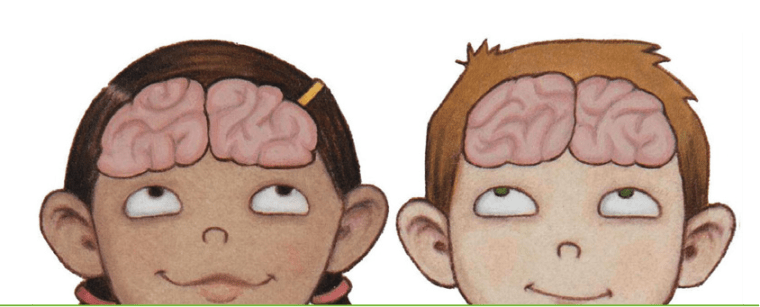
Your Body is a Brain…

Great writers and painters have known this fact for decades: The body acts like a brain…

Walt Whitman understood that the flesh was the source of meaning; Auguste Escoffier discovered that taste is actually a smell; Paul Cézanne realized that the brain can decipher an image from minimal brushstrokes.

Jonah Lehrer has written a book called Proust Was a Neuroscientist

In my own trauma-informed trainings I discuss how our central nervous system, specifically the nerves surrounding our “guts”, acts as a second brain.

Did you know that there are 43 different pairs of nerves which connect the nervous system to every part of our body. Twelve of these nerve pairs are connected to the brain, while the remaining 31 are connected to the spinal cord.

Did you know that the gut has 100 million nerve cells that make up it’s own nervous system separate from the brain!

Did you know that one of the major nerve pathways from the gut to the brain is called the Vagus Nerve. The brain interprets signals from the Vagus Nerve as actual emotional information. It really doesn’t know the difference. 

Did you know that there is more and more research on how the gut and gastrointestinal conditions are linked to depression, anxiety, autism, and ADHD. What we are talking about here is nutrition and not just medication can change our mental health.

And did you know that there is a reason we call certain kinds of food “comfort food”? Comfort foods affect our moods. Can someone say chocolate please?

Understanding the brain/body connection can help us overcome trauma in ways that traditional talk therapy cannot. This is because a lot of times there are no words to express what trauma is doing in our lives or the trauma is so far back in infancy and during pregnancy that there was no ability to form words.

This will require a new approach to doing therapy that involves movement, sensory processing, art therapy and my own NeuroResilience Play Therapy Approach. Click here for more info.

What is your body telling you?  Perhaps its time to follow your “gut” instincts today and find the help you need. Hey, writers and artists have been telling us for years this truth about our body acting like a brain. Let’s listen to what it is saying!

TraumaInformedTraining logo

Need trauma-informed training for your organization or up coming conference? Contact Ron today.

Newsletterimage

Join our newsletter and get Ron’s blog posts in your inbox!

NeuroResilient Play Therapy ©: A Trauma-Informed Approach to Healing

brainarticle1

The goal of therapy with traumatized children is to help them learn to regulate and develop the executive functioning skills of the prefrontal center of the brain. I call this the state of being NeuroResilient.

All children are born emotionally impulsive and need to learn how to manage their moods, initiate and stick with tasks, plan and organize, and learn from past mistakes. This is nothing new and neurological studies of the brain suggest that the prefrontal areas of the brain do not completely develop until people are in their mid-twenties.

The challenge with trauma is that it can set a person back socially and emotionally so that while they are 15 years old chronologically, they react to the world as if their were 5 years of age. We call this, in the field of trauma-informed care and attachment-focused research, “age vs stage”. The individual’s chronological age doesn’t line up with their stage of development causing problems in relationships and daily functioning.

Many parents and professionals believe that an emotionally regulated child is a calm child which would be nice, even understandable, but not realistic for a child who has been traumatized. Consequently the goal of therapy is to build resilience, not calmness.

Resilience refers to ability to “spring back, recoil back into shape” or “recover quickly from a difficult situation”. It literally means to “leap back” to a place of safety and security. Who wouldn’t want to have more of that in their lives or the lives of their children?

Children have to build resiliency in their neurology so that behavioral strategies will stick. Parents and teachers get frustrated when their behavior charts and modification tools don’t have any effect on their hurt children.

NeuroResilient Play Therapy © models, to parents, how to integrate the various physiological and mindful parts of the child so that they can function optimally. It is based on identity focusing on the strengths of who the child was created to be instead of forcing the child to fit into a mold made by adults who believe the child has no motivation or seeks only to manipulate.

For more information on how to be NeuroResilient for children and adults, contact Ron today about speaking opportunities or schedule a session in his Avila Beach, Ca office (skype services are available).