Page 3 of 11

Back to School, But Not Back to Normal: Understanding Kids’ Ongoing Anxiety After the Pandemic

The lingering effects of the COVID-19 pandemic continue to impact children’s mental health and their ability to adjust to school life, even as the world returns to a semblance of normalcy. Despite the official end of the pandemic, many children are still grappling with anxiety and struggling to readapt to the classroom environment.

Persistent Anxiety and Worry

A survey by Nemours Kids-Health revealed that 37% of children aged 9 to 13 worry at least once a week, primarily about school or friendships[1]. This ongoing anxiety can be attributed to several factors:

  1. Disrupted Routines: The pandemic significantly disrupted children’s daily routines, and reestablishing these patterns has proven challenging for many.
  2. Heightened Health Concerns: Children have been conditioned to be cautious about physical proximity and hygiene, leading to lingering fears about safety in social settings[2].
  3. Academic Pressure: The shift from remote learning back to in-person education has created new stressors as children readjust to different testing methods and classroom dynamics[1].

The Impact of Social Isolation

The extended period of social isolation during the pandemic has had lasting effects on children’s social skills and confidence:

  • Social Anxiety: Many children are experiencing increased social anxiety as they navigate peer interactions after prolonged periods of limited social contact[2].
  • Separation Anxiety: Some children have developed separation anxiety after spending extended time at home with their families[2].

Lingering Mental Health Issues

Research indicates that the pandemic has left a significant mark on children’s mental health:

  • A study found that depressive and anxiety symptoms doubled during the pandemic, with 20% of youth reporting significant anxiety symptoms[4].
  • Children from urban, racial-minority, and ethnic-minority backgrounds showed higher levels of emotional and behavioral symptoms mid-pandemic compared to pre-pandemic levels[4].

Factors Contributing to Ongoing Struggles

Several elements continue to influence children’s difficulties in school:

  1. Increased Screen Time: The reliance on digital devices during remote learning has led to increased screen time, associated with worse mid-pandemic mental health in children[4].
  2. Academic Gaps: Many students are still trying to catch up on learning losses incurred during remote schooling periods.
  3. Parental Stress: Caregiver depression and stress can indirectly affect children’s mental health and ability to cope with school demands[4].

The Need for Support and Intervention

To address these ongoing challenges, schools and mental health professionals are emphasizing the importance of:

  • Providing consistent routines and structure in the classroom
  • Offering mental health support and counseling services within schools
  • Encouraging open communication about anxiety and concerns between parents, teachers, and students.

While the acute phase of the pandemic may be over, its psychological impact on children persists. The transition back to regular schooling remains a complex process for many students. Recognizing these ongoing struggles and providing appropriate support is crucial for helping children regain their footing in the educational environment and manage their anxiety effectively.

>> Get more Anxiety Tools for Children and Adults at FamilyHealer.tv!

Citations:
[1] https://www.cbsnews.com/philadelphia/news/kids-left-with-lingering-mental-health-issues-after-pandemic-study/
[2] https://childmind.org/article/back-to-school-anxiety-during-covid/
[3] https://www.chop.edu/news/health-tip/how-to-help-manage-your-childs-anxiety-around-covid-19
[4] https://pmc.ncbi.nlm.nih.gov/articles/PMC9894765/
[5] https://pmc.ncbi.nlm.nih.gov/articles/PMC8525876/
[6] https://spurgeons.org/about-us/news-stories-events/blogs/in-a-post-pandemic-world-children-are-struggling-with-anxiety-more-than-ever-what-can-we-do-to-help/
[7] https://thelucyraynerfoundation.com/post-covid-anxiety-in-children/
[8] https://nyulangone.org/news/trauma-children-during-covid-19-pandemic
Thought Deletion: Why Trying to Erase Your Thoughts Doesn’t Work

In the complex landscape of mental health, we often find ourselves battling unwanted thoughts. The Acceptance and Commitment Therapy (ACT) approach offers a fascinating perspective on this challenge through a simple yet profound exercise known as Thought Deletion.

The Illusion of Mental Control

Our natural instinct when confronted with distressing thoughts is to push them away. We believe we’d find peace if we could delete these thoughts. However, the human mind doesn’t work like a computer—there’s no convenient mental backspace or delete button.

The Thought Deletion Exercise

The exercise is elegantly simple:

  1. Identify a Distressing Thought: Clients are asked to focus on a recent thought that causes them significant emotional discomfort.
  2. Attempt Deletion: They’re then instructed to actively try to erase this thought.
  3. Experience the Paradox: Invariably, they discover something counterintuitive—the more they try to eliminate the thought, the more persistent and powerful it becomes.

Why Thought Deletion Backfires

This exercise illustrates a fundamental principle of psychological flexibility: resistance increases suffering. When we struggle against our thoughts, we inadvertently give them more power. It’s like trying not to think about a pink elephant—the very act of trying not to think about it ensures the elephant dominates your mental landscape.

Defusion: A Different Approach

Acceptance and Commitment Therapy introduces the concept of cognitive defusion—learning to see thoughts as merely mental events, not absolute truths that must be fought or believed. Instead of wrestling with thoughts, we can:

  • Observe thoughts without judgment
  • Recognize that thoughts are transient
  • Understand that having a thought doesn’t make it real or meaningful
  • Choose to focus on actions aligned with our values

Practical Implications

For adolescents and adults alike, the Thought Deletion exercise serves multiple therapeutic purposes:

  • Reduces anxiety around “unacceptable” thoughts
  • Demonstrates the futility of thought suppression
  • Introduces a more compassionate approach to inner experiences
  • Builds psychological resilience

A Mindful Alternative

Instead of deletion, ACT suggests:

  • Acknowledging thoughts without attachment
  • Letting thoughts pass like clouds in the sky
  • Focusing on present-moment experiences
  • Choosing actions that matter, regardless of intrusive thoughts

Thought Deletion is more than an exercise—it’s a gateway to understanding our mind’s complex workings. We open ourselves to greater emotional freedom and psychological flexibility by embracing thoughts rather than fighting them.

Remember, you are not your thoughts. You are the awareness observing those thoughts.

What is ACT?

Acceptance and Commitment Therapy (ACT) is a form of psychological intervention that focuses on helping individuals accept complex thoughts and feelings rather than fighting or feeling controlled by them. The core aim is to increase psychological flexibility—the ability to:

  • Accept emotions and thoughts without judgment
  • Stay present in the moment
  • Clarify personal values
  • Take committed action toward meaningful goals

ACT uses six key processes:

  1. Cognitive defusion (seeing thoughts as just thoughts)
  2. Acceptance of emotional experiences
  3. Present moment awareness
  4. Self-as-context (observing self)
  5. Values clarification
  6. Committed action aligned with those values

Unlike traditional cognitive therapies that seek to change thought content, ACT helps people change their relationship with thoughts, reducing their impact and enabling more value-driven living.

“The Double-Edged Sword of AI: What Teens Need to Know”

Artificial Intelligence (AI) has become an integral part of modern life, and teenagers are at the forefront of this technological revolution. As AI continues to evolve and integrate into various aspects of daily life, it’s crucial to understand both its benefits and potential drawbacks for young people. Let’s explore the pros and cons of AI around teenagers.

Pros of AI for Teens

Enhanced Learning Experiences

AI-powered educational tools are revolutionizing how teenagers learn:

  • Personalized learning platforms adapt to individual learning styles and paces, making education more engaging and effective[1].
  • AI tutors can provide 24/7 support, helping students grasp complex concepts and improve their academic performance.

Creative Empowerment

AI is opening new avenues for teenage creativity:

  • Image and video generation tools allow teens to express themselves artistically in novel ways[3].
  • AI-assisted music composition and writing tools can help nurture budding talents.

Mental Health Support

AI is making mental health resources more accessible:

  • AI chatbots and apps can provide immediate support for teens dealing with stress or anxiety[1].
  • Early detection algorithms may help identify mental health issues before they escalate.

Skill Development for the Future

Exposure to AI prepares teens for the job market of tomorrow:

  • Learning to work alongside AI tools can give teens a competitive edge in future careers.
  • Understanding AI principles can foster critical thinking and problem-solving skills.

Cons of AI for Teens

Potential for Misuse

The power of AI comes with risks:

  • Deepfake technology can be used for cyberbullying, creating fake explicit images or videos[2].
  • AI-generated content may be used to cheat on assignments, hindering genuine learning.

Privacy Concerns

AI’s data collection raises privacy issues:

  • Teens may not fully understand the extent of data they’re sharing with AI systems.
  • There’s potential for misuse of personal information collected by AI-powered apps.

Diminished Social Skills

Overreliance on AI could impact social development:

  • Excessive use of AI companions might reduce face-to-face interactions.
  • Teens may struggle with real-world communication if too dependent on AI-mediated interactions.

Addiction and Mental Health Risks

AI can potentially exacerbate existing issues:

  • AI-powered games and social media can be highly addictive, leading to screen dependence[1].
  • Constant exposure to AI-curated content may create unrealistic expectations and affect self-esteem.

Navigating the AI Landscape

To maximize benefits and minimize risks, consider these approaches:

  1. Education: Teach teens about AI’s capabilities, limitations, and ethical considerations.
  2. Balanced Use: Encourage a healthy balance between AI-assisted activities and traditional methods.
  3. Critical Thinking: Foster skills to evaluate AI-generated content critically.
  4. Open Dialogue: Maintain open conversations about AI experiences and concerns.
  5. Privacy Awareness: Educate teens on data privacy and responsible online behavior.

Conclusion

AI presents both exciting opportunities and significant challenges for teenagers. By understanding and actively managing these pros and cons, we can help young people harness the power of AI while developing the skills and awareness needed to navigate this new digital landscape safely and effectively.

As AI continues to evolve, it’s crucial for parents, educators, and teens themselves to stay informed and adaptable. With the right guidance and approach, AI can be a powerful tool for learning, creativity, and personal growth, preparing teenagers for a future where human intelligence and artificial intelligence work hand in hand.

Citations:
[1] https://www.newportacademy.com/resources/empowering-teens/ai-teen-mental-health/
[2] https://www.edweek.org/technology/most-teens-think-ai-wont-hurt-their-mental-health-teachers-disagree/2024/03
[3] https://www.wired.com/story/teens-generative-ai-use-schools-parents/
[4] https://insights.fusemachines.com/learning-evolving-inspiring-a-thoughtful-exploration-of-ais-impact-on-todays-youth/
[5] https://www.future-ed.org/how-are-teens-using-ai/
[6] https://www.connecticutchildrens.org/growing-healthy/ai-here-stay-4-things-parents-teens-should-know
[7] https://aimagazine.com/machine-learning/the-impact-of-artificial-intelligence-on-kids-and-teens
[8] https://www.healthychildren.org/English/family-life/Media/Pages/how-will-artificial-intelligence-AI-affect-children.aspx

“Unlocking the Secrets of Epigenetics: How Our Experiences Shape Us!”

Have you ever wondered why some people react differently to stress or scary situations? The answer might be in something called epigenetics. Let’s explore what this big word means and how it helps us understand trauma.

What is Epigenetics?

Epigenetics is like a special switch for our genes. Our genes tell our body how to work, but epigenetics can turn these instructions on or off. It’s like a light switch that can make a room bright or dark, but the light bulb doesn’t change.

How Does Trauma Affect Our Genes?

When someone goes through something really scary or upsetting (we call this trauma), it can flip some of these epigenetic switches. This means that even after the scary thing is over, the person’s body might still act like it’s in danger.

Can Trauma be Passed Down?

Scientists have found that these switched genes can sometimes be passed from parents to their children. It’s a bit like inheriting your mom’s hair color, but instead, you might inherit how your body reacts to stress.

What is Trauma-Informed Care?

Trauma-informed care is when doctors, teachers, and other helpers understand that bad experiences can change how a person’s body and mind work. They use this knowledge to help people feel safe and get better.

How Does Epigenetics Help with Trauma-Informed Care?

By understanding epigenetics, helpers can:

  1. Know that a person’s reactions might be because of past experiences
  2. Find better ways to help people who have been through trauma
  3. Create plans that help not just one person but whole families

The Good News

The best part about epigenetics is that these switches can be changed again! With the right help and care, people can learn new ways to cope with stress and feel better.

What Can We Do?

  • Be kind to others – you never know what they’ve been through
  • Talk to a grown-up if you’re feeling scared or upset
  • Remember that it’s okay to ask for help

Epigenetics shows us that our experiences can change us, but we can help ourselves and others heal and grow stronger with understanding and care.

Citations:
[1] https://arkansasadvocate.com/2023/07/05/understanding-epigenetics-how-trauma-is-passed-on-through-our-family-members/
[2] https://pmc.ncbi.nlm.nih.gov/articles/PMC9705591/
[3] https://www.ca18211.eu/courses/trauma-informed-care-and-epigenetics/
[4] https://pmc.ncbi.nlm.nih.gov/articles/PMC6127768/
[5] https://www.scientificamerican.com/article/how-parents-rsquo-trauma-leaves-biological-traces-in-children/
[6] https://therapist.com/trauma/generational-trauma-epigenetics/
[7] https://jamanetwork.com/journals/jama/fullarticle/2797220
[8] https://newsinhealth.nih.gov/2016/03/understanding-anxiety-disorders

The Current State of Anxiety in Children and Adolescents

Anxiety among children and adolescents has become a growing concern in recent years, with significant increases observed in the prevalence and severity of anxiety disorders. This trend has been exacerbated by various factors, including the COVID-19 pandemic and the pervasive influence of social media. Let’s explore the current landscape of youth anxiety and its implications.

Rising Prevalence

Recent data paints a concerning picture of anxiety among young people:

  • By 2020, 5.6 million children (9.2%) had been diagnosed with anxiety problems, a 27% increase from 2016[1].
  • In 2020, 12% of U.S. children ages 3 to 17 were reported as having ever experienced anxiety or depression, up from 9% in 2016[2].
  • The 2020 National Survey of Children’s Health estimated that 7.8% of children aged 3 to 17 years had a current anxiety disorder, with 0.7% experiencing severe anxiety[4].

These statistics highlight a significant upward trend in anxiety diagnoses among youth, indicating a growing mental health challenge.

Factors Contributing to Increased Anxiety

Several key factors have contributed to the rise in anxiety among children and adolescents:

The COVID-19 Pandemic

The pandemic has had a profound impact on youth mental health:

  • There was a two-fold increase in clinically significant depression and anxiety among adolescents after the COVID-19 outbreak[5].
  • Lockdowns, school closures, and uncertainty about the virus left many children feeling anxious and isolated[5].
  • The disruption of everyday routines and the shift to remote learning created additional stressors for young people.

Social Media and Technology

The pervasive presence of social media has introduced new challenges:

  • Constant connectivity and exposure to curated online personas can lead to feelings of inadequacy and social comparison.
  • Cyberbullying and online harassment have become significant sources of anxiety for many young people.
  • Excessive screen time can disrupt sleep patterns and contribute to overall stress levels.

Impact on Well-being and Development

Anxiety in children and adolescents can have far-reaching consequences:

  • It often interferes with social, emotional, and academic development[3].
  • Childhood anxiety may increase the risk of secondary depression and substance abuse later in life[4].
  • Anxious youth are at higher risk for educational underachievement and functional impairment[4].

Screening and Diagnosis

Early identification of anxiety disorders is crucial for effective intervention:

  • Various screening instruments are available, with sensitivity ranging from 0.34 to 1.00 and specificity from 0.47 to 0.99 across different tools[4].
  • Healthcare providers use a combination of interviews, surveys, and observations to diagnose anxiety disorders in children[3].

Treatment Approaches

Evidence-based treatments have shown promise in addressing youth anxiety:

Cognitive Behavioral Therapy (CBT)

  • CBT has demonstrated effectiveness in reducing anxiety symptoms and improving overall functioning[4].
  • It helps children develop coping strategies and reframe anxious thoughts.

Pharmacotherapy

  • Medication, when appropriate, can be effective in managing anxiety symptoms[4].
  • Selective Serotonin Reuptake Inhibitors (SSRIs) are commonly prescribed for anxiety disorders in youth.

Moving Forward

Addressing the current state of anxiety in children and adolescents requires a multi-faceted approach:

  1. Increased awareness and destigmatization of mental health issues among youth.
  2. Improved access to mental health resources in schools and communities.
  3. Education for parents and caregivers on recognizing and supporting children with anxiety.
  4. Promotion of healthy lifestyle habits, including balanced screen time and physical activity.
  5. Continued research into effective prevention and treatment strategies for youth anxiety.

By recognizing the scope of the problem and implementing comprehensive support systems, we can work towards improving the mental health landscape for children and adolescents, ensuring they have the tools and resources needed to navigate an increasingly complex world.

Citations:
[1] https://ccf.georgetown.edu/2022/03/24/research-update-childrens-anxiety-and-depression-on-the-rise/
[2] https://www.prb.org/resources/anxiety-and-depression-increase-among-u-s-youth-2022-kids-counts-data-book-shows/
[3] https://my.clevelandclinic.org/health/diseases/anxiety-in-children
[4] https://jamanetwork.com/journals/jama/fullarticle/2797220
[5] https://weillcornell.org/news/what-to-know-about-youth-anxiety
[6] https://www.cdc.gov/childrensmentalhealth/data.html
[7] https://www.mcleanhospital.org/essential/anxiety-kids-teens
[8] https://www.ncbi.nlm.nih.gov/books/NBK476265/

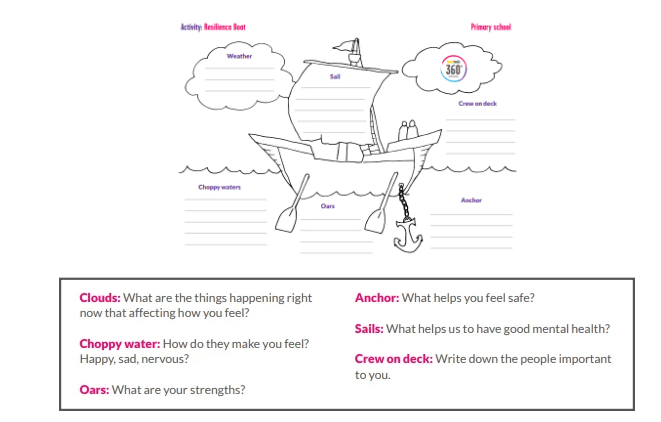
The Resiliency Boat: Navigating Life’s Challenges

The Resiliency Boat exercise is a powerful tool for individuals to visualize and strengthen their ability to cope with life’s challenges. This creative and engaging activity helps participants identify their support systems, personal strengths, and areas for growth.

How It Works

The exercise begins with participants drawing a boat, representing themselves navigating life’s ups and downs. Each part of the boat and its surroundings symbolizes different aspects of resilience:

Choppy Waters

Participants identify current challenges or stressors they’re facing. These might include work pressures, relationship issues, or health concerns[1].

Oars

These represent personal strengths that help navigate difficult times. Participants list qualities like determination, adaptability, or problem-solving skills[1].

Anchor

This symbolizes the support system that provides stability. Participants note people, resources, or activities that ground them during tough times[1].

Sails

The sails represent self-care strategies that promote mental health and well-being. These might include exercise, meditation, or creative pursuits[1].

Crew on Deck

This section is for listing key individuals who provide support and encouragement[1].

Benefits of the Exercise

The Resiliency Boat exercise offers several advantages:

  1. Visual Representation: It provides a tangible, visual way to understand one’s resilience factors.
  2. Self-Awareness: Participants gain insight into their coping mechanisms and support systems.
  3. Identifying Gaps: The exercise helps highlight areas where additional support or skills might be needed.
  4. Positive Focus: Emphasizing strengths and supports fosters a positive mindset towards challenges.
  5. Group Discussion: In a group setting, it promotes sharing and learning from others’ experiences.

Conducting the Exercise

To conduct the Resiliency Boat exercise:

  1. Provide participants with paper and drawing materials.
  2. Explain the symbolism of each boat part.
  3. Allow time for reflection and drawing.
  4. Encourage participants to share their boats with the group, if comfortable.
  5. Facilitate a discussion about common themes and insights gained.

Enhancing Resilience

The Resiliency Boat exercise underscores that resilience is not a fixed trait but a skill that can be developed. By regularly reflecting on and strengthening the elements represented in their boat, individuals can enhance their ability to navigate life’s challenges[2].

Remember, building resilience is an ongoing process. Just as a real boat needs regular maintenance, our resilience requires continuous attention and care. By using tools like the Resiliency Boat exercise, we can better understand our strengths, support systems, and areas for growth, ultimately becoming more equipped to handle life’s storms.

Citations:
[1] https://whenyoumakeithappen.com/learning-to-float-and-tame-the-storms-about-building-resilience/
[2] https://cartus.com/en/insights/blog/what-floats-your-boat-how-develop-resilience-while-international-assignment/
[3] https://info.sailingvirgins.com/blog/resilience-at-sea-how-sailing-adventures-foster-mental-toughness-in-professionals
[4] https://www.youngminds.org.uk/media/4mhjvqu1/resilience-boat.pdf
[5] https://commonslibrary.org/leaderful-organizing-tool-resilience-trees/
[6] https://positivepsychology.com/resilience-counseling/
[7] https://www.youtube.com/watch?v=ECaxX-jJQUU
[8] https://nathanbweller.com/tree-life-simple-exercise-reclaiming-identity-direction-life-story/

Overcome the Need for Approval: Key Steps

Understanding the Impact of Others’ Opinions

Caring about what others think is a natural human tendency rooted in our evolutionary need for social acceptance. While it’s expected to seek approval, excessive concern can lead to anxiety and hinder personal growth. To cultivate a more authentic life, learning how to prioritize your values and well-being over external validation is essential.

Steps to Stop Caring About What Others Think

1. Focus on Your Own Goals and Values
Begin by identifying what truly matters to you. Create a list of personal aspirations and values that guide your decisions. This will help shift your focus from others’ opinions to your path, fostering a sense of purpose and direction in life.

2. Listen to Your Inner Voice
Cultivate self-awareness by tuning into your thoughts and feelings. Regular practices like journaling or meditation can help clarify your priorities and reinforce your self-worth. When you understand your own values, the opinions of others become less significant.

3. Challenge Negative Thoughts
Recognize when you’re comparing yourself to others, especially on social media. Remind yourself that these comparisons often reflect only the surface of someone’s life. Replace negative self-talk with affirmations highlighting your strengths and accomplishments, such as “I am enough just as I am”.

4. Surround Yourself with Supportive People
Choose to spend time with individuals who uplift and encourage you rather than those who foster insecurity or doubt. Positive relationships can bolster your self-esteem and help you feel more secure in your identity.

5. Embrace Change and Imperfection
Understand that perfection is subjective and unattainable. Allow yourself to change your mind and make mistakes without fear of judgment. This acceptance fosters resilience and self-compassion, enabling you to navigate life’s challenges more effectively.

6. Spend Time Alone
Solitude can be a powerful tool for self-discovery. Use this time to reflect on your thoughts and desires without external influences clouding your judgment. The more grounded you are in yourself, the less likely you will be swayed by others’ opinions.

7. Let Go of the Need for Approval
Not everyone will like or accept you, and that’s perfectly okay. Detaching from the need for universal approval frees you to express your true self without fear of rejection.

Learning to stop caring about what others think is a journey that involves self-reflection, courage, and practice. By focusing on your values, surrounding yourself with supportive people, and embracing imperfection, you can cultivate a more authentic life filled with confidence and fulfillment. Remember, the opinions of others are often reflections of their own insecurities—what truly matters is how you perceive yourself.

Quiz: How Much Do You Care About What Others Think?

This quiz will help you assess your concern about others’ opinions. For each statement, rate yourself on a scale from 1 to 5, where:

  • 1 = Strongly Disagree
  • 2 = Disagree
  • 3 = Neutral
  • 4 = Agree
  • 5 = Strongly Agree

Questions

  1. I often change my opinions or preferences to fit in with others.
  2. I feel anxious when I think about how others perceive me.
  3. I frequently seek validation from friends or family before making decisions.
  4. I avoid expressing my true feelings if it might upset someone else.
  5. I often compare myself to others on social media.
  6. I worry about what people will say if I pursue my passions or interests.
  7. I feel embarrassed when I receive criticism, even if it’s constructive.
  8. I often think about how others will judge my actions before doing them.
  9. I frequently apologize, even when I don’t feel I’ve done anything wrong.
  10. I prioritize pleasing others over my own needs and desires.

Scoring Your Quiz

Add up your scores for each question to get your total score.

  • 10-20: Low Concern
    You have a healthy sense of self and are not overly affected by what others think. You prioritize your own values and opinions.
  • 21-35: Moderate Concern
    You care about others’ opinions to some extent, but you also value your own perspective. Strive for more balance in your decision-making.
  • 36-50: High Concern
    You may be significantly influenced by what others think, which can lead to anxiety and self-doubt. Consider working on building your self-esteem and focusing on your personal values.

Reflection

Regardless of your score, remember that it’s natural to care about how others perceive you to some degree. The key is finding a balance that allows you to live authentically while maintaining healthy relationships with those around you. If you find yourself in the high-concern category, consider exploring strategies to cultivate self-confidence and reduce the impact of external opinions on your life.

Art Therapy Activities to Boost Children’s Emotional Health

Nurturing Creativity and Emotional Well-being: Art Therapy Activities for Children

As parents, we always look for ways to support our children’s emotional development and help them express their feelings. Art therapy activities can be a powerful tool in this journey, offering a non-verbal outlet for emotions and fostering creativity. Here are some simple yet effective art therapy activities you can try at home with your children:

Emotion Monsters

Encourage your child to draw and color personified versions of their emotions. For example, they might create a grumpy thundercloud for anger or a playful sunshine for happiness. This activity helps children identify and understand feelings while developing coping mechanisms by giving these “monsters” friendly features or silly accessories[1].

Color Your Feelings

Give your child an outline of a heart and ask them to color it based on their emotions. Different colors can represent various feelings. This exercise helps children create visual representations of their emotions, making it easier to express and understand complex feelings[2].

Abstract Expression

Set up a space with large canvases or paper and various art supplies like paints, markers, or crayons. Play calming music and encourage your child to express emotions through abstract shapes and colors. This activity allows for releasing emotions in a non-judgmental space and can be particularly helpful for children who struggle to verbalize their feelings[1].

Safe Space Creation

Ask your child to draw or create a representation of their safe space. This could be a real place or an imaginary one. Encourage them to include elements that make them feel secure and comfortable. This activity can lead to discussions about creating safe environments in real life and can be a valuable tool for children dealing with anxiety[2].

Story Stones

Collect smooth stones and have your child paint or draw simple images. These stones can then be used to create and tell stories. This activity not only stimulates creativity but also helps children explore narratives and themes that are meaningful to them. It’s an excellent way to encourage self-expression and advance vocabulary[3].

Mindful Doodling

Introduce your child to mindful doodling. Have them close their eyes and draw simple shapes and lines on paper, focusing on how they feel rather than how they look. This exercise can be calming and meditative, helping to reduce stress and anxiety[3].

Remember, these activities aim not to create masterpieces but to provide a safe, creative outlet for self-expression. Encourage your child to focus on the process rather than the end result. As you engage in these activities together, you’re supporting their emotional development and strengthening your bond.

Incorporating these art therapy activities into your family routine gives your child valuable tools for emotional regulation and self-expression that can benefit them throughout their lives.

Citations:
[1] https://loveplaygrownj.com/art-therapy-activities/
[2] https://positivepsychology.com/art-therapy/
[3] https://www.rmcad.edu/blog/brushing-away-stress-21-art-therapy-activities-for-self-expression-and-healing/
[4] https://intuitivecreativity.typepad.com/expressiveartinspirations/100-art-therapy-exercises.html
[5] https://www.weareteachers.com/art-therapy-activities/
[6] https://www.playday.com/post/8-art-therapy-activities-for-kids-recommended-by-therapists
[7] https://www.wholechildcounseling.com/post/5-art-therapy-inspired-activities-for-calming-behaviors-and-building-resilience-by-erica-curtis
[8] https://www.alternativetomeds.com/blog/art-therapy-ideas/

“Doing The Best I Can”: A Healthy Reframe for Overwhelm and Negativity

When life feels complicated, and challenges seem insurmountable, it’s easy to fall into negative thinking and self-criticism patterns. However, adopting the “Doing The Best I Can” mindset can be a powerful reframe to combat these feelings and foster self-compassion. Here’s how this simple phrase can transform your perspective:

Acknowledging Your Efforts

“Doing The Best I Can” recognizes that you’re putting forth effort, even when outcomes aren’t perfect. This acknowledgment is crucial because:

  1. It shifts focus from results to process
  2. It validates your struggles and challenges
  3. It reminds you that perfection isn’t the goal

Embracing Imperfection

This reframe helps you accept that perfection is unattainable. Instead of berating yourself for falling short of impossible standards, you can:

  • Recognize that everyone has limitations
  • Appreciate progress, no matter how small
  • View mistakes as opportunities for growth

Cultivating Self-Compassion

By telling yourself you’re doing your best, you’re practicing self-compassion. This approach:

  • Reduces self-criticism and negative self-talk
  • Increases resilience in the face of setbacks
  • Improves overall mental well-being

Recognizing Context

“Doing The Best I Can” takes into account your current circumstances. It acknowledges that:

  • Your best may vary from day to day
  • External factors can impact your capabilities
  • You’re working with the resources available to you

Promoting Growth Mindset

This reframe encourages a growth mindset by:

  • Focusing on effort rather than innate ability
  • Viewing challenges as opportunities to learn and improve
  • Encouraging persistence in the face of difficulties

Practical Application

To incorporate this reframe into your daily life:

  1. Notice negative self-talk and consciously replace it with “I’m doing the best I can.”
  2. Reflect on your efforts at the end of each day, acknowledging your hard work.
  3. Practice self-compassion exercises when feeling overwhelmed
  4. Share this perspective with others to create a supportive environment

Remember, “Doing The Best I Can” doesn’t mean settling for less or making excuses. Instead, it’s about recognizing your efforts, accepting your limitations, and maintaining a compassionate attitude toward yourself as you navigate life’s complexities.

By adopting this reframe, you can reduce feelings of overwhelm, combat negative thinking, and approach challenges with a more balanced and kind perspective. It’s a simple yet powerful tool for fostering resilience and maintaining emotional well-being in life’s inevitable ups and downs.

“Praise That Empowers: Rethinking How We Encourage Our Kids”

A Moment of Meaningful Praise

It was a sunny Saturday morning, and the kitchen was filled with the delightful aroma of pancakes sizzling on the stove. Eight-year-old Mia was sitting at the table, her brow furrowed in concentration as she carefully colored a picture of a butterfly for her school project.

As her mother, Sarah, flipped the pancakes, she glanced over and noticed Mia’s intense focus. Instead of the usual “Good job!” that might have slipped out in the past, Sarah paused momentarily, reflecting on what she saw.

“Mia,” she called gently, “can you tell me about the colors you chose for your butterfly?”

Mia looked up, her eyes sparkling with enthusiasm. “I wanted it to look like the sunset, so I used orange, pink, and purple. Butterflies can be so colorful!”

Sarah smiled, feeling the warmth of pride swell in her chest. “I love that idea! You’ve really captured the beauty of a sunset. The way you blended those colors together shows how creative you are. It makes me excited to see how it will turn out!”

Mia beamed at the compliment, her confidence visibly growing. “Thanks, Mom! I’m trying to make it the best I can!”

As they continued their breakfast, Sarah felt grateful for the moment. By focusing on Mia’s effort and creativity, she was not only encouraging her daughter’s artistic skills but also fostering a sense of pride in her work.

Later that day, when Mia proudly presented her completed butterfly at school, she felt a sense of accomplishment from knowing her hard work was recognized and valued. And Sarah, reflecting on their morning, realized that this kind of meaningful praise would help Mia build a strong foundation of self-esteem and motivation for years to come.

We’ve all been there—your child shows you a drawing, and you automatically respond with a cheerful “Good job!” But what if there’s a better way to encourage our children? Recent research suggests that praise can significantly impact a child’s development, motivation, and self-esteem.

The Problem with Generic Praise

While well-intentioned, phrases like “good boy” or “good girl” can be counterproductive. These generic compliments:

  • Lack of specificity, leaving children unsure about what exactly they did well
  • Encourage external validation rather than intrinsic motivation
  • It may reinforce gender stereotypes or exclusivity

The Art of Effective Praise

Instead of relying on catch-all phrases, try these strategies:

  1. Be specific: “I love how you used different colors in your drawing!”
  2. Focus on effort: “You worked really hard on that puzzle!”
  3. Highlight process: “You found a creative way to solve that problem!”
  4. Encourage growth: “You’re getting better at tying your shoes daily!”

Why It Matters

Effective praise:

  • Boosts self-esteem and confidence
  • Encourages persistence and resilience
  • Fosters a growth mindset
  • Improves parent-child communication

Putting It into Practice

Next time your child accomplishes something, take a moment to consider your response. Instead of a quick “good job,” try something like, “I noticed you helped your sister without being asked. That was very thoughtful of you!”

Remember, the goal isn’t to praise constantly but to make your praise meaningful when you do give it. By being specific, genuine, and focused on effort, you’ll nurture your child’s growth and development in powerful ways.

References for Further Reading:

  1. Dweck, C. S. (2017). Mindset: Changing The Way You Think To Fulfil Your Potential. Robinson.
  2. Kohn, A. (2001). Five Reasons to Stop Saying “Good Job!”. Young Children, 56(5), 24-28.
  3. Henderlong, J., & Lepper, M. R. (2002). The effects of praise on children’s intrinsic motivation: A review and synthesis. Psychological Bulletin, 128(5), 774-795.
  4. Gunderson, E. A., et al. (2013). Parent Praise to 1- to 3-Year-Olds Predicts Children’s Motivational Frameworks 5 Years Later. Child Development, 84(5), 1526-1541.
  5. Podcast: “The Parenting Junkie Show” – Episode on Effective Praise
  6. Video: TED Talk by Carol Dweck – “The power of believing that you can improve”

By rethinking how we praise our children, we can help them develop resilience, motivation, and a lifelong love of learning. It’s a small change that can make a big difference in your child’s life.

Citations:
[1] https://evergreenpsychotherapycenter.com/the-dos-and-donts-of-praising-your-child/
[2] https://www.parentingforbrain.com/words-of-encouragement-for-kids/
[3] https://parentingscience.com/effects-of-praise/
[4] https://mybrightwheel.com/blog/effective-praise
[5] https://sarahockwell-smith.com/2018/09/14/why-saying-good-boy-or-good-girl-is-not-a-good-thing/
[6] https://www.understood.org/en/articles/ways-praise-can-empower-kids-learning-differences
[7] https://centerforcbt.org/2020/09/25/labeledpraise/
[8] https://amotherfarfromhome.com/use-phrases-good-girl-good-boy-well/