Page 2 of 3

The Current State of Anxiety in Children and Adolescents

Anxiety among children and adolescents has become a growing concern in recent years, with significant increases observed in the prevalence and severity of anxiety disorders. This trend has been exacerbated by various factors, including the COVID-19 pandemic and the pervasive influence of social media. Let’s explore the current landscape of youth anxiety and its implications.

Rising Prevalence

Recent data paints a concerning picture of anxiety among young people:

  • By 2020, 5.6 million children (9.2%) had been diagnosed with anxiety problems, a 27% increase from 2016[1].
  • In 2020, 12% of U.S. children ages 3 to 17 were reported as having ever experienced anxiety or depression, up from 9% in 2016[2].
  • The 2020 National Survey of Children’s Health estimated that 7.8% of children aged 3 to 17 years had a current anxiety disorder, with 0.7% experiencing severe anxiety[4].

These statistics highlight a significant upward trend in anxiety diagnoses among youth, indicating a growing mental health challenge.

Factors Contributing to Increased Anxiety

Several key factors have contributed to the rise in anxiety among children and adolescents:

The COVID-19 Pandemic

The pandemic has had a profound impact on youth mental health:

  • There was a two-fold increase in clinically significant depression and anxiety among adolescents after the COVID-19 outbreak[5].
  • Lockdowns, school closures, and uncertainty about the virus left many children feeling anxious and isolated[5].
  • The disruption of everyday routines and the shift to remote learning created additional stressors for young people.

Social Media and Technology

The pervasive presence of social media has introduced new challenges:

  • Constant connectivity and exposure to curated online personas can lead to feelings of inadequacy and social comparison.
  • Cyberbullying and online harassment have become significant sources of anxiety for many young people.
  • Excessive screen time can disrupt sleep patterns and contribute to overall stress levels.

Impact on Well-being and Development

Anxiety in children and adolescents can have far-reaching consequences:

  • It often interferes with social, emotional, and academic development[3].
  • Childhood anxiety may increase the risk of secondary depression and substance abuse later in life[4].
  • Anxious youth are at higher risk for educational underachievement and functional impairment[4].

Screening and Diagnosis

Early identification of anxiety disorders is crucial for effective intervention:

  • Various screening instruments are available, with sensitivity ranging from 0.34 to 1.00 and specificity from 0.47 to 0.99 across different tools[4].
  • Healthcare providers use a combination of interviews, surveys, and observations to diagnose anxiety disorders in children[3].

Treatment Approaches

Evidence-based treatments have shown promise in addressing youth anxiety:

Cognitive Behavioral Therapy (CBT)

  • CBT has demonstrated effectiveness in reducing anxiety symptoms and improving overall functioning[4].
  • It helps children develop coping strategies and reframe anxious thoughts.

Pharmacotherapy

  • Medication, when appropriate, can be effective in managing anxiety symptoms[4].
  • Selective Serotonin Reuptake Inhibitors (SSRIs) are commonly prescribed for anxiety disorders in youth.

Moving Forward

Addressing the current state of anxiety in children and adolescents requires a multi-faceted approach:

  1. Increased awareness and destigmatization of mental health issues among youth.
  2. Improved access to mental health resources in schools and communities.
  3. Education for parents and caregivers on recognizing and supporting children with anxiety.
  4. Promotion of healthy lifestyle habits, including balanced screen time and physical activity.
  5. Continued research into effective prevention and treatment strategies for youth anxiety.

By recognizing the scope of the problem and implementing comprehensive support systems, we can work towards improving the mental health landscape for children and adolescents, ensuring they have the tools and resources needed to navigate an increasingly complex world.

Citations:
[1] https://ccf.georgetown.edu/2022/03/24/research-update-childrens-anxiety-and-depression-on-the-rise/
[2] https://www.prb.org/resources/anxiety-and-depression-increase-among-u-s-youth-2022-kids-counts-data-book-shows/
[3] https://my.clevelandclinic.org/health/diseases/anxiety-in-children
[4] https://jamanetwork.com/journals/jama/fullarticle/2797220
[5] https://weillcornell.org/news/what-to-know-about-youth-anxiety
[6] https://www.cdc.gov/childrensmentalhealth/data.html
[7] https://www.mcleanhospital.org/essential/anxiety-kids-teens
[8] https://www.ncbi.nlm.nih.gov/books/NBK476265/
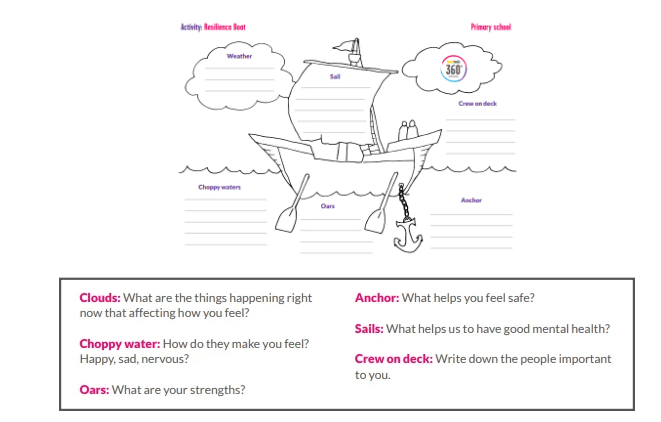
The Resiliency Boat: Navigating Life’s Challenges

The Resiliency Boat exercise is a powerful tool for individuals to visualize and strengthen their ability to cope with life’s challenges. This creative and engaging activity helps participants identify their support systems, personal strengths, and areas for growth.

How It Works

The exercise begins with participants drawing a boat, representing themselves navigating life’s ups and downs. Each part of the boat and its surroundings symbolizes different aspects of resilience:

Choppy Waters

Participants identify current challenges or stressors they’re facing. These might include work pressures, relationship issues, or health concerns[1].

Oars

These represent personal strengths that help navigate difficult times. Participants list qualities like determination, adaptability, or problem-solving skills[1].

Anchor

This symbolizes the support system that provides stability. Participants note people, resources, or activities that ground them during tough times[1].

Sails

The sails represent self-care strategies that promote mental health and well-being. These might include exercise, meditation, or creative pursuits[1].

Crew on Deck

This section is for listing key individuals who provide support and encouragement[1].

Benefits of the Exercise

The Resiliency Boat exercise offers several advantages:

  1. Visual Representation: It provides a tangible, visual way to understand one’s resilience factors.
  2. Self-Awareness: Participants gain insight into their coping mechanisms and support systems.
  3. Identifying Gaps: The exercise helps highlight areas where additional support or skills might be needed.
  4. Positive Focus: Emphasizing strengths and supports fosters a positive mindset towards challenges.
  5. Group Discussion: In a group setting, it promotes sharing and learning from others’ experiences.

Conducting the Exercise

To conduct the Resiliency Boat exercise:

  1. Provide participants with paper and drawing materials.
  2. Explain the symbolism of each boat part.
  3. Allow time for reflection and drawing.
  4. Encourage participants to share their boats with the group, if comfortable.
  5. Facilitate a discussion about common themes and insights gained.

Enhancing Resilience

The Resiliency Boat exercise underscores that resilience is not a fixed trait but a skill that can be developed. By regularly reflecting on and strengthening the elements represented in their boat, individuals can enhance their ability to navigate life’s challenges[2].

Remember, building resilience is an ongoing process. Just as a real boat needs regular maintenance, our resilience requires continuous attention and care. By using tools like the Resiliency Boat exercise, we can better understand our strengths, support systems, and areas for growth, ultimately becoming more equipped to handle life’s storms.

Citations:
[1] https://whenyoumakeithappen.com/learning-to-float-and-tame-the-storms-about-building-resilience/
[2] https://cartus.com/en/insights/blog/what-floats-your-boat-how-develop-resilience-while-international-assignment/
[3] https://info.sailingvirgins.com/blog/resilience-at-sea-how-sailing-adventures-foster-mental-toughness-in-professionals
[4] https://www.youngminds.org.uk/media/4mhjvqu1/resilience-boat.pdf
[5] https://commonslibrary.org/leaderful-organizing-tool-resilience-trees/
[6] https://positivepsychology.com/resilience-counseling/
[7] https://www.youtube.com/watch?v=ECaxX-jJQUU
[8] https://nathanbweller.com/tree-life-simple-exercise-reclaiming-identity-direction-life-story/

Parenting Through the Behavioral Storm: Disruptive Mood Dysregulation Disorder

Disruptive Mood Dysregulation Disorder (DMDD) is a relatively newly recognized mental health disorder that primarily affects children and adolescents. It is characterized by severe and recurrent temper outbursts that are out of proportion to the situation, along with a persistently irritable or angry mood between outbursts. These symptoms must be present for at least 12 months and be severe in at least two settings (e.g., home, school, with peers).

DMDD was introduced in the Diagnostic and Statistical Manual of Mental Disorders, Fifth Edition (DSM-5), which was published in May 2013. It was created to address concerns about overdiagnosis of bipolar disorder in children and to provide a more accurate diagnosis for children who exhibit chronic irritability and temper outbursts without meeting the criteria for bipolar disorder.

DMDD is seen as a way to better classify and treat children with severe irritability and temper outbursts, helping to differentiate them from those with bipolar disorder or oppositional defiant disorder. It’s important to note that DMDD is a relatively new diagnosis and research into its causes and treatment is ongoing.

Treatment for children with Disruptive Mood Dysregulation Disorder (DMDD) typically involves a combination of therapeutic interventions and, in some cases, medication management. Here are some common treatment options:

  1. Psychotherapy: Various forms of psychotherapy can be beneficial for children with DMDD:
  • Cognitive Behavioral Therapy (CBT): Helps children learn to identify and challenge negative thought patterns and develop coping strategies to manage their emotions and behavior.
  • Parent Management Training (PMT): Teaches parents effective techniques for managing their child’s behavior, setting appropriate limits, and providing positive reinforcement.
  • Family Therapy: Addresses family dynamics and communication patterns, improves conflict resolution skills, and fosters a supportive environment for the child.
  1. Social Skills Training: Helps children develop interpersonal skills, such as problem-solving, conflict resolution, empathy, and communication skills, which can improve their relationships with peers and family members.
  2. Medication: In some cases, medication may be prescribed to manage specific symptoms associated with DMDD or co-occurring conditions:
  • Antidepressants: Selective serotonin reuptake inhibitors (SSRIs) or other antidepressants may be prescribed to alleviate symptoms of depression or anxiety.
  • Mood Stabilizers: In cases where mood swings are severe or resemble bipolar disorder, mood stabilizers such as lithium or atypical antipsychotics may be considered.
  1. Parent Education and Support: Providing parents with education about DMDD, guidance on effective parenting strategies, and support in managing their child’s behavior can be crucial in improving family functioning and reducing stress.
  2. School Interventions: Collaboration with teachers and school staff to implement behavior management strategies, accommodations, and supports can help address academic and social difficulties and create a more supportive learning environment for the child.
  3. Stress Management Techniques: Teaching the child relaxation techniques, such as deep breathing exercises, mindfulness, or progressive muscle relaxation, can help them regulate their emotions and reduce stress levels.

Treatment plans should be individualized to meet the specific needs of each child and may involve a multidisciplinary approach involving mental health professionals, educators, and medical providers. Regular monitoring and adjustment of treatment strategies based on the child’s progress are also important for optimal outcomes.

Here are some books and resources that provide information and support specifically on Disruptive Mood Dysregulation Disorder (DMDD):

  1. “The Explosive Child: A New Approach for Understanding and Parenting Easily Frustrated, Chronically Inflexible Children” by Ross W. Greene – While not exclusively focused on DMDD, this book offers valuable insights and strategies for parenting children with explosive behaviors, including those with DMDD.
  2. “Your Defiant Child, Second Edition: Eight Steps to Better Behavior” by Russell A. Barkley and Christine M. Benton – This book provides practical guidance for parents dealing with challenging behaviors in children, including those with DMDD or oppositional defiant disorder (ODD).
  3. “Parenting Your Child with Autism: Practical Solutions, Strategies, and Advice for Helping Your Family” by Anjali Sastry and Blaise Aguirre – Although targeted towards parents of children with autism, this book offers strategies for managing challenging behaviors that may apply to children with DMDD.
  4. “Managing the Meltdown: A Parent’s Guide to The Disruptive Mood Dysregulation Disorder” by Naomi Henderson – This book specifically focuses on DMDD and offers guidance for parents on understanding the disorder, managing meltdowns, and supporting their child’s emotional well-being.
  5. “Raising An Emotionally Intelligent Child: The Heart of Parenting” by John Gottman – While not specifically about DMDD, this book provides insights into fostering emotional intelligence in children, which can be beneficial for parents navigating the challenges of DMDD.
  6. “Parenting Children with ADHD: 10 Lessons That Medicine Cannot Teach” by Vincent J. Monastra – While ADHD and DMDD are distinct disorders, they can share some overlapping symptoms and challenges. This book provides practical advice for parents dealing with behavioral issues in children, including those with DMDD.
  7. “The Highly Sensitive Child: Helping Our Children Thrive When the World Overwhelms Them” by Elaine N. Aron – While not directly related to DMDD, this book offers insights into understanding and supporting highly sensitive children, which may be relevant for parents of children with DMDD who are easily overwhelmed by emotions.

These resources can provide valuable information and support for parents seeking to better understand and manage DMDD in their children. It’s important to consult with mental health professionals for personalized guidance and treatment recommendations tailored to the individual needs of the child and family.

How to Focus When You Have ADHD

Parenting a child with ADHD can present its own unique challenges, especially when it comes to helping them focus on tasks and activities. ADHD, or attention-deficit/hyperactivity disorder, can make it difficult for children to concentrate and stay on track, but there are strategies that parents can use to help their child improve their focus and attention. Here are some tips on how to help your child focus when they have ADHD.

  1. Create a structured routine: Children with ADHD thrive on structure and routine. Establishing a consistent daily schedule can help them know what to expect and when, which can in turn help them stay focused on tasks. Set specific times for waking up, meals, homework, and bedtime, and try to stick to this routine as much as possible.
  2. Break tasks into smaller steps: Large tasks can be overwhelming for children with ADHD, making it difficult for them to focus. Break down tasks into smaller, more manageable steps, and provide clear instructions for each step. This can help your child stay on track and feel a sense of accomplishment as they complete each step.
  3. Minimize distractions: Create a quiet, clutter-free environment for your child to work on tasks. Minimize distractions by turning off the TV, removing toys or other items that may be distracting, and finding a quiet space for your child to focus. Consider using noise-cancelling headphones or white noise machines to help block out distractions.
  4. Use visual aids: Visual aids, such as charts, checklists, and timers, can help children with ADHD stay focused and organized. Use visual schedules to help your child understand what needs to be done and when, and use timers to help them stay on track and manage their time effectively.
  5. Provide positive reinforcement: Positive reinforcement can be a powerful motivator for children with ADHD. Offer praise and rewards when your child can stay focused and complete tasks. This can help build their confidence and encourage them to continue working on their focus and attention skills.
  6. Encourage physical activity: Regular physical activity can help children with ADHD release excess energy and improve their ability to focus. Encourage your child to engage in activities they enjoy, such as sports, dance, or outdoor play. Exercise can help improve attention and concentration, so make sure your child has opportunities to be active every day.
  7. Seek professional help: If you are struggling to help your child focus, consider seeking support from a professional. A pediatrician, psychologist, or other mental health professional can provide guidance and support for managing ADHD symptoms and improving focus and attention.

Parenting a child with ADHD can be challenging, but by implementing these strategies, you can help your child improve their focus and attention. Remember to be patient and understanding, and seek support when needed. With the right support and strategies in place, children with ADHD can learn to focus and succeed in their daily activities.

Emotions must be Mentioned to be Managed

The phrase “emotions must be mentioned to be managed” encapsulates a profound truth that underlines the importance of acknowledging and articulating our feelings for effective emotional well-being. In the intricate landscape of human emotions, expression serves as a compass, guiding us through the ebbs and flows of our inner experiences.

When we verbalize our emotions, whether joy, sorrow, fear, or excitement, we engage in a form of self-awareness that is fundamental to emotional management. It is a recognition that our feelings are valid and deserving of acknowledgment. This articulation becomes a bridge connecting our internal world with the external, fostering understanding and empathy from others. Moreover, putting emotions into words is an act of personal empowerment, allowing us to gain a clearer perspective on our feelings and paving the way for constructive coping mechanisms.

Failure to mention or communicate our emotions can lead to a build-up of unexpressed sentiments, creating a reservoir of unaddressed issues. This emotional backlog may eventually manifest as stress, anxiety, or even physical ailments. The phrase emphasizes the proactive stance needed to navigate the complexities of emotions – a reminder that vulnerability and openness are not signs of weakness but rather prerequisites for emotional resilience.

In personal relationships, the significance of this phrase becomes even more evident. Effective communication of emotions lays the groundwork for understanding and connection between individuals. It enables the creation of a supportive environment where emotions are not only recognized but also shared. This fosters healthier relationships built on empathy and mutual understanding.

In conclusion, the phrase “emotions must be mentioned to be managed” encapsulates a universal truth about the human experience. It calls for a proactive and expressive approach to emotions, recognizing their importance in our mental and relational well-being. By embracing this principle, we empower ourselves to navigate the complexities of our emotional landscapes with resilience, fostering both personal growth and meaningful connections with others.

    6 Benefits of Starting Self-Care In Your Life

    Self-care refers to any attitude or activity we participate in to keep up and support our wellbeing, including mental, physical and spirit. Although everyone agrees with the importance of it, self-care frequently gets thrown away for the demands like work, family and the other pressing factors of life. The time to start self-care is today. Yes, right now!

    Self-care doesn’t interrupts your life or take time away from your busy schedule. It benefits it and re-energies you. Here are a six simple reasons you should start benefiting form self-care:

    1. Improves state of mind

    Putting time in your own consideration can significantly affect your state of mind, prompting more noteworthy hopefulness and inspiration. It will assist you with feeling more joyful, more fulfilled and better ready to adapt to the difficulties that life tosses you way. In any event, taking a limited quantity of time each week to sustain your physical, passionate and psychological wellness can be tremendously advantageous on your state of mind.

    1. Creates connections

    Self-care assists you with being the best individual you can be, which has a positive effect on your connections. Setting aside standard effort to put resources into your own wellbeing permits you to be more joyful and more steady as a person. This permits you to be more persistent and obliging with others and along these lines have better connections.

    1. Diminishes hazard of burnout

    Most Americans are over-worked and so self-care is important to keep away from burnout. Discover a type of self-care that works for you, regardless of whether that be going for a stroll, investing energy with family or getting a back rub, and focus on participating in it consistently. It will assist with dealing with your pressure and prevent burnout.

    1. Causes you to be more present

    Investing energy overseeing yourself permits you to turn out to be more present and drawn in with your environmental factors. You are probably going to have a superior comprehension of the stuff to keep up your psychological, physical and passionate wellbeing, in this way bringing about you having a more prominent spotlight on your present mind-set and trigger that can possibly affect your wellbeing.

    1. Better execution on your goals

    Self-care is frequently seen as an afterthought or luxury. The truth is that it is a requirement for better health and wellness. Taking care of yourself increases your capacity in every area of life: work, family, and sport. If you don’t get enough sleep, you are going to drag at work and miss deadlines. If you don’t meditate each day you will be grumpy and react more to others. Good diet, exercise, and time to yourself will help you focus more, stay more motivated, and finish tasks.

    1. Builds personal happiness/satisfaction

    The general advantage of self-care is that it builds the quality of your life. That is probably obvious by now but it not only improves things around you, it improves your identity. Wouldn’t you like to be happier? You can be on the journey for this if you keep this as your focus and your develop habits that promote happiness. Hey, you could read on happiness research for just 5 minutes per day. Try it and see happens in just one week. Why not start now?

    Let Ron Huxley help you by scheduling an appointment today to change the negative patterns of your life and transform you relationships into greater satisfaction and joy.

    You can get more help on parenting, trauma, and anxiety with online courses at http://familyhealer.tv

    Resilience: The Biology of Stress and the Science of Hope

    Listen to my radio interview reflecting on the documentary “Resilience”, the Adverse Childhood Experiences study (ACES), and my thoughts on how to heal from trauma and child abuse.

    Click here: http://kcbx.org/post/resilience

    aces pyramid 2

    “The child may not remember, but the body remembers.” Resilience: The Biology of Stress and the Science of Hope is a one-hour documentary that delves into the science of Adverse Childhood Experiences (ACEs) and the birth of a new movement to treat and prevent Toxic Stress. While the original research was controversial, experts now consider the findings to have revealed one of the most important public health findings of a generation. Understood to be one of the leading causes of everything from heart disease and cancer to substance abuse and depression, extremely stressful experiences in childhood can alter brain development and have lifelong effects on health and behavior.

    Join host Kris Kington-Barker as she speaks with guests Nisha AbdulCadar, an M.D., F.A.A.P. and Pediatrician with Martha’s Place Children’s Assessment Center and Ron Huxley a LMFT who provides faith-based, trauma-informed therapy for individuals and families about the upcoming movie screening and research behind “Resilience,” a powerful documentary film by James Redford and Karen Pritzker that reveals, toxic stress can trigger hormones that wreak havoc on the brains and bodies of children which can put them at a an increased risk for disease, homelessness, prison time, and even early death. Join the conversation and listen to how trailblazers like these in pediatrics, education, and social welfare are using cutting-edge science and field-tested therapies to fight back against the effects of toxic stress and greatly improve the health of our future generations.

    Central Coast Voices is sponsored by ACTION for Healthy Communities in collaboration with KCBX and made possible through underwriting by Joan Gellert-Sargen.

    Depression and Parental Insightfulness

    Research articles often have a “duh” factor when it comes to outcomes in various studies. After you read them you think “I could have told you that!” The up side of academic studies is that they point a laser light of attention on areas of life that need attention. Society seems more willing to spend money and time on correcting problems when we draw a big circle around a social problem in the lab.

    This was true, for me, of a study on the level of parental insightfulness and maternal depression (see clip below). The findings of the study was that mom’s (why do we always study moms!) who were depressed are less likely to be able to see life from the vantage point of their children. This results in less emotional attachment and parenting effectiveness. The obviousness of this research is that mom’s or dad’s that are depressed are less likely to see much of anything outside of their own internal pain. This isn’t a slam on depressed parents. I have experienced it and it isn’t purposeful. Depression is usually due to a chemical imbalance and requires professional interventions that may or may not involve medications.

    I mention this study on the blog because I want draw a big circle around this issue and say that the long-term effects of a poor attachment between parent and child can have some serious effects on self-esteem and future relationships. I guess this is a call to action for anyone who feels they are depressed, even occasionally. Help yourself and your child by getting some help. There is plenty of help available, from changing diets to clinical therapy. I have found that playing with my child lifts my mood even when I was tired and emotionally down.

    “Insightfulness is seen as the mental capacity that provides the context for a secure child–parent attachment. It involves the ability to see things from the child’s perspective and is based on insight into the child’s motives, a complex view of the child and openness to new information about the child. To test our hypothesis that maternal insightfulness is related to maternal depression, we utilized the Insightfulness Assessment (IA) developed by Oppenheim and Koren-Karie to conduct and analyse interviews in which mothers discussed their perceptions of video segments of their interactions with their children. We compared the results of a control group of 30 mothers without a diagnosis of depression with a sample of 23 mothers diagnosed with depression (International Classification of Diseases, 10th Revision). As expected, depression was negatively related to maternal insightfulness.”

    Source: onlinelibrary.wiley.com Share what you have done to increase your mood and deal with depression by leaving a comment below or posting on our Facebook ParentingToolbox Page.

    Using Your E.A.R.S. to Help Children Problem-Solve

    Someone once joked that God gave us two ears and one mouth so that we could listen twice as much as we talked. Not bad advice actually. Many parents would do well to heed that advice. This doesn’t mean that parents shouldn’t talk to their children. It’s just that they shouldn’t be so quick to give advice or lecture of the right and wrongs of a problem. Listen first, then talk. Better yet, ask questions to get at the solutions to children’s problems. This causes them to feel as if they came up with the answer and take more ownership for the problem. E.A.R.S. is a helpful acronym for parents who want to improve their problem-solving skills with their children.

    E = Elicit

    The starting point for problem-solving with children is to elicit possible solutions that already exist in the child’s repertoire. Ask questions such as, “What would you think would make the situation better?” This implies that there is a solution and that the child has the ability to utilize it. If they don’t have an answer to this question, try this one: “What would your _______ (supply a relevant name here) say you are doing about the situation?”

    This implies that the child is already solving his problem. The fact of the matter is that every response to a problem is a solution to a problem. Only some responses are better than others and have fewer severe consequences. The job of parents is to acknowledge children’s efforts and then direct them to use better responses.

    If the child persists that there wasn’t anything good about what he did in the situation, then ask, “What was the part of the situation that was better than the other parts?” And if the child does recite some ‘better than other parts’ of the situation, ask, “How did you do that?” This encourages the child to learn from their own behaviors and increase positive responses.

    If the child suffered severe consequences for his response to the situation, ask, “What did you learn from the situation?” Most successes are the result of trial and error and determining what doesn’t work.

    A = Amplify

    Amplify refers to the use of questions to get more details about any positive efforts toward problem-solving. Use who, what, where, when, and how questions. For example, “Who noticed you do that?” or “When did you decide to do that?” or “How did they respond to your solution?” Never use why questions. Why is a very judgemental word and will stop all attempts to help the child problem-solving because he feels bad about his efforts. Over time this can develop into a pattern of behavior where the child never tries anything new because he is afraid of failing. If he doesn’t try, he doesn’t fail. At least that is the rationale.

    R = Reinforce

    Years of behavioral change research have taught us that there are two ways to create change in others. Reward desired behaviors and ignore or mildly punish undesirable behavior. So be sure to reinforce any effort to solving a problem. Even failed attempts are worthy of acknowledgment. The child must want and value positive change. Reinforcement will be the motivating force for this value. Be sure, though, that you use verbal or social reinforcement. Don’t give in to bribes (candy, toys, and money) to reinforce the child. This will reinforce dependent and manipulative behavior and decrease independent problem-solution. The best reinforcers are a surprise. When children do not know when to expect a reinforcer (a compliment or public acknowledgment) they will be more motivated, ready for reinforcement at any moment in time.

    S = Start again

    Learning to problem-solving and listening to our children to help them, is a process. It can’t be done once and then left alone. It must be done over and over again. Repetition is a fundamental principle of learning. The more you do something the better you get at it. And now that the child has found a solution to a problem, plan for the next one. Most problems pop up again in life. Brainstorm solutions for the next time. And finally, treat every problem as an experiment where new and clever solutions can be tested. So use those two ears to listen more then you talk but when you do talk, ask solution-focused questions to help children problem-solve.

    17 Hugs A Day

    My wife and I have a joke that we tell each other and family members: It takes a minimum of 17 hugs a day to feel normal. I will confess that there is no scientific research that supports 17 hugs per day therapy…at least not yet. Nevertheless, we have come to recognize that need for touch and have adopted the idea that hugs, at least 17 is what gets us through the daily life hassles.

    At a recent conference on Attachment Theory, where there was some real scientific data, a presenter on Post Traumatic Stress Disorder stated that data suggests that the little stressors of everyday living can add up to the same effects of someone who has undergone a single, major life trauma, like a robbery or death of a loved one or car accident. We let these little incidents of life go by without any real concern. Perhaps we feel embarrassed to admit how much a poor marriage or teenager defiance or even workplace stress really does affect us.

    Can parents acts as prevention specialists for our children. As adults, we need 17 hugs just to maintain normal living. Our children need them to counter the cumulative effects of stress on their lives to avoid PTCS – Post Traumatic Childhood Stress. If you don’t believe there is a such a thing, just observe children interacting on a play ground. There are some mean things thrown back and forth on the jungle gym, let me tell you! Add to that some homework pressures and the constant media bombardment of negative words and images and what child wouldn’t feel slightly traumatized? As parents, the least we can do is give some touch therapy with a few hugs a day.

    John Bowlby, the great attachment theorist, stated that attachment is essential to normal development (see my blog post on this here). Guardians are supposed to be our safe haven from life. Home should be a place of refuge from the constant stress of school and work. Granted, there are chores and homework to be done but how can you carve our 30 minutes a day for some connection. Parents are quick to use Time-Out, how about some Time-In? It might be good for mom and dad too.

    Starting today, give a few more hugs than usual. It is OK to start slow and work your way up. And yes, teenagers love them too. You just have to be a little more crafty in your approach.