Why Trauma-Informed Care Matters—and How to Stay Equipped as a Trauma Champion

Trauma affects more people than we realize. Whether in schools, healthcare, workplaces, or communities, the need for trauma-informed care has never been greater. Professionals on the frontlines—therapists, teachers, social workers, leaders, and advocates—are increasingly recognizing that understanding trauma is not optional; it’s essential.

But here’s the challenge: staying current with trauma-informed best practices can feel overwhelming. New research, new strategies, and new demands necessitate ongoing resources to remain effective and avoid burnout. That’s precisely why I created the Trauma Champions Newsletter.


What Is Trauma-Informed Care?

At its core, trauma-informed care is an approach that:

  • Recognizes the widespread impact of trauma
  • Identifies the signs and symptoms in individuals, families, and organizations
  • Responds with policies, practices, and programs that foster safety and healing
  • Prevents re-traumatization, ensuring care is supportive and empowering

This approach matters because trauma doesn’t just affect individuals—it ripples across families, schools, workplaces, and entire communities. When professionals are equipped with trauma-informed strategies, they don’t just treat symptoms; they create conditions for long-term resilience and growth.


Introducing the Trauma Champions Newsletter

The Trauma Champions Newsletter is my way of making trauma-informed care practical, accessible, and sustainable for busy professionals.

Each issue includes:

  • Practical strategies you can apply immediately in clinical, educational, and community settings
  • Insights on the latest trauma-informed care research and methods
  • Tools for preventing burnout and compassion fatigue
  • Resources to help leaders and organizations build trauma-sensitive cultures

Thousands of professionals worldwide have already participated in my training and certification programs. This newsletter brings that same expertise straight to your inbox.

👉 Subscribe free today at TraumaChampions.com


Why Join?

By subscribing, you’ll not only stay up to date—you’ll join a growing movement of Trauma Champions committed to transforming care. Together, we’re working to:

  • Make trauma-informed care the standard across schools, agencies, and organizations
  • Provide families with hope and healing tools
  • Build stronger, more resilient communities

If you’re passionate about trauma-informed practice, this is your space to grow, connect, and lead.


Take the Next Step

Don’t miss out on tools, training, and encouragement designed to help you thrive in this critical work.

👉 Sign up now at TraumaChampions.com and start receiving trauma-informed insights directly in your inbox.

Together, we can turn trauma into resilience—and create real change.
Beyond “I Do”: Building a Trauma-Informed Marriage When One Partner Has a Trauma History

Understanding how past wounds can become pathways to deeper connection


Marriage vows promise “for better or worse,” but few couples anticipate how past trauma can profoundly shape their relationship. When one partner carries invisible wounds from their history, it affects everything from daily conversations to intimate moments. Yet with understanding and intentional care, these challenges can become opportunities for unprecedented closeness and resilience.

When the Past Lives in the Present

Sarah freezes when her husband Mark raises his voice—even during playful moments. What Mark doesn’t initially understand is that his tone triggers memories of an unpredictable childhood, making Sarah’s nervous system react as if danger is imminent.

Similarly, Emily physically healed from a serious car accident, but her body remembers the trauma. Highway driving now feels impossible, creating tension whenever she and her husband, David, plan trips together.

These scenarios illustrate what trauma expert Dr. Bessel van der Kolk describes in The Body Keeps the Score: trauma literally reshapes how our brains and bodies perceive safety and connection. For partners, understanding this isn’t just helpful—it’s transformative.

The Ripple Effects: How Trauma Touches Every Corner of Marriage

Emotional Landscapes

Living with trauma often means experiencing intense emotional swings—from overwhelming anxiety to profound numbness. Your partner might seem to “shut down” or react strongly to seemingly small triggers, leaving you feeling like you’re walking on eggshells.

Communication Barriers

Trauma can make it incredibly difficult to articulate internal experiences. What feels like defensiveness or withdrawal might actually be your partner’s nervous system protecting them from perceived threats.

Intimacy Challenges

Both emotional and physical closeness can feel threatening when trauma has shattered someone’s sense of safety. Touch, vulnerability, and even eye contact might trigger distressing memories or sensations.

Trust and Connection

Even in loving relationships, trauma can create persistent doubts about safety, consistency, and loyalty. This isn’t about you personally—it’s about how trauma rewires the brain’s threat-detection systems.

Daily Life Disruptions

Chronic anxiety, sleep disturbances, concentration difficulties, and avoidance behaviors can affect everything from household routines to social activities.

The Hidden Impact on Supporting Partners

While focus naturally centers on the trauma survivor, supporting partners face their own challenges that deserve recognition and care.

Secondary trauma can develop from repeatedly witnessing your partner’s pain or hearing traumatic details. You might experience:

  • Emotional exhaustion and anxiety
  • Sleep disruption and irritability
  • Feelings of helplessness or inadequacy
  • Isolation from the unique nature of your situation

Relationship dynamics can shift dramatically:

  • Feeling more like a caregiver than an equal partner
  • Frustration when your support efforts seem ineffective
  • Resentment about lost spontaneity or social activities
  • Guilt about having your own needs and feelings

Remember: Acknowledging these impacts isn’t selfish—it’s essential for sustaining your ability to support your partner and maintain your own well-being.

Building Your Trauma-Informed Partnership: A Roadmap

1. Invest in Individual Therapy

This is your foundation. Both partners benefit from professional support:

  • For trauma survivors: Processing experiences safely and developing coping tools
  • For supporting partners: Managing secondary trauma and maintaining emotional health

2. Become Trauma-Literate Together

Understanding how trauma affects the nervous system transforms confusion into compassion. When you recognize that your partner’s “overreactions” are actually their brain protecting them from perceived danger, everything changes.

Key insight: Those fight, flight, freeze, or fawn responses aren’t choices—they’re automatic survival mechanisms.

3. Practice Compassionate Communication

  • Lead with curiosity instead of judgment
  • Recognize when someone is triggered and focus on safety first
  • Use “I” statements to express your own needs
  • Create agreements about how to handle overwhelming moments

4. Embrace the Marathon Mindset

Trauma healing isn’t linear. There will be breakthroughs followed by setbacks, as well as good weeks and difficult ones. Progress might look like three steps forward, two steps back—and that’s completely normal.

5. Co-Create Safety

Transform your relationship into a haven by:

  • Establishing predictable routines when possible
  • Learning nervous system regulation techniques together (breathing exercises, grounding techniques, mindful movement)
  • Identifying and minimizing environmental triggers
  • Developing safety signals and check-in practices

6. Consider Trauma-Informed Couples Therapy

A therapist specializing in trauma can guide you through rebuilding trust, improving communication, and navigating intimacy challenges. Generally, this approach works best after the trauma survivor has established some degree of individual stability.

7. Prioritize Your Own Oxygen Mask

For supporting partners, self-care isn’t optional—it’s essential for everyone’s wellbeing:

  • Maintain friendships and hobbies outside the relationship
  • Set healthy boundaries around what you can and cannot do
  • Seek your own support through therapy, support groups, or trusted friends
  • Remember that you can’t heal your partner’s trauma for them

The Unexpected Gift

While navigating trauma’s impact on marriage presents real challenges, many couples discover something remarkable: trauma can become a pathway to extraordinary intimacy and resilience. When you learn to hold space for each other’s deepest vulnerabilities, when you develop skills to co-regulate during difficult moments, when you choose understanding over judgment, you create a bond that can weather almost anything.

The marriage that emerges from this crucible often becomes stronger, more authentic, and more compassionate than many couples ever experience. It’s a relationship that truly embodies “for better or worse”—not because it’s easy, but because it’s real.


If you’re navigating trauma in your relationship, remember that seeking help is a sign of strength, not weakness. Consider reaching out to a trauma-informed therapist who can provide personalized guidance for your unique situation.

Resources:

  • “The Body Keeps the Score” by Bessel van der Kolk
  • Psychology Today’s therapist directory (filter for trauma specialists)
  • National Center for PTSD resources for families
  • Local support groups for trauma survivors and their partners

The Poison Within: Understanding and Releasing Bitterness and Anger

We’ve all experienced that corrosive feeling that settles in after being hurt, betrayed, or mistreated. It starts as a sharp pain and then becomes more persistent: bitterness. Like a slow-acting poison, bitterness seeps through our emotional system, fundamentally altering how we see ourselves and the world around us.

The Bitter Cycle

Bitterness rarely exists in isolation. It’s typically accompanied by its volatile cousin, anger. While anger can be a healthy, natural response to injustice, bitterness occurs when that anger isn’t processed or released. Instead, it calcifies, becoming a lens through which we view our experiences.

Dr. Maya Thompson, a clinical psychologist specializing in emotional regulation, explains: “Bitterness is essentially anger turned inward and preserved. While immediate anger can be protective and motivating, chronic bitterness becomes self-destructive, affecting everything from our physical health to our capacity for joy.”

Research supports this view. Studies have shown correlations between unresolved anger and increased risks for cardiovascular problems, weakened immune function, and disrupted sleep patterns. Our bodies weren’t designed to carry this emotional weight indefinitely.

Recognizing the Signs

How do you know if bitterness has taken root in your life? Here are some common indicators:

  • You find yourself repeatedly revisiting old hurts, mentally rehearsing what happened and what you should have said or done
  • Cynicism has become your default perspective
  • You experience satisfaction when those who hurt you face difficulties
  • Trusting others feels increasingly impossible
  • You find yourself withdrawing from relationships to avoid potential hurt
  • Physical symptoms like tension headaches, jaw clenching, or digestive issues become frequent companions

The irony of bitterness is that while it begins as a response to being hurt by others, it ultimately hurts us more than anyone else. As the ancient proverb suggests, harboring bitterness is like drinking poison and expecting the other person to die.

The Path to Release

Breaking free from bitterness doesn’t happen overnight, but it is possible. Here are some approaches that can help:

1. Acknowledge the hurt

Bitterness often thrives in denial. By honestly acknowledging what happened and how it affected you, you begin to loosen its grip. This doesn’t mean dwelling on the hurt but giving yourself permission to feel it fully, perhaps for the first time.

2. Practice self-compassion

Beating yourself up for feeling bitter only compounds the problem. Instead, try relating to yourself with kindness. “We often judge ourselves harshly for not being able to ‘just get over it,'” notes therapist James Rivera. “But healing isn’t linear, and self-compassion creates the emotional safety needed for real change.”

3. Reframe your narrative

The stories we tell ourselves about what happened and why can either entrench bitterness or help dissolve it. Consider whether there might be alternative interpretations of events. This doesn’t mean excusing harmful behavior but freeing yourself from a narrative that keeps you stuck.

4. Set boundaries

Sometimes, bitterness persists because we remain in situations that continually reopen wounds. Setting clear boundaries—including limiting contact with certain people—can create the space needed for healing.

5. Practice forgiveness (on your own terms)

Forgiveness is often misunderstood. It doesn’t mean what happened was okay or the relationship must be restored. Instead, it’s a decision to stop allowing the hurt to control your life. As author and researcher Brené Brown puts it, “Forgiveness is not forgetting or walking away from accountability or condoning a hurtful act; it’s the process of taking back and healing our lives so we can truly live.”

6. Seek professional support

Sometimes, professional guidance becomes essential, mainly when the hurt is deep or complex. Therapies like Cognitive Behavioral Therapy (CBT), Acceptance and Commitment Therapy (ACT), and EMDR have proven effective in addressing persistent negative emotions tied to past experiences.

Finding Freedom

A 42-year-old teacher, Maria Chen, describes her journey: “After my divorce, I was consumed by bitterness. It affected my health, my work, and even how I parented. The turning point came when I realized my ex-husband had moved on completely while I was still carrying this massive emotional burden. I decided then that I deserved to be free, too.”

For Maria, healing involved therapy, journaling, and eventually, a deliberate choice to focus on rebuilding her life rather than ruminating on its collapse. “I still have moments,” she admits, “but they’re just moments now, not my entire existence.”

The Gift on the Other Side

Perhaps the most compelling reason to address bitterness is what awaits on the other side: the return of possibility. When we no longer view life through the distorted lens of past hurts, we can engage more fully with the present. Relationships become sources of joy rather than potential threats. Creativity flows more freely. We become more compassionate—both with ourselves and others.

Releasing bitterness doesn’t mean forgetting the lessons learned through difficult experiences. In fact, many find that working through bitterness eventually yields wisdom that wouldn’t have been accessible otherwise. The hurt becomes part of your story without defining it.

As you consider your own relationship with bitterness and anger, remember that seeking help isn’t a sign of weakness but of courage. In reaching for healing, you’re reclaiming your emotional well-being and your right to a future unconstrained by the past.


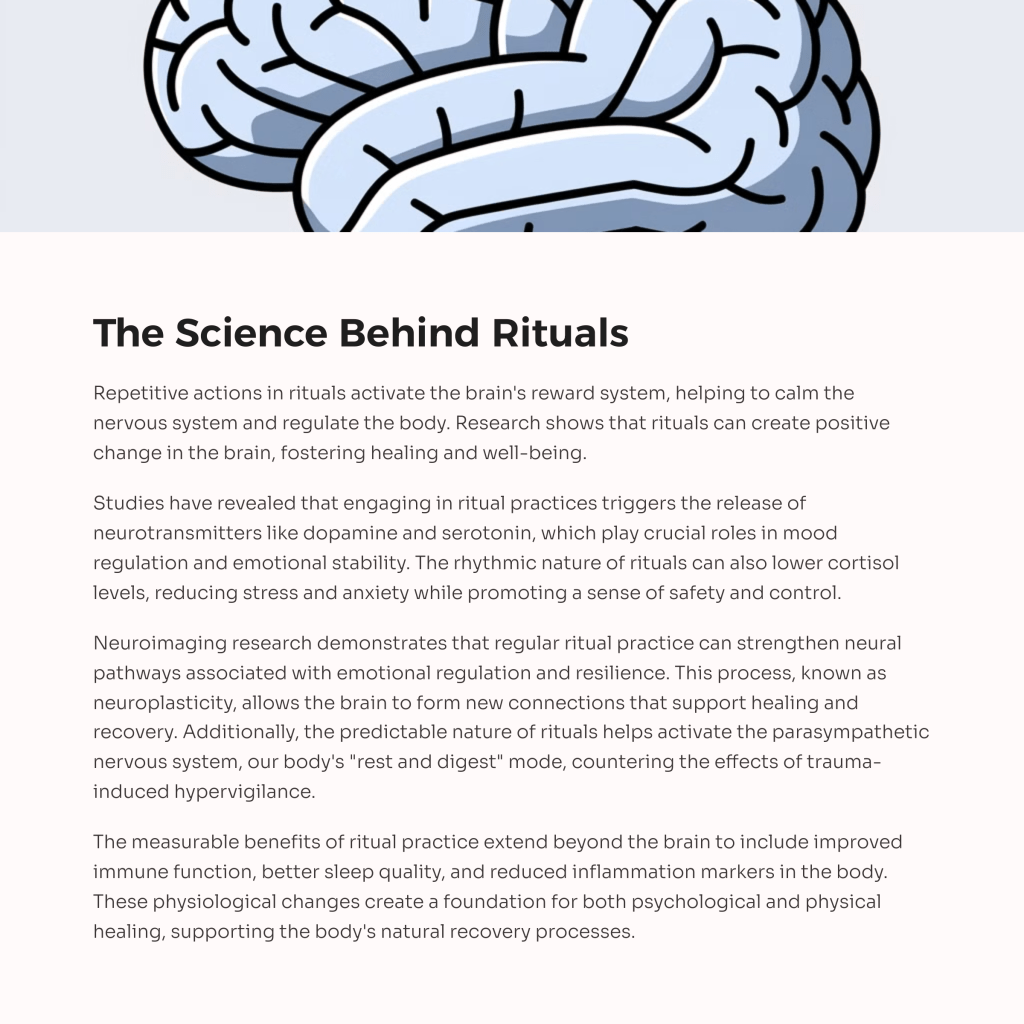
Trauma Recovery: The Healing Power of Rituals

Looking for ways to heal after trauma? Rituals are more than just cultural practices; they’re powerful tools for creating a sense of peace and grounding. Whether it’s a morning meditation, a weekly journaling practice, or a sacred ceremony, rituals can provide structure and meaning during your healing journey.

Safe Space for Healing

Rituals create a protected container for processing emotions and experiences at your own pace.

Connection to Self

Regular practices help rebuild trust in yourself and your body’s wisdom

Restored Sense of Control

Through intentional actions, rituals help reclaim your power and agency

Join us as we explore how ancient wisdom and modern understanding support your healing journey. Whether you’re just starting out or looking to deepen your practice, discover how reclaiming rituals can help you find healing, empowerment, and renewed purpose.

Becoming Trauma Aware for NonClinical Staff in Organizations

Becoming Trauma Aware: Strategies and Tools for Nonclinical Staff

Nonclinical staff are often clients’ first point of contact and play a vital role in creating a supportive environment. Trauma awareness is when individuals have knowledge and education about trauma. By understanding the signs of trauma, nonclinical staff can improve recognition and response, decrease the risk of triggering and retraumatization, prioritize care, make more informed decisions about immediate care needs, and reduce stress and job satisfaction for staff.

Understanding the Signs of Trauma

Here are some typical behavioral, emotional, and physical signs of trauma:

Behavioral:

  • Avoidance: Reluctance to talk about specific topics, social withdrawal, or isolation.
  • Agitation: Irritability, angry outbursts, being on guard, exaggerated startle responses, and difficulty sitting still.
  • Concentration Issues: Trouble paying attention, focusing on questions, memory problems, forgetfulness, difficulty absorbing information, and zoning out.
  • Risky Behaviors: Engaging in dangerous activities, thrill-seeking behaviors, increased accidents, self-harming behaviors, and substance use to cope with distressing emotions or memories.
  • Sleep Pattern Disturbances: Insomnia or difficulty falling asleep, excessive sleep, fatigue, nightmares, terrors, and sleep deprivation.

Emotional:

  • Emotional Numbing: A protective mechanism when other coping mechanisms have failed.
  • Difficulty Feeling Positive Emotions: Trauma interferes with standard emotional processing.

Physical:

  • Chronic Pain and Aches: Trauma activates the body’s stress response system, disrupting mood regulation and leading to physical symptoms.
  • Fatigue:
  • Lack of Sleep and Appetite:
  • Headaches and Stomach Problems:

Trauma-Informed Care Principles

By implementing trauma-informed care principles, organizations can create supportive environments that improve client outcomes. These principles foster healing, resilience, and well-being for clients and staff. The six key principles are:

  1. Safety (physical and emotional): Creating a space where clients feel safe and secure is paramount.
  2. Trustworthiness and Transparency: Open and honest communication builds trust and makes clients more comfortable.
  3. Peer Support: Connecting with others who have shared similar experiences can be incredibly validating and empowering for clients.
  4. Collaboration and Mutuality: Rather than dictating treatment plans, working with clients empowers them and ensures their voices are heard.
  5. Empowerment, Voice, and Choice: Giving clients choices and control over their care helps them regain a sense of agency and promotes self-determination.
  6. Cultural, Historical, and Gender Responsiveness: Recognizing and respecting clients’ diverse backgrounds and experiences is crucial for providing culturally competent care.

Five Guiding Values and Principles for Trauma-Informed Interactions

Harris and Fallot (2001) proposed five guiding values and principles to ensure a trauma-informed approach in any organization. These values can be applied at a worker-to-client level, a worker-to-worker level, and a leadership-to-worker level:

  1. Safety: Ensuring emotional safety by being attentive to signs of individual discomfort and recognizing these signs in a trauma-informed way.
  2. Trustworthiness: Providing clear information about processes and procedures, maintaining respectful boundaries, and prioritizing privacy and confidentiality.
  3. Choice: Providing individuals with choices and a voice throughout their experience in the organization.
  4. Collaboration: Creating an environment of “doing with” rather than “doing to” by flattening the organizational power hierarchy and giving all individuals a significant role in planning and evaluating.
  5. Empowerment: Recognizing and building on individual strengths and skills, highlighting supportive practices, communicating a realistic sense of hope, and fostering an atmosphere of validation and affirmation.

Trauma-Sensitive Language

Using trauma-sensitive language is essential in creating a supportive atmosphere for clients. It involves using words and phrases that are respectful, validating, and empowering. Here are some examples of trauma-sensitive language:

  • Instead of “What happened to you?” ask, “Can you tell me more about your experiences?”
  • Instead of “You need to…”, offer choices by saying “It might be helpful to…”
  • Instead of “Calm down,” validate the client’s emotions and seek to understand by asking, “What can I do to help you feel more comfortable?”
  • Instead of “Are you sure?” validate their perspective with “I hear that you’re saying…is that right?”
  • Instead of “You should have…” avoid judgment and blame by saying, “It sounds like that was a difficult situation.”

When interacting with clients, it’s crucial to:

  • Stay calm, and speak softly and gently.
  • Stay focused on the present.
  • Get help if you need it.
  • Offer reassurance: “I am here to help.” “It’s okay; take your time; there is no rush.”
  • Be sensitive to triggers: “If anything I say brings up difficult feelings, please let me know. It’s ok to take a break if you need it.”
  • Acknowledge the client’s resilience: “You’ve overcome so much already,” or “Your strength in facing these difficulties is commendable.”

Strengths-Based Language

Using strengths-based language focuses on the client’s abilities and resilience rather than their deficits. Examples of strengths-based language include:

  • “I admire your courage in sharing your story with me.”
  • “You have shown great determination in facing your challenges.”
  • “Your ability to reflect on your experiences is a powerful tool for growth.”
  • “Let’s identify your skills to help you navigate this situation.”
  • “You have a unique perspective that can guide us in finding solutions.”

Trauma Champions

Forming an internal Champion Team is one of the most important ways to ensure the overall sustainability of trauma-informed culture change. Champions prioritize the trauma-informed lens in all areas of organizational functioning and assist in developing workforce learning around a trauma-informed approach.

By understanding and implementing these strategies and tools, nonclinical staff can create a more supportive and empowering environment for clients who have experienced trauma.

Surrender as Strength: Resilience Practices

Today we delve into the transformative power of surrender in building resilience and facing adversity. As professionals working with trauma, we often encounter overwhelming situations that seem beyond our control. Paradoxically, embracing surrender can be a key to developing greater resilience and effectiveness in our work.

Bessel van der Kolk, a renowned trauma expert, reminds us: “Trauma constantly confronts us with our fragility and with man’s inhumanity to man but also with our extraordinary resilience” [4]. This perspective highlights the dual nature of trauma work – acknowledging the pain while recognizing the incredible human capacity for healing.

Surrender doesn’t mean giving up. Instead, it’s about letting go of our need to control every outcome and trusting in our ability to adapt. As van der Kolk explains, “It’s about becoming safe to feel what you feel. When you’re traumatized, you’re afraid of what you’re feeling because your feeling is always terror, or fear, or helplessness” [4]. By surrendering to these feelings, we can process and move through them.

Peter Levine, another prominent figure in trauma studies, emphasizes the importance of bodily awareness in this process: “The body has its language that communicates to us through sensation and imagery.” This aligns with van der Kolk’s observation that “Mindfulness has been shown to have a positive effect on numerous psychiatric, psychosomatic, and stress-related symptoms, including depression and chronic pain” [4].

By surrendering to our bodily sensations and experiences, we open ourselves to new perspectives and solutions. We become more flexible in our approaches and better able to navigate the complex landscape of trauma work. Van der Kolk notes, “For our physiology to calm down, heal, and grow, we need a visceral feeling of safety” [3]. This mindset shift allows us to conserve energy and reduce burnout, ultimately making us more effective advocates for those we serve.

In her groundbreaking work on trauma, Judith Herman states, “The ordinary response to atrocities is to banish them from consciousness. Certain violations of the social compact are too terrible to utter aloud: this is the meaning of the word unspeakable.” By surrendering to the reality of trauma, we create space for healing and growth.

Contemplative Exercises for Surrender and Resilience

Exercise 1: The Surrender Breath

Purpose: To cultivate mindfulness and release stress through focused breathing.

1. Find a Comfortable Position: Sit in a quiet space where you feel comfortable.

2. Close Your Eyes: Take a deep breath through your nose.

3. Inhale: Consider a situation causing stress or anxiety.

4. Exhale: Imagine releasing your need to control that situation.

5. Repeat: Repeat for 5-10 breaths, surrendering more deeply each time.

6. Open Your Eyes: Notice any shifts in your perspective.

Exercise 2: The Surrender Journal

Purpose: To reflect on feelings of surrender and articulate thoughts in a safe space.

1. Gather Your Materials: Find a quiet space with a journal and a pen.

2. Set an Intention: Reflect on what surrender means to you and write a few sentences.

3. Free Write: Set a timer for 10 minutes and write continuously about a situation where you feel resistance.

4. Reflect: Read what you’ve written and highlight phrases that resonate with you.

5. Close with Gratitude: Write down three things you are grateful for.

Van der Kolk reminds us, “The more you stay focused on your breathing, the more you will benefit, particularly if you pay attention until the end of the out-breath and then wait a moment before you inhale again “[3].

By practicing surrender, we cultivate resilience, allowing us to stand firm in the face of adversity and continue our vital work as Trauma Champions. As van der Kolk beautifully puts it, “I can’t begin to imagine how I would have coped with what many of my patients have endured, and I see their symptoms as part of their strength—the ways they learned to survive” [4].

Exercise 3: The Nature Connection

Purpose: Connect with nature to practice surrender and cultivate resilience.

1. Choose Your Setting: Find a natural environment, like a park or garden.

2. Ground Yourself: Stand or sit comfortably and take a few deep breaths.

3. Observe: Spend a few minutes observing your surroundings—colors, textures, sounds.

4. Surrender to Nature: Allow yourself to feel a sense of surrender to the natural world, saying, “I surrender to the rhythm of nature; I trust in the process of life.”

5. Reflect: Consider how nature embodies resilience and adaptability.

6. Close with a Commitment: Commit to a tiny action embodying surrender and resilience this week.

By practicing these exercises, you can deepen your understanding of surrender and enhance your resilience in both your personal and professional life.

Sources:

[1] https://movemequotes.com/quotes-on-trauma-from-the-body-keeps-the-score/

[2] https://www.goodreads.com/author/quotes/21280926.Bessel_van_der_Kolk

[3] https://quotefancy.com/bessel-a-van-der-kolk-quotes

[4] https://quotecatalog.com/communicator/bessel-van-der-kolk/

[5] http://mollystrongheart.blogspot.com/2018/07/wise-quotes-from-bessel-van-der-kolk.html

12 Effective Strategies for Rebuilding Trust in Relationships

Trust is the bedrock of any healthy relationship but can be fragile and easily damaged. Couples may find their trust eroding for various reasons, ranging from major betrayals like infidelity to more subtle issues such as repeated broken promises, lack of emotional support, or poor communication. Financial dishonesty, addiction problems, constant criticism, and neglecting the relationship can also contribute to a breakdown of trust. Sometimes, unresolved past traumas or personal insecurities can manifest as jealousy or possessiveness, further straining the bond between partners.

When trust is broken, rebuilding can seem daunting, but it’s far from impossible. Couples in this challenging situation can take heart in knowing there are effective strategies to repair their relationship and restore trust. By employing a combination of open communication, commitment to change, and willingness to forgive, partners can begin the journey of healing. The following twelve tools offer a comprehensive approach to relationship repair, addressing various aspects of trust-building and emotional reconnection. When applied consistently and with genuine effort from both parties, these strategies can help couples navigate the difficult terrain of rebuilding trust and emerge with a stronger, more resilient relationship.

Here are some key strategies that can help a couple rebuild trust after past trauma:

  1. Open and honest communication: Encourage the couple to express their feelings and concerns openly, practice active listening, and use “I” statements to avoid blame[1][5].
  2. Make a commitment: Both partners must fully commit to doing the work involved in healing and rebuilding trust[4].
  3. Take responsibility: The partner who broke trust must accept full responsibility for their actions without making excuses or blaming the other person[2][4].
  4. Provide transparency: The partner who broke trust should offer reassurance by being transparent about their whereabouts, activities, and communications[2].
  5. Set aside time to discuss the issue: Establish a specific time (15-20 minutes daily) to discuss the betrayal, allowing both partners to prepare for productive discussions[4].
  6. Practice forgiveness: The hurt partner should work on forgiving, understanding that forgiveness doesn’t mean condoning the behavior[5].
  7. Focus on rebuilding safety: Make rebuilding a sense of safety in the relationship the primary goal[4].
  8. Avoid dwelling on the past: Once the issue has been fully discussed, avoid bringing it up in future arguments[5].
  9. Seek professional help: Consider couples therapy or individual counseling to work through personal issues and learn effective communication skills[4].
  10. Develop attunement skills: Practice turning towards each other, sharing vulnerabilities, and fostering emotional closeness[3].
  11. Accept repair attempts: Be open to sincere apologies and efforts to make amends[4].
  12. Be patient: Understand that rebuilding trust takes time and requires consistent effort from both partners[1].

By implementing these strategies and committing to the process, couples can work towards rebuilding trust and creating a stronger, more resilient relationship after past trauma.

Citations:
[1] https://www.verywellmind.com/rebuild-trust-in-your-marriage-2300999
[2] https://www.gottman.com/blog/reviving-trust-after-an-affair/
[3] https://lanaisaacson.com/how-to-build-rebuild-trust-and-heal-from-betrayal/
[4] https://www.choosingtherapy.com/how-to-rebuild-trust/
[5] https://www.healthline.com/health/how-to-rebuild-trust

Take a free course on rebuilding relationships at FamilyHealer.tv. Contact Ron today if you want to schedule an online session for one-on-one healing skills; go to RonHuxley.com to set up a time and day…

Turning Interruptions into Opportunities: Radical Inclusivity and Compassion

Ever felt like someone was just getting in the way of your day? Maybe a coworker stopped by your desk when you were deep in thought, or a stranger asked for directions when you were in a rush. What if, instead of seeing these moments as interruptions, we saw them as opportunities? What if every unexpected encounter was a chance to connect and grow?

Father Gregory Boyle, the inspiring founder of Homeboy Industries, has a refreshing take on this. He believes in radical inclusivity and compassion, and his perspective can totally change how we view those “interruptions.”

Boyle says, “We’ve mistaken moral outrage for moral compass. Moral compass helps you see with clarity how complex and damaged people are. It is the whole language. Moral outrage just increases the volume and the distance that separates us.” In other words, instead of getting annoyed or judgmental, we should try to understand and connect with the people we meet, no matter how unexpected the encounter.

So, what is radical inclusivity? It’s about welcoming everyone, no matter who they are or where they come from. Boyle puts it simply: “There is no us and them, just us.” This means breaking down our biases and seeing the value in every person we meet.

And what about radical compassion? It’s more than just being nice. It’s about deeply empathizing with others and being willing to engage with them, especially those who are struggling. Boyle says, “You’re not going out to the margins to reach people; you’re going out to the margins to be reached.” This flips the script, turning interruptions into meaningful moments of connection.

At Homeboy Industries, Boyle’s philosophy comes to life. The organization offers a safe haven for former gang members, helping them find security and opportunities for growth. Boyle explains, “Here we say that they find this sanctuary here, then they become the sanctuary they sought in the first place, and then they go home and provide that sanctuary to their kids.” This cycle of compassion and inclusivity can break down barriers and create lasting change.

So, how can we bring this into our own lives? Here are a few ideas:

  1. Listen Up: When someone talks to you, really listen. Show genuine interest, especially if they’re different from you.
  2. Challenge Yourself: Question your own biases and try to see things from others’ perspectives.
  3. Seize the Moment: View unexpected encounters as opportunities, not interruptions.
  4. Practice Empathy: Try to understand what others are going through.
  5. Create Safe Spaces: Make your community a place where everyone feels welcome and accepted.

In the end, radical inclusivity and compassion can transform our daily interactions and help us build a more empathetic society. So next time someone “interrupts” you, take a moment to connect. You might just find that these unexpected encounters are the most rewarding parts of your day. After all, as Boyle says, we all “belong to each other.” Let’s make sure no one is left out.

Understanding Grief: How Men and Women Can Support One Another

Grief is a universal human experience that touches us all at some point. While men and women may navigate grief differently, much can be learned from each other’s approaches. By understanding and appreciating the unique ways in which men and women process grief, individuals can support one another more effectively through challenging times.

Men and Women: Different Paths to Healing

Men and women often exhibit distinct patterns in how they approach and cope with grief. Men may internalize their emotions, seeking solace in solitude and practical problem-solving. On the other hand, women may be more inclined to seek emotional support from their social networks, expressing their feelings openly and engaging in dialogue about their grief.

Learning from Each Other: A Path to Healing Together

  1. Emotional Expression vs. Practical Solutions: Men can learn from women’s ability to openly express their emotions and seek support. By allowing themselves to acknowledge and share their feelings, men can access a valuable source of healing and connection.
  2. Seeking Support: Women can learn from men’s focus on practical solutions and problem-solving. Incorporating action-oriented approaches alongside emotional expression can provide a more balanced and comprehensive path to healing.
  3. Communication Styles: Men and women communicate differently, with men often preferring direct and concise dialogue while women may engage in more elaborate and emotive conversations. By recognizing and respecting these differences, individuals can cultivate understanding and empathy.
  4. Coping Mechanisms: Men and women may benefit from exploring diverse coping strategies. Men can incorporate emotional expression and seek social support, while women can engage in problem-solving activities and embrace moments of solitude for reflection.

Supporting Each Other Through Grief

Ultimately, the key to navigating grief lies in mutual understanding and support. By learning from each other’s strengths and vulnerabilities, men and women can create a supportive environment that honors individual grieving processes while fostering connection and healing.

Men can offer:

  • Strength and stability in times of crisis.
  • Practical solutions and problem-solving skills.
  • A listening ear and emotional support when needed.

Women can offer:

  • Emotional empathy and understanding.
  • Open communication and a safe space for expression.
  • Connection to social networks and community resources.

Embracing Diversity in Grief

In the tapestry of grief, men and women bring unique colors and textures that enrich the shared experience of healing and resilience. By embracing diversity in how we approach and process grief, individuals can learn from each other’s strengths and vulnerabilities, forging deeper connections and supporting one another on the journey toward healing and renewal. Let us honor the wisdom and compassion that each gender brings to the table, creating a tapestry of support and understanding that transcends differences and unites us in our shared humanity.

New Trauma Healing Series: What is Internal Family Systems Therapy?

Internal Family Systems (IFS) therapy can be a valuable approach in supporting the client’s journey toward trauma recovery and self-understanding. Here’s how IFS can be utilized in her therapy:

  1. Parts Work: Introduce the concept of “parts work” to help the client explore the different aspects of her internal system. The therapist can guide her in identifying and understanding the various parts of herself that have emerged as a result of her trauma and coping mechanisms.
  2. Self-Leadership: Facilitate the development of self-leadership by helping the client connect with her core Self, the compassionate and wise center of her being. This can empower her to navigate her internal system with self-awareness and understanding.
  3. Internal Dialogue: Encourage the client to engage in internal dialogue with her different parts, allowing her to explore their roles, concerns, and needs within her emotional landscape. This can promote a deeper understanding of her internal dynamics.
  4. Unblending and Self-Integration: Guide the client in “unblending” from her protective parts and accessing her core Self, fostering a sense of self-integration and harmony within her internal system.
  5. Healing Exiles: Support the client in identifying and healing the “exiled” parts of herself that hold the emotional wounds of her trauma. This can involve compassionate exploration and acknowledgment of these vulnerable aspects.
  6. Reparenting Exercises: Incorporate reparenting exercises to assist the client in nurturing and comforting her wounded parts with the presence of her core Self, fostering a sense of internal safety and care.
  7. Trauma Processing: Utilize IFS techniques to facilitate trauma processing within the safety of the therapeutic space, allowing the client to address trauma-related parts with self-compassion and understanding.
  8. Integration and Harmony: Work towards integrating the client’s internal system, fostering a sense of harmony and cooperation among her parts under the guidance of her core Self.
  9. Externalizing the Problem: Externalize the impact of trauma and the client’s reactions, allowing her to view these aspects as “parts” rather than as intrinsic aspects of her identity, promoting self-compassion and understanding.

By incorporating Internal Family Systems therapy into her treatment, the client can engage in a compassionate exploration of her internal world, fostering healing, self-understanding, and the integration of her experiences within a framework of self-compassion and self-leadership.

Are you ready for therapy? Contact Ron Huxley today at RonHuxley.com or rehuxley@gmail.com or take a course on Trauma-Informed Care at TraumaToolbox.com