


Page 8 of 9

Special Free Report: “Balancing Love and Limits in the NonTraditional Family”

by Ron Huxley, LMFT

Balancing love and limits in discipline is one of the most 

challenging aspects of parenting. Love and limits refer to 

different styles of parenting with love representative of a 

“permissive” or child centered style of parenting and limits 

representative of “authoritative” or parent centered style. Each 

style is based on a set of beliefs, in the parent, about what it 

means to be a good parent. No one wants to be a bad parent. 

They adopt a style that they feel best meets the goal of 

parenting to raise children that are able to manage themselves 

and function productively in the world. 

Get some tools to rebuild your family today…click here!

S.A.F.E.R. H.O.M.E. : Helping parents deal with power struggles and out-of-control children.

by Ron Huxley, LMFT

Are you in a constant power struggle with your children? Feeling a little helpless to manage the continual arguments and competition between children in your home? Tired of yelling, bribing, and negotiating to get cooperation? Well here is a 9 step plan to help you create a “safer home”:

= Stop what you are doing. Your probably reacting to the stress of the situation and making things worse. Take some time to…

= Assess the situation, environment, mood and motivations of your child(ren). What are they doing? Why are they doing it? How are you handling it? Who is involved? Just notice for now…

=Focus on one problem or priority to address. Don’t try to tackle all the issues. Try and address the core issue that affects the most people/variables. This will allow you to…

E = Empathize with your child’s feelings. State: “I can understand how you would feel this way or want to act in a certain way, however…”

= Respond (versus reacting) by offering alternative solutions or asking for responses from the children to come up with the alternatives themselves. This activates all areas of the brain through empathy development (right brain and emotional centers of the brain) and logical thought (left brain and cause and effect areas of the brain)…

= Help children with suggestions for things they could try if they cannot come up with their own or if they won’t do it. “Would you like some ideas? What if we do x or y?”…

= Offer choices. Would you rather share the toy or find a new one? Brush teeth before or after putting on your pajamas? The more choices and the smaller they are spread out through the day the more compliance you will get. Choices mean power but only offer ones you can live with and be ready to…

M = Maintain your position when they go for that third choice you didn’t offer them. If they do this, you know you are playing a game that no one will win. You may have to be a broken record and repeat the choice two choices two times (this is important to only do it twice) and then…

E = Execute the choice everyone agreed to or take action if they can’t or won’t agree to one. You chose A or B. This is “do or die” when it comes to parenting. Be ready to stick to your choice and don’t back down. If you do, you give total control back to your child. The fight might be tough today but tomorrow it will be easier and easier the day after that until finally it will be a rare day that you have to fight it at all. Won’t that be nice and safe?

Need more help with power struggles, arguments and out-of-control home situations? Contact Ron today at rehuxley@gmail.com about parenting coaching or family therapy. 

How do you feel about your child today?

Are you feeling love or are you feeling anger or sadness or disappointment?

Our feelings are responses to events that occur in us and around us. They are not definitions of the relationship status or the amount of affection we can direct towards our children. When they mess up and they are good mess makers, we never change our affections toward them regardless of our emotional state.

Emotions come and go. The word emotion comes from the French term “to stir up” and stir up they do but they also settle down. Our emotional statement is based on our state of mind about our intentions to love our children in unconditional ways no matter what emotions have been stirred up. 

The good news about emotions and relationships is that they are new every day. Today is a new day to start fresh and re-store new emotional experiences. Don’t let emotions drag yesterday into todays thoughts and actions. Yesterday is a drag…it drags down your ability to parent from a fully charged emotional purpose to love and cherish your children.

Give yourself permission to feel freely, in love, with your child today. 

Parents need to stop thinking about how to “fix” their children’s behavior problems and begin to look at how to “re-source” them instead. Stop trying to stop tantrums or talking back and start re-connecting them to the source of the problems. What is your child needing that he or she cannot get or getting that he or she doesn’t want? Decode and recode your children to add social skills, self-soothing, understanding, competence, attention, love, affection, security that is driving the behaviors in the first place. 

It is time to put away punishment and use discipline which is to disciple or teach/guide a child to appropriate behaviors. The goal is not “stop irritating mommy” today but learn to live life successfully tomorrow! You can never deal with a negative by using a negative and expect a positive outcome. 

Visualize who and what your child is becoming and connect them to that source of choice-making, problem-solving, character. 

Parents complain too much! It’s true and you know it. We complain about the irresponsibility of our partner, the disrespect of our children, and the way life has let us down when what we need to be doing is taking some action on our life. We opt to talk to others about our problems but we rarely do anything about them. We make others to be our problem but the truth is that people are not our problems, the problem is the problem. We need to partner with other people (like our family members) against the problem and work together as a team to make our relationships something to tell others about. 

(via Amazon.com: 101 Parenting Tools: Building the Family of Your Dreams eBook: Ronald Huxley: Kindle Store)

Tired of time-out? Yelling and counting to three no working for you? Parents can have a whole toolbox of parenting ideas with this power packed ebook.

Parents need the right tools for the job. Get 101 Parenting Tools from family therapist Ron Huxley and his popular ParentingToolbox.com website. This 53 page ebook gives an A-Z guide on how manage the toughest parenting problems. In addition, each tool lists the age of the child and parenting style (balance of love and limits) it is best suited for…get it and start taking back control of your home today!

Using Your Parenting E.A.R.S.

Someone once joked that God gave us two ears and one mouth so that we could listen twice as much as we talked. Not bad advice actually. Many parents would do well to heed that advice. This doesn’t mean that parents shouldn’t talk to their children. It’s just that they shouldn’t be so quick to give advice or lecture of the right and wrongs of a problem. Listen first, then 
talk. Better yet, ask questions to get at the solutions to children’s problems. This causes them to feel as if they came up with the answer and take more ownership for the problem. E.A.R.S. is a helpful acronym for parents who want to improve their problem-solving skills with their children. 

E = Elicit

The starting point for problem-solving with children is to elicit possible solutions that already exist in the child’s repertoire. Ask questions such as, “What have you been doing to make your situation better?” This implies 
that there is a solution and that the child has the ability to utilize it. If they don’t have an answer to this question, try this one: “What would your _______ (supply a relevant name here) say you are doing about the situation?” 
This implies that the child is already solving his problem. The fact of the matter is that every response to a problem is a solution to a problem. Only some responses are better than others and have fewer severe consequences. The job of parents is to acknowledge children’s efforts and then direct them to use better responses.

If the child persists that there wasn’t anything good about what he did in the situation, then ask, “What was the part of the situation that was better than the other parts?” And if the child does recite some ‘better than other 
parts’ of the situation, ask, “How did you do that?” This encourages the child to learn from their own behaviors and increase positive responses. 

If the child suffered severe consequences for his response to the situation, ask, “What did you learn from the situation?” Most successes are the result 
of trial and error and determining what doesn’t work. 

A = Amplify

Amplify refers to the use of questions to get more details about any positive efforts toward problem-solving. Use who, what, where, when, and how questions. For example, “Who noticed you do that?” or “When did you decide to do that?” or “How did they respond to your solution?” Never use why questions. Why is a very judgmental word and will stop all attempts to help 
the child problem-solving because he feels bad about his efforts. Over time this can develop into a pattern of behavior where the child never tries 
anything new because he is afraid of failing. If he doesn’t try, he doesn’t fail. At least that is the rationale.

R = Reinforce

Years of behavioral change research have taught us that there are two ways to create change in others. Reward desired behaviors and ignore or 
mildly punish undesirable behavior. So be sure to reinforce any effort to solving a problem. Even failed attempts are worthy of acknowledgment. The 
child must want and value positive change. Reinforcement will be the motivating force for this value. Be sure, though, that you use verbal or social reinforcement. Don’t give in to bribes (candy, toys, and money) to 
reinforce the child. This will reinforce dependent and manipulative behavior and decrease independent problem-solution. The best reinforcers are a 
surprise. When children do not know when to expect a reinforcer (a compliment or public acknowledgment) they will be more motivated, ready for reinforcement at any moment in time. 

S = Start again

Learning to problem-solving, and listening to our children to help them, is a process. It can’t be done once and then left alone. It must be done over and over again. Repetition is a fundamental principle of learning. The more you do something the better you get at it. And now that the child has found a solution to a problem, plan for the next one. Most problems pop up again in life. Brainstorm solutions for the next time. And finally, treat every problem as an experiment where new and clever solutions can be tested. So use those two ears to listen more then you talk but when you do talk, ask solution-focused questions to help children problem-solve.

CONTACT Ron today for an appointment at 530-339-6888 or Rehuxley@gmail.com

A Simple Way to Teach Family a Lesson About Complaining Less

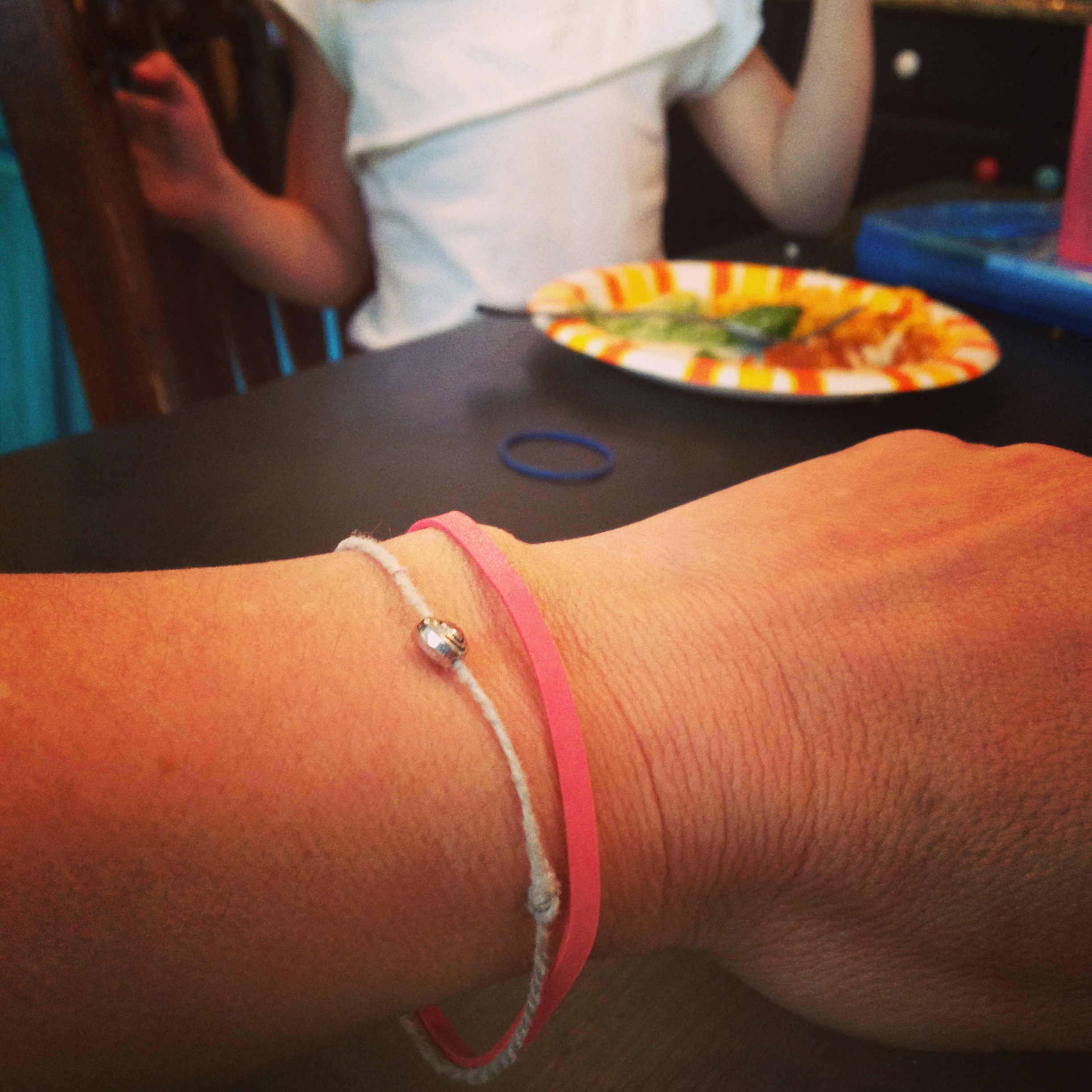
I handed everyone at the table a rubber band and told them to put it around their wrists like a bracelet.

We slipped it on as we finished dinner and I read these instructions from our dinner time devotional:  Every time you grumble or complain, snap your rubber band. 

photo

The day before we memorized John 6:43, “Stop grumbling among yourselves.”

Guess who got the first “pop?”

My kids laughed as the first complaint rolled off my tongue just minutes after reading our assignment. I wasn’t even trying to show them an example of what not to do. I didn’t even know I was going to grumble about cleaning up our dinner mess. Because sometimes complaining is just our second nature.

Ouch.

I rubbed my wrist and watched my words.

We all did. Our 24 hour experiment proved to leave our wrists a little tender and our tongues a little more controlled.

We were listening for the bemoaning and bellyaching. We pointed out when we heard each other complain.

The most important thing this experiment did? It made us think before we spoke. It made us more aware.

Grumbling comes too easy. And when we try not to do it, we see how often we whine or complain–about each other, about our situations, about what we have and what we don’t.

When we really get a good look at what’s underneath all those negative words, we find ingratitude.

Because let’s face it:  we probably all can find something to gripe about. But when we think before we speak, we can always find something to be thankful for.

the happiest people

Try this simple lesson today (and if rubber bands won’t work for you, keep tally marks on the kitchen calendar or cheerios around a yarn bracelet and break one off with every complaint).

 Here’s what a lesson in complaining less does for all of us:

1. It forces us to admit how often we grumble or whine or speak negatively about ourselves or others

2. It causes us to think before we speak

3. It gives us the opportunity to choose gratitude over grumbling.

And while this lesson won’t necessarily rid our homes of complaining (ask me how I know), it will certainly give us something to (think) and talk about.

Core Values are what drive our best practices in life. These values are at the heart of healing for Ron Huxley and are evident in his work with families:

Healing occurs in “family”. The family is the primary healing agent for change. Children cannot be “fixed” but must be treated as powerful, creative people that must learn to live with other powerful, creative people called “family.” Family can look like many positive things.

Healing is Wholeness. Healing isn’t just about coping with problems, it is about being whole in mind, body, and spirit. It involves and impacts all three areas.

Healing looks like something. It should be noticeable, practical, and agreeable. It involves a change of heart as well as behavior. It is a measurable process.

Healing focuses on our strength’s. Healing builds on what is already working… It focuses on doing more of what works and less of what doesn’t.

Healing is multi-sensory and experiential. It uses all the senses and can involve storytelling, drama, movement, and art.

Healing occurs when a “false belief” is replaced with a “true belief”. A false belief is the real root of the problem, not the behavior. Behaviors are the fruit of your beliefs. Once the false belief is discovered, a true belief must take its place.

Healing is inherent in identity. You can choose what you belief about yourself and not what your situation suggests or others say about you. Once you know your identity you will know your needs and your boundaries.

Healing always involves truth. It comes form understanding “all there is to know” about the story of you. Even young children can handle truth when shared in a developmentally appropriate and caring way. Truth brings freedom from pain.