Blended Family Issues (Video)
Blended families are the majority of families in America. This is a hard hitting but truthful look at the issues of blended families…
(Source: https://www.youtube.com/)
Blended families are the majority of families in America. This is a hard hitting but truthful look at the issues of blended families…
Step 1: Start with Self-Regulation
Dr. van der Kolk: I would say the foundation of all effective treatments involves some way for people to learn that they can change their arousal system.
Before any talking, it’s important to notice that if you get upset, taking 60 breaths, focusing on the out breaths, can calm your brain right down. Attempting some acupressure points or going for a walk can be very calming.
Dr. Buczynski: So this is learning to modulate arousal?
Dr. van der Kolk: Yes, and there’s alarmingly little in our mainstream culture to teach that. For example, this was something that kindergarten teachers used to teach, but once you enter the first grade, this whole notion that you can actually make yourself feel calm seems to disappear.
Now, there’s this kind of post-alcoholic culture where if you feel bad, you pop something into your mouth to make the feeling go away.
“The issue of self-regulation needs to become front and center in the treatment of trauma.”
It’s interesting that right now there are about six to ten million people in America who practice yoga, which is sort of a bizarre thing to do – to stand on one foot and bend yourself up into a pretzel. Why do people do that? They’ve discovered that there’s something they can do to regulate their internal systems.
So the issue of self-regulation needs to become front and center in the treatment of traumatized people. That’s step number one.
Step 2: Help Your Patients Take Steps Toward Self-Empowerment
The core idea here is that I am not a victim of what happens. I can do things to change my own thoughts, which is very contrary to the medical system where, if you can’t stand something, you can take a pill and make it go away.
The core of trauma treatment is something is happening to you that you interpret as being frightening, and you can change the sensation by moving, breathing, tapping, and touching (or not touching). You can use any of these processes.
It’s more than tolerating feelings and sensations. Actually, it is more about knowing that you, to some degree, are in charge of your own physiological system.
There needs to be a considerable emphasis on “cultivating in myself,” not only as a therapist, but also as a patient – this knowing that you can actually calm yourself down by talking or through one of these other processes.
So, step number two is the cultivation of being able to take effective action. Many traumatized people have been very helpless; they’ve been unable to move. They feel paralyzed, sit in front of the television, and they don’t do anything.
“Programs with physical impact would be very, very effective treatments.”
Programs with physical impact, like model mugging (a form of self-defense training), martial arts or kickboxing, or an activity that requires a range of physical effort where you actually learn to defend yourself, stand up for yourself, and feel power in your body, would be very, very effective treatments. Basically, they reinstate a sense that your organism is not a helpless (tool) of fate.
Step 3: Help Your Patients Learn to Express Their Inner Experience
The third thing I would talk about is learning to know what you know and feel what you feel. And that’s where psychotherapy comes in: finding the language for internal experience.
The function of language is to tie us together; the function of language is communication. Without being able to communicate, you’re locked up inside of yourself.
“Without being able to communicate, you’re locked up inside of yourself.”
So, learning to communicate and finding words for your internal states would be very helpful in terms of normalizing ourselves – accepting and making (the communication of internal states) a part of ourselves and part of the community. That’s the third part.
Step 4: Integrate the Senses Through Rhythm
We’re physical animals, and to some level, we’re always dancing with each other. Our communication is as much through head nodding and smiles and frowns and moving as anything else. Kids, in particular, and adults, who as kids were victims of physical abuse and neglect, lose those interpersonal rhythms.
“Rhythmical interaction to establish internal sensory integration is an important piece.”
So, some sort of rhythmical interaction to establish internal sensory integration is an important piece that we are working on. With kids, we work with sensory integration techniques like having them jump on trampolines and covering them with heavy blankets to have them feel how their bodies relate to the environment because that’s an area that gets very disturbed by trauma, neglect, and abuse, especially in kids.
For adults, I think we’ve resolved rhythmical issues with experiences like tango dancing, Qi Gong, drumming – any of these put one organism in rhythm with other organisms and is a way of overcoming this frozen sense of separation that traumatized people have with others.
Dr. Buczynski: These are four keystones that can make healing from trauma faster and more effective. In order to give patients the best chance for recovery, consider these steps as you plan your interventions and treatments.
– See more at: http://www.nicabm.com/bessel-van-der-kolk/confirmed/?del=7.8.15BesselLMtoall#sthash.tU3FljBE.dpuf
Some people call them the “black sheep” of the family and are content to let them stay that way. Others try to change them and take them to psychologists and doctors. A few give up on them all together. This child is the “identified problem child” and many homes spend a lot of time and energy dealing with the member of the family. This rebellious, acting out child is most often seen in dysfunctional homes, where substance or physical abuse is taking place. The identified problem child serves a very important role in this type of family by balancing out the imbalance and protecting the abusive parent from outside interventions. In a lesser degree, even nonabusive families have children who cause more stress and trouble than other children in the home. This child resists parent’s efforts at discipline, is constantly mischievous, and appears to enjoy the attention that getting into trouble provides.
Family therapists have determined that the symptoms of the “identified problem” child are often a reaction to the family’s state of imbalance. This imbalance can be anything from severe abuse to a mild family stressor, such as the illness of a parent or the loss of fathers job. The negative behavior of the “identified problem-child” may be an effort, albeit unconsciously, to alleviate the families pain. The child becomes a stabilizing force to reduce stress and thereby return the family to its previous state of balance, even if it is an imbalanced one. A teenagers acting out, a school-age child’s poor grades, a young child’s temper tantrums — all may be efforts to stabilize an unstable system.
Thomas was an “A” student up until his parents announcement of their divorce. Suddenly, he began getting failing grades on his school report card. Fortunately, his parents recognized this behavior as a reaction to their devastating news and brought him in for therapy. After some time, Thomas’ bad grades were more than his depression over mom and dad’s split. They were also a way for him to save his parent’s marriage by forcing them to focus on him and away from the pain of the divorce. He overheard his parents saying that they would have to come to the school together to talk to his teacher. This was a glimmer of hope, however feeble and small, that he could influence his parent’s decision.
Many parents react to the behavior and not to the underlying family system issues that might be taking place. This is because, for many parents, it is easier to use the child as a scapegoat then focus on their own issues and problems.
Susan was an overly aggressive child. She was kicked out of several preschools and was finally referred to a therapist when she viciously bit another child, drawing blood. The doctor recommended medication, but at 4 years of age, the parents felt something else might work. Over time, it was found that Susan hurt other children to express her own feelings of being hurt. Due to her poor communication skills, she demonstrates her own internal state by aggressively acting out the role of “I hurt, therefore I will hurt others.” Her biological father had abandoned Susan when she was just a baby and her mother had recently married another man that Susan didn’t like. Her mother never saw the rejection as a reason for her behavior because she was so young when the biological father left.
When children are misbehaving they are said to be “acting out.” What is the child acting out, exactly? According to family systems theory, they are acting out the family’s pain. Stated another way, when the family experiences sudden change, for better or worse, and members undergo stress, the “problem child” pops up ready to stabilize the family system. Parents who are able to read their child’s behavior in this way will be able to help them express it in a more positive manner and cope with their “big” feelings or anger, frustration, and loss.
In some cases the best way to deal with the “child’s problem” is to include the whole family. Obviously, the child is not the real problem anyway and the whole family is affected by, and affecting, the child’s behavior. The first task of the family is to unmask the real problem and relabel it as a family issue versus a child centered one. This can be difficult, as other members of the family may have to share some of the blame and resist stepping down from the ideal child or parent pedestal. The next task is to find family focused solutions to the problem. This might involve improving family communication, adjusting family boundaries and rules, and renegotiating family activities.
In the case of Thomas, the parents did not get back together but they did increase their involvement with him and reassure them of their love for him, regardless of the divorce. It took a while for his grades to improve but with patience and cooperation they were able to get them back to normal. With Susan, the family started more family oriented activities and had the new father pick her up from preschool a couple of times a week to spend some one on one time together. This helped her feel connected to the new dad, lessening the hurt she felt from her biological father. With time, she started calling this new person “dad” and her aggressiveness completely stopped.
Not all children act out because of internal struggles but it does occur frequently enough that parents need to look for this as a possible explanation for their child’s behavior. They will have to set aside their own issues and struggles to accomplish this and that could be a difficult thing for many. Family members may need to redraw family roles and responsibilities, and change, even in the best of circumstances, is a difficult experience. The intervention for identified problem children is to look at the entire family system. Sometimes, the problem is bigger than we think!
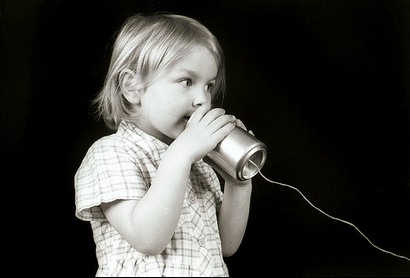
One of parents main goals is to improve communication in the home. Unfortunately, what they really mean is they want the child to “listen” to them and cooperate with their “instructions.” Communication is two-way. It requires parents to listen as well as be listened to. More importantly, parents cannot judge or shame a child’s efforts to communicate when they express their opinions. Either you value communication or your don’t. Back up your values with your actions. The good news is that communication doesn’t need to be learned. It needs to be protected. If parents will allow their children to talk and feel heard then they will talk more. If parents allow conversation to be two-sided and value their children’s thoughts, even if is immature and irrational, then parents will have the opportunity to “speak into” their child’s life. Don’t waste time lecturing, criticizing or showing children the error of their thoughts. That shuts down communication FAST! Try this talk tool the next time your child opens up. Say: “That is interesting. Tell me more!” and just listen…

by Adam Pertman
Source: http://www.huffingtonpost.com/adam-pertman/a-new-organization-and-a-new-focus_b_6543152.html
Finding safe, permanent homes for children in foster care – usually through adoption when they cannot return to their families of origin – has become a federal mandate and a national priority during the past few decades. That’s obviously a very good thing, but there’s a too-little-discussed downside to this positive trend: Far too little attention is being paid to serving children after placement to ensure that they can grow up successfully in their new families and so that their parents can successfully raise them to adulthood.
Notice the use of the word “successfully” twice in the last paragraph. It’s the key. It’s also the founding principle of a new organization I’m proud to lead, the National Center on Adoption and Permanency (NCAP). Our mission is to move policy and practice in the U.S. beyond their current concentration on child placement to a model in which enabling families of all kinds to succeed – through education, training and support services – becomes the bottom-line objective.
Along with fellow NCAP team members, I’ll be writing more about our organization and its goals in subsequent commentaries. For now, please check out our website and know we are already at work around the country. Furthermore, I’m delighted to announce that we’re entering into an exciting new partnership designed to significantly enhance our efforts; it is with the American Institutes for Research, one of the world’s largest behavioral and social science research and evaluation organizations. In addition, we are partnering with the Chronicle for Social Change, which like NCAP is dedicated to improving the lives of children, youth and families.
Because of the traumatic experiences most children in foster care have endured, a substantial proportion of them have ongoing adjustment issues, some of which can intensify as they age. And many if not most girls and boys being adopted from institutions in other countries today have had comparable experiences that pose risks for their healthy development.
Preparing and supporting adoptive and guardianship families before and after placement not only helps to preserve and stabilize at-risk situations, but also offers children and families the best opportunity for success. Furthermore, such adoptions not only benefit children, but also result in reduced financial and social costs to child welfare systems, governments and communities.
A continuum of Adoption Support and Preservation (ASAP) services is needed to address the informational, therapeutic and other needs of these children and their families. The overall body of adoption-related research is clear on this count: Those who receive such services show more positive results, and those with unmet service needs are linked with poorer outcomes.
(Next June, the first national conference in over a decade to focus on ASAP – which many in the child welfare community believe is the most important issue facing their field – will take place in Nashville, TN. NCAP is among the many sponsors; learn more about the event here.)
Our nation has made a concerted effort to move children into adoption and other forms of permanency because, from research and experience, we understand their value for girls and boys who cannot remain in their original homes, a value rooted in the belief that all of them – of every age – need and deserve nurturing families to promote optimal development and emotional security throughout their lives. Indeed, while child welfare systems in many states are still experiencing a variety of problems, it’s also the case that a combination of federal funding and other resources has made a significant difference – that is, they have contributed to a huge increase in the number of children moving from insecurity into permanency over the last few decades, from about 211,000 in FY 1988-1997 (an average of 21,000 annually) to 524,496 in the 10-year period ending in FY2012 (over 52,000 annually).
Furthermore, an analysis conducted by the Donaldson Adoption Institute indicates that, as a nation, we have made some progress in developing ASAP services, particularly in 17 states rated as having “substantial” programs. At least 13 states, however, have almost no specialized ASAP programs, and even the most developed of them often serve only a segment of children with significant needs. For example, many of the specialized therapeutic services have limits in duration or frequency or serve only children with special needs adopted from foster care in their own states, and some serve only those at imminent risk of placement outside their homes.
To enable families to succeed, ASAP services must become an integral, essential part of adoption. Just as the complex process of treating an ongoing health issue requires continuing care, as well as specialists who understand the complications that can arise and how to best address them, the adoption of a child with complex special needs requires specific services and trained professionals to address the challenges that arise over time.
When families struggle to address the consequences of children’s early adversity, they should be able to receive – as a matter of course integral to the adoption process, and not as an “add-on” that can be subtracted – services that meet their needs and sustain them. Adoptive families, professionals, state and federal governments, and we as a society share an obligation to provide the necessary supports to truly achieve permanency, safety and well-being for the girls and boys whom we remove from their original homes.
Given the profound changes that have taken place in the field today, especially the reality that most adoptions in the U.S. are of children from foster care with some level of special needs, permanency for them should focus on more than just sustaining their original families when possible or finding new ones when necessary. We must also provide the resources and supports that will allow them to – here’s that word again – succeed.
Get more information at http://www.nationalcenteronadoptionandpermanency.net

Regulation vs. Resolution
by Ron Huxley, LMFT
Are you trying to build or rebuild the family of your dreams? Needs some parenting tools to remodel your relationships. Let Ron Huxley and the ParentingToolbox blog help you this New Year.
Instead of figuring out your parenting resolutions, work on relationship regulation. Regulation is defined as “a set of rules maintained by an authority figure” and “a process of self-management and control.” Modern parents are plagued with homes that are out-of-control and find it impossible to enforce a set of rules in the home. This is the new season for regulation and not for a new list of tasks to increase this or decrease that behavior problem.
Resolutions focus on the person and not the problem. Regulation is a co-relational strategy between parent and child that is based on scientific research in the fields of attachment and developmental neuroscience.
Follow this blog as Ron Huxley gives you new tools for this new season of regulation and find more family connection. Hey, tell a friend too 🙂

A recent article by Scientific American reviews desperate attempts to change unruly teen behavior around. One of the toughest challenges is to reach an adolescent who is angry, defiant and acting out in destructive ways. Confrontational strategies and harsh punishment, the article explains, has only short-term benefits. No studies prove lasting results from this type of “scared straight” intervention. So what does work? The article ends with this summarization:
“results show that merely imposing harsh discipline on young offenders or frightening them is unlikely to help them refrain from problematic behavior. Instead teens must learn enduring tools—including better social skills, ways to communicate with parents and peers, and anger management techniques—that help them avoid future aggression. Several effective interventions do just that, including cognitive-behavior therapy, a method intended to change maladaptive thinking patterns and behaviors, and multisystemic therapy, in which parents, schools and communities develop programs to reinforce positive behaviors. Another well-supported method, aimed at improving behavior in at-risk children younger than eight years, is parent-child interaction therapy. Parents are coached by therapists in real time to respond to a child’s behavior in ways that strengthen the parent-child bond and provide incentives for cooperation [see “Behave!” by Ingrid Wickelgren; Scientific American Mind, March/April 2014].”
What can you do to strengthen your bond with your child? How can you reach his or her heart, locked behind a wall of pain and anger? Don’t expect overnight miracles. Turning your defiant teen around will require consistency and continual micro-shifts of change in you and your child. You will probably blow it on days and be exhausted from the effort on others. This is a marathon, not a sprint. Focus on who the child will be and not on who they have been or what they are doing. Consequences are natural and necessary. Boundaries are even more important! Just don’t equate your love with positive behavior. Nothing your child does should make you love him or her any less and nothing can make you love them more. Love just is…

Dear ANGER Diary
by Ron Huxley, LMFT
Have you ever kept a diary? Maybe as a child you did. I still do although I am not as diligent with it as I used to be. Using a diary is a simple way to manage your anger. Anger triggers and solutions are very predictable. Unfortunately, we miss the clues to both of these anger management tips and continue to repeat the negative process of outburst and tantrums.
Every day for two weeks, write in a diary using this four step anger management process:
1. List what made you angry.
2. List how angry it made you feel on a scale from 1 to 10, one being cool and calm and 10 being a major rage.
3. Put a plus sign (+) down if you handled it well and a minus sign (-) if you didn’t.
4. Write what you will try next time this situation presents itself.
After two weeks are over go back and see what you have learned. You will be surprised by how much info you gathered in a short time and how much insight and change you have accomplished.
Get more help on anger management by Ron at http://inner-healing.tumblr.com/anger

Dream Parenting Project: I Choose You
All families have disagreements and fights. It is easy to get into polar opposition toward one another and the result can be feelings of hurt and loss. How do you build a dream family when these painful elements exist? You make a choice! You choose one another despite the hurts. Of course, you work to change that negative atmosphere and you must have boundaries and even consequences for certain behaviors but you still make a choice to connect. Take a moment today to tell a family member: “I choose you.” If it is not safe to say it aloud, at least, say it to yourself when you are thinking about that person and how they wronged you. Again, set good boundaries and make positive, safe behavioral choices but make a choice to connect by taking your will to task and declaring: “I choose you."

Dreaming is difficult when we have had disappointments. We can give up on our dreams for a healthier, happier family because it hurts too much to put our hearts out there again. Living without a dream is a dry, empty place to be as well. What is the answer? Must you take a risk again and be hurt again? That might be the answer for some but not for others. Take a risk to look at the dream itself. What was it that birthed it in the first place? How can you take parts of it and pursue hope in that direction if you feel the direction you have been going is shut? Who can be your audience of appreciation for your efforts and support you in your new journey? Maybe a new dream needs birthing that meets the underlying need of the original dream. The point is, don’t give up dreaming just because one dream, for your family, has stopped. Mourn the loss of it but allow life to bring you a new one…
 Ron Huxley LMFT