Page 5 of 6

Transracial Adoption

One of the many challenges for transracial adoptees is that “they are, but they aren’t.” They are Asian or African or Russian but they aren’t. They are American but they aren’t. They are a son or daughter but they aren’t… There are people who look like be but I have nothing in common with them. There are people here who don’t look like me that I do have things in common. Often the adoptee must adapt to the new culture. Rarely does the family adapt to the cultural needs of the child. A level of ignorance occurs in order to function happily. Who champions the child’s cultural issues and needs? What messages are communicated to the transracial adoptee? You must change to our way of thinking and living or we change toward each other? 

Support National Adoption Day Nov. 23
CWLA

Help support National Adoption Day on Nov. 23. This national effort to raise awareness of the more than 100,000 children in foster care waiting to find permanent, loving families is an annual, one-day event celebrated the Saturday before every Thanksgiving. It honors families who adopt, encourages others to adopt children from foster care and builds collaboration among local adoption agencies, courts and advocacy organizations. Find out more at http://www.nationaladoptionday.org

International Adoption: a local family’s story of growing By Stephanie Robusto CONWAY, SC (WMBF) – After reading about the orphan crisis in Africa, it didn’t take the Crawford family long to decide to adopt from Ethiopia. But their journey is far from over. “Our motivation was never if we could have biological or not, it was more than that,” explained Victor Crawford, the proud father of two boys. They explain part of their reason was simple human nature. “We evaluated what our faith really looks like in the real world. Showing compassion and love, that’s our motivation,” said Crawford.

Another reason for adopting internationally came from Crawford spending time abroad during a mission trip. Adoption wasn’t something the couple originally planned on. But spending time in the orphanages of Honduras opened their eyes to an international need. “They have basic needs; a roof, food, and love. We want to provide that,” said Crawford. Now, the Crawford’s are defining what it means to be a blended family. They adopted their first son, Josiah, from Guatemala when he was about 4 years old. A few years later, they had a biological son named Miles. Biological or not, the two boys are brothers. They want to continue growing their blended family. “When Miles got to the age where we thought we could handle another one, we thought ‘let’s start this journey, start this process again,"explained Crawford.

That journey first began here in the states, with the Crawfords trying to adopt in America. "But after three years of no placement, we decided to move forward again with international,” explained Victor’s wife, Robin Crawford. When they learned about the need in Ethiopia, the couple decided to double their family. “We found two brothers, two siblings who needed a home,"said Crawford. "The oldest is 8, the youngest is 3. They’ve been in an orphanage for about 8 months. Their biological father passed away,” explained Mrs. Crawford. Legally, the two boys are already part of the family. But it will be weeks until they are united as a family under one roof.

The waiting has Robin Crawford feeling like an expectant mother. It’s hard for her knowing they are her babies, but she doesn’t have them home with her, yet. “It’s very difficult, it’s something that consumes you all the time,” she expressed. The family recently met the brothers in Ethiopia. They are waiting for the U.S. Embassy to decide a date they can go back again, and hope this time, the boys will be coming back home with them.

To read more about the family, visit their website here:CrawfordsJourney.com Copyright 2013 WMBF News.All rights reserved. Share: / /

Adoption Parties’ Help Form New Families:

According to the British Association for Adoption and Fostering (BAAF), at one recent activity day event in Kent 34 out of 54 children found possible links to new foster parents.

The events are designed for people who are already well advanced in the adoption process.

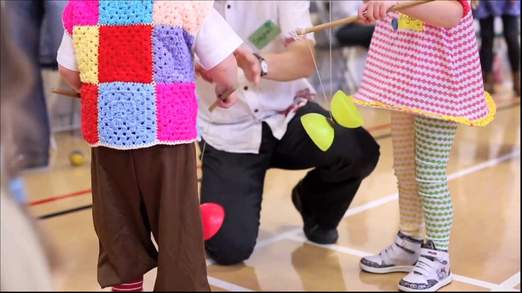
They get to meet children at play while the youngsters enjoy face, painting, climbing and other activities.

The children’s foster parents or social workers attend the event to support them.

It is part of a scheme to help speed up the process and find adoptive parents for those children who may be more difficult to place.

More than 6,000 children are going through the adoption process with only 1,800 prospective parents approved and waiting for a child.

White Sugar, Brown Sugar Blog shares some balance views of open adoption options…

We have a range of open adoption experiences and of birth parents.    In one case, both birth parents are involved in an ongoing relationship.  In one case, it’s a biological brother and his adoptive family, with occasional contact with birth mom.  In one case, we have contact with birth mom and some extended birth family.   

No one-size-fits-all.

My motto in adoption is this:   don’t make choices out of fear; make them out of education.   

I have gobs of resources listed on this blog and in my book.  I hope you’ll check them out.

When we are asked why we chose open adoption, I often share these things:

1:  Who are we to keep our children from their biological family members when these individuals pose no harm to our children?

2:  Why shouldn’t our children have access to as much information as they will want/need in the future, information we, as their adoptive parents, cannot provide them?

3:  Why should we not have access to family health history which can help us better meet our children’s needs?

4:  Why should our kids’ birth families not have access to updated information and photos of the children they gave life to and love?

Also, something to consider, is that if you, as an adoptive parent, are insecure in your position in your child’s life, that is unhealthy for your child and unhealthy for your emotional health.    Your child will eventually understand that you were the gatekeeper in his/her life, either fostering or diminishing the access the child could have to his/her biological family.

So ask yourself:

1:  Will the birth parents cause harm to the child?   

2:  Are the birth parents supportive of you as the adoptive parent (meaning, they respect your role as the child’s primary parents)?

3:  What is going on with me, emotionally, that I’m holding back from open adoption (and anything, really, adoption related)?   Where can I seek help for these issues?

4:  Does the child want a relationship with his/her biological parent?   Or, if my child is very young, would the birth parent knowing information/seeing the child bring the birth parent joy, peace, and assurance?

Open adoption is not an easy option.  In fact, it can be quite uncomfortable for everyone involved at times, or even for many seasons.  But …

The Ambiguous Loss Syndrome

Ambiguous Loss

Have you ever lost something you know still exists? Perhaps it was an old picture, a sentimental letter or your favorite pair of shoes. Initially, you search and search for the item but you cannot recover it. It eats away at you, day after day, until you are lucky enough to be reunited with it. When this happens, you give a big sigh of relief, the panic eventually subsides and you move forward with your life.

This same scenario can apply to children in the foster care system. They have been separated from what is most precious to them, their families. They know that their family members still exist, but they cannot live with them. Clearly, those children who are reunited with their families feel a great sense of relief. The children who remain in care hold onto the hope of reunifying with their families as long as they are in foster care. Their losses are unresolved.

Ambiguous loss is also known as an unresolved loss. Boss, 1999, defined ambiguous loss as the grief or distress associated with a loss (usually a person or relationship) in which there is confusion or uncertainty about the finality of the loss. There are two types of ambiguous loss:

1. When the person is physically present but psychologically unavailable. An example of this might be when a child’s parent has a mental health diagnosis or a substance use issue that makes him/her emotionally unavailable to meet the needs of the child, even if that parent is physically present.

2. When the person is physically absent but psychologically present. Examples of this would be when a child does not live with a parent due to divorce, incarceration, foster care or adoption (Boss, 1999).

For children in foster care, ambiguous loss occurs over and over again and is very difficult to process. Children who enter foster care often lose contact with their birth parents, their siblings, other family members, friends and their physical surroundings. They enter uncertain situations and are left wondering if the separation from their biological families will be permanent or temporary. Frequently, the biological family stays psychologically present in the child’s mind, even though the biological family members are not physically present. While in care, many foster children fluctuate between hope and hopelessness with regard to reunification. This is due to the ambiguous loss, which causes them to block themselves from forming healthy attachments to their new foster families. To gain a better understanding of a foster child experiencing an ambiguous loss, consider the example of this 11-year-old boy who was in foster care:

I knew that my mom kept thinking about getting us back and that helped me hang on. She told me she wanted us back. I just could never give up on my mom even though she did so much stuff. I know no matter what she put me through she still loved me. There was no way I was going to call my foster mother Mom. I got a mother. At times my mom said she couldn’t stop thinking about us and wanted to kill herself because she wasn’t with us. I thought one day she will come back and get me, wake up and realize what she did wrong. After all the pain you go through you hope there is happiness waiting for you in the end (Manuel, age 11).

Nationally, there are 463,000 children in foster care, 49% of whom are slated for reunification with their biological parents. With this in mind, it is essential that professionals working with foster children and foster parents understand the concept of ambiguous loss and work with their clients to create more stable relationships between foster parents and their foster children (www.childwelfare.gov).

How Foster Parents Can Cope Ambiguous loss can be difficult for many foster parents to comprehend if they do not have a clear understanding of its role in the foster child’s life. As outsiders, we expect the foster child to be as angry as we are at the biological parents who caused them pain. We cannot understand why the children want to have anything to do with their biological parents after being treated so badly. This may be our reality, but it is not the foster child’s reality. Extreme loyalty remains between the child and the biological family members, and hope of returning home is kept alive by phone contact or visits with biological parents who tell them that they are attempting to regain custody. These statements by parents underscore for the children that reunification is not a fantasy; it can be a reality. Since the loss is unresolved, the children find it very difficult to detach from their biological parents and attach to a new caregiver; their parents are still very much alive.

Foster parents can ease the transition for themselves and their foster children by recognizing the symptoms of ambiguous loss prior to the child entering the home. These symptoms often include: Difficulty with changes and transitions, even seemingly minor ones like sleeping in a new bed Trouble making decisions Feelings of being overwhelmed when asked to make a choice Problems coping with routine childhood or adolescent losses (last day of school, death of a pet, move to a new home, etc.) A sort of learned helplessness and hopelessness due to a sense that he has no control over his life Depression and anxiety Feelings of guilt Fear of attachment Lack of trust

(www.nacac.org). Foster parents can also help alleviate the ambiguous foster child’s anxieties and fears and create a healthy attachment by:

Acknowledging that the foster child’s biological family still exists; denial can be a real enemy. Not taking sides but spending time exploring the foster child’s feelings if he is open to this.

Giving a voice to the ambiguity – give a name to the feelings of ambiguous loss and acknowledge how difficult it is to live with this ambiguity.

Learning to redefine what it means to be a family, both foster and biological. Giving your foster children permission to have feelings about being separated from their family of origin without feeling guilty.

Helping the child identify what has been lost (the loss may not be limited to the actual parent – loss could also include the membership of that extended family, the loss of the home or town, the loss of having a family that looks like them or the loss of their family surname.

Create a “loss box.” In her work with adopted adolescents, therapist Debbie Riley guides youth as they decorate a box in which they place items that represent things they’ve lost. This gives them both a ritual for acknowledging the loss and a way for them to revisit the people or relationships in the future.

Creating a life book and writing in the birthdays and names of their biological family members. Understanding that sometimes certain events trigger feelings of loss, such as holidays, birthdays or the anniversary of an adoption.

Alter or add to family rituals to acknowledge the child’s feelings about these important people or relationships that have been lost. For example, adding an extra candle representing the child’s birth family on his or her cake may be a way of remembering their part in your child’s life on that day.

Don’t set an expectation that grief over ambiguous loss will be “cured,” “fixed” or “resolved” in any kind of predetermined timeframe.

Explain that feelings related to ambiguous loss will come and go at different times in a person’s life and provide a safe place for the child to express those feelings (www.nacac.org).|

In addition to unconditional love, the best gifts that anyone can give a foster child coping with an ambiguous loss are patience, honesty and acknowledgement.

References Boss, P. (1999), Ambiguous Loss. Learning to live with unresolved grief. Cambridge, MA. Harvard University Press. National American Council on Adoptable Children. (2011). Retrieved October 2, 2010, from www.nacac.org/links.html

Share your thoughts on this issue by posting your comments on http://www.facebook.com/parentingtoolbox
Transracial Adoptions

Based on the book by Amy Ford

Helping adoptive parents with advice and experience in raising children of different ethnicity.

Top 10 Things White Parents Need to Know When Raising African American Children

  1. Darker skin is drier than lighter skin
    Expect to use a generous amount of lotion daily. Find a brand with the least amount of water content in order to maximize the amount of hydration.

  2. Sandboxes are not your friend
    Sandboxes are not your friend It takes an enormous amount of time and effort to remove sand from your child’s hair. Avoid the sandbox until you are ready for the challenge.

  3. Limit Your Child’s Exposure to Water 
    Your child’s hair is naturally dry and washing their hair as often as you wash your own will cause the hair to dry even more and break. Hair washing once per week is fine.
  4. Hair is Huge 
    Your child’s hair is nothing like your own. Your child’s hair is nothing like your own, don’t treat it as such.
    • Wash weekly with a hydrating shampoo
    • Condition, Condition, Condition
    • Oil
    • Comb for boys, brush for girls
    • Silk Scarf for girls overnight

  5. Do what it takes to master the hair 
    The hair of a minority child is an expression of cultural pride and is directly linked to self-esteem.
  6. White Privilege 
    You have it, your child doesn’t. White privilege is the undeserved, unprompted advantages afforded to whites in this country in the areas of banking, education, and society.

  7. Decisions, Decisions, Decisions 
    Not everyone in your life will support your decision to parent a child of a different race. You may lose some friends or family members. Can you handle it?
  8. Be prepared to become a minority
    Adopting a child of a different race automatically moves you into minority status. Gone are the days of being anonymous. Prepare yourself for the attention coming your way. It is helpful to practice how you will respond to questions about the unique nature of your family. Decide as a family how much information you are comfortable sharing. 

  9. Racism is wide spread in this country in ways that may not be visible until you accept a child of a different race into your family. It may take a while for you to feel it or see it, but your child will feel it immediately. It is part of his every day experience. Don’t pretend it isn’t happening. Embrace the differences and celebrate the likenesses. 
  10. Your African American child has needs you cannot meet. It truly takes a village to raise a child and never has it been truer than in raising one of a different race. Your child has physical, cultural, and emotional needs that you cannot meet without taking the time to build a support system. Look to churches, sports teams, parenting groups, child care workers, teachers, and play groups for support.

Ron Replies: I am currently working on a seminar on Adoption Clinical Skills concerning transracial adoptions and thought this could be helpful to prospective adoptive parents.

The Mind-Body Connection in Fertility & Pregnancy by Marcy Axness, PhD

One of the biggest challenges we face in creating the lives we want is that our basic attitudes and perceptions of the world were shaped in the earliest days, months and years of our lives, long before we had a chance to form our own opinions! Through the process of “implicit learning,” wordless messages and lessons accrue via repeated experiences within our key relationships, as non-verbal regions of our brains distill the constant principles underlying those experiences. For example, you’re a baby, and you’re hungry. You cry, and before too long someone picks you up, soothes you, and feeds you. As this happens again and again, some of your “perception templates” become shaped from the principles I have an effect on my world… People are there for me… I can trust… Being close to someone feels safe. Our basic understandings of who we are and what the world is all about are a series of “neural perception templates” that were shaped for us, by our earliest experiences with the people and world around us.

Fertility

Women are almost never told how their family histories,
beliefs, and emotions 
affect their fertility. Knowing this
information can be very empowering.
– 
Dr. Christiane Northrup, renowned OB/GYN
Author, Women’s Bodies, Women’s Wisdom

It is also true that some of our most potent attitudes about our reproductive capabilities are formed decades before we decide to begin a family! And in this exciting era of psychoneuroimmunology (mind-body) research, we are discovering how our hormonal, immune, and nervous systems are intimately connected with and influenced by our every thought, attitude and emotion, even ones we’re not aware of having. Along with parental attitudes about the body and its creative functions, as young children we perceive and internalize basic attitudes about such things as

• how babies come into our family (with ease, difficulty, crisis, etc.)

• whether children are loved and valued in our family

• whether it’s safe and desirable in our family to have a childwhether it’s safe and desirable in our family to be a child

Our endocrinology (hormonal profile), so critical to healthy fertility, organizes to “enact” whatever our mental and emotional perceptions dictate. (For example, a hypnotized subject touched on the forearm with a piece of chalk—but told it’s a lit cigarette—develops a raised, red “burn”; and study subjects given a harmless substance, but told it is something to which they’re highly allergic, suffer asthma attacks.) Furthermore, research finds that our healthy mind-body balance is especially affected by “feelings we don’t feel,” unconscious emotions often related to unrecognized neglect, trauma or loss in childhood. Here are two examples of this at work in women who went on to have healthy, full-term babies:

Ellyn* had been trying for a long time to get pregnant, and though there was nothing medically wrong, it just wasn’t happening. An adoptee, Ellyn had wordlessly learned a fundamental mind-body lesson throughout her growing-up years: women in our family don’t get pregnant. After working with a counselor to consciously reconnect with and “claim” the fertile part of her past—her birth mother whom she had met some years earlier—Ellyn was finally able to conceive.

Maya suffered repeated miscarriages, and her doctor could find no physical cause. In charting her family history it became painfully clear that she and her sister had been “throwaway” children, left behind in their native country when their parents emigrated seeking a better life in America. Maya gradually came to understand how she was reenacting—in a classic mind-body way—what her mother had done: she allowed herself to get pregnant but then “gave the children away.”

Sometimes inner shifts happen more spontaneously and mysteriously. We have all heard stories about “infertile” couples who spent many years and thousands of dollars on reproductive technologies with no success, adopted a baby, and then conceived naturally by surprise. People who offer infertile couples the infuriating advice “Just relax!” point to these stories as evidence for their theory. Yes, hopping off of the “conception-go-round” may have decreased stress and nudged their hormonal profile into a more conception-friendly zone, but it may also have to do with their biology adjusting to reflect their new feelings, behaviors and devotions: they had become fully engaged in mothering and fathering.

One of my favorite stories is of a 43-year-old woman who, after a year of grueling rounds of IVF, two miscarriages, and the final, dismal “expert diagnosis” that she was too old and “all of her eggs were bad,” decided to get some cats. She got her cats and “smothered them with unconditional love.” Six months later she was pregnant with her son, who is now a healthy 8-year-old.

It may be important to do some inner investigation into the invisible answers you may be carrying to basic questions about how fertility, pregnancy, birth and children were perceived in your family of origin, so that you can journey ahead into those realms fully free, right down to your biochemistry, and make the healthiest choices. (As a bonus, engaging in the creative process of mastering your own inner life is the best preparation not just for conceiving a baby, but for parenting in general!)

Once we realize how we carry on a continual dialogue with our biology—consciously and unconsciously—we can aspire to cultivate an inner ecology that is truly fit for life.

Pregnancy

Scientists now know that a pregnant woman’s moods have a significant impact upon birth outcomes and on fetal brain development. Statistically speaking, women experiencing significant, chronic** fears and anxiety about their pregnancies are at higher risk for delivering prematurely. And in terms of her baby’s development in the womb, if a mother is constantly filled with anxiety or stress during her pregnancy, the message communicated to her baby (via stress hormones) is that they are in an unsafe environment—regardless of whether or not this is actually the case. The baby’s brain will be wired to prepare it for the unsafe environment it perceives it is going to be born into, and is more likely to be a fussy infant—hard to sooth—and later, a more temperamental child—short on attention, and impulsive.

Parents need to recognize the unceasing question being asked by the baby in the womb, and continually answered via the mother’s thoughts, feelings and behaviors: What kind of world am I coming into, Mommy, through your eyes? Then they can begin to understand how important it is for the pregnant mother to feel supported, loved, safe… and most especially, to experience joy… so their baby can arrive as healthy as possible, ready to love and learn!

The Quantum Parenting fertility program, designed to facilitate a “conception-friendly” mind-body state, is intended for use alongside fertility drugs and procedures or as an alternative to medical fertility treatment. Expectant parents benefit from Quantum Parenting’s practical guidelines for mind-body pregnancy health, for optimizing their baby’s development in the womb, and for embarking on their parenting journey in the most effective, rewarding way possible.

*Names have been changed for privacy purposes

** Remember, “chronic” means “persistent…more often than not.” Occasional stressful moments are a normal part of pregnancy and fetal development—it is life!