Creating a Safe Space for Adoption Conversations: A Guide for Parents

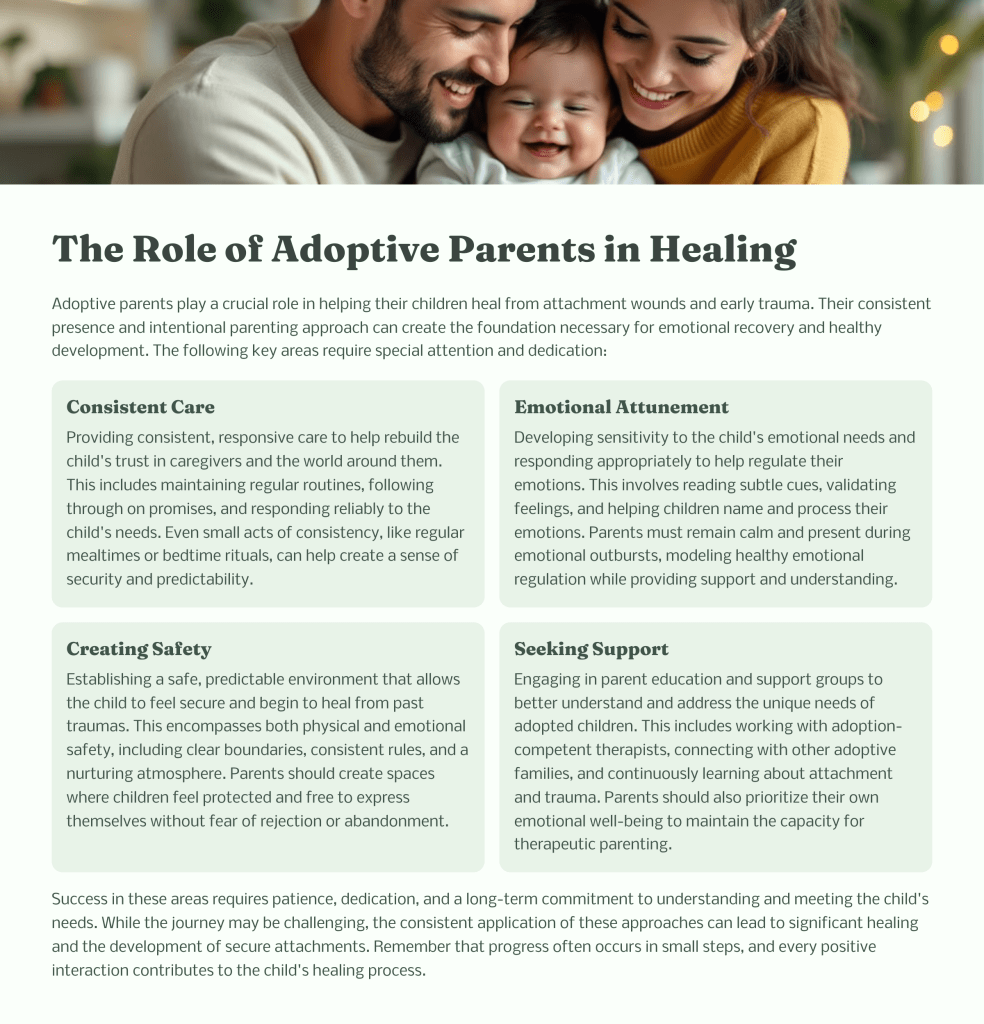
For transracial adoptees, having a safe space to discuss their adoption story, birth family, and cultural identity is crucial for healthy emotional development. Yet many parents struggle to create this environment despite their best intentions. This article explores what constitutes a safe space for these conversations, what barriers parents might face in providing one, and why overcoming these challenges benefits the entire family.

What Makes a Safe Space for Adoption Conversations?

A safe space for adoption conversations includes several key elements:

Emotional safety is the foundation. Children need to feel they can express any emotion—sadness, anger, confusion, curiosity—about their adoption without parents becoming defensive, dismissive, or overly emotional themselves. Parents should validate these feelings rather than trying to “fix” them.

Non-judgment allows children to ask questions or share thoughts about their birth family, cultural heritage, or identity without fear of upsetting their parents. This includes accepting when children may express grief or loss alongside a love for their adoptive family.

Age-appropriate honesty builds trust. Parents should share truthful information about the adoption story at developmentally appropriate stages, without hiding challenging aspects but presenting them with sensitivity.

Regular, casual opportunities for conversation help normalize adoption discussions. Rather than making these talks formal or rare events, weaving them naturally into everyday life shows children that adoption isn’t a taboo topic.

Child-led pacing respects the child’s emotional readiness. Some children may want frequent conversations, while others need more time. Parents should follow their child’s lead while occasionally opening the door for discussion.

Consistent reassurance of permanence and love provides security. Children need to know that exploring feelings about the birth family doesn’t threaten their place in the adoptive family.

Cultural resources and connections demonstrate respect for the child’s heritage. Books, cultural events, and relationships with others who share their background show children that their identity is valued.

Barriers Parents May Face

Despite good intentions, parents can struggle to create this safe space for several reasons:

Fear of Rejection

Many adoptive parents worry that their child’s interest in their birth family or culture signifies rejection of them as parents.

“It’s natural to feel threatened when your child expresses curiosity about their birth family,” says Dr. Emily Martinez, adoption psychologist and author. “But remember, a child’s desire to understand their origins isn’t about replacing you—it’s about completing their identity puzzle.”

Insecurity About “Real” Parenthood

Some parents struggle with societal messaging that biological connections are more “real” than adoptive ones.

“I’ve worked with many parents who confess they feel like ‘imposters’ when their child asks about their birth family,” explains adoption counselor James Wilson. “This insecurity can make it difficult to create the open environment children need.”

Discomfort with Difficult Emotions

Adoption stories often include complex, sometimes painful elements. Parents may want to protect their children—and themselves—from these difficult emotions.

“Parents often tell me they want to wait until their child is ‘old enough’ to handle the hard parts of their story,” says Dr. Lisa Chen, a family therapist specializing in adoption. “But avoidance usually creates more issues than it solves. Children sense when topics are off-limits, which can lead to shame and secrecy.”

Cultural Disconnection

For transracial adoptees, discussions about identity often include race and culture. Parents who haven’t done their own cultural education work may feel ill-equipped for these conversations.

Why Creating a Safe Space Benefits Everyone

Though challenging, creating this safe space ultimately strengthens family bonds and promotes healthy development:

For the child: Research shows that adoptees who can openly discuss their adoption experiences have better self-esteem, more vigorous identity formation, and fewer psychological issues in adulthood.

For parents: Open communication builds trust and deepens the parent-child relationship. It also prevents the buildup of unspoken questions and concerns that can create distance.

For the family unit: Families who can navigate these conversations develop resilience and communication skills that benefit all aspects of family life.

A Real-Life Example

When 8-year-old Mei began asking questions about her birth mother in China, her adoptive mother, Sarah, initially felt anxious. “I worried she was unhappy with our family,” Sarah admits. “I found myself changing the subject or giving brief answers to end the conversation quickly.”

After joining an adoptive parent support group, Sarah recognized her defensive reactions were more about her fears than Mei’s needs. She began creating space for these conversations, starting with books about adoption and gradually moving to more personal discussions.

“The turning point came when I told Mei it was okay to love her birth mother and wonder about her,” Sarah recalls. “The relief on her face was immediate. She said, ‘I thought it would hurt your feelings if I talked about her.'”

Today, at 13, Mei speaks openly about her adoption story and Chinese heritage. “These conversations haven’t diminished our bond,” Sarah says. “They’ve made it stronger because Mei knows she can bring her whole self to our relationship.”

Expert Advice

Dr. Martinez offers this guidance: “The best gift you can give your adopted child is permission to explore all aspects of their identity without feeling they’re betraying you. This isn’t always easy, but it’s essential.”

Wilson adds: “Remember that your child’s story belongs to them. Your role is not to control the narrative but to help them understand and integrate it into their life healthily.”

Dr. Chen concludes: “Creating this safe space isn’t a one-time event but an ongoing process. Be patient with yourself and your child as you navigate these waters together. The ultimate goal is to raise a child who feels whole and secure in all aspects of their identity.”

By facing their own fears and insecurities, parents can create the safe space their children need to thrive—not despite their adoption story, but with it fully integrated into their sense of self.
10 Things Transracial / Transcultural Adoptees Want Their Parents To Know

Download a PDF infographic of this article here!

1. Racial Mirroring is Crucial for Identity Development

Transracial and transcultural adoptees often express the need to see and interact with people who share their racial or ethnic background. This mirroring is vital for their identity development, helping them to form a positive self-image and understand their place in the world.

2. The Challenges of a “Color-Blind” Approach

While a “color-blind” approach may stem from good intentions, it can hinder an adoptee’s ability to explore their racial identity and navigate experiences of discrimination. Recognizing and discussing race openly is essential for fostering a healthy understanding of identity.

3. Experiencing Racism and Microaggressions

Adoptees may encounter racism and microaggressions that their adoptive parents might not fully recognize or understand. Parents must educate themselves about these experiences and provide support when their children face such challenges.

4. Importance of Birth Culture Connections

Maintaining connections to their birth culture is essential for adoptees’ sense of self and belonging. Parents should actively encourage and facilitate these connections to help their children feel grounded in their heritage.

5. Identity Confusion from Cultural Disconnection

Many adoptees report feeling disconnected from both their adoptive family’s culture and their birth culture, leading to confusion about their identity. Open discussions about these feelings can help alleviate some of this confusion.

6. Open Communication About Adoption

Having open conversations about their adoption story and birth family is important for adoptees’ emotional well-being. Parents should create a safe space for these discussions, allowing their children to express their feelings and questions.

7. Active Involvement in Heritage Exploration

Adoptees benefit from their parents’ active involvement in helping them explore and celebrate their heritage. This can include participating in cultural events, language learning, and engaging in activities that reflect their background.

8. The Need for Mentors and Role Models

Having mentors or role models from their racial or ethnic background can significantly impact an adoptee’s self-esteem and identity. Parents should seek opportunities for their children to connect with individuals who can provide guidance and support.

9. Exposure to Diverse Environments

Living in a diverse community or having regular exposure to diverse environments can help adoptees feel less isolated. Parents should consider the importance of diversity in their children’s social circles and experiences.

10. Addressing Emotional Challenges

Adoptees may struggle with issues related to attachment, anger, anxiety, or perfectionism due to their adoption experiences. Parents must know these potential challenges and seek appropriate support and resources to help their children navigate them.

By understanding these key points, adoptive parents can better support their transracial and transcultural children, fostering a nurturing environment that honors their unique identities and experiences.

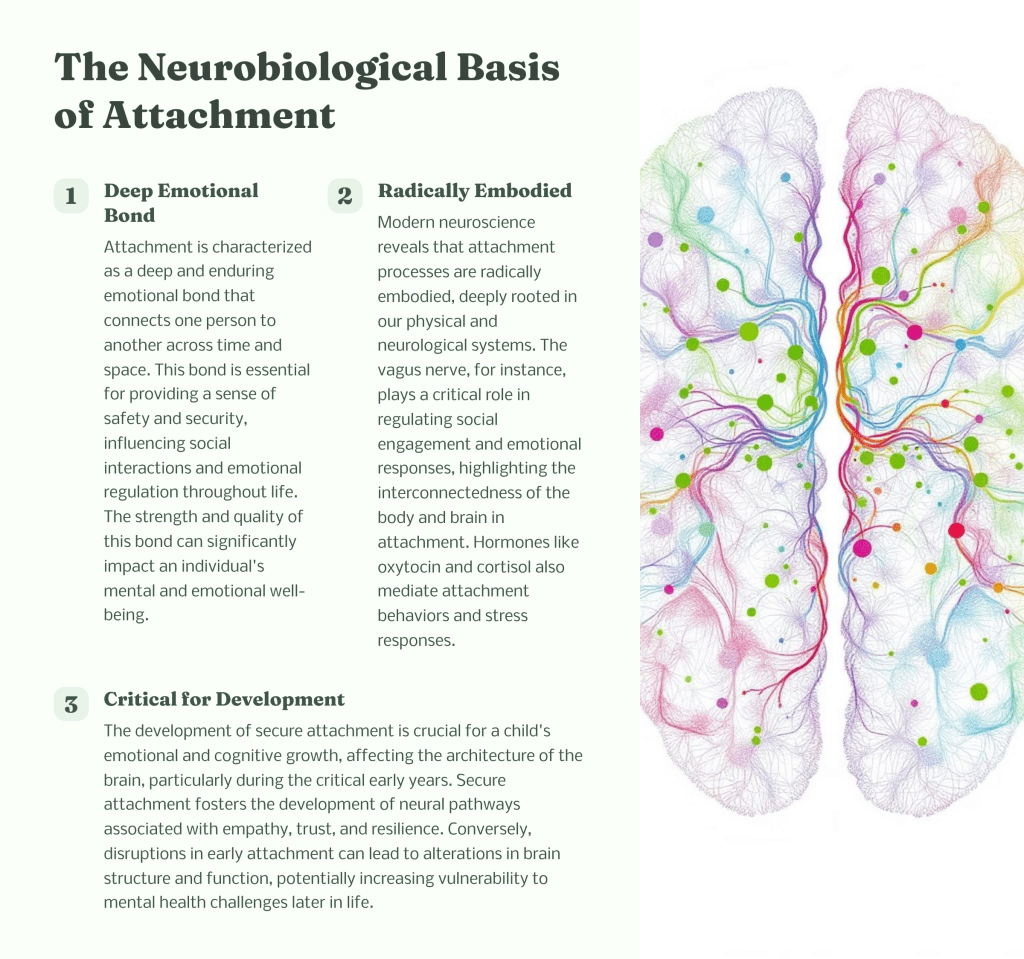
Attachment Wounds in Adoption: A Neuroscientific Perspective

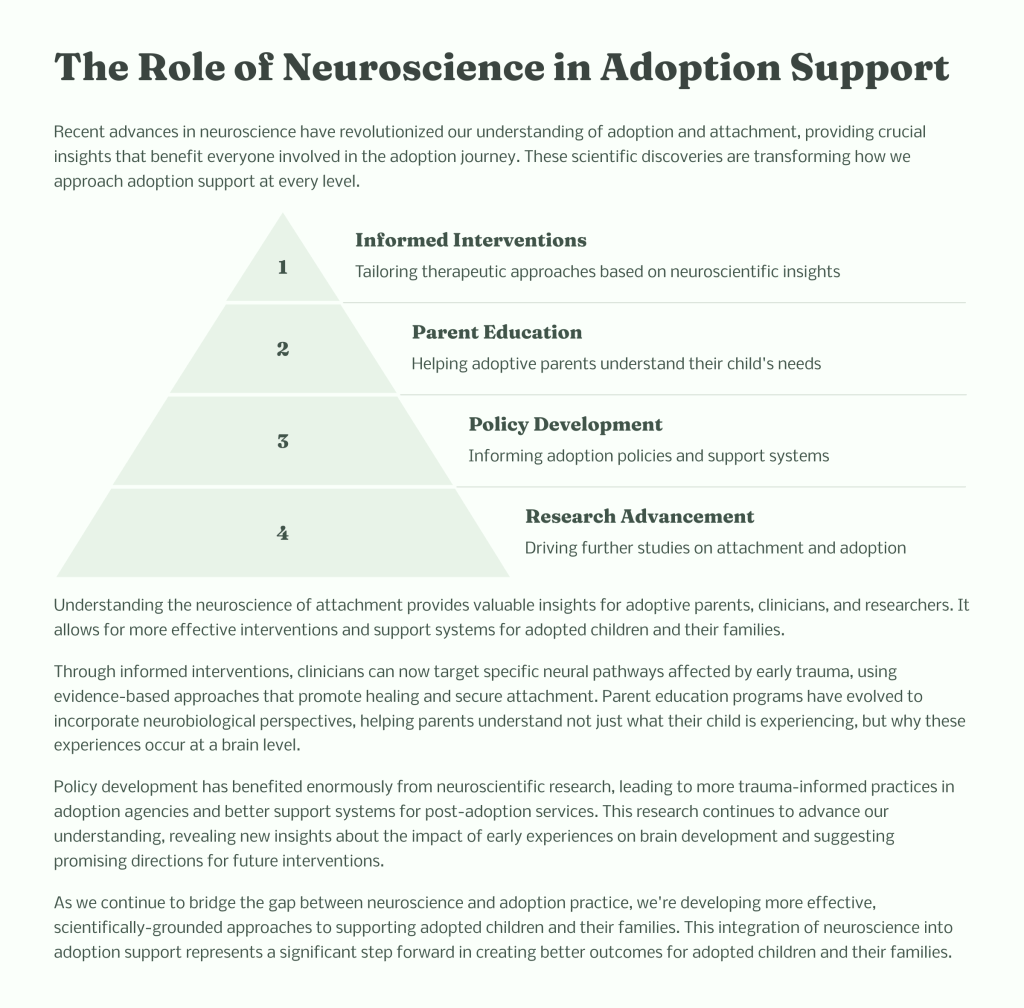
Adoption, while often a positive and life-changing experience, can present unique challenges for children, particularly in the realm of attachment. Recent advancements in neuroscience and attachment research have shed light on the complex interplay between early experiences and brain development, offering new insights into the attachment wounds adopted children may carry.

Navigating the Adoption Journey: Insights for Adoptive Parents and Professionals

Adoption is a complex and emotional process that requires understanding, patience, and ongoing support. This article aims to provide valuable insights for both adoptive parents and the professionals who work with them.

Understanding the Complexities

Joyce Maguire Pavao, a renowned adoption expert, emphasizes:

“Adoption is not about finding children for families, it’s about finding families for children.”

This perspective shift is crucial for both parents and professionals to internalize. It places the child’s needs at the center of the adoption process.

The Lifelong Nature of Adoption

Adoption is not a one-time event but a lifelong journey. As one adoptive parent notes:

“The adoption journey doesn’t end when your adopted child is finally in your arms. The journey is one that never ends. It is a journey filled with joy, pain, fear and love.”

Professionals should prepare adoptive parents for this ongoing process, providing resources and support for various stages of the adoption journey.

Openness and Communication

Open communication about adoption is vital from the earliest stages. Experts recommend:

“Start telling your child that s/he is adopted from day one. A child should never remember finding out they’re adopted – they should just always know.”

Professionals can guide adoptive parents on age-appropriate ways to discuss adoption with their children.

Addressing Loss and Grief

It’s important to recognize that adoption involves loss for all parties involved. Pavao notes:

“The stages birth parents go through are very real and need to be understood… The initial period of grieving lasts roughly five to seven years.”

Professionals should help adoptive parents understand and navigate these complex emotions, both for themselves and their children.

Cultural Competence

For transracial or transcultural adoptions, cultural competence is crucial. Pavao advises:

“The challenge to adoptive parents, and to others connected to this child, is to help the child to develop his/her own identity within the framework of both cultures.”

Professionals can provide resources and guidance on cultural integration and identity development.

Ongoing Education and Support

Adoption requires continuous learning. One adoptive parent shares:

“You commit to education. You commit to learning other perspectives. You commit to growing.”

Professionals should encourage adoptive parents to engage in ongoing education about adoption issues, trauma-informed care, and child development.

Conclusion

For both adoptive parents and professionals, understanding the nuances of adoption is crucial. By recognizing its lifelong nature, embracing openness, addressing loss, promoting cultural competence, and committing to ongoing education, we can better support adoptive families throughout their journey.

Remember, as Pavao states, “Adoption is intergenerational. It lasts a lifetime and beyond.” With this perspective, we can work together to create positive, supportive environments for all members of the adoption triad.

Citations:
[1] https://www.reddit.com/r/AdoptiveParents/comments/1ercoiw/starting_our_unexpected_adoption_journey/
[2] https://www.goodreads.com/author/quotes/487220.Joyce_Maguire_Pavao
[3] https://abidinglovecharities.org/2022/11/16/being-open-to-grow-in-your-adoption-journey/
[4] https://www.adoptimist.com/adoption-success-stories/a-proactive-and-prayerful-adoption-journey
[5] https://www.waitnomore.org/the-adoption-journey/
[6] https://blog.nchs.org/adoptive-families-challenges
[7] https://www.modernheirloombooks.com/new-blog/2020/3/18/what-to-save-for-your-adoption-journey-book
[8] https://www.boulderpsychologicalservices.com/understanding-common-challenges-adopted-children/

Keeping Siblings Connected: The Challenges and Triumphs of Adoption

Sarah nervously fidgeted with her necklace as she waited in the airport terminal. It had been five years since she’d seen her younger brother, Jake. Separated by adoption when Sarah was 10 and Jake was 6, the siblings were about to reunite for the first time since that difficult day.

“I was so scared he wouldn’t remember me,” Sarah recalled. “But as soon as I saw him, it was like no time had passed. We just hugged and cried.”

Stories like Sarah and Jake’s are too familiar in adoption. While keeping siblings together is often the goal, it’s not always possible. Maintaining these vital connections is challenging, but so are the rewards.

Dr. David Brodzinsky, a leading expert in adoption psychology, emphasizes the importance of sibling relationships: “Sibling bonds are often the longest-lasting family ties we have. For adopted children, these connections can be a crucial link to their past and a source of stability in their present.”

Indeed, research has shown that maintaining sibling relationships can have profound benefits for adopted children. These connections can provide emotional support, a sense of identity, and a link to a shared history.

However, maintaining these relationships is often fraught with obstacles. Geographic distance, the differing needs of individual children, and complex family dynamics can all pose challenges.

Mary, an adoptive mother of three siblings, shared her experience: “We knew it was important to keep the kids together, but it wasn’t easy. They each had such different needs. There were times I wondered if we’d made the right choice.”

Despite the difficulties, Mary and her husband persevered. They sought professional help, established routines that gave each child individual attention, and worked tirelessly to foster a sense of family unity.

“It was worth every struggle,” Mary said. “Watching them support each other, seeing their bond grow stronger – it’s been the most rewarding part of our adoption journey.”

For families who aren’t able to adopt sibling groups together, maintaining connections requires creativity and commitment. Regular video calls, shared online photo albums, and planned visits can all help bridge the gap.

Tom, a social worker specializing in adoption, offers this advice: “Communication is key. Be open with your children about their siblings, encourage questions, and proactively facilitate contact when possible.”

He adds, “It’s also important to be sensitive to the complex emotions that can arise. Feelings of guilt, loss, or confusion are common. Providing a safe space for children to express these feelings is crucial.”

As the adoption community continues to recognize the importance of sibling relationships, more resources and support are becoming available. Many agencies now offer specialized training for families adopting sibling groups or those working to maintain connections with siblings placed separately.

Sarah, now 25, reflects on her journey: “It hasn’t always been easy, but I’m so grateful we’ve been able to stay in each other’s lives. Jake is more than just my brother – he’s a link to my past and an important part of my future.”

As we continue to navigate the complexities of adoption, one thing remains clear: the sibling bond is a powerful force. By recognizing its importance and working to nurture these relationships, we can help adopted children maintain vital connections to their roots while building strong, loving families for the future.

Here are some valuable resources for adoptive parents looking to deepen their understanding of sibling relationships and the adoption process:

Websites and Organizations

  1. Adoption Support Alliance
    A comprehensive resource with various topics related to adoption, including sibling dynamics. They provide links to books, blogs, and organizations to help navigate the adoption journey.
    Adoption Support Alliance Resources [1]
  2. Creating a Family
    This nonprofit organization offers unbiased education and support for families dealing with infertility or adoption. Their website includes a wealth of resources on post-adoption parenting and sibling relationships.
    Creating a Family Resources [2]
  3. Utah’s Adoption Connection
    A resource database tailored for adoptive families, offering information on various topics, including mental health services, educational support, and support groups.
    Utah’s Adoption Connection Resources [3]
  4. Purl Adoption
    This organization provides resources and education for adoptive parents, focusing on how to talk to children about adoption and navigate the complexities of their feelings.
    Purl Adoption Resources [4]

Recommended Books

  1. “20 Things Adoptive Parents Need to Succeed” by Sherrie Eldridge
    A practical guide offering insights and advice for adoptive parents.
  2. “The Connected Child” by Karyn B. Purvis and David R. Cross
    Focuses on strategies for nurturing and connecting with adopted children.
  3. “Raising Adopted Children: Practical Reassuring Advice for Every Adopted Parent” by Lois Ruskai Melina
    Offers practical parenting advice to adopted children, including those with siblings.
  4. “The Body Keeps the Score” by Bessel Van Der Kolk, M.D.
    Explores the impact of trauma on children, including those in the adoption process.
  5. “Adoption Nation” by Adam Pertman
    Discusses the evolution of adoption and its implications for families and society.

Support Groups and Community Resources

  • Support Groups: Many adoptive families find comfort and support in connecting with others with similar experiences. Look for local or online support groups focused on adoption.
  • Counseling Services: Consider seeking out adoption-competent therapists who specialize in the unique challenges faced by adopted children and their families.

By utilizing these resources, adoptive parents can gain deeper insights into sibling relationships and the broader adoption process, fostering a more supportive environment for their children.

Citations:
[1] https://www.adoptionsupportalliance.org/resources
[2] https://creatingafamily.org/adoption/resources/
[3] https://www.utahadopt.org/resources
[4] https://www.purladoptions.com/learn/adoption-advisor/resources-for-talking-to-your-child-about-adoption/
[5] https://www.utahadopt.org/support-resources
[6] https://www.adoptuskids.org/adoption-and-foster-care/parenting-support/for-adoptive-parents
[7] https://www.creatingafamilyed.org/courses/preparing-children-already-in-the-home-for-adoption
[8] https://adoptioncouncil.org/publications/adoption-advocate-no-147/

Unlocking Your Parenting Potential: 15 Questions to Guide Your Journey

Parenting is one of the most rewarding yet challenging roles you can take on. As parents, we often find ourselves navigating a maze of emotions, expectations, and responsibilities. It’s essential to take a step back and show on our parenting practices. This helps us become the best version of ourselves for our children. Here are 15 thought-provoking questions. They are designed to help you unlock your parenting potential. They will foster a nurturing environment for your family.

1. What are my core values as a parent?

Understanding your values can guide your decisions and actions. Reflect on what principles are most important to you. Principles may include respect, honesty, or kindness. Consider how you can instill these in your children.

2. How do I respond to my child’s emotions?

Consider how you react when your child expresses feelings like anger, sadness, or frustration. Are you supportive and understanding, or do you dismiss their emotions? Your response shapes their emotional intelligence.

3. What are my child’s unique strengths and weaknesses?

Every child is different. Take time to observe and appreciate what makes your child special. Think about how you can nurture their strengths. Support them through their challenges.

4. How do I handle stress and frustration?

Your emotional state affects your parenting. Reflect on your coping mechanisms and consider healthier strategies to manage stress, ensuring you model resilience for your child.

5. Am I setting realistic expectations for my child?

Evaluate whether your expectations align with your child’s age and developmental stage. Unrealistic expectations can lead to disappointment for both you and your child.

6. How do I communicate with my child?

Consider the effectiveness of your communication style. Are you actively listening? Do you encourage open dialogue? Effective communication fosters trust and strengthens your relationship.

7. What routines or traditions do we have as a family?

Family routines and traditions create a sense of belonging and stability. Reflect on what practices you cherish and how they contribute to your family’s identity.

8. How do I balance discipline with love?

Discipline is essential, but it should be balanced with love and understanding. Reflect on your disciplinary methods and consider how they can promote learning rather than fear.

9. What role does technology play in our family life?

In today’s digital age, it’s crucial to assess how technology impacts your family dynamics. Reflect on screen time limits, online safety, and how technology can be used positively.

10. How do I encourage my child’s independence?

Fostering independence helps children build confidence and decision-making skills. Reflect on how you can provide opportunities for your child to take on responsibilities appropriate for their age.

11. How do I express love and affection?

Consider the ways you show love to your child. Are you verbal in your affirmations, or do you express love through actions? Consistent affection strengthens your bond.

12. What are my child’s interests and passions?

Take time to discover what excites your child. Supporting their interests not only nurtures their talents but also strengthens your connection.

13. How do I involve my child in family decisions?

Involving your child in age-appropriate decisions fosters a sense of ownership and responsibility. Reflect on how you can include them in discussions about family activities or rules.

14. What are my parenting goals for the next year?

Setting specific, achievable goals can help you focus your efforts. Think about what you’d like to do as a parent in the coming year. It can be improving communication. It can also be spending more quality time together.

15. How do I take care of myself as a parent?

Self-care is vital for effective parenting. Reflect on how you prioritize your well-being. Consider ways to carve out time for yourself. This ensures you have the energy and patience to support your child.


Reflecting on these questions can illuminate areas for growth and improvement in your parenting journey. Remember, there’s no perfect parent. By taking the time to show, you can cultivate a nurturing environment. This environment allows both you and your child to thrive. Embrace this journey of self-discovery, and watch as your family flourishes together!

Understanding “The Primal Wound”: A Must-Read for Adoptive Parents

As parents who have opened your hearts and homes through adoption, you’re likely always on the lookout for resources to help you better understand and support your child. One book that has been making waves in the adoption community for years is “The Primal Wound: Understanding the Adopted Child” by Nancy Newton Verrier. Today, we’re diving into this influential work and exploring its relevance for adoptive families.

What is “The Primal Wound”?

At its core, “The Primal Wound” introduces a concept that many find eye-opening: the idea that separating a baby from their birth mother creates a deep, often unconscious wound that can affect the adoptee throughout their life. Verrier, an adoptive mother herself, argues that this separation can lead to a range of emotional and psychological challenges.

Key Insights for Adoptive Parents

The Impact of Early Separation
Verrier suggests that the bond between a baby and their birth mother begins in the womb and that disrupting this bond through adoption can have lasting effects. As an adoptive parent, understanding this perspective can help you approach your child’s emotional needs with greater empathy and insight.

Attachment Challenges
The book delves into how early separation might affect a child’s ability to form secure attachments. If you’ve noticed your child struggling with trust or intimacy, this concept might offer some explanations and guide you toward appropriate support strategies.

Common Behaviors and Coping Mechanisms
“The Primal Wound” identifies behaviors that might stem from adoption-related trauma, such as:

    • Difficulty with emotional regulation
    • Fear of abandonment
    • Struggles with identity formation
    • The tendency towards self-sabotage Recognizing these as potential coping mechanisms rather than personal flaws can dramatically shift how you respond to challenging behaviors.

    Validating Your Child’s Experience
    One of the book’s strengths is its emphasis on acknowledging and validating the adoptee’s feelings. This validation can be incredibly healing for adopted individuals who might have felt misunderstood or alone in their struggles.

      How Can This Book Help You?

      Reading “The Primal Wound” can:

      • Deepen your understanding of your child’s emotional landscape
      • Provide a framework for addressing adoption-related challenges
      • Guide you in creating a more trauma-informed home environment
      • Help you advocate for your child’s needs in therapy and educational settings

      A Word of Caution

      While many find this book illuminating, it’s important to remember that every adoption experience is unique. Some adoptees and professionals critique the book for overgeneralizing or being too deterministic. As with any resource, it’s best to take what resonates and feels helpful for your family’s situation.

      Moving Forward

      If you decide to read “The Primal Wound,” consider these steps:

      1. Reflect on how the concepts apply to your family’s experience
      2. Discuss the book with your partner or a trusted friend to process your thoughts
      3. Consider seeking guidance from an adoption-competent therapist to explore these ideas further
      4. Look for ways to incorporate the book’s insights into your parenting approach

      Remember, acknowledging the potential for early trauma doesn’t negate the love and connection in your family. Instead, it can be a powerful tool for fostering deeper understanding and healing.

      “The Primal Wound” offers a unique perspective on the adopted child’s experience that many parents find invaluable. By exploring these concepts, you’re taking an important step in your journey to support your child’s emotional well-being. Remember that this book is just one resource among many, and the most important thing is to remain open, compassionate, and attuned to your child’s needs.


      Turning Interruptions into Opportunities: Radical Inclusivity and Compassion

      Ever felt like someone was just getting in the way of your day? Maybe a coworker stopped by your desk when you were deep in thought, or a stranger asked for directions when you were in a rush. What if, instead of seeing these moments as interruptions, we saw them as opportunities? What if every unexpected encounter was a chance to connect and grow?

      Father Gregory Boyle, the inspiring founder of Homeboy Industries, has a refreshing take on this. He believes in radical inclusivity and compassion, and his perspective can totally change how we view those “interruptions.”

      Boyle says, “We’ve mistaken moral outrage for moral compass. Moral compass helps you see with clarity how complex and damaged people are. It is the whole language. Moral outrage just increases the volume and the distance that separates us.” In other words, instead of getting annoyed or judgmental, we should try to understand and connect with the people we meet, no matter how unexpected the encounter.

      So, what is radical inclusivity? It’s about welcoming everyone, no matter who they are or where they come from. Boyle puts it simply: “There is no us and them, just us.” This means breaking down our biases and seeing the value in every person we meet.

      And what about radical compassion? It’s more than just being nice. It’s about deeply empathizing with others and being willing to engage with them, especially those who are struggling. Boyle says, “You’re not going out to the margins to reach people; you’re going out to the margins to be reached.” This flips the script, turning interruptions into meaningful moments of connection.

      At Homeboy Industries, Boyle’s philosophy comes to life. The organization offers a safe haven for former gang members, helping them find security and opportunities for growth. Boyle explains, “Here we say that they find this sanctuary here, then they become the sanctuary they sought in the first place, and then they go home and provide that sanctuary to their kids.” This cycle of compassion and inclusivity can break down barriers and create lasting change.

      So, how can we bring this into our own lives? Here are a few ideas:

      1. Listen Up: When someone talks to you, really listen. Show genuine interest, especially if they’re different from you.
      2. Challenge Yourself: Question your own biases and try to see things from others’ perspectives.
      3. Seize the Moment: View unexpected encounters as opportunities, not interruptions.
      4. Practice Empathy: Try to understand what others are going through.
      5. Create Safe Spaces: Make your community a place where everyone feels welcome and accepted.

      In the end, radical inclusivity and compassion can transform our daily interactions and help us build a more empathetic society. So next time someone “interrupts” you, take a moment to connect. You might just find that these unexpected encounters are the most rewarding parts of your day. After all, as Boyle says, we all “belong to each other.” Let’s make sure no one is left out.

      Adoption Ambiguity in Adoptive Children

      Adoption ambiguity, a term introduced by Pauline Boss in the 1970s, encapsulates the intricate emotional landscape adoptive children navigate as they grapple with their identities, relationships, and sense of belonging. Nancy Verrier, in her seminal work “The Primal Wound: Understanding the Adopted Child” (1991), further sheds light on the profound impact of adoption on children. In this article, we will explore adoption ambiguity, draw insights from experts in the field, and highlight the relevance of Verrier’s work in understanding the complexities of adoptive experiences.

      Understanding Adoption Ambiguity: Adoption ambiguity is a multifaceted phenomenon that encompasses the unresolved emotions and challenges adopted children face. Parents need to acknowledge and address these complexities to provide a nurturing environment for these children. Let’s delve into expert perspectives and the insights shared in “The Primal Wound“:

      1. Ambiguous Loss and Adopted Children:
        • Verrier’s work emphasizes the concept of the primal wound, which refers to the profound loss experienced by adoptees due to the separation from their biological mothers.
        • This primal wound can manifest as a deep-seated sense of loss, grief, and disconnection that adoptive children carry throughout their lives.
      2. Self-Sabotage and Adoption Ambiguity:
        • Adoptive children may exhibit self-sabotaging behaviors as a coping mechanism for the unresolved emotions stemming from adoption ambiguity.
        • Issues such as fear of rejection, trust and control struggles, identity conflicts, and attachment trauma can contribute to self-sabotage in adoptive children.

      Insights on Supporting Adoptive Children: Drawing from expert advice and Verrier’s insights, here are key strategies for parents to support their adoptive children through the challenges of adoption ambiguity:

      1. Establishing Open Communication:
        • Foster open and honest communication with your child to create a safe space for discussing their feelings and experiences.
        • Encourage dialogue about adoption-related topics while respecting your child’s emotions and perspectives.
      2. Building Trust and Security:
        • Prioritize building a foundation of trust and security in your relationship with your adoptive child.
        • Demonstrate consistent support, empathy, and understanding to help your child feel secure in their identity and relationships.
      3. Seeking Professional Guidance:
        • Consider seeking guidance from adoption professionals, therapists, or support groups familiar with adoption-related issues.
        • Professional assistance can offer valuable insights and strategies tailored to address the specific needs of your adoptive child.
      4. Embracing Education and Resources:
        • Educate yourself about adoption ambiguity and its impact on adoptive children by exploring resources such as “The Primal Wound” and other relevant literature.
        • Engage with adoption communities, workshops, and online resources to gain knowledge and connect with others who share similar experiences.

      The journey of adoptive children is characterized by unique challenges and emotional complexities that require sensitivity, understanding, and support. By integrating insights from experts and works like “The Primal Wound” by Nancy Verrier, parents can cultivate a nurturing environment that empowers their adoptive children to navigate their identities and relationships with resilience. As illuminated by Verrier and other experts, adoption ambiguity underscores the significance of acknowledging and addressing the deep-seated emotions and challenges inherent in adoptive experiences. Empathy, communication, and a commitment to learning can create a supportive space where adoptive children can flourish and embrace their individual journeys.

      Here are some recommended books and resources for parents looking to deepen their understanding of adoption-related issues and support their adoptive children:

      Books:

      Online Resources:

      • Adoption.com: A comprehensive online resource offering articles, forums, and community support for adoptive families.
      • Child Welfare Information Gateway: Provides resources on adoption-related topics, including parenting tips, support services, and legal information.
      • North American Council on Adoptable Children (NACAC): Offers educational resources, training, and advocacy for adoptive families.
      • Adoptive Families Magazine: Features articles, expert advice, and personal stories related to adoption and parenting.
      • Adoption Network: Provides support, education, and resources for adoptive families, birth families, and adoptees.

      These books and online resources can offer valuable insights, guidance, and support for parents navigating the complexities of adoption and seeking to create a nurturing environment for their adoptive children.

      Embracing Post-Traumatic Growth: A Guide for Adoptive Families

      Adopting a child is a journey filled with love, hope, and challenges. For adoptive families, the road to building a strong and resilient family unit may involve navigating various emotional terrains. One concept that has gained recognition in recent years is “post-traumatic growth” (PTG). This transformative process, arising from adversity, can be a powerful tool for adoptive families seeking to foster connection, resilience, and personal growth.

      Understanding Post-Traumatic Growth:
      Post-traumatic growth refers to the positive psychological changes that individuals or families can experience in the aftermath of a challenging or traumatic event. Rather than being overwhelmed by difficulties, individuals may find new strengths, perspectives, and a deeper appreciation for life.

      Adoptive families often encounter unique challenges, including the complexities of attachment, identity, and the potential for past traumas in a child’s life. By understanding the principles of post-traumatic growth, adoptive families can harness these challenges as opportunities for personal and collective development.

      The Five Domains of Post-Traumatic Growth:

      1. Personal Strength:
        Adoptive families can cultivate personal strength by acknowledging and embracing their vulnerabilities. This involves recognizing the resilience they’ve developed in navigating the adoption process and overcoming obstacles. Fostering a sense of self-efficacy can empower family members to face future challenges with confidence.
      2. Appreciation of Life:
        Embracing gratitude for the joys and positive aspects of life can be a transformative practice for adoptive families. Celebrating milestones, small victories, and the everyday moments of connection can create a foundation of positivity within the family.
      3. Relationships:
        Nurturing healthy connections within the family and beyond is crucial for post-traumatic growth. Adoptive families may find strength in open communication, empathy, and a shared commitment to overcoming challenges. Strong support systems, whether through friends, family, or support groups, can enhance the family’s ability to grow together.
      4. New Possibilities:
        The adoption journey opens doors to new possibilities, both for the child and the family. Recognizing and exploring these opportunities, whether through education, hobbies, or cultural exploration, can contribute to the family’s collective growth.
      5. Spiritual or Existential Growth:
        Reflecting on the deeper meaning and purpose of the adoption journey can lead to spiritual or existential growth. This may involve exploring one’s beliefs, values, and the profound impact of building a family through adoption.

      Practical Strategies for Adoptive Families:

      1. Promote Open Communication:
        Encourage family members to express their thoughts and feelings openly. Establishing a safe space for communication fosters understanding and strengthens familial bonds.
      2. Seek Professional Support:
        Utilize the expertise of adoption professionals, therapists, and support groups to navigate challenges. Professional guidance can offer insights, coping strategies, and reassurance during difficult times.
      3. Embrace the Journey:
        Recognize that the adoption journey is ongoing, and growth is a continuous process. Embrace the ups and downs, understanding that challenges can be opportunities for learning and development.
      4. Celebrate Milestones:
        Acknowledge and celebrate the achievements and milestones within the family. Recognizing progress, no matter how small reinforces a positive outlook and strengthens the family’s sense of accomplishment.


      Post-traumatic growth is a powerful framework for adoptive families seeking to transform challenges into opportunities for personal and collective development. By fostering personal strength, appreciating life, nurturing relationships, exploring new possibilities, and embracing spiritual growth, adoptive families can build resilience and create a supportive environment for their children. The adoption journey is a unique and transformative experience, and with a mindset of post-traumatic growth, families can navigate it with strength, grace, and a deep sense of connection.