Page 8 of 9

Trauma Can Shock You to Your Core (video)

When you go through something really horrible, it can shock you to your core. Trauma can take many forms. All of them have one thing in common: Feelings of Helplessness, Anger, Fear, and being Overwhelmed.

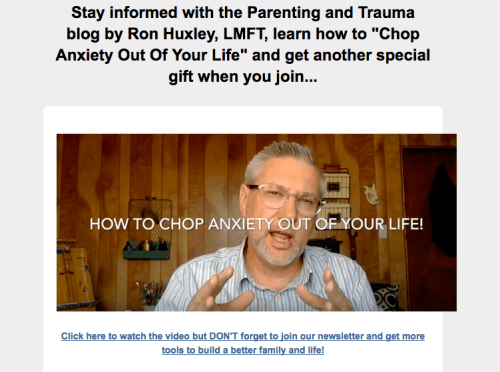
Watch the complete video on how trauma affects our lives and how you CAN heal…

Screen Shot 2017-08-01 at 5.05.27 PM

> Take our FREE Parenting Course: The Full-Proof Family Meeting when you sign up to our Family Healer Newsletter…Click here now!

Your Body is a Brain…

Great writers and painters have known this fact for decades: The body acts like a brain…

Walt Whitman understood that the flesh was the source of meaning; Auguste Escoffier discovered that taste is actually a smell; Paul Cézanne realized that the brain can decipher an image from minimal brushstrokes.

Jonah Lehrer has written a book called Proust Was a Neuroscientist

In my own trauma-informed trainings I discuss how our central nervous system, specifically the nerves surrounding our “guts”, acts as a second brain.

Did you know that there are 43 different pairs of nerves which connect the nervous system to every part of our body. Twelve of these nerve pairs are connected to the brain, while the remaining 31 are connected to the spinal cord.

Did you know that the gut has 100 million nerve cells that make up it’s own nervous system separate from the brain!

Did you know that one of the major nerve pathways from the gut to the brain is called the Vagus Nerve. The brain interprets signals from the Vagus Nerve as actual emotional information. It really doesn’t know the difference. 

Did you know that there is more and more research on how the gut and gastrointestinal conditions are linked to depression, anxiety, autism, and ADHD. What we are talking about here is nutrition and not just medication can change our mental health.

And did you know that there is a reason we call certain kinds of food “comfort food”? Comfort foods affect our moods. Can someone say chocolate please?

Understanding the brain/body connection can help us overcome trauma in ways that traditional talk therapy cannot. This is because a lot of times there are no words to express what trauma is doing in our lives or the trauma is so far back in infancy and during pregnancy that there was no ability to form words.

This will require a new approach to doing therapy that involves movement, sensory processing, art therapy and my own NeuroResilience Play Therapy Approach. Click here for more info.

What is your body telling you?  Perhaps its time to follow your “gut” instincts today and find the help you need. Hey, writers and artists have been telling us for years this truth about our body acting like a brain. Let’s listen to what it is saying!

TraumaInformedTraining logo

Need trauma-informed training for your organization or up coming conference? Contact Ron today.

Newsletterimage

Join our newsletter and get Ron’s blog posts in your inbox!

Children who are responsible and fun to be around!

ani_thinkingcap

Cleaning Up Your Mess*

by Ron Huxley, LMFT

Every parent wants a child that is “responsible and fun to be around”. Children will enjoy being this way too. Unfortunately, traumatized children forget who they are and believe a lie instead. Trauma introduces the belief that “the world is a scary place, caregivers can’t be trusted and I am broken and damaged goods”. In addition, they believe that “no one could love me…People will get rid of me just like everyone else…I am stupid…I can only trust myself…Life is not safe”, and on it goes.

A big lie is that it is not ok to make a mistake. This is because a life of shame makes mistakes feel like a reminder that “I am a mistake too”. Fortunately, if we have believed a lie, we can also choose to believe the truth. This doesn’t always come easily. Attachment research calls this cycle “rupture and repair”. Every family has a rupture in a relationship. The healing for traumatized children comes in the repair. In that respect, a rupture is desirable. It allows the attachment relationship to be rebuilt. New Positive experiences can replace negative experiences from their past. A simple strategy is for parents to ask children: “How are you going to clean up this mess?”

A mess is a metaphor for a problem that children create in their relationships and daily living. For example, Hitting their sibling over taking a toy is a mess. Not following through on doing chores and forcing mom to repeat herself several times is a mess. Throwing a tantrum and refusing to brush their teeth is a mess. Forgetting their homework and getting a failing grade is a mess. You get the idea…

Our job as parents is to teach children how to clean up their messes and be more responsible and fun to be around. Instead of nagging, complaining or lecturing, trying asking how the child plans on cleaning up the mess they have made? This is also a way to increase leverage. At some point a child will want something from the parent. When they do you can simple refer the child back to the need to clean up their mess before you give them what they are wanting. This reinforces the concept of working together. You help me and I help you. This is how we do things in this family…

A typical response to the question is “I don’t know” to avoid taking responsibility. Don’t engage in a fight. That is how the child distracts you from the problem in front of them. In reply a parents offer some of their ideas on how the child can clean up their mess. The best idea from mom and dad are the tough, most undesirable ones. Children don’t want to do the tough ones. They want to do the easy ones. Offering the tough idea will force a child to engage in the discussion and present a better idea. This will get their thinking brains online so that they start to consider better ways to treat others and make family life more fun.

MESSES are Mom’s LEVERAGE:

Sometimes (OK, often) children will not follow through on their plan to clean up their messes. That’s fine. Parents now have another opportunity for “rupture and repair” by waiting until the child wants something from them…and you know they will.

Son: “Hey mom, can I go to Johnny’s house to play.”
Mom: “Oh wow, Johnny has that new video game you have been talking about, right?”
Son: “Yeah, it is so cool. Can I go?”
Mom: “It really would be cool but it is soooo sad!”
Son: “Sad?”
Mom: “Yes, there is still this mess you made with that tantrum yesterday and all those toys are still all over the living room. Remember how you made that plan to say you were sorry and clean them up?”
Son: “Kind of…”
Mom: “So take all the time you need to clean up that mess and then you can go to Johnny’s.”

You can only imagine the type of negotiation that the son might try at this point, right? He might even choose to get angry and throw another tantrum. More opportunities for rupture and repair. This is where mom MUST stand her ground and stay as cool and empathic as possible. Empathy has a way of keeping everyones brains level and focused on the problem on not in a heated game of “whose to blame”. With practice on how to clean up their messes, a child will learn to be more “responsible and fun to be around”.

  • Original concept for this tool is from the book “Love and Logic”

traumatraining

Let Ron Huxley provide a trauma-informed training for your next event or up-coming conference. Click here!

tumblr_inline_okw613SIVt1ro6w1h_500

Join our newsletter and get all of Ron’s Family Healer posts plus special member only reports and videos. Subscribe here!

Art and Trauma: An Altered DSM by Ron Huxley, LMFT

Screen Shot 2017-05-11 at 6.24.21 AM

Art can be a way for us to heal from intense grief and trauma. Some things can’t be expressed complete in words and require the aid of images and sensory expressed movements.

It can help us transcend our emotional pain and find ways to regulate our nervous systems that encode trauma in our memories. Even when our minds cannot remember our traumatic pasts, our body still remembers.

The french painter, Charles Braque, stated that “art is a wound turned to light.” Art takes many forms. One contemporary form of art is called Altered Books. an Altered book is a form of mixed media artwork that changes a book from its original form into a different form, altering its appearance and meaning.

Ron Huxley, a family art therapist, altered a diagnostic and statistical manual along with a group of therapists to demonstrate how therapists can overuse labels to diagnose mental disorders and risk losing the essence of humanity each client brings to therapy. Therapists can take themselves too seriously and transforming a dry clinical manual with fresh artistic insights can make them better healers.

Click here to view the Altered DSM Book. 

tumblr_inline_okw613SIVt1ro6w1h_500

Join Ron’s newsletter and never miss a Family Healer Blog + get special reports and videos for members only! Subscribe here!

Born To Worry

I really can’t think of anyone who loves stress. Do you? A little stress is normal in life but it can range from positive, tolerable, or even toxic. When we suffer from toxic stress early in life it can effect how our genes express their programmed ability to manage it.

A new book on the subject of stress, called “Born Anxious: The Lifelong Impact of Early Life Adversity – and How to Break the Cycle, by Daniel P. Keating” reveals how and what happens when we are impacted by toxic stress.

bornanxious

The book discusses research on epigenetics which is the study of genetic expression and how it is altered by environmental events. Our genes are designed, by our DNA, to cope with certain levels of stress. Positive and tolerable stress can be managed by our stress programs. Toxic stress, experienced early in life, effects if our genetic programs actually get turned on or off.

Our bodies are designed to amp up or power down in reaction to the type and amount of stress we go through on a daily basis. For example, if we find ourselves facing an angry dog, our immediate reaction is to fight or flee in order to survive. If the dog runs off, we might continue to feel agitated for a short while after the encounter and then we will naturally calm back down. Our nervous system is designed to amp up to deal with the dog and then reset itself so that we can function normally again.

Children who have gone through chronic early life stress may have their normal genetic response to angry dogs or any perceived threat altered. If the genetic expression to stress stays continuously on, we move through life as if the dog is always in front of us. In the book, Born Anxious: The Lifelong Impact of Early Life Adversity – and How to Break the Cycle, Daniel P. Keating states the effects of early life stress makes individuals “born to worry.”

Some of the reasons for early life stress can come from internal sources, such as hunger, pain, illness, fatigue, and external sources, such as family conflict, divorce, poverty and natural disasters. Many children suffer from the toxic stress of prenatal substance exposure and parental neglect. This formative time can have prolonged effects on our feelings of safety and our genetic expressions of coping.

traumatraining

Looking for a speaker/consultant on Trauma-Informed Trainings? Talk with Ron Huxley…

Your Beautiful, Wonderful, Broken Brain: Understanding Trauma-Informed Care

215732-child-brain-shutterstock

Please join us for the 9th Annual Child Abuse Prevention Academy, a training for students, professionals, and community members.
Brought to you in partnership with Center for Family Strengthening and Cuesta College.​

Participants will:

  • learn how to report incidents of suspected child abuse,
  • understand what occurs after a report,
  • understand the role and funtion of the brain in Trauma-Informed Care
  • learn to recognize the effects of trauma on the brain, behavior and development
  • explore primary strategies for healing trauma in the lives of children and adults.

Presenter: Lisa Fraser, Executive Director, Center for Family Strengthening, the San Luis Obispo County Child Abuse Prevention Council

Guest Speaker: Ron Huxley, LMFT will share,
The Beautiful, Wonderful, Broken Brain: Understanding Trauma-Informed Care.

Noted child and familiy therapist, speaker, and blogger Ron Huxley has worked in several systems of care, including community-based mental health, child therapy clinics, wraparound, County mental health, private psychotherapy practice, and faith-based counseling/coaching services. He has certifications in various clinical evidence-based and promising practices: EMDR, Incredible Years, Family Wellness, Love & Logic, S.T.E.P. (Systematic Training for Effective Parenting), TheraPlay, Love After Marriage, and Developmental Dyadic Psychotherapy (attachment-focused family therapy).

Student participants are urged to attend and will receive a Certificate of Participation. The training is free, but preregistration is required. Register here!

When

Friday April 28, 2017. 9:00am – 12pm
Add to Calendar

Where

Cuesta College Student Auditorium – #5401
 CA-1, San Luis Obispo, CA, CA 93403

Free Parking  Lot #2

For More Information, Contact:

Center for Family Strengthening
805-543-6216
support@cfsslo.org  

Faith-In-Motion Training Series: “Healing The Hurt Child” May 20, 2017

Adoptive and foster care children that have suffered trauma have lost their “first love”. This loss creates pain in their hearts that make it difficult to love new people, in particular new mom’s and dad’s. Every time they open up to love or be loved the pain comes up as well. This can create some very interesting reactions in the child, often seen in reactive attachment disordered children (RAD) like lying, stealing, hoarding, urinating in their rooms, hurting self and others, destroying property and a host of other emotional and social dysfunctions. The answer to this problem is to remove the pain…

Come to the free training series “Healing The Hurt Child” sponsored by San Luis Obispo Department of Social Services’ Faith-In-Motion Program, Cuesta College and Grace Slo Church. This is a full day training from 9 am to 4 pm on May 20th. Lunch is on your own but child care is provided and the training is free. Parents and professionals who work with traumatized children are welcome to attend. See the training flyer below for registration details:

FaithInMotion_TrainingDay2

Resilience: The Biology of Stress and the Science of Hope

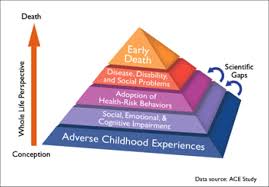
Listen to my radio interview reflecting on the documentary “Resilience”, the Adverse Childhood Experiences study (ACES), and my thoughts on how to heal from trauma and child abuse.

Click here: http://kcbx.org/post/resilience

aces pyramid 2

“The child may not remember, but the body remembers.” Resilience: The Biology of Stress and the Science of Hope is a one-hour documentary that delves into the science of Adverse Childhood Experiences (ACEs) and the birth of a new movement to treat and prevent Toxic Stress. While the original research was controversial, experts now consider the findings to have revealed one of the most important public health findings of a generation. Understood to be one of the leading causes of everything from heart disease and cancer to substance abuse and depression, extremely stressful experiences in childhood can alter brain development and have lifelong effects on health and behavior.

Join host Kris Kington-Barker as she speaks with guests Nisha AbdulCadar, an M.D., F.A.A.P. and Pediatrician with Martha’s Place Children’s Assessment Center and Ron Huxley a LMFT who provides faith-based, trauma-informed therapy for individuals and families about the upcoming movie screening and research behind “Resilience,” a powerful documentary film by James Redford and Karen Pritzker that reveals, toxic stress can trigger hormones that wreak havoc on the brains and bodies of children which can put them at a an increased risk for disease, homelessness, prison time, and even early death. Join the conversation and listen to how trailblazers like these in pediatrics, education, and social welfare are using cutting-edge science and field-tested therapies to fight back against the effects of toxic stress and greatly improve the health of our future generations.

Central Coast Voices is sponsored by ACTION for Healthy Communities in collaboration with KCBX and made possible through underwriting by Joan Gellert-Sargen.

NeuroResilient Play Therapy ©: A Trauma-Informed Approach to Healing

brainarticle1

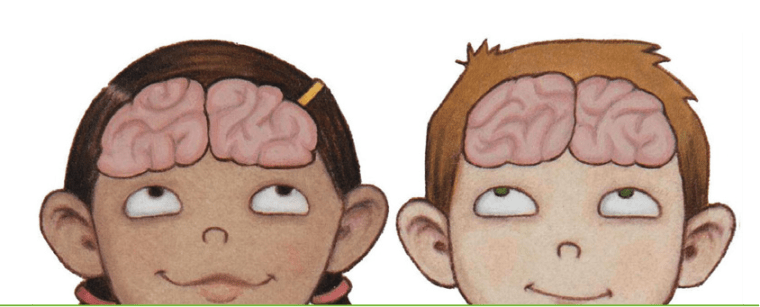
The goal of therapy with traumatized children is to help them learn to regulate and develop the executive functioning skills of the prefrontal center of the brain. I call this the state of being NeuroResilient.

All children are born emotionally impulsive and need to learn how to manage their moods, initiate and stick with tasks, plan and organize, and learn from past mistakes. This is nothing new and neurological studies of the brain suggest that the prefrontal areas of the brain do not completely develop until people are in their mid-twenties.

The challenge with trauma is that it can set a person back socially and emotionally so that while they are 15 years old chronologically, they react to the world as if their were 5 years of age. We call this, in the field of trauma-informed care and attachment-focused research, “age vs stage”. The individual’s chronological age doesn’t line up with their stage of development causing problems in relationships and daily functioning.

Many parents and professionals believe that an emotionally regulated child is a calm child which would be nice, even understandable, but not realistic for a child who has been traumatized. Consequently the goal of therapy is to build resilience, not calmness.

Resilience refers to ability to “spring back, recoil back into shape” or “recover quickly from a difficult situation”. It literally means to “leap back” to a place of safety and security. Who wouldn’t want to have more of that in their lives or the lives of their children?

Children have to build resiliency in their neurology so that behavioral strategies will stick. Parents and teachers get frustrated when their behavior charts and modification tools don’t have any effect on their hurt children.

NeuroResilient Play Therapy © models, to parents, how to integrate the various physiological and mindful parts of the child so that they can function optimally. It is based on identity focusing on the strengths of who the child was created to be instead of forcing the child to fit into a mold made by adults who believe the child has no motivation or seeks only to manipulate.

For more information on how to be NeuroResilient for children and adults, contact Ron today about speaking opportunities or schedule a session in his Avila Beach, Ca office (skype services are available).

2017 Child Abuse Prevention Academy

Please join us for the 9th Annual Child Abuse Prevention Academy, a training for students, professionals, and community members.

Participants will:

  • learn how to report incidents of suspected child abuse,
  • understand what occurs after a report,
  • understand the role and funtion of the brain in Trauma-Informed Care
  • learn to recognize the effects of trauma on the brain, behavior and development
  • explore primary strategies for healing trauma in the lives of children and adults.

Presenter: Lisa Fraser, Executive Director, Center for Family Strengthening, the San Luis Obispo County Child Abuse Prevention Council

Guest Speaker: Ron Huxley, LMFT will share,
The Beautiful, Wonderful, Broken Brain: Understanding Trauma-Informed Care.

Noted child and family therapist, speaker, and blogger Ron Huxley has worked in several systems of care, including community-based mental health, child therapy clinics, wraparound, County mental health, private psychotherapy practice, and faith-based counseling/coaching services. He has certifications in various clinical evidence-based and promising practices: EMDR, Incredible Years, Family Wellness, Love & Logic, S.T.E.P. (Systematic Training for Effective Parenting), TheraPlay, Love After Marriage, and Developmental Dyadic Psychotherapy (attachment-focused family therapy).

Student participants are urged to attend and will receive a Certificate of Participation. 

The training is free, but preregistration is required.

register now

When

Friday April 28, 2017. 9:00am – 12pm
Add to Calendar

Where

Cuesta College Student Auditorium – #5401
 CA-1, San Luis Obispo, CA, CA 93403

Free Parking  Lot #2

Contact

Center for Family Strengthening
805-543-6216
support@cfsslo.org  

  Brought to you in partnership with Center for Family Strengthening and Cuesta College        


Click here to Register Now!