Finding Light in Dark Times: The Science of Positive Coping

When life hits hard, most of us naturally focus on damage control. We try to solve problems, push through negative feelings, or simply survive until things get better. But what if there’s another way to cope—one that doesn’t ignore the tough stuff but adds something powerful to the mix?

A Different Approach to Stress

Professor Judith Moskowitz, a researcher at Northwestern University, stumbled onto something important while studying people going through one of life’s most difficult experiences: watching a partner die from AIDS. She was asking participants about their stress, pain, and struggles when something unexpected occurred. The participants pushed back.

“You’re only asking us about the bad stuff,” they told her. “What about the good things that are helping us get through this?”

At first, this seemed almost impossible. How could people facing such devastating loss talk about positive experiences? But as Moskowitz listened, she realized something profound: even in the darkest moments, people were finding glimmers of light. And those who could see these bright spots seemed to be coping better overall.

This observation changed everything. Instead of focusing solely on reducing negative emotions, Moskowitz began studying how positive emotions could serve as a tool for handling life’s inevitable challenges.

It’s Not About Pretending Everything’s Fine

Before we go further, let’s be clear about what this approach is not. It’s not about slapping on a fake smile, pretending problems don’t exist, or falling into the trap of “toxic positivity”—that harmful idea that you should just think your way out of every situation.

Life is complicated, and so are our emotions. You can feel grateful and sad at the same time. You can find moments of joy even while grieving. You can appreciate a sunset while worrying about tomorrow. The goal isn’t to replace difficult emotions but to make room for helpful ones alongside them.

Think of it like this: if you’re walking through a storm, you don’t pretend it’s sunny. But you might notice a sturdy tree that offers shelter, or feel grateful for the warm coat you’re wearing. The storm is still real, but you’re not missing the resources that can help you weather it.

A Toolkit for Tough Times

Moskowitz and her team developed a practical set of skills that anyone can learn and use. These aren’t magic solutions—they’re more like exercises for your emotional well-being. Just like physical exercise, they are most effective when practiced regularly.

Notice the Good Stuff

This might sound obvious, but when we’re stressed, our brains naturally focus on threats and problems. We must intentionally seek out positive moments, no matter how small. Maybe it’s your morning coffee tasting just right, a text from a friend, or noticing that the traffic light turned green just as you approached it.

The key is actively paying attention. Good things happen every day, but we often miss them when we’re caught up in our worries.

Savor the Positive Moments

When something good does happen, don’t let it slip by unnoticed. Take a moment to really experience it. Share it with someone, write it down, or simply pause to appreciate it fully. Think of it like a slow-motion replay for positive experiences—you’re amplifying the good feeling by giving it your full attention.

Practice Gratitude

This goes beyond just saying “thanks.” It’s about intentionally noticing things you appreciate, from the big (having people who love you) to the small (having clean water to drink). Some people keep gratitude journals, others just take a few minutes each day to mentally list what they’re thankful for.

Stay Present

When we’re stressed, our minds often race between past regrets and future worries. Mindful awareness means gently bringing your attention back to the present moment. This isn’t about meditation retreats or complicated techniques—it can be as simple as focusing on your breathing for a few minutes or really noticing what you’re seeing, hearing, or feeling right now.

Being present also helps you notice those joyous moments that are easy to miss when your mind is elsewhere.

Look for Silver Linings

Positive reappraisal means finding ways to reframe challenging situations. This isn’t about convincing yourself that bad things are actually good—it’s about looking for any genuine positives that might exist alongside the negatives.

Perhaps a job loss led to the discovery of a new career path. Possibly a health scare motivated you to take better care of yourself. Or maybe a difficult situation taught you something about your own strength. Moskowitz says this is her personal go-to skill because it can be used in almost any situation.

Recognize Your Strengths

When life feels overwhelming, it’s easy to feel helpless. But you have resources, skills, and strengths that have helped you through tough times before. Taking time to identify these qualities—whether it’s your sense of humor, your ability to listen to others, or your determination—can remind you that you’re not powerless.

Set Small, Achievable Goals

Big problems can feel impossible to solve, but breaking them down into tiny, manageable pieces makes them less overwhelming. Instead of “get my life together,” try “organize one drawer today” or “call one person back.” Each small accomplishment gives you a little boost of positive emotion and builds momentum.

Moskowitz found this particularly helpful during the pandemic, when everything felt uncertain and out of control.

Do Something Kind

Helping others—even in small ways—shifts your focus outward and often brings unexpected positive feelings. It doesn’t have to be dramatic. You might let someone merge in traffic, send an encouraging text, or help a neighbor with their groceries.

Acts of kindness remind us that we can still make a positive difference, even when we’re struggling ourselves.

Be Gentle with Yourself

Self-compassion means treating yourself with the same kindness you’d show a good friend going through a hard time. Instead of harsh self-criticism, try to understand that suffering is a natural part of being human, and you deserve care and patience, especially from yourself.

The Evidence Is Real

This might all sound like common sense, but research shows these practices actually work. Studies have found connections between gratitude and improved physical health. Moskowitz’s own research has shown that people who learn these skills experience improved emotional well-being, and some studies are even finding effects on physical health measures.

The approach has been tested with people facing various challenges: those dealing with depression, caregivers, people with chronic pain, and everyday folks just trying to cope with life’s stresses.

Making It Work in Real Life

Like physical fitness, these emotional skills require regular practice to see sustained benefits. You can’t just try gratitude once and expect lasting change. The key is building these practices into your daily routine until they become as automatic as brushing your teeth.

Start small. Pick one or two skills that resonate with you and practice them for a few weeks. Notice what happens. You might be surprised at how such simple practices can help you feel more resilient and capable of handling whatever life throws your way.

The Bottom Line

When you’re going through tough times, don’t underestimate the power of positive emotions. They’re not frivolous add-ons to “real” coping—they’re legitimate tools that can help you navigate challenges more effectively.

You don’t have to choose between acknowledging your problems and finding moments of positivity. You can do both. And when you do, you might find that you’re not just surviving difficult times—you’re building skills that make you stronger for whatever comes next.

The research is clear: these simple practices might seem small, but their impact can be significant. In a world that often feels overwhelming, that’s a message worth holding onto.
Learn to be your own “Good Parent”

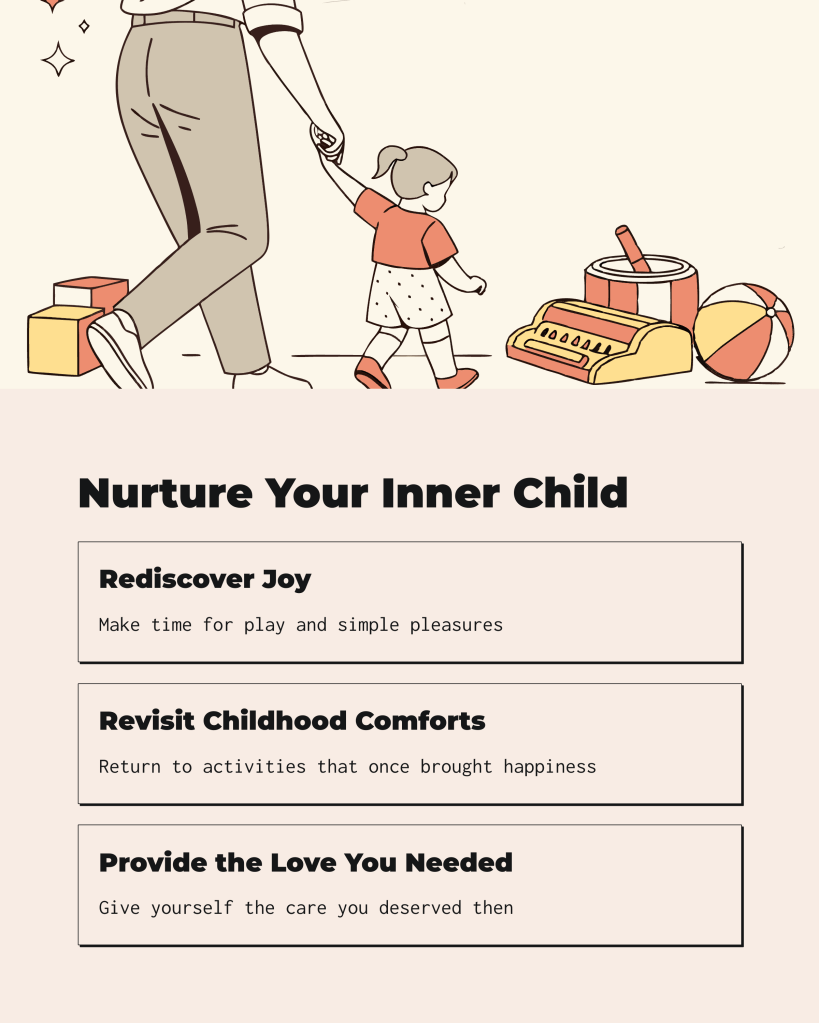
Discover how to nurture, support, and build inner resilience through self-compassion. When we develop our inner “good parent,” we create a foundation of emotional stability that serves us through life’s challenges.

Many of us carry wounds from childhood that affect how we treat ourselves today. By learning to parent yourself with kindness and wisdom, you can heal these patterns and develop healthier self-talk, boundaries, and emotional regulation skills.

Trauma Recovery: The Healing Power of Rituals

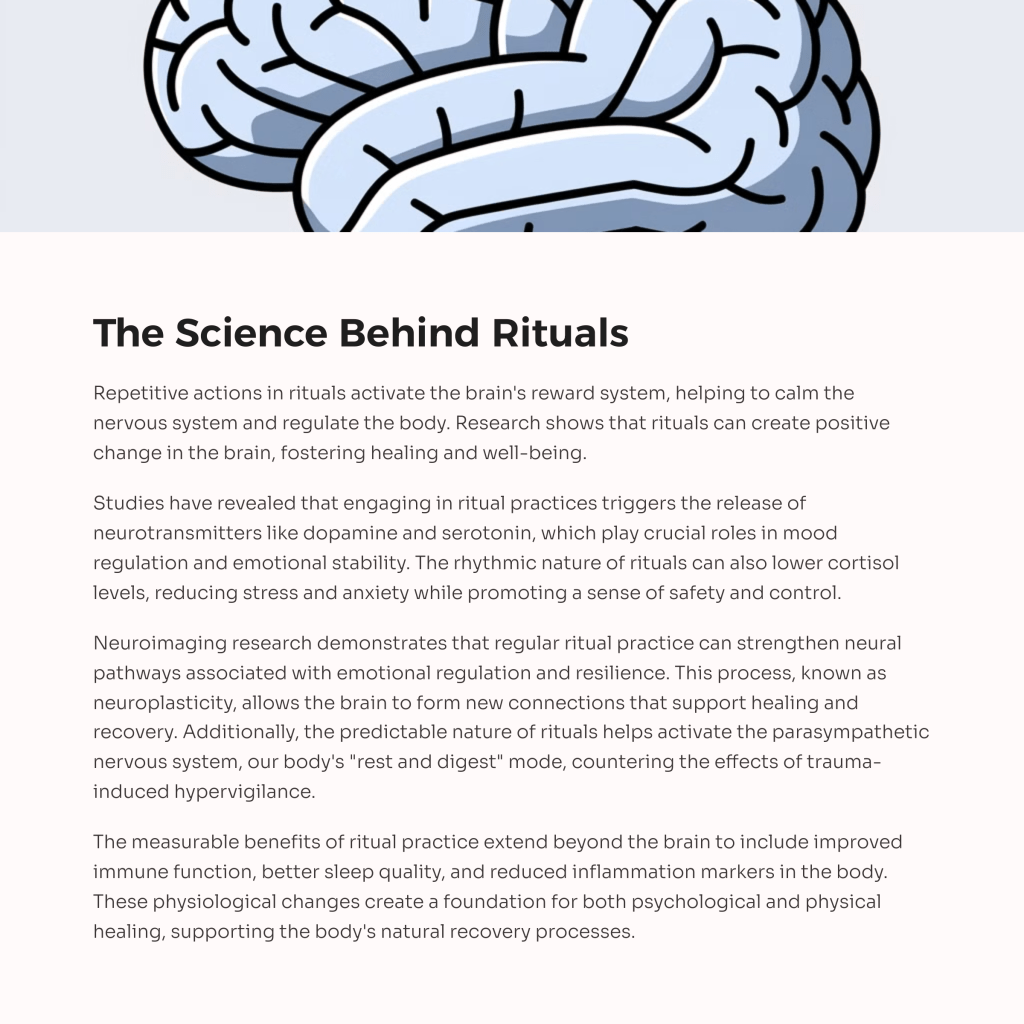
Looking for ways to heal after trauma? Rituals are more than just cultural practices; they’re powerful tools for creating a sense of peace and grounding. Whether it’s a morning meditation, a weekly journaling practice, or a sacred ceremony, rituals can provide structure and meaning during your healing journey.

Safe Space for Healing

Rituals create a protected container for processing emotions and experiences at your own pace.

Connection to Self

Regular practices help rebuild trust in yourself and your body’s wisdom

Restored Sense of Control

Through intentional actions, rituals help reclaim your power and agency

Join us as we explore how ancient wisdom and modern understanding support your healing journey. Whether you’re just starting out or looking to deepen your practice, discover how reclaiming rituals can help you find healing, empowerment, and renewed purpose.

Leaping into 2025: Embracing Change with an Open Heart and Letting Go!

As we stand at the threshold of 2025, many of us feel like skydivers perched at the airplane door – hearts racing, minds swirling with “what-ifs.” In her profound work, Melody Beattie captures this universal fear perfectly: “Sometimes we’re so scared, all we can think to do is hang on.”

Whether entering this new year carrying hopes for career advancement, relationship healing, or personal growth, the journey ahead requires us to embrace the art of letting go. The coming year represents our metaphorical airplane door. Some of us approach it willingly, armed with resolutions and dreams. Others may be pushed toward change by circumstances beyond our control – a company restructuring, health challenges, or shifting relationships.

Fear often manifests as an intense grip on the familiar. We cling to outdated habits, toxic relationships, or unfulfilling jobs because we feel safer than the unknown. But Beattie notes that holding on is often a “silly illusion.” Like a skydiver must release the aircraft to experience the exhilarating freedom of flight, we must loosen our grip on what no longer serves us.

The Art of Letting Go: A 2025 Action Plan

Recognize Your Airplane Door

    • Identify what you need to release
    • Acknowledge if changes are voluntary or forced
    • Practice Beattie’s physical exercise: literally, drop objects while noting your resistance

    Practice Ground Training
    “Training their bodies and themselves to do it right” – Beattie

      • Start with releasing minor irritations – traffic delays, minor setbacks
      • Journal about your letting-go journey
      • Build resilience through small daily acts of surrender

      Manage the Freefall

        Use Beattie’s anxiety management techniques:

        • Deep breathing exercises
        • Positive self-talk
        • Finding humor in uncertainty
        • Accept that fear is normal during change
        • Trust the process of release

        Deploy Your Safety Measures
        “Cut away major malfunctions” – Beattie

          • Identify toxic situations requiring immediate release
          • Build a support network
          • Create contingency plans for significant life changes
          • Know when to walk away from situations that aren’t working

          Navigate the Landing

            • Actively engage with change rather than passive acceptance
            • Assess when to “push against the wind” (stand firm)
            • Celebrate small victories in letting go
            • Practice grace and resilience in facing challenges

            Remember, letting go isn’t passive surrender. Like a skydiver reading wind patterns and adjusting accordingly, we must actively engage with life’s currents. “The process of letting go,” Beattie emphasizes, “requires as much skill and attention as holding on.”

            Sometimes, life presents us with malfunctioning parachutes – situations that aren’t working despite our best efforts. The new year might require us to deploy our reserve chute by walking away from draining relationships, leaving unfulfilling careers, or abandoning strategies that no longer work. While scary, these decisions often lead to softer landings than forcing a damaged situation to work.

            As we step into 2025, let’s trust that even in freefall, we possess the strength to navigate our descent and land gracefully in new possibilities. Every skydiver was once a beginner. Start small, trust the process, and let 2025 be your conscious release and renewal year.

            The countdown to the new year has begun. What will you choose to release as you leap into 2025?

            Reflecting on Your Beliefs for Personal Growth

            In our journey towards personal growth and self-improvement, understanding our beliefs plays a crucial role. Our beliefs shape how we perceive the world, ourselves, and our potential. By identifying and reflecting on our beliefs, we can uncover deep-seated patterns that may be holding us back and cultivate a mindset that propels us forward. Here are some key questions and practical ways to reflect on your beliefs for personal growth:

            Questions to Identify Core Beliefs:

            1. What beliefs do I hold about myself?
            2. How do I view my abilities and skills?
            3. What beliefs do I have about relationships?
            4. How do I perceive failure and setbacks?
            5. What are my beliefs about the world around me?
            6. How do I see my own worthiness and value?
            7. What beliefs do I hold about success and achievement?
            8. How do I interpret feedback and criticism?
            9. What are my beliefs about happiness and fulfillment?

            Reflective Practices for Personal Growth:

            1. Journaling: Write down your beliefs, explore their origins, and reflect on their impact on your thoughts and actions.
            2. Mindfulness: Practice being present and observing your beliefs without judgment in different situations.
            3. Seeking Feedback: Engage in conversations with others to gain new perspectives on your beliefs.
            4. Challenge Your Beliefs: Question the validity of your beliefs and examine how they may be limiting you.
            5. Visualization: Envision a life without the constraints of limiting beliefs and explore the possibilities.
            6. Read and Learn: Educate yourself on personal development topics to gain insights into belief systems.
            7. Affirmations: Use positive affirmations to replace negative beliefs with empowering ones.
            8. Therapy or Coaching: Consider seeking professional guidance to delve deeper into your beliefs and work on transforming them.

            By actively engaging in these reflective practices, you can unravel the layers of your beliefs, identify areas for growth, and pave the way for personal transformation. Embracing a mindset of curiosity, openness, and self-awareness can lead to profound shifts in your beliefs and ultimately empower you to live a more fulfilling and authentic life. Remember, personal growth is a continuous journey of self-discovery and evolution, and reflecting on your beliefs is a powerful step toward realizing your full potential.

            Stop Second-Guessing Yourself: Build Confidence and Make Better Decisions

            Second-guessing oneself is a common experience that can lead to indecision, anxiety, and a lack of confidence. For many people, the constant cycle of doubting their choices and actions can be a significant challenge. However, there are ways to overcome this habit and build the confidence needed to make decisions with conviction.

            Step 1: Recognize the Pattern:

            The first step in overcoming second-guessing is to recognize the pattern. Pay attention to when and why you tend to doubt yourself. Is it in social situations, at work, or when making personal decisions? Understanding the triggers for your second-guessing can help you address the issue more effectively.

            Step 2: Challenge Negative Thoughts:

            Once you identify the pattern, work on challenging the negative thoughts that lead to second-guessing. Instead of assuming the worst or doubting your abilities, consciously replace negative thoughts with more positive and realistic ones. For example, if you catch yourself thinking “I can’t do this,” reframe it to “I have the skills and knowledge to tackle this.”

            Step 3: Practice Self-Compassion:

            It’s important to be kind to yourself when facing the challenges of second-guessing. Practice self-compassion by acknowledging that it’s okay to make mistakes and that everyone experiences moments of doubt. Treat yourself with the same understanding and encouragement that you would offer to a friend in a similar situation.

            Step 4: Seek Support and Feedback:

            Don’t be afraid to seek support and feedback from trusted friends, family members, or colleagues. Sharing your thoughts and concerns with others can provide a different perspective and help you gain clarity. Constructive feedback can also reinforce your confidence in making decisions.

            Step 5: Take Action and Embrace Mistakes:

            Overcoming second-guessing often involves taking action despite the uncertainty. Embrace the possibility of making mistakes and recognize that they are valuable learning opportunities. By taking decisive action, you can build confidence in your ability to handle challenges and make informed choices.

            Step 6: Celebrate Achievements and Progress:

            As you work on overcoming second-guessing, celebrate your achievements and progress along the way. Recognize and acknowledge the times when you make decisions without hesitation or doubt. By acknowledging your growth, you reinforce positive behaviors and build confidence in your decision-making abilities.

            Overcoming the habit of second-guessing oneself is a gradual process that requires self-confidence, and a willingness to take action. By recognizing the pattern, challenging negative thoughts, seeking support, and embracing mistakes, individuals can gradually build the confidence needed to make decisions with conviction. Through consistent practice and perseverance, it is possible to break free from the cycle of second-guessing and approach life’s challenges with greater confidence and clarity.

            How to live in the “Peaks & Valleys” of life

            A review (and application) of Spencer Johnsons Book “Peaks and Valleys”:

            Have you ever felt like life is a rollercoaster of highs and lows? If so, you’re not alone. Life is full of peaks and valleys, and navigating the ups and downs can be challenging. But fear not because Spencer Johnson’s book, “Peaks and Valleys,” provides a simple but powerful framework for managing the highs and lows of life.

            Johnson tells the story of a young man who meets an older, wiser man in the mountains, who teaches him how to overcome obstacles and achieve success. The older man teaches the young man that life is a series of peaks and valleys and that it is during the valleys that one can learn valuable lessons and gain perspective.

            So, how can we learn valuable lessons and gain perspectives in the valleys of life? Johnson suggests several ways:

            First, he encourages us to embrace the valley. Rather than avoiding or denying life’s difficulties, Johnson suggests embracing them and seeking opportunities to learn and grow.

            Embracing the valleys of life can be challenging, but there are practical ways that someone can implement this idea from “Peaks and Valleys” by Spencer Johnson. Here are a few suggestions:

            1. Practice mindfulness: Mindfulness can help individuals become more aware of their thoughts and emotions and help them approach difficult situations with a more open and accepting attitude. Mindfulness practices such as meditation or journaling can help individuals embrace the valleys of life by encouraging them to sit with and observe their experiences without judgment.
            2. Seek support: Talking to a trusted friend, family member, or therapist can provide individuals with a safe space to process difficult emotions and experiences. Seeking support can also help individuals feel less alone and give them insights and advice on navigating the valley.
            3. Reframe negative thoughts: Falling into negative thought patterns or beliefs can be easy when faced with a difficult situation. Reframing negative thoughts into more positive or neutral ones can help individuals approach the valley with a more open and accepting attitude. For example, rather than thinking, “this situation is terrible,” try reframing it to “this situation is challenging, but I have the strength to overcome it.”
            4. Look for growth opportunities: As Johnson suggests, the valleys of life can provide opportunities for learning and growth. When facing a difficult situation, identify what lessons can be learned or how they can contribute to personal growth. This shift in perspective can help individuals approach the valley with a more positive and proactive attitude.

            Second, he suggests reflecting on past successes and failures. Reflecting on past successes and failures can help us gain perspective and learn from our mistakes.

            Reflecting on past successes and failures can be valuable for personal growth and development. Here are some practical ways to implement this idea from “Peaks and Valleys” by Spencer Johnson:

            1. Keep a journal: Writing down past successes and failures can provide a record of personal growth and development over time. Additionally, reflecting on past experiences in writing can help individuals gain perspective and identify patterns or themes in their successes and failures.
            2. Seek feedback: Talking to trusted friends, family members, or mentors can provide valuable insights into past successes and failures. Others may be able to offer an outside perspective and identify strengths and weaknesses that the individual may not have noticed themselves.
            3. Identify patterns: Reflecting on past successes and failures can help individuals identify patterns or themes in their behavior or decision-making. By recognizing these patterns, individuals can make more informed decisions and avoid repeating past mistakes.
            4. Celebrate successes: Celebrating past successes, no matter how small, can provide motivation and confidence for future endeavors. Acknowledging personal achievements can help individuals feel more resilient in future challenges.
            5. Learn from failures: Johnson suggests that failures can provide valuable lessons for personal growth. Rather than dwelling on past mistakes, individuals can reflect on what they learned from the experience and how they can use that knowledge to make better decisions in the future.

            Third, he recommends asking for feedback. Asking for feedback from others can provide valuable insights and help us identify areas for improvement.

            Asking for feedback can be a powerful tool for personal growth and development. Here are some practical ways to implement this idea from “Peaks and Valleys” by Spencer Johnson:

            1. Ask specific questions: When seeking feedback from others, asking specific questions about a particular area of interest can be helpful. For example, individuals can ask for general feedback on a specific project, presentation, or behavior rather than asking for general feedback.
            2. Choose trusted sources: It’s important to choose trusted sources when seeking feedback. Individuals can ask for feedback from friends, family members, colleagues, mentors, or others they respect and trust.
            3. Be open to criticism: Receiving feedback can be difficult, especially if it’s critical. However, being open to criticism and approaching feedback with a growth mindset can provide valuable insights and help individuals identify areas for improvement.
            4. Follow up: After receiving feedback, following up with the individual to clarify any points or ask for additional advice can be helpful. Additionally, individuals can share how they plan to implement the feedback and ask for support or accountability.
            5. Practice active listening: When receiving feedback, it’s important to practice active listening. This means paying attention to what the individual is saying, asking clarifying questions, and expressing gratitude for the feedback.

            Fourth, he advises practicing gratitude. Even amid difficulty, focusing on the positive aspects of our lives can help us maintain a positive attitude and gain perspective.

            Practicing gratitude can be a powerful tool for cultivating a positive mindset and gaining perspective, even during difficult times. Here are some practical ways, with empathy in mind, to implement this idea from “Peaks and Valleys” by Spencer Johnson:

            1. Start a gratitude journal: Writing down three things you’re grateful for each day can help you focus on the positive aspects of your life. This could be as simple as a warm cup of coffee in the morning, a supportive friend or family member, or the beauty of nature.
            2. Say thank you: Expressing gratitude to others can help strengthen relationships and improve your own well-being. Whether it’s a heartfelt thank-you note, a verbal expression of thanks, or a small act of kindness, saying thank you can help you feel more connected and appreciative.
            3. Notice the good: During difficult times, it can be easy to focus on the negative aspects of a situation. However, intentionally noticing the good, no matter how small, can help shift your perspective and boost your mood. For example, noticing a beautiful sunset, a kind gesture from a stranger, or a moment of laughter with a loved one can help you feel more positive.
            4. Practice mindfulness: Mindfulness practices, such as meditation or deep breathing, can help you stay present and cultivate a sense of gratitude. Focusing on your breath or a specific sensation in your body can quiet your mind and help you appreciate the present moment.
            5. Give back: Giving back to others can be a powerful way to cultivate gratitude and meaning in your life. Volunteering, donating to a charity, or simply offering a kind word or gesture to someone in need can help you feel more connected to others and appreciate your blessings.

            Fifth, he suggests taking action. Rather than becoming paralyzed by fear or uncertainty, Johnson suggests taking action toward our goals, even if it is a small step.

            Here are the practical action steps for taking action towards your goals as suggested by Spencer Johnson in his book “Peaks and Valleys”:

            1. Identify your goals: First, identify what you want to achieve or accomplish. Be specific about your goals and write them down.
            2. Break down your goals: Break your goals down into smaller, manageable steps. This will make them less overwhelming and easier to accomplish.
            3. Take small actions: Take action towards your goals, even if it’s just a small step. It could be as simple as making a phone call or email.
            4. Focus on progress, not perfection: Don’t worry about being perfect. Instead, focus on making progress toward your goals. Celebrate small wins along the way.
            5. Stay motivated: Keep yourself motivated by focusing on the positive outcomes of achieving your goals. Remind yourself why you started and how good it will feel when you succeed.
            6. Adjust your actions: If your actions aren’t getting you closer to your goals, adjust your approach. Be open to trying new things and making changes as needed.
            7. Stay consistent: Consistency is key to achieving your goals. Keep taking action towards your goals, even when it gets tough.

            Lastly, he advises us to learn from others. Studying the lives of successful people and learning from their experiences can help us gain perspective and insights into navigating the valleys of life.

            Here are the practical implementation steps for learning from others, as suggested by Spencer Johnson in his book “Peaks and Valleys”:

            1. Identify successful people: In your field or area of interest, identify successful people. You can look for them in books, articles, online resources, or your personal network.
            2. Study their experiences: Read about their experiences, challenges, and successes. Look for common themes and patterns that contributed to their success.
            3. Learn from their mistakes: Identify the mistakes they made and learn from them. This can help you avoid making the same mistakes and save you time and effort in the long run.
            4. Adapt their strategies: Identify their strategies and approaches to overcome challenges and achieve success. Adapt these strategies to fit your own situation and circumstances.
            5. Apply their lessons: Apply the lessons you learn from successful people to your own life. Implement their strategies and approaches in your own work and personal life.
            6. Share with others: Share what you learn with others. Discuss your findings with colleagues, friends, or family members. This can help you gain new perspectives and insights and inspire others to learn from successful people.

            Remember, learning from successful people is not about copying them. It’s about gaining insights and perspectives to help you navigate life’s valleys more effectively and achieve your own goals.

            “The best way to get out of a valley is to climb toward a peak.”

            Spencer Johnson

            Overall, “Peaks and Valleys” provides a simple but powerful framework for managing the highs and lows of life and encourages readers to use the lessons learned during difficult times to achieve greater success and happiness. Rather than getting stuck in the depths of a valley, we can focus on climbing towards a peak and use the lessons learned during the valley to propel us forward. By embracing the valleys of life, reflecting on past experiences, seeking feedback, practicing gratitude, taking action, and learning from others, we can navigate life’s peaks and valleys with grace and resilience.

            I hope you found this summary helpful and that it encourages you to read “Peaks and Valleys” for yourself. Remember, life is a journey, and every valley has a peak waiting on the other side.

            New Year Reflections (vs. Resolutions)

            This year, I am working on short reflections, taking an inner path of peace and wellness instead of the traditional new year resolutions. I hope you enjoy them…

            It’s Normal

            It is normal to feel abnormal from time to time. Fear and uncertainty are certainties in worlds that are broken and fragmented. What is needed isn’t more glue and duct tape but more compassion and softness for ourselves. Try the softer path versus the hard, logical road and see if your journey discovers new growth in the rocks and gravel you overlooked before.

            Action Step: Reflect on your inner path. How rocky has it been? Where does it feel broken? What would the softer path look like for you? What will you find that you overlooked?

            Take a Breath

            Inspiration doesn’t always require perspiration,
            I am not against it; I have shed my share of it.
            Inspiration is “in spirit,” breathing hope in and
            releasing hopelessness. Pausing to feel the true
            self and letting go false. Allow new ideas to
            happen, without striving, with just the breath.
            Take another until there are several, like
            pearls on a string, shimmering in the light.

            Action Step: Practice breathing more and stop trying to find inspiration and creativity. Let it find you…Don’t let the wait time increase your anxiety; start striving again. Take another breath and breath in the spirit, in-spire-nation.

            OVER IT

            Drinking is just the symptom of the bigger
            problem, the iceberg under the surface
            no one wants to consider. The yelling is just a
            sign. Overeating is just the frosty
            tip, the overspending, the overthinking,
            the over-everything, and excesses to mask
            the pain. Let’s start with a few ice cubes,
            drink a glass of chilled water, and talk about
            the stuff long buried. Aren’t we finally OVER IT?

            Action Step: Assess how ready you are to be OVER It, whatever it is…What’s your first step for inner healing? Can you read a book, listen to a podcast, or talk to a therapist? Get out your journal, brush off the dust and start writing.