Finding Light in Dark Times: The Science of Positive Coping

When life hits hard, most of us naturally focus on damage control. We try to solve problems, push through negative feelings, or simply survive until things get better. But what if there’s another way to cope—one that doesn’t ignore the tough stuff but adds something powerful to the mix?

A Different Approach to Stress

Professor Judith Moskowitz, a researcher at Northwestern University, stumbled onto something important while studying people going through one of life’s most difficult experiences: watching a partner die from AIDS. She was asking participants about their stress, pain, and struggles when something unexpected occurred. The participants pushed back.

“You’re only asking us about the bad stuff,” they told her. “What about the good things that are helping us get through this?”

At first, this seemed almost impossible. How could people facing such devastating loss talk about positive experiences? But as Moskowitz listened, she realized something profound: even in the darkest moments, people were finding glimmers of light. And those who could see these bright spots seemed to be coping better overall.

This observation changed everything. Instead of focusing solely on reducing negative emotions, Moskowitz began studying how positive emotions could serve as a tool for handling life’s inevitable challenges.

It’s Not About Pretending Everything’s Fine

Before we go further, let’s be clear about what this approach is not. It’s not about slapping on a fake smile, pretending problems don’t exist, or falling into the trap of “toxic positivity”—that harmful idea that you should just think your way out of every situation.

Life is complicated, and so are our emotions. You can feel grateful and sad at the same time. You can find moments of joy even while grieving. You can appreciate a sunset while worrying about tomorrow. The goal isn’t to replace difficult emotions but to make room for helpful ones alongside them.

Think of it like this: if you’re walking through a storm, you don’t pretend it’s sunny. But you might notice a sturdy tree that offers shelter, or feel grateful for the warm coat you’re wearing. The storm is still real, but you’re not missing the resources that can help you weather it.

A Toolkit for Tough Times

Moskowitz and her team developed a practical set of skills that anyone can learn and use. These aren’t magic solutions—they’re more like exercises for your emotional well-being. Just like physical exercise, they are most effective when practiced regularly.

Notice the Good Stuff

This might sound obvious, but when we’re stressed, our brains naturally focus on threats and problems. We must intentionally seek out positive moments, no matter how small. Maybe it’s your morning coffee tasting just right, a text from a friend, or noticing that the traffic light turned green just as you approached it.

The key is actively paying attention. Good things happen every day, but we often miss them when we’re caught up in our worries.

Savor the Positive Moments

When something good does happen, don’t let it slip by unnoticed. Take a moment to really experience it. Share it with someone, write it down, or simply pause to appreciate it fully. Think of it like a slow-motion replay for positive experiences—you’re amplifying the good feeling by giving it your full attention.

Practice Gratitude

This goes beyond just saying “thanks.” It’s about intentionally noticing things you appreciate, from the big (having people who love you) to the small (having clean water to drink). Some people keep gratitude journals, others just take a few minutes each day to mentally list what they’re thankful for.

Stay Present

When we’re stressed, our minds often race between past regrets and future worries. Mindful awareness means gently bringing your attention back to the present moment. This isn’t about meditation retreats or complicated techniques—it can be as simple as focusing on your breathing for a few minutes or really noticing what you’re seeing, hearing, or feeling right now.

Being present also helps you notice those joyous moments that are easy to miss when your mind is elsewhere.

Look for Silver Linings

Positive reappraisal means finding ways to reframe challenging situations. This isn’t about convincing yourself that bad things are actually good—it’s about looking for any genuine positives that might exist alongside the negatives.

Perhaps a job loss led to the discovery of a new career path. Possibly a health scare motivated you to take better care of yourself. Or maybe a difficult situation taught you something about your own strength. Moskowitz says this is her personal go-to skill because it can be used in almost any situation.

Recognize Your Strengths

When life feels overwhelming, it’s easy to feel helpless. But you have resources, skills, and strengths that have helped you through tough times before. Taking time to identify these qualities—whether it’s your sense of humor, your ability to listen to others, or your determination—can remind you that you’re not powerless.

Set Small, Achievable Goals

Big problems can feel impossible to solve, but breaking them down into tiny, manageable pieces makes them less overwhelming. Instead of “get my life together,” try “organize one drawer today” or “call one person back.” Each small accomplishment gives you a little boost of positive emotion and builds momentum.

Moskowitz found this particularly helpful during the pandemic, when everything felt uncertain and out of control.

Do Something Kind

Helping others—even in small ways—shifts your focus outward and often brings unexpected positive feelings. It doesn’t have to be dramatic. You might let someone merge in traffic, send an encouraging text, or help a neighbor with their groceries.

Acts of kindness remind us that we can still make a positive difference, even when we’re struggling ourselves.

Be Gentle with Yourself

Self-compassion means treating yourself with the same kindness you’d show a good friend going through a hard time. Instead of harsh self-criticism, try to understand that suffering is a natural part of being human, and you deserve care and patience, especially from yourself.

The Evidence Is Real

This might all sound like common sense, but research shows these practices actually work. Studies have found connections between gratitude and improved physical health. Moskowitz’s own research has shown that people who learn these skills experience improved emotional well-being, and some studies are even finding effects on physical health measures.

The approach has been tested with people facing various challenges: those dealing with depression, caregivers, people with chronic pain, and everyday folks just trying to cope with life’s stresses.

Making It Work in Real Life

Like physical fitness, these emotional skills require regular practice to see sustained benefits. You can’t just try gratitude once and expect lasting change. The key is building these practices into your daily routine until they become as automatic as brushing your teeth.

Start small. Pick one or two skills that resonate with you and practice them for a few weeks. Notice what happens. You might be surprised at how such simple practices can help you feel more resilient and capable of handling whatever life throws your way.

The Bottom Line

When you’re going through tough times, don’t underestimate the power of positive emotions. They’re not frivolous add-ons to “real” coping—they’re legitimate tools that can help you navigate challenges more effectively.

You don’t have to choose between acknowledging your problems and finding moments of positivity. You can do both. And when you do, you might find that you’re not just surviving difficult times—you’re building skills that make you stronger for whatever comes next.

The research is clear: these simple practices might seem small, but their impact can be significant. In a world that often feels overwhelming, that’s a message worth holding onto.

Trauma Recovery: The Healing Power of Rituals

Looking for ways to heal after trauma? Rituals are more than just cultural practices; they’re powerful tools for creating a sense of peace and grounding. Whether it’s a morning meditation, a weekly journaling practice, or a sacred ceremony, rituals can provide structure and meaning during your healing journey.

Safe Space for Healing

Rituals create a protected container for processing emotions and experiences at your own pace.

Connection to Self

Regular practices help rebuild trust in yourself and your body’s wisdom

Restored Sense of Control

Through intentional actions, rituals help reclaim your power and agency

Join us as we explore how ancient wisdom and modern understanding support your healing journey. Whether you’re just starting out or looking to deepen your practice, discover how reclaiming rituals can help you find healing, empowerment, and renewed purpose.

Breath to Breath: Your Path to Inner Calm

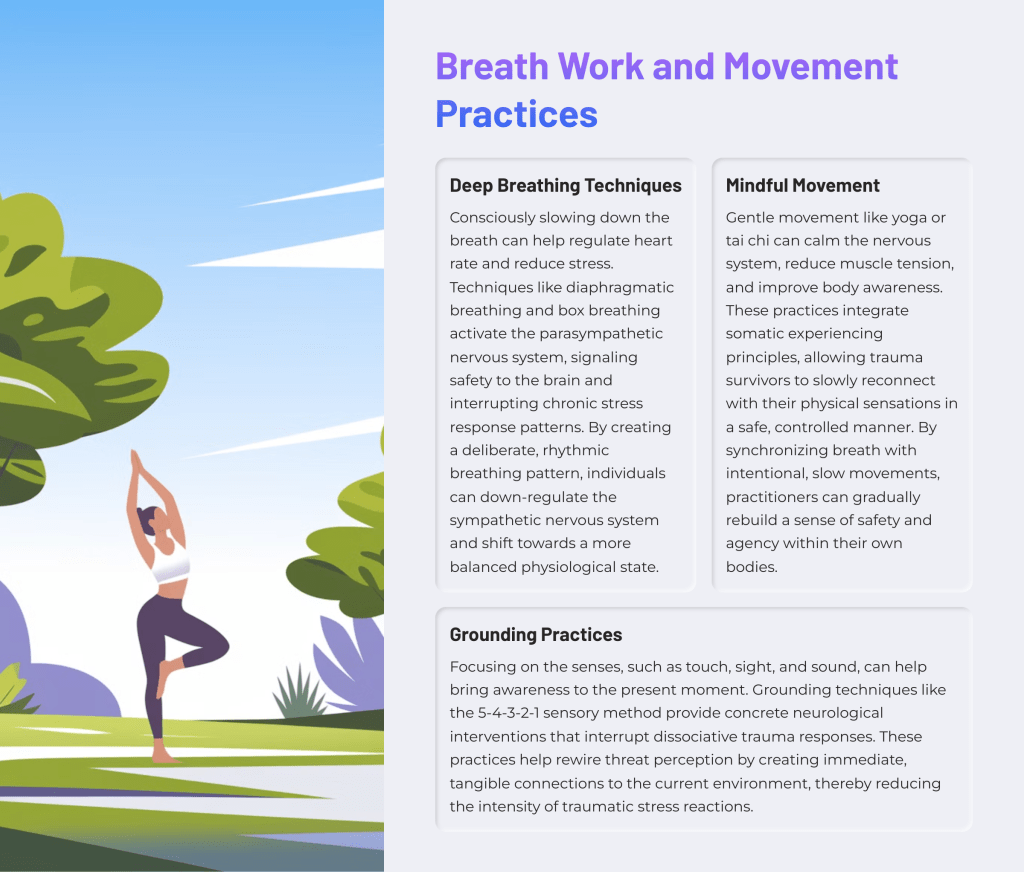
Deep breathing is a powerful tool for calming the nervous system and promoting overall well-being in children and adults. This simple yet effective technique offers numerous benefits for physical and mental health.

Benefits of Deep Breathing

For Adults

Deep breathing activates the parasympathetic nervous system, which helps reduce stress and anxiety[1][2]. It can lower heart rate and blood pressure and even decrease the production of stress hormones like cortisol[1]. Regular practice of deep breathing exercises has been shown to:

  • Improve cardiovascular health
  • Enhance respiratory performance
  • Boost emotional well-being
  • Increase relaxation responses
  • Promote better sleep

Studies have found that just one minute of slow, deep breathing can significantly lower physiological arousal, making it an excellent tool for managing stress in everyday situations[4].

For Children

Deep breathing exercises can be particularly beneficial for children, helping them develop essential coping skills:

  • Reduces anxiety and stress
  • Improves focus and concentration
  • Enhances emotional regulation
  • Promotes better sleep
  • Builds resilience

Research has shown that guiding children through brief deep breathing exercises can significantly lower their physiological arousal, even in everyday settings[4]. This makes it an invaluable tool for helping children manage their emotions and stress.

Introducing Calm Breath: A New App for Children

We’ve developed a new app called Calm Breath to help children learn and practice deep breathing techniques. This interactive tool makes deep breathing exercises fun and engaging for kids. You can try it out at https://calm-breath.replit.app/

Calm Breath joins a growing list of digital resources to teach children mindfulness and relaxation techniques [6][9]. Incorporating technology can make these valuable skills more accessible and appealing to young users.

How to Practice Deep Breathing

To get the most benefit from deep breathing, follow these simple steps:

  1. Find a comfortable position, either sitting or lying down.
  2. Place one hand on your chest and the other on your belly.
  3. Breathe in slowly through your nose, feeling your belly expand.
  4. Exhale slowly through your mouth, letting your belly fall.
  5. Repeat for several breaths, focusing on the sensation of your breath.

Remember, consistency is key. Incorporating deep breathing exercises into your daily routine can lead to long-term benefits for you and your children.

By teaching children the importance of deep breathing early on, we can help them develop lifelong skills for managing stress and promoting overall well-being. With tools like Calm Breath, we’re making it easier than ever for children to learn and practice these essential techniques.

Citations:
[1] https://www.onestep.co/resources-blog/deep-breathing-better-physical-mental-health
[2] https://positivepsychology.com/deep-breathing-techniques-exercises/
[3] https://www.apaservices.org/practice/business/technology/tech-column/children-mindfulness-apps
[4] https://greatergood.berkeley.edu/article/item/how_four_deep_breaths_can_help_kids_calm_down
[5] https://www.nature.com/articles/s41598-021-98736-9
[6] https://www.understood.org/en/articles/8-meditation-apps-for-kids
[7] https://www.childrenscolorado.org/just-ask-childrens/articles/breathing-to-change-mood/
[8] https://www.webmd.com/balance/what-to-know-4-7-8-breathing
[9] https://parentingchaos.com/anxiety-apps-kids/
[10] https://copingskillsforkids.com/deep-breathing-exercises-for-kids
[11] https://www.heart.org/en/news/2023/07/07/its-not-just-inspiration-careful-breathing-can-help-your-health
[12] https://www.pcmag.com/picks/the-6-best-meditation-and-mindfulness-apps-for-kids
[13] https://www.cedars-sinai.org/blog/five-deep-breathing-exercises-for-kids-and-teens.html

Understanding Traumas Impact on Individuals and Communities

Trauma is not just an individual experience; it ripples through families, neighborhoods, and entire communities, shaping the social fabric and influencing the well-being of all its members.” – Dr. Judith Herman, Clinical Psychologist and Trauma Expert.

Trauma is a pervasive and often misunderstood experience that can have profound effects on individuals and communities. Understanding the nature of trauma, its impact, and the expected reactions it elicits is crucial for building a supportive and empathetic community. 

In this issue of the Trauma Champions Newsletter, we will explore the definition of trauma, its far-reaching effects, and the different types of trauma that individuals may experience. By gaining a deeper understanding of trauma, we can better support those who have been affected and work towards creating trauma-informed communities.

Defining Trauma: 

Trauma is not limited to physical injuries; it encompasses emotional and psychological wounds that result from distressing events or experiences. These events can be singular, such as an accident or natural disaster, or prolonged, such as ongoing abuse or neglect. Trauma can also result from systemic injustices, discrimination, or the effects of war and conflict. It is essential to recognize that trauma is a deeply personal experience, and individuals may respond differently to similar events based on their unique circumstances and resilience.

Impact on Individuals and Communities:

The impact of trauma extends beyond the individual, affecting families, neighborhoods, and entire communities. Trauma can disrupt social connections, erode trust, and create cycles of adversity that perpetuate its effects. It may manifest in various ways, including mental health challenges, substance abuse, relationship difficulties, and physical health issues. Furthermore, trauma can contribute to the perpetuation of violence, crime, and social instability if left unaddressed. Understanding the collective impact of trauma is essential for fostering a compassionate and supportive community environment.

Types of Trauma and Common Reactions: 

Trauma can take many forms, each with its own challenges and responses. Some common types of trauma include:

  • Acute Trauma: Resulting from a single distressing event, such as an accident, assault, or natural disaster.
  • Complex Trauma: Arising from prolonged exposure to traumatic experiences, such as childhood abuse, domestic violence, or war trauma.
  • Intergenerational Trauma: Transmitted across generations, often stemming from historical injustices, colonization, or cultural trauma.
  • Systemic Trauma: Caused by institutional oppression, discrimination, and social inequalities that impact marginalized communities.

Individuals’ reactions to trauma can vary widely, encompassing emotional distress, dissociation, hypervigilance, and a range of coping mechanisms. Recognizing that these responses are adaptive strategies developed in the face of overwhelming experiences is essential.

For more in-depth insights and education on trauma, the following resources can provide valuable information and guidance:

  • The National Child Traumatic Stress Network (NCTSN) offers various resources and training materials on trauma-informed care and trauma response.
  • The Substance Abuse and Mental Health Services Administration (SAMHSA) provides publications, toolkits, and webinars on trauma-informed approaches and trauma-specific interventions.
  • Trauma-Informed Care Implementation Resource Center: Offers practical guidance and best practices for implementing trauma-informed care in various settings, including communities and organizations.

By educating ourselves and our communities about the nature of trauma and its impact, we can take meaningful steps toward creating environments that support healing, resilience, and understanding for all individuals affected by trauma.

Healing Strategies for Trauma’s Impact on Communities: 

  1. Community-Based Support Programs: Establishing support groups and community-based programs that provide a safe space for individuals to share their experiences, receive empathy, and access resources. Peer support and group interventions can foster a sense of connection and understanding among community members.
  2. Trauma-Informed Education and Training: Implementing training programs to educate community members, including educators, healthcare providers, and law enforcement, about trauma-informed care and its impact. This can help create a more supportive and understanding environment for those affected by trauma.
  3. Culturally Responsive Services: Developing culturally responsive services that respect and honor the diverse backgrounds and experiences within the community. This includes providing language-specific resources, culturally sensitive mental health support, and addressing the unique needs of different cultural groups.
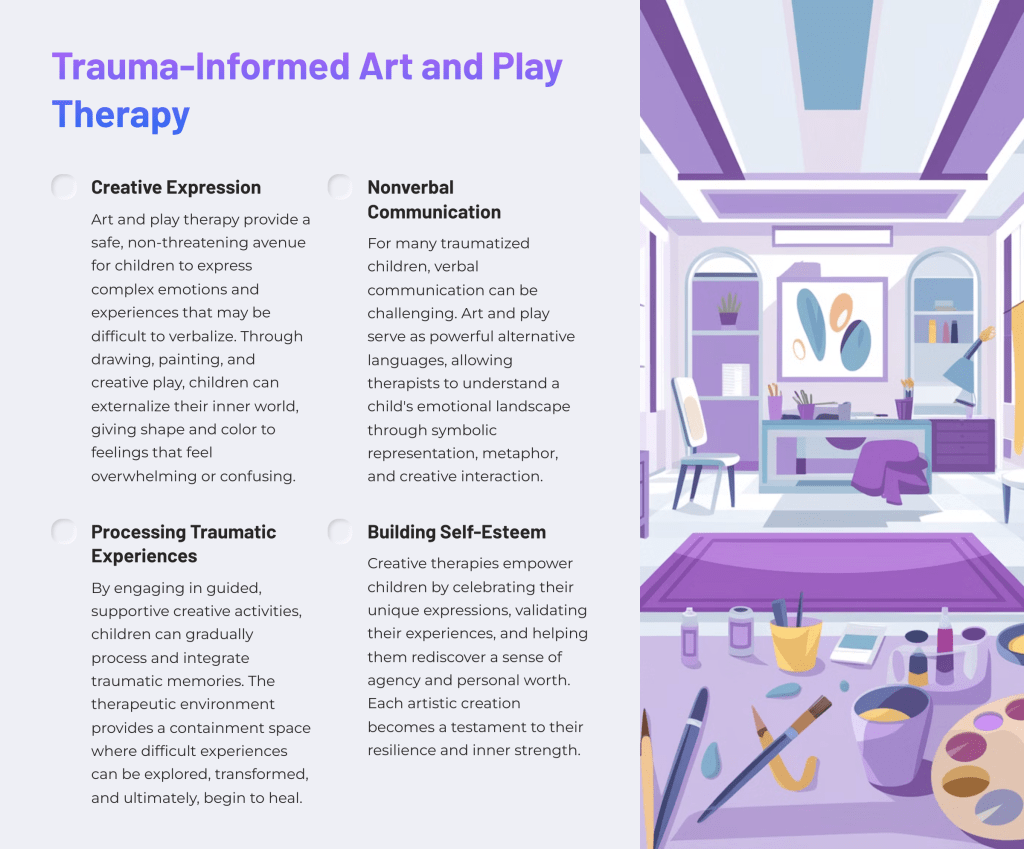
  4. Community Resilience-Building Initiatives: Engaging in community-building activities, such as art therapy workshops, mindfulness practices, and community events that promote resilience and positive coping strategies. These initiatives can strengthen social connections and promote a sense of collective well-being.
  5. Advocacy and Policy Changes: Engaging in advocacy efforts to influence policy changes and resource allocation that address the systemic issues contributing to trauma within the community. This may involve advocating for increased access to mental health services, trauma-informed schools, and social support programs.
  6. Engaging in Collective Healing Rituals: Creating opportunities for collective healing rituals, such as community gatherings, memorial events, and storytelling circles, to honor the experiences of those affected by trauma and provide a space for communal healing and reflection.

These strategies can create a more supportive, resilient community that fosters healing and empowerment for traumatized individuals.

Emotions must be Mentioned to be Managed

The phrase “emotions must be mentioned to be managed” encapsulates a profound truth that underlines the importance of acknowledging and articulating our feelings for effective emotional well-being. In the intricate landscape of human emotions, expression serves as a compass, guiding us through the ebbs and flows of our inner experiences.

When we verbalize our emotions, whether joy, sorrow, fear, or excitement, we engage in a form of self-awareness that is fundamental to emotional management. It is a recognition that our feelings are valid and deserving of acknowledgment. This articulation becomes a bridge connecting our internal world with the external, fostering understanding and empathy from others. Moreover, putting emotions into words is an act of personal empowerment, allowing us to gain a clearer perspective on our feelings and paving the way for constructive coping mechanisms.

Failure to mention or communicate our emotions can lead to a build-up of unexpressed sentiments, creating a reservoir of unaddressed issues. This emotional backlog may eventually manifest as stress, anxiety, or even physical ailments. The phrase emphasizes the proactive stance needed to navigate the complexities of emotions – a reminder that vulnerability and openness are not signs of weakness but rather prerequisites for emotional resilience.

In personal relationships, the significance of this phrase becomes even more evident. Effective communication of emotions lays the groundwork for understanding and connection between individuals. It enables the creation of a supportive environment where emotions are not only recognized but also shared. This fosters healthier relationships built on empathy and mutual understanding.

In conclusion, the phrase “emotions must be mentioned to be managed” encapsulates a universal truth about the human experience. It calls for a proactive and expressive approach to emotions, recognizing their importance in our mental and relational well-being. By embracing this principle, we empower ourselves to navigate the complexities of our emotional landscapes with resilience, fostering both personal growth and meaningful connections with others.

    Why Your Stuffed Animal is a Comforting Object…

    The concept of transitional objects originated from the work of renowned psychoanalyst D.W. Winnicott in the mid-20th century. Winnicott introduced the idea that particular objects, often soft and comforting, like stuffed animals or blankets, play a transitional role in a child’s life as they navigate the process of growing independence. These objects, typically chosen by the child themselves, help them feel secure and provide a sense of continuity and comfort during transition or stress, such as separation from their primary caregiver.

    Trauma-informed care is an approach to providing support and treatment that recognizes the prevalence and impact of trauma on individuals. It involves creating an environment of safety, trust, and empowerment for those who have experienced trauma. In a trauma-informed care framework, professionals consider the potential effects of trauma on a person’s behavior, emotions, and overall well-being. They prioritize their physical and emotional safety, provide choices and autonomy, and promote a collaborative and strengths-based approach to healing.

    Finding Comfort from Your “Stuffy”:

    For several reasons, a stuffed animal can be a comforting object to someone who has experienced trauma, even into adulthood. First, a stuffed animal’s soft texture and familiar presence can provide comfort and security. It can remind them of a time when they felt safe and protected, helping to alleviate anxiety or distress.

    Additionally, a stuffed animal can become a symbolic representation of emotional support and companionship. It may be a constant presence that offers unconditional love and understanding, especially during emotional distress. This can be particularly important for individuals who have experienced trauma, as they may find it challenging to trust or connect with others.

    Furthermore, a stuffed animal can provide a tangible outlet for soothing and self-soothing behaviors. It can be squeezed, held, or cuddled, releasing tension and promoting relaxation. Engaging with the stuffed animal in this way can create a calming effect and help regulate emotions during moments of distress.

    Moreover, the familiarity and consistency of a stuffed animal can create a sense of stability and predictability, which is particularly valuable for individuals who have experienced trauma. It can act as a reliable anchor in their lives, offering a sense of control and reassurance when other aspects may feel uncertain or overwhelming.

    Self-Soothing Strategies:

    DBT (Dialectical Behavior Therapy) self-soothing activities are techniques commonly used in therapy to help individuals manage distress and regulate their emotions. DBT is a cognitive-behavioral therapy that teaches individuals skills to improve emotional regulation, interpersonal effectiveness, and distress tolerance. Self-soothing activities in DBT aim to help individuals calm themselves during times of heightened emotional intensity or distress. These activities can vary widely but often involve engaging the senses, such as listening to calming music, using aromatherapy, taking a warm bath, practicing deep breathing exercises, or engaging in gentle physical activity like yoga or walking.

    By utilizing self-soothing activities, individuals can cultivate a sense of self-care and emotional regulation, promoting resilience and well-being in the face of challenging situations or traumatic experiences.

    The 1-Minute Cure for Distressing Emotions

    If you have ever felt that there isn’t enough time to manage your emotional and mental health or you get stuck in the same distressing place repeatedly, here are some quick 1-minute self-soothing activities to find some breakthrough.

    These activities come from a therapeutic practice called Dialectical Behavior Therapy or DBT. DBT is all about helping you manage your emotions and build better relationships. It’s like having a toolkit with practical skills to handle tricky situations and care for yourself. Imagine you’re facing distressing emotions or struggling with intense mood swings. It teaches you how to recognize and understand your emotions so they don’t feel like a wild rollercoaster ride you have no control over.

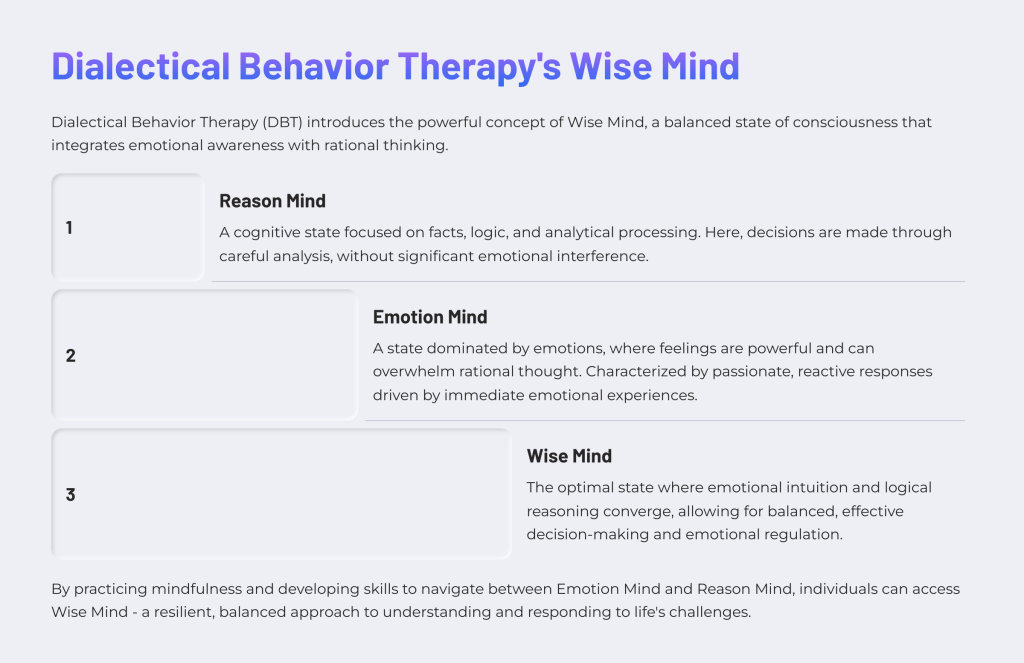
    One of the strengths of DBT is mindfulness. It’s all about being present at the moment, fully aware of what’s happening inside and around you. It’s like pressing the pause button on your busy thoughts and taking a breather. By practicing mindfulness, you can find some calmness in the chaos.

    DBT also shines a light on something called interpersonal effectiveness. It’s like giving you a secret handbook on communicating better, setting boundaries, and building healthy relationships. You’ll learn to express your needs, listen to others, and find that sweet spot where everyone feels heard and respected.

    Now, let’s not forget about distress tolerance. Life can throw some curveballs your way, right? DBT helps you develop strategies to handle those challenging moments without worsening things. It’s like having a shield that protects you from getting overwhelmed when things don’t go as planned.

    DBT also tackles unhelpful thoughts and beliefs. It helps you challenge negative self-talk and find more balanced perspectives. It’s like rewiring your brain to think more positively and realistically. You’ll discover that you can do amazing things and that setbacks don’t define you.

    Ultimately, the goal of DBT is to help you create “a life worth living.” It’s about finding balance, cultivating self-acceptance, and building a solid foundation for your well-being. With DBT, you’ll have the tools and support to tackle life’s challenges head-on and create a brighter future.

    Here’s a list of 25 different 1-minute self-soothing activities to regulate your emotions:

    1. Take three deep breaths, focusing on the sensation of the air entering and leaving your body.
    2. Squeeze a stress ball or a soft object in your hand.
    3. Repeat a positive affirmation or mantra to yourself.
    4. Close your eyes and visualize a calm and peaceful place.
    5. Listen to a calming or instrumental piece of music.
    6. Stretch your body and release tension.
    7. Take a quick walk around the room or step outside for fresh air.
    8. Massage your temples or gently rub your hands together for a few seconds.
    9. Write down three things you are grateful for in a gratitude journal.
    10. Drink a small glass of water mindfully, focusing on the sensation of each sip.
    11. Look out the window and notice five things in your surroundings.
    12. Count backward from 10 to 1, allowing yourself to relax with each number.
    13. Hold and stroke a soft fabric or a favorite plush toy.
    14. Repeat a calming word or phrase silently to yourself.
    15. Do a quick body scan, noticing any areas of tension and consciously releasing them.
    16. Hum a soothing tune or sing a calming song to yourself.
    17. Use a scented hand lotion and focus on the fragrance as you rub it into your hands.
    18. Take a mindful pause and observe your thoughts without judgment.
    19. Apply gentle pressure to your temples with your fingertips and massage in circular motions.
    20. Use a stress-relief app or listen to a guided meditation for one minute.
    21. Look at a photo or image that brings you joy and smile at the associated memory.
    22. Do a quick yoga or stretching pose, such as a standing forward bend or a shoulder roll.
    23. Repeat “I am calm and in control” silently or aloud.
    24. Hug yourself tightly for a few seconds, providing comfort and warmth.
    25. Practice a simple gratitude exercise by listing three things you appreciate about yourself.

    Remember, these self-soothing activities provide quick relief and promote relaxation in just one minute. Feel free to customize the list based on your preferences and experiment with different techniques to find what works best.

    Get a complete list of DBT Regulation Skills by clicking here!

    Let Ron Huxley help you today with your emotional regulation and mood. Click here to schedule an appointment.

    Breaking Free From Media-Induced Anxiety

    In today’s world, we are constantly bombarded with news and information, much of which can be frightening and anxiety-inducing. This constant exposure to negative news can result in a condition known as “media-induced trauma.” Media-induced trauma is a term used to describe the psychological distress that can result from exposure to repeated traumatic news events.

    The human brain is wired to respond to threats, and exposure to repeated negative news can activate the fear center of the brain, leading to feelings of anxiety and fear. This is especially true when the news is about threats to personal safety or threats to one’s sense of security.

    For example, during the COVID-19 pandemic, many people were glued to their screens, constantly checking for updates on the number of cases, deaths, and vaccine availability. This constant exposure to negative news about the pandemic can lead to feelings of anxiety, fear, and helplessness.

    In addition to the fear center of the brain, exposure to negative news can also activate the amygdala, which is responsible for processing emotions. This can lead to a negative spiral of emotions, as the constant exposure to negative news can reinforce feelings of anxiety and fear.

    So, what can you do to deal with the fear and anxiety that comes from constantly watching news and fearing the worst? Here are some quick tips to help right away:

    1. Limit your exposure to news: While it’s important to stay informed, it’s also important to set limits on your exposure to news. This can mean setting specific times of the day to check for updates, or limiting your exposure to specific news sources.
    2. Focus on positive news: While negative news can be overwhelming, there is also positive news out there. Make an effort to seek out positive news stories and focus on the good things that are happening in the world.
    3. Practice self-care: Engage in activities that help you to relax and reduce stress. This can include exercise, meditation, or spending time in nature.
    4. Seek professional help: If you are experiencing significant anxiety or fear as a result of your exposure to negative news, it may be helpful to seek professional help. A mental health professional can provide support and help you to develop coping strategies to manage your anxiety.

    There are several approaches that a mental health professional could use to help someone who is struggling with media-induced trauma or anxiety caused by constantly watching negative news. Some of these approaches may include:

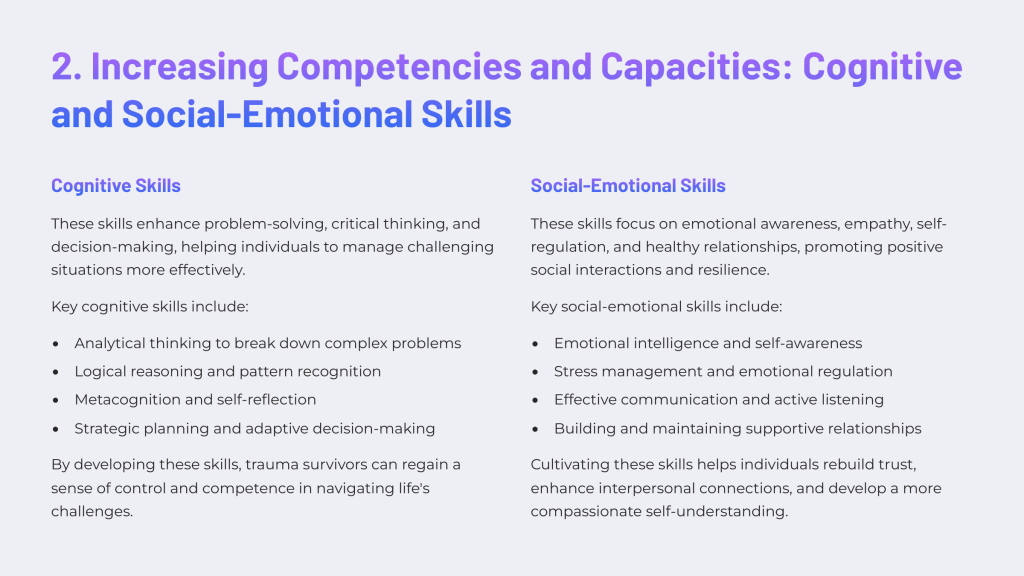
    1. Cognitive Behavioral Therapy (CBT): This type of therapy focuses on identifying and changing negative thought patterns and behaviors. A mental health professional might help a person with media-induced trauma identify thought patterns that contribute to their anxiety and help them to develop more positive ways of thinking.
    2. Exposure therapy: This type of therapy involves gradually exposing a person to the object or situation that triggers their anxiety. In the case of media-induced trauma, a therapist might work with a person to gradually expose them to news stories or images that trigger their anxiety, helping them to build up a tolerance and reduce their fear response.
    3. Mindfulness-based therapies: These therapies focus on teaching individuals to be more present in the moment and to accept their thoughts and feelings without judgment. A mental health professional might use mindfulness-based techniques to help a person with media-induced trauma to be more present and grounded, reducing their anxiety.
    4. Relaxation techniques: A mental health professional might teach a person relaxation techniques such as deep breathing, progressive muscle relaxation, or guided imagery to help them manage their anxiety and reduce their fear response.
    5. Supportive counseling: A mental health professional can provide a supportive, non-judgmental space for a person to talk about their fears and concerns. This can be especially helpful for individuals who feel overwhelmed or isolated by their anxiety.

    Incorporating your faith to find comfort and hope:

    A faith-based approach to help someone with media-induced trauma involves incorporating religious beliefs and practices into the therapeutic process. It includes encouraging prayer, using scriptural counseling, practicing mindfulness meditation, promoting forgiveness and gratitude, and referring the person to pastoral counseling. By connecting the person with their faith community and helping them find comfort, peace, and hope through their religious beliefs, this approach can be a powerful tool to manage media-induced trauma and anxingkin

    A faith-based approach to help someone with media-induced trauma involves incorporating religious beliefs and practices into the therapeutic process. It includes encouraging prayer, using scriptural counseling, practicing mindfulness meditation, promoting forgiveness and gratitude, and referring the person to pastoral counseling. By connecting the person with their faith community and helping them find comfort, peace, and hope through their religious beliefs, this approach can be a powerful tool to manage media-induced trauma and anxiety.

    Healing from Trauma: Understanding the Stages and Supporting Your Child Through the Journey

    Healing from trauma is a complex and challenging, but recovering and moving forward with life is possible. As a trauma therapist, I have worked with many people who have experienced trauma and have seen firsthand how healing can transform lives. In this article, I will discuss the stages of recovery from trauma and what parents can do to support their children.

    Stage 1: Safety and Stabilization
    The first stage of healing from trauma is focused on safety and stabilization. This stage is about establishing a sense of safety and security, both physically and emotionally. Many people who have experienced trauma may feel like the world is dangerous and unpredictable, so finding ways to feel safe and grounded in the present moment is essential. This may involve developing a safety plan, finding a safe and supportive community, and practicing self-care.

    As a parent, you can support your child during this stage by creating a safe and predictable environment. This may involve establishing routines, setting boundaries, and providing emotional support. Listening to your child’s needs and concerns and validating their feelings is also important.

    Stage 2: Processing and Understanding
    The second healing stage focuses on processing and understanding the traumatic experience. This stage is about exploring thoughts and feelings related to the trauma, making sense of the incident, and working through any confusion or self-blame. It’s important to note that this stage can be complicated and involve intense emotions, so having a supportive therapist or other mental health professionals guide you through the process is essential.

    As a parent, you can support your child during this stage by providing a safe and supportive environment for them to express their feelings. It’s important to listen without judgment and validate their experiences. You can also help your child to understand that their reactions to the trauma are normal and that they are not alone.

    Stage 3: Integration and Meaning-Making
    The third healing stage focuses on integrating the experience into one’s sense of self and life story. This stage involves finding ways to incorporate the trauma into one’s identity and a sense of purpose and developing a greater understanding of meaning and purpose due to the experience. This stage is about finding a way to move forward with life, even in the face of adversity.

    As a parent, you can support your child during this stage by helping them find meaning and purpose in their life. This may involve helping them to explore their interests and passions and keeping them pursuing their goals. It’s also important to remind your child that they are strong and resilient and can overcome the challenges they face.

    Stage 4: Re-connection and Empowerment
    The final stage of healing is about reconnecting with oneself, others, and the world in a safe and empowering way. This stage is about finding ways to engage in meaningful activities and pursuits and to feel a sense of agency and control in one’s life. This stage concerns reclaiming power and moving forward with a renewed sense of purpose.

    As a parent, you can support your child during this stage by encouraging them to engage in activities that bring them joy and fulfillment. This may involve helping them to connect with others who share their interests and supporting them in pursuing their passions. It’s also important to remind your child that they can create the life they want and are not defined by past experiences.

    In conclusion, healing from trauma is a complex and individualized process. Still, it is possible to recover and move forward with life. As a parent, you can support your child through the healing process by creating a safe and supportive environment, listening without judgment, and encouraging them to find meaning and purpose in their life.

    If you or your child have experienced trauma and are struggling to heal, know that you are not alone. Seeking support from a therapist can be an important step in the healing process. Ron Huxley, LMFT, can help you and your child find freedom from the burden of trauma. Schedule a session today!