Page 8 of 10

What To Do When Children Lie?

children-lying

By Ron Huxley, LMFT

It can really upsets a parent when their children lie. What want our children to be honest and always tell the truth. When they don’t it can feel embarrassing and feel like we have failed as a parent

The “truth” is that there may be many reasons for a child to lie. Some of the common causes may be due to an active imagination, desire to please you, fit in socially,  avoid unpleasant or boring tasks, or seeking (negative) attention. Parents can cope with a child who lies by following these simple parenting tools:

1. Provide opportunities for your child to express his imagination without lying.

2. Point out the differences between fact and fantasy.

3. Practice telling the truth yourself so that your child does not imitate you lying.

4. Don’t overreact to lying. Point out the need to tell the truth and allow your child to do so without feelings ashamed.

5. Don’t push for confessions. These usually lead to bigger lies and more punishment.

6. Look for ways your child can get what they want without lying and reward him for not lying.

Lastly, parents have to set a good example. If parents are caught, by their children, in telling lies, then they will believe it is OK. Parents: “Practice what you preach!”

Looking for Web Course Testers

Looking for web course testers! I have two web courses in the works: Freedom From Anxiety and The Better Behavior Chart Program. I need a few tech savvy people to review content, give helpful feedback and maybe leave a nice review for future guests. Here’s your chance to get free advice too! I will create a private FB group to get feedback…things are still under construction so don’t mind the dust 🙂 I will need your email address to sign you up. More on that later. Email me at rehuxley@gmail.com or message me if interested but hurry time is limited.

7 Steps to Negotiating With Your Child

handlingdisrespect

By Ron Huxley, LMFT

You walk in and find your child playing computer games instead of cleaning his room. You asked him an hour ago to clean it. In frustration, you blow up, yelling at him to get his room cleaned up or “else.” He scrambles around picking up dirty clothes and toys. You stomp off. There has got to be a better way, you think to yourself.

Fortunately, there is a better way. Yelling often gets opposite results and results in a lose/lose situation. Even if you win (get him to clean his room), you lose (feel horrible for yelling). Instead parents can try using
negotiation. While, it is not a perfect tool, it will increase the cooperation desired from your child.

Negotiation is a tool that allows parents and children to make a win/win agreement. It is a learned skill and no child, that I know, is born with it. It must be modeled and reinforced by parents. But, because most parents, that I know, were children at one time or another, they were not born with it either. Therefore, here are several steps for parents to teach negotiation to your child:

Step 1: Know what is negotiable and not negotiable ahead of time. If cleaning his room after dinner is not an acceptable time because company is coming and you need the room picked up now, state firmly but gently, why it is not acceptable to wait. If it is an acceptable time to do the chores, then be flexible and make sure you are both clear on what “after dinner” really means.

Step 2: Be open-minded. Be willing to listen and consider the other person’s viewpoint. Stephen Covey, in his book the Seven Habits of Highly Effective People, suggests that you seek first to understand the other person before you ask to be understood. If your child appears grumpy and depressed take a moment to find out why. Yelling will only increase the grumps and depression, backfiring on you in moments of revenge or decreased cooperation
later.

Step 3: Set a time limit. Keep the negotiation time short to prevent the discussion from getting off track. Most negotiation ends up in the blame game where there are no winners, only losers. Keep things on the specific topic and not on what happened yesterday, last month, or years ago. If you do get off track, simply steer yourself back on the right path by stating, “Let’s get back to the issue of when you are to clean your room.”

Step 4: Keep it private. Don’t embarrass your child by negotiating in front of his friends. He will be more likely to react negatively if he thinks others are watching. Ask to talk to him in a private room or ask for the friend to go home.

Step 5: Stay calm and cool. Don’t try to negotiate when feeling you are over heated, tired, or preoccupied with a hundred other things. If the situation gets too hot, suggest taking a few minutes to cool off and then resume the negotiation. Set this up as a ground rule before negotiating if you think a heated discussion is likely.

Step 6: Acknowledge the others’ point of view. Even if your child is totally off base, acknowledge his feelings about the chores. Those feelings belong to him and are valid to him even if they are not to you. One way to do this is to say, “I can see how you could feel the way you do given your bad day at school.” You never said it was true, just bad for him.

Step 7: Restate the final solution once it is reached. Most failures to cooperate after a negotiation is due to a misunderstanding about what EXACTLY were agreed upon. Write it in contract form if that seems necessary.

Of course, negotiation may not be enough. Your child may still not pick up his room. If that happens set firm consequences for failure to cooperate. Remind him of the negotiation and, in the future, write everything down so there is no dispute on the agreement. When he fails to comply, point to the contract and state the consequence. This takes parents out of the uncomfortable judge and jury role. Most often, children will be testing parents to see if they mean what they say as parents have failed to follow through themselves, in the past.

Co-Parenting Isn’t Working? Try Parallel Parenting.

parallel-parenting-500-x-250

Many divorced parents are frustrated about their co-parenting arrangements. No matter what they try to do to work things with their ex, all of their efforts end up in conflict. Co-parenting feels more like game where there are no winners.

In these situations, the best advice is “no contact is no conflict”. If it wasn’t for the shared children they would have no contact and then there would be no problem but since that isn’t the case how do you co-parent with no contact? The answer is Parallel Parenting!

The situation reminds me of small children who are learning to share. Before they develop the skills to play cooperatively, they engage in parallel play. Both types of play look alike but when you watch more closely you realize that they are in the same room, with similar toys, playing next to one another but they are not really playing together. They are quite disengaged. Eventually, development will help create the skills needed for cooperative play. In the case of high-conflict divorce, parents may have to let go of the more mature cooperative parenting and shift to parallel parenting.

Parallel parenting purposefully disengages from the conflictual partner and concentrates on connection with the child. It may involve one parent focusing on dealing with the child’s school and the other on their soccer games. While both parents need to agree on major decisions, they will differ on daily logistics about bedtime routines, acceptable television watching, choice of baby sisters, and church attendance. When the daily heat can be turned down between parents, it makes the bigger decisions easier to navigate.

Parallel parenting protects the children. Research clearly demonstrates that high-conflict divorce results in higher rates of behavioral disturbances and mental illness later in life. More commonly, when a child tries to have a positive relationship with both parents who do not have a positive relationship with each other, they experience a “loyalty bind.” When the child is with parent A, he misses parent B. The child might even feel that he is being disloyal to parent B when he is with parent A and vice versa. This is easily intensified by parents who talk negatively about the other parent in front of the child. It can also occur when one parent acts like a victim causing the child to worry about them. Another way is leaning on your child for moral support and treating the child like the co-parent instead of a child.

It is a delicate balance to parallel parent and break down loyalty binds. A parents natural inclination is to protect their child and if they believe the other parent is harmful then…

The truth is that both parents are important to the child. To really protect them and find some sanity in the relationship, try using alternative methods to communication than face-to-face, like email or a notebook. Keep the wording factual about the child’s health, sleeping patterns, school events, weekend schedules, medical care, etc. Request separate school notices or records. Avoid showing up at the same events without prior knowledge. When you do end up at the same event, make a huge effort to demonstrate working together. You might actually find you can do it all the time!

Newsletterimage

Join our newsletter and never miss a blog post! Click here.

Children who are responsible and fun to be around!

ani_thinkingcap

Cleaning Up Your Mess*

by Ron Huxley, LMFT

Every parent wants a child that is “responsible and fun to be around”. Children will enjoy being this way too. Unfortunately, traumatized children forget who they are and believe a lie instead. Trauma introduces the belief that “the world is a scary place, caregivers can’t be trusted and I am broken and damaged goods”. In addition, they believe that “no one could love me…People will get rid of me just like everyone else…I am stupid…I can only trust myself…Life is not safe”, and on it goes.

A big lie is that it is not ok to make a mistake. This is because a life of shame makes mistakes feel like a reminder that “I am a mistake too”. Fortunately, if we have believed a lie, we can also choose to believe the truth. This doesn’t always come easily. Attachment research calls this cycle “rupture and repair”. Every family has a rupture in a relationship. The healing for traumatized children comes in the repair. In that respect, a rupture is desirable. It allows the attachment relationship to be rebuilt. New Positive experiences can replace negative experiences from their past. A simple strategy is for parents to ask children: “How are you going to clean up this mess?”

A mess is a metaphor for a problem that children create in their relationships and daily living. For example, Hitting their sibling over taking a toy is a mess. Not following through on doing chores and forcing mom to repeat herself several times is a mess. Throwing a tantrum and refusing to brush their teeth is a mess. Forgetting their homework and getting a failing grade is a mess. You get the idea…

Our job as parents is to teach children how to clean up their messes and be more responsible and fun to be around. Instead of nagging, complaining or lecturing, trying asking how the child plans on cleaning up the mess they have made? This is also a way to increase leverage. At some point a child will want something from the parent. When they do you can simple refer the child back to the need to clean up their mess before you give them what they are wanting. This reinforces the concept of working together. You help me and I help you. This is how we do things in this family…

A typical response to the question is “I don’t know” to avoid taking responsibility. Don’t engage in a fight. That is how the child distracts you from the problem in front of them. In reply a parents offer some of their ideas on how the child can clean up their mess. The best idea from mom and dad are the tough, most undesirable ones. Children don’t want to do the tough ones. They want to do the easy ones. Offering the tough idea will force a child to engage in the discussion and present a better idea. This will get their thinking brains online so that they start to consider better ways to treat others and make family life more fun.

MESSES are Mom’s LEVERAGE:

Sometimes (OK, often) children will not follow through on their plan to clean up their messes. That’s fine. Parents now have another opportunity for “rupture and repair” by waiting until the child wants something from them…and you know they will.

Son: “Hey mom, can I go to Johnny’s house to play.”
Mom: “Oh wow, Johnny has that new video game you have been talking about, right?”
Son: “Yeah, it is so cool. Can I go?”
Mom: “It really would be cool but it is soooo sad!”
Son: “Sad?”
Mom: “Yes, there is still this mess you made with that tantrum yesterday and all those toys are still all over the living room. Remember how you made that plan to say you were sorry and clean them up?”
Son: “Kind of…”
Mom: “So take all the time you need to clean up that mess and then you can go to Johnny’s.”

You can only imagine the type of negotiation that the son might try at this point, right? He might even choose to get angry and throw another tantrum. More opportunities for rupture and repair. This is where mom MUST stand her ground and stay as cool and empathic as possible. Empathy has a way of keeping everyones brains level and focused on the problem on not in a heated game of “whose to blame”. With practice on how to clean up their messes, a child will learn to be more “responsible and fun to be around”.

  • Original concept for this tool is from the book “Love and Logic”

traumatraining

Let Ron Huxley provide a trauma-informed training for your next event or up-coming conference. Click here!

tumblr_inline_okw613SIVt1ro6w1h_500

Join our newsletter and get all of Ron’s Family Healer posts plus special member only reports and videos. Subscribe here!

Big Boys Do Cry: Emotional IQ for Men

mencryGet a number of parents in a room and ask them about their children’s behavior and you will begin to hear a common theme that boys behave differently than girls. It’s news in the media too; it seems, with all of the talk about our Emotional IQ (usually referring to a male’s lack of) or how men are from Mars and women from Venus. Sit in on an online chat room for parents or an email discussion list on male/female relationships and it won’t be long before you see some retort about how “men can’t express their feelings” or “boys acting out their aggression.” All of it focuses on how men struggle with their emotional self.

As a man, I won’t deny it’s true. Even the men I have talked with, be they friends or patients in my office, will agree with it. The rub is that while men accept this fact they feel helpless to change it. That’s because we are caught in a double bind, put on us by society, the other gender, and ourselves. The double bind says that we should be more in touch with our emotions and yet, at the same time, be tough, macho, Mr. Fix-It, and the Family Provider. We are asked to be in touch with our “feminine” side and still retain our “Male” strength.

Add the problem that most men never had adequate male role models in life, or if they did, they weren’t emotionally available one’s, and you end up with a fairly confused man or son about the emotional nature of manhood. William Pollack, Ph.D., in his book, Real Boys: Rescuing Our Sons from the Myths of states that the consequence of this confusion for males includes higher rates of depression, anxiety, aggressiveness, and substance abuse. It’s ironic that male’s confusion about expressing emotion leads to emotional problems. He goes on to state that in order to survive this confusion, boys learn “the code” that to be a man you must pretend to “feel nothing.”

Of course, it’s not possible to “feel nothing.” The best example comes from the biggest complaint about male’s behaviors, namely, that they are too competitive and aggressive. Boys are much more likely to be diagnosed as conduct disordered learning disabled, and attention deficit. Statistics are also higher for violent crimes and fighting among males. They are also more likely to be medicated for these disorders to decrease their aggressive behaviors. Dr. Pollack feels that males are given an “emotional funnel” to express their feelings. All of their emotions: sadness, fear, anxiety, and frustration is translated into one emotion: Anger!

Anger is the most common emotion expressed by males. That is because men and boys feel more accepted by society when they express anger over what is considered to be the more “feminine” emotions. Here is the double-bind again: we ask males to manage their anger which is the only socially acceptable emotion to express and that emotion turns out to be a cover-up for other emotions, such as sadness or powerlessness. Anger or aggressive behaviors, are just the symptom. The source may be any number of hidden, indirect emotions.

So what do males do with this double bind? If we agree that we have trouble expressing our emotions, and that creates trouble for us relationally and socially, how do we get out of trouble? First, we start with understanding the true nature of emotions and then society must demonstrate an acceptance of those emotions in boys and men.

The Emotional Brain

If we look at emotions from purely a physiological standpoint, they turn out to be some of the most fundamental parts of our brain. Researchers have determined that our emotions are controlled in the brain stem, which regulates our involuntary functions and the middle area of our brain, which controls our basic drives, such as eating, and sleeping. Emotions come from and are related to some of the most primitive and primary areas of our brains.

According to Daniel Goleman, Ph.D., in his book, Emotional IQ, our emotions are designed to “motivate” or move us forward in life. Each emotion has a particular purpose in our personal evolution. Anger serves to give us the energy and strength necessary to change a situation, fear allows us to focus on the threat at-hand and evaluate a course of action, happiness increases energy and decreases inhibitions to achieve goals, love creates satisfaction and a state of rest or contentment, surprise allows us to take in more information about an unexpected event, disgust expresses a need to avoid an undesirable event or food, and sadness slows us down to adjust to a major disappointment and find solace in familiar people and places.

Dr. Goleman goes on to acknowledge that while males and females have the same emotional capacity, they are taught very different lessons about how to handle their emotions. Parents tend to discuss emotions more with daughters than sons. In studies of parents telling their children stories, girls are told stories more heavily laden with emotional words and situations than are boys. Mothers display a wider range of emotions when playing with their daughters than when they are playing with their sons. And even when parents talk to their children about emotions, they use more emotional descriptions with girls than with boys.

Research has also shown that girls develop language skills much sooner than boys and are more articulate when it comes to expressing themselves emotionally. This natural advantage and the de-emphasis on emotional training for boys, lead males to communicate their emotions behaviorally. This may be why so many boys get into fights, play competitive sports, or act aggressively towards others. It is their way of communicating their feelings. And anger is the socially acceptable spokesperson for all of those feelings, be they positive or negative. Perhaps the answer to the emotional double bind, experienced by boys and men, are to provide males with the missing Emotional IQ training. Teaching males to understand and express their emotions increases their Emotional IQ, according to Dr. Goleman and other researchers. It is this Emotional IQ that provides success at school, work, or home – wherever human relations are necessary.

Emotional IQ Training

Howard Gardner, a psychologist at the Harvard School of Education, has suggested that there are many different types of intelligence, not just academic (linguistic and math) one’s. He refers to these as talents that all children possess, male or female. Being able to use these talents is what makes people successful and satisfied in life. Peter Salovey, another psychologist, refines Gardner’s talents into five main domains of emotional intelligence: Knowing one’s emotions, Managing emotions, Motivating oneself, Recognizing emotions in others, and Handling relationships. Making these domains a part of every boy’s daily curriculum is essential if we want to help boys increase their Emotional IQ and become the fathers and husband’s society desires. Another way of saying it is, if we want males to be more expressive emotionally, we have to give them the “right tools to do the job.”

Where do we start? The most natural place is the home. And the most natural person is dad. It stands to reason, that if we want to teach real boys to be real men, then we need to utilize our most natural and powerful resources. We also need to be more conscious about what and how we are teaching emotional literacy to our sons and take a more active approach in doing so. And these Emotional IQ skills must be socially sanctioned in order for the new skills to take root and grow.

Dr. Pollack suggests that we give our sons undivided attention every day. This means full attention, not partial or half. Don’t engage in cooking, cleaning, reading or anything else that might detract from the attention giving. Dads don’t always have to talk when giving attention either. Playing a game or working on a project, side-by-side, with minimal words is enough. Jerrold Lee Shapiro, Ph.D, in his book, The Measure of a Man: Becoming the Father You Wish Your Father Had Been, states that while men and women experience emotions similarly, they may share those emotions differently. Men, due to past Emotional IQ training, are used to indirectly communicating with one another. This is what, Dr. Shapiro calls “side-by-side” or “shoulder-to-shoulder” communication. Moms tend to prefer the more “face-to-face”, direct approach.

Dr. Shapiro talks about the different styles of communicating emotions by men and women: “Men have long been criticized for either having no feelings or having the wrong ones, or being unable to describe them. It is true that males in our society are trained to deny, ignore, cover up, and rise above feelings. However, we do have them all the time. It is important that we express our feelings to our children in male ways. It is customary for men to be most open, for example, while they are working on a joint project together (i.e., shoulder to shoulder).”

It is also important that mom’s and dad’s encourage boys to express the full range of emotions. Past social conditioning that only some emotions, namely anger, are acceptable need to be removed. All emotions are valid. Be receptive to a baby’s sadness and discomfort as well as his cooing and giggles. Ask toddlers and school-age boys if they are feeling sad or tired and empathize with those feelings. Tell older boys that it is normal to feel awkward or anxious and have open discussions about his relationships with girls, other boys, siblings, teachers and family.

When boys do express themselves aggressively or act rambunctious, look below the anger. While it is true that boys, on the average, do play more aggressively, don’t let that prevent you from checking for underlying emotions of sadness or anxiety. Remember that acting out means just that. Boys often act out their feelings of hurt and loss. Labels those feelings for them if they are obvious or ask them about their feelings if they are not. Reflect on their behavior by stating, “You seem to be upset about this situation. I wonder if your are feelings hurt/sad/anxious by it.” Model complex feelings by admitting you often get angry when you feel these other emotions too. It is often difficult for young children to understand that people can have more than one emotion at a time.

Be willing to express your love and empathy openly and generously. Loving your son will not “baby” him, “spoil” him, or make him a “sissy.” It will make him more self-assured, confidant, and secure. When a dad is openly affectionate toward his son, a very deep message about manhood and emotions is communicated. Tell you son that you love him as much as you wish. Give him hugs and take opportunities to play with him.

Fatherless Homes And Father Hunger

What is a boy to do if there is no father or positive male role model available? The answer is two-fold: Model emotions yourself and/or borrow a positive male role model. Although the most powerful model of emotional literacy is between a dad and his son, mom’s can model healthy functioning too. Any and all adults, not just the biological father, can teach Emotional IQ. And if dad is absent, physically or emotionally, from the home, have your son join a mentoring program like Big Brothers or the Police Activity League. Ask around about organizations that provide positive role models for boys and check them out to determine if they are able to provide Emotional IQ training. Of course, they may not understand it as such, but watch what they do with your son and other boys to see if they are teaching it, by their actions. Recruit an uncle, grandfather, or other male relative to get together with your son one-day a week to go to the movies, build a model, or play catch. It is also possible to find a male, child therapist for your son. A child therapist can address the child’s issues (aggressive behavior, depression, anxiety, etc.), consult with the parent about how to increase a child’s Emotional IQ, and be an adequate male role model at the same time. While you are not trying to replace dad or build an unhealthy dependence on the therapist, a male therapist can provide that essential ingredient some boys needs and can’t get from a female therapist.

Dr. Shapiro talks about this essential ingredient as “father hunger.” Coined by James Herzog, a psychoanalyst, to describe the psychological damage in young children who were deprived of their fathers love and attention. These children were determined to be more aggressive and had trouble controlling their impulses. They also tend to be more immature and needy. Older children, who suffer from this “father hunger” are more likely to attempt suicide, run away, malinger, and manipulate others.

The satisfaction of this hunger is to find adequate father substitutes. Even men, who did not have emotionally available fathers or grew up in single parent homes without a father, can find other men who act as mentors or role models about how to be a high Emotional IQ dad. Even haphazard attempts at emotional functioning are better than nothing. Most children are fairly forgiving and willing to learn how to be healthy males together. Contrary to popular opinion, I think that children learn as much, if not more, from healthy male failures as their successes. Covering up our failures only reinforces the old “boy code” that we feel nothing or must always be right, tough, and macho.

The New Boy Code

Dr. Pollack suggests we adopt a new boy code. A code that respects emotions in boys and men, that is based on honesty rather than fear, communication rather than repression, and connection rather than disconnection. It’s time to stop complaining about boy’s aggressiveness and men’s lack of emotional availability by taking down the double bind. It is true that males have a problem expressing themselves. But it is also true that we hunger for relationship and affection. We tire of being cool, independent and always in control. Turn the emotional funnel around and let all of the emotions come out, safely and in a healthy manner. Maybe then it will be O.K. if big boys cry.

Faith-In-Motion Training Series: “Healing The Hurt Child” May 20, 2017

Adoptive and foster care children that have suffered trauma have lost their “first love”. This loss creates pain in their hearts that make it difficult to love new people, in particular new mom’s and dad’s. Every time they open up to love or be loved the pain comes up as well. This can create some very interesting reactions in the child, often seen in reactive attachment disordered children (RAD) like lying, stealing, hoarding, urinating in their rooms, hurting self and others, destroying property and a host of other emotional and social dysfunctions. The answer to this problem is to remove the pain…

Come to the free training series “Healing The Hurt Child” sponsored by San Luis Obispo Department of Social Services’ Faith-In-Motion Program, Cuesta College and Grace Slo Church. This is a full day training from 9 am to 4 pm on May 20th. Lunch is on your own but child care is provided and the training is free. Parents and professionals who work with traumatized children are welcome to attend. See the training flyer below for registration details:

FaithInMotion_TrainingDay2

NeuroResilient Play Therapy ©: A Trauma-Informed Approach to Healing

brainarticle1

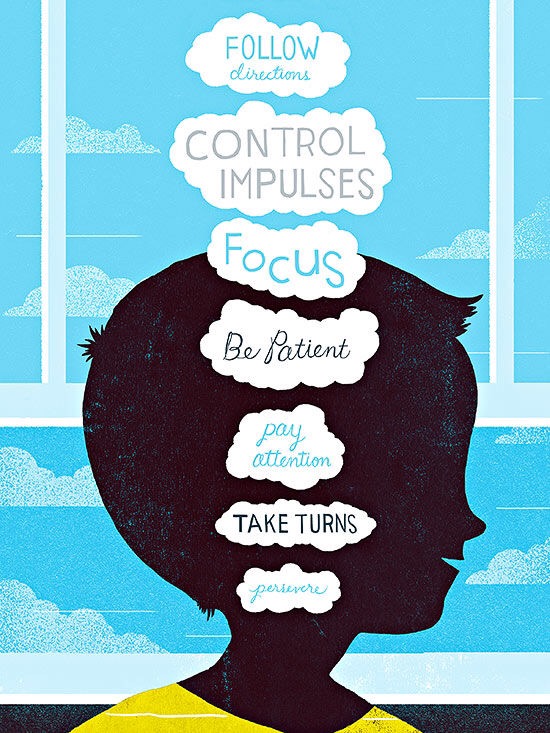
The goal of therapy with traumatized children is to help them learn to regulate and develop the executive functioning skills of the prefrontal center of the brain. I call this the state of being NeuroResilient.

All children are born emotionally impulsive and need to learn how to manage their moods, initiate and stick with tasks, plan and organize, and learn from past mistakes. This is nothing new and neurological studies of the brain suggest that the prefrontal areas of the brain do not completely develop until people are in their mid-twenties.

The challenge with trauma is that it can set a person back socially and emotionally so that while they are 15 years old chronologically, they react to the world as if their were 5 years of age. We call this, in the field of trauma-informed care and attachment-focused research, “age vs stage”. The individual’s chronological age doesn’t line up with their stage of development causing problems in relationships and daily functioning.

Many parents and professionals believe that an emotionally regulated child is a calm child which would be nice, even understandable, but not realistic for a child who has been traumatized. Consequently the goal of therapy is to build resilience, not calmness.

Resilience refers to ability to “spring back, recoil back into shape” or “recover quickly from a difficult situation”. It literally means to “leap back” to a place of safety and security. Who wouldn’t want to have more of that in their lives or the lives of their children?

Children have to build resiliency in their neurology so that behavioral strategies will stick. Parents and teachers get frustrated when their behavior charts and modification tools don’t have any effect on their hurt children.

NeuroResilient Play Therapy © models, to parents, how to integrate the various physiological and mindful parts of the child so that they can function optimally. It is based on identity focusing on the strengths of who the child was created to be instead of forcing the child to fit into a mold made by adults who believe the child has no motivation or seeks only to manipulate.

For more information on how to be NeuroResilient for children and adults, contact Ron today about speaking opportunities or schedule a session in his Avila Beach, Ca office (skype services are available).

Discovering your love road map and dealing with conflict

road map

How do you get from point A to point B? You can put in your own destinations for each point… The answer is simple. Look at a road map or in our modern technological society, tell your phone to pull up the map.

The “point” is that if you want to get anywhere you have to have a road map (or in the case of our phone, a GPS). In relationships, we need a love road map. When it all hits the fan, and it will sooner or latter, we need to know how to get back to a place of love and trust.

The research of John Gottman, PhD, shows us that the road to relational stability requires this type of emotional guidance system. In order to be a master of relationships and not experience the disaster of it, you can start building this map today. According to Dr. Gottman, you have to know a lot about your partner or child to navigate through difficult times and moments of disagreement. The process to build this map is asking a lot of questions that search the soul of the other person. Questions like what do you think about injustice or what countries you would like to visit or how do you feel about your career in life? These are open ended questions that go deeper than did you do your homework or pay the electrical bill?

How does your partner feel about their role as a mother or father? Does your child enjoy his or her friendships? After these heart-probing questions are asked, you have to remember the answer because this is what you will use to work through conflicts. The intensity of our fights with our most intimate companions aren’t really about an “F” on a test or dishes in the sink. They are really about our hopes and dreams and desires. They can also be about our disappointments, fears and losses. The more deeply connected you are with the former, the better you will find your way through the latter.

When people ask you these questions they show their interest in you. It makes you feel valuable. Conversely, scanning for mistakes, even with the motivation to help the other person be better in life, destroys intimacy and trust.

It has been said that a joyful life is created in the little details, conversations and moment to moment interactions. This is exactly how you build a love road map that will help you deal with conflict. Conflict is part of the human relationships and can’t be avoided so be prepared and get to know the inner world of others.

Action plan: Ask some deep questions of people who are closest to you in the next 7 days. Take notes of their answers. There will be a test! 


Explaining Executive Function Skills to Children

Our brains are organized into three components. There’s the robot or the brainstem which controls all the functions within our body without having to be told what to do. It just does it automatically like a robot!

Next is the puppy dog this is built on top of the robot and while it has a lot of energy and a lot of fun I can early experience life to its fullest it can also be easily distracted not very trainable and sometimes a little disobedient.

On top of this is the trainer. The trainer is very good at figuring out problems solving puzzles and using self-control. It’s job is to teach the puppy dog how to behave and make sure that it gets all the information sent from the robot about what’s going on in the body so that he can give a new instructions if needed.

A child’s job is to use the trainer part of our brains to teach the puppy and the robot but it needs to have self-control, lots of fun, and manage ourselves well!

The easiest way for the trainer to teach the puppy dog in the robot is to use self talk. Everyone talk to them selves. When were difficult situations week off and talk yourself through it by encouraging us to sit still when it’s hard and there’s a lot of distractions, give something a little extra effort is proving very challenging, and figure out how to make the best choices in a very confusing situation.

Sometimes we need to advise and help from other adults in her life like her parents or teachers to guide us on how we should best train the puppy dog and give instructions to the robot. Most adults have already had a lot of practice being a trainer and they have to offer some really good ideas that would help you as well.

Looking for a trainer at your next parenting conference or trauma-informed care event? Contact Ron today at rehuxley@gmail.com