Page 10 of 11

Helping Children With Anxiety

Screen Shot 2017-10-26 at 8.41.43 AM

We have created a new course for parents on “Helping Children With Anxiety”. You can view it now in our Online Courses page (click here). This course will include:

  • What is Anxiety?
  • Developing Your Child’s Emotional IQ
  • How NOT To Pass Anxiety On To Your Children
  • 8 Helpful Things (Strategies) To Say To An Anxious Child
  • Children’s Fears: Create a S.A.F.E.R. H.O.M.E.
  • Teach Your Child To Be A Worry Warrior and a Fear Fighter
  • A Healthy Gut is a Happy Gut!

SPECIAL OFFER: Our Freedom From Anxiety program is now available as a monthly membership program. Get new tools for the body/mind/spirit and overcome anxiety for only $29.95 per month. Don’t miss this unique offer…click here for more info!


Screen Shot 2017-10-26 at 8.41.33 AM


Are you Parenting a Prince or a Pauper?

Previously posted on Parenting Toolbox November 2014 by Ron Huxley, LMFT

There are areas in our parenting where we think like princes or princesses. We are fully confident in our abilities to handle a situation. There are also areas where we think like paupers, poor in attitude and low in confidence. A prince is rich in resources and doesn’t worry about a positive future. They know respect and honor from those around them. A pauper lives by survival skills and manipulation and secrecy is the game of life. A prince feels deserving of worthy and is valued and feels valuable. A pauper feels worthlessness, shame, and guilt.

Are you a consciously parenting a prince or a pauper? Do you feel confident and worthy to the task? Are you controlled by guilt, manipulation, and shame? Do you experience respect or disdain from your family members? Is your household ruled by love or fear?

It is possible to think like a prince in some areas of our lives and like a pauper in others at the same time. It may not be all of our parenting that suffers but there may be some key areas that are creating some big trouble. Take time to honestly evaluate where you are thinking like a prince or a pauper. Allow yourself to find new value and think differently about your family relationships. Create a self-care plan. Read, watch, listen or hang out with people who believe they are a prince and princess. They will model how to have a different mindset for parenting and life.

A parenting pauper has few or no tools to build a family of their dreams. A parenting prince or princess has many tools in their parenting toolbox. Get more parenting tools by using our online parenting ecourses in our Family Healer School!

Screen Shot 2017-08-06 at 6.09.30 AM

Keeping Love Alive

lovealive

By Ron Huxley, LMFT

How we love family members during the emotional distances and dark shadows of our relationships determine the long-term quality of those relationships. All relationships have ups and downs and our ability to ride out the extremes is challenging but a normal process of loving others. At the heart of the dark moments, we want to abandon the roller coaster ride for the firm safety of the ground. Our inner brains want us to fight or flee or if both of these options fail us, to freeze internal emotional reality. How do we overcome the turbulence and deep disconnect for the long haul?

One truth is to develop our identity and remind ourselves that relationship is not contained in the ups and downs but over the entire course of life. Look for the long tail of relationships and how to keep a spark alive even if it just nurture by you and not the other. The fight or flight mechanism of the brain wants us to rush our actions or reactions when we really need to do in these crucibles is slow down and evaluate our choices. My best advice to families in the middle of chaos is to slow down but that is one of the hardest things to do. Many fail in the attempt.

A lot of my therapeutic work is with adoptive families. Many times the early life trauma results in an out-of-control teenager that ultimately forces the parent to consider residential care. They believe they have failed as parents and the relationship feels like it has ended. The truth is that relationship trumps residence. Your connection is stretchier than you thought. You may have to make a decision to create distance to ensure safety but you are not letting go of the relationship. You are protecting it and that is very different.

Because we like “up” moments filled with laughter and hugs and emotional closeness and hate the “down” moments with its harsh words, self-pity, victimization, and loneliness, we can start a rocking motion that swings faster and faster between the ups and downs. Pushing on one side and then the other increases chaos that throws everyone off the see-saw entirely.

When I work with bitter couples, hurt by infidelity and emotional rejection, I ask them to step off the see-saw, remember what attracted them to each other, the values they used to believe and to forgive one another. Too many nurture the wound and do not receive the healing. It is difficult to forgive but unforgiveness is like a poison that kills the heart of the relationship. It doesn’t say what was done was acceptable or that I will “forget and forgive”. You do not forget but you must forgive to allow life to start up again. From here we rebuild new creations that last.

Give up the illusion of control. You cannot control anyone else. You only have 100%, guaranteed results with yourself. You must manage you. Controlling your reactions is what allow the extreme ups and downs to settle and become smooth again. Take 5 to keep your relationship alive and pause to consider your best long-term actions. Take 10 and then reconsider again. If you need to make a hard, drastic decision, it is better to take the time to think it through completely vs. carrying a weight of regret.

Identity is the most important ingredient in loving through the distance.  Victim-minded people seek their identity through others instead of operation from a place of a sense of self. If I need you in order to be me and you are the source of my hurt and pain, then I cannot manage me that doesn’t exist. I cannot sustain a relationship that is one-sided. Start a journey of knowing yourself and your needs and your drives and your desires to deal with others in the distant relationships. Operating FROM a place of identity allows you to remain you even if others reject you. A simple starting place is journaling or talking to a therapist.

A final truth is that love is unconditional. It doesn’t have to agree with the other person’s actions or allow it to continue damaging the family but it doesn’t have to turn off. It can continue from a safer distant to provide an opportunity to bring it into closer intimacy. We don’t turn off love when others don’t do what we want. That is false power. Real power says I can set a boundary and I can exist without you but I choose to continue to love you. If you do not choose the same than I will remain me and love myself and others too.

It’s about justice…and mercy!

justiceandmercy

by Ron Huxley, LMFT

How can we be full of mercy and open ourselves up to the hurt that is in the world when there seems to be so little justice to balance it? My faith calls me to help the broken-hearted but I will be honest, there are days when it just too much. Bearing witness to the trauma and pain in the world can be traumatizing to me. Is that true for you?

The problem comes when people have hearts of mercy but end up empty and burnt out from over giving. Sometimes this comes from our own brokenness and at times it is from simply not staying full of mercy so that we always have enough supply.  Mercy givers are good at giving but not so much at receiving.

As a man of faith, it is easy to think about God acting through me instead of God working in me. There is a big difference between being called and being driven. Our acts of mercy can become performance-driven instead of heart reactive. We have to live our lives honoring our own emotional and physical needs. It is vital that we practice what we preach and have good diets, exercise regularly, make healthy connections, and take time alone with God.

The real secret is to operate from a place of “overflow”. It is far easier to give to others when are continuously full and overflowing. Operating from a place of excess is a healthier balance than continual lack.

Individuals with hearts of mercy are called to “guard their hearts”. Two practices that help us stay full of mercy to cope with the injustices of the world is gathering up little moments of mercy and to find time for silence and solitude every day. It is easy to believe that the refueling process it about filling up on knowledge, reading more scripture or memorizing more bible versus. These are beneficial but they won’t fill that deep inner space.

Discerning the glories of the world is crucial. What are the lovely, pure, beautiful, noble and sweet moments of our life that pop up around us? As the poet says, did you stop and smell the roses? You might find that divine moment of mercy seeing a sunset or catch a babies smile. Maybe you need to stop and listen to all the words of your favorite song on the radio when it comes on. You could even dance a little. Cherishing the little moments will add up to huge rewards in our hearts.

Guarding our hearts also refers to saying “No” to what drains you. It is such a little work but it takes so much effort for people with hearts of mercy to say it. The truth is that you will have to say no to some things if you want to say yes to others. There are only so many hours in a day and you are not superhuman. Make a choice.

Dallas Willard, the famous theologian, describes our first freedom as humans is the freedom to choose where we want to direct our thoughts each day. You have the power to choose well.

In my Christian faith, silence and stillness are hallmarks of the heavenly relationship. I am sure other faith traditions have similar invitations to inner transformation. Most faith goers hate silence and stillness. Be honest, you know you do!

Ruth Haley Barton, in her book “The Invitation to Solitude and Silence” comments: “Because we do not rest we lose our way…Poisoned by the hypnotic belief that good things come only through unceasing determination and tireless effort, we can never truly rest. And for want of rest out lives are in danger.”

Ruth goes on to claim that our refusal to rest in spirit and body is an attitude of arrogance, that we don’t need what God has modeled as a need to take Sabbath rests in our busy weeks.

I have found that hurt people don’t want to stop and rest because they don’t want to hear what God might have to say to them. There could be areas of their lives they are neglecting and they don’t want God reminding them of the need to take care of areas of dysfunction. It’s easier to focus on others needs and not our own, right? People with hearts of mercy can be broken too. Wounded healers can answer the needs of the world without allowing God to heal them first.

I remember the time my own counselor/spiritual mentor told me that I can’t be a “father until I learned how to be a son.” Those words hit home hard. I wanted to improve my effectiveness as a leader, be a more involved dad, and have more influence in my business. Instead, I was continually burnt out and frustrated. I had to turn my focus to concentrate on my own relationship with God. As a result, I spend the next year not allowing myself to taking new leadership roles and adopting new projects. My focus was on being healed and taking personal retreats so that I could restore my identity as a “son”. This is what sustains my ability to be a good “father”. This time away increased my heart capacity and is the source of my merci-fullness.

My challenge to readers who have “hearts of mercy” is to list 5 things that you will do for your own Sabbath rests. How will you rediscover what it means to be sons and daughters? Set a time for silence and solitude. Be OK saying no. Others need to see that light in your life to balance the dark injustices of the world.

“Blessed are the merciful, for they will be shown mercy.” Matthew 5:7

Join our newsletter and receive our blogs in your inbox every week…plus get a few extra surprises! Click here.

traumatraining

Need a Trauma-Informed Trainer? Contact Ron today!

Big Boys Do Cry: Emotional IQ for Men

mencryGet a number of parents in a room and ask them about their children’s behavior and you will begin to hear a common theme that boys behave differently than girls. It’s news in the media too; it seems, with all of the talk about our Emotional IQ (usually referring to a male’s lack of) or how men are from Mars and women from Venus. Sit in on an online chat room for parents or an email discussion list on male/female relationships and it won’t be long before you see some retort about how “men can’t express their feelings” or “boys acting out their aggression.” All of it focuses on how men struggle with their emotional self.

As a man, I won’t deny it’s true. Even the men I have talked with, be they friends or patients in my office, will agree with it. The rub is that while men accept this fact they feel helpless to change it. That’s because we are caught in a double bind, put on us by society, the other gender, and ourselves. The double bind says that we should be more in touch with our emotions and yet, at the same time, be tough, macho, Mr. Fix-It, and the Family Provider. We are asked to be in touch with our “feminine” side and still retain our “Male” strength.

Add the problem that most men never had adequate male role models in life, or if they did, they weren’t emotionally available one’s, and you end up with a fairly confused man or son about the emotional nature of manhood. William Pollack, Ph.D., in his book, Real Boys: Rescuing Our Sons from the Myths of states that the consequence of this confusion for males includes higher rates of depression, anxiety, aggressiveness, and substance abuse. It’s ironic that male’s confusion about expressing emotion leads to emotional problems. He goes on to state that in order to survive this confusion, boys learn “the code” that to be a man you must pretend to “feel nothing.”

Of course, it’s not possible to “feel nothing.” The best example comes from the biggest complaint about male’s behaviors, namely, that they are too competitive and aggressive. Boys are much more likely to be diagnosed as conduct disordered learning disabled, and attention deficit. Statistics are also higher for violent crimes and fighting among males. They are also more likely to be medicated for these disorders to decrease their aggressive behaviors. Dr. Pollack feels that males are given an “emotional funnel” to express their feelings. All of their emotions: sadness, fear, anxiety, and frustration is translated into one emotion: Anger!

Anger is the most common emotion expressed by males. That is because men and boys feel more accepted by society when they express anger over what is considered to be the more “feminine” emotions. Here is the double-bind again: we ask males to manage their anger which is the only socially acceptable emotion to express and that emotion turns out to be a cover-up for other emotions, such as sadness or powerlessness. Anger or aggressive behaviors, are just the symptom. The source may be any number of hidden, indirect emotions.

So what do males do with this double bind? If we agree that we have trouble expressing our emotions, and that creates trouble for us relationally and socially, how do we get out of trouble? First, we start with understanding the true nature of emotions and then society must demonstrate an acceptance of those emotions in boys and men.

The Emotional Brain

If we look at emotions from purely a physiological standpoint, they turn out to be some of the most fundamental parts of our brain. Researchers have determined that our emotions are controlled in the brain stem, which regulates our involuntary functions and the middle area of our brain, which controls our basic drives, such as eating, and sleeping. Emotions come from and are related to some of the most primitive and primary areas of our brains.

According to Daniel Goleman, Ph.D., in his book, Emotional IQ, our emotions are designed to “motivate” or move us forward in life. Each emotion has a particular purpose in our personal evolution. Anger serves to give us the energy and strength necessary to change a situation, fear allows us to focus on the threat at-hand and evaluate a course of action, happiness increases energy and decreases inhibitions to achieve goals, love creates satisfaction and a state of rest or contentment, surprise allows us to take in more information about an unexpected event, disgust expresses a need to avoid an undesirable event or food, and sadness slows us down to adjust to a major disappointment and find solace in familiar people and places.

Dr. Goleman goes on to acknowledge that while males and females have the same emotional capacity, they are taught very different lessons about how to handle their emotions. Parents tend to discuss emotions more with daughters than sons. In studies of parents telling their children stories, girls are told stories more heavily laden with emotional words and situations than are boys. Mothers display a wider range of emotions when playing with their daughters than when they are playing with their sons. And even when parents talk to their children about emotions, they use more emotional descriptions with girls than with boys.

Research has also shown that girls develop language skills much sooner than boys and are more articulate when it comes to expressing themselves emotionally. This natural advantage and the de-emphasis on emotional training for boys, lead males to communicate their emotions behaviorally. This may be why so many boys get into fights, play competitive sports, or act aggressively towards others. It is their way of communicating their feelings. And anger is the socially acceptable spokesperson for all of those feelings, be they positive or negative. Perhaps the answer to the emotional double bind, experienced by boys and men, are to provide males with the missing Emotional IQ training. Teaching males to understand and express their emotions increases their Emotional IQ, according to Dr. Goleman and other researchers. It is this Emotional IQ that provides success at school, work, or home – wherever human relations are necessary.

Emotional IQ Training

Howard Gardner, a psychologist at the Harvard School of Education, has suggested that there are many different types of intelligence, not just academic (linguistic and math) one’s. He refers to these as talents that all children possess, male or female. Being able to use these talents is what makes people successful and satisfied in life. Peter Salovey, another psychologist, refines Gardner’s talents into five main domains of emotional intelligence: Knowing one’s emotions, Managing emotions, Motivating oneself, Recognizing emotions in others, and Handling relationships. Making these domains a part of every boy’s daily curriculum is essential if we want to help boys increase their Emotional IQ and become the fathers and husband’s society desires. Another way of saying it is, if we want males to be more expressive emotionally, we have to give them the “right tools to do the job.”

Where do we start? The most natural place is the home. And the most natural person is dad. It stands to reason, that if we want to teach real boys to be real men, then we need to utilize our most natural and powerful resources. We also need to be more conscious about what and how we are teaching emotional literacy to our sons and take a more active approach in doing so. And these Emotional IQ skills must be socially sanctioned in order for the new skills to take root and grow.

Dr. Pollack suggests that we give our sons undivided attention every day. This means full attention, not partial or half. Don’t engage in cooking, cleaning, reading or anything else that might detract from the attention giving. Dads don’t always have to talk when giving attention either. Playing a game or working on a project, side-by-side, with minimal words is enough. Jerrold Lee Shapiro, Ph.D, in his book, The Measure of a Man: Becoming the Father You Wish Your Father Had Been, states that while men and women experience emotions similarly, they may share those emotions differently. Men, due to past Emotional IQ training, are used to indirectly communicating with one another. This is what, Dr. Shapiro calls “side-by-side” or “shoulder-to-shoulder” communication. Moms tend to prefer the more “face-to-face”, direct approach.

Dr. Shapiro talks about the different styles of communicating emotions by men and women: “Men have long been criticized for either having no feelings or having the wrong ones, or being unable to describe them. It is true that males in our society are trained to deny, ignore, cover up, and rise above feelings. However, we do have them all the time. It is important that we express our feelings to our children in male ways. It is customary for men to be most open, for example, while they are working on a joint project together (i.e., shoulder to shoulder).”

It is also important that mom’s and dad’s encourage boys to express the full range of emotions. Past social conditioning that only some emotions, namely anger, are acceptable need to be removed. All emotions are valid. Be receptive to a baby’s sadness and discomfort as well as his cooing and giggles. Ask toddlers and school-age boys if they are feeling sad or tired and empathize with those feelings. Tell older boys that it is normal to feel awkward or anxious and have open discussions about his relationships with girls, other boys, siblings, teachers and family.

When boys do express themselves aggressively or act rambunctious, look below the anger. While it is true that boys, on the average, do play more aggressively, don’t let that prevent you from checking for underlying emotions of sadness or anxiety. Remember that acting out means just that. Boys often act out their feelings of hurt and loss. Labels those feelings for them if they are obvious or ask them about their feelings if they are not. Reflect on their behavior by stating, “You seem to be upset about this situation. I wonder if your are feelings hurt/sad/anxious by it.” Model complex feelings by admitting you often get angry when you feel these other emotions too. It is often difficult for young children to understand that people can have more than one emotion at a time.

Be willing to express your love and empathy openly and generously. Loving your son will not “baby” him, “spoil” him, or make him a “sissy.” It will make him more self-assured, confidant, and secure. When a dad is openly affectionate toward his son, a very deep message about manhood and emotions is communicated. Tell you son that you love him as much as you wish. Give him hugs and take opportunities to play with him.

Fatherless Homes And Father Hunger

What is a boy to do if there is no father or positive male role model available? The answer is two-fold: Model emotions yourself and/or borrow a positive male role model. Although the most powerful model of emotional literacy is between a dad and his son, mom’s can model healthy functioning too. Any and all adults, not just the biological father, can teach Emotional IQ. And if dad is absent, physically or emotionally, from the home, have your son join a mentoring program like Big Brothers or the Police Activity League. Ask around about organizations that provide positive role models for boys and check them out to determine if they are able to provide Emotional IQ training. Of course, they may not understand it as such, but watch what they do with your son and other boys to see if they are teaching it, by their actions. Recruit an uncle, grandfather, or other male relative to get together with your son one-day a week to go to the movies, build a model, or play catch. It is also possible to find a male, child therapist for your son. A child therapist can address the child’s issues (aggressive behavior, depression, anxiety, etc.), consult with the parent about how to increase a child’s Emotional IQ, and be an adequate male role model at the same time. While you are not trying to replace dad or build an unhealthy dependence on the therapist, a male therapist can provide that essential ingredient some boys needs and can’t get from a female therapist.

Dr. Shapiro talks about this essential ingredient as “father hunger.” Coined by James Herzog, a psychoanalyst, to describe the psychological damage in young children who were deprived of their fathers love and attention. These children were determined to be more aggressive and had trouble controlling their impulses. They also tend to be more immature and needy. Older children, who suffer from this “father hunger” are more likely to attempt suicide, run away, malinger, and manipulate others.

The satisfaction of this hunger is to find adequate father substitutes. Even men, who did not have emotionally available fathers or grew up in single parent homes without a father, can find other men who act as mentors or role models about how to be a high Emotional IQ dad. Even haphazard attempts at emotional functioning are better than nothing. Most children are fairly forgiving and willing to learn how to be healthy males together. Contrary to popular opinion, I think that children learn as much, if not more, from healthy male failures as their successes. Covering up our failures only reinforces the old “boy code” that we feel nothing or must always be right, tough, and macho.

The New Boy Code

Dr. Pollack suggests we adopt a new boy code. A code that respects emotions in boys and men, that is based on honesty rather than fear, communication rather than repression, and connection rather than disconnection. It’s time to stop complaining about boy’s aggressiveness and men’s lack of emotional availability by taking down the double bind. It is true that males have a problem expressing themselves. But it is also true that we hunger for relationship and affection. We tire of being cool, independent and always in control. Turn the emotional funnel around and let all of the emotions come out, safely and in a healthy manner. Maybe then it will be O.K. if big boys cry.

Faith-In-Motion Training Series: “Healing The Hurt Child” May 20, 2017

Adoptive and foster care children that have suffered trauma have lost their “first love”. This loss creates pain in their hearts that make it difficult to love new people, in particular new mom’s and dad’s. Every time they open up to love or be loved the pain comes up as well. This can create some very interesting reactions in the child, often seen in reactive attachment disordered children (RAD) like lying, stealing, hoarding, urinating in their rooms, hurting self and others, destroying property and a host of other emotional and social dysfunctions. The answer to this problem is to remove the pain…

Come to the free training series “Healing The Hurt Child” sponsored by San Luis Obispo Department of Social Services’ Faith-In-Motion Program, Cuesta College and Grace Slo Church. This is a full day training from 9 am to 4 pm on May 20th. Lunch is on your own but child care is provided and the training is free. Parents and professionals who work with traumatized children are welcome to attend. See the training flyer below for registration details:

FaithInMotion_TrainingDay2

NeuroResilient Play Therapy ©: A Trauma-Informed Approach to Healing

brainarticle1

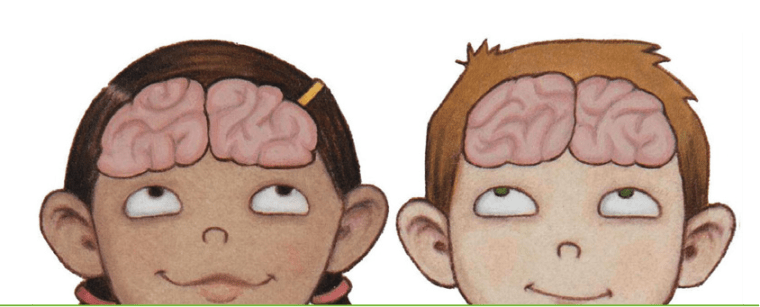
The goal of therapy with traumatized children is to help them learn to regulate and develop the executive functioning skills of the prefrontal center of the brain. I call this the state of being NeuroResilient.

All children are born emotionally impulsive and need to learn how to manage their moods, initiate and stick with tasks, plan and organize, and learn from past mistakes. This is nothing new and neurological studies of the brain suggest that the prefrontal areas of the brain do not completely develop until people are in their mid-twenties.

The challenge with trauma is that it can set a person back socially and emotionally so that while they are 15 years old chronologically, they react to the world as if their were 5 years of age. We call this, in the field of trauma-informed care and attachment-focused research, “age vs stage”. The individual’s chronological age doesn’t line up with their stage of development causing problems in relationships and daily functioning.

Many parents and professionals believe that an emotionally regulated child is a calm child which would be nice, even understandable, but not realistic for a child who has been traumatized. Consequently the goal of therapy is to build resilience, not calmness.

Resilience refers to ability to “spring back, recoil back into shape” or “recover quickly from a difficult situation”. It literally means to “leap back” to a place of safety and security. Who wouldn’t want to have more of that in their lives or the lives of their children?

Children have to build resiliency in their neurology so that behavioral strategies will stick. Parents and teachers get frustrated when their behavior charts and modification tools don’t have any effect on their hurt children.

NeuroResilient Play Therapy © models, to parents, how to integrate the various physiological and mindful parts of the child so that they can function optimally. It is based on identity focusing on the strengths of who the child was created to be instead of forcing the child to fit into a mold made by adults who believe the child has no motivation or seeks only to manipulate.

For more information on how to be NeuroResilient for children and adults, contact Ron today about speaking opportunities or schedule a session in his Avila Beach, Ca office (skype services are available).

Parenting is a game…

Sometimes parenting just seems like a game…that you never win.

The child team has more energy, more time, and more players. To help parents improve the odds, we’ve come up with some new “game plans” that might even the score.

Here are three parenting tools that look like games but can really build cooperation and respect:

Follow the Leader is a parenting tool that can be used in two ways:

As a game; and as a “redirection” tool. When using this tool as a game, parents can invite their children to play “follow the leader.“ This game is fun on family trips or vacations. Families with more than one child can have each child take turns leading the family hike or singing a song. The leader has the power to choose which forest path to take or which song to sing. Each child (and parent) gets the opportunity to be the leader, thereby encouraging equality and fairness. When used as a “redirection” tool controlling children can be direct their need to take charge of a particular task, such as getting the family together for dinner or organizing a wood gathering party for the campfire. This is a great game to replace power-struggling.

Freeze Play is a parenting tool variation of the old stand-by: Time-Out

Time-out is usually conducted by isolating or excluding a child from the rest of the family or classroom. In this traditional form children are sent to their room, a chair in the kitchen, outside the classroom door, or left facing a wall. Time-Out has a number of disadvantages, the primary one being that it involves the use of punishment that may seem harsh to some parents and children. Some children may become out-of-control or physically destructive when put in isolation or exclusion time-out. Fortunately, parents can use a different form of time-out, that behaviorists call “nonexclusionary time-out.“

Nonexclusionary time-out, like isolation and exclusionary time-out, eliminates reinforces (interaction with others). It accomplishes this by freezing the moment of interaction with the child for a very brief, but poignant amount of time. For example, if a child starts whining when told they must wait for dinner to eat, the parent can firmly but evenly, say, “freeze!” The parent then avoids eye contact (i.e., attention during the discipline) for a few seconds and the child is prohibited from communicating during this time. Afterwards the parent can nonchalantly carry on the task at hand or use Time-In or educational parenting tool. Be careful not to place too much emphasis on talking about the misbehavior afterwards as it might inadvertently reinforce the child to misbehave again for the attention it gains.

It might be necessary for the parent to tell the child what is going to happen during “freeze play” and the expectation that there will be no communication/eye contact during that time, so that the child knows why the parent is “acting this way.“ In addition, the old rule of thumb for time-out, one minute for every year of life, can be used in Freeze Play by substituting seconds for minutes (e.g., one frozen second for every year of life.)

Huddling is a parenting tool shorten version of a family meeting without all the fuss or preparation time.

Huddling is a quick, informal, type of family meeting that any number of family members can have together and can occur at any time or place. Football players do this before every play to make sure the team knows what the plan is and to make clear everyone’s job. Family members can stop whatever they are doing to have a quick, little meeting about a specific problem or task. Parents can play the captain by telling the family to “huddle together.” Put arms around one another for support or just gather together in a circle, face in. Talk about the problem or task and assign jobs or ask for quick input. Decide on a plan of action and say “let’ go!“ Parents can use this tool at the zoo to decide what they are going to go see first, at the restaurant to decide what everyone wants to eat, and at home to decide what toys need to be gathered up before going to the park. While these “game plans” don’t guarantee a winning season, they can coach parents on new ways to improve their performance and their satisfaction in parenting.

OK, let’s play!