Beyond “I Do”: Building a Trauma-Informed Marriage When One Partner Has a Trauma History

Understanding how past wounds can become pathways to deeper connection


Marriage vows promise “for better or worse,” but few couples anticipate how past trauma can profoundly shape their relationship. When one partner carries invisible wounds from their history, it affects everything from daily conversations to intimate moments. Yet with understanding and intentional care, these challenges can become opportunities for unprecedented closeness and resilience.

When the Past Lives in the Present

Sarah freezes when her husband Mark raises his voice—even during playful moments. What Mark doesn’t initially understand is that his tone triggers memories of an unpredictable childhood, making Sarah’s nervous system react as if danger is imminent.

Similarly, Emily physically healed from a serious car accident, but her body remembers the trauma. Highway driving now feels impossible, creating tension whenever she and her husband, David, plan trips together.

These scenarios illustrate what trauma expert Dr. Bessel van der Kolk describes in The Body Keeps the Score: trauma literally reshapes how our brains and bodies perceive safety and connection. For partners, understanding this isn’t just helpful—it’s transformative.

The Ripple Effects: How Trauma Touches Every Corner of Marriage

Emotional Landscapes

Living with trauma often means experiencing intense emotional swings—from overwhelming anxiety to profound numbness. Your partner might seem to “shut down” or react strongly to seemingly small triggers, leaving you feeling like you’re walking on eggshells.

Communication Barriers

Trauma can make it incredibly difficult to articulate internal experiences. What feels like defensiveness or withdrawal might actually be your partner’s nervous system protecting them from perceived threats.

Intimacy Challenges

Both emotional and physical closeness can feel threatening when trauma has shattered someone’s sense of safety. Touch, vulnerability, and even eye contact might trigger distressing memories or sensations.

Trust and Connection

Even in loving relationships, trauma can create persistent doubts about safety, consistency, and loyalty. This isn’t about you personally—it’s about how trauma rewires the brain’s threat-detection systems.

Daily Life Disruptions

Chronic anxiety, sleep disturbances, concentration difficulties, and avoidance behaviors can affect everything from household routines to social activities.

The Hidden Impact on Supporting Partners

While focus naturally centers on the trauma survivor, supporting partners face their own challenges that deserve recognition and care.

Secondary trauma can develop from repeatedly witnessing your partner’s pain or hearing traumatic details. You might experience:

  • Emotional exhaustion and anxiety
  • Sleep disruption and irritability
  • Feelings of helplessness or inadequacy
  • Isolation from the unique nature of your situation

Relationship dynamics can shift dramatically:

  • Feeling more like a caregiver than an equal partner
  • Frustration when your support efforts seem ineffective
  • Resentment about lost spontaneity or social activities
  • Guilt about having your own needs and feelings

Remember: Acknowledging these impacts isn’t selfish—it’s essential for sustaining your ability to support your partner and maintain your own well-being.

Building Your Trauma-Informed Partnership: A Roadmap

1. Invest in Individual Therapy

This is your foundation. Both partners benefit from professional support:

  • For trauma survivors: Processing experiences safely and developing coping tools
  • For supporting partners: Managing secondary trauma and maintaining emotional health

2. Become Trauma-Literate Together

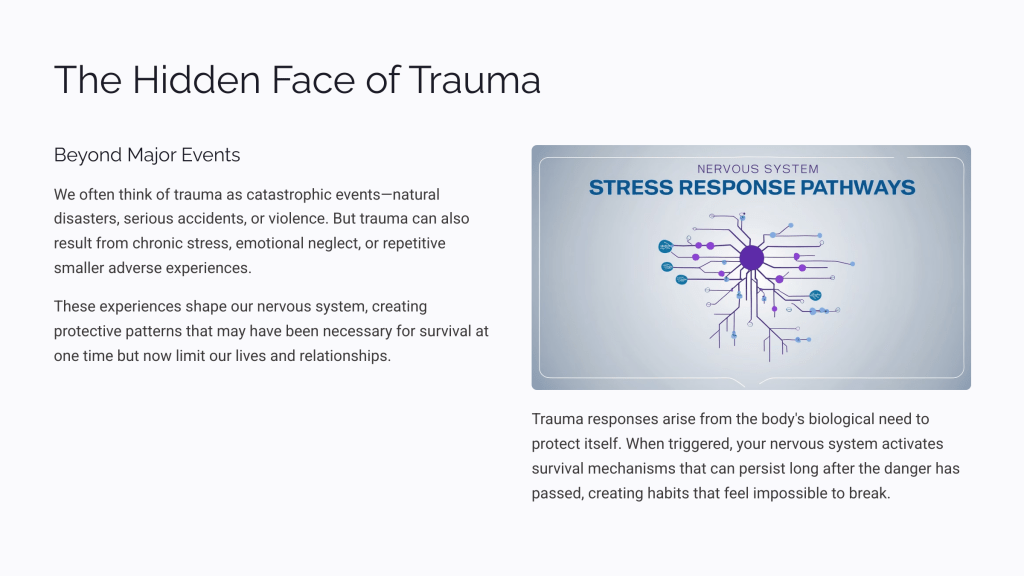
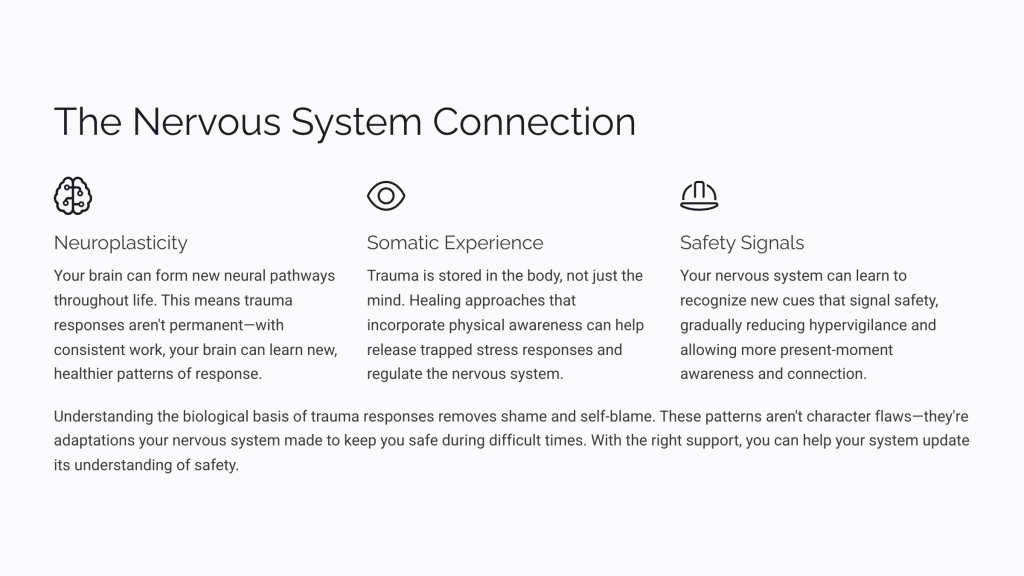
Understanding how trauma affects the nervous system transforms confusion into compassion. When you recognize that your partner’s “overreactions” are actually their brain protecting them from perceived danger, everything changes.

Key insight: Those fight, flight, freeze, or fawn responses aren’t choices—they’re automatic survival mechanisms.

3. Practice Compassionate Communication

  • Lead with curiosity instead of judgment
  • Recognize when someone is triggered and focus on safety first
  • Use “I” statements to express your own needs
  • Create agreements about how to handle overwhelming moments

4. Embrace the Marathon Mindset

Trauma healing isn’t linear. There will be breakthroughs followed by setbacks, as well as good weeks and difficult ones. Progress might look like three steps forward, two steps back—and that’s completely normal.

5. Co-Create Safety

Transform your relationship into a haven by:

  • Establishing predictable routines when possible
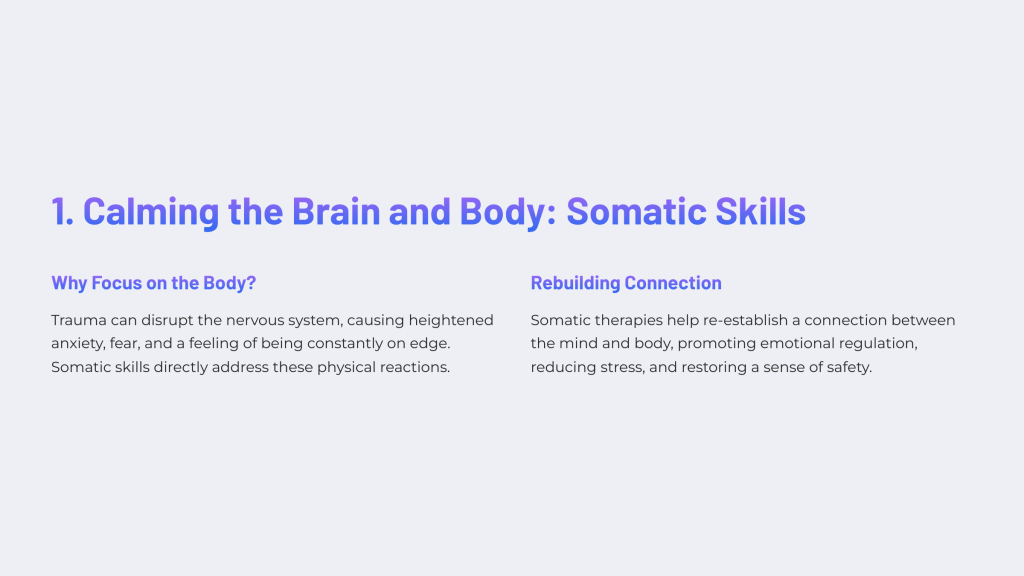
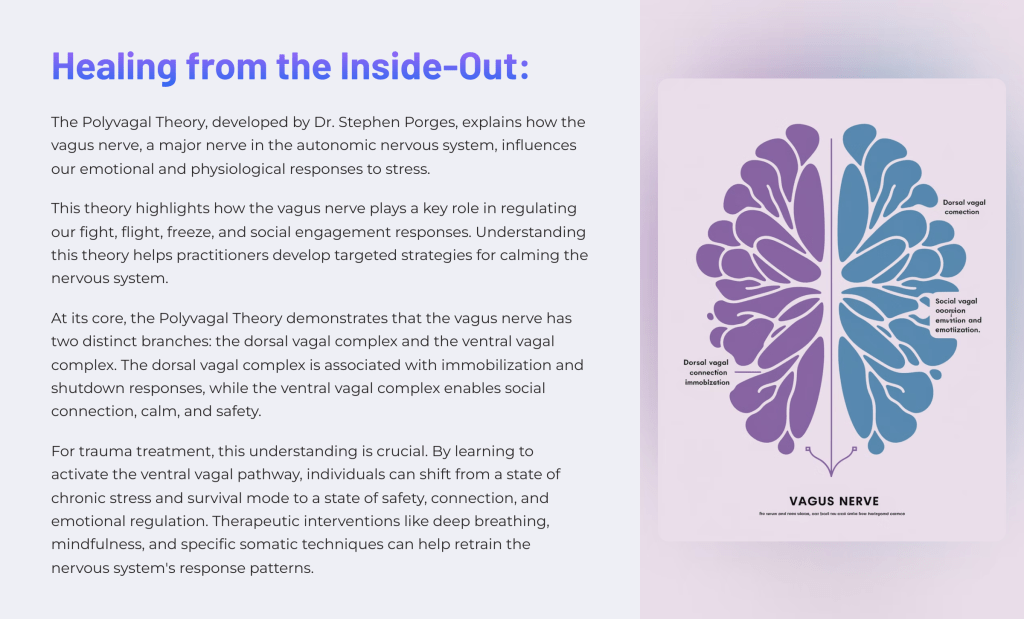
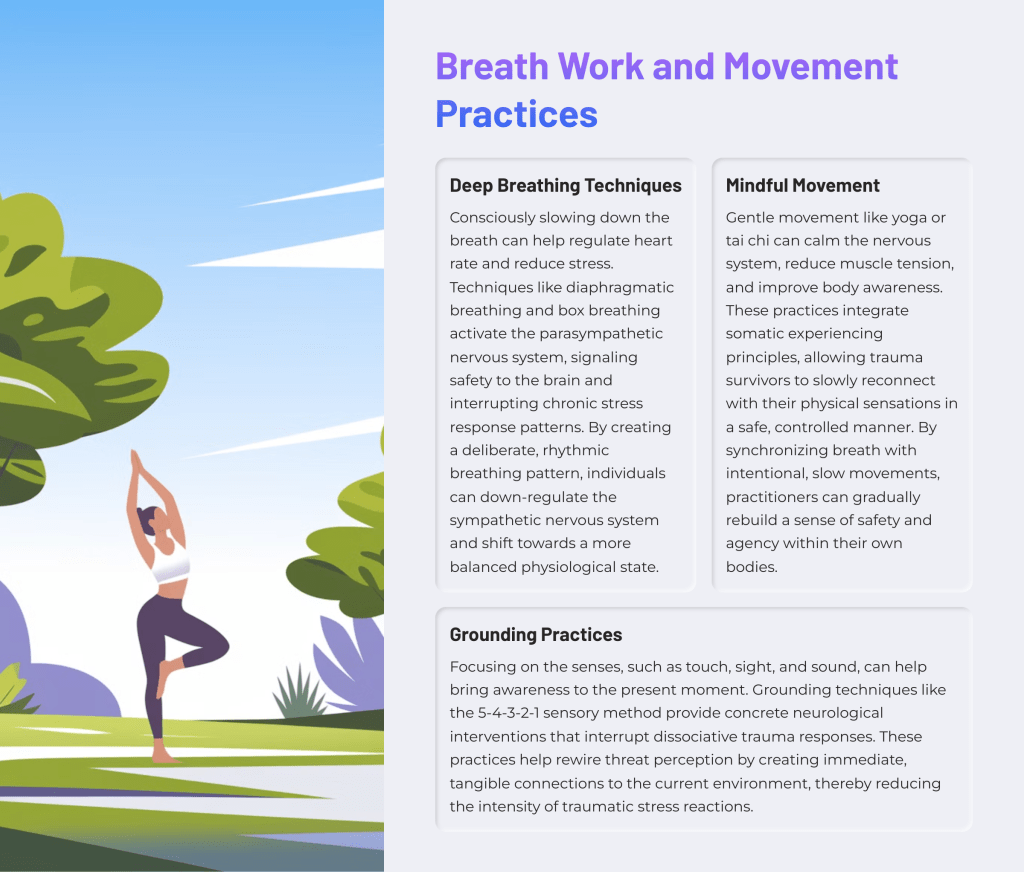
  • Learning nervous system regulation techniques together (breathing exercises, grounding techniques, mindful movement)
  • Identifying and minimizing environmental triggers
  • Developing safety signals and check-in practices

6. Consider Trauma-Informed Couples Therapy

A therapist specializing in trauma can guide you through rebuilding trust, improving communication, and navigating intimacy challenges. Generally, this approach works best after the trauma survivor has established some degree of individual stability.

7. Prioritize Your Own Oxygen Mask

For supporting partners, self-care isn’t optional—it’s essential for everyone’s wellbeing:

  • Maintain friendships and hobbies outside the relationship
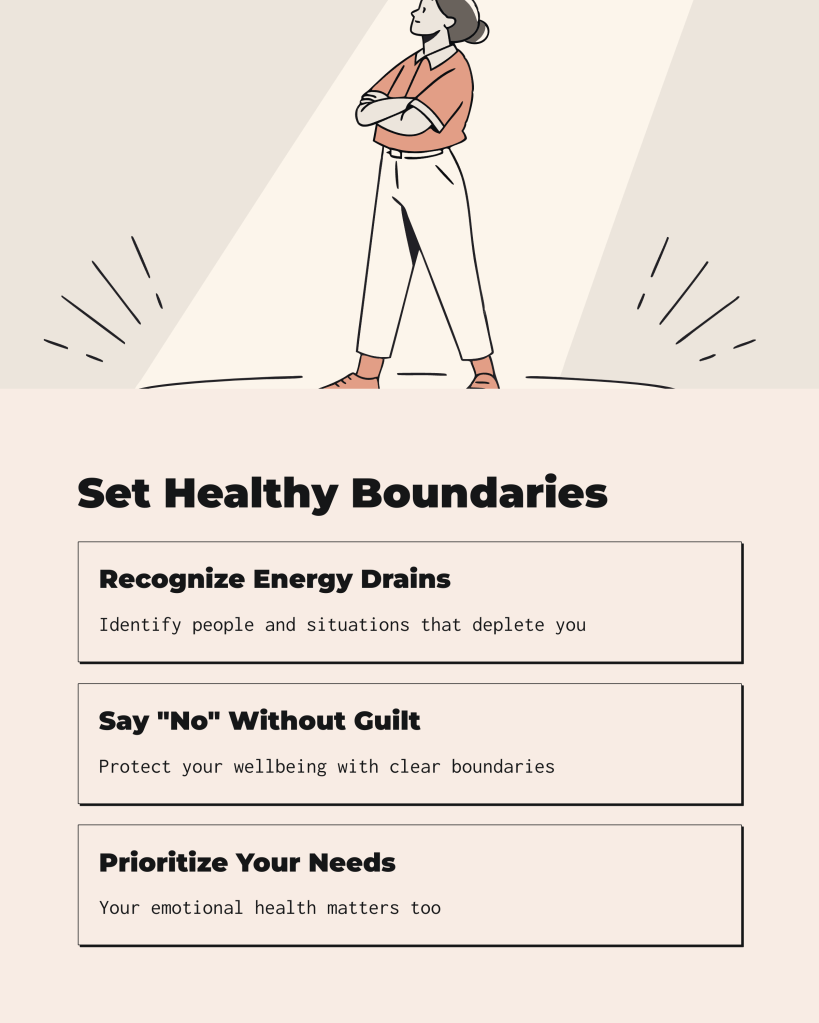
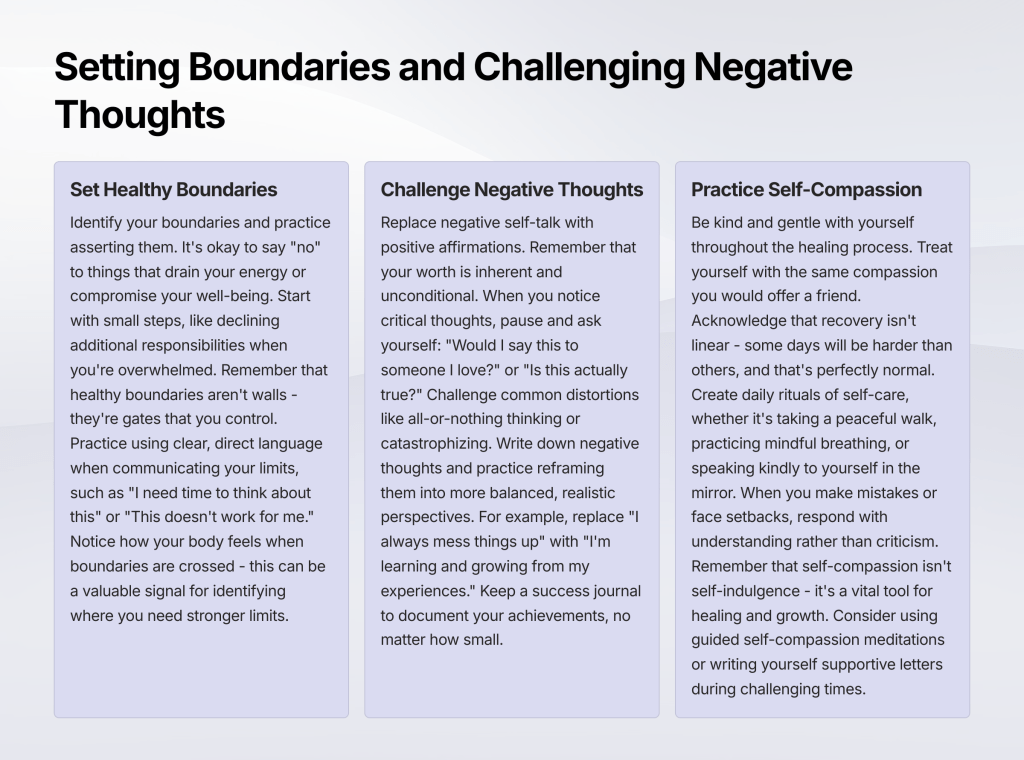
  • Set healthy boundaries around what you can and cannot do
  • Seek your own support through therapy, support groups, or trusted friends
  • Remember that you can’t heal your partner’s trauma for them

The Unexpected Gift

While navigating trauma’s impact on marriage presents real challenges, many couples discover something remarkable: trauma can become a pathway to extraordinary intimacy and resilience. When you learn to hold space for each other’s deepest vulnerabilities, when you develop skills to co-regulate during difficult moments, when you choose understanding over judgment, you create a bond that can weather almost anything.

The marriage that emerges from this crucible often becomes stronger, more authentic, and more compassionate than many couples ever experience. It’s a relationship that truly embodies “for better or worse”—not because it’s easy, but because it’s real.


If you’re navigating trauma in your relationship, remember that seeking help is a sign of strength, not weakness. Consider reaching out to a trauma-informed therapist who can provide personalized guidance for your unique situation.

Resources:

  • “The Body Keeps the Score” by Bessel van der Kolk
  • Psychology Today’s therapist directory (filter for trauma specialists)
  • National Center for PTSD resources for families
  • Local support groups for trauma survivors and their partners

Stressing on the Small Things: Real World Tips and Tools

Discover how minor stressors affect our daily lives and contribute to creating significant challenges for our mental and physical well-being. From forgotten tasks to interpersonal tensions, these seemingly minor irritations can gradually erode our resilience and peace of mind.

This presentation explores the science behind everyday stressors and offers empowering strategies for healthier, happier living through practical techniques that anyone can implement. You’ll learn how minor adjustments to your daily routines can create profound positive changes in how you experience and respond to life’s inevitable challenges.
Join us as we discover simple yet powerful ways to transform your relationship with stress and establish sustainable mental wellness practices that work in real-life situations.

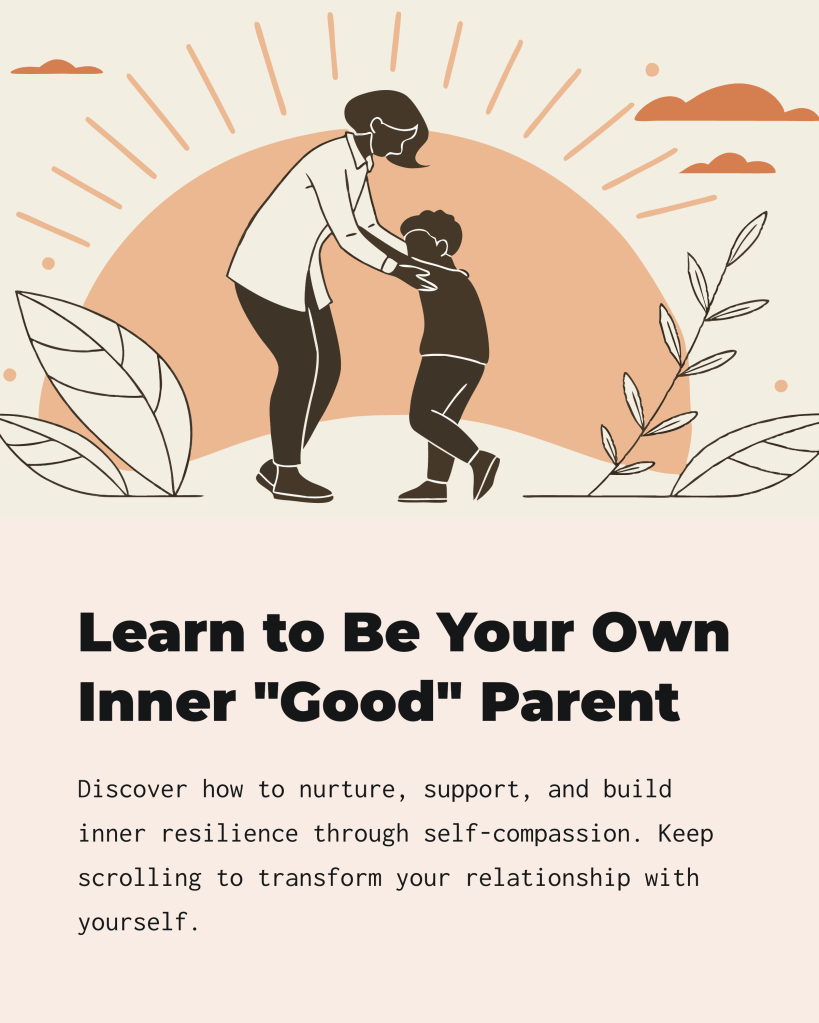
Learn to be your own “Good Parent”

Discover how to nurture, support, and build inner resilience through self-compassion. When we develop our inner “good parent,” we create a foundation of emotional stability that serves us through life’s challenges.

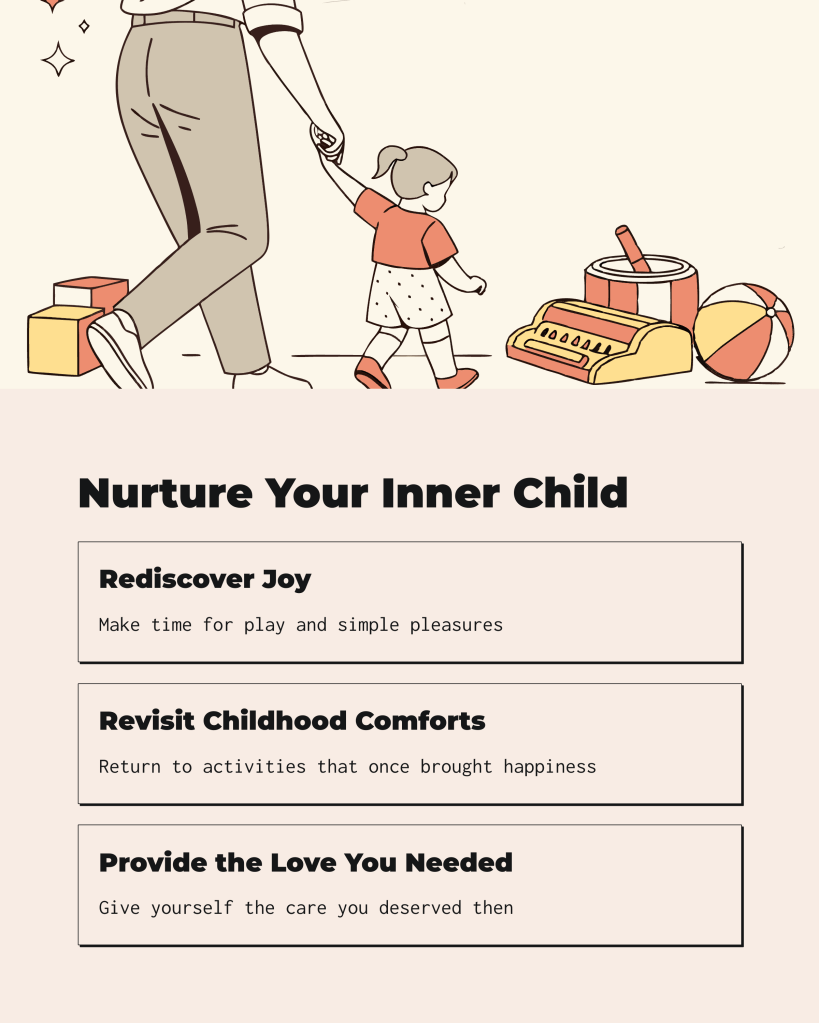
Many of us carry wounds from childhood that affect how we treat ourselves today. By learning to parent yourself with kindness and wisdom, you can heal these patterns and develop healthier self-talk, boundaries, and emotional regulation skills.

What Heals Judgment?

Judgment creates barriers and separation in our lives. It limits our connections, stifles growth, and keeps us trapped in rigid perspectives. When we judge ourselves or others, we close the door to understanding and compassion.

Discover four powerful pathways that can transform how we relate to ourselves and others:

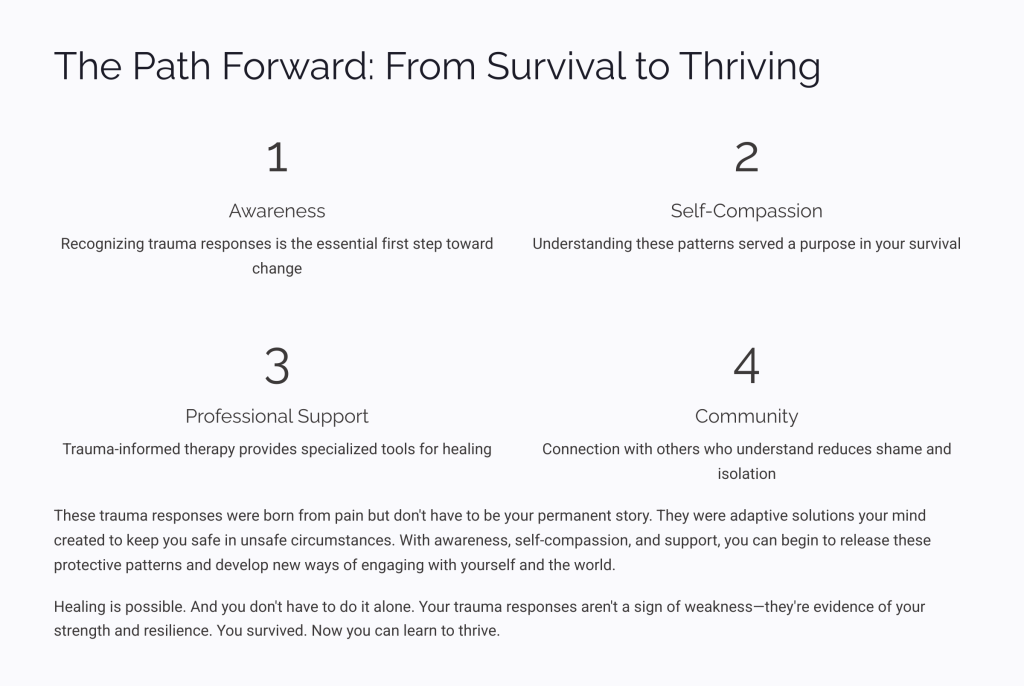
10 Surprising Trauma Responses You Didn’t Know Were Controlling Your Life

What if that trait you’ve always considered just part of your personality—being “too sensitive” or “fiercely independent”—isn’t really who you are? What if it’s actually trauma silently controlling your responses?

Trauma doesn’t always announce itself through dramatic flashbacks or panic attacks. It often hides in our everyday behaviors, reflexive reactions, and even our quirks. These unconscious responses might be your mind’s way of trying to keep you safe from threats that no longer exist.

Join us as we explore ten common trauma responses that might be quietly shaping your life and discover how recognizing them is the first step toward healing and reclaiming your authentic self.

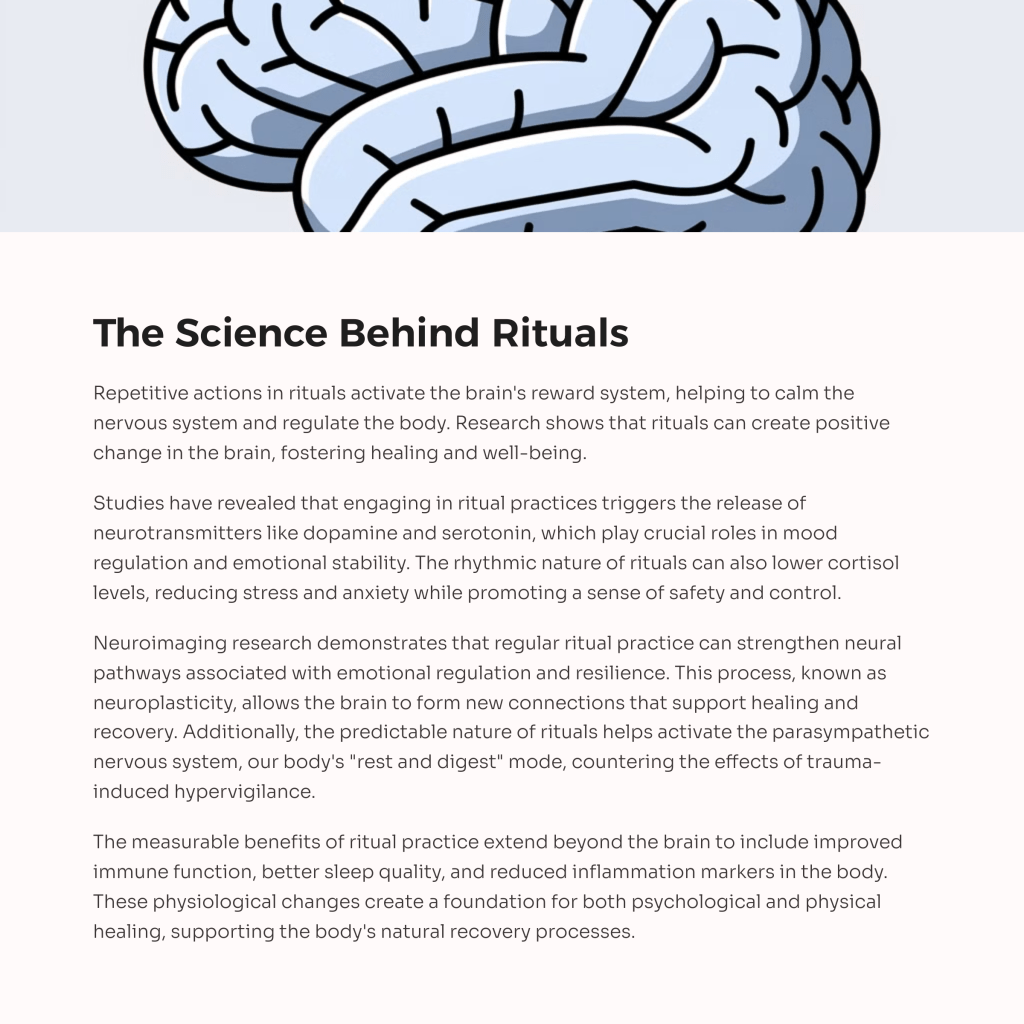
Trauma Recovery: The Healing Power of Rituals

Looking for ways to heal after trauma? Rituals are more than just cultural practices; they’re powerful tools for creating a sense of peace and grounding. Whether it’s a morning meditation, a weekly journaling practice, or a sacred ceremony, rituals can provide structure and meaning during your healing journey.

Safe Space for Healing

Rituals create a protected container for processing emotions and experiences at your own pace.

Connection to Self

Regular practices help rebuild trust in yourself and your body’s wisdom

Restored Sense of Control

Through intentional actions, rituals help reclaim your power and agency

Join us as we explore how ancient wisdom and modern understanding support your healing journey. Whether you’re just starting out or looking to deepen your practice, discover how reclaiming rituals can help you find healing, empowerment, and renewed purpose.

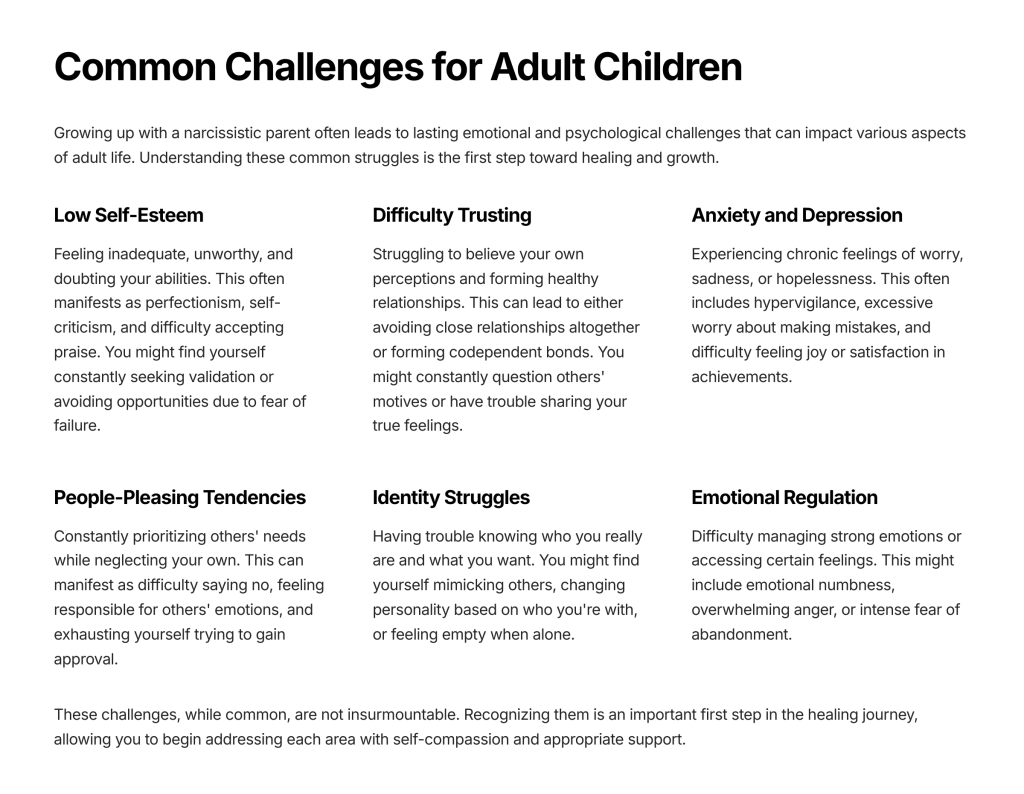
Reclaiming Yourself: A Guide to Recover from Narcisstic Parenting

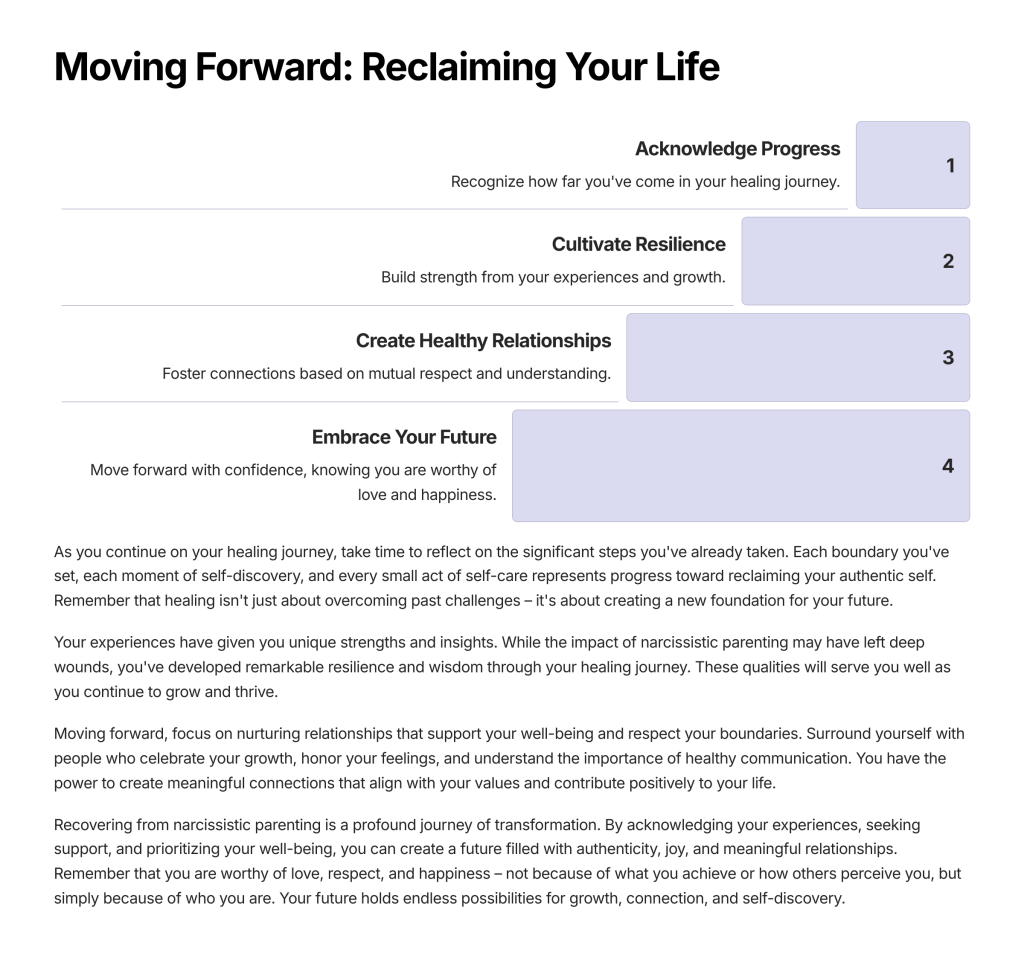
Growing up with a narcissistic parent can leave deep emotional scars, distorting your sense of self and creating lasting challenges. However, recovery is possible. This guide offers a journey of self-discovery, healing, and reclaiming your authentic self. We’ll explore the impact of narcissistic parenting and common challenges faced by adult children and provide essential steps toward healing and moving forward.

Breath to Breath: Your Path to Inner Calm

Deep breathing is a powerful tool for calming the nervous system and promoting overall well-being in children and adults. This simple yet effective technique offers numerous benefits for physical and mental health.

Benefits of Deep Breathing

For Adults

Deep breathing activates the parasympathetic nervous system, which helps reduce stress and anxiety[1][2]. It can lower heart rate and blood pressure and even decrease the production of stress hormones like cortisol[1]. Regular practice of deep breathing exercises has been shown to:

  • Improve cardiovascular health
  • Enhance respiratory performance
  • Boost emotional well-being
  • Increase relaxation responses
  • Promote better sleep

Studies have found that just one minute of slow, deep breathing can significantly lower physiological arousal, making it an excellent tool for managing stress in everyday situations[4].

For Children

Deep breathing exercises can be particularly beneficial for children, helping them develop essential coping skills:

  • Reduces anxiety and stress
  • Improves focus and concentration
  • Enhances emotional regulation
  • Promotes better sleep
  • Builds resilience

Research has shown that guiding children through brief deep breathing exercises can significantly lower their physiological arousal, even in everyday settings[4]. This makes it an invaluable tool for helping children manage their emotions and stress.

Introducing Calm Breath: A New App for Children

We’ve developed a new app called Calm Breath to help children learn and practice deep breathing techniques. This interactive tool makes deep breathing exercises fun and engaging for kids. You can try it out at https://calm-breath.replit.app/

Calm Breath joins a growing list of digital resources to teach children mindfulness and relaxation techniques [6][9]. Incorporating technology can make these valuable skills more accessible and appealing to young users.

How to Practice Deep Breathing

To get the most benefit from deep breathing, follow these simple steps:

  1. Find a comfortable position, either sitting or lying down.
  2. Place one hand on your chest and the other on your belly.
  3. Breathe in slowly through your nose, feeling your belly expand.
  4. Exhale slowly through your mouth, letting your belly fall.
  5. Repeat for several breaths, focusing on the sensation of your breath.

Remember, consistency is key. Incorporating deep breathing exercises into your daily routine can lead to long-term benefits for you and your children.

By teaching children the importance of deep breathing early on, we can help them develop lifelong skills for managing stress and promoting overall well-being. With tools like Calm Breath, we’re making it easier than ever for children to learn and practice these essential techniques.

Citations:
[1] https://www.onestep.co/resources-blog/deep-breathing-better-physical-mental-health
[2] https://positivepsychology.com/deep-breathing-techniques-exercises/
[3] https://www.apaservices.org/practice/business/technology/tech-column/children-mindfulness-apps
[4] https://greatergood.berkeley.edu/article/item/how_four_deep_breaths_can_help_kids_calm_down
[5] https://www.nature.com/articles/s41598-021-98736-9
[6] https://www.understood.org/en/articles/8-meditation-apps-for-kids
[7] https://www.childrenscolorado.org/just-ask-childrens/articles/breathing-to-change-mood/
[8] https://www.webmd.com/balance/what-to-know-4-7-8-breathing
[9] https://parentingchaos.com/anxiety-apps-kids/
[10] https://copingskillsforkids.com/deep-breathing-exercises-for-kids
[11] https://www.heart.org/en/news/2023/07/07/its-not-just-inspiration-careful-breathing-can-help-your-health
[12] https://www.pcmag.com/picks/the-6-best-meditation-and-mindfulness-apps-for-kids
[13] https://www.cedars-sinai.org/blog/five-deep-breathing-exercises-for-kids-and-teens.html

Raising Good Humans: A Guide to Mindful Parenting

Hunter Clarke-Fields’ book “Raising Good Humans” offers a refreshing approach to parenting that focuses on mindfulness, emotional intelligence, and building strong relationships with our children. By incorporating these principles, parents can create a nurturing environment that fosters cooperation, resilience, and empathy in their children.

The Power of Modeling

One of the core tenets of Clarke-Fields’ approach is the importance of modeling desired behaviors. Children learn more from what we do than we say[1]. As parents, we must embody the qualities we wish to see in our children, such as kindness, calmness, and respect[1]. For example, if we want our children to manage their emotions effectively, we need to demonstrate emotional regulation ourselves.

Breaking Harmful Cycles

Clarke-Fields emphasizes the need to identify and break harmful generational patterns[1]. Many parents unknowingly perpetuate behaviors they experienced in their own upbringing, such as yelling or using physical punishment. By recognizing these patterns, we can consciously choose to parent differently, creating a more positive family dynamic.

Mindfulness as a Foundation

The book advocates using mindfulness techniques to enhance parental self-regulation and improve communication with children[1]. Practices like the RAIN meditation can help parents navigate emotional challenges with more excellent balance and presence[1].

Building Strong Relationships

At the heart of Clarke-Fields’ philosophy is the belief that a strong parent-child relationship is key to effective parenting[3]. Children who feel securely attached to their parents are more likely to cooperate and work together to resolve conflicts[3].

Top Parenting Techniques from “Raising Good Humans”

  1. Practice mindful emotion management: Use techniques like RAIN meditation to navigate challenging situations with balance[1].
  2. Model desired behaviors: Demonstrate the qualities you want to see in your children, such as kindness and calmness[1].
  3. Focus on positive reinforcement: Catch your child being good and acknowledge their positive actions[2].
  4. Teach interoception: Help children recognize their body’s internal signals to develop better self-regulation[2].
  5. Establish predictable routines: Create consistency in daily activities to provide security and reduce anxiety[2].
  6. Spend focused time with your child: Strengthen your connection through dedicated, quality time together[3].
  7. Create a low-stress home environment: Simplify your surroundings to foster a calm atmosphere[3].
  8. Practice vulnerability: Show your children that it’s okay not to have all the answers and to learn from mistakes[6].
  9. Cultivate a growth mindset: Encourage a perspective that embraces challenges and sees failures as opportunities for learning[6].
  10. Prioritize emotional intelligence: Help children effectively identify, understand, and manage their emotions [5].

By implementing these techniques and embracing the principles outlined in “Raising Good Humans,” parents can create a nurturing environment that supports their children’s emotional and social development. Remember, the goal is not perfection but a conscious, mindful approach to parenting that fosters strong relationships and raises emotionally intelligent, resilient children.

Citations:
[1] https://swiftread.com/books/raising-good-humans
[2] https://www.mindbodydad.com/dad/5-principles-of-parenting
[3] https://www.shortform.com/summary/raising-good-humans-summary-hunter-clarke-fields
[4] https://bewellbykelly.com/blogs/blog/raising-good-humans-discover-the-5-key-principles-of-parenting-with-dr-aliza-pressman
[5] https://www.20minutebooks.com/raising-good-humans
[6] https://www.mamasaysnamaste.com/podcast-good-humans/
[7] https://www.youtube.com/watch?v=eOlJMB8I_k0
[8] https://gabbybernstein.com/podcast/spirituality-and-parenting-raising-good-humans-with-dr-aliza-pressman/