Page 5 of 13

The 1-Minute Cure for Distressing Emotions

If you have ever felt that there isn’t enough time to manage your emotional and mental health or you get stuck in the same distressing place repeatedly, here are some quick 1-minute self-soothing activities to find some breakthrough.

These activities come from a therapeutic practice called Dialectical Behavior Therapy or DBT. DBT is all about helping you manage your emotions and build better relationships. It’s like having a toolkit with practical skills to handle tricky situations and care for yourself. Imagine you’re facing distressing emotions or struggling with intense mood swings. It teaches you how to recognize and understand your emotions so they don’t feel like a wild rollercoaster ride you have no control over.

One of the strengths of DBT is mindfulness. It’s all about being present at the moment, fully aware of what’s happening inside and around you. It’s like pressing the pause button on your busy thoughts and taking a breather. By practicing mindfulness, you can find some calmness in the chaos.

DBT also shines a light on something called interpersonal effectiveness. It’s like giving you a secret handbook on communicating better, setting boundaries, and building healthy relationships. You’ll learn to express your needs, listen to others, and find that sweet spot where everyone feels heard and respected.

Now, let’s not forget about distress tolerance. Life can throw some curveballs your way, right? DBT helps you develop strategies to handle those challenging moments without worsening things. It’s like having a shield that protects you from getting overwhelmed when things don’t go as planned.

DBT also tackles unhelpful thoughts and beliefs. It helps you challenge negative self-talk and find more balanced perspectives. It’s like rewiring your brain to think more positively and realistically. You’ll discover that you can do amazing things and that setbacks don’t define you.

Ultimately, the goal of DBT is to help you create “a life worth living.” It’s about finding balance, cultivating self-acceptance, and building a solid foundation for your well-being. With DBT, you’ll have the tools and support to tackle life’s challenges head-on and create a brighter future.

Here’s a list of 25 different 1-minute self-soothing activities to regulate your emotions:

  1. Take three deep breaths, focusing on the sensation of the air entering and leaving your body.
  2. Squeeze a stress ball or a soft object in your hand.
  3. Repeat a positive affirmation or mantra to yourself.
  4. Close your eyes and visualize a calm and peaceful place.
  5. Listen to a calming or instrumental piece of music.
  6. Stretch your body and release tension.
  7. Take a quick walk around the room or step outside for fresh air.
  8. Massage your temples or gently rub your hands together for a few seconds.
  9. Write down three things you are grateful for in a gratitude journal.
  10. Drink a small glass of water mindfully, focusing on the sensation of each sip.
  11. Look out the window and notice five things in your surroundings.
  12. Count backward from 10 to 1, allowing yourself to relax with each number.
  13. Hold and stroke a soft fabric or a favorite plush toy.
  14. Repeat a calming word or phrase silently to yourself.
  15. Do a quick body scan, noticing any areas of tension and consciously releasing them.
  16. Hum a soothing tune or sing a calming song to yourself.
  17. Use a scented hand lotion and focus on the fragrance as you rub it into your hands.
  18. Take a mindful pause and observe your thoughts without judgment.
  19. Apply gentle pressure to your temples with your fingertips and massage in circular motions.
  20. Use a stress-relief app or listen to a guided meditation for one minute.
  21. Look at a photo or image that brings you joy and smile at the associated memory.
  22. Do a quick yoga or stretching pose, such as a standing forward bend or a shoulder roll.
  23. Repeat “I am calm and in control” silently or aloud.
  24. Hug yourself tightly for a few seconds, providing comfort and warmth.
  25. Practice a simple gratitude exercise by listing three things you appreciate about yourself.

Remember, these self-soothing activities provide quick relief and promote relaxation in just one minute. Feel free to customize the list based on your preferences and experiment with different techniques to find what works best.

Get a complete list of DBT Regulation Skills by clicking here!

Let Ron Huxley help you today with your emotional regulation and mood. Click here to schedule an appointment.

Breaking Free From Media-Induced Anxiety

In today’s world, we are constantly bombarded with news and information, much of which can be frightening and anxiety-inducing. This constant exposure to negative news can result in a condition known as “media-induced trauma.” Media-induced trauma is a term used to describe the psychological distress that can result from exposure to repeated traumatic news events.

The human brain is wired to respond to threats, and exposure to repeated negative news can activate the fear center of the brain, leading to feelings of anxiety and fear. This is especially true when the news is about threats to personal safety or threats to one’s sense of security.

For example, during the COVID-19 pandemic, many people were glued to their screens, constantly checking for updates on the number of cases, deaths, and vaccine availability. This constant exposure to negative news about the pandemic can lead to feelings of anxiety, fear, and helplessness.

In addition to the fear center of the brain, exposure to negative news can also activate the amygdala, which is responsible for processing emotions. This can lead to a negative spiral of emotions, as the constant exposure to negative news can reinforce feelings of anxiety and fear.

So, what can you do to deal with the fear and anxiety that comes from constantly watching news and fearing the worst? Here are some quick tips to help right away:

  1. Limit your exposure to news: While it’s important to stay informed, it’s also important to set limits on your exposure to news. This can mean setting specific times of the day to check for updates, or limiting your exposure to specific news sources.
  2. Focus on positive news: While negative news can be overwhelming, there is also positive news out there. Make an effort to seek out positive news stories and focus on the good things that are happening in the world.
  3. Practice self-care: Engage in activities that help you to relax and reduce stress. This can include exercise, meditation, or spending time in nature.
  4. Seek professional help: If you are experiencing significant anxiety or fear as a result of your exposure to negative news, it may be helpful to seek professional help. A mental health professional can provide support and help you to develop coping strategies to manage your anxiety.

There are several approaches that a mental health professional could use to help someone who is struggling with media-induced trauma or anxiety caused by constantly watching negative news. Some of these approaches may include:

  1. Cognitive Behavioral Therapy (CBT): This type of therapy focuses on identifying and changing negative thought patterns and behaviors. A mental health professional might help a person with media-induced trauma identify thought patterns that contribute to their anxiety and help them to develop more positive ways of thinking.
  2. Exposure therapy: This type of therapy involves gradually exposing a person to the object or situation that triggers their anxiety. In the case of media-induced trauma, a therapist might work with a person to gradually expose them to news stories or images that trigger their anxiety, helping them to build up a tolerance and reduce their fear response.
  3. Mindfulness-based therapies: These therapies focus on teaching individuals to be more present in the moment and to accept their thoughts and feelings without judgment. A mental health professional might use mindfulness-based techniques to help a person with media-induced trauma to be more present and grounded, reducing their anxiety.
  4. Relaxation techniques: A mental health professional might teach a person relaxation techniques such as deep breathing, progressive muscle relaxation, or guided imagery to help them manage their anxiety and reduce their fear response.
  5. Supportive counseling: A mental health professional can provide a supportive, non-judgmental space for a person to talk about their fears and concerns. This can be especially helpful for individuals who feel overwhelmed or isolated by their anxiety.

Incorporating your faith to find comfort and hope:

A faith-based approach to help someone with media-induced trauma involves incorporating religious beliefs and practices into the therapeutic process. It includes encouraging prayer, using scriptural counseling, practicing mindfulness meditation, promoting forgiveness and gratitude, and referring the person to pastoral counseling. By connecting the person with their faith community and helping them find comfort, peace, and hope through their religious beliefs, this approach can be a powerful tool to manage media-induced trauma and anxingkin

A faith-based approach to help someone with media-induced trauma involves incorporating religious beliefs and practices into the therapeutic process. It includes encouraging prayer, using scriptural counseling, practicing mindfulness meditation, promoting forgiveness and gratitude, and referring the person to pastoral counseling. By connecting the person with their faith community and helping them find comfort, peace, and hope through their religious beliefs, this approach can be a powerful tool to manage media-induced trauma and anxiety.

How to live in the “Peaks & Valleys” of life

A review (and application) of Spencer Johnsons Book “Peaks and Valleys”:

Have you ever felt like life is a rollercoaster of highs and lows? If so, you’re not alone. Life is full of peaks and valleys, and navigating the ups and downs can be challenging. But fear not because Spencer Johnson’s book, “Peaks and Valleys,” provides a simple but powerful framework for managing the highs and lows of life.

Johnson tells the story of a young man who meets an older, wiser man in the mountains, who teaches him how to overcome obstacles and achieve success. The older man teaches the young man that life is a series of peaks and valleys and that it is during the valleys that one can learn valuable lessons and gain perspective.

So, how can we learn valuable lessons and gain perspectives in the valleys of life? Johnson suggests several ways:

First, he encourages us to embrace the valley. Rather than avoiding or denying life’s difficulties, Johnson suggests embracing them and seeking opportunities to learn and grow.

Embracing the valleys of life can be challenging, but there are practical ways that someone can implement this idea from “Peaks and Valleys” by Spencer Johnson. Here are a few suggestions:

  1. Practice mindfulness: Mindfulness can help individuals become more aware of their thoughts and emotions and help them approach difficult situations with a more open and accepting attitude. Mindfulness practices such as meditation or journaling can help individuals embrace the valleys of life by encouraging them to sit with and observe their experiences without judgment.
  2. Seek support: Talking to a trusted friend, family member, or therapist can provide individuals with a safe space to process difficult emotions and experiences. Seeking support can also help individuals feel less alone and give them insights and advice on navigating the valley.
  3. Reframe negative thoughts: Falling into negative thought patterns or beliefs can be easy when faced with a difficult situation. Reframing negative thoughts into more positive or neutral ones can help individuals approach the valley with a more open and accepting attitude. For example, rather than thinking, “this situation is terrible,” try reframing it to “this situation is challenging, but I have the strength to overcome it.”
  4. Look for growth opportunities: As Johnson suggests, the valleys of life can provide opportunities for learning and growth. When facing a difficult situation, identify what lessons can be learned or how they can contribute to personal growth. This shift in perspective can help individuals approach the valley with a more positive and proactive attitude.

Second, he suggests reflecting on past successes and failures. Reflecting on past successes and failures can help us gain perspective and learn from our mistakes.

Reflecting on past successes and failures can be valuable for personal growth and development. Here are some practical ways to implement this idea from “Peaks and Valleys” by Spencer Johnson:

  1. Keep a journal: Writing down past successes and failures can provide a record of personal growth and development over time. Additionally, reflecting on past experiences in writing can help individuals gain perspective and identify patterns or themes in their successes and failures.
  2. Seek feedback: Talking to trusted friends, family members, or mentors can provide valuable insights into past successes and failures. Others may be able to offer an outside perspective and identify strengths and weaknesses that the individual may not have noticed themselves.
  3. Identify patterns: Reflecting on past successes and failures can help individuals identify patterns or themes in their behavior or decision-making. By recognizing these patterns, individuals can make more informed decisions and avoid repeating past mistakes.
  4. Celebrate successes: Celebrating past successes, no matter how small, can provide motivation and confidence for future endeavors. Acknowledging personal achievements can help individuals feel more resilient in future challenges.
  5. Learn from failures: Johnson suggests that failures can provide valuable lessons for personal growth. Rather than dwelling on past mistakes, individuals can reflect on what they learned from the experience and how they can use that knowledge to make better decisions in the future.

Third, he recommends asking for feedback. Asking for feedback from others can provide valuable insights and help us identify areas for improvement.

Asking for feedback can be a powerful tool for personal growth and development. Here are some practical ways to implement this idea from “Peaks and Valleys” by Spencer Johnson:

  1. Ask specific questions: When seeking feedback from others, asking specific questions about a particular area of interest can be helpful. For example, individuals can ask for general feedback on a specific project, presentation, or behavior rather than asking for general feedback.
  2. Choose trusted sources: It’s important to choose trusted sources when seeking feedback. Individuals can ask for feedback from friends, family members, colleagues, mentors, or others they respect and trust.
  3. Be open to criticism: Receiving feedback can be difficult, especially if it’s critical. However, being open to criticism and approaching feedback with a growth mindset can provide valuable insights and help individuals identify areas for improvement.
  4. Follow up: After receiving feedback, following up with the individual to clarify any points or ask for additional advice can be helpful. Additionally, individuals can share how they plan to implement the feedback and ask for support or accountability.
  5. Practice active listening: When receiving feedback, it’s important to practice active listening. This means paying attention to what the individual is saying, asking clarifying questions, and expressing gratitude for the feedback.

Fourth, he advises practicing gratitude. Even amid difficulty, focusing on the positive aspects of our lives can help us maintain a positive attitude and gain perspective.

Practicing gratitude can be a powerful tool for cultivating a positive mindset and gaining perspective, even during difficult times. Here are some practical ways, with empathy in mind, to implement this idea from “Peaks and Valleys” by Spencer Johnson:

  1. Start a gratitude journal: Writing down three things you’re grateful for each day can help you focus on the positive aspects of your life. This could be as simple as a warm cup of coffee in the morning, a supportive friend or family member, or the beauty of nature.
  2. Say thank you: Expressing gratitude to others can help strengthen relationships and improve your own well-being. Whether it’s a heartfelt thank-you note, a verbal expression of thanks, or a small act of kindness, saying thank you can help you feel more connected and appreciative.
  3. Notice the good: During difficult times, it can be easy to focus on the negative aspects of a situation. However, intentionally noticing the good, no matter how small, can help shift your perspective and boost your mood. For example, noticing a beautiful sunset, a kind gesture from a stranger, or a moment of laughter with a loved one can help you feel more positive.
  4. Practice mindfulness: Mindfulness practices, such as meditation or deep breathing, can help you stay present and cultivate a sense of gratitude. Focusing on your breath or a specific sensation in your body can quiet your mind and help you appreciate the present moment.
  5. Give back: Giving back to others can be a powerful way to cultivate gratitude and meaning in your life. Volunteering, donating to a charity, or simply offering a kind word or gesture to someone in need can help you feel more connected to others and appreciate your blessings.

Fifth, he suggests taking action. Rather than becoming paralyzed by fear or uncertainty, Johnson suggests taking action toward our goals, even if it is a small step.

Here are the practical action steps for taking action towards your goals as suggested by Spencer Johnson in his book “Peaks and Valleys”:

  1. Identify your goals: First, identify what you want to achieve or accomplish. Be specific about your goals and write them down.
  2. Break down your goals: Break your goals down into smaller, manageable steps. This will make them less overwhelming and easier to accomplish.
  3. Take small actions: Take action towards your goals, even if it’s just a small step. It could be as simple as making a phone call or email.
  4. Focus on progress, not perfection: Don’t worry about being perfect. Instead, focus on making progress toward your goals. Celebrate small wins along the way.
  5. Stay motivated: Keep yourself motivated by focusing on the positive outcomes of achieving your goals. Remind yourself why you started and how good it will feel when you succeed.
  6. Adjust your actions: If your actions aren’t getting you closer to your goals, adjust your approach. Be open to trying new things and making changes as needed.
  7. Stay consistent: Consistency is key to achieving your goals. Keep taking action towards your goals, even when it gets tough.

Lastly, he advises us to learn from others. Studying the lives of successful people and learning from their experiences can help us gain perspective and insights into navigating the valleys of life.

Here are the practical implementation steps for learning from others, as suggested by Spencer Johnson in his book “Peaks and Valleys”:

  1. Identify successful people: In your field or area of interest, identify successful people. You can look for them in books, articles, online resources, or your personal network.
  2. Study their experiences: Read about their experiences, challenges, and successes. Look for common themes and patterns that contributed to their success.
  3. Learn from their mistakes: Identify the mistakes they made and learn from them. This can help you avoid making the same mistakes and save you time and effort in the long run.
  4. Adapt their strategies: Identify their strategies and approaches to overcome challenges and achieve success. Adapt these strategies to fit your own situation and circumstances.
  5. Apply their lessons: Apply the lessons you learn from successful people to your own life. Implement their strategies and approaches in your own work and personal life.
  6. Share with others: Share what you learn with others. Discuss your findings with colleagues, friends, or family members. This can help you gain new perspectives and insights and inspire others to learn from successful people.

Remember, learning from successful people is not about copying them. It’s about gaining insights and perspectives to help you navigate life’s valleys more effectively and achieve your own goals.

“The best way to get out of a valley is to climb toward a peak.”

Spencer Johnson

Overall, “Peaks and Valleys” provides a simple but powerful framework for managing the highs and lows of life and encourages readers to use the lessons learned during difficult times to achieve greater success and happiness. Rather than getting stuck in the depths of a valley, we can focus on climbing towards a peak and use the lessons learned during the valley to propel us forward. By embracing the valleys of life, reflecting on past experiences, seeking feedback, practicing gratitude, taking action, and learning from others, we can navigate life’s peaks and valleys with grace and resilience.

I hope you found this summary helpful and that it encourages you to read “Peaks and Valleys” for yourself. Remember, life is a journey, and every valley has a peak waiting on the other side.
Healing from Trauma: Understanding the Stages and Supporting Your Child Through the Journey

Healing from trauma is a complex and challenging, but recovering and moving forward with life is possible. As a trauma therapist, I have worked with many people who have experienced trauma and have seen firsthand how healing can transform lives. In this article, I will discuss the stages of recovery from trauma and what parents can do to support their children.

Stage 1: Safety and Stabilization
The first stage of healing from trauma is focused on safety and stabilization. This stage is about establishing a sense of safety and security, both physically and emotionally. Many people who have experienced trauma may feel like the world is dangerous and unpredictable, so finding ways to feel safe and grounded in the present moment is essential. This may involve developing a safety plan, finding a safe and supportive community, and practicing self-care.

As a parent, you can support your child during this stage by creating a safe and predictable environment. This may involve establishing routines, setting boundaries, and providing emotional support. Listening to your child’s needs and concerns and validating their feelings is also important.

Stage 2: Processing and Understanding
The second healing stage focuses on processing and understanding the traumatic experience. This stage is about exploring thoughts and feelings related to the trauma, making sense of the incident, and working through any confusion or self-blame. It’s important to note that this stage can be complicated and involve intense emotions, so having a supportive therapist or other mental health professionals guide you through the process is essential.

As a parent, you can support your child during this stage by providing a safe and supportive environment for them to express their feelings. It’s important to listen without judgment and validate their experiences. You can also help your child to understand that their reactions to the trauma are normal and that they are not alone.

Stage 3: Integration and Meaning-Making
The third healing stage focuses on integrating the experience into one’s sense of self and life story. This stage involves finding ways to incorporate the trauma into one’s identity and a sense of purpose and developing a greater understanding of meaning and purpose due to the experience. This stage is about finding a way to move forward with life, even in the face of adversity.

As a parent, you can support your child during this stage by helping them find meaning and purpose in their life. This may involve helping them to explore their interests and passions and keeping them pursuing their goals. It’s also important to remind your child that they are strong and resilient and can overcome the challenges they face.

Stage 4: Re-connection and Empowerment
The final stage of healing is about reconnecting with oneself, others, and the world in a safe and empowering way. This stage is about finding ways to engage in meaningful activities and pursuits and to feel a sense of agency and control in one’s life. This stage concerns reclaiming power and moving forward with a renewed sense of purpose.

As a parent, you can support your child during this stage by encouraging them to engage in activities that bring them joy and fulfillment. This may involve helping them to connect with others who share their interests and supporting them in pursuing their passions. It’s also important to remind your child that they can create the life they want and are not defined by past experiences.

In conclusion, healing from trauma is a complex and individualized process. Still, it is possible to recover and move forward with life. As a parent, you can support your child through the healing process by creating a safe and supportive environment, listening without judgment, and encouraging them to find meaning and purpose in their life.

If you or your child have experienced trauma and are struggling to heal, know that you are not alone. Seeking support from a therapist can be an important step in the healing process. Ron Huxley, LMFT, can help you and your child find freedom from the burden of trauma. Schedule a session today!

Helping Children Focus in School After Trauma…

When children experience trauma, it can be difficult to focus and stay engaged in the classroom. Fortunately, many social-emotional learning activities can help children develop the skills they need to stay focused and engaged in the classroom. Here are 10 ways children can use social-emotional learning activities to help them focus in the classroom after experiencing trauma.

1. Positive Self-Talk: Positive self-talk can be a powerful tool for helping children to stay focused and engaged in the classroom. Encourage your child to practice positive self-talk by repeating mantras and affirmations to themselves throughout the day. This will help them to stay positive and motivated, even when facing challenging tasks.

2. Mindfulness: Mindfulness activities can help children to stay in the present moment and pay attention to what is happening in the classroom. Encourage your child to practice mindfulness activities like deep breathing and body scans to help them stay focused and engaged.

3. Visualization: Visualization activities can help children to create positive images in their minds, which can help them stay focused and engaged in the classroom. Encourage your child to practice visualization activities, such as imagining a peaceful place or positive future, to help them stay on task.

4. Social Skills: Social skills can help children stay engaged in the classroom and positively interact with their peers. Encourage your child to practice social skills, such as active listening, problem-solving, and conflict resolution.

5. Emotional Regulation: Emotional regulation activities can help children to manage their emotions and stay focused in the classroom. Encourage your child to practice emotional regulation activities like deep breathing, progressive muscle relaxation, and positive self-talk.

6. Self-Awareness: Self-awareness activities can help children to understand their emotions, thoughts, and behaviors. Encourage your child to practice self-awareness activities such as journaling, reflecting on their experiences, and talking to a trusted adult.

7. Goal Setting: Goal-setting activities can help children to stay focused and motivated in the classroom. Encourage your child to set short-term goals that are achievable and to create a plan for how to reach those goals.

8. Problem-Solving: Problem-solving activities can help children to think flexibly and stay focused in the classroom. Encourage your child to practice problem-solving activities, such as brainstorming, making lists, and breaking down tasks into smaller steps.

9. Self-Care: Self-care activities can help children to stay focused and engaged in the classroom. Encourage your child to practice self-care activities such as getting enough sleep, eating healthy meals, and engaging in physical activity.

10. Connecting With Others: Connecting with others can help children to stay focused and engaged in the classroom. Encourage your child to connect with peers by talking to them, listening to their stories, and engaging in conversations.

Ron Huxley can help your and your child focus and learn after dealing with stress and trauma. Ron Huxley is a licensed therapist specializing in anxiety and trauma. Contact him today!

Breathwork is the body’s “calm down” switch

When life throws us challenges, we experience trauma or a stressful event; our natural response is to go into fight-or-flight mode. This is a normal, automatic response to a perceived danger. But when the threat has passed, it’s essential to learn how to calm your nervous system and release the tension and anxiety that can linger in the aftermath.

One of the most powerful tools for calming the nervous system is breathing. Breathwork has been used in various forms for centuries to help people manage stress, anxiety, and trauma. It’s an effective and natural way to reset your body and mind.

We take shallow, rapid breaths when our bodies are in fight-or-flight mode. This type of breathing is known as sympathetic breathing, and it’s the body’s way of preparing us to fight or run away. But when the danger has passed, this type of breathing can increase anxiety and make it more difficult to relax.

On the other hand, deep, slow breaths can help to activate the body’s parasympathetic nervous system. This system is responsible for calming the body and restoring balance. Deep, slow breaths can help to trigger the body’s relaxation response, which is the opposite of the fight-or-flight response.

The key to using breathing to calm the nervous system is to focus on the breath. Focusing on our breath brings us into the present moment and helps us become aware of our body and mind. This awareness helps us relax, as it allows us to recognize what is happening and let go of any tension or fear we may be holding onto.

Breathing can also help to release the emotions that may be stored in our body from the traumatic event. When we take a few deep, slow breaths, we can help to release the tension and stress that may have built up in our bodies. This type of breathing can also help release emotions associated with the trauma, allowing us to move through the experience more quickly.

Breathing can also help to regulate the body’s cortisol levels. Cortisol is a hormone that is released in response to stress. When we take deep, slow breaths, we can help to lower our cortisol levels and restore balance in the body. This can help to reduce anxiety and improve mood.

Try this simple breathing exercise:
Make your exhales longer than your inhales. For example, if you breathe in for 4 seconds, breathe out for a count of 8 seconds. Longer exhales than inhales will turn on the “rest and relaxation” functions in the parasympathetic system. Conversely, longer inhales than exhales energize the system. This is an exercise used by Navy Seals to prepare for or calm down from a battle. Take 3 or 4 long exhales. You should feel your body relax immediately, with shoulders dropping and tension releasing. You might even yawn, which is a good sign too.

Breathing is a powerful tool for calming the nervous system and helping manage trauma’s effects. It can help to reduce stress, release emotions, and regulate cortisol levels. When we focus on our breath and take a few slow, deep breaths, we can help to activate the body’s relaxation response and restore balance.

If you want help calming the body and brain due to worry, fear, stress, or panic, contact Ron Huxley today. Click here to schedule an appointment!

Anxiety should be our primary focus for the New Year

Anxiety is a common and often debilitating mental health condition that affects millions of people around the world. It is characterized by feelings of worry, unease, and fear and can manifest in a variety of physical symptoms such as increased heart rate, difficulty breathing, and muscle tension. While anxiety is something that many experiences at some point in their lives, it can become a chronic problem that interferes with daily functioning and overall well-being.

Given the significant impact of anxiety on individuals and society, we must make it a priority to address this issue in the coming year. In this blog post, we will explore why anxiety should be our primary focus in 2023 and what we can do to support those struggling with this condition.

One of the main reasons anxiety should be a focus in 2023 is that it is highly prevalent. According to the World Health Organization (WHO), anxiety disorders are among the most common mental health conditions globally, affecting an estimated 264 million people. One in every 13 people is likely to experience anxiety at some point.

Anxiety can have a major impact on a person’s quality of life. It can interfere with work, relationships, and daily activities and lead to other mental health issues, such as depression. Anxiety can also have physical consequences, such as an increased risk of heart disease and other health problems.

Another reason anxiety should be a focus in 2023 is that it is often overlooked or misunderstood. Despite its prevalence, anxiety is often stigmatized and not taken as seriously as other mental health conditions. This can make it difficult for people to seek help or even recognize that they have a problem.

There is also a lack of awareness about the various forms of anxiety and the different ways it can manifest. For example, generalized anxiety disorder (GAD) is characterized by excessive and persistent worry about various topics, while social anxiety disorder is marked by extreme fear of social situations. Understanding the different types of anxiety can help us better identify and support those struggling with this condition.

So what can we do to make anxiety a focus in 2023 and support those dealing with this condition? Here are a few suggestions:

  • Increase awareness and understanding of anxiety: One of the first steps to addressing anxiety is to increase awareness and understanding of the condition. This can involve educating the public about the different forms of anxiety, the signs and symptoms, and the available treatments. It can also involve debunking myths and stereotypes about anxiety and promoting a more compassionate and understanding approach to struggling people.
  • Expand access to treatment: Another important step is ensuring that those struggling with anxiety have access to effective treatment. This can involve making therapy and medications more readily available and affordable and increasing the number of trained mental health professionals. It can also involve supporting alternative treatments such as mindfulness and meditation, which can be effective for some people.
  • Create supportive environments: We can also create more supportive environments for those with anxiety. This can involve providing accommodations in the workplace, such as flexible scheduling or the option to work from home. It can also involve creating safe and supportive spaces in schools, universities, and other community settings.
  • Promote self-care: Finally, it is important to encourage self-care and stress management techniques to help individuals better manage their anxiety. This can involve educating people about healthy habits such as exercise, sleep, and nutrition, as well as techniques such as relaxation and mindfulness.

In conclusion, Anxiety is a growing problem for children and adults. It can be an invisible illness overlooked by society, leading to fear and anxiety in those suffering from it. The good news is that anxiety can be managed, and we can work together to bring change so that more people can recover from it.

Let Ron Huxley help you deal with anxiety by scheduling a session today!

STOP Anxiety and Unwanted Emotions in Four Simple Steps

Dialectical behavioral therapy (DBT) is a therapeutic approach that has been used to treat a variety of mental health issues, including anxiety. It focuses on helping individuals learn how to regulate their emotions and build healthier relationships. One of the core concepts of DBT is the “stop technique”, which is a tool that can be used to help reduce anxiety.

What is the DBT stop technique?

The DBT stop technique is a way to help individuals recognize and manage their emotions in a healthy way. It is based on the idea that when we experience strong emotions, it can be difficult to think clearly and make rational decisions. The stop technique encourages individuals to pause and take a moment to recognize their feelings and to make a conscious effort to shift their focus to something else.

The stop technique is broken down into four steps:

  1. Stop: This is the first step in the technique and it involves taking a moment to recognize your emotions and to pause. You can do this by saying the word “stop” to yourself or by taking a few deep breaths.
  2. Take a step back: The second step is to take a step back and to observe the situation from a distance. This can help to provide perspective and to give you a better understanding of the situation.
  3. Observe: The third step is to observe your thoughts and feelings without judgement. This can help to provide clarity and to give you a better understanding of yourself and the situation.
  4. Proceed: The fourth step is to proceed with a plan of action. This could involve talking to someone about your feelings, writing down your thoughts, or engaging in a calming activity.

How can the DBT stop technique help with anxiety?

The DBT stop technique can be a helpful tool for individuals who are struggling with anxiety. It can help to provide a sense of control and to give individuals a sense of clarity. It can also help to reduce feelings of overwhelm by allowing individuals to take a step back and to observe their emotions without judgement.

The stop technique can also help to reduce the intensity of anxiety-related symptoms, such as racing thoughts, increased heart rate, and difficulty concentrating. By recognizing and acknowledging your feelings, you can take control of the situation and focus on calming yourself down.

Using the DBT stop technique effectively

Using the DBT stop technique effectively requires practice and dedication. It can be helpful to talk to a therapist about your experience with the technique and to practice it in a safe, comfortable environment. It is also important to be patient with yourself and to remember that it takes time to develop new skills.

It is also important to remember that the stop technique is not a “cure-all” for anxiety. It is a tool that can be used to help manage anxiety in the moment, but it is not a replacement for other forms of therapy or treatment.

Ron Huxley can help you stop anxiety and any other unwanted emotions. Let’s schedule an appointment for you today!

Emotional Regulation Tools for Stressed-Out People

Emotional regulation is the ability to manage and respond to our emotions in a healthy and productive way. It’s a crucial skill to have, especially for those who struggle with stress and anxiety. When we’re overwhelmed by negative emotions, it can be difficult to think clearly and make good decisions. However, with some practice and effort, we can learn to regulate our emotions and feel more in control of our lives.

Here are some strategies for improving emotional regulation in times of stress and anxiety:

1. Practice mindfulness: Mindfulness is the practice of bringing your attention to the present moment, without judgment. It can help you become more aware of your thoughts and emotions, and allow you to respond to them in a more thoughtful way. Try setting aside a few minutes each day to sit quietly and focus on your breath, or try a guided mindfulness meditation.

2. Use deep breathing: Deep breathing is a simple but effective way to calm the body and mind. When we’re stressed or anxious, our breath tends to become shallow and rapid. By slowing down and deepening our breath, we can help activate the body’s natural relaxation response. Try taking a few slow, deep breaths whenever you’re feeling overwhelmed.

3. Engage in physical activity: Exercise can be a great way to reduce stress and improve emotional regulation. It releases endorphins, which are chemicals that improve mood and reduce feelings of stress. Plus, getting your body moving can be a great distraction from negative thoughts and emotions.

4. Practice gratitude: Focusing on the things we’re grateful for can help shift our perspective and improve our mood. Try keeping a gratitude journal where you write down three things you’re grateful for each day. Or, share your gratitude with a friend or family member.

5. Seek support: It’s important to remember that you don’t have to face stress and anxiety alone. Talk to a trusted friend or family member about how you’re feeling, or consider seeking support from a mental health professional.

6. Use positive self-talk: Our thoughts have a powerful impact on our emotions. When we’re struggling with stress and anxiety, it’s common to have negative thoughts about ourselves or the situation. By practicing positive self-talk, we can reframe these negative thoughts and improve our emotional well-being. For example, instead of telling yourself “I can’t handle this,” try saying “I’m doing the best I can and I will get through this.”

7. Take breaks: It’s important to give yourself time to relax and recharge. Make sure to schedule breaks into your day and take time to do things you enjoy. This could be something as simple as going for a walk or reading a book.

8. Use relaxation techniques: There are a variety of relaxation techniques that can be helpful for managing stress and anxiety. These might include progressive muscle relaxation, visualization, or guided imagery. Experiment with different techniques to see what works best for you.

9. Set boundaries: It’s important to set boundaries and make sure you’re not taking on more than you can handle. Learn to say no to things that don’t align with your values or that are overwhelming for you.

10. Seek professional help: If you’re struggling to manage your stress and anxiety on your own, it may be helpful to seek the support of a mental health professional. They can provide you with tools and strategies to help you cope with difficult emotions and improve your overall well-being.

Emotional regulation is a skill that can be developed with practice. It’s not always easy, but it’s worth the effort. By using the strategies outlined above, you can learn to manage your emotions in a healthy and productive way, even in times of stress and anxiety.

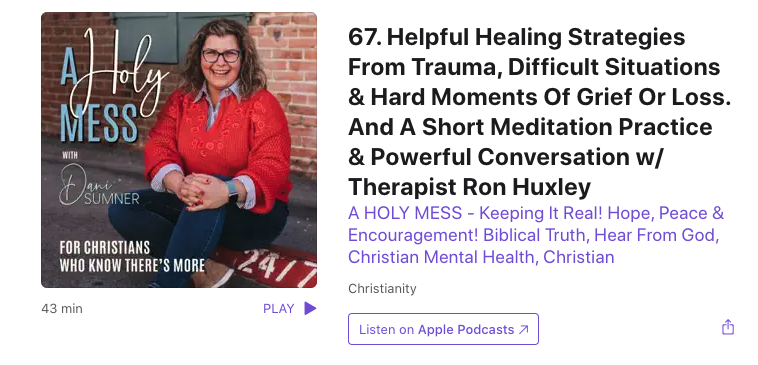
Helpful Healing Strategies from Trauma, Difficult Situations & Hard Moments of Grief or Loss (a Holy Mess Podcast)

I am so excited to guess again on the Holy Mess Podcast (see the link below). The show creator, Dani Sumner, has the #1 Christian Mental Health podcast on Spotify. This episode talks about healing from a body, mind, and spirit perspective. At the end of the podcast, I will lead you through a short meditation on how to “resource” safety from each perspective. You don’t want to mess with this podcast: Click here now!