Page 12 of 13

Anxiety can ruin your life…

freetillsept1

FACT: Anxiety and depression are the biggest causes of disability in the developed world. One in five Americans suffers from some type of diagnosable anxiety disorder, such as generalized anxiety, panic, agoraphobia, post-traumatic stress, and obsessive-compulsive disorders. Eighty-five percent of sufferers never get any help!

FACT: Between 50 and 75% of all visits to primary-care doctors in the United State are related to stress or unresolved emotional upsets.

FACT: Anxiety is 2x more likely in women than in men.

FACT: Another 60 to 100 million people struggle with addictions and toxic lifestyles and mental health disorders!

FACT: Almost everyone else is nervous or worried about something every single day of their life!

FACT: Anxiety can destroy relationships, sabotage job opportunities, and ruin your physical and mental health. 

This doesn’t have to be you! You can walk confidently in social situations at school and at work; live without fear of a panic attack; find that intimate relationship you desire; sleep peacefully knowing you have a positive future waiting for you.

Get FREE access to our online course: “Freedom From Anxiety” but this is only open until September 1st, 2017. So get it now…

Looking for Web Course Testers

Looking for web course testers! I have two web courses in the works: Freedom From Anxiety and The Better Behavior Chart Program. I need a few tech savvy people to review content, give helpful feedback and maybe leave a nice review for future guests. Here’s your chance to get free advice too! I will create a private FB group to get feedback…things are still under construction so don’t mind the dust 🙂 I will need your email address to sign you up. More on that later. Email me at rehuxley@gmail.com or message me if interested but hurry time is limited.

Your Body is a Brain…

Great writers and painters have known this fact for decades: The body acts like a brain…

Walt Whitman understood that the flesh was the source of meaning; Auguste Escoffier discovered that taste is actually a smell; Paul Cézanne realized that the brain can decipher an image from minimal brushstrokes.

Jonah Lehrer has written a book called Proust Was a Neuroscientist

In my own trauma-informed trainings I discuss how our central nervous system, specifically the nerves surrounding our “guts”, acts as a second brain.

Did you know that there are 43 different pairs of nerves which connect the nervous system to every part of our body. Twelve of these nerve pairs are connected to the brain, while the remaining 31 are connected to the spinal cord.

Did you know that the gut has 100 million nerve cells that make up it’s own nervous system separate from the brain!

Did you know that one of the major nerve pathways from the gut to the brain is called the Vagus Nerve. The brain interprets signals from the Vagus Nerve as actual emotional information. It really doesn’t know the difference. 

Did you know that there is more and more research on how the gut and gastrointestinal conditions are linked to depression, anxiety, autism, and ADHD. What we are talking about here is nutrition and not just medication can change our mental health.

And did you know that there is a reason we call certain kinds of food “comfort food”? Comfort foods affect our moods. Can someone say chocolate please?

Understanding the brain/body connection can help us overcome trauma in ways that traditional talk therapy cannot. This is because a lot of times there are no words to express what trauma is doing in our lives or the trauma is so far back in infancy and during pregnancy that there was no ability to form words.

This will require a new approach to doing therapy that involves movement, sensory processing, art therapy and my own NeuroResilience Play Therapy Approach. Click here for more info.

What is your body telling you?  Perhaps its time to follow your “gut” instincts today and find the help you need. Hey, writers and artists have been telling us for years this truth about our body acting like a brain. Let’s listen to what it is saying!

TraumaInformedTraining logo

Need trauma-informed training for your organization or up coming conference? Contact Ron today.

Newsletterimage

Join our newsletter and get Ron’s blog posts in your inbox!

Born To Worry

I really can’t think of anyone who loves stress. Do you? A little stress is normal in life but it can range from positive, tolerable, or even toxic. When we suffer from toxic stress early in life it can effect how our genes express their programmed ability to manage it.

A new book on the subject of stress, called “Born Anxious: The Lifelong Impact of Early Life Adversity – and How to Break the Cycle, by Daniel P. Keating” reveals how and what happens when we are impacted by toxic stress.

bornanxious

The book discusses research on epigenetics which is the study of genetic expression and how it is altered by environmental events. Our genes are designed, by our DNA, to cope with certain levels of stress. Positive and tolerable stress can be managed by our stress programs. Toxic stress, experienced early in life, effects if our genetic programs actually get turned on or off.

Our bodies are designed to amp up or power down in reaction to the type and amount of stress we go through on a daily basis. For example, if we find ourselves facing an angry dog, our immediate reaction is to fight or flee in order to survive. If the dog runs off, we might continue to feel agitated for a short while after the encounter and then we will naturally calm back down. Our nervous system is designed to amp up to deal with the dog and then reset itself so that we can function normally again.

Children who have gone through chronic early life stress may have their normal genetic response to angry dogs or any perceived threat altered. If the genetic expression to stress stays continuously on, we move through life as if the dog is always in front of us. In the book, Born Anxious: The Lifelong Impact of Early Life Adversity – and How to Break the Cycle, Daniel P. Keating states the effects of early life stress makes individuals “born to worry.”

Some of the reasons for early life stress can come from internal sources, such as hunger, pain, illness, fatigue, and external sources, such as family conflict, divorce, poverty and natural disasters. Many children suffer from the toxic stress of prenatal substance exposure and parental neglect. This formative time can have prolonged effects on our feelings of safety and our genetic expressions of coping.

traumatraining

Looking for a speaker/consultant on Trauma-Informed Trainings? Talk with Ron Huxley…

How To Be A Worry Warrior And A Fear Fighter!

Do you spend a lot of time worrying about “what if” instead of enjoying the moment of “what is” right now? This is what happens when we worry about being hurt by other people if we get too close to them. It is also what happens when we fear something dangerous might occur, in the future, to us or someone we care about.

The emotional result of living in the “what if’s” is often anxiety and panic. I have worked with individuals who worry that they will have a car accident, choke on food, be publicly humiliated, or that someone will enter their house and hurt them or their family members. The list of possible “what if’s” could go on and on…

This worry prevents people from enjoying life in the moment. They are unable to go to parties or attend weddings and they avoid certain foods and even check doors repeatedly every night before going to sleep (if they are able to go to sleep). Their fear robs them of self-confidence and security.  In order to cope, they  avoid any potentially uncomfortable,  painful situation.

Often these “what if’s” situations come into our lives because of traumatic events in the past. Maybe we did get sick from expired milk and threw up in the cafeteria in front of all our friends. Perhaps we did have a tragic car accident that resulted in a terrible loss! Perhaps we have had our home invaded or someone assault us. While there may be many realities to our anxieties, we don’t have to let them continue to control our lives.

We can become worry warriors and fear fighters!

The secret to making this change is to understand the true nature of emotions. Anxiety is an emotion as is anger or excitement or happiness. All emotions are “energy in motion” or e-motions.

The word “motion”, in Latin, means “to move” as in “it’s time to move out” on a trip or journey. It also means “to excite” or take action.

Additionally, e-motions are temporary. They come without warning and they will leave just as quickly, if we let them. They will stay longer if we complicate their “movement” by holding on to them with our beliefs about ourselves and the world. If our experiences are negative and our beliefs follow with more negativity, then our e-motions stop their normal movement and become frozen in our psyches.

Typical negative beliefs that can result in anxiety include:

I am a failure.

I have to be perfect.

I should have done something.

I am not good enough.

I am not safe.

I am stupid.

I am bad.

I am not lovable.

I can’t bear the pain of _____.

I am not in control.

I am weak.

I am fake.

I am ugly.

It is my fault.

There may be more but that is enough to make you feel anxious! Imagine what it must be like to live with those negative beliefs all the time. Underneath all of those negative beliefs is the idea that they cannot change and we are destined to suffer under them forever. That is not true. You can fight back!

I’ll be honest. The fight can be hard but the prize (YOU) is worth it. This the only way to deal with anxiety. You can’t continue to avoid it and hope it goes away and you can fight it directly.

That’s right, you are NOT fighting anxiety head on. You are fighting your beliefs about anxiety and how you view yourself/your world. That is what keeps it frozen and stops it natural movement away from us. Another problem with fighting anxiety is that people try to measure success based on whether they FEEL anxious or not instead of whether they are able to LIVE productively or not. You will always feel anxious from time to time. It is a natural e-motion that wants to move on. Focusing on living life is a much better measuring stick.

Use these positive thoughts instead:

I deserve to be happy.

I am great just as I am.

I am in control now.

I can do the best I can.

I am good.

I am smart.

I am beautiful inside and out.

I can make mistakes.

I am lovable.

I am strong.

It is not my fault.

I can succeed.

I am safe now.

Just like any good fighter, you have to take care of yourself. Regular exercise, good nutrition, relaxation and rest are important strategies to winning the worry war.

To help you visualize yourself as a worry warrior or a fear fighter, imagine wearing the following pieces of armor as you go into the battle:

Helmet of happy thoughts.

Breastplate of perfect love (that protects against fear).

Shield of self-confidence.

Boots (to stay grounded and moved you through the fight).

Sword of truth (that breaks irrational lies).

Chainmail of support (from family and friends).

Make up your own ideas with the following image as you become a worry warrior and a fear fighter:

knight-coloring-page

One brain, many different experiences


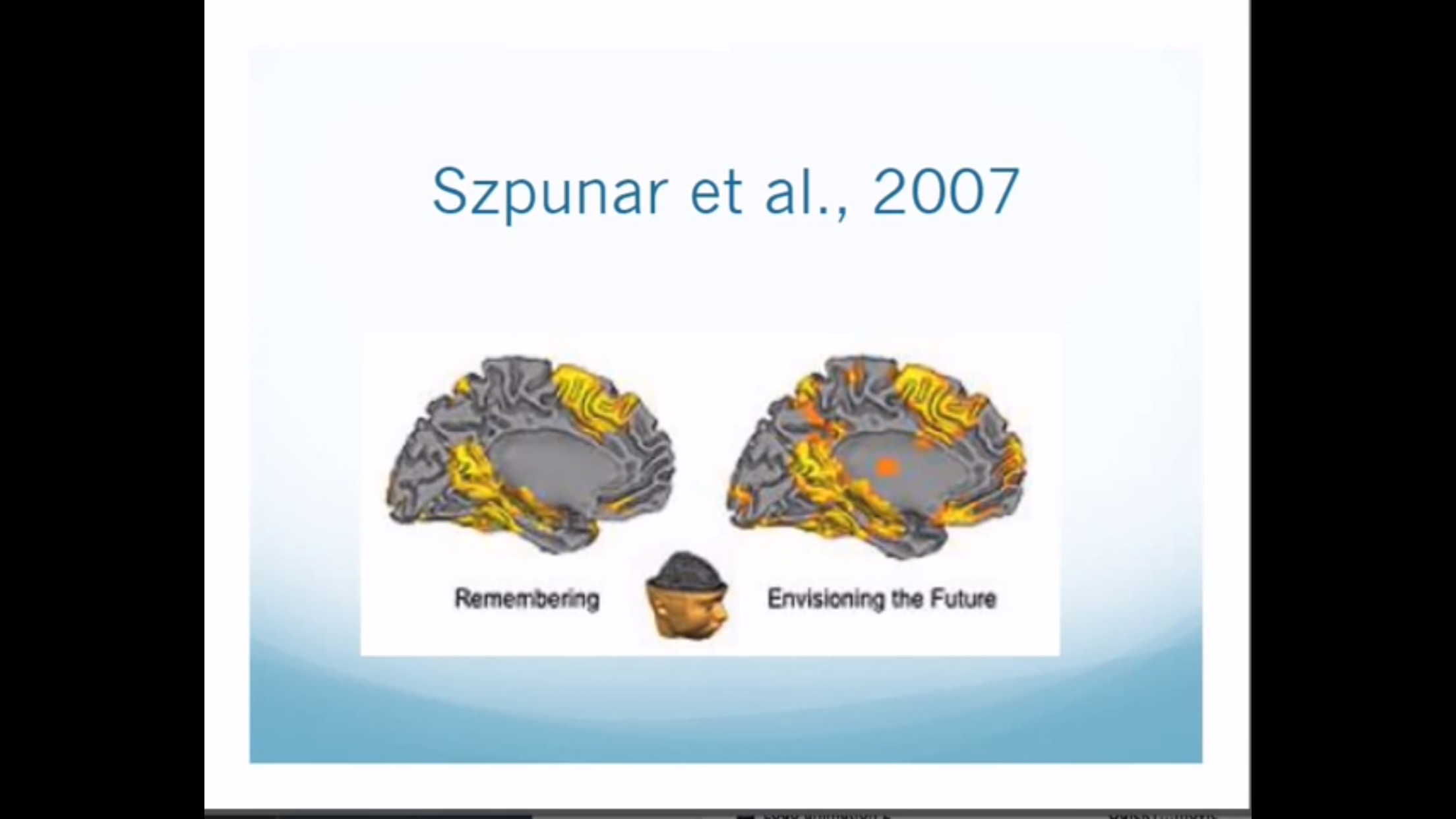
Nobody likes to have a negative experience of fear, sadness or anxiety. Unfortunately it’s very difficult to shift his mental states two more positive experiences of peace, joy, love. That’s when I realized that we are using the same brain to have very different experiences. Same brain structures, chemicals, and energy networks are being used for both negative and positive states.

In my studies of neurophysiology I discovered there are very similar mechanisms being used for things like anxiety and excitement! Additionally, we are using the same structures to experience past traumas as well as future expectations. The slide above is from a research study in the field of trauma resolution, particularly the use of EMDR as an intervention for trauma.

EMDR stands for eye movement desensitization and reprocessing. It’s obviously quite a mouthful. Basically utilizes I have moments to help us manage dramatic situations in our past so they don’t continue the hunt are present and destroy our hopes of a future. The technique was created by Francine Shapiro a psychologist working with traumatized veterans. In the research study illustrated above, The demonstrates how the brain scan can reveal a similar activation when we Thunk about past events as well as future hopes and dreams.

When working in trauma-informed care, we can utilize the same channels in our brain and mind to focus on more positive experiences. We are not limited to only one set of negative experiences. When adding thanks to our trauma informed care, we are able to inject hope it comes from a source greater than ourselves and yet moves in and through us. When we operate in agreement with this belief that we are protected and cared for by a God who loves us unconditionally, we are able to transform our past thoughts about trauma into a hopeful future that start now.

If you would like help at your next training event how to build faith-based, trauma-informed practices contact Ron today at rehuxley@gmail.com .

7 Steps to a More Authentic Life

authenticbook

7 Steps to a More Authentic Life

By Ron Huxley, LMFT

We are all looking for that muse that can inspire more creative juices into our work and relationships. We all want to be happy, free of the black cloud that hangs over us. You probably know a few people who seem to be “naturally” like this. You really don’t trust them, do you? If you are like me, you probably think they are highly delusional or at least a big faker. And yet… Something draws you to this life of emotional freedom and simple pleasure at being alive. You want to have a passionate, authentic life. That really should be too much to ask, now should it?

Here’s seven steps to help you find a new passionate direction for living. Try them on and see what they can do for you:

1. Start off by being curious. That’s right, just like a young child that stops in the middle of the road to look at pretty flower or a odd looking bug. Stop occasionally and take something in fully. Allow yourself to be curious about people, places and things. I know how perfectionism and pessimism can shut this down. Tell the voices in your head to shut up and stop, look and listen.

2. Garbage in, Garbage out. This is an old saying and I am sure you have heard some variation of it. Perhaps you have heard the expression: “As a man thinks in his heart, so is he…” What you put in your mind transforms you. You don’t have to turn off the television (although it would be a good idea), just watch one hour of the nature channel or the history channel or something other than the depressing junk that’s out there. Read a book on a topic you have never thought about before. Listen to an audio tape by a motivational speaker. Hey, podcasts are a great idea if you like to listen to stuff.

3. Post it. If you come across a saying or verse or picture that touches you in some way. Write it down or cut it out but post it where you can see it everyday. Let it do the work by absorbing into your mind on a subconcious level. Watch what it can do without you having to figure it out.

4. Say thanks. I mean really say thanks, with the whole eye contact for a full half second or more. Let the Barista at Starbucks now you really appreciate him or her. Tell your office mate thank you as sincerely as possible. Make them look you in the eye no matter how painful for them or you. And, tell you higher power thanks for your next breath, that darn cat that scratched your new coach, and your boss because even if he is a pig, at least you can get a paycheck to go to Starbucks and tell the Barista thank you.

5. Watch your language. Not just the cuss words but the “woulda, coulda, shoulda” stuff. Check how often you say things like “I always do…” or “I must have…” Life is really about a lot of choices. Good ones and bad ones. Start using words like “I choose to…” or “I want do…” Oh yeah. Avoid starting off sentences with “You…” as that make people defensive and you can’t control them anyway.

6. Keep humor at the forefront of thought, laughing at and with yourself when possible. You may find yourself quite entertaining when you loosen up! I am yet to see a comedian ever go hungry even though his jokes are as ‘old as great-grandma’. Life has so much to offer to allow you to mope around in self pity. Humor is very attractive, very passionate: life-giving.

7. Believe that you are the architect of your destiny. No one can take your passionate future from you except for you! Create your life authentically. As long as there’s still breath in your body, there is no end to how much you can accomplish in a lifetime. The concept of thinking big is all about enjoying your work, which would lead to celebrate a discovery that is born within your hands. Watch everything flow into place with perfect, passionate precision.

Read Ron’s ebook on “Living More Abundantly: Simple Steps to a Happier Life”