Page 97 of 101

DSM-5 Will Further Inflate the ADD Bubble: Child Work Group Fails to Learn From Experience – Psychiatric Times

Martin Whiteley is an MP who represents Perth in the Australian parliament. He has been actively involved in mental health issues and succeeded in a crusade to curb what had been Perth’s alarming overdiagnosis and overmedication of Attention Deficit Disorder (ADD). Mr Whiteley has become expert in the intricacies of  ADD and is alarmed that the changes suggested for DSM 5 will greatly exacerbate the ADD fad he worked so hard to tame.  Read Mr Whiteley’s careful item by item review and you will be alarmed, too (See:  http://speedupsitstill.com/dsm-5-proposal-adhd-%e2%80%93-making-lifelong-pat).   

 We are already in the midst of a false epidemic of ADD. Rates in kids that were 3-5% when DSM IV was published in 1994 have now jumped to 10%. In part this came from changes in DSM IV, but most of the inflation was caused by a marketing blitz to practitioners that accompanied new on-patent drugs amplified by new regulations that also allowed direct to consumer advertising to parents and teachers. In a sensible world, DSM 5 would now offer much tighter criteria for ADD and much clearer advice on the steps needed in its differential diagnosis. This would push back ,however feebly, against the skilled and well financed drug company sell. DSM 5 should work hard to improve its text, not play carelessly with the ADD criteria in a way that may unleash a whole set of dreadful unintended consequences- unneeded medication, stigma, lowered expectations, misallocation of resources, and contribution to the illegal secondary market peddling stimulants for recreation or performance enhancement.

The DSM 5 child and adolescent work group has perversely gone just the other way. It proposes to make an already far too easy diagnosis much looser.

How puzzling and troubling. Child mental health has already promoted no fewer than three false  epidemics in just 15 years- ADD, childhood bipolar, and autism. Any reasonable group would now be learning from this past experience. For the future, it would be chastened, cautious, and eager to correct the damage it has done- rather than embarking on any reckless new adventures. A prudent DSM 5 would tighten its criteria for ADD and put in a black box warning against the blatant current  off-the-DSM-label diagnosis of childhood bipolar.  DSM 5 instead does everything wrong it possibly could with ADD and then remarkably takes the mischievous further step of adding yet another new candidate for diagnostic fad (Disruptive Mood Dysregulation Disorder) likely that will increase the already scandalous overprescription of  dangerous antipsychotic medication to children. Go figure.

In many circles, the accepted wisdom is that DSM 5 workers are making such unaccountably bad decisions because they want to promote drug sales to kids. To support this accusation, cynics raise the Biederman affair and also APA’s previous excessive financial support from Pharma.

This is one time when the cynics are dead wrong. The DSM 5 work group is making simply disastrous decisions for the purist of reasons. These are not people with close industry ties and their conflict of interest is intellectual, not financial. Experts in child psychiatry are dangerously naïve about the likely misuses of their well meaning suggestions. They are blind, not corrupt.

What is needed is outside supervision to curb child psychiatry’s seemingly endless taste for diagnostic excess. And APA should also realize the grave  harm done to its credibility by the appearance that DSM 5 is far too Pharma friendly even if this has not been the real motivation behind the bad DSM 5 proposals.     

To make matters worse, the DSM 5 field trial will be completely worthless- providing no information at all about the magnitude of the rate increase in ADD that will occur once DSM 5 opens the floodgates even wider. We did careful field trials before DSM IV to compare the impact on rates of the  different possible definitions and predicted a 15% increase for the one finally chosen. Instead, the rates more than doubled- courtesy of pressure from the drug companies. For obscure reasons, DSM 5 is conducting extraordinarily expensive field trials that (again perversely) avoid the only question that really counts- just how high will the rates skyrocket under the even easier to meet new DSM 5 definition.

DSM 5 will be flying completely blind into dangerous territory, unimpeded by adult supervision. The leaders of child psychiatry (who already have the unfortunate  track record of producing fads) will now be given a free pass to further feed their blossoming ADD fad. Will they never learn from past mistakes?

Do you believe that drug companies are controlling the mental health industry? Are children being over diagnosed as attention deficit disorder and are they being over medicated?

Smoke Signals? How Second Hand Smoke Can Impact Your Child’s Mental Health


Special Editorial: Smoke Signals? How Second Hand Smoke Can Impact Your Child’s Mental Health

Posted: 10 Aug 2011 05:19 AM PDT

We have known for a long time that secondhand smoke can have a serious impact on the physical health of children.  Asthma, sudden infant death syndrome, respiratory tract infections, dental decay, and middle ear infections are just a few of the illnesses that children exposed to secondhand smoke develop at significant rates.  In case parents needed an even greater incentive to quit smoking, there is now a growing body of research that suggests that secondhand smoke negatively affects the mental health of children. 

Two recent studies published in the Archives of Pediatric and Adolescent Medicine looked at the exposure of children and adolescents to secondhand smoke and whether there was a significant link between the exposure and the development of mental health problems, such as ADHD, depression, and poor behavioral conduct. 

In Bandera and colleagues’ U.S. study, the researchers found that a large sample of 8-15 year-old non-smokers regularly exposed to secondhand smoke had significantly more symptoms related to attention-deficit/hyperactivity disorder, major depressive disorder, generalized anxiety disorder, and conduct disorder.  Boys and non-Hispanic whites tended to be most vulnerable to the development of mental health symptoms.  When examining children with ADHD diagnoses more closely, the researchers found that the most significant predictor was maternal smoking during pregnancy.

Hamer and colleagues conducted a study in Scotland, also with a large group of children (ages 4-12 years).  The researchers found that the higher the amount of secondhand smoke exposure, the higher the rate of reported mental health symptoms.  After controlling for variables such as SES, chronic illness, and physical activity, the participants with high secondhand smoke exposure reported significant symptoms of hyperactivity and conduct disorder.  

Hopefully, these findings have caught your eye.  Not only does secondhand smoke have detrimental effects on the physical health of children, it also appears to impact their mental health and this can, in turn,  affect other important areas of functioning such as school and social relationships.  Exposing children to secondhand smoke may be best thought of as a non-option.  The dilemma: smoking is one of the toughest addictions to battle.  Here’s the thing.  Your children need for you to quit smoking.

There are resources upon resources out there for people trying to kick the smoking habit.  And kicking it can take many tries.  In fact, it usually does.  In working with parents, therapists will sometimes ask them to keep a photo of their child(ren) handy so their purpose is always fresh in their minds.  So get that picture out and keep it with you.  Take it out when things feel really tough.  Know that it’s worth it.  And get lots and lots of support.  Here are a couple of sites that may be of use to you as you take on this extremely trying challenge: Webmd has some good information for quitting during pregnancy and the CDC has information for anyone trying to quit. 

A few years ago, a childhood friend of mine lost her mother to lung cancer after a long history of smoking.  She left behind a husband, two adult children, and two young grandchildren, not to mention a huge community of family and friends that were just crazy about her.  She was, to this day, one of the best mothers and spunkiest individuals I have ever encountered.  We would all rather have her here.  I write this post in her memory.  

Sources: Bandiera FC, Richardson AK, Lee DJ, He JP, & Merikangas KR (2011). Secondhand smoke exposure and mental health among children and adolescents. Archives of pediatrics & adolescent medicine, 165 (4), 332-8 PMID: 21464381

Hamer M, Ford T, Stamatakis E, Dockray S, & Batty GD (2011). Objectively measured secondhand smoke exposure and mental health in children: evidence from the Scottish Health Survey. Archives of pediatrics & adolescent medicine, 165 (4), 326-31 PMID: 21135317

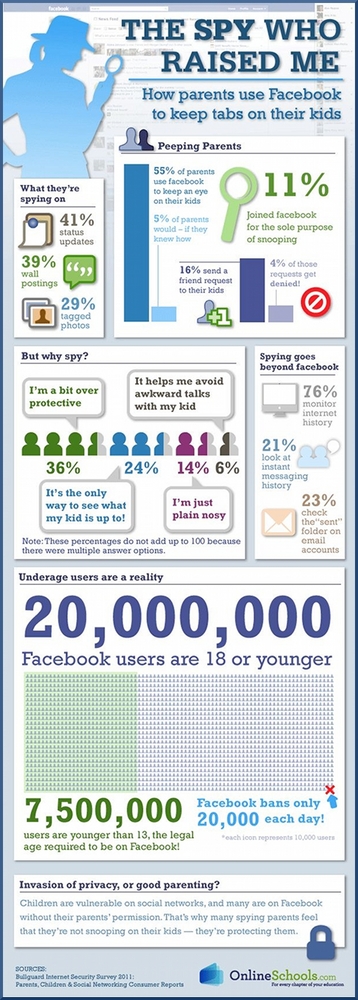
This is your child’s brain on Facebook!

I just posted an article on how the use of Facebook and other online activities actually decreases performance for children academically. There was a reference in that article on “digital natives” or “homo zappiens.” Is this just a cute reference to a generation that grows up around digital devices? I did a little more investigation (the final decision is still out) and came across this pdf article on the subject. It has a quote from one of my favorite doc on the subject, Bruce Perry. There is some discussion that the digital world is actually reshaping our children’s brain structure. Take a look at tell me what you think?

Read the article here: http://www.marcprensky.com/writing/prensky%20-%20digital%20natives,%20digital%20immigrants%20-%20part2.pdf#


Facebook® and academic performance

There is much talk of a change in modern youth – often referred to as digital natives or Homo Zappiens – with respect to their ability to simultaneously process multiple channels of information. In other words, kids today can multitask. Unfortunately for proponents of this position, there is much empirical documentation concerning the negative effects of attempting to simultaneously process different streams of information showing that such behavior leads to both increased study time to achieve learning parity and an increase in mistakes while processing information than those who are sequentially or serially processing that same information. This article presents the preliminary results of a descriptive and exploratory survey study involving Facebook use, often carried out simultaneously with other study activities, and its relation to academic performance as measured by self-reported Grade Point Average (GPA) and hours spent studying per week. Results show that Facebook® users reported having lower GPAs and spend fewer hours per week studying than nonusers.

This research article found that online use (multitasking) decreases academic performance. I guess that is a “duh!” Back in the day when I used to teach time management courses for corporations I used to preach that time saving devices are really time shortening devices. They just allow you to pack in more information in a particular space of time. The fact is that you really can only do one thing at a time. Unfortunately, I don’t practice what I preach and still multitask, now with droid phone in hand or pocket. I did get rid of my pager however!

Take this study into consideration and you consider your child’s study time. How should you set some limits on online use at home?

Teach children to use a “Lion’s Roar” to learn meditation

How do you help a child that has been traumatized (abused and neglected)? What sort of therapeutic techniques work with these children? Will mindfulness practices help children alleviate the devestating effects on their development? Cathy Mlchiodi, from TLC Institute has a novel answer: 

“When it comes to children, some readers may ask, “Well, how do we successfully adapt what is known about meditation, mindfulness and relaxation to young people?” One popular technique I have used with children for many years is called “Lion’s Breath” and uses an imaginative metaphor (the lion’s roar) to help young people learn the same relaxation skills that teens and adults may learn through traditional methods and yoga breathing:

“I am going to teach you about a way to let go of worries or thoughts that might be bothering you. It’s called the Lion’s Breath and I want you to imagine you are a lion. Remember, a lion has a really, really big roar—can you roar? Now I want you to sit up with your legs crossed; if you feel more comfortable sitting up against a wall with your legs crossed, go ahead and do that (some children feel safer with their backs against a wall). Now, get ready to make your roar! Let’s try one all together as a group (we all roar in unison).

Before we roar again, let’s all think of a worry that we would like to let go off.  For a minute I want you to watch me and see how I roar. First, I am going to take in a really, really deep breath through my nose and then let my roar out through my mouth, sticking my tongue out at the same time and stretching out my arms out as far as I can in front of me. Let’s all try it together, okay?” (Leader and children perform the breathing and roaring together, sticking out their tongues and stretching out arms) (Malchiodi, 2000, p. 14).”

As a therapist that works with children that have been traumatized, I am always looking for unique ways to engage them and encourage healing. Because children don’t respond to traditional talk therapy in the way that adults do, nontraditional techniques such as art, yoga, and animal assisted therapy are invaluable tools in my “therapist toolbox.”

The “lion’s roar” suggested by therapist Cathy Malchiodi is an interesting way to teach children elementary meditation techniques through the use of breathing exercises. Contemporary attachment-based researchers, like Daniel Siegel and Bruce Perry, suggest that meditation and mindfulness can improve a child’s mental functioning and overcome trauma impacted brains.

What have you used with your child to manage the stress of trauma and teach mindfulness?

The Literacy of Gaming: What Kids Learn From Playing

Making the most of gaming for your kids

Although videogames have great potential to be powerful vehicles for learning, there is no guarantee this will happen. Just as there is no guarantee that someone will understand the themes and symbols of “The Lord of the Flies” by simply reading it. As a result, kids need parents, teachers and their peers to engage their gaming in thoughtful ways. While there could be a long list of recommended practice, for simplicity sake I’ve reduced the list to three preliminary suggestions.

  1. Play games. Otherwise how can you have meaningful conversations about them? Not learning how to play games would be akin to talking about “The Lord of the Flies” without having learned to read.
  2. Connect games to books, movies, TV and the world around them. By thinking about games beyond their boundaries we can cultivate pattern recognition across media platforms and parlay the problem-solving of gaming into the real world.
  3. Have your students or kids collaborate with other peers to analyze and interpret games, as well share strategies. There has been a raft of research in recent years that extols the wisdom of the crowd and the logic of the swarm. Through collaboration and networking kids can learn to enhance their own perspectives, ideas and, perhaps, contribute to a whole that is greater than the sum of its parts.

I am a very right-brained person and much of my success in life is in trying to add a “virtualness” to my world. I do this through mind mapping software and having a lot of art around me, even using art in my day to day activities on the job. What do you think about the literacy of gaming for children?

Seeking Meaningful Therapy: Thoughts from an Adoptive Mom

Adoptive parents quickly realize that traditional forms of therapy are not as effective for their children’s issues. A therapist that understand the core issues of loss is needed and must include the parent in the therapy with the child. Read this superb whitepaper on one mom’s experience with “family therapy.”