5 Steps to Managing Big Emotions
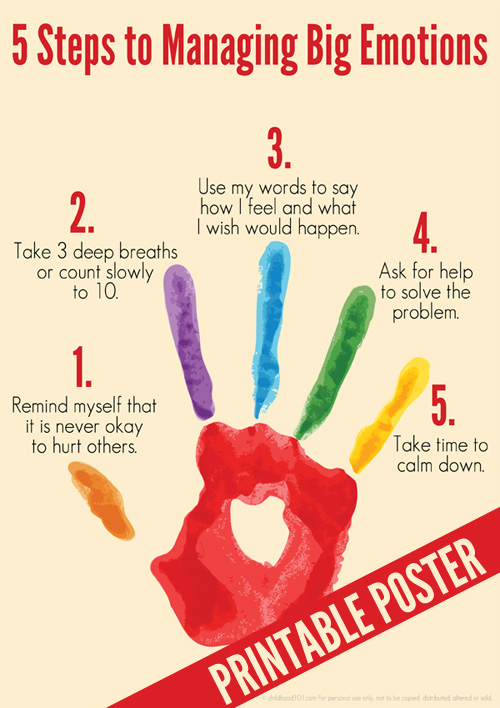
5 Steps to Managing Big Emotions
Source: http://childhood101.com/2015/03/helping-children-manage-big-emotions/
5 Steps to Managing Big Emotions
Source: http://childhood101.com/2015/03/helping-children-manage-big-emotions/

Dream Parenting: Winning the Battle
You don’t have to win every battle with your child. You don’t have to be a perfect parent. Some days are going to be sweet one’s, with lots of cuddling, peaceful interactions and other days are going to be more chaotic and bumpy. It is important that parents learn how to ride these ups and downs and now that they are still headed in the right direction. if today was a bad day, than you get to have another day. Make tomorrow different. If tomorrow is bad too, look forward to the day after than and so on…
You were there to write the first chapter of your child’s life and you get to help write the next one until the day they start writing their own chapters. You are never totally powerless and no mistake cannot be forgiven and un-reconciled. It make take a while but time really is on your side and it can heal the most grievous hurts. Use this to your parenting advantage.
Action Parenting Tool: Don’t focus on today’s problem. Visualize how you want tomorrow to look and start working toward it. Be OK with small adjustments until you achieve the family you dreamed about.

April is Child Abuse Prevention Month
April is National Child Abuse Prevention Month, a time to recognize that we each play a part in promoting the social and emotional well-being of children and families in our communities. Learn more on the National Child Abuse Prevention Month website.
https://www.childwelfare.gov/topics/preventing/preventionmonth/
Encourage your mayor or governor to issue a National Child Abuse Prevention Month proclamation. They can use the 2014 National Child Abuse Prevention Month Proclamation as a model.https://www.childwelfare.gov/topics/preventing/preventionmonth/about/proclamations/
Want to raise awareness about the importance of child abuse prevention? Add a National Child Abuse Prevention widget to your agency’s website.
https://www.childwelfare.gov/topics/preventing/preventionmonth/widgets/
Have you downloaded the 2015 Resource Guide: Making Meaningful Connections? Available on Child Welfare Information Gateway, the guide supports service providers in their work with parents, caregivers, and their children to strengthen families and prevent child abuse and neglect. Learn more here: https://www.childwelfare.gov/topics/preventing/preventionmonth/resource-guide/
Download the National Child Abuse Prevention Month activity calendars to learn how you can promote child well-being throughout the month of April. The calendar is available in English and Spanish on the Child Welfare Information Gateway website.
https://www.childwelfare.gov/topics/preventing/preventionmonth/resource-guide/activity-calendar/
Watch real-life stories from prevention programs across the nation. Visit the National Child Abuse Prevention video gallery, and share with your friends, family, coworkers, and community.
https://www.childwelfare.gov/topics/preventing/preventionmonth/video-gallery/
Some people call them the “black sheep” of the family and are content to let them stay that way. Others try to change them and take them to psychologists and doctors. A few give up on them all together. This child is the “identified problem child” and many homes spend a lot of time and energy dealing with the member of the family. This rebellious, acting out child is most often seen in dysfunctional homes, where substance or physical abuse is taking place. The identified problem child serves a very important role in this type of family by balancing out the imbalance and protecting the abusive parent from outside interventions. In a lesser degree, even nonabusive families have children who cause more stress and trouble than other children in the home. This child resists parent’s efforts at discipline, is constantly mischievous, and appears to enjoy the attention that getting into trouble provides.
Family therapists have determined that the symptoms of the “identified problem” child are often a reaction to the family’s state of imbalance. This imbalance can be anything from severe abuse to a mild family stressor, such as the illness of a parent or the loss of fathers job. The negative behavior of the “identified problem-child” may be an effort, albeit unconsciously, to alleviate the families pain. The child becomes a stabilizing force to reduce stress and thereby return the family to its previous state of balance, even if it is an imbalanced one. A teenagers acting out, a school-age child’s poor grades, a young child’s temper tantrums — all may be efforts to stabilize an unstable system.
Thomas was an “A” student up until his parents announcement of their divorce. Suddenly, he began getting failing grades on his school report card. Fortunately, his parents recognized this behavior as a reaction to their devastating news and brought him in for therapy. After some time, Thomas’ bad grades were more than his depression over mom and dad’s split. They were also a way for him to save his parent’s marriage by forcing them to focus on him and away from the pain of the divorce. He overheard his parents saying that they would have to come to the school together to talk to his teacher. This was a glimmer of hope, however feeble and small, that he could influence his parent’s decision.
Many parents react to the behavior and not to the underlying family system issues that might be taking place. This is because, for many parents, it is easier to use the child as a scapegoat then focus on their own issues and problems.
Susan was an overly aggressive child. She was kicked out of several preschools and was finally referred to a therapist when she viciously bit another child, drawing blood. The doctor recommended medication, but at 4 years of age, the parents felt something else might work. Over time, it was found that Susan hurt other children to express her own feelings of being hurt. Due to her poor communication skills, she demonstrates her own internal state by aggressively acting out the role of “I hurt, therefore I will hurt others.” Her biological father had abandoned Susan when she was just a baby and her mother had recently married another man that Susan didn’t like. Her mother never saw the rejection as a reason for her behavior because she was so young when the biological father left.
When children are misbehaving they are said to be “acting out.” What is the child acting out, exactly? According to family systems theory, they are acting out the family’s pain. Stated another way, when the family experiences sudden change, for better or worse, and members undergo stress, the “problem child” pops up ready to stabilize the family system. Parents who are able to read their child’s behavior in this way will be able to help them express it in a more positive manner and cope with their “big” feelings or anger, frustration, and loss.
In some cases the best way to deal with the “child’s problem” is to include the whole family. Obviously, the child is not the real problem anyway and the whole family is affected by, and affecting, the child’s behavior. The first task of the family is to unmask the real problem and relabel it as a family issue versus a child centered one. This can be difficult, as other members of the family may have to share some of the blame and resist stepping down from the ideal child or parent pedestal. The next task is to find family focused solutions to the problem. This might involve improving family communication, adjusting family boundaries and rules, and renegotiating family activities.
In the case of Thomas, the parents did not get back together but they did increase their involvement with him and reassure them of their love for him, regardless of the divorce. It took a while for his grades to improve but with patience and cooperation they were able to get them back to normal. With Susan, the family started more family oriented activities and had the new father pick her up from preschool a couple of times a week to spend some one on one time together. This helped her feel connected to the new dad, lessening the hurt she felt from her biological father. With time, she started calling this new person “dad” and her aggressiveness completely stopped.
Not all children act out because of internal struggles but it does occur frequently enough that parents need to look for this as a possible explanation for their child’s behavior. They will have to set aside their own issues and struggles to accomplish this and that could be a difficult thing for many. Family members may need to redraw family roles and responsibilities, and change, even in the best of circumstances, is a difficult experience. The intervention for identified problem children is to look at the entire family system. Sometimes, the problem is bigger than we think!

Adults who are securely attached put a high value on relationships and are objective regarding their own thoughts and emotions. They don’t all have trouble-free childhoods but they have and are working through past issues. The have learned to effectively communicate with others and are working to forgive and have more compassion in life. They are creators of a new generation of secure people. #secureparenting #parentingtoolbox
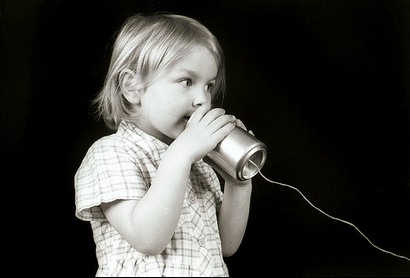
One of parents main goals is to improve communication in the home. Unfortunately, what they really mean is they want the child to “listen” to them and cooperate with their “instructions.” Communication is two-way. It requires parents to listen as well as be listened to. More importantly, parents cannot judge or shame a child’s efforts to communicate when they express their opinions. Either you value communication or your don’t. Back up your values with your actions. The good news is that communication doesn’t need to be learned. It needs to be protected. If parents will allow their children to talk and feel heard then they will talk more. If parents allow conversation to be two-sided and value their children’s thoughts, even if is immature and irrational, then parents will have the opportunity to “speak into” their child’s life. Don’t waste time lecturing, criticizing or showing children the error of their thoughts. That shuts down communication FAST! Try this talk tool the next time your child opens up. Say: “That is interesting. Tell me more!” and just listen…
Power of TheraPlay used by Ron Huxley with children and families.
The National Center on Adoption and Permanency – which I am very proud to lead – has formed a partnership with the American Institutes for Research, one of the world’s largest behavioral and social science research and evaluation organizations. I am proud to be a team member of NCAP and it efforts to improve the lives of foster and adoptive children in the US. Get more info now at http://www.nationalcenteronadoptionandpermanency.net/press-releases

 Ron Huxley LMFT