Page 5 of 101

When Kids Cheat on Their Schoolwork: Understanding and Prevention

Student cheating has become increasingly prevalent, with various factors contributing to this concerning trend. Understanding why children resort to academic dishonesty and implementing practical tools can help parents address this issue effectively.

Why Kids Cheat

Pressure to Succeed

Many students are pressured to achieve high grades and meet societal expectations. This pressure can make them prioritize grades over learning, causing them to seek shortcuts through cheating.

Poor Time Management

Students often struggle with balancing multiple assignments and personal commitments. Without proper time management skills, they may resort to cheating as a quick solution to complete their work.

Lack of Interest

Students who don’t find the subject matter engaging or relevant to their future goals may be more inclined to cheat rather than invest time and effort in learning.

Technological Accessibility

The widespread use of smartphones and internet access has made cheating more accessible and tempting for students. With answers readily available online, the line between research and plagiarism can become blurred.

Peer Influence

Students may feel pressured to cheat when they see their peers doing so, fearing they’ll be disadvantaged if they don’t participate.

Practical Tools for Parents

Foster Open Communication

Create an environment where your child feels comfortable discussing academic challenges without fear of judgment. This can help address underlying issues before they lead to cheating.

Teach Time Management Skills

Help your child develop effective scheduling habits using planners or digital tools to break tasks into manageable steps. This can reduce the likelihood of last-minute panic and temptation to cheat.

Emphasize Learning Over Grades

Encourage your child to focus on the learning process rather than just the end result. Praise effort and progress instead of solely rewarding high grades.

Discuss Academic Integrity

Have open conversations about the importance of honesty and the long-term consequences of cheating. Help your child understand that integrity is more valuable than a perfect score.

Collaborate with Teachers

Stay in touch with your child’s teachers to understand assignment expectations and areas where your child might struggle. This allows you to provide targeted support at home.

Limit Technology During Study Time

Create designated study areas with limited access to smartphones or unnecessary internet use. This can help minimize distractions and reduce the temptation to seek easy answers online[2].

Seeking Help

Let your child know it’s okay to ask for help when struggling. Whether from you, their teachers, or tutors, seeking assistance is a better alternative to cheating.

By implementing these strategies and maintaining open dialogue, parents can play a crucial role in fostering academic integrity and helping their children develop strong ethical values that extend beyond the classroom.

Finding Healing Through Words: The Power of Poetry in Life’s Challenges

Life is full of ups and downs, moments of joy, and seasons of struggle. During difficult times, many turn to traditional methods like therapy, journaling, or talking with loved ones to process their emotions. But poetry’s another, perhaps less conventional, tool that can help. The rhythmic beauty of poetry provides a space for reflection, healing, and growth, offering a unique way to navigate life’s challenges.

Poetry as a Safe Space for Emotions

When life feels overwhelming, it can be hard to articulate the swirl of emotions within. Poetry allows us to capture the essence of those feelings without the need for perfect words or grammar. The freedom of expression inherent in poetry provides a safe, nonjudgmental space to explore our emotions—whether through raw, unfiltered verses or carefully crafted metaphors.

For instance, a person grappling with grief might write about the weight of absence or the shape of their sorrow. Someone dealing with anxiety could create a poem that reflects the chaos and the calm they long for. The process of putting these feelings into words can be deeply cathartic.

Poetry as a Tool for Perspective

Poetry often requires us to look at experiences from a new angle. By describing struggles metaphorically—as storms, locked doors, or broken wings—we can create distance between ourselves and our pain. This shift in perspective can make challenges feel more manageable and remind us that, like storms, tough times eventually pass.

Writing or reading poems emphasizing hope, resilience, or transformation can inspire us to see our struggles as part of a larger story in which healing and growth are possible.

Poetry for Connection and Community

One of the most beautiful aspects of poetry is its ability to foster connection. Sharing poems about personal struggles can create a sense of solidarity, showing others they’re not alone in their pain. Reading poetry written by others can also provide comfort as we see our feelings reflected in their words.

Consider classics like Mary Oliver’s Wild Geese, which encourages us to embrace our imperfect humanity or Rupi Kaur’s modern poems about healing and survival. These works remind us that pain is a universal experience—and so is hope for better days.

Poetry as a Tool for Resilience

Research shows that creative outlets like poetry can reduce stress, improve mood, and boost resilience. Creating something meaningful from challenging experiences helps us reclaim a sense of agency. We may not be able to control what happens to us, but we can control how we process and express it.

By transforming our struggles into art, we can find strength in our ability to endure and adapt. Writing a poem about overcoming challenges can feel like planting seeds of hope, reminding us that growth often comes from adversity.

How to Use Poetry in Your Life

If you’re new to poetry, here are some simple ways to incorporate it into your journey of healing and growth:

  1. Write Freely: Set a five-minute timer and write whatever comes to mind. Don’t worry about structure or rhyme—just let your thoughts flow.
  2. Try Prompts: Use prompts like “Describe your emotions as weather” or “Write about a place where you feel safe.”
  3. Read and Reflect: Find poems that resonate with your experiences. Let their words guide you toward understanding and peace.
  4. Create a Poetry Journal: Dedicate a space for your poetic reflections on daily life, struggles, and triumphs.
  5. Share Your Work: Sharing your poetry with friends, support groups, or online communities can help you feel seen and heard.

Poetry is more than just words on a page—it’s a lifeline for those navigating the twists and turns of life. Whether you’re facing grief, stress, anxiety, or uncertainty, poetry can help you process emotions, find meaning in challenges, and connect with others who share your journey.

Here are some accessible, impactful poems that can help readers navigate challenges and provide comfort, reflection, and inspiration. These selections are straightforward and emotionally resonant, making them approachable even for those new to poetry.


For Comfort and Reassurance

  1. “Wild Geese” by Mary Oliver
  • Why Read It? This poem reminds readers they don’t have to be perfect to belong and that life continues with grace and beauty, even during hardship.
  • Notable Line:
    “You do not have to be good. You do not have to walk on your knees for a hundred miles through the desert, repenting.”
  1. “The Peace of Wild Things” by Wendell Berry
  • Why Read It? A soothing poem about finding peace and solace in nature when overwhelmed by worries and fears.
  • Notable Line:
    “I come into the peace of wild things who do not tax their lives with forethought of grief.”

For Resilience and Hope

  1. “If” by Rudyard Kipling
  • Why Read It? This classic poem offers practical wisdom and encouragement for staying calm, strong, and true to oneself in life’s trials.
  • Notable Line:
    “If you can meet with Triumph and Disaster and treat those two impostors just the same.”
  1. “Still I Rise” by Maya Angelou
  • Why Read It? A powerful anthem of resilience, courage, and self-worth, especially for those feeling defeated or discouraged.
  • Notable Line:
    “You may trod me in the very dirt, but still, like dust, I’ll rise.”

For Grief and Healing

  1. “Do Not Stand at My Grave and Weep” by Mary Elizabeth Frye
  • Why Read It? A gentle, reassuring poem that helps readers cope with loss by emphasizing presence and memory.
  • Notable Line:
    “Do not stand at my grave and cry; I am not there, I did not die.”
  1. “Funeral Blues” by W.H. Auden
  • Why Read It? For those grieving, this poem articulates the depth of loss with raw, relatable emotion.
  • Notable Line:
    “He was my North, my South, my East and West, my working week and my Sunday rest.”

For Finding Strength in Adversity

  1. “Invictus” by William Ernest Henley
  • Why Read It? A bold declaration of inner strength and determination, perfect for moments of struggle.
  • Notable Line:
    “I am the master of my fate, I am the captain of my soul.”
  1. “The Guest House” by Rumi
  • Why Read It? This Sufi poem encourages readers to welcome all emotions—even painful ones—as visitors with lessons to teach.
  • Notable Line:
    “Be grateful for whoever comes, because each has been sent as a guide from beyond.”

For Perspective and Clarity

  1. “Desiderata” by Max Ehrmann
  • Why Read It? A timeless guide to living with grace, patience, and peace, even in the face of chaos.
  • Notable Line:
    “Go placidly amid the noise and haste, and remember what peace there may be in silence.”
  1. “The Road Not Taken” by Robert Frost
  • Why Read It? A contemplative poem about choices and their impact on our lives, perfect for times of uncertainty.
  • Notable Line:
    “Two roads diverged in a wood, and I—I took the one less traveled by, and that has made all the difference.”

For Encouraging Self-Reflection

  1. “Love After Love” by Derek Walcott
  • Why Read It? A beautiful reminder to rediscover and love oneself after life’s difficulties or heartbreaks.
  • Notable Line:
    “You will love again the stranger who was your self.”
  1. “Today” by Billy Collins
  • Why Read It? This uplifting poem invites readers to embrace the beauty of a simple, joyful moment, even amidst struggles.
  • Notable Line:
    “If ever there were a spring day so perfect… it made you want to throw open all the windows in the house.”

Tips for First-Time Readers

  • Start by reading the poems slowly, aloud if possible, to feel the rhythm and emotion.
  • Don’t overthink the meaning—focus on how the words make you feel.
  • Reflect on lines that resonate, journaling your thoughts or emotions.

Poetry can be a balm for the soul, offering connection, clarity, and comfort in life’s most challenging moments. Start with one of these poems, and let the healing begin.
Thought Deletion: Why Trying to Erase Your Thoughts Doesn’t Work

In the complex landscape of mental health, we often find ourselves battling unwanted thoughts. The Acceptance and Commitment Therapy (ACT) approach offers a fascinating perspective on this challenge through a simple yet profound exercise known as Thought Deletion.

The Illusion of Mental Control

Our natural instinct when confronted with distressing thoughts is to push them away. We believe we’d find peace if we could delete these thoughts. However, the human mind doesn’t work like a computer—there’s no convenient mental backspace or delete button.

The Thought Deletion Exercise

The exercise is elegantly simple:

  1. Identify a Distressing Thought: Clients are asked to focus on a recent thought that causes them significant emotional discomfort.
  2. Attempt Deletion: They’re then instructed to actively try to erase this thought.
  3. Experience the Paradox: Invariably, they discover something counterintuitive—the more they try to eliminate the thought, the more persistent and powerful it becomes.

Why Thought Deletion Backfires

This exercise illustrates a fundamental principle of psychological flexibility: resistance increases suffering. When we struggle against our thoughts, we inadvertently give them more power. It’s like trying not to think about a pink elephant—the very act of trying not to think about it ensures the elephant dominates your mental landscape.

Defusion: A Different Approach

Acceptance and Commitment Therapy introduces the concept of cognitive defusion—learning to see thoughts as merely mental events, not absolute truths that must be fought or believed. Instead of wrestling with thoughts, we can:

  • Observe thoughts without judgment
  • Recognize that thoughts are transient
  • Understand that having a thought doesn’t make it real or meaningful
  • Choose to focus on actions aligned with our values

Practical Implications

For adolescents and adults alike, the Thought Deletion exercise serves multiple therapeutic purposes:

  • Reduces anxiety around “unacceptable” thoughts
  • Demonstrates the futility of thought suppression
  • Introduces a more compassionate approach to inner experiences
  • Builds psychological resilience

A Mindful Alternative

Instead of deletion, ACT suggests:

  • Acknowledging thoughts without attachment
  • Letting thoughts pass like clouds in the sky
  • Focusing on present-moment experiences
  • Choosing actions that matter, regardless of intrusive thoughts

Thought Deletion is more than an exercise—it’s a gateway to understanding our mind’s complex workings. We open ourselves to greater emotional freedom and psychological flexibility by embracing thoughts rather than fighting them.

Remember, you are not your thoughts. You are the awareness observing those thoughts.

What is ACT?

Acceptance and Commitment Therapy (ACT) is a form of psychological intervention that focuses on helping individuals accept complex thoughts and feelings rather than fighting or feeling controlled by them. The core aim is to increase psychological flexibility—the ability to:

  • Accept emotions and thoughts without judgment
  • Stay present in the moment
  • Clarify personal values
  • Take committed action toward meaningful goals

ACT uses six key processes:

  1. Cognitive defusion (seeing thoughts as just thoughts)
  2. Acceptance of emotional experiences
  3. Present moment awareness
  4. Self-as-context (observing self)
  5. Values clarification
  6. Committed action aligned with those values

Unlike traditional cognitive therapies that seek to change thought content, ACT helps people change their relationship with thoughts, reducing their impact and enabling more value-driven living.

Navigating the Adoption Journey: Insights for Adoptive Parents and Professionals

Adoption is a complex and emotional process that requires understanding, patience, and ongoing support. This article aims to provide valuable insights for both adoptive parents and the professionals who work with them.

Understanding the Complexities

Joyce Maguire Pavao, a renowned adoption expert, emphasizes:

“Adoption is not about finding children for families, it’s about finding families for children.”

This perspective shift is crucial for both parents and professionals to internalize. It places the child’s needs at the center of the adoption process.

The Lifelong Nature of Adoption

Adoption is not a one-time event but a lifelong journey. As one adoptive parent notes:

“The adoption journey doesn’t end when your adopted child is finally in your arms. The journey is one that never ends. It is a journey filled with joy, pain, fear and love.”

Professionals should prepare adoptive parents for this ongoing process, providing resources and support for various stages of the adoption journey.

Openness and Communication

Open communication about adoption is vital from the earliest stages. Experts recommend:

“Start telling your child that s/he is adopted from day one. A child should never remember finding out they’re adopted – they should just always know.”

Professionals can guide adoptive parents on age-appropriate ways to discuss adoption with their children.

Addressing Loss and Grief

It’s important to recognize that adoption involves loss for all parties involved. Pavao notes:

“The stages birth parents go through are very real and need to be understood… The initial period of grieving lasts roughly five to seven years.”

Professionals should help adoptive parents understand and navigate these complex emotions, both for themselves and their children.

Cultural Competence

For transracial or transcultural adoptions, cultural competence is crucial. Pavao advises:

“The challenge to adoptive parents, and to others connected to this child, is to help the child to develop his/her own identity within the framework of both cultures.”

Professionals can provide resources and guidance on cultural integration and identity development.

Ongoing Education and Support

Adoption requires continuous learning. One adoptive parent shares:

“You commit to education. You commit to learning other perspectives. You commit to growing.”

Professionals should encourage adoptive parents to engage in ongoing education about adoption issues, trauma-informed care, and child development.

Conclusion

For both adoptive parents and professionals, understanding the nuances of adoption is crucial. By recognizing its lifelong nature, embracing openness, addressing loss, promoting cultural competence, and committing to ongoing education, we can better support adoptive families throughout their journey.

Remember, as Pavao states, “Adoption is intergenerational. It lasts a lifetime and beyond.” With this perspective, we can work together to create positive, supportive environments for all members of the adoption triad.

Citations:
[1] https://www.reddit.com/r/AdoptiveParents/comments/1ercoiw/starting_our_unexpected_adoption_journey/
[2] https://www.goodreads.com/author/quotes/487220.Joyce_Maguire_Pavao
[3] https://abidinglovecharities.org/2022/11/16/being-open-to-grow-in-your-adoption-journey/
[4] https://www.adoptimist.com/adoption-success-stories/a-proactive-and-prayerful-adoption-journey
[5] https://www.waitnomore.org/the-adoption-journey/
[6] https://blog.nchs.org/adoptive-families-challenges
[7] https://www.modernheirloombooks.com/new-blog/2020/3/18/what-to-save-for-your-adoption-journey-book
[8] https://www.boulderpsychologicalservices.com/understanding-common-challenges-adopted-children/

“The Double-Edged Sword of AI: What Teens Need to Know”

Artificial Intelligence (AI) has become an integral part of modern life, and teenagers are at the forefront of this technological revolution. As AI continues to evolve and integrate into various aspects of daily life, it’s crucial to understand both its benefits and potential drawbacks for young people. Let’s explore the pros and cons of AI around teenagers.

Pros of AI for Teens

Enhanced Learning Experiences

AI-powered educational tools are revolutionizing how teenagers learn:

  • Personalized learning platforms adapt to individual learning styles and paces, making education more engaging and effective[1].
  • AI tutors can provide 24/7 support, helping students grasp complex concepts and improve their academic performance.

Creative Empowerment

AI is opening new avenues for teenage creativity:

  • Image and video generation tools allow teens to express themselves artistically in novel ways[3].
  • AI-assisted music composition and writing tools can help nurture budding talents.

Mental Health Support

AI is making mental health resources more accessible:

  • AI chatbots and apps can provide immediate support for teens dealing with stress or anxiety[1].
  • Early detection algorithms may help identify mental health issues before they escalate.

Skill Development for the Future

Exposure to AI prepares teens for the job market of tomorrow:

  • Learning to work alongside AI tools can give teens a competitive edge in future careers.
  • Understanding AI principles can foster critical thinking and problem-solving skills.

Cons of AI for Teens

Potential for Misuse

The power of AI comes with risks:

  • Deepfake technology can be used for cyberbullying, creating fake explicit images or videos[2].
  • AI-generated content may be used to cheat on assignments, hindering genuine learning.

Privacy Concerns

AI’s data collection raises privacy issues:

  • Teens may not fully understand the extent of data they’re sharing with AI systems.
  • There’s potential for misuse of personal information collected by AI-powered apps.

Diminished Social Skills

Overreliance on AI could impact social development:

  • Excessive use of AI companions might reduce face-to-face interactions.
  • Teens may struggle with real-world communication if too dependent on AI-mediated interactions.

Addiction and Mental Health Risks

AI can potentially exacerbate existing issues:

  • AI-powered games and social media can be highly addictive, leading to screen dependence[1].
  • Constant exposure to AI-curated content may create unrealistic expectations and affect self-esteem.

Navigating the AI Landscape

To maximize benefits and minimize risks, consider these approaches:

  1. Education: Teach teens about AI’s capabilities, limitations, and ethical considerations.
  2. Balanced Use: Encourage a healthy balance between AI-assisted activities and traditional methods.
  3. Critical Thinking: Foster skills to evaluate AI-generated content critically.
  4. Open Dialogue: Maintain open conversations about AI experiences and concerns.
  5. Privacy Awareness: Educate teens on data privacy and responsible online behavior.

Conclusion

AI presents both exciting opportunities and significant challenges for teenagers. By understanding and actively managing these pros and cons, we can help young people harness the power of AI while developing the skills and awareness needed to navigate this new digital landscape safely and effectively.

As AI continues to evolve, it’s crucial for parents, educators, and teens themselves to stay informed and adaptable. With the right guidance and approach, AI can be a powerful tool for learning, creativity, and personal growth, preparing teenagers for a future where human intelligence and artificial intelligence work hand in hand.

Citations:
[1] https://www.newportacademy.com/resources/empowering-teens/ai-teen-mental-health/
[2] https://www.edweek.org/technology/most-teens-think-ai-wont-hurt-their-mental-health-teachers-disagree/2024/03
[3] https://www.wired.com/story/teens-generative-ai-use-schools-parents/
[4] https://insights.fusemachines.com/learning-evolving-inspiring-a-thoughtful-exploration-of-ais-impact-on-todays-youth/
[5] https://www.future-ed.org/how-are-teens-using-ai/
[6] https://www.connecticutchildrens.org/growing-healthy/ai-here-stay-4-things-parents-teens-should-know
[7] https://aimagazine.com/machine-learning/the-impact-of-artificial-intelligence-on-kids-and-teens
[8] https://www.healthychildren.org/English/family-life/Media/Pages/how-will-artificial-intelligence-AI-affect-children.aspx

“Unlocking the Secrets of Epigenetics: How Our Experiences Shape Us!”

Have you ever wondered why some people react differently to stress or scary situations? The answer might be in something called epigenetics. Let’s explore what this big word means and how it helps us understand trauma.

What is Epigenetics?

Epigenetics is like a special switch for our genes. Our genes tell our body how to work, but epigenetics can turn these instructions on or off. It’s like a light switch that can make a room bright or dark, but the light bulb doesn’t change.

How Does Trauma Affect Our Genes?

When someone goes through something really scary or upsetting (we call this trauma), it can flip some of these epigenetic switches. This means that even after the scary thing is over, the person’s body might still act like it’s in danger.

Can Trauma be Passed Down?

Scientists have found that these switched genes can sometimes be passed from parents to their children. It’s a bit like inheriting your mom’s hair color, but instead, you might inherit how your body reacts to stress.

What is Trauma-Informed Care?

Trauma-informed care is when doctors, teachers, and other helpers understand that bad experiences can change how a person’s body and mind work. They use this knowledge to help people feel safe and get better.

How Does Epigenetics Help with Trauma-Informed Care?

By understanding epigenetics, helpers can:

  1. Know that a person’s reactions might be because of past experiences
  2. Find better ways to help people who have been through trauma
  3. Create plans that help not just one person but whole families

The Good News

The best part about epigenetics is that these switches can be changed again! With the right help and care, people can learn new ways to cope with stress and feel better.

What Can We Do?

  • Be kind to others – you never know what they’ve been through
  • Talk to a grown-up if you’re feeling scared or upset
  • Remember that it’s okay to ask for help

Epigenetics shows us that our experiences can change us, but we can help ourselves and others heal and grow stronger with understanding and care.

Citations:
[1] https://arkansasadvocate.com/2023/07/05/understanding-epigenetics-how-trauma-is-passed-on-through-our-family-members/
[2] https://pmc.ncbi.nlm.nih.gov/articles/PMC9705591/
[3] https://www.ca18211.eu/courses/trauma-informed-care-and-epigenetics/
[4] https://pmc.ncbi.nlm.nih.gov/articles/PMC6127768/
[5] https://www.scientificamerican.com/article/how-parents-rsquo-trauma-leaves-biological-traces-in-children/
[6] https://therapist.com/trauma/generational-trauma-epigenetics/
[7] https://jamanetwork.com/journals/jama/fullarticle/2797220
[8] https://newsinhealth.nih.gov/2016/03/understanding-anxiety-disorders

The Current State of Anxiety in Children and Adolescents

Anxiety among children and adolescents has become a growing concern in recent years, with significant increases observed in the prevalence and severity of anxiety disorders. This trend has been exacerbated by various factors, including the COVID-19 pandemic and the pervasive influence of social media. Let’s explore the current landscape of youth anxiety and its implications.

Rising Prevalence

Recent data paints a concerning picture of anxiety among young people:

  • By 2020, 5.6 million children (9.2%) had been diagnosed with anxiety problems, a 27% increase from 2016[1].
  • In 2020, 12% of U.S. children ages 3 to 17 were reported as having ever experienced anxiety or depression, up from 9% in 2016[2].
  • The 2020 National Survey of Children’s Health estimated that 7.8% of children aged 3 to 17 years had a current anxiety disorder, with 0.7% experiencing severe anxiety[4].

These statistics highlight a significant upward trend in anxiety diagnoses among youth, indicating a growing mental health challenge.

Factors Contributing to Increased Anxiety

Several key factors have contributed to the rise in anxiety among children and adolescents:

The COVID-19 Pandemic

The pandemic has had a profound impact on youth mental health:

  • There was a two-fold increase in clinically significant depression and anxiety among adolescents after the COVID-19 outbreak[5].
  • Lockdowns, school closures, and uncertainty about the virus left many children feeling anxious and isolated[5].
  • The disruption of everyday routines and the shift to remote learning created additional stressors for young people.

Social Media and Technology

The pervasive presence of social media has introduced new challenges:

  • Constant connectivity and exposure to curated online personas can lead to feelings of inadequacy and social comparison.
  • Cyberbullying and online harassment have become significant sources of anxiety for many young people.
  • Excessive screen time can disrupt sleep patterns and contribute to overall stress levels.

Impact on Well-being and Development

Anxiety in children and adolescents can have far-reaching consequences:

  • It often interferes with social, emotional, and academic development[3].
  • Childhood anxiety may increase the risk of secondary depression and substance abuse later in life[4].
  • Anxious youth are at higher risk for educational underachievement and functional impairment[4].

Screening and Diagnosis

Early identification of anxiety disorders is crucial for effective intervention:

  • Various screening instruments are available, with sensitivity ranging from 0.34 to 1.00 and specificity from 0.47 to 0.99 across different tools[4].
  • Healthcare providers use a combination of interviews, surveys, and observations to diagnose anxiety disorders in children[3].

Treatment Approaches

Evidence-based treatments have shown promise in addressing youth anxiety:

Cognitive Behavioral Therapy (CBT)

  • CBT has demonstrated effectiveness in reducing anxiety symptoms and improving overall functioning[4].
  • It helps children develop coping strategies and reframe anxious thoughts.

Pharmacotherapy

  • Medication, when appropriate, can be effective in managing anxiety symptoms[4].
  • Selective Serotonin Reuptake Inhibitors (SSRIs) are commonly prescribed for anxiety disorders in youth.

Moving Forward

Addressing the current state of anxiety in children and adolescents requires a multi-faceted approach:

  1. Increased awareness and destigmatization of mental health issues among youth.
  2. Improved access to mental health resources in schools and communities.
  3. Education for parents and caregivers on recognizing and supporting children with anxiety.
  4. Promotion of healthy lifestyle habits, including balanced screen time and physical activity.
  5. Continued research into effective prevention and treatment strategies for youth anxiety.

By recognizing the scope of the problem and implementing comprehensive support systems, we can work towards improving the mental health landscape for children and adolescents, ensuring they have the tools and resources needed to navigate an increasingly complex world.

Citations:
[1] https://ccf.georgetown.edu/2022/03/24/research-update-childrens-anxiety-and-depression-on-the-rise/
[2] https://www.prb.org/resources/anxiety-and-depression-increase-among-u-s-youth-2022-kids-counts-data-book-shows/
[3] https://my.clevelandclinic.org/health/diseases/anxiety-in-children
[4] https://jamanetwork.com/journals/jama/fullarticle/2797220
[5] https://weillcornell.org/news/what-to-know-about-youth-anxiety
[6] https://www.cdc.gov/childrensmentalhealth/data.html
[7] https://www.mcleanhospital.org/essential/anxiety-kids-teens
[8] https://www.ncbi.nlm.nih.gov/books/NBK476265/

How to Encourage Your Spouse to Work on Your Marriage

Marriage is a partnership that requires ongoing effort from both parties. However, one spouse may sometimes be reluctant to put in the work needed to improve or maintain the relationship. Whether you’re a husband or wife facing this challenge, there are strategies you can employ to encourage your partner to invest in your marriage.

Understanding Resistance

Before diving into solutions, it’s essential to understand why a spouse might resist working on the marriage. Dr. John Gottman, a renowned relationship expert, notes that resistance often stems from:

  1. Fear of change
  2. Feeling overwhelmed
  3. Past failures in addressing issues
  4. Lack of hope for improvement

Recognizing these underlying factors can help you approach the situation with empathy and patience.

Strategies for Encouraging Participation

1. Lead by Example

Dr. Sue Johnson, developer of Emotionally Focused Therapy, emphasizes the power of modeling desired behavior. Start by working on yourself and demonstrating the positive changes you want to see in your relationship.

Example: Sarah noticed her husband Tom was distant and uninterested in date nights. Instead of pushing him, she focused on her personal growth and started planning enjoyable activities. Tom became curious about her positive attitude and began showing interest in joining her.

2. Improve Communication

Clear, non-confrontational communication is critical. Dr. Gary Chapman, author of “The 5 Love Languages,” suggests:

  • Using “I” statements to express your feelings
  • Avoiding blame and criticism
  • Actively listening to your partner’s concerns

Example: Instead of saying, “You never want to talk about our problems,” try, “I feel disconnected when we don’t discuss our relationship. Can we set aside some time to talk?”

3. Create a Safe Environment

Dr. Harriet Lerner, author of “The Dance of Connection,” stresses the importance of creating a safe space for vulnerability. This means:

  • Avoiding judgment
  • Showing appreciation for small efforts
  • Being patient with the process

Example: When Mike finally opened up about his insecurities in the marriage, his wife Lisa thanked him for his honesty and reassured him of her commitment to working things out together.

4. Seek Professional Help

Sometimes, an outside perspective can make a significant difference. Dr. John Gottman recommends couples therapy as a way to:

  • Gain new insights into your relationship
  • Learn effective communication tools
  • Address deep-seated issues

Example: After months of tension, Maria suggested couples counseling to her reluctant husband, Carlos. She framed it as a way to improve their communication skills rather than “fixing” their marriage, which helped Carlos feel more open to the idea.

5. Focus on Positive Reinforcement

Dr. Shelly Gable’s research on active-constructive responding shows the power of positive reinforcement. Celebrate small wins and improvements in your relationship.

Example: When David started helping more around the house, his wife Emma expressed her appreciation and enthusiastically encouraged him to continue his efforts.

Dealing with Continued Resistance

If your spouse remains resistant despite your efforts, it’s essential to:

  1. Set boundaries for yourself
  2. Continue self-improvement
  3. Seek support from friends, family, or a therapist
  4. Consider your long-term options and personal well-being

Remember, you can’t force someone to change, but you can create an environment that encourages growth and connection.

Encouraging a reluctant spouse to work on your marriage requires patience, understanding, and consistent effort. By focusing on your growth, improving communication, and creating a safe environment for vulnerability, you increase the chances of your partner joining you to strengthen your relationship. Remember that every marriage is unique; what works for one couple may not work for another. Be willing to adapt your approach and seek professional help when needed.

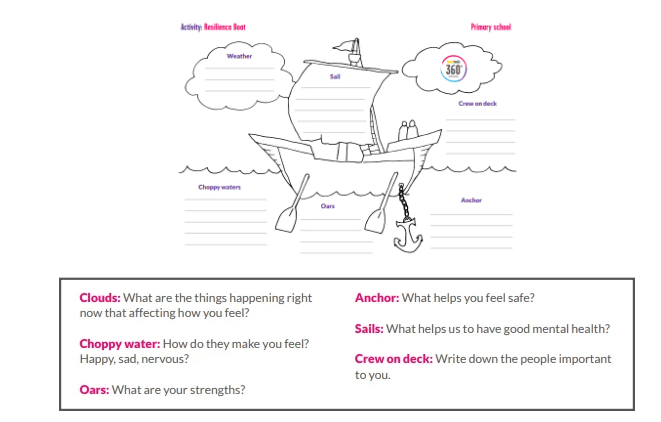
The Resiliency Boat: Navigating Life’s Challenges

The Resiliency Boat exercise is a powerful tool for individuals to visualize and strengthen their ability to cope with life’s challenges. This creative and engaging activity helps participants identify their support systems, personal strengths, and areas for growth.

How It Works

The exercise begins with participants drawing a boat, representing themselves navigating life’s ups and downs. Each part of the boat and its surroundings symbolizes different aspects of resilience:

Choppy Waters

Participants identify current challenges or stressors they’re facing. These might include work pressures, relationship issues, or health concerns[1].

Oars

These represent personal strengths that help navigate difficult times. Participants list qualities like determination, adaptability, or problem-solving skills[1].

Anchor

This symbolizes the support system that provides stability. Participants note people, resources, or activities that ground them during tough times[1].

Sails

The sails represent self-care strategies that promote mental health and well-being. These might include exercise, meditation, or creative pursuits[1].

Crew on Deck

This section is for listing key individuals who provide support and encouragement[1].

Benefits of the Exercise

The Resiliency Boat exercise offers several advantages:

  1. Visual Representation: It provides a tangible, visual way to understand one’s resilience factors.
  2. Self-Awareness: Participants gain insight into their coping mechanisms and support systems.
  3. Identifying Gaps: The exercise helps highlight areas where additional support or skills might be needed.
  4. Positive Focus: Emphasizing strengths and supports fosters a positive mindset towards challenges.
  5. Group Discussion: In a group setting, it promotes sharing and learning from others’ experiences.

Conducting the Exercise

To conduct the Resiliency Boat exercise:

  1. Provide participants with paper and drawing materials.
  2. Explain the symbolism of each boat part.
  3. Allow time for reflection and drawing.
  4. Encourage participants to share their boats with the group, if comfortable.
  5. Facilitate a discussion about common themes and insights gained.

Enhancing Resilience

The Resiliency Boat exercise underscores that resilience is not a fixed trait but a skill that can be developed. By regularly reflecting on and strengthening the elements represented in their boat, individuals can enhance their ability to navigate life’s challenges[2].

Remember, building resilience is an ongoing process. Just as a real boat needs regular maintenance, our resilience requires continuous attention and care. By using tools like the Resiliency Boat exercise, we can better understand our strengths, support systems, and areas for growth, ultimately becoming more equipped to handle life’s storms.

Citations:
[1] https://whenyoumakeithappen.com/learning-to-float-and-tame-the-storms-about-building-resilience/
[2] https://cartus.com/en/insights/blog/what-floats-your-boat-how-develop-resilience-while-international-assignment/
[3] https://info.sailingvirgins.com/blog/resilience-at-sea-how-sailing-adventures-foster-mental-toughness-in-professionals
[4] https://www.youngminds.org.uk/media/4mhjvqu1/resilience-boat.pdf
[5] https://commonslibrary.org/leaderful-organizing-tool-resilience-trees/
[6] https://positivepsychology.com/resilience-counseling/
[7] https://www.youtube.com/watch?v=ECaxX-jJQUU
[8] https://nathanbweller.com/tree-life-simple-exercise-reclaiming-identity-direction-life-story/

Overcome the Need for Approval: Key Steps

Understanding the Impact of Others’ Opinions

Caring about what others think is a natural human tendency rooted in our evolutionary need for social acceptance. While it’s expected to seek approval, excessive concern can lead to anxiety and hinder personal growth. To cultivate a more authentic life, learning how to prioritize your values and well-being over external validation is essential.

Steps to Stop Caring About What Others Think

1. Focus on Your Own Goals and Values
Begin by identifying what truly matters to you. Create a list of personal aspirations and values that guide your decisions. This will help shift your focus from others’ opinions to your path, fostering a sense of purpose and direction in life.

2. Listen to Your Inner Voice
Cultivate self-awareness by tuning into your thoughts and feelings. Regular practices like journaling or meditation can help clarify your priorities and reinforce your self-worth. When you understand your own values, the opinions of others become less significant.

3. Challenge Negative Thoughts
Recognize when you’re comparing yourself to others, especially on social media. Remind yourself that these comparisons often reflect only the surface of someone’s life. Replace negative self-talk with affirmations highlighting your strengths and accomplishments, such as “I am enough just as I am”.

4. Surround Yourself with Supportive People
Choose to spend time with individuals who uplift and encourage you rather than those who foster insecurity or doubt. Positive relationships can bolster your self-esteem and help you feel more secure in your identity.

5. Embrace Change and Imperfection
Understand that perfection is subjective and unattainable. Allow yourself to change your mind and make mistakes without fear of judgment. This acceptance fosters resilience and self-compassion, enabling you to navigate life’s challenges more effectively.

6. Spend Time Alone
Solitude can be a powerful tool for self-discovery. Use this time to reflect on your thoughts and desires without external influences clouding your judgment. The more grounded you are in yourself, the less likely you will be swayed by others’ opinions.

7. Let Go of the Need for Approval
Not everyone will like or accept you, and that’s perfectly okay. Detaching from the need for universal approval frees you to express your true self without fear of rejection.

Learning to stop caring about what others think is a journey that involves self-reflection, courage, and practice. By focusing on your values, surrounding yourself with supportive people, and embracing imperfection, you can cultivate a more authentic life filled with confidence and fulfillment. Remember, the opinions of others are often reflections of their own insecurities—what truly matters is how you perceive yourself.

Quiz: How Much Do You Care About What Others Think?

This quiz will help you assess your concern about others’ opinions. For each statement, rate yourself on a scale from 1 to 5, where:

  • 1 = Strongly Disagree
  • 2 = Disagree
  • 3 = Neutral
  • 4 = Agree
  • 5 = Strongly Agree

Questions

  1. I often change my opinions or preferences to fit in with others.
  2. I feel anxious when I think about how others perceive me.
  3. I frequently seek validation from friends or family before making decisions.
  4. I avoid expressing my true feelings if it might upset someone else.
  5. I often compare myself to others on social media.
  6. I worry about what people will say if I pursue my passions or interests.
  7. I feel embarrassed when I receive criticism, even if it’s constructive.
  8. I often think about how others will judge my actions before doing them.
  9. I frequently apologize, even when I don’t feel I’ve done anything wrong.
  10. I prioritize pleasing others over my own needs and desires.

Scoring Your Quiz

Add up your scores for each question to get your total score.

  • 10-20: Low Concern
    You have a healthy sense of self and are not overly affected by what others think. You prioritize your own values and opinions.
  • 21-35: Moderate Concern
    You care about others’ opinions to some extent, but you also value your own perspective. Strive for more balance in your decision-making.
  • 36-50: High Concern
    You may be significantly influenced by what others think, which can lead to anxiety and self-doubt. Consider working on building your self-esteem and focusing on your personal values.

Reflection

Regardless of your score, remember that it’s natural to care about how others perceive you to some degree. The key is finding a balance that allows you to live authentically while maintaining healthy relationships with those around you. If you find yourself in the high-concern category, consider exploring strategies to cultivate self-confidence and reduce the impact of external opinions on your life.