Page 46 of 101
Family Therapy is about Creating a Culture of Honor
Family Therapy is about Creating a Culture of Honor
By Ron Huxley, LMFT
Does an angry teen deserve your respect? Is it possible to show value to a defiant child? Can we honor someone who is unhonorable?

Is Your Child a Manipulator or Influencer?
By Ron Huxley, LMFT
Children want feel significant and can be natural leaders when parents can direct this desire in a healthy manner. Unfortunately, many children turn into manipulators or bullies, trying to control everything and everyone in their path. This has a lot to do with developmental drives. A child is untrained force of emotional energy. They cry, scream, tantrum and hit at the slightest provocation. This is because their brain and nervous system are ruled by their emotions over their thoughts and it takes time and practice for them to learn how to manage themselves. Truthfully, many adults are still trying to learn this skill!
When your child is acting bossy, try to imagine how you can redirect this emotional energy into concrete, positive influence. How can you model natural leadership and guide them to be significant without the abuse?
Reinforce areas of their character that demonstrate their capacity for patience, kindness, respect, love, generosity, and compassion for others. Empathy that is experienced and offered toward others is still the key builders of morality and good judgements in our brain development. Use it without restraint toward your children.
Look for examples, in media and the world around us, where positive influence and helping others is happening. Discuss the costs for this and why others would lay down their time and energy for someone else. Ask your child how they have done this and who they could pick to be helpful to…Shift their attentional focus from finding significance in manipulation to finding identity in influencing others.
Parents don’t have to win every battle…

Parents can take back their home life and create an atmosphere of love and peace. The strategy is battling a series of change campaigns over many weeks, months and perhaps years. Don’t lose the war due to impatience or stretching yourself too thin by fighting every battle of every day. You are outnumbered! You don’t have the same amount of physiological energy as your children. Be strategic and fight key battles on specific hills and don’t give up until that battle is won. These hills are territories of the heart that have been taken over by fear, resentments, unforgiveness, entitlements, When they are taken over, relationships become cold and defenses are built. Risk, through reconciliation and repentance of mistakes are the weapons that bring these defenses down.

Better Beliefs Bring Better Relationships
By Ron Huxley, LMFT
You don’t have to keep praying for better relationships. You can just start having them. Let them start with you today. Don’t expect others to start because you did but once you start they will feel the ripple effects of it and will try to have better relationships with you as well.
The thing that drains you in your relationships isn’t the other person. It is the beliefs you have about that relationship that drains you. Negative emotions make you tired.
Change what you believe about your family. A hopeful thought will bubble up life and love that you didn’t know was still inside. Stop trying to do what you are doing better and do it with better beliefs about what is possible. Don’t wait for better days to come. Start having better attitudes and better days will come.
So much effort goes into changing other family members instead of changing the culture of the family. Shifting the atmosphere of the home and paying attention to examples of hope, love, kindness, celebration, patience, cooperation, respect, power, optimism, fun, playfulness, honesty, sharing, peach and more, will make those values increase. Ignoring what you dislike about your family relationships will strangle those things and they will wither away.
Don’t act on feelings. Feelings deceive you. They come and then they go. Let them. Practice what you believe and act on your hope of what will be and not what is going on in your relationships. Feelings are signals to the temperature level in the home. They are not the thermostat. Your beliefs are set the temperature.
Hurting families protect and hold back parts of themselves to avoid further hurt. Risk involves giving more of ones self to build trust and get more of the other in return and better, safer relationships develop through these small acts of faith.
Breakthrough in the strongholds of fear will change the atmosphere of the home bringing balance in mood and reactivity. Underestimating your influence will disempower your ability to change. Stop thinking about yourself and powerless and start thinking about yourself as powerful. You have 100% power over your own life, reactions, attitude and beliefs. Your outer reality doesn’t determine your inner reality. Your inner reality will transform your outer reality.
It is time for unreasonable optimism about your present and future relationships. This is more than strategies to change things. It is a personal revival to change yourself. The family changes when you change.
Children who have been abused and neglected suffer from an internal model of fear. The world is a scary place. Providers, regardless of the amount of love and tenderness, can’t be trusted. Behaviors can go to the extreme and violate social norms and expectations but these behaviors were normal in an abnormal world. They are now abnormal in a normal family! Unfortunately, children who have been maltreated still operated under F.E.A.R. or False Evidence Appearing Real.
Parents have to be invested in creating a culture of celebration, creativity and hope in the next generation. When parents wake up their hearts need to beat wth the urgency to empower their children and instill values of perseverance, positivity and generosity. This can’t and won’t happen unless parents model it and rearrange their schedules to make sure this is allowed in the home. Change the atmosphere you and your children breath if you want them to have, inside of them, the things you say you want them to be and do!
“I’ve Got No Choice”
Many studies have shown how important it is for low-income mothers to sustain their moral identities as both good mothers and reliable workers during times of little social valuing of mothers’ caring work. Discovering how low-income mothers sustain this duality when caring crises preclude employment requires a mapping of their social worlds as reflected in their moral justifications. We used an institutional ethnographic approach that focused on situations wherein mothers decide to exit the labor market and devote themselves to their children’s caring needs. Interviews with 48 Israeli mothers revealed that they maintain their moral fitness both as good mothers and good citizens by engaging in a specific emotion management: expressing emotional devotion to their paid job, whereas child care is presented as a necessity. We argue that emotion management is particularly revealing of how macro-level institutional practices and discourses come to the fore in individuals’ daily lives.
Sensory Smart Sleep Tips for Kids
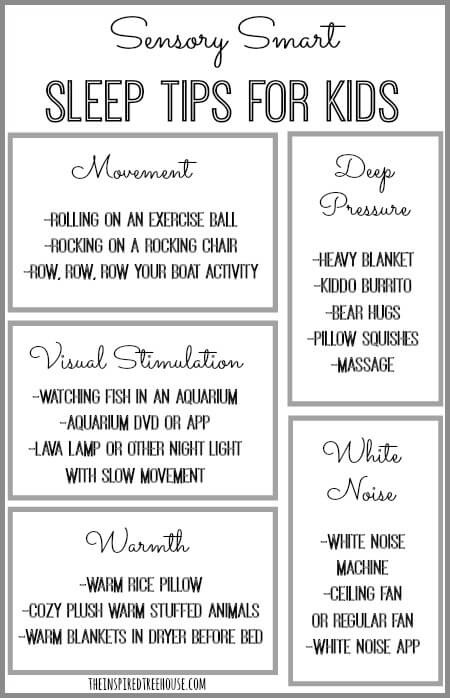
Great sleep tips for adults with SPD as well. Let me know if you would like a transcription of what the image says.
Miriam,Mod.
 Ron Huxley LMFT