I am a licensed Marriage and Family Therapist providing faith-based, trauma-informed therapy for individuals and families. My heart is to see hurting people saved, healed and delivered. Currently, I am practicing in my Shell Beach, California office but travel internationally educating parents and professionals on adoption and permanency skills. You can schedule an office visit or Skype call right away. Just click here now…
Children who no longer live with their birth parents must go through their own version of grief…
by Ron Huxley, LMFT
In 2014, Child Welfare Services checked up on 3.2 million children reported as abused or neglected, in the United States of America*. Many of these children are removed from their birth parents and enter foster care. Some return to their parents while others are adopted by loving families. The goal is always permanency for children but the issues of grief must be addressed regardless of the child’s placement.
What is Grief?
Grief is the state that individuals experience when a significant loss occurs in their life. The loss might occur as a result of death, divorce, and/or abandonment by a family member. It might be said that nontraditional families, like foster and adoptive families, are born out of grief as they are formed as a result of a loss. This is confusing due to this is a time for both celebration and sadness.
Grief is a profound loss for children that is not always recognized by parents and professionals. One reason is that children do not grief in the same way that adults do. Young children often act like nothing happened at all and adults wrongly assume they are not grieving. Later, when they erupt in anger and aggression towards others, adults are surprised by their behavior. Misunderstanding the behavior will lead to incorrectly managing it and parents miss an opportunity to address the loss and create a healing bond.
Stages of Grief
Despite the confusion, grief has predictable stages of development. This is beneficial to the nontraditional parent as they attempt to make sense of their child’s grief experiences. Most importantly they know that the most negative feelings of grief and loss will not last forever, at least not in the same intensity as when it first started.
Perhaps the best known framework for grief and loss are the stages listed in the work of Elisabeth Kubler-Ross who wrote the book On Death and Dying (1969). Her stages of grief include:
Denial Anger Bargaining Depression Acceptance
These stages can manifest differently depending on the child’s developmental stage. As a child matures, their ability to understand themselves and their world changes, allowing for deeper levels of grieving. This is why young children can act like they don’t grief or care about their past. They may not want to talk about their past or have any questions for adults. When they are older, however, they may “suddenly” have questions and this can be perplexing to adults.
Another way grief can affect children is creating a division between “age and stage.” A child may be 16 years of age chronologically but act emotionally and socially like a 6 year old. Would a parent allow a 6 year old to take care of his or her younger siblings? Of course not! A 16 should be responsible to watch their younger siblings for a short time. A 6 year old would not have the cognitive ability. A 10 year discrepancy between age and stage can cause grieving children to look like they are on an emotional roller coaster ride. One minute they are responsible and calm. Then next they are reactive and impulsive. Parents can easily make the mistake of dealing with the child’s age and not their stage.
Close the gap between the child’s emotional and chronological stage by creating a space for them to grief past losses.
Waves of the Ocean
A useful metaphor for understanding grief are the waves of an ocean. When you are way out in the ocean, the waves are large and frightening. They pull you under and twist you about, creating a sense of hopelessness or fear of your future. This is similar to the stage of Denial or shock at the reality of the loss. When the waves pass and the ocean feels momentarily calm, this is called the stage of anger or bargaining. The shore represents the stage of acceptance. As nontraditional parents and children swim for the stage of acceptance, waves continue to crash over them, sometimes threatening to pull them under in denial and shock and at other times settling down and letting anger and bargaining propel them forward to the shore. The closer you come to the shore the less intense the waves. But even small waves, when standing on the edge of the ocean can unsettle and cause you to lose your balance.
Parents can use this metaphor to help themselves and their children find emotional balance. Because they are in the ocean and not on the shore they cannot compare their children’s action to others. In addition, rather than live up to society’s expectation of what an ideal family should look like, parents need to concentrate their energy on helping their child swim for the shore, in their own timeframe, even if it must be developmental stages.
Art and the Heart
Expressive arts can open the heart of the child who is grieving by allowing them to freely process thoughts and feelings that have been trapped in her heart and possibly . Parents have to set an atmosphere of acceptance to help the child “swim to shore”. Parents who avoid talking about sad or angry feelings communicate that it is unsafe or unwise to share. You don’t have to be an art therapist. Just get out the crayons and paper. Pull out paints and use your fingers. Play with legos and dolls. Make believe and role play. As adults we can interject healing ideas and allow grief and loss to work naturally.
Talking about Birth Parents
It can feel rejecting for foster or adoptive parents to talk to their children about birth parents. Ironically, opening up conversation and allowing children to grieve will create a closer, more intimate attachment. Not talking about them will reinforce shame in the child and idealizing birth parents creating a vicious cycle or hurt between parent and child. The loss has already occurred. Avoid it doesn’t make it go away. It stays buried until it comes out in more painful ways.
If parents need help in this area, consult with a child therapy and spend some time working through the age and stage of grief.
Parents of children with autism are learning that food choices can help their sons and daughters become healthier and reach their full potential. In addition to traditional behavioral therapy and other pharmaceutical treatments, pediatricians, researchers, and nutritionists increasingly recommend that parents implement autism diets, autism-specific nutrition, and specialized supplementation.
Even television’s respected Dr. Oz recently said, “Some of the most promising treatments for autism come from changing the foods that the child is eating.” Respected pediatrician and author of “The Autism Book,” Dr. Robert Sears says that 75% of his patients following the diet see great improvement.
Doctors now recognize that the bodies of children with autism are unique and require very specific care, including special enzymes for digestion, medical treatment for yeast infections and other common conditions found during testing, attention to digestive issues, special dietary requirements (autism diets), nutrient and fatty acid supplementation, behavioral therapy, and more.
The outdated model sees autism as a “mysterious” psychiatric disorder that begins and ends in the brain—and reports that little can be done to impact its effects. Through the breakthrough work of the Autism Research Institute a more appropriate “whole body disorder” (the brain is affected by the biochemistry generated in the body) perspective of autism has emerged.
When seen as a whole body disorder, parents and physicians are more likely to identify the physical symptoms of autism that often get overlooked including diarrhea, constipation, bloating and GI pain, inflammation, and frequent infections. With this broader comprehension it becomes apparent that there is a great deal that can be done to address these challenges. Step one is to take charge of diet.
When parents correctly implement specific autism diets, improvements in gastrointestinal problems (including diarrhea and constipation), language, learning, focus, attention, eye contact, behavior, sleep difficulties, toilet training, and skin rashes/eczema have been observed. Parents around the world are beginning to share their stories of healing. Since every child is unique, improvements will vary.
It’s important to understand that these diets are customized food-focused strategies of nutritional intervention for autism. Going from not considering the impact of food intake (standard American diet) to giving specialized attention (nutrition centered diet) is the key to promoting systemic healing through autism diets. All autism diets involve the removal of problematic foods and substances, and the addition of easier to digest nutrient dense foods.
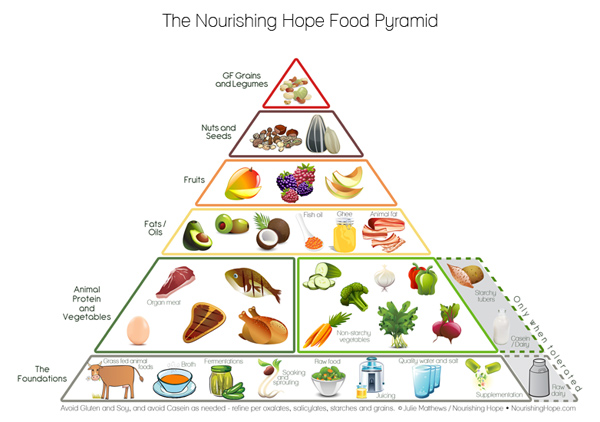
Certain food substances, such as gluten (wheat) and casein (milk) are known to be problematic for many children with autism, and should be avoided – and other foods rich in healing nutrients are beneficial when added to children’s diets. Attention to these factors is intended to help balance biochemistry, affect systemic healing, and provide relief of autism symptoms.
For many children with autism, nutrient deficiencies, chemicals in foods, imbalanced biochemistry, and digestive problems can play a significant role in their physical conditions. Their physiological and behavioral symptoms may stem from, or be exacerbated by, impaired digestion and GI health. Altering food choices positively affects these processes and helps improve symptoms.
There are several diets that are used by parents, autism nutritionists and pediatricians. These diets include the Gluten-Free Casein-Free (GFCF) Diet, Specific Carbohydrate Diet (SCD), Gut and Psychology Syndrome (GAPS) Diet, Low Oxalate Diet, Body Ecology Diet, Feingold Diet and Weston A. Price dietary principles.
Parents begin with simple steps: more fresh fruits, vegetables and grass-fed meats whenever possible. They read labels for ingredients and clean out their cupboards. They shop for organic foods in order to remove antibiotics, hormones, pesticides and PCBs from the dinner table. They naturally avoid pre-packaged, canned or frozen foods that contain preservative, additives, colors and artificial ingredients. They immediately decrease the amount of sugar they feed their children. The guidance of a qualified nutrition profession is always recommended.
After the initial clean up steps are completed, parents embark on the implementation of an autism diet, which typically begins with removing gluten and casein—as implemented in the GFCF diet. Gluten is the protein found in wheat, rye, barley, commercial oats, kamut, and spelt. Casein is the protein found in dairy. The GFCF diet has become popular for autism and the general population, and there are many GFCF foods available in stores. Parents applying a GFCF diet cook from great recipes they find online and in autism diet friendly cookbooks.
Autism Research Institute (ARI) surveyed thousands of parents and found that 69% of those applying the GFCF Diet saw improvement. For the Specific Carbohydrate Diet, 71% noted improvement. In recent autism diet research funded by Autism Speaks, 82% of parents reported “definite improvement” in their child’s skills.
For the parent of a child with autism, the food that they choose to serve their children is vitally important to their healing. Autism diets are an important first step all parents should consider as they are creating a program for the improved health and well being of children.
Julie Matthews is an internationally respected Certified Nutrition Consultant, autism nutrition specialist and author of the award-winning book, “Nourishing Hope for Autism” and the creator of “Cooking to Heal: Autism Nutrition and Cooking Classes” (DVD). Julie provides diet and nutrition intervention guidance backed by scientific research and applied clinical experience. She presents at the leading autism conferences in the US and abroad.
7 Ways Anxiety Actually Works to Your Advantage If you live with #anxiety, you’re all too familiar with its negative effects—unfounded fear, tension, and nervousness among them. But there are positives, too. http://ift.tt/24AXK61
And how a child reacts to these problems is different in every case.
Some go into their shell, become anxious and have bad associations with school, even experiencing physical symptoms like stomach pain and headaches at the thought of going to school.
Others act out and are unfairly labeled “troublemaker” or “lazy” when they actually have no control over their ability to complete the allocated tasks.
One thing is consistent throughout every child I see though:
Improving their Sensory Motor Skills improves their performance in the classroom. Fact.
And as they have to be at school for 12 years (not counting further study after that) it is SO important to give them the best possible foundation for their schooling career!
Even if you feel they are doing “Okay” and there’s nothing really wrong… helping your child’s Sensory Motor Skill development will only give your child even more of an advantage.
Fear destroys families and why you must make it “feel” safer
By Ron Huxley, LMFT
Fear is one of the biggest reasons for family power struggles and defiance in children. It shifts the atmosphere of the home and causes use to react instead of acting in a safe and sane manner toward one another. All families fight. You can create a S.A.F.E.R. H.O.M.E. to battle against problems instead of people you love.
Are you in a constant power struggle with your children? Feeling a little helpless to manage the continual arguments and competition between children in your home? Tired of yelling, bribing, and negotiating to get cooperation? Well here is a 9 step plan to help you create a “safer home”:
S = Stop what you are doing. Your probably reacting to the stress of the situation and making things worse. Take some time to…
A = Assess the situation, environment, mood and motivations of your child(ren). What are they doing? Why are they doing it? How are you handling it? Who is involved? Just notice for now…
F =Focus on one problem or priority to address. Don’t try to tackle all the issues. Try and address the core issue that affects the most people/variables. This will allow you to…
E = Empathize with your child’s feelings. State: “I can understand how you would feel this way or want to act in a certain way, however…”
R = Respond (versus reacting) by offering alternative solutions or asking for responses from the children to come up with the alternatives themselves. This activates all areas of the brain through empathy development (right brain and emotional centers of the brain) and logical thought (left brain and cause and effect areas of the brain)…
H = Help children with suggestions for things they could try if they cannot come up with their own or if they won’t do it. “Would you like some ideas? What if we do x or y?”…
O = Offer choices. Would you rather share the toy or find a new one? Brush teeth before or after putting on your pajamas? The more choices and the smaller they are spread out through the day the more compliance you will get. Choices mean power but only offer ones you can live with and be ready to…
M = Maintain your position when they go for that third choice you didn’t offer them. If they do this, you know you are playing a game that no one will win. You may have to be a broken record and repeat the choice two choices two times (this is important to only do it twice) and then…
E = Execute the choice everyone agreed to or take action if they can’t or won’t agree to one. You chose A or B. This is “do or die” when it comes to parenting. Be ready to stick to your choice and don’t back down. If you do, you give total control back to your child. The fight might be tough today but tomorrow it will be easier and easier the day after that until finally it will be a rare day that you have to fight it at all. Won’t that be nice and safe?
A recent article by Scientific American reviews desperate attempts to change unruly teen behavior around. One of the toughest challenges is to reach an adolescent who is angry, defiant and acting out in destructive ways. Confrontational strategies and harsh punishment, the article explains, has only short-term benefits. No studies prove lasting results from this type of “scared straight” intervention. So what does work? The article ends with this summarization:
“…results show that merely imposing harsh discipline on young offenders or frightening them is unlikely to help them refrain from problematic behavior. Instead teens must learn enduring tools—including better social skills, ways to communicate with parents and peers, and anger management techniques—that help them avoid future aggression. Several effective interventions do just that, including cognitive-behavior therapy, a method intended to change maladaptive thinking patterns and behaviors, and multisystemic therapy, in which parents, schools and communities develop programs to reinforce positive behaviors. Another well-supported method, aimed at improving behavior in at-risk children younger than eight years, is parent-child interaction therapy. Parents are coached by therapists in real time to respond to a child’s behavior in ways that strengthen the parent-child bond and provide incentives for cooperation [see “Behave!” by Ingrid Wickelgren; Scientific American Mind, March/April 2014].”
What can you do to strengthen your bond with your child? How can you reach his or her heart, locked behind a wall of pain and anger? Don’t expect overnight miracles. Turning your defiant teen around will require consistency and continual micro-shifts of change in you and your child. You will probably blow it on days and be exhausted from the effort on others. This is a marathon, not a sprint. Focus on who the child will be and not on who they have been or what they are doing. Consequences are natural and necessary. Boundaries are even more important! Just don’t equate your love with positive behavior. Nothing your child does should make you love him or her any less and nothing can make you love them more.
“Love never gives up, never loses faith, is always hopeful, and endures through every circumstance.” I Corinthians 13:7 (NLT)









 Ron Huxley LMFT