Page 17 of 101

Reflection and Journaling for the New Year

Reflections and journaling are powerful tools that can help us better understand ourselves and our lives. They can provide a sense of clarity, direction, and purpose, and can even lead to personal growth and transformation.

What is reflection?

Reflection is the process of thinking deeply about something, considering different perspectives, and learning from past experiences. It involves evaluating and analyzing events, actions, and feelings, and considering their significance and impact.

Reflection can take many forms, including self-reflection, where we reflect on our own thoughts, feelings, and behaviors; and external reflection, where we reflect on the experiences and perspectives of others. Reflection can also be formal or informal, depending on the context and the purpose of the reflection.

Why is reflection important?

Reflection is an essential part of the learning process, as it helps us make sense of our experiences and understand how they relate to our goals and values. It can also help us identify patterns and trends in our behavior and thought processes, and identify areas for improvement or growth.

Reflection can also provide a sense of perspective and clarity, and help us better understand ourselves and the world around us. It can be a way to process and make sense of difficult experiences, and can even help us find meaning and purpose in our lives.

How do we reflect?

There are many different ways to reflect, and what works best for you will depend on your personal style and preferences. Some common methods of reflection include:

• Writing in a journal: This can be a great way to capture your thoughts and feelings on paper, and can be especially helpful for processing and making sense of difficult experiences.

• Talking to someone: Sharing your thoughts and feelings with a trusted friend, family member, or therapist can be a helpful way to reflect on your experiences and gain insight.

• Meditating or practicing mindfulness: These practices can help you focus your attention on the present moment and reflect on your thoughts and feelings without judgment.

• Engaging in creative activities: Creative activities like drawing, painting, or writing poetry can be a way to express and explore your thoughts and feelings in a different way.

• Doing something physical: Engaging in physical activities like exercise or yoga can be a way to reflect on your thoughts and feelings while also taking care of your physical well-being.

Why is journaling important?

Journaling is a form of reflection that involves writing down your thoughts and feelings on a regular basis. It can be a powerful tool for personal growth and development, and has a number of benefits, including:

• Providing a sense of clarity and perspective: Writing down your thoughts and feelings can help you better understand and make sense of them. It can also provide a sense of perspective and help you see things in a new light.

• Enhancing self-awareness: Journaling can help you become more self-aware by providing a space to reflect on your thoughts, feelings, and behaviors. This can help you identify patterns and trends, and better understand your strengths and areas for growth.

• Promoting emotional well-being: Journaling can be a way to process and express difficult emotions, and can even help reduce feelings of stress and anxiety.

• Setting goals and tracking progress: Journaling can be a way to set goals and track your progress towards achieving them. It can also help you reflect on what is and isn’t working, and make any necessary adjustments.

Journaling is a simple but powerful tool that can help improve your mental well-being and overall quality of life. It involves writing down your thoughts and feelings on a regular basis, and can provide a sense of clarity, perspective, and self-awareness. It can also be a way to process and express difficult emotions, set goals, and track progress.

If you’re new to journaling, or are looking for ways to make it a more meaningful and beneficial practice, here are some tips to get started:

1. Find a comfortable and private space to journal

It’s important to have a dedicated space where you can journal without distractions or interruptions. This can be a physical space, like a quiet room or cozy corner, or it can be a virtual space, like a private journaling app or document. Make sure you have everything you need, like a pen and paper or a laptop, and create a comfortable and inviting atmosphere.

2. Choose a journaling method that works for you

There are many different ways to journal, and what works best for you will depend on your personal style and preferences. Some options include:

• Pen and paper: This is a traditional and simple way to journal, and can be especially helpful for those who enjoy the physical act of writing.

• Digital journaling: There are many apps and online platforms available that allow you to journal electronically. This can be a convenient option if you’re always on the go or prefer typing to writing.

• Creative journaling: If you’re more creative and artistic, you might enjoy using your journal as a canvas for drawing, painting, or collaging.

• Prompted journaling: If you’re struggling to know what to write about, you might find it helpful to use prompts or questions to get started. There are many online resources and journals available that provide prompts for different topics and themes.

3. Set a regular journaling schedule

To get the most out of journaling, it’s important to make it a regular practice. Choose a time of day that works best for you, and try to set aside at least 15-20 minutes for journaling. You might find it helpful to journal at the same time each day, or to schedule specific times for different types of journaling (e.g., morning pages, gratitude journaling).

4. Write freely and without judgment

One of the key benefits of journaling is that it provides a safe and private space to explore your thoughts and feelings. It’s important to remember that your journal is for you, and that you don’t have to worry about grammar, spelling, or structure. Just write freely and let your thoughts and feelings flow.

5. Be honest and authentic

Journaling is an opportunity to be honest and authentic with yourself, so don’t hold back. Write about what’s really on your mind, even if it’s difficult or uncomfortable. You might be surprised at the insights and revelations that come from this process.

6. Reflect on and learn from your journaling

Journaling is a form of reflection, so it’s important to take some time to review and analyze your writing. Look for patterns and trends in your thoughts and feelings, and consider how they relate to your goals and values. Use your journaling as a way to learn about yourself and identify areas for growth and improvement.

7. Consider sharing your journal with someone you trust

Sharing your journal with a trusted friend, family member, or therapist can be a powerful way to gain additional insights and support. It’s important to choose someone who is supportive and non-judgmental, and to only share what you feel comfortable sharing.
Emotional Regulation Tools for Stressed-Out People

Emotional regulation is the ability to manage and respond to our emotions in a healthy and productive way. It’s a crucial skill to have, especially for those who struggle with stress and anxiety. When we’re overwhelmed by negative emotions, it can be difficult to think clearly and make good decisions. However, with some practice and effort, we can learn to regulate our emotions and feel more in control of our lives.

Here are some strategies for improving emotional regulation in times of stress and anxiety:

1. Practice mindfulness: Mindfulness is the practice of bringing your attention to the present moment, without judgment. It can help you become more aware of your thoughts and emotions, and allow you to respond to them in a more thoughtful way. Try setting aside a few minutes each day to sit quietly and focus on your breath, or try a guided mindfulness meditation.

2. Use deep breathing: Deep breathing is a simple but effective way to calm the body and mind. When we’re stressed or anxious, our breath tends to become shallow and rapid. By slowing down and deepening our breath, we can help activate the body’s natural relaxation response. Try taking a few slow, deep breaths whenever you’re feeling overwhelmed.

3. Engage in physical activity: Exercise can be a great way to reduce stress and improve emotional regulation. It releases endorphins, which are chemicals that improve mood and reduce feelings of stress. Plus, getting your body moving can be a great distraction from negative thoughts and emotions.

4. Practice gratitude: Focusing on the things we’re grateful for can help shift our perspective and improve our mood. Try keeping a gratitude journal where you write down three things you’re grateful for each day. Or, share your gratitude with a friend or family member.

5. Seek support: It’s important to remember that you don’t have to face stress and anxiety alone. Talk to a trusted friend or family member about how you’re feeling, or consider seeking support from a mental health professional.

6. Use positive self-talk: Our thoughts have a powerful impact on our emotions. When we’re struggling with stress and anxiety, it’s common to have negative thoughts about ourselves or the situation. By practicing positive self-talk, we can reframe these negative thoughts and improve our emotional well-being. For example, instead of telling yourself “I can’t handle this,” try saying “I’m doing the best I can and I will get through this.”

7. Take breaks: It’s important to give yourself time to relax and recharge. Make sure to schedule breaks into your day and take time to do things you enjoy. This could be something as simple as going for a walk or reading a book.

8. Use relaxation techniques: There are a variety of relaxation techniques that can be helpful for managing stress and anxiety. These might include progressive muscle relaxation, visualization, or guided imagery. Experiment with different techniques to see what works best for you.

9. Set boundaries: It’s important to set boundaries and make sure you’re not taking on more than you can handle. Learn to say no to things that don’t align with your values or that are overwhelming for you.

10. Seek professional help: If you’re struggling to manage your stress and anxiety on your own, it may be helpful to seek the support of a mental health professional. They can provide you with tools and strategies to help you cope with difficult emotions and improve your overall well-being.

Emotional regulation is a skill that can be developed with practice. It’s not always easy, but it’s worth the effort. By using the strategies outlined above, you can learn to manage your emotions in a healthy and productive way, even in times of stress and anxiety.

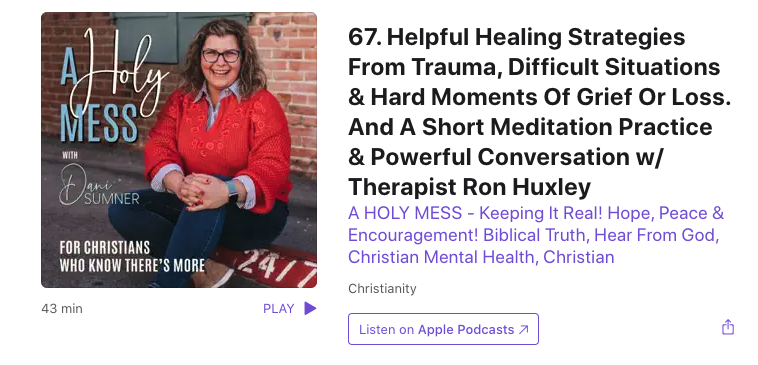
Helpful Healing Strategies from Trauma, Difficult Situations & Hard Moments of Grief or Loss (a Holy Mess Podcast)

I am so excited to guess again on the Holy Mess Podcast (see the link below). The show creator, Dani Sumner, has the #1 Christian Mental Health podcast on Spotify. This episode talks about healing from a body, mind, and spirit perspective. At the end of the podcast, I will lead you through a short meditation on how to “resource” safety from each perspective. You don’t want to mess with this podcast: Click here now!

10 Ways to Manage Your Panic Attacks

“In my experience, the words “now just calm down” almost inevitably have the opposite effect on the person you are speaking to.” – Elyn Saks

A panic attack is a sudden and intense feeling of fear or anxiety that can be overwhelming and debilitating. It is often accompanied by physical symptoms such as rapid heartbeat, difficulty breathing, dizziness, sweating, trembling, and a feeling of impending doom. Some people may also experience chest pain, nausea, and a fear of losing control or going crazy.

During a panic attack, the body’s fight or flight response is activated, even though there is no real danger. This response causes the physical symptoms of a panic attack and a heightened state of alertness and arousal.

Many things trigger panic attacks, social events, public speaking, conflict with family or coworkers, and situations reminiscent of past traumas. Sometimes, an accumulation of stress builds up over time and then pops up unexpectedly in a panic. 

Most people believe they have a heart attack when experiencing a panic attack. They often go to the emergency room or their doctor for a checkup. When the doctor cannot find anything physically wrong with them, they suggest that the individual might have had a panic attack and recommend talking to a mental health professional. 

Family and friends feel helpless around individuals who struggle with panic attacks. They can suggest useless advice or tell them to “calm down,” which never works. 

Mental health professionals might offer several strategies to cope with a panic attack:

  1. Focus on your breathing: Take slow, deep breaths through your nose and out through your mouth. This can help to calm your body and mind.
  2. Use positive self-talk: Remind yourself that you are safe and that the panic attack will pass.
  3. Find a peaceful place to relax: Find a quiet place where you can sit or lie down and relax.
  4. Use relaxation techniques: Try progressive muscle relaxation, visualization, or mindfulness meditation to help you relax.
  5. Find a focus object: Redirect your attention to something in clear sight and consciously notice all the details about that object, engaging all of your senses if possible.
  6. Picture a safe place, face, or space: Visualizing a place or location that holds a positive memory can be helpful to calm the nervous system. Additionally, you can picture someone safe or an activity that gives you joy. 
  7. Engage in light exercise: Taking a walk, stretching, or playing an outdoor game with someone can alleviate the stressful energy in your body.
  8. Use a mantra or affirmation: A positive statement, verse, song, or quote can redirect fear or worry about your condition and reset negative thoughts. 
  9. Change your life situation: If panic results from stress, consider distancing yourself from people, changing jobs, setting boundaries, or reorganizing living situations for your future health.
  10. Reach out to someone: Talk to a friend or loved one, or consider seeking support from a mental health professional.

The best time to deal with a panic attack is before you have a panic attack. Trying to deal with one in the middle is highly challenging to control. A daily practice of calming, affirming prayer and meditation, healthier living, and new perspectives can strengthen the body’s defenses, so the panic never comes up again. 

Panic attacks can be very distressing and may interfere with daily activities. It is essential to seek help from a mental health professional if you are experiencing panic attacks, as they can be treated effectively with therapy and medication. Consult Ron Huxley today if you are struggling with panic attacks and want help. 

Couples who fight fair thrive!

When couples come together in marriage, they bring their own experiences and expectations. As time passes, these expectations can evolve and change, as can the relationship dynamics. However, when couples find themselves in a rut, communicating effectively and breaking through the barriers can take time and effort. This is where marriage therapy can be beneficial.

Marriage therapy is a specialized form of counseling designed to help couples better understand each other and improve their communication and relationship. Marriage therapy aims to create a safe space where couples can express their feelings and concerns without fear of judgment or criticism. It can also guide how to manage disagreements and work together.

CREATE SAFETY:

The first step in marriage therapy is creating a safe communication space. This can be done by setting aside a specific time and place where couples can talk without interruption. Creating a safe environment where couples can feel comfortable expressing their feelings without fear of criticism or judgment is also essential. This can include setting ground rules like no name-calling or criticism and allowing each partner to take turns speaking.

Once the safe space is established, the couple can then begin to work on improving their communication. This can include learning how to listen to each other more effectively, understanding each other’s perspectives, and learning how to express needs and feelings constructively. Marriage therapy can also focus on teaching couples how to resolve conflicts healthily and work together to create solutions that work for both.

EXPRESS EMOTIONAL NEEDS:

In addition to communication, marriage therapy can also help couples work on their emotional connection. This can include exploring each other’s emotional needs and learning how to express love and affection better. It can also involve exploring past hurts and how to move past them to create a stronger bond.

The existence of conflict doesn’t indicate the end of the relationship. Couples who thrive know how to fight fairly and repair the disconnection between them. Disconnection is inevitable. Having the tools to reconnect is essential.

FIGHTING FAIR:

Fair fighting techniques can help couples resolve conflicts without resorting to name-calling or other hurtful behavior. Not only can fair fighting help couples reach a resolution quickly, but it can also help strengthen their relationship in the long run.

So, what are some of the best fair fighting techniques for couples?

  1. Set Ground Rules

Before any argument starts, couples need to set ground rules. This means agreeing not to resort to name-calling, personal attacks, or bringing up past grievances. Setting ground rules can help ensure that the fight stays on track and that both parties feel heard.

  1. Listen Carefully

When couples fight, it’s easy to get caught up in the moment’s heat and start talking over each other. But it’s essential to take a step back and listen to your partner’s words. This means actively listening and trying to understand their perspective instead of just waiting for your turn to talk.

  1. Take a Break

Sometimes a fight can get too heated, and it’s best to take a break. This doesn’t mean walking away and not returning but taking a few moments to cool down and collect your thoughts. This can help you approach the conversation with a clearer head and can help you find a resolution faster.

  1. Be Respectful

It’s important to remember to be respectful during a fight. This means no name-calling or belittling language. Instead, try understanding and use “I” statements to express your feelings. This will help your partner understand your perspective without feeling attacked.

  1. Find a Resolution

When it comes to fighting fair, the goal is to find a resolution. This doesn’t mean that one person has to be correct and the other wrong, but rather that both parties can come to a compromise. This can involve both parties making concessions or coming up with a plan that works for them.

Fair fighting is essential for any healthy relationship. It’s important to remember that while fighting is inevitable, it doesn’t have to be destructive. With the proper techniques, couples can learn to fight fairly and become stronger than ever.

Let Ron Huxley help you improve your communication skills and fight fairly today. Click here to set an appointment now.

The Healing Power of Music

Music has a powerful ability to evoke strong emotions, which can be both positive and negative. It can help us to process and express our feelings, allowing us to make sense of them and move on. Music can also be a form of self-care, helping us relax and take a break from our worries.

Music can also help to reduce stress and anxiety. Studies have shown that listening to music can have a calming effect on the body, reducing heart rate and blood pressure. It can also help reduce cortisol levels, hormones released in response to stress. 

Research has also found that music can help to relieve pain. By providing a distraction from pain, music can help to reduce the perception of pain. It can also help to reduce the need for pain medication in some cases. 

Music can also be used to help people heal from trauma. Music therapy is effective in helping people cope with traumatic experiences. It can help to provide a safe space for people to process their emotions and find ways to move forward. 

Music can also be used to boost mood. Listening to uplifting music can help to reduce levels of depression and increase feelings of joy and happiness. It can also help reduce fatigue levels, helping people feel more energized. 

The healing power of music is undeniable. It can help to reduce stress, anxiety, and pain. It can also provide a safe space for people to process their emotions and heal from trauma. Finally, it can help boost mood and increase joy and happiness. 

If you’re looking for a way to relax and take a break from your worries, or if you’re struggling with pain or trauma, music may be just the thing to help you heal. So, turn up the volume and let the healing power of music work!

Winter Blues, Go Away!

The winter blues are a real thing. Seasonal depression, also known as seasonal affective disorder (SAD), is a type of depression that occurs at the same time every year. It usually starts in the fall and continues into the winter months. In a given year, about 5 percent of the U.S. population will report symptoms of seasonal depression. Seasonal depression is more common in women than men. The main onset of seasonal depression is between 20 and 30 years of age but it can happen earlier. It is also more common in people who live in northern climates.

Typical symptoms of seasonal depression include loss of self-esteem, hopelessness, diminished interest in activities, low tolerance for stress, extreme mood swings, sleep problems, lethargy, overeating, avoidance of social contact, and loss of libido.

There are several theories about what causes seasonal depression. One theory is that it is caused by a lack of sunlight. Sunlight helps our bodies produce vitamin D, which is essential for our mood. Another theory is that changing seasons can disrupt our body’s natural circadian rhythms. It’s certainly no surprise that this time of year brings a lot of stressors into our lives, and people can feel lonely and isolated on top of it all.

Even if we don’t know why the winter blues come this time of year, the good news is that you can do things to ease your symptoms and beat seasonal depression.

Here are a few tips:

  • Get outside: Spend time in the sunlight, even if it’s just for a few minutes. This can help improve your mood and boost your energy levels. One option is light therapy, which involves sitting in front of a special light box for 30 minutes daily.
  • Exercise: Exercise releases endorphins, which have mood-boosting effects. A moderate amount of activity is the key to maintaining your mental health.
  • Connect with others: Isolation can worsen seasonal affective disorder symptoms. It can be a vicious cycle where we feel cut off but don’t want to reach out, and the process spins on. Make an effort to talk to friends or professionals.
  • Practice gratitude: Studies have shown that gratitude can have a powerful effect on your well-being. It can improve your physical health, mental health, and overall satisfaction with life. Reflect on the things you’re grateful for, no matter how small.
  • Another option is an antidepressant medication. If you think you might be suffering from seasonal depression, talk to your doctor. I know lots of people don’t want to take medication, and there is certainly no “happy pill” but medication may alleviate a lot of your symptoms.

Survival Tips for the Holiday Season

Did you know that 65% of people with mental health issues report that the holidays worsen them? Even if you are not struggling with significant depression or crippling anxiety, you may feel the stress and overwhelm that come during Thanksgiving, Christmas, and New Year. It is two months of overwhelm and possible re-traumatization. 

This can be due to increased loneliness, financial pressures, memories of past trauma, physical exhaustion, unrealistic expectations, and having to engage with challenging people. All these things turn the time of comfort and joy into the holiday blues.

You could take a pass for the holiday season, go on your own vacation, or pretend it is just another day but if you do choose to try and carry out the traditional activities, here are a few ideas to help you survive them: 

Manage your time and take on a manageable amount of things. Prioritize your day-to-day schedule so there is a fair amount of to-do’s each day. Plan ahead and try to avoid cramming everything into the day before. If you can do shopping ahead of time or order things online versus fighting crowds in the stores, do it! You can order complete meals from restaurants or grocery stores. If you can afford that luxury, divide the tasks among friends and family members, so you need to do more. 

Set boundaries that you are comfortable with and help you feel safe and secure. If you or someone in your family struggles with alcohol, set a limit that doesn’t allow it at the holiday party or dinner. Start your festivities early enough so people can go home at a decent time to keep up your rest, enabling you to wind down after. 

Be realistic about your time and energy. You may only be able to visit some friends’ and relatives’ homes during the holidays. It is hard to say no, but you may have to spend one holiday function on one side of the family this year and with the other next year, or Thanksgiving at one home and Christmas at the other. You don’t have to spend the actual holiday date with someone. You can pick the weekend prior or after to celebrate. Financially you may have to do a zoom Christmas with some who live far away and can’t travel during the holidays. We all hated this arrangement during COVID, but it has its benefits. It is better than no contact.

Give yourself the gift of self-care. Take time to relax, plan evenings alone, meditate and pray, exercise and eat well, and get as much sleep as possible. Keep a schedule for personal grooming, warm baths, massages, play with your kids, a book, and your favorite treat. 

Stay connected to positive, healthy people. It is tempting to stop attending church or support groups or cancel therapy appointments. Now is the time you need it more than ever. Your positive connections will help you manage the stressors of all the negative encounters and pressures. 

Keep up or create traditions and rituals. Many families already have specific practices during the holidays. We always cook the turkey a particular way, share about things we are thankful for around the table, do a Christmas puzzle, open stockings the night before, read specific devotions and journals, and attend a Christmas eve service or mass. Setting traditions and rituals provides structure, stability, and positive feelings. If you still need one, create one or add a new one to your holiday activities. Let it remind you of the reason for the season (hint, it isn’t about the presents). 

If you want help managing the stress of the holidays or experience challenging feelings of depression, anxiety, or trauma, let Ron Huxley help you. Schedule a session with him today! 

New IOS Mobile App to Schedule Appointments

Our new SimplePractice Client Portal iOS mobile app allows you to manage your care while on the go. This HIPAA-compliant app is now available for download on the App Store.

The SimplePractice Client Portal app combines the client portal’s critical functionality with a mobile app’s convenience. With the app, you can:

  • Manage appointments
  • Join Telehealth sessions directly from the app
  • View invoices
  • Make payments
  • Review shared documents
  • Send Secure Messages
  • Opt to receive push notifications when new messages, invoices, and documents become available
  • Manage multiple profiles
  • Enable a Passcode, Face ID, or Touch ID for quick and secure login

Download it now: App Store

Breaking out of Negative Thoughts and Rumination

Do you ever feel like your mind is racing or your thoughts are stuck in a loop? You might be experiencing what’s called negative thinking or rumination. People who engage in this tend to overthink things, strive for perfection, look at the downside of events and miss the good stuff that happened to them.

Coping with negative thoughts and rumination can be a challenge. But it’s not impossible to overcome, and it’s not something you have to live with forever.

The good news is that you can learn ways to cope with negative thinking and rumination without using medications. Here are some things that might help:

1) Practice mindfulness meditation. This involves focusing on the present moment without judgment, especially when you have negative or repetitive thoughts. You can try this by focusing on your breath, listening to music or nature sounds (like rain or waves), or simply sitting quietly in silence and noticing what’s happening around you (or inside yourself).

2) If you are spiritual, pray! Prayer is a powerful weapon against depression and anxiety. It can be hard to pray when you are overwhelmed by negative thoughts, but if you commit yourself to prayer as a daily routine, it will help keep your mind focused on what matters most.

3) Get some exercise. Exercise releases endorphins into the brain, making us feel better about ourselves and more optimistic about our lives. So if you’ve been feeling down lately, try getting out for a run instead of staying cooped up inside all day!

4) Eat healthy foods! Eating well helps regulate hormones in our bodies that are responsible for mood swings (like serotonin). So if you’re feeling down, try eating something like strawberries or almonds—they contain nutrients that promote happiness and contentment. Ever heard the expression: “Your mental health is at the end of your fork”? It’s true.

5) Try writing down your feelings instead of keeping them bottled up inside where no one else can see them except for yourself (and even then, only if you want to share them with others. Grammer and punctuation aren’t necessary. The point is to let that negative go.

6) Identify the areas where you were hurt or traumatized. Destructive thought patterns can result from betrayal, abandonment, unfair actions, and traumatic events. We can internalize external actions and believe we are the problem or too broken, leaving us in a vicious loop of negative thoughts and feelings.

7) Work with a professional therapist specializing in trauma-informed practices and Cognitive Behavior Therapy. Together, you can get to the unhealthy core beliefs causing so much pain and suffering and find alternative perspectives on your life.

Negative thinking and rumination are exhausting. It ruins your sleep, and it interferes with your day. If you want help finding a way out of this destructive pattern, contact Ron Huxley and set up an appointment to start feeling good immediately! Click here now…