Featured

New IOS Mobile App to Schedule Appointments

Our new SimplePractice Client Portal iOS mobile app allows you to manage your care while on the go. This HIPAA-compliant app is now available for download on the App Store.

The SimplePractice Client Portal app combines the client portal’s critical functionality with a mobile app’s convenience. With the app, you can:

  • Manage appointments
  • Join Telehealth sessions directly from the app
  • View invoices
  • Make payments
  • Review shared documents
  • Send Secure Messages
  • Opt to receive push notifications when new messages, invoices, and documents become available
  • Manage multiple profiles
  • Enable a Passcode, Face ID, or Touch ID for quick and secure login

Download it now: App Store

Featured

The Upside of Toxic Stress

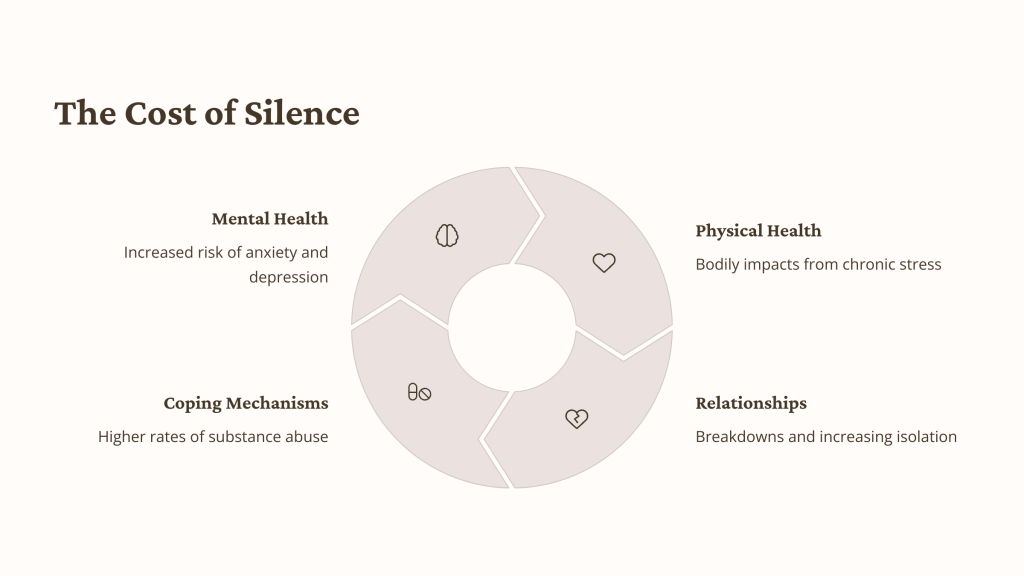
When it is chronic and untreated, adverse events can become toxic stress and severely impact individual health, social and cultural structure, and economic stability. 

Trauma affects everyone and has known no boundaries. It affects children and adults from all socioeconomic and ethnic backgrounds. It is one of the common denominators for individuals receiving services from social services organizations, and its structural disorganization shows up in correctional institutions, jails, schools, hospitals, and the workplace. 

According to the Substance Abuse and Mental Health Services Administration (SAMHSA), “individual trauma results from an event, series of events, or set of circumstances experienced by an individual as physically or emotionally harmful or life-threatening with lasting adverse effects on the individual’s functioning and mental, physical, social, emotional, or spiritual well-being.” [https://www.integration.samhsa.gov/clinical-practice/trauma-informed

The upside of recognizing the commonality of adversity and toxic stress causes us to respond compassionately to ourselves and others! 

Bessel van der Kolk, a leading researcher and author of the book “The Body Keeps the Score,” notes that “trauma is not the story of something that happened back then… it’s the current imprint of that pain, horror, and fear living inside people.” https://www.psychotherapynetworker.org/blog/details/311/video-when-is-it-trauma-bessel-van-der-kolk-explains

This continual horror, triggered by events in the individual’s world, leads to a nervous system shutdown that has repercussions in the ability to read and express social cues, access executive brain skills, and find motivation or purpose in life. For researchers like van der Kolk, the body is key to understanding trauma treatment. This insight into toxic stress opens the doors of hope to helpers burdened by the cold cognitive concepts consisting of thought processes alone. 

Recognizing the body’s role on the mind and the mind on the body has opened the door to new therapies that allow for deeper healing!

Get more healing for you and your family with Ron Huxley’s online courses at FamilyHealer.tv or schedule a session with Ron today.

Featured

Telehealth for Trauma: An effective treatment strategy

According to the National Center for Post-traumatic Stress Disorder, Telehealth or TeleMental Health services are an effective treatment strategy for trauma. Telehealth uses information technology, such as email, phone calls, FaceTime video, and Secure Online Video to conduct therapy services. This technology allows a therapist and a client to engage in real-time two-way interaction. Services that can be provided via Telehealth include assessments, individual and group therapy, psychoeducational interventions, and general therapeutic interactions.

Traditionally, mental health services are engaged in face-to-face, office visits. Just because this is traditional, doesn’t mean that is is more effective. There are times when face-to-face visits are preferred due to lack of adequate technology, challenges with privacy at home, or personal limitations of the client in using technology. In all other situations, TeleHealth is a unique service that provides several benefits, including:

  1. Savings in time and money,
  2. Overcome geographic distance for rural populations,
  3. Increased access to care for individuals with mobility issues (lack of transportation),
  4. Flexibility of appointment times (e.g., out of town for work, babysitting concerns, or other restriction on clients availability like a lunch hour, etc.),
  5. Promotion of physical health by avoiding spreading a contagious illness (COVID-19 or general sickness, like a cold).

Telehealth is not new. It has been used for six decades, in the medical field, and is now being adopted by TeleMental Health as a flexible option for individuals. It is not a “lesser” alternative to mental health care. Outcome research has proven it to be very effective in many areas of mental health issues, like anxiety, depression, and trauma. It also offers convenient support for many general concerns, such as parenting education, life transitions, spiritual direction, and more.

A recent article from the Washington Post points out how global pandemics, like the COVID-19 virus, have shifted the landscape of mental health services through the use of technology allowing more people to attend to their mental health needs. Therapists and individuals may be just blocks away from one another geographically, but medical issues isolate and create an insurmountable “distance” between them. The use of Telehealth or TeleMental Health eliminates geographic and social distance.

The reality is that people around the world are suffering and in need of mental health treatment, education, and support. Children and adults who have experienced trauma cannot wait for medical cures or be punished for lack of mental health access. Telehealth/TeleMental Health is a powerful tool to bring immediate hope and healing.

Learn how to use TeleHealth with Ron Huxley by clicking here!

Read about our security measures and informed consent for Telehealth services here!

SOURCES:

https://www.ptsd.va.gov/professional/treat/txessentials/telemental_health.asp https://www.apa.org/pubs/journals/releases/ser-a0034963.pdf https://www.washingtonpost.com/opinions/2020/03/23/coronavirus-is-mental-health-emergency-too-we-must-remove-barriers-care/?fbclid=IwAR3JK9PIihf_5_nbwbPtgtC1coPpflzmWnAPEDE5FL5kgjsvCnUix_N74aY

Why Trauma-Informed Care Matters—and How to Stay Equipped as a Trauma Champion

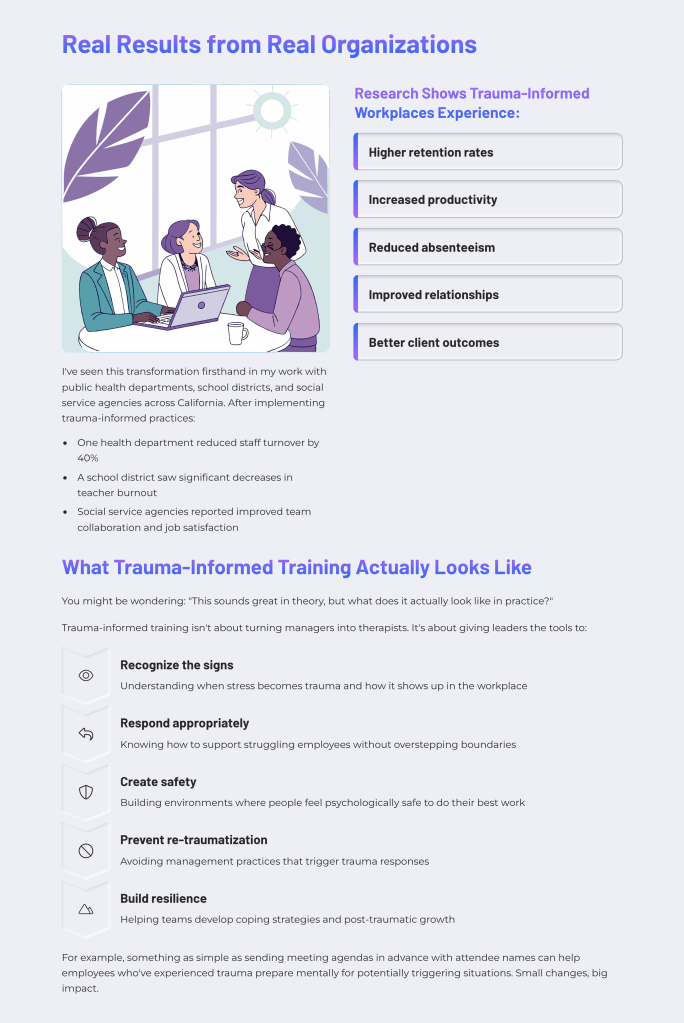
Trauma affects more people than we realize. Whether in schools, healthcare, workplaces, or communities, the need for trauma-informed care has never been greater. Professionals on the frontlines—therapists, teachers, social workers, leaders, and advocates—are increasingly recognizing that understanding trauma is not optional; it’s essential.

But here’s the challenge: staying current with trauma-informed best practices can feel overwhelming. New research, new strategies, and new demands necessitate ongoing resources to remain effective and avoid burnout. That’s precisely why I created the Trauma Champions Newsletter.


What Is Trauma-Informed Care?

At its core, trauma-informed care is an approach that:

  • Recognizes the widespread impact of trauma
  • Identifies the signs and symptoms in individuals, families, and organizations
  • Responds with policies, practices, and programs that foster safety and healing
  • Prevents re-traumatization, ensuring care is supportive and empowering

This approach matters because trauma doesn’t just affect individuals—it ripples across families, schools, workplaces, and entire communities. When professionals are equipped with trauma-informed strategies, they don’t just treat symptoms; they create conditions for long-term resilience and growth.


Introducing the Trauma Champions Newsletter

The Trauma Champions Newsletter is my way of making trauma-informed care practical, accessible, and sustainable for busy professionals.

Each issue includes:

  • Practical strategies you can apply immediately in clinical, educational, and community settings
  • Insights on the latest trauma-informed care research and methods
  • Tools for preventing burnout and compassion fatigue
  • Resources to help leaders and organizations build trauma-sensitive cultures

Thousands of professionals worldwide have already participated in my training and certification programs. This newsletter brings that same expertise straight to your inbox.

👉 Subscribe free today at TraumaChampions.com


Why Join?

By subscribing, you’ll not only stay up to date—you’ll join a growing movement of Trauma Champions committed to transforming care. Together, we’re working to:

  • Make trauma-informed care the standard across schools, agencies, and organizations
  • Provide families with hope and healing tools
  • Build stronger, more resilient communities

If you’re passionate about trauma-informed practice, this is your space to grow, connect, and lead.


Take the Next Step

Don’t miss out on tools, training, and encouragement designed to help you thrive in this critical work.

👉 Sign up now at TraumaChampions.com and start receiving trauma-informed insights directly in your inbox.

Together, we can turn trauma into resilience—and create real change.

Why Your Brain Craves Structure: The Answer to Rumination, Anxiety, and Stress

Why Your Brain Craves Structure: Simple Tips to Navigate Rumination, Anxiety, and Stress

In our increasingly complex world, the human brain constantly seeks order to make sense of information and predict outcomes. Discover how intentionally creating simple yet powerful structures in your daily life can profoundly transform your mental well-being, reduce the burden of persistent worry, and empower your brain to function at its optimal capacity.

This presentation will delve into the neurological basis for our brain’s affinity for routine and predictability, and provide you with actionable strategies to harness this innate preference for improved mental health. You will learn:

  • The scientific connection between structured living and reduced cognitive load.
  • Practical, easy-to-implement strategies to introduce helpful routines.
  • How to identify and counter patterns of rumination and anxiety.
  • Real-world benefits of a well-organized mind for overall life quality.

Prepare to unlock your brain’s full potential and cultivate a calmer, more resilient mindset.

Why Your Best Employees Are Walking Out the Door (And It’s Not About Money)

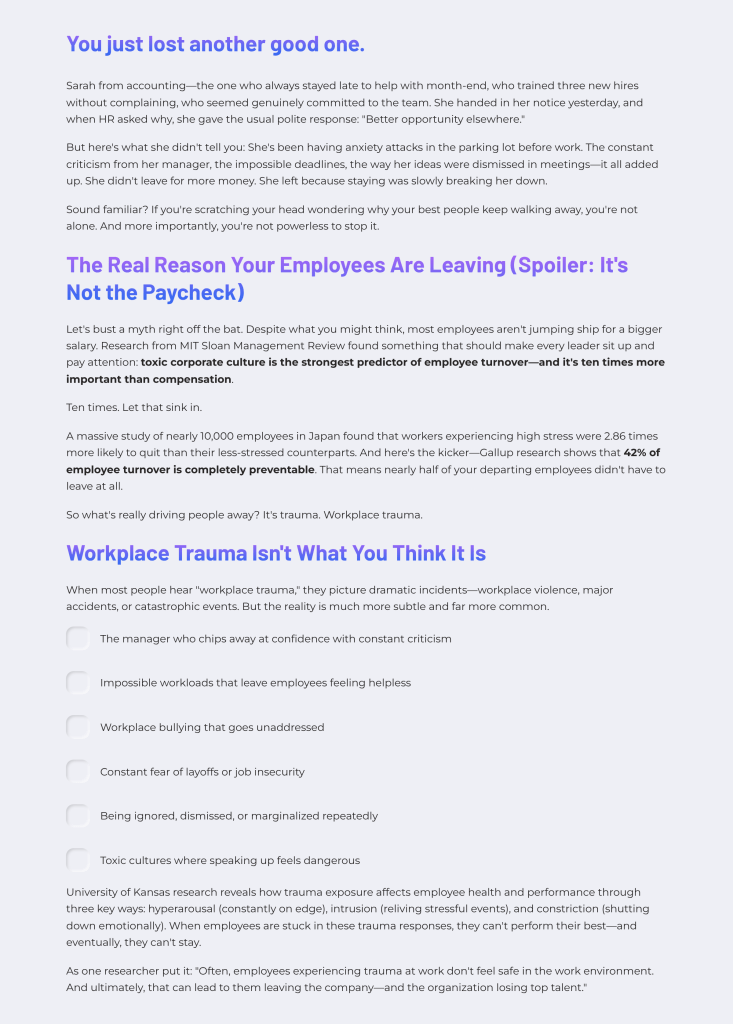
You just lost another good one.

Sarah from accounting—the one who always stayed late to help with month-end, who trained three new hires without complaining, who seemed genuinely committed to the team. She handed in her notice yesterday, and when HR asked why, she gave the usual polite response: “Better opportunity elsewhere.”

But here’s what she didn’t tell you: She’s been having anxiety attacks in the parking lot before work. The constant criticism from her manager, the impossible deadlines, the way her ideas were dismissed in meetings—it all added up. She didn’t leave for more money. She left because staying was slowly breaking her down.

Sound familiar? If you’re scratching your head, wondering why your best people keep walking away, you’re not alone. And more importantly, you’re not powerless to stop it.

Outside the Circle: How One Couple Learned to Step Back from the Magnetic Pull of Conflict

Imagine a circle drawn on the ground. Inside this circle, two people are locked in an ancient dance—circling each other, taking turns being pursuer and pursued, accuser and defender. The circle is magnetic, hypnotic. Once you step inside, the gravitational pull becomes almost irresistible.

This was Mark and Sarah’s marriage for three years.

The Circle of Conflict

“You promised you’d load the dishwasher,” Sarah said, her voice carrying that familiar edge that made Mark’s shoulders tense. “But here I am, coming home to the same mess again.”

Mark felt it immediately—that invisible force pulling him into the circle. His body moved toward the familiar position: feet planted, arms crossed, jaw set. “I was going to do it. You never give me a chance to—”

And there they were, both inside the circle again, spinning in the same exhausting pattern. Sarah feeling unheard and unsupported. Mark feeling criticized and trapped. Round and round they went, each movement predictable, each response drawing them deeper into the magnetic field of their conflict.

From inside the circle, each could only see the other as adversary. From inside the circle, each felt completely justified in their position. From inside the circle, there was no escape—only the endless dance of attack and defense.

The View from Outside

Three months earlier, Mark’s therapist had drawn an actual circle on a piece of paper during their session.

“This is where you and Sarah spend most of your time,” she said, pointing to the inside. “When you’re in here, you can only see each other. You can’t see the pattern you’re trapped in. You can’t see that you’re dancing the same dance that millions of couples dance.”

She drew a larger circle around the first one, then another around that.

“But what if you could step outside? What if you could observe the dance instead of being trapped in it? What if you could see that this isn’t actually personal—it’s just two people caught in a very old, very common pattern?”

Mark stared at the concentric circles. “But how do you step outside when everything in you is being pulled back in?”

The Magnetic Pull

The next time Sarah criticized him, Mark tried to observe what was happening in his body. The pull was immediate and powerful—like standing at the edge of a whirlpool. His chest tightened. His breathing changed. Every cell in his body wanted to step into the circle and defend himself.

“You always do this,” Sarah continued, her voice rising. “You make promises and then—”

Mark could feel himself being drawn in. The circle was calling to him. Defend yourself. Explain. Make her understand. Fight back.

But instead of stepping in, he tried something unprecedented. He imagined himself taking a step back. Not physically—he stayed right where he was—but energetically. As if he were observing the scene from outside the circle.

From this vantage point, he could see something remarkable: Sarah wasn’t his enemy. She was someone in pain, circling inside the same trap he’d been circling in. She was caught in the magnetic field just as much as he was.

“I can see you’re really frustrated,” he said quietly.

Sarah stopped mid-sentence, clearly expecting him to step into the circle with her. When he didn’t take the bait—when he didn’t defend or counter-attack—the dance had nowhere to go.

The Power of the Pattern

For Sarah, staying outside the circle proved even more challenging. She had years of practice stepping into conflict, and the pull was magnetic in a different way. When Mark didn’t fight back, when he didn’t give her the resistance she expected, she felt disoriented.

“Why aren’t you defending yourself?” she asked, genuinely confused.

“Because I can see what’s happening,” Mark said. “We’re both about to step into that circle again. And I’ve started to notice that nothing good ever happens in there.”

But Sarah could feel the gravitational pull intensifying. He’s trying to avoid responsibility. He’s using some therapy trick to make me look like the crazy one. The circle was calling to her, and everything in her wanted to pull him back in with her.

“Don’t you dare therapize me,” she snapped.

Mark felt the familiar tug—the irresistible urge to step into the circle and defend his new approach. The magnetic pull was strongest when Sarah was trying to drag him back in. But he held his position outside the circle.

“You’re right to be suspicious,” he said. “I would be too. But I’m not trying to avoid responsibility. I’m trying to see what’s really happening between us.”

Learning to Observe

Gradually, Sarah began to experiment with stepping back herself. It was harder for her because she had learned early in life that stepping into conflict was how you got your needs met. Staying outside the circle felt dangerous, like giving up.

But one evening, when Mark forgot to pick up their daughter Emma from soccer practice, something different happened. Sarah felt the familiar rage—the magnetic pull toward the circle of blame and defense. But this time, instead of immediately stepping in, she paused.

From outside the circle, she could see the larger pattern: Mark, probably feeling terrible about his mistake, preparing to defend himself. Herself, feeling overwhelmed and unsupported, preparing to attack. The same dance they’d been dancing for years.

She could see something else too: how this exact scene was playing out in thousands of homes across the country. How universal this pattern was. How impersonal, really, despite feeling so intensely personal.

When Mark came home full of apologies and excuses, Sarah didn’t step into the circle.

“I can see you feel awful about forgetting,” she said instead. “And I can see that I’m about to make you feel worse. What if we don’t do our usual dance this time?”

The Larger Circles

As Mark and Sarah practiced stepping outside their personal circle of conflict, they began to see ever-widening circles around them. The circle of couples having the same fights. The circle of humans struggling with the same needs for appreciation and understanding. The circle of all beings trying to love and be loved imperfectly.

“When I can see that our fight isn’t just our fight—that it’s the fight that every couple has—it feels less intense,” Sarah explains. “Less like life or death. More like… just what humans do.”

Mark learned to recognize the early warning signs of the circle’s magnetic pull: the tightening in his chest, the urge to explain and defend. “Now when I feel that pull, I imagine taking a step back. Not away from Sarah, but away from the pattern. I can stay present with her while refusing to dance the old dance.”

The Resistance

Stepping outside the circle wasn’t always welcomed by their dynamic. The pattern itself seemed to fight back, as if it had a life of its own.

“There were times when one of us would stay outside the circle, and the other would get more intense, trying to pull them back in,” Sarah remembers. “It’s like the pattern needed both of us to keep it alive.”

The children noticed too. Emma, their thirteen-year-old, actually complained when her parents stopped fighting in their familiar way. “You guys are being weird,” she said. “Why aren’t you yelling at each other?”

Even friends and family members seemed unconsciously invested in the old pattern. “Sarah’s finally training you, huh?” a friend joked when Mark started responding differently to criticism. The comment felt like an invitation to step back into the circle.

The View from Above

Six months into practicing this new approach, Mark and Sarah describe their relationship differently.

“We still trigger each other,” Mark says. “But now when it happens, instead of getting sucked into the vortex, we can usually observe what’s happening. We can see the circle forming and choose whether or not to step into it.”

Sarah nods. “And most of the time now, we choose not to. Because we’ve seen what’s in there—just the same old dance that never resolves anything. Why would we keep going back?”

They describe a strange phenomenon: the more they stayed outside their personal circle of conflict, the more they could see the larger circles of human suffering and struggle. Their individual pain became part of something much bigger, much more universal.

“When you realize that every couple who has ever lived has struggled with feeling heard and valued, your specific fight about the dishes becomes… well, it becomes workable,” Sarah explains. “It’s still important, but it’s not the center of the universe anymore.”

The Practice

For couples willing to experiment with stepping outside the circle, the practice requires constant vigilance:

Recognize the Pull: Learn to identify the physical sensations that signal you’re being drawn into the circle—tension, heat, the urge to defend or attack.

Step Back: Imagine taking a literal step backward, moving from participant to observer. Ask yourself: “What pattern are we about to dance?”

Expand the View: See your conflict as part of larger circles—all couples, all humans, all beings struggling with the same basic needs.

Stay Present: Remaining outside the circle doesn’t mean checking out. You can be fully present with your partner while refusing to dance the old dance.

Expect Resistance: The pattern will try to pull you back in. Your partner might intensify their attempts to engage you in the familiar dance. Hold your position.

The Paradox of Distance

The paradox Mark and Sarah discovered is that by stepping outside their circle of conflict, they actually became closer. When they stopped seeing each other as adversaries in a battle, they could see each other as fellow travelers caught in the same human predicament.

“We thought stepping back meant caring less,” Mark reflects. “But it actually means caring more effectively. When I’m not trapped in the circle, I can actually help Sarah with what she’s struggling with instead of just defending myself.”

The magnetic pull of their old pattern still exists. The circle is still there, still calling to them. But they’ve learned that they have a choice. They can observe the dance instead of being trapped in it. They can see the larger patterns instead of being hypnotized by the personal drama.

And in that space outside the circle—in that place of expanded awareness—they’ve found something they never expected: the freedom to love each other without needing to fix each other, to be present without needing to be right, to connect without needing to control.

The circle of conflict is still there. But they’re learning to live in the larger circles of compassion, understanding, and shared humanity. And from that vantage point, everything looks different.

Taming The Anger Volcano

Welcome to the “Taming the Anger Volcano” intro! In just five seconds, we showcase a playful yet soothing animation that symbolizes the journey of managing anger. Bright, vibrant colors, such as soft blues and calming greens, set the stage, while a cartoonish volcano gently bubbles with animated steam, representing pent-up emotions. As the volcano transitions into a serene landscape, uplifting yet soft music plays in the background, inviting viewers to explore healthier ways to channel their feelings.

The Hidden Messages in Your Discomfort: Why Processing Emotions is Your Path to Freedom

You know that feeling—a nagging unease in your stomach, a restlessness you can’t quite name, or a vague sense that something isn’t right even when everything looks fine on the surface. Most of us try to push these feelings away, distract ourselves with work, social media, or other activities. But what if these uncomfortable sensations aren’t problems to be solved, but messengers trying to deliver critical information?

The Weight of Unfinished Emotional Business

That persistent discomfort you’re experiencing might not be a warning about what’s coming—it could be an echo from your past that’s been quietly traveling with you. Unprocessed emotions don’t simply disappear because we ignore them. They settle into our bodies and minds like uninvited houseguests, taking up space and influencing how we move through the world.

Think of these unresolved feelings as unopened letters from earlier versions of yourself. Some contain wisdom and insights that could guide you forward. Others are simply remnants from chapters of your life that have already ended but haven’t been adequately acknowledged or grieved. All of them represent parts of you that are still waiting to be heard and integrated.

These emotional fragments aren’t trying to torture you—they’re signals pointing toward aspects of yourself that haven’t been fully understood or accepted. They’re like a persistent knock at the door from the parts of you that remain unfree, asking for attention and care.

Creating Space for Healing

When you’re ready to stop running from these feelings and start listening to them, the process begins with creating a sense of safety. This means finding physical and emotional spaces where you can turn toward your discomfort rather than away from it. It’s about developing the courage to ask, “What are you trying to tell me?”

This journey often brings up forgotten memories and long-buried emotions. You might suddenly remember moments from childhood that shaped how you see yourself, or realize that specific triggers—anger, sadness, anxiety—have been trying to wake you up to unmet needs or unacknowledged pain.

The healing process isn’t always gentle. It might involve crying for losses you never properly mourned, revisiting difficult memories to offer your younger self the comfort or voice they never had, or simply sitting with emotions you’ve spent years avoiding. But as you move through this process, something remarkable happens: you begin to feel lighter, as if you’re literally releasing weight you didn’t realize you’d been carrying.

Your body, too, holds onto emotional experiences. Physical practices such as exercise, stretching, or allowing yourself to shake or tremble can help release stored tension and trauma. Sometimes the body knows how to let go in ways the mind hasn’t figured out yet.

The goal isn’t to eliminate all discomfort from your life, but to learn how to be present with your feelings as they arise. When you can face what’s wrong without immediately trying to fix or escape it, you begin to uncover parts of yourself that have been buried under layers of personas, beliefs, and protective strategies.

You were never actually lost—just hidden. The discomfort was your authentic self’s way of reminding you that it was still there, waiting to be reclaimed.

Discomfort as Your Growth Partner

Here’s something our culture rarely teaches us: discomfort is often the seed of positive change. Most transformations begin not with a sudden burst of inspiration but with experiences that initially bring uncertainty, fear, and anxiety. This happens because we’re remarkably good at adapting to situations that aren’t quite right for us, often waiting until crisis forces our hand before we make necessary changes.

Your discomfort isn’t punishment—it’s information. It’s your inner wisdom communicating that something needs to shift, that there’s another way forward even if you can’t see it clearly yet. Think of discomfort as a caring friend who’s willing to tell you brutal truths that others might avoid.

Many people resist this messenger, which is why their lives can feel stuck or repetitive. But learning to sit with discomfort, to let it reveal what it needs to show you, is one of the most valuable skills you can develop. Discomfort, like anger, grief, and jealousy, serves a purpose—it’s trying to guide you toward something meaningful.

The Sneaky Ways We Resist Our Own Growth

Even when we intellectually understand that change would benefit us, our minds have clever ways of keeping us stuck. These psychological patterns often operate below conscious awareness, sabotaging our best intentions:

The Comfort of Familiar Discomfort. Strangely, we often unconsciously sabotage ourselves when life gets too good. If you’re used to struggle or chaos, peace and happiness can feel foreign and threatening. Your mind might create problems or find ways to return to familiar levels of stress, even when that familiar state isn’t pleasant. Change—even positive change—feels uncomfortable until it becomes your new normal.

The Limits of Our Imagination. Our minds are remarkably good at solving problems we’ve encountered before, but they struggle to envision genuinely new possibilities. When contemplating change, we often can only imagine variations of what we’ve already experienced. This limitation can lead us to believe that our current options are more limited than they actually are. Real growth requires accepting uncertainty and exploring unknown territory, which can feel deeply unsettling.

Expecting the Worst. Human brains are wired to notice and remember negative experiences more vividly than positive ones. This survival mechanism once kept our ancestors alive, but now often keeps us playing small. We tend to overestimate the likelihood and severity of bad outcomes while underestimating our ability to handle challenges or create positive change. This negativity bias can make staying in uncomfortable but familiar situations seem safer than taking risks toward something better.

The Sunk Cost Trap. Sometimes we remain committed to jobs, relationships, or life paths that aren’t working simply because we’ve already invested a significant amount of time, energy, or money in them. The thought of “wasting” that investment can keep us trapped in situations that no longer serve us, preventing us from pursuing options that might be much more fulfilling.

First Impressions Stick. Our brains tend to give special weight to early experiences and first impressions, making it harder to see new possibilities later. Suppose you learned early in life that you weren’t good at something, or that specific dreams were unrealistic. In that case, these initial conclusions can overshadow evidence to the contrary that emerges as you grow and change.

Temporary Feelings, Permanent Decisions. When we’re going through difficult emotions or challenging periods, it’s easy to assume these temporary states represent permanent realities. A bad week can feel like a prediction of a bad life. A period of sadness can seem like evidence that happiness isn’t possible. Learning to recognize the temporary nature of most emotional states can prevent us from making major life decisions based on passing feelings.

Insight Without Action. Sometimes, we become so caught up in understanding our patterns and having revelations about ourselves that we forget to actually implement the changes. Self-reflection can become its own form of avoidance when we use it to delay the often mundane, repetitive work of building new habits and sticking to healthier choices.

Living More Intentionally

Processing emotions and working through discomfort isn’t about reaching a state where you never feel bad again. It’s about developing the capacity to live more fully in each moment, experiencing your feelings in real-time rather than carrying around emotional baggage from the past or anxiety about the future.

When you can look directly at what’s bothering you—when you can sit with discomfort long enough to understand its message—you begin to access parts of yourself that may have been hidden for years. You discover that beneath all the protective layers you’ve built up, your authentic self has been there all along, waiting to be acknowledged and expressed.

This process isn’t always comfortable, but it leads to something invaluable: the freedom to respond to life from a place of choice rather than reaction, to make decisions based on who you actually are rather than who you think you should be, and to experience the full range of human emotion without being overwhelmed by it.

Your discomfort has been trying to tell you something important. Maybe it’s time to finally listen.

Finding Light in Dark Times: The Science of Positive Coping

When life hits hard, most of us naturally focus on damage control. We try to solve problems, push through negative feelings, or simply survive until things get better. But what if there’s another way to cope—one that doesn’t ignore the tough stuff but adds something powerful to the mix?

A Different Approach to Stress

Professor Judith Moskowitz, a researcher at Northwestern University, stumbled onto something important while studying people going through one of life’s most difficult experiences: watching a partner die from AIDS. She was asking participants about their stress, pain, and struggles when something unexpected occurred. The participants pushed back.

“You’re only asking us about the bad stuff,” they told her. “What about the good things that are helping us get through this?”

At first, this seemed almost impossible. How could people facing such devastating loss talk about positive experiences? But as Moskowitz listened, she realized something profound: even in the darkest moments, people were finding glimmers of light. And those who could see these bright spots seemed to be coping better overall.

This observation changed everything. Instead of focusing solely on reducing negative emotions, Moskowitz began studying how positive emotions could serve as a tool for handling life’s inevitable challenges.

It’s Not About Pretending Everything’s Fine

Before we go further, let’s be clear about what this approach is not. It’s not about slapping on a fake smile, pretending problems don’t exist, or falling into the trap of “toxic positivity”—that harmful idea that you should just think your way out of every situation.

Life is complicated, and so are our emotions. You can feel grateful and sad at the same time. You can find moments of joy even while grieving. You can appreciate a sunset while worrying about tomorrow. The goal isn’t to replace difficult emotions but to make room for helpful ones alongside them.

Think of it like this: if you’re walking through a storm, you don’t pretend it’s sunny. But you might notice a sturdy tree that offers shelter, or feel grateful for the warm coat you’re wearing. The storm is still real, but you’re not missing the resources that can help you weather it.

A Toolkit for Tough Times

Moskowitz and her team developed a practical set of skills that anyone can learn and use. These aren’t magic solutions—they’re more like exercises for your emotional well-being. Just like physical exercise, they are most effective when practiced regularly.

Notice the Good Stuff

This might sound obvious, but when we’re stressed, our brains naturally focus on threats and problems. We must intentionally seek out positive moments, no matter how small. Maybe it’s your morning coffee tasting just right, a text from a friend, or noticing that the traffic light turned green just as you approached it.

The key is actively paying attention. Good things happen every day, but we often miss them when we’re caught up in our worries.

Savor the Positive Moments

When something good does happen, don’t let it slip by unnoticed. Take a moment to really experience it. Share it with someone, write it down, or simply pause to appreciate it fully. Think of it like a slow-motion replay for positive experiences—you’re amplifying the good feeling by giving it your full attention.

Practice Gratitude

This goes beyond just saying “thanks.” It’s about intentionally noticing things you appreciate, from the big (having people who love you) to the small (having clean water to drink). Some people keep gratitude journals, others just take a few minutes each day to mentally list what they’re thankful for.

Stay Present

When we’re stressed, our minds often race between past regrets and future worries. Mindful awareness means gently bringing your attention back to the present moment. This isn’t about meditation retreats or complicated techniques—it can be as simple as focusing on your breathing for a few minutes or really noticing what you’re seeing, hearing, or feeling right now.

Being present also helps you notice those joyous moments that are easy to miss when your mind is elsewhere.

Look for Silver Linings

Positive reappraisal means finding ways to reframe challenging situations. This isn’t about convincing yourself that bad things are actually good—it’s about looking for any genuine positives that might exist alongside the negatives.

Perhaps a job loss led to the discovery of a new career path. Possibly a health scare motivated you to take better care of yourself. Or maybe a difficult situation taught you something about your own strength. Moskowitz says this is her personal go-to skill because it can be used in almost any situation.

Recognize Your Strengths

When life feels overwhelming, it’s easy to feel helpless. But you have resources, skills, and strengths that have helped you through tough times before. Taking time to identify these qualities—whether it’s your sense of humor, your ability to listen to others, or your determination—can remind you that you’re not powerless.

Set Small, Achievable Goals

Big problems can feel impossible to solve, but breaking them down into tiny, manageable pieces makes them less overwhelming. Instead of “get my life together,” try “organize one drawer today” or “call one person back.” Each small accomplishment gives you a little boost of positive emotion and builds momentum.

Moskowitz found this particularly helpful during the pandemic, when everything felt uncertain and out of control.

Do Something Kind

Helping others—even in small ways—shifts your focus outward and often brings unexpected positive feelings. It doesn’t have to be dramatic. You might let someone merge in traffic, send an encouraging text, or help a neighbor with their groceries.

Acts of kindness remind us that we can still make a positive difference, even when we’re struggling ourselves.

Be Gentle with Yourself

Self-compassion means treating yourself with the same kindness you’d show a good friend going through a hard time. Instead of harsh self-criticism, try to understand that suffering is a natural part of being human, and you deserve care and patience, especially from yourself.

The Evidence Is Real

This might all sound like common sense, but research shows these practices actually work. Studies have found connections between gratitude and improved physical health. Moskowitz’s own research has shown that people who learn these skills experience improved emotional well-being, and some studies are even finding effects on physical health measures.

The approach has been tested with people facing various challenges: those dealing with depression, caregivers, people with chronic pain, and everyday folks just trying to cope with life’s stresses.

Making It Work in Real Life

Like physical fitness, these emotional skills require regular practice to see sustained benefits. You can’t just try gratitude once and expect lasting change. The key is building these practices into your daily routine until they become as automatic as brushing your teeth.

Start small. Pick one or two skills that resonate with you and practice them for a few weeks. Notice what happens. You might be surprised at how such simple practices can help you feel more resilient and capable of handling whatever life throws your way.

The Bottom Line

When you’re going through tough times, don’t underestimate the power of positive emotions. They’re not frivolous add-ons to “real” coping—they’re legitimate tools that can help you navigate challenges more effectively.

You don’t have to choose between acknowledging your problems and finding moments of positivity. You can do both. And when you do, you might find that you’re not just surviving difficult times—you’re building skills that make you stronger for whatever comes next.

The research is clear: these simple practices might seem small, but their impact can be significant. In a world that often feels overwhelming, that’s a message worth holding onto.

The Cost of Caring: Burnout and Its Kin

Mental health professionals enter their field with a deep desire to help others heal and grow. Yet paradoxically, the very act of caring that draws them to this work can become a source of profound personal distress. Understanding burnout and its related phenomena is crucial for both individual practitioners and the field of mental health as a whole.

Understanding Burnout: More Than Just Being Tired

Burnout is formally recognized as an occupational phenomenon resulting from chronic workplace stress that has not been successfully managed. It manifests through three distinct dimensions: overwhelming exhaustion that exceeds normal fatigue, depersonalization, where providers develop cynical attitudes toward their work and clients, and a diminished sense of personal accomplishment or efficacy in their professional role.

This isn’t simply about having a bad day or feeling overwhelmed occasionally. Burnout represents a systematic erosion of engagement, energy, and effectiveness that develops over time in response to chronic stressors in the workplace environment.

The Family of Caring-Related Stress

While burnout is perhaps the most widely recognized form of work-related distress among mental health professionals, it exists alongside several related but distinct phenomena that can profoundly impact practitioners.

Compassion Fatigue represents a decreased capacity to empathize or feel compassion for others, resulting from repeated exposure to client suffering and trauma, unlike burnout, which primarily relates to workplace conditions, compassion fatigue explicitly addresses the emotional toll of witnessing pain and distress. Practitioners may find themselves becoming emotionally numb or struggling to connect with clients’ experiences in ways that once came naturally.

Vicarious Trauma involves negative changes in a practitioner’s worldview, spirituality, or internal experience that result from cumulative exposure to client trauma narratives. This isn’t about developing specific symptoms, but rather about how repeatedly hearing traumatic stories can alter one’s fundamental beliefs about safety, trust, and meaning in the world. A therapist working with abuse survivors, for example, might find their own sense of security in relationships becoming compromised.

Secondary Traumatic Stress (STS) manifests as trauma-related symptoms—such as intrusive thoughts, avoidance behaviors, or hypervigilance—that develop as a result of witnessing or hearing about another person’s trauma. Unlike vicarious trauma, which develops gradually, STS can have a relatively quick onset and presents with symptoms similar to those experienced by direct trauma survivors.

The Perfect Storm: Contributing Factors in Mental Health Settings

Mental health work environments often create conditions that are particularly conducive to burnout and related stress responses. High caseloads mean practitioners juggle numerous complex cases simultaneously, each requiring significant emotional and cognitive resources. The severity and complexity of client presentations have increased over time, while resources and support systems have often remained static or decreased.

A lack of autonomy and control over working conditions exacerbates these challenges. Many mental health professionals find themselves constrained by institutional policies, insurance requirements, and administrative demands that conflict with their clinical judgment or values. When practitioners cannot practice in ways that align with their professional standards or personal values, the resulting moral distress contributes significantly to burnout.

The reward structure in mental health work is often misaligned with the demands of the job. While the work is emotionally intensive and requires high levels of skill and training, compensation frequently fails to reflect this reality. Recognition for good work may be minimal, while criticism for poor outcomes can be harsh and public.

Community and collegiality serve as crucial buffers against work-related stress, yet many mental health settings struggle with isolation, competition, and lack of meaningful peer support. When practitioners feel isolated in their struggles or are unable to process complex cases with colleagues, the burden of care becomes exponentially heavier.

Perceived unfairness in workload distribution, advancement opportunities, or organizational decision-making processes creates additional stress. When practitioners feel that their workplace operates according to different standards or that some individuals receive preferential treatment, it undermines their investment in the organization and their commitment to the work.

Perhaps most significantly, the emotionally taxing nature of mental health work itself creates unique challenges. Practitioners regularly encounter human suffering, crisis situations, and complex ethical dilemmas. They must maintain therapeutic boundaries while remaining genuinely engaged, balance hope with realism, and navigate the delicate process of facilitating change while respecting client autonomy.

Staffing shortages and high turnover rates create a vicious cycle. The remaining staff must absorb additional responsibilities, making it even more challenging to provide quality care and maintain a work-life balance. The constant need to orient new staff members and the loss of experienced colleagues further erode the stability and support that might otherwise buffer against stress.

The Ripple Effect: Consequences for Providers and Clients

The impact of burnout extends far beyond individual discomfort, creating cascading effects that touch every aspect of mental health service delivery.

For practitioners themselves, burnout takes a severe toll on both physical and mental health. Chronic stress contributes to cardiovascular problems, compromised immune function, sleep disturbances, and increased susceptibility to anxiety and depression. The irony of mental health professionals struggling with their own psychological well-being while trying to help others cannot be overstated.

Professional disengagement follows naturally from burnout. Practitioners may find themselves going through the motions, providing adequate but uninspired care, or avoiding challenging cases. The creativity, empathy, and genuine connection that characterize excellent mental health treatment become casualties of chronic stress and exhaustion.

Ultimately, many burned-out practitioners leave the field entirely, representing a devastating loss of training, experience, and institutional knowledge. This exodus particularly affects specialized areas of practice and underserved populations, where experienced practitioners are already in short supply.

The consequences for clients are equally serious. Reduced access to services occurs as practitioners leave the field or reduce their availability. Those who remain may provide lower-quality care, lacking the energy and engagement necessary for effective treatment. Continuity of care suffers as clients must repeatedly establish new therapeutic relationships, disrupting progress and potentially retraumatizing vulnerable individuals.

Perhaps most concerning, burned-out practitioners may inadvertently cause harm through impaired judgment, boundary violations, or inadequate attention to safety issues. When the helpers are struggling, everyone suffers.

Moving Forward: Recognition as the First Step

Understanding burnout and its related phenomena is not about creating despair or discouraging people from mental health careers. Instead, it’s about acknowledging the very real challenges inherent in caring work and developing realistic strategies for maintaining both professional effectiveness and personal well-being.

Recognition that these experiences are normal responses to abnormal levels of stress is crucial. Mental health professionals are not immune to the effects of chronic stress, nor should they be expected to be. Creating cultures that normalize the discussion of these challenges and provide concrete support for practitioners is essential.

The cost of caring is real, but it need not be insurmountable. By understanding what we face, we can begin to develop the individual skills and systemic changes necessary to preserve both the healers and those they serve.

Beyond “I Do”: Building a Trauma-Informed Marriage When One Partner Has a Trauma History

Understanding how past wounds can become pathways to deeper connection


Marriage vows promise “for better or worse,” but few couples anticipate how past trauma can profoundly shape their relationship. When one partner carries invisible wounds from their history, it affects everything from daily conversations to intimate moments. Yet with understanding and intentional care, these challenges can become opportunities for unprecedented closeness and resilience.

When the Past Lives in the Present

Sarah freezes when her husband Mark raises his voice—even during playful moments. What Mark doesn’t initially understand is that his tone triggers memories of an unpredictable childhood, making Sarah’s nervous system react as if danger is imminent.

Similarly, Emily physically healed from a serious car accident, but her body remembers the trauma. Highway driving now feels impossible, creating tension whenever she and her husband, David, plan trips together.

These scenarios illustrate what trauma expert Dr. Bessel van der Kolk describes in The Body Keeps the Score: trauma literally reshapes how our brains and bodies perceive safety and connection. For partners, understanding this isn’t just helpful—it’s transformative.

The Ripple Effects: How Trauma Touches Every Corner of Marriage

Emotional Landscapes

Living with trauma often means experiencing intense emotional swings—from overwhelming anxiety to profound numbness. Your partner might seem to “shut down” or react strongly to seemingly small triggers, leaving you feeling like you’re walking on eggshells.

Communication Barriers

Trauma can make it incredibly difficult to articulate internal experiences. What feels like defensiveness or withdrawal might actually be your partner’s nervous system protecting them from perceived threats.

Intimacy Challenges

Both emotional and physical closeness can feel threatening when trauma has shattered someone’s sense of safety. Touch, vulnerability, and even eye contact might trigger distressing memories or sensations.

Trust and Connection

Even in loving relationships, trauma can create persistent doubts about safety, consistency, and loyalty. This isn’t about you personally—it’s about how trauma rewires the brain’s threat-detection systems.

Daily Life Disruptions

Chronic anxiety, sleep disturbances, concentration difficulties, and avoidance behaviors can affect everything from household routines to social activities.

The Hidden Impact on Supporting Partners

While focus naturally centers on the trauma survivor, supporting partners face their own challenges that deserve recognition and care.

Secondary trauma can develop from repeatedly witnessing your partner’s pain or hearing traumatic details. You might experience:

  • Emotional exhaustion and anxiety
  • Sleep disruption and irritability
  • Feelings of helplessness or inadequacy
  • Isolation from the unique nature of your situation

Relationship dynamics can shift dramatically:

  • Feeling more like a caregiver than an equal partner
  • Frustration when your support efforts seem ineffective
  • Resentment about lost spontaneity or social activities
  • Guilt about having your own needs and feelings

Remember: Acknowledging these impacts isn’t selfish—it’s essential for sustaining your ability to support your partner and maintain your own well-being.

Building Your Trauma-Informed Partnership: A Roadmap

1. Invest in Individual Therapy

This is your foundation. Both partners benefit from professional support:

  • For trauma survivors: Processing experiences safely and developing coping tools
  • For supporting partners: Managing secondary trauma and maintaining emotional health

2. Become Trauma-Literate Together

Understanding how trauma affects the nervous system transforms confusion into compassion. When you recognize that your partner’s “overreactions” are actually their brain protecting them from perceived danger, everything changes.

Key insight: Those fight, flight, freeze, or fawn responses aren’t choices—they’re automatic survival mechanisms.

3. Practice Compassionate Communication

  • Lead with curiosity instead of judgment
  • Recognize when someone is triggered and focus on safety first
  • Use “I” statements to express your own needs
  • Create agreements about how to handle overwhelming moments

4. Embrace the Marathon Mindset

Trauma healing isn’t linear. There will be breakthroughs followed by setbacks, as well as good weeks and difficult ones. Progress might look like three steps forward, two steps back—and that’s completely normal.

5. Co-Create Safety

Transform your relationship into a haven by:

  • Establishing predictable routines when possible
  • Learning nervous system regulation techniques together (breathing exercises, grounding techniques, mindful movement)
  • Identifying and minimizing environmental triggers
  • Developing safety signals and check-in practices

6. Consider Trauma-Informed Couples Therapy

A therapist specializing in trauma can guide you through rebuilding trust, improving communication, and navigating intimacy challenges. Generally, this approach works best after the trauma survivor has established some degree of individual stability.

7. Prioritize Your Own Oxygen Mask

For supporting partners, self-care isn’t optional—it’s essential for everyone’s wellbeing:

  • Maintain friendships and hobbies outside the relationship
  • Set healthy boundaries around what you can and cannot do
  • Seek your own support through therapy, support groups, or trusted friends
  • Remember that you can’t heal your partner’s trauma for them

The Unexpected Gift

While navigating trauma’s impact on marriage presents real challenges, many couples discover something remarkable: trauma can become a pathway to extraordinary intimacy and resilience. When you learn to hold space for each other’s deepest vulnerabilities, when you develop skills to co-regulate during difficult moments, when you choose understanding over judgment, you create a bond that can weather almost anything.

The marriage that emerges from this crucible often becomes stronger, more authentic, and more compassionate than many couples ever experience. It’s a relationship that truly embodies “for better or worse”—not because it’s easy, but because it’s real.


If you’re navigating trauma in your relationship, remember that seeking help is a sign of strength, not weakness. Consider reaching out to a trauma-informed therapist who can provide personalized guidance for your unique situation.

Resources:

  • “The Body Keeps the Score” by Bessel van der Kolk
  • Psychology Today’s therapist directory (filter for trauma specialists)
  • National Center for PTSD resources for families
  • Local support groups for trauma survivors and their partners

“I Don’t Want To Talk About It”

Male intimacy struggles affect countless relationships. Over 40 years of psychological research reveal hidden emotional lives beneath stoic exteriors.

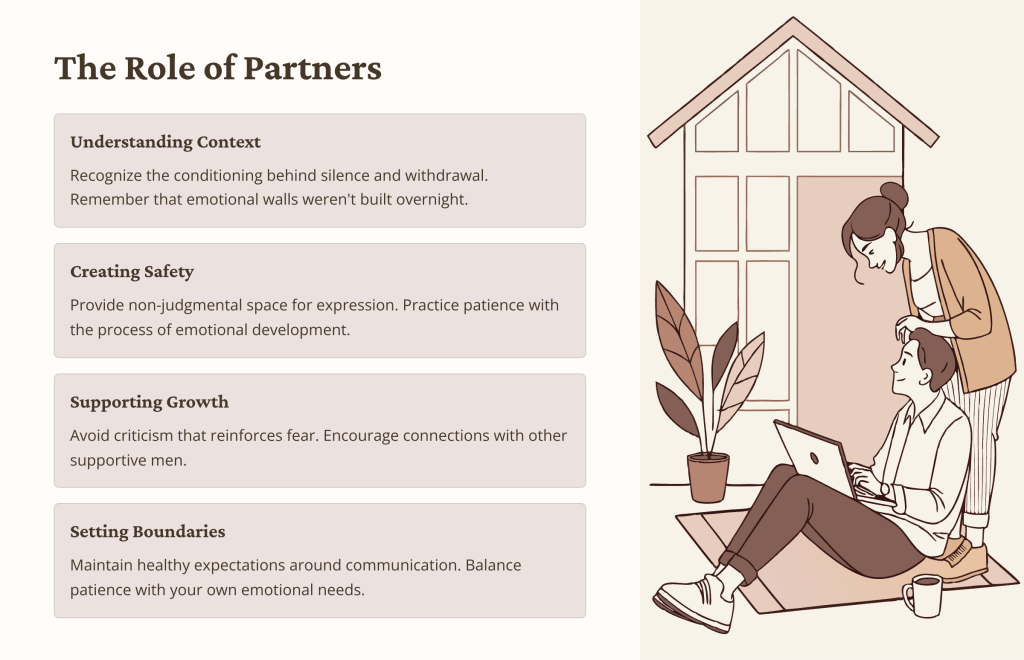
This presentation offers a path to healthier communication and deeper connections.