Page 89 of 101

5 Ways To Prevent Your Kids From Becoming Targets of Bully’s

1 in every 5 students in high schools complained of bullying last year. With bullying making national news nowadays, communities and schools have now started taking a strong anti-bullying stand to protect students. 

As smart parents, you of course understand that this is not enough and that you probably need to be more vigilant to make sure your children are not becoming a victim of the bully’s. Sure you cannot guard your kids all the time but if you help them understand a few things, they will definitely be more comfortable in seeking your help to keep all bullies at bay. Given below are the five tips that will help you bully-proof your child:

1.                  Let Them Talk – Encourage your child to open up and confide in you if he or she is being bullied in school. Don’t put them down if they have been unable to fight the bully back. Rather talk to the child about bullying and tell them about your experiences with bullies. Also, speak to the school authorities and seek their help in resolving the issue without troubling the child.

2.                  Find Out What The Bully Wants – When you encourage your child to talk to you, you can find out what the bully wants? Is it the child’s lunch, money, the gadgets, or the new funky costume wigs they just brought? In such a case, let the child leave the object of temptation at home and you can observe if this resolves the situation.

3.                  Encourage Them to Stay in Groups – Teach your child that bullies target loners and so, encourage him or her to be with friends whenever he or she is at their lockers or at any other time. Being in a group protects the child from bullies. If your child does not have too many friends, you may want to buy spring party supplies and organize a small party to help him get along and have fun with other students.

4.                  Discourage Retaliate – Being calm and not retaliating is sometimes the best way to deal with bullies. Your child can ignore the remarks made and just walk away from the situation. If the child does not retaliate, the bully will soon go in search of other targets.

5.                  Involve The School – You may talk to the bully’s parents but that rarely resolves the issue. If you still wish to talk to bully’s parents, it is a good idea to involve the school authorities and ask the school counselor to intervene on your behalf.

Working with your child can not only help him or her but also resolve the issue. Be calm and counsel the child to be calm too. Address the problem in a logical and calm way so that your child can continue going to school without being bothered again.


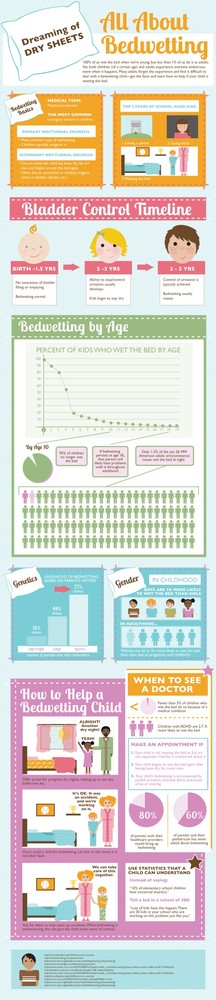
Dreaming of Dry Sheets

Ron Huxley: This isn’t one of the most talked about parenting tools on blogs or parenting classes but it is one that can shame the toughest child and frustrate the most competent parents. This infographic has some very helpful advice for mom and dad. Get more power tools now in the “inner circle” membership club!

Daily Love Notes

Valentine Boxes All Year Round

There are many ways to show love for family members. However, in our family, we don’t write to each other as much as we talk to each other or do acts of service. So, for one of our family activities we decided to make a family mail system.


Outside Mom and Dad’s bedroom door we made a family post office. Each of us have our own mail box, with flag to indicate when there is a message we need to pick up.


Our family is loving this! I spend moments each day writing love notes my family will want to keep forever, and depositing small gifts into the boxes. Everyone else does the same. My small children come to me and say, “Mom, your flag is up, you better go check your mailbox.”


They can’t wait for me to see the love notes they have put in my box. “Mom, you are the best mom ever! Love, Londyn”


When I read the notes some of the children blush a bit or turn away. They have written things they normally wouldn’t say. Really kind, mushy things like, “Mom, I love when you sing me songs.”


I think we are really going to love having those mail boxes in the hall to remind us to tell others how much we love and appreciate them.


I’m pretty sure these boxes will end up being our fun new Valentine boxes for 2012. This activity is also teaching my children how to write a letter, and why spelling is important.


Making A Post Office


This is what we did. We ordered small metal mail boxes from Oriental trading for $2 each. Then we decorated them how we wanted to. Then Dad used a long screw and a washer and screwed each one to the wall.

Happy Valentines Day! 

Nicholeen’s 10 Step Implementation Course

Books and Audio Classes

–>

Ron Huxley Writes: Daily love notes is an excellent way to keep children engaged and promote strong family connections. What would you put in a note to your child?

Moral Development of Children

(This article is a repost but I like it…)

A bumper sticker on the back of an expensive recreational vehicle read: “We’re spending our children’s inheritance.” While many parents strive to save wealth and property to hand down to their children, how many parents will make an effort to leave a spiritual inheritance for them? How do parents invest in the wealth of their children’s moral well being? What transactions should parents engage in to create ethical returns in their child’s behavior?

These are some of the questions we will look at in this second installment on “The Moral Development in Children.” To help with the answers, we asked Mimi Doe, author of the book “10 Principles for Spiritual Parenting” and a group of spiritually minded parents for practical advice on creating a spiritual inheritance.

“Mirror, Mirror”In the introduction to her book, Doe writes: “Children are spiritual beings.” She considers a child’s spirituality to be innate but that parents and other adults “clobber it out of them.” Parents who want to develop moral and ethical behavior in children must nurture these qualities in their child. One of reasons parents “clobber” or discourage these qualities in children is that they are not attuned with their own spirituality.

Parents are psychological and spiritual mirrors to children. “Children form their earliest ideas about God, the world, people, and trust from what is mirrored from you,” says Doe.How do you act, or react, to circumstances? Do you scream at the guy who just cut you off on the road? Do you make fun of other people? Do you tantrum when you are frustrated? A child’s identity is filtered through the beliefs and behaviors of their parent.

A parent from the online support group stated it this way: “The most important heritage we can leave our children is to have them be richly aware of God’s presence and working in our lives. The way we perceive and explain the events of day-to-day life; how we live will determine their spiritual inheritance.”That’s a heavy load for many parents who didn’t grow up in a spiritual or moral home or feel too overwhelmed by life to try and be “perfect” in front of their children. Not having moral models, in parents own lives, may mean that being a moral mirror is difficult, it is never too late to develop one’s own spirituality. Doing so doesn’t require a strict religious training or dogma asserts Doe. While that might work for some parents, a day-to-day way of being, with our child, and us, is all that is needed.

Another mother of the Parents Work Bench expressed, “If I teach my children to build their treasures on heavenly things: love, peace, patience, and kindness, that is being a real mother.” Perhaps many of the physical things parents are currently doing, that make them exhausted, are actually teaching an anti-moral lesson.“Weave spirituality into your everyday rhythm; your daily routines,” prescribes Doe. “It doesn’t take any more time to light a candle and flip on Mozart than to turn on the television or news in the morning.”

The moral of this moral lesson is mirror to your children what you want to see in them. And if your children are not displaying the kinds of behavior, who consider right, take a look in the mirror first, to see what your child is seeing and possibly mimicking.The Spirit of Discipline

Doe suggests that parents let go of people or situations that drag them and the children down, physically and spiritually. When you are around exciting and stimulating people whom love life, you feel excited and full of life too, right? But when you are around people and situations that deplete the emotional reserves, you feel negative and empty.The same is true for children. They need vibrant, spiritual parents who give them life. And, they need parents to make tough decisions about where they should go, what they should watch, who they should socialize with, to help them develop their spiritual and moral selves. If this is done early in a child’s life, they will have a better chance latter in life, to act morally and know the value of their own spirituality. A proverb, in the Holy Bible, says, “Train a child when he is young and when he is old, he will not depart from it.” Sound investment tips there!

A common complaint of American parents is that they no longer have the tools to teach children right from wrong. Parents argue that because their tool of spanking is gone, so is their ability to discipline. In light of the principles of spiritual and moral development, the problem may not be technique, but lack of “spirit.” Without the inner discipline, taught by a parents words and deeds, the outer discipline is unprofitable (spiritually speaking).Making Spiritual Transactions

So, what can a parent do to increase the interest rate of their child’s moral bank account? Doe offers various exercises, affirmations, and activities for parents for each spiritual parenting principle:Spiritual Principle #1: Knowing God Cares for You. “Establish daily spiritual habits and household rituals and pray anytime you hear a siren. Send a blessing to everyone involved in the emergency incident, paint or draw pictures of God, point out simple signs of God in your child’s life: the perfect snowflake, the lunar eclipse, the magic of spring. Learn about the worlds religions and create a family alter.”

Spiritual Principle #2: Trust and teach that all life is connected and has a purpose. “Bring nature inside and let your family observe growth&Get involved in neighborhood beautification projects. Celebrate Earth Day. Take a hike, plant a butterfly garden or window box. Adopt a cause.”Spiritual Principle #3: Listen to your child. “Have mealtime conversations&ask your child to write some prayers that the whole family can use&Make dates for one-on-one with your children&Set up specific discussion themes and times&Read books with your child&have family meetings&Wish upon a star with your child.”

Spiritual Principle #4: Words are important, use them with care. “Write a poem about your pets&Create a cartoon character that represents you. Create a story box. Grab your journal before you go to sleep at night and jot down five images of your child from the day and write the story of your child’s birth. Plant secret love notes. Pray together as a family and tape record your daily conversations.”Spiritual Principle #5: Allow and encourage dreams, wishes and hopes. “Spend time role-playing a dream, create a dream book and point out examples of good luck throughout the day. Encourage team activities, sports, and interest groups. Ask each family member to draw or write his goals or dreams”

Spiritual Principle #6: Add magic to the ordinary. “Look for the fairy in the soap bubbles when you wash dishes and walk in the rain. Arrange the bedsheets into a tent and turn an ordinary night into an enchanted imaginary camp-out. Watch the moon come out. Have a picnic indoors. Try waking your child with a song. Play in the snow and come up with a family logo or family slogan.”Spiritual Principle #7: Create a flexible structure. “Take a recess from dishwashing for a night&turn out the lights and just use candles, have fun with a monthly dinner with international cuisine and music. Choose a direction and walk for ten minutes that way, get silly, talk in a silly language.”

Spiritual Principle #8: Be a positive mirror for your child. “Acknowledge your mistakes&sing hymns, drum, chant, or pray&Ask the blessing at mealtimes, say goodnight prayers, ask for a safe journey&laugh&List five traits you like about yourself as a child&support and cheer on others&yell or hold up cheering signs&smile.”Spiritual Principle #9: Release the struggle. “Release you image of an ideal family and accept that children are not always going to please you. Take a quiet day, slow down, help your child create a peaceful place in her mind and imagine a restful setting. Ask your child to place his hands on his heart. Feel the beating and picture light around your home. Meditate, take a hot bath, form a parent group. Push back the furniture and allow your child to dance their energy out.”

Spiritual Principle #10: Make each day a new beginning. “Validate successes at the day’s end, even small ones such as waking up on time, It’s alright to say no. Don’t sweat the small stuff. Rethink your priorities today. Play with the idea that you have no limits. Start the morning on a peaceful note. If it means making lunches and laying out school clothes the night before, do so, get up fifteen minutes earlier. Encourage children to eat slowly. Walk like a winner. In the evening visualize how you would like tomorrow to turn out.”Start Early and Grow Spiritually Rich

Most financial advisors show the need to start investing early in life. They love to demonstrate how a small, monthly investment, over the long haul, reaps greater financial rewards over large investments later in life. Spiritually, parents need to invest early and consistently, in small ways. But parents can start late too. In the moral and spiritual market, late can be almost as good as early, to invest.“Begin today,” states Doe. “Create your family rituals, celebrations, and traditions. Begin cultivating a code of honor in your family. That’s spiritual parenting.”

Or as another parent on the list exclaims: “If I die tomorrow, I will have died a woman who taught her children that power within us, above us, and around us, and to always respect that power and use it in a manner that will help others the way they would want to be helped.”References:

Doe, M & Walch, M. (1998). 10 Principles for Spiritual Parenting. Harper Perennial, New York.

You can get more information on Mimi Doe and her 10 Principles for Spiritual Parenting athttp://www.pink-bubble.com

Romantic Ideas for Parents | eHow.com

Romantic Ideas for Parentsthumbnail
There are many ways for parents to keep the love alive.

Becoming a parent is a wonderful experience for two people, but it can create a lapse in your romance. Finding ways to rekindle the flame after the arrival of your children can be complicated, but with some planning and patience, you can find romance with your spouse all over again. You might find your love bond is stronger in a whole different way.

  1. Dinner and a Movie

    • A classic date of dinner and a movie can rekindle your romance as parents. Arrange for a babysitter on a Saturday or Sunday, take in a matinee and have an early dinner. You’ll get to spend quality, romantic time with your significant other and get home in time to put your baby to bed. Keep things fair by allowing one spouse to choose the movie while the other gets to pick the dinner spot. Talk about yourselves and other life events, but avoid talking about the children if possible. The point of the date is to spend time with each other, remembering why you fell in love.

    Weekend Getaway

    • Plan a weekend away to a favorite or new spot if you can arrange for a babysitter and feel comfortable enough to leave your children overnight. A spa getaway can be relaxing for both spouses, helping you to reconnect with each other. A trip to a nearby city for shopping and dinner can be enjoyable too. Keep the focus on each other and take advantage of the free time to rekindle intimacy with your spouse.

    “Stay-cation”

    • Ask the grandparents or a close friend to keep your children overnight and have a “stay-cation.” Spend the day or weekend at home, lounging in your pajamas and catching up on movies or television. Sleep in, make love and spend time in your hometown like you did before you had children. Enjoy the free time in your own home, but focus on spending time with your spouse. Do not use the time to clean, catch up on bills or other mundane, household tasks. Save that for another time.

    Renew Your Wedding Vows

    • Renewing your lifelong commitment to each other after you have children can be a nice romantic gesture. Arrange to have a priest or minister renew your marriage vows, either in your own home or at a church. You can have a small reception-type gathering at your home or a local restaurant. Recreate the sentiments from your wedding, such as a toast or cutting a wedding cake. The point is to focus on your love and how it has evolved and grown stronger since you’ve become parents.

Ron Huxley Recommends: Valentines Day doesn’t have to be expensive. Make the mood creative with a just a few simple touches. Tips for Men: Plan now!

Some New Parenting Books to Help the Adoptive, Foster Care (or any!) Parenting Journey | Kinship Center

The Foster Parenting Toolbox covers topics from newborns to teens and everything in between for not only foster parents, but also those who work with foster parents: case workers, social workers, judges, CASA’s, GAL’s and others. Three Kinship Center professionals are among the contributors.

Edited by Kim Phagan-Hansel, the editor of Fostering Families Today Magazine, the book features more than 100 contributors who have helped weave a stunning tapestry of advice specifically for foster parents and the professionals and case workers who are on their team. This 464-page book is an extension of the trainings offered by individual states. It’s a top of the nightstand resource that offers today’s foster parents access to a wealth of useful information from professionals in the field and successful foster parents in the trenches. This is a book you won’t read all at once, but come back to again and again.

Ron Huxley Reports: I was honored by being asked to author one of the chapters for this newly published book on “Kinship Caregivers.” Check the book out at http://www.emkpress.com/fosterparenting.html

Games to Teach Kids Good Manners

You have probably been out to a restaurant and have seen kids behaving in a decidedly unmannered way. You know the ones–elbows on the table, whining about the food, kicking the chair, getting up and running around, picking fights with siblings, yelling and crying. No one wants to be around kids like that. But, if children are never taught any better, they will never do any better. Teaching manners doesn’t have to be a punishment. You can use games to make teaching manners fun.

Table Manners

Make one night formal night. This is similar to the tea party game children play. You can do this once a week or once a month to reinforce good manners. Pull out all the stops. Everyone plays dress-up like for a tea party. You set the table formally, even if some members are still using plastic dinnerware. Serve a special meal, preferably one that your children like. Use this night to show the kids how people behave at dinner, such as how to hold their forks, how to put their napkin on their lap and how to ask for food on the table. Every time your children display good manners, they get a point. If they make it to five points, they win a prize.

Greeting People Game

Shyness is the most common reason for awkward behavior when children are confronted with adults, according to the Family Education website. Turn the idea of meeting someone new into a “find-the-hidden-picture” type of game that helps teach them how to overcome their shyness. One way to start a conversation with an adult is for the child to ask questions, as long as the questions are not too personal. Make a pretend scenario. Pretend that you are a stranger and your child is entering the room. Sit at the kitchen table. Have a tennis racket on the floor, a gift with birthday wrapping paper on the table and a picture of a dog next to you. Three obvious questions your child could ask you (the stranger) would be if you play tennis, if you are going to a birthday party and if that is your dog. The game is to see how observant your child is. He wins a small prize for each appropriate question he comes up with.

Good Sportsmanship

When children and parents display bad sportsmanship, nobody wins. Once your child understands good sportsmanship, he will realize that the real winners are the players and spectators who behave with dignity, according to the Kids Health website. Make a game by showing your children videotapes of players behaving with sportsmanship and shaking hands after a game. Show another one that has players and coaches fighting, such as a hockey game or a video of a child’s event where a fight breaks out. Give each child two different noisemakers, and tell them to sound one when they see good manners and the other for bad. Stop the tape when you hear the noisemaker and have the child explain why he used the noisemaker. Each child gets a point for each right answer. The winner gets a prize.

Manners Board Game

Make a board game about manners. Get a piece of cardboard and draw squares going around each side. In each square, write something that would be good manners or bad manners, such as “says thank you” or “burps at the table.” Roll the dice, and when you land on a bad manner, you have to go back one space. When you land on a good manner, you can go forward two spaces.

Polite Polly Says

This game is a variation of “Simon Says,” and it reinforces good manners. Your child should do what is polite and should not do what is impolite. You are Polite Polly, and when you say, “Polite Polly says to say please and thank you,” the child should say, “please and thank you,” if she thinks that is polite. If she does say it, she is correct and gets a point. If she doesn’t, she does not get a point. The opposite happens if you say something impolite, such as, “Polite Polly says to stick out your tongue.” If the child sticks out her tongue, she would not get a point, because that is impolite. If she does not stick out her tongue, she would get a point. After five points, the child gets a prize.

Ron Huxley’s Hope: Manners seem to be a lost art in our society. I can’t claim to have been the best teacher to my children but we did try to cover the basics. Overall, I am happy with the results. My hope, for parents, is that they can use the power of play to teach good manners to their children.

> Get more ideas to build the family of your dreams as a member of our Parents “Inner Circle” today!

5 Parenting Strategies That Work

Shortly after my son was born 11 years ago, a friend of mine – the father of three much older kids – asked me how I was doing. At that point, I think we’d moved safely into that phase where I was no longer feeding my son every three seconds, he’d begun smiling at us, and my husband and I had more or less adjusted to this massive change in our lives.

“It’s such a great age,” I commented.

“They all are,” he replied.

It’s true, they are all great ages and I’m continually mystified by how exciting and interesting each phase of parenting is (even when I’m going through them for the second time with my daughter.)

But it’s also an ongoing challenge to parent and one always feels a bit behind the eight ball as you try desperately to figure out how best to react (or, indeed, whether to react at all) to our children’s behavior and emerging personalities.

To that end, this week I thought I’d share some new (but really) old parenting strategies that seem to prove their value again and again:

1. Incentives are better than punishments. When your kids misbehave – and particularly when they do the same annoying thing repeatedly – there’s a temptation to take something away from them: no television for a week, no play dates, no dessert. But rewards for good behavior are also much more effective than punishments for bad behavior, especially for younger children. In my own case, my daughter takes an inordinate amount of time to get dressed in the morning, producing frequent (and repetitive) conflicts. While my first instinct was to take away her computer time, I opted this week to try something new: if she can get dressed, brush hair and brush teeth each morning (and the reverse each evening) in under 10 minutes, I’ll give her 50 pence a day. At the end of two weeks, if she does this consistently, she can buy a present for herself. (Bear in mind that she doesn’t have allowance right now.) I explained to her that we wouldn’t carry on buying gifts on a regular basis, but I’m hoping that by heaping praise on her in the next two weeks while we do this trial period, she’ll internalize the positive reinforcement and want to get dressed/undressed quickly, rather than only working for the extrinsic reward. So far, so good.

2. Hitting doesn’t work. If you think that doesn’t bear repeating, think again. Here in the UK where I live, a Labor politician – who was, I kid you not, the former Education minister – recently declared that if working class parents had more freedom to hit their children, we wouldn’t have had the riots that broke out here last summer. No sh$!. In a poll taken not so long ago, nearly one half of British parents surveyed said that they thought that teachers should be allowed to hit children to keep them in line. This, despite mounds of evidence showing that while spanking is very effective in the short run for altering a child’s behavior, in the long run it is completely counter-productive.

3. Understand where your kids are at, developmentally. Like many parents, I was absolutely fascinated by a recent article by Alison Gopnik in the Wall Street Journal about the teenage mind. The upshot of the article is that teenagers are hitting puberty – and all the attendant hormonal, risk-taking changes in attitude this phase of life produces – much earlier than ever before, while becoming “adults” (in the sense of assuming responsibility for their own lives) ever later. The result is that their emotional development is out of sync with their ability to exert judgment and self-control in a way that it wasn’t even 20 years ago. Once I read this, I thought, Eureka! So that’s why my 11-year-old loves listening to rap music but can’t be bothered to cut with a knife and fork properly.

4. Don’t micro-manage. I attended my son’s parent-teacher meetings earlier this week and was told by several of his teachers, independently, that they felt that while he had come into the school year a bit jumpy and unsettled, over the course of the year he had really calmed down. As a fellow manic, I can’t really criticize him too much on this score – the apple, as they say, doesn’t fall far from the tree. But I couldn’t help but wonder if my own New Year’s resolution to chill out and try to control him less wasn’t helping, in part, to chill him out in other parts of his life. Coincidence? Maybe. But I’m going to press on with this resolution – despite temptations to “fall off the wagon” – and see if I keep observing positive change.

5. Keep reading books by Faber and Mazlish. Believe it or not, I do think that you can over-train yourself in the art of parenting. Some of it has to be instinctual – and based, crucially, on your particular child’s nature – or you’ll drive yourself insane. But I will put in a plug for two books by parenting experts Adele Faber and Elaine Mazlish that I will stand by: How To Talk So Kids Will Listen and Listen So Kids Will Talk, as well as their companion volume, Siblings Without Rivalry. I remember parenting blogger Lisa Belkin saying that for many years, she and her husband kept dog-eared copies of these books by their respective bedsides. Ditto.

What tried and true parenting strategies work for you?


Follow Delia Lloyd on Twitter:

www.twitter.com/realdelia

Ron Huxley’s Applause: I love it when someone gets the basics of parenting correct. You would be surprised how many “experts” do not. For me, basics need to be basic. The simpler the better for parents to remember what and how to react in a crisis situation. This blogger has some useful points for parents to follow. Can you add to them?

Letting Go of Grudges

“To err is human; to forgive, infrequent.”
– Franklin P. Adams

Maybe it was the relative who said something hurtful, the co-worker who stole credit for your idea, or the lover who cheated on you. Whatever happened, you were left feeling angry, hurt, and bitter, and you have held onto those emotions, in some cases for years.

But a grudge is no life preserver. It’s not a healthy thing to hang onto. In fact, holding grudges can harm you both physically and mentally.

When you hold a grudge, your body behaves as if it’s under stress, with the stress hormones kicking into high gear. This can raise your blood pressure, increase your heart rate, and lower your immune system. It can also steal your energy and set you up for depression and other mental health problems.

By contrast, when you release a grudge your blood pressure goes down, your heart rate drops, and you are less likely to have psychological symptoms.

Forgiveness is not always easy to achieve. It may take time and effort on your part, and you have to be ready to do the work. But if you succeed, it can have real benefits for your own well-being.

Understanding forgiveness
Forgiveness is letting go of anger and resentment about past events. It does not mean you forget what happened or that you approve of what was done. It means altering how you view the situation. You can’t change what happened, but you can change your attitude about it and reduce its power over you.

Forgiveness is not done for the person who harmed you but to help you. The goal is to free yourself of the negative consequences of carrying anger inside you.

If you are in an abusive relationship, though, your main focus should be on getting out of the situation for good. You can work on forgiveness later, when you are safe.

Letting go
Try these tips to help you let go of a grudge:

  • Write down your thoughts and emotions. Think about what upset you and how it makes you feel. Writing can help you get perspective on the event.
  • Try to understand what happened. Often people do and say hurtful things without thinking of the harm they can cause. They may later regret their actions. Chances are you’ve done this yourself. If you think of a time you hurt someone, it may help you understand what happened. Understanding does not mean you approve.
  • Decide if you are ready to forgive. Sometimes it takes a long time to get to this point. Being ready is the biggest step to forgiveness.
  • Don’t wait for an apology. Remember, this is an internal process, something you are doing for yourself. You do not need to have a relationship with the person to practice forgiveness.
  • Work through the emotions. It may help to write about your feelings, pray, or meditate.
  • Seek support if you need it. You may want to talk to someone you trust, such as a friend or a therapist. Someone who is neutral may help you gain new insight.

Ron Huxley Relates: It is amazing how many of our parenting problems have to do with things we don’t typically think of as “parenting”. Unforgiveness can be one of the biggest hindrances to relating to our children and partner.

How Do You Find Good Educational Apps for your Children

schnaars

There are a lot of amazing new educational apps out there, whether you’re looking for native apps or Web apps, apps for your mobile phone, for your tablet, or for your laptop. There a number of app stores too where you can find and download them: Apple’s iTunes and its Mac App Store, the Amazon Appstore, Google’s Android Market, the Chrome Web Store, the Google Apps Marketplace, GetJar, and so on.

These app stores all offer products in a designated education category, ostensibly designed to make it easier to locate apps for learning and studying (as opposed to apps for productivity or for entertainment, although sometimes these categories do overlap). But having an education category doesn’t necessarily make it easier to locate quality apps, as any cursory search there will quickly show you. Apps for teaching pre-schoolers the alphabet are grouped alongside those for studying calculus or human anatomy. Spanish for Beginners flash cards are found next to GRE test preparation.

When you’re spending money on these apps, those $1.99 charges add up.

Take, for example, a look at the educational apps in iTunes. The category highlights the top paid and top free apps, that is, listing them in terms of download and sales numbers. It also features “New and Noteworthy” applications, as well as “Staff Favorites.” But these are a wide variety of apps: Shakespeare’s Midsummer Night’s Dream for your iPhone and an interactive Winnie the Pooh e-book.

This problem with very broad categorization exists outside the education category, too. If you search, say, for “science,” you’ll get some science magazines, some reference apps, and some not-safe-for-work results too.

iTunes does offer a ratings system, as do all the major app stores, whereby users can give apps zero to five stars and can write detailed reviews of their experiences with the app. But this too is frequently an unreliable way to discover new and interesting applications. Oftentimes, like websites such as Yelp, those who leave these reviews have either had terrible experiences with the app (“It crashes every time I use it”) or rave about it uncritically (“This is my preschooler’s favorite app.”) Too often, there are so few reviews, it’s hard to know whether customers’ responses are typical or not.

Although sites like the Google Apps Marketplace do try to help the review process by highlighting those tools that have been reviewed by a “Verified User” (in other words, by a real customer rather than a fictitious account created just for the purposes of boosting ratings), these ratings aren’t weighted more heavily or any differently than anonymous reviews. An app can have 20 anonymous five-star reviews, and without a closer look, it’s easy to mistake that as something better than an app that’s got only five reviews, but all from verified accounts.

The alternative, of course, to searching through App Stores and taking your best guess based on the review information there is to rely on the recommendation of people you know. Indeed, word-of-mouth remains one of the most important ways that developers can sell and buyers can find quality applications. Several educational blogs write detailed reviews of new educational apps, and sites like Moms With Apps try to showcase “family-friendly” developers’ work. And while “caveat emptor” holds true in app purchases as with anything you buy, one has to wonder if there aren’t better ways to help showcase quality apps.

It’s one thing, of course, when the applications are free. If you download a new educational game and you find that it’s not fun and not smart, it’s easy to simply delete it. But the stakes are higher once you’re looking at spending money on these apps (those $1.99 charges add up), particularly since the return policy for app marketplaces is limited: Android apps can be returned within 15 minutes, but iOS apps are non-refundable.

Readers, how do you find quality educational apps? What changes would you make to the app stores to give consumers better information, particularly when it comes to educational apps?

Ron Huxley Learns: How many parents have a smartphone or tabet that a child doesn’t want to play with? If there are going to use your digital device it is a good idea to have child safe apps for them to play and learn!